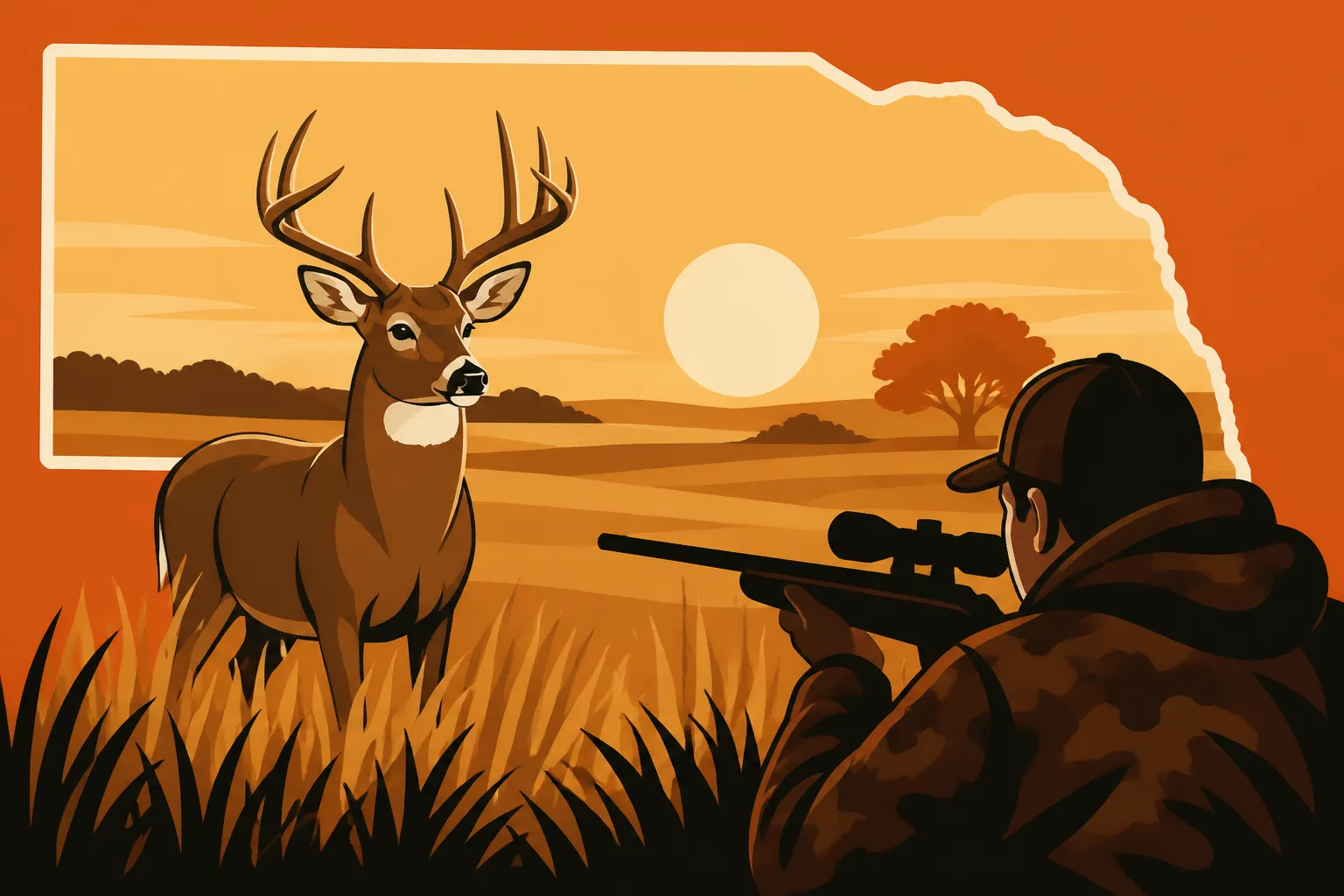
Nebraska’s Nine-Day November Firearm Deer Season
That crisp November air, the crunch of frosted grass under your boots, the scent of damp earth and deer sign—there's nothing quite like Nebraska's nine-day firearm deer season. For many of us, it's the highlight of the hunting calendar, a highly anticipated sprint to fill our tags and make memories. But let's be honest, those nine days can fly by in a whirlwind of unpredictable weather, fleeting deer, and sometimes, a whole lot of frustration. This guide is all about helping you cut through the noise, understand the nuances, and put yourself in the best possible position for success during this intense, rewarding season.
Understanding the November Firearm Season Structure
Nebraska's firearm deer season is a unique beast. It's a short, intense window, traditionally falling in the middle of November, right when deer activity is often at its peak. This brief period means hunters have to be prepared, strategic, and ready to adapt to whatever the Nebraska landscape and its deer throw their way. It’s not a marathon; it’s a full-on sprint.
The Nine-Day Sprint: What Makes It Unique
Unlike longer seasons in other states, or even Nebraska's own extended archery and muzzleloader opportunities, the nine-day firearm season demands efficiency. You don't have weeks to scout and leisurely pick your days. You've got just over a week to execute your plan, and often, that includes travel, setting up camp, and dealing with potentially changing conditions. This short window can create a palpable sense of urgency, and for many, it's the only time they get to pursue deer with a rifle all year. It's a tradition, a reunion, and a high-stakes hunt all rolled into one. The fact that it's set to coincide with the whitetail rut peaking in Nebraska makes it incredibly exciting, but also adds pressure to capitalize on those brief opportunities when bucks are on the move. Understanding Why Nebraska's Rifle Season Runs Nine Days helps put it in perspective.
This intense timeframe also concentrates hunter effort. You'll likely encounter more fellow hunters during these nine days than almost any other time in the deer seasons combined. This means scouting for unpressured areas, having backup plans, and being willing to walk a little further or hunt a little harder than you might otherwise. The short duration also means you can't afford to waste time second-guessing your gear or your strategy. Every sunrise, every hour in the stand, every push through a cedar draw feels immensely valuable, because before you know it, the season will be over.
Permit Types and Management Units
Navigating Nebraska's permit system can sometimes feel like trying to solve a puzzle, especially with different management units and permit types. Generally, firearm permits are unit-specific, meaning you apply for a permit valid only in a particular deer management unit. These permits are typically "Any Deer" (allowing you to take a buck or doe) or "Antlerless Only." Non-residents often face tighter restrictions and higher demand for permits, making the application process for Nebraska Big Game Permits and How to Get One crucial well in advance. Residents also need to be on top of application dates.
Here’s a simplified breakdown of common permit types you might encounter:
| Permit Type | Description | Target Game | Availability |
|---|---|---|---|
| Any Deer | Allows the harvest of one deer of either sex (antlered buck or antlerless doe) in a specific management unit. | Whitetail/Mule Deer | Limited, often through a draw system for residents and nonresidents. Can sell out fast. |
| Antlerless Only | Allows the harvest of one antlerless deer (doe). Often designed to manage local populations and provide additional harvest opportunities. | Whitetail/Mule Deer | Generally more available, sometimes over-the-counter after the draw. |
| Statewide Whitetail Buck | A specific permit for residents, allowing a whitetail buck anywhere in the state except for certain units with antler point restrictions or mule deer density concerns. Very popular. | Whitetail Buck | Limited, draw system for residents. |
| Landowner Permits | Available to qualifying landowners who own or lease agricultural land. Often unit-specific and designed to offer harvest opportunities on their own property. | Whitetail/Mule Deer | Restricted to landowners. |
It’s important to remember that some units, particularly those in western Nebraska with higher mule deer populations, may have antler point restrictions for bucks or may be designated for whitetail deer only to protect mule deer numbers. Always double-check the current year's regulations for the unit you plan to hunt. For non-residents, these unit-specific permits are often highly sought after and may require building preference points through a system like GoHunt's data analysis tools to increase your draw odds over time. The application process, understanding Nebraska's June Big Game Draw Explained, and monitoring leftover permits after the draw are critical steps that can make or break your November hunt.
Blaze Orange Requirements and Safety
Safety is paramount, especially during a high-pressure, high-hunter-density season like the November firearm hunt. Nebraska has specific Orange Requirements for Archers in November, but for rifle hunters, it's a non-negotiable. You must wear at least 400 square inches of blaze orange on your head, chest, and back, visible from all directions. This isn't just a rule; it's a lifesaver. When you're in the field, moving through cover, or even just sitting in a stand, you want to be as visible as possible to other hunters.
Think about it: the woods and fields can be thick, especially in river bottoms or shelterbelts, and it's easy for another hunter to mistake movement for game, especially in low light conditions or if they're not being as careful as they should be. That bright orange serves as an immediate visual cue that you are a human, not a deer. It's an essential part of responsible hunting and ensures everyone can come home safely at the end of the day. Beyond the orange, always identify your target and what's beyond it. Never take a shot at movement, sound, or color without absolute certainty of what you're aiming at. Your firearm safety skills should be sharp, and communication with any hunting partners is key. Always assume there are other hunters in the area, even if you haven't seen them.
Key Deer Behavior During the November Rut
The magic of the November firearm season largely hinges on the whitetail rut. This is when deer activity skyrockets, making them more visible and, often, less cautious. Understanding this behavior isn't just interesting; it's absolutely critical for putting together a successful hunting strategy.
Peak Rut Activity and Its Impact on Hunting
For most of Nebraska, the whitetail rut peaks right around the second to third week of November, perfectly coinciding with the firearm season. What does this mean for you? Bucks are no longer just thinking about food; they're driven by the urge to breed. This means they are actively scent-checking scrapes, following doe trails, and engaging in sparring matches. They might travel significant distances, often through areas they wouldn't normally frequent during other times of the year. This increased movement is a double-edged sword: it makes bucks more vulnerable but also more unpredictable. Knowing When the Whitetail Rut Peaks in Nebraska is foundational to this season.
During the peak rut, you'll see bucks moving at all times of day, not just dawn and dusk. Midday cruising for does is common, making those all-day sits in a treestand or ground blind much more productive. You might catch a buck chasing a doe through an open field, or see a mature deer just meandering through a timber edge, sniffing the air for signs of estrus. This heightened activity level means that consistent pressure can move deer, but also that new deer might move into an area you're hunting. It's a dynamic period where persistence and being in the right place at the right time are more important than ever. The intensity of the rut means bucks are focused on one thing, and it can override their natural caution, giving you opportunities you simply won't get outside of this window.
Understanding Deer Movement Patterns
While the rut makes deer more active, it doesn't mean their movement is entirely random. They still stick to certain patterns, albeit expanded ones. Bucks will frequently check known doe bedding areas and travel corridors between them. They'll follow creek bottoms, field edges, and timber lines, using cover to move from one section of their expanded territory to another. Knowing Where Nebraska Whitetails Bed in Row-Crop Country or how they use river corridors becomes incredibly valuable during this time. Scrapes and rubs, which might have been passively worked in the pre-rut, become communication hubs, telling you where bucks are actively patrolling.
Consider the landscape you're hunting. In open country, deer might be more nocturnal or move quickly from cover to cover. In thicker river bottoms or heavily wooded areas, they might feel more secure moving during daylight. Pay attention to pinch points—places where terrain funnels deer into a narrow travel path. These could be saddles in hills, fence line crossings, or narrow strips of timber between open fields. Also, understand Entry and Exit Routes on Flat Farm Ground so you don't spook deer while going to and from your stand. These natural funnels are prime locations for ambush, as bucks will inevitably use them as they search for does. Even during the rut, deer seek efficiency and security in their travels, and these choke points are where those two needs often intersect.
Food Sources and Bedding Areas During the Season
Even with the rut in full swing, deer still need to eat and rest. While food becomes secondary to breeding for bucks, they'll still grab a bite when opportunities arise. In November, natural food sources like acorns might be depleted, but standing corn, soybean stubble, or winter wheat fields become magnets. Alfalfa fields, if still green, can also attract deer. Identifying Late-Season Food Sources in Nebraska is a crucial part of your scouting.
Doe family groups will continue to use reliable food sources, and bucks will often cruise the edges of these fields, hoping to intercept a receptive doe. Bedding areas, whether it's a dense cedar thicket, a cattail slough, or a heavy river bottom, remain critical for deer to rest and feel secure. Bucks might bed down closer to doe groups during the rut, or even in unexpected, lighter cover if they're trying to keep an eye on a specific area. Scouting before the season, or even during the first few days, to locate these key feeding and bedding areas and the travel paths connecting them will significantly improve your chances. Remember that deer will often move from bedding areas to food sources and then back again, with rutting bucks actively patrolling these routes throughout the day.
Strategic Approaches for Different Nebraska Landscapes
Nebraska is a diverse state, offering a variety of hunting experiences from the river bottoms in the east to the vast Sandhills in the west. Your hunting strategy needs to adapt to the specific landscape you're in. What works in a small timber lot might be completely useless in the wide-open prairie.
Hunting Whitetails in Eastern Nebraska River Bottoms
Eastern Nebraska is characterized by its agricultural fields broken up by dense river and creek bottoms, and smaller timber blocks. Whitetails thrive in this environment, using the thick cover for bedding and security, and the surrounding fields for food. Hunting these areas requires patience, stealth, and a good understanding of deer movement within these dense habitats. Many hunters swear by the advantages of River-Bottom Whitetail Hunting in Eastern Nebraska.
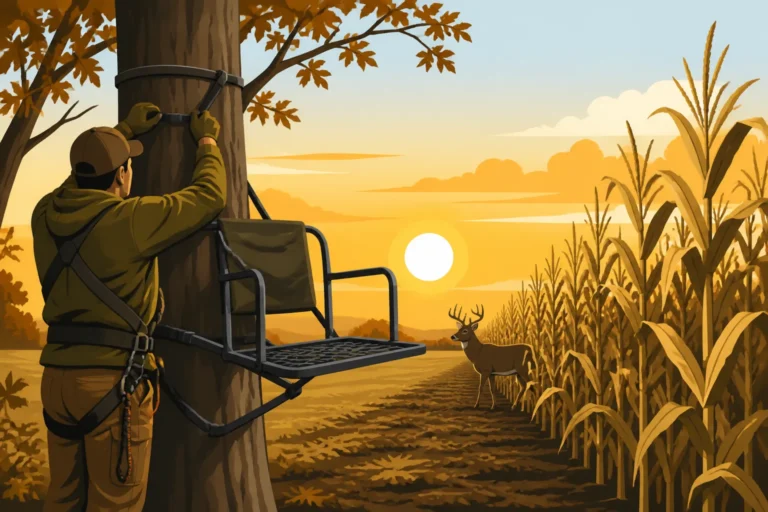
In these settings, focus on scouting pinch points, natural funnels created by the river bends, changes in timber density, or agricultural fields. Choosing a Treestand Site on Nebraska Farmland or along a river corridor is paramount. Look for heavily used trails, fresh rubs, and active scrapes. Elevated stands are often the most effective, allowing you to see over the dense undergrowth and get above a deer's keen sense of smell. However, ground blinds, especially well-brushed-in ones, can also be very effective, particularly if you can set up overlooking a trail or a small opening. Remember, wind direction is your absolute enemy; always play the wind and understand how it swirls in river bottoms.
Tackling Mule Deer in the Sandhills and Panhandle
The Sandhills and the Nebraska Panhandle offer a completely different challenge, primarily for mule deer, although whitetails are increasingly present. This is big, open country, demanding a spot-and-stalk approach, keen optics, and a willingness to cover a lot of ground. It's truly Spot-and-Stalk Mule Deer in the Nebraska Sandhills country.
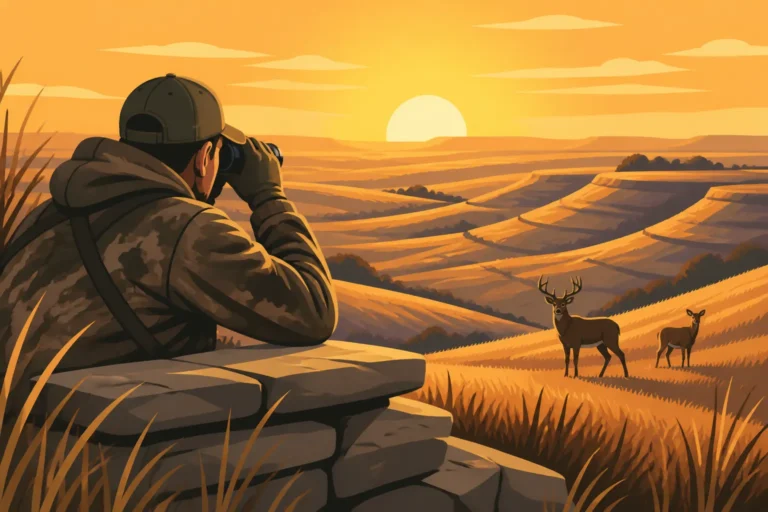
Successful mule deer hunting here often starts with intense glassing. Get to a high point at first light, set up a good spotting scope and binoculars (GoHunt offers excellent resources for researching optics, which is vital here), and systematically pick apart the landscape. Look for the tell-tale shape of a mule deer, their big ears, or the flicker of an antler in a blowout or on a ridge. Once you spot a deer, the real work begins: planning a stalk that keeps you out of sight and downwind. This can mean long, circuitous routes, crawling through sand and grass, all while keeping the wind in your favor. Patience is key, as is the ability to close the last hundred yards on sand without being detected. Mule deer have incredible eyesight, so minimizing movement and breaking up your outline are critical.
Navigating Row-Crop Country Tactics
Much of central and eastern Nebraska is dominated by vast tracts of row crops, primarily corn and soybeans. When these crops are standing, they offer incredible cover for deer, making hunting extremely challenging. Once harvested, however, the dynamic completely changes, creating new opportunities. For instance, What Changes in Nebraska After the Corn Comes Off directly impacts how you hunt.
Before harvest, hunting the edges of standing corn, especially near known bedding areas or waterways, can be productive. Deer will use the corn as a sanctuary, only venturing out briefly. Once the corn is off, these fields become food sources and travel corridors. Focus on the remaining cover—small pockets of timber, shelterbelts, creek bottoms, and even grass waterways within the fields. Deer will concentrate in these limited cover areas. Setting Up on a Nebraska Cornfield Edge or a small timber island can be incredibly effective. Drives can also be successful in small patches of timber or CRP within this landscape, but always ensure safety and proper communication with your hunting party. Persistence in scouting and adapting to the post-harvest landscape is the name of the game in row-crop country.
Essential Gear and Preparation for Success
You can have the best strategy in the world, but if your gear isn't up to snuff or you're not prepared for what Nebraska's November can throw at you, your hunt will be an uphill battle. This isn't about having the most expensive stuff, but about having the right stuff and knowing how to use it.
Rifle Caliber and Optics for Open Country
When it comes to rifle hunting in Nebraska, especially in the more open areas, your choice of caliber and optics makes a huge difference. You might encounter shots that are longer than you're used to, particularly in the Sandhills or across large agricultural fields. This is why having a Rifle Setups for Nebraska's Open Country is so important. Common calibers like .270 Winchester, .30-06 Springfield, .308 Winchester, and 6.5 Creedmoor are all excellent choices, offering a good balance of flat trajectory and sufficient energy for deer. Newer straight-wall cartridges are also gaining popularity in certain areas, so always check regulations for Which Rifles the Straight-Wall Rule Allows.
Your scope is arguably as important as your rifle. A good quality variable power scope (e.g., 3-9x, 4-12x, or even 4-16x) with clear glass and reliable turrets is essential. Many hunters also swear by a good rangefinder for those longer shots, allowing you to dial in your elevation precisely. Zeroing your rifle for Rifle Ranges Realistic on the Nebraska Prairie—often 200 yards or even 300 yards—gives you an advantage in open country, minimizing holdover or holdunder at common hunting distances. Practice shooting from field positions, not just a bench, so you're confident when that deer steps out.
Layering for Nebraska's Unpredictable November Weather
Nebraska weather in November is famously fickle. One day you might be hunting in a light jacket with temperatures in the 50s; the next, you could be facing single-digit wind chills, snow, or even freezing rain. This unpredictability means layering is not just a suggestion, it's a necessity. Your Clothing for Nebraska Wind and Cold strategy needs to be flexible.
Start with a good moisture-wicking base layer to manage sweat, followed by insulating mid-layers like fleece or down. Your outer shell should be windproof and waterproof, offering protection from the elements. Don't forget quality headwear, gloves, and warm socks. Many hunters carry a small pack with extra layers so they can adjust throughout the day. If you're going to be sitting for extended periods, especially in a stand, consider insulated bibs or a heavy parka. Keeping your core warm is key, but don't overlook your hands and feet; cold extremities will send you back to the truck faster than anything. A hand warmer pouch can be a game-changer on bitter mornings.
Navigation and Communication Tools
In the expansive landscapes of Nebraska, especially on public ground, having reliable navigation and communication tools is non-negotiable. Whether you're miles into the Sandhills or deep in a river bottom, getting lost or being unable to call for help is a serious concern. While GPS Units Versus Phone Apps is a common debate, most hunters now rely heavily on smartphone apps like OnX Hunt, BaseMap, or Gaia GPS, which show public and private land boundaries, topography, and aerial imagery. Make sure to download offline maps, as cell service can be spotty in remote areas.
Beyond mapping, carrying a fully charged power bank for your phone is critical for Power Banks for Long Days Afield. For communication, while cell service is ideal, consider having a personal locator beacon (PLB) or satellite messenger for true emergencies, particularly if hunting alone or in very remote locations. Two-way radios can be invaluable for coordinating Two-Person Deer Drives on Small Timber or simply staying in touch with hunting partners when cell service is unreliable. Always let someone know where you're going and when you expect to return, even if you're only going for a morning hunt. A physical compass and map are also smart backups, just in case electronics fail.
Effective Hunting Tactics for Firearm Season
With your permits in hand and your gear ready, it's time to talk tactics. The nine-day firearm season offers a window of opportunity to employ various strategies, leveraging the rutting activity and the presence of a rifle.
Stand Hunting and Ambush Strategies
Stand hunting remains a cornerstone of deer hunting during the firearm season, especially in timbered areas or along agricultural fields. The key is to position yourself in a location that intercepts deer movement, often between bedding and feeding areas, or along high-traffic rutting corridors. This can involve Choosing a Treestand Site on Nebraska Farmland or setting up a ground blind where deer funnel through. During the rut, don't be afraid to set up in areas you might not consider during the early season, as bucks can be anywhere.
Morning hunts are great for catching deer moving back to bedding areas after feeding or cruising overnight. Evening hunts target deer moving towards food sources. Midday can also be incredibly productive during the peak rut, as bucks actively search for does. Consider using a Ground Blinds That Handle Nebraska Wind in open areas or Brushing In a Blind on Open Range if you're after mule deer or whitetails in less timbered country. Set up early, move quietly, and be patient. The best stand sites are those where you have good visibility, a clear shooting lane, and minimal wind disturbance to your scent. Remember that deer drives or still-hunting by other parties might push deer to you, making an all-day stand sit potentially very rewarding.
Still-Hunting and Drives in Smaller Timber
When conditions are right, or if you prefer a more active approach, still-hunting or organizing small drives can be very effective, especially in smaller timber blocks, cedar draws, or shelterbelts. Still-Hunting Nebraska Cedar Draws or along a river bottom allows you to move slowly and deliberately through cover, trying to intercept deer that might be bedded down or moving cautiously. This method requires extreme stealth, constant observation, and the ability to stop frequently to scan for deer. Use the wind to your advantage, and move into the wind or with a slight crosswind.
For Deer Drives on Small Nebraska Timber, coordination and safety are paramount. Assign blockers to key escape routes and have drivers slowly push through the cover, making enough noise to move deer but not so much that they stampede. This works well with a small group of hunters and can be highly effective in areas with limited cover. Always ensure every hunter knows the plan, their assigned position, and their safe zones of fire. Communication, often via two-way radios, is critical for safety and success. Drives can push deer out of thick cover they might otherwise hide in all day, offering shots at deer that wouldn't normally present themselves to a stand hunter.
Using Calls and Decoys to Your Advantage
During the rut, deer are more vocal and more receptive to calls and decoys than at any other time of the year. Rattling and Grunting in Nebraska's Rut can be incredibly effective, especially for drawing in curious bucks looking for a fight or trying to steal a doe. Start with softer grunts and snort-wheezes, and if that doesn't work, try rattling antlers to simulate a sparring match. Be ready when you call, as a buck can come in fast and silently.
Decoys, particularly buck decoys, can also be a powerful tool, especially in open country where deer can see them from a distance. A posturing buck decoy can challenge a dominant buck or attract a subordinate one looking for an opportunity. Always set up your decoy downwind of your position and facing away from you, so an approaching buck focuses on the decoy and presents a shot opportunity. Combining calls with a decoy can be a deadly combination. For whitetails, a doe decoy can also work, especially if you're trying to lure in a buck that's searching for a mate. Decoying a Nebraska Whitetail Buck takes practice, but the rewards can be incredible.
Post-Harvest Care and Regulatory Compliance
Taking down a deer is just one part of the hunting experience. What happens next is just as important, both for ensuring quality meat and for staying on the right side of Nebraska Game and Parks Commission regulations.
Field Dressing and Meat Care in Variable Temperatures
November weather might be cold, but it can also swing into warmer temperatures, making proper field dressing and meat care crucial. Field Dressing and Cooling Game in Warm Weather is essential to prevent spoilage. As soon as possible after the harvest, field dress your deer to remove the internal organs, which helps the carcass cool down rapidly. This is especially important if temperatures are above freezing. Get the deer out of the sun and off the ground as soon as you can.
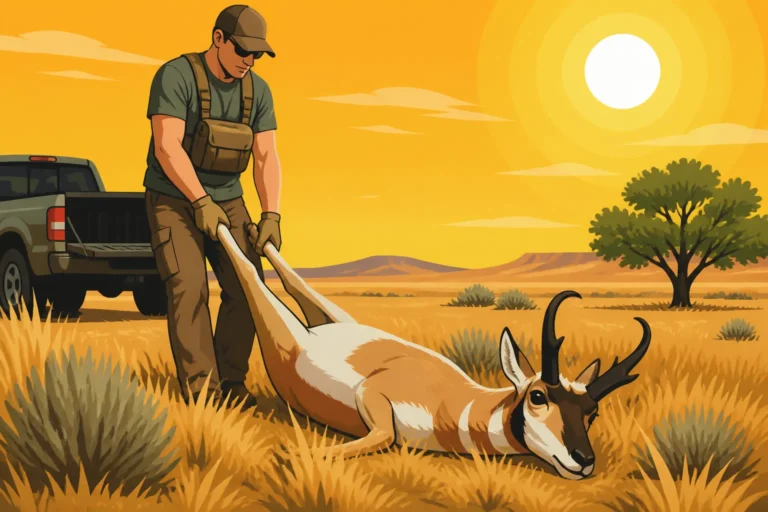
If you have a long drive home or if temperatures are mild, consider packing the body cavity with ice once you've cleaned it out. Use game bags to protect the meat from flies and dirt. Avoid piling deer in the back of a truck, as this can trap heat and lead to spoilage. Air circulation is key. If you're hunting in particularly warm weather, processing the deer quickly and getting it into a cooler or to a processor is your best bet for preserving the meat. For more remote hunts, having a plan for Getting a Deer Out of a Nebraska Sandhills Basin or a river bottom is vital, whether it's quartering in the field or using a game cart.
Tagging, Checking, and Transporting Your Deer
Nebraska has specific rules for tagging and checking harvested deer, and it's your responsibility to know and follow them. Immediately after harvesting, you must notch and attach your permit tag to the deer. The tag should be visibly affixed to the carcass, typically to the leg, before you move the animal from the kill site. Once tagged, you generally have a certain timeframe (usually 48 hours, but always check current regulations) to Reporting a Nebraska Deer Harvest through the Nebraska Game and Parks online system or by phone. This is a critical step in managing deer populations and is mandatory.
When it comes to Nebraska Deer Transport Requirements, the basic rule is that evidence of sex and species must remain attached to the carcass until it reaches its final destination (your home, a processor, or a taxidermist). This usually means the head or antlers for bucks, and sufficient evidence for does. If you're traveling across state lines, be aware of specific CWD carcass transport rules to prevent the spread of disease. It's always a good idea to keep your permit with you, even after the deer is tagged and checked, in case you're stopped by conservation officers.
CWD Sampling and Carcass Disposal Rules
Chronic Wasting Disease (CWD) is a serious concern for deer populations, and Nebraska Game and Parks monitors its spread through hunter-submitted samples. While not always mandatory, hunters are often encouraged to participate in Nebraska CWD Sampling for Hunters, especially if harvesting a deer in a designated CWD management zone. Check the current regulations for specific requirements or voluntary submission locations. Usually, this involves taking the head (with some neck attached) to a designated collection site.
Beyond sampling, there are strict Carcass Transport Rules Out of Nebraska and recommendations for carcass disposal within the state, particularly concerning CWD. If you bone out your deer in the field, you generally can transport the deboned meat, antlers, and skull plate (cleaned of brain tissue) more freely. However, if you transport a full carcass, especially from a CWD-positive area, you must follow specific rules to prevent spreading the disease. This usually means not transporting the brain, spinal cord, or lymph nodes. The best practice is often to process your deer locally or dispose of high-risk parts in approved landfills if you're not planning to take them home. These measures are designed to protect Nebraska's deer herd for future generations, and our participation is vital.
Navigating Public and Private Land Access
Finding a place to hunt is often one of the biggest challenges, whether you're a seasoned resident or a first-time non-resident. Nebraska offers both public and private land opportunities, each with its own set of considerations.
Utilizing Nebraska's Public Access Atlas
For many hunters, especially those new to the state or without private land access, the Nebraska Public Access Atlas is an invaluable resource. This annual publication, available online and in print, details all the publicly accessible hunting lands, including Wildlife Management Areas (WMAs), State Recreation Areas (SRAs), National Forest and Grasslands, and lands enrolled in the Nebraska's Open Fields and Waters Program. The atlas provides maps, acreage, and specific rules for each tract.
The Open Fields and Waters program, in particular, has been a game-changer, opening up thousands of acres of private land to public hunting through agreements with landowners. These tracts are often marked with distinctive signs. Using the atlas effectively means studying the maps beforehand, identifying potential hunting areas, and understanding the specific regulations for each site. Some areas might be walk-in only, others might have special waterfowl restrictions, or specific legal shooting hours. Many hunters use smartphone apps that layer the atlas information over topographical maps, allowing for detailed Scouting Nebraska Public Ground Before Opening Day. While public land can see more pressure, particularly on opening weekend, there are always opportunities for those willing to walk further and explore less obvious spots.
Securing Private Land Permission
Nebraska is predominantly private land, and much of the best deer hunting occurs on farms and ranches. Gaining Getting Private Land Permission in Nebraska is often the key to consistent success, but it requires effort, respect, and building relationships. Don't just show up on opening day; start well in advance of the season. Knock on doors, introduce yourself, explain your intentions, and be polite. Offer to help the landowner in some way, whether it's helping with chores, fixing a fence, or sharing some of your harvested venison.
When you do get permission, treat the land as if it were your own. Respect crops, livestock, and property boundaries. Leave gates as you found them, pick up any trash, and always thank the landowner. A small gift at the end of the season can also go a long way in ensuring future access. Always carry written permission if requested by the landowner, and understand Nebraska's Posted-Land and Trespass Rules to avoid any issues. Private land often offers less hunting pressure and more consistent deer activity, making the effort to secure permission well worth it.
Dealing with Hunting Pressure
Whether you're on public or private ground, hunting pressure is a reality of the nine-day firearm season. With so many hunters condensed into a short timeframe, deer can become very wary, quickly changing their patterns and seeking refuge in the thickest cover. It's a common frustration, but it's manageable with the right mindset.
On public land, Finding Ground That Sees Fewer Hunters often means walking further, exploring less accessible areas, or hunting during weekdays when crowds are lighter. Don't just hunt the easy-access spots near parking areas; often, the best deer are deeper in. On private land, pressure might come from neighboring properties, pushing deer onto your permission. The key is to adapt. If deer are becoming nocturnal, adjust your stand times or focus on bedding areas during midday. If they're moving to thick cover, consider still-hunting those areas or organizing small, strategic drives. Understanding how deer react to pressure and anticipating their movements will give you an edge. Sometimes, sitting tight in a good location, knowing that other hunters' movements might push deer towards you, is the best strategy.
Common Challenges and How to Overcome Them
Every hunting season comes with its own set of hurdles, and Nebraska's nine-day firearm deer season is no exception. Being prepared for these challenges mentally and practically can make all the difference between a frustrating trip and a successful one.
Dealing with Weather Swings
We've touched on Nebraska's volatile November weather, but it's worth emphasizing the mental toll it can take. One day you're sweating, the next you're shivering uncontrollably. A beautiful, calm morning can turn into a blizzard or a torrential downpour in a matter of hours. This isn't just uncomfortable; it can ruin a hunt if you're not prepared.
To overcome this, flexibility is key. Your Layering for a Nebraska November Sit wardrobe should be versatile. Check the forecast constantly, but be ready for it to change. If a heavy storm rolls in, it might mean hunkering down, or it might mean a prime opportunity to still-hunt if deer are on the move before or after the weather front. Strong winds can make long shots difficult and make sitting in a stand brutal; consider a ground blind or still-hunting through protected timber. Extreme cold demands a focus on safety—watch for signs of frostbite or hypothermia. Don't be a hero; know when to pack it in and warm up. A warm cup of coffee or soup in a thermos can do wonders for morale on a frigid day.
Overcoming Hunting Pressure
As mentioned, pressure is a given. It can be disheartening to see other trucks parked along the road or hear distant shots when you're hoping for solitude. But don't let it defeat you. Deer are incredibly resilient and adaptive creatures. They don't just vanish; they adjust.
To overcome the impact of pressure, think like a deer. Where would you go if people were constantly moving through your home? You'd seek out the thickest, nastiest, most inaccessible cover you could find. That's where you need to be willing to go. Walk deeper into public lands, explore swamps, dense cedar thickets, or thorny river bottoms that others avoid. Hunt through the middle of the day when many hunters have gone back to camp for lunch. If you're on private land, consider coordinating with neighbors about hunting times to minimize disruption or maximize strategic pushes. Remember, another hunter's movement might push a deer right to you, so stay vigilant even if you haven't seen any sign of your own.
Ethical Considerations and Fair Chase
Beyond the rules and regulations, ethical hunting practices are fundamental to our sport. Fair chase means giving the animal a reasonable chance to evade you. This includes understanding Rifle Ranges Realistic on the Nebraska Prairie and only taking shots within your effective range, ensuring a clean, humane kill. It also means properly Blood Trailing After Dark in Nebraska if necessary, and making every effort to recover any wounded animal.
Respect for the land, the wildlife, and other hunters is paramount. Avoid sky-lining yourself on ridges, ensure you have a safe backdrop for your shot, and be mindful of where your bullet might travel. If you encounter another hunter, a polite nod or a friendly wave goes a long way. Teach new hunters these values, and set a good example. Our hunting heritage depends not just on obeying laws, but on upholding the highest ethical standards. This includes proper game care, taking only what you need, and never wasting meat.
Final Thoughts and Making the Most of Your Hunt
The Nebraska nine-day firearm deer season is truly a special time. It's a blend of tradition, challenge, and immense satisfaction. It's an opportunity to connect with nature, test your skills, and create lasting memories.
Reflecting on the Season
Win or lose, success in hunting isn't always measured by a filled tag. Take time to reflect on your hunt, regardless of the outcome. What did you learn? What worked, and what didn't? Did you see new terrain, observe unique deer behavior, or spend quality time with friends or family? These experiences are the true trophies. Even if you don't fill your tag, the lessons learned from chasing deer through the Nebraska landscape are invaluable for future seasons. Every sit in the stand, every stalk, every early morning spent shivering and watching the sun rise is part of the journey. Embrace the challenge, enjoy the solitude, and appreciate the privilege of being out there.
Planning for Next Year
Good hunters are always planning for the next season. As soon as this one ends, start thinking about what you'll do differently. Take notes on deer sightings, weather patterns, and public land hotspots or private land opportunities you discovered. Consider applying for preference points for coveted Nebraska Sandhills Any Deer Draw Odds or other limited permits. Use the off-season to fine-tune your shooting skills, scout new areas, and maintain your gear. Read up on Nebraska Deer Management Unit Permits to see if there are better units for your goals. The preparation you put in now will pay dividends next November. Whether it's practicing Calling Spring Gobblers in Nebraska Timber to hone your calling skills, or simply studying maps, continuous learning is what keeps us passionate about the hunt.
The nine-day firearm deer season in Nebraska is a short, intense window, but with the right preparation, strategy, and respect for the game and the land, it can be the most rewarding hunt of the year. Go out there, be safe, and make the most of every moment.
Disclaimer
Always consult the current year's Nebraska Game and Parks Commission hunting regulations before heading afield. Information and regulations are subject to change.