Calling Spring Gobblers in Nebraska Timber
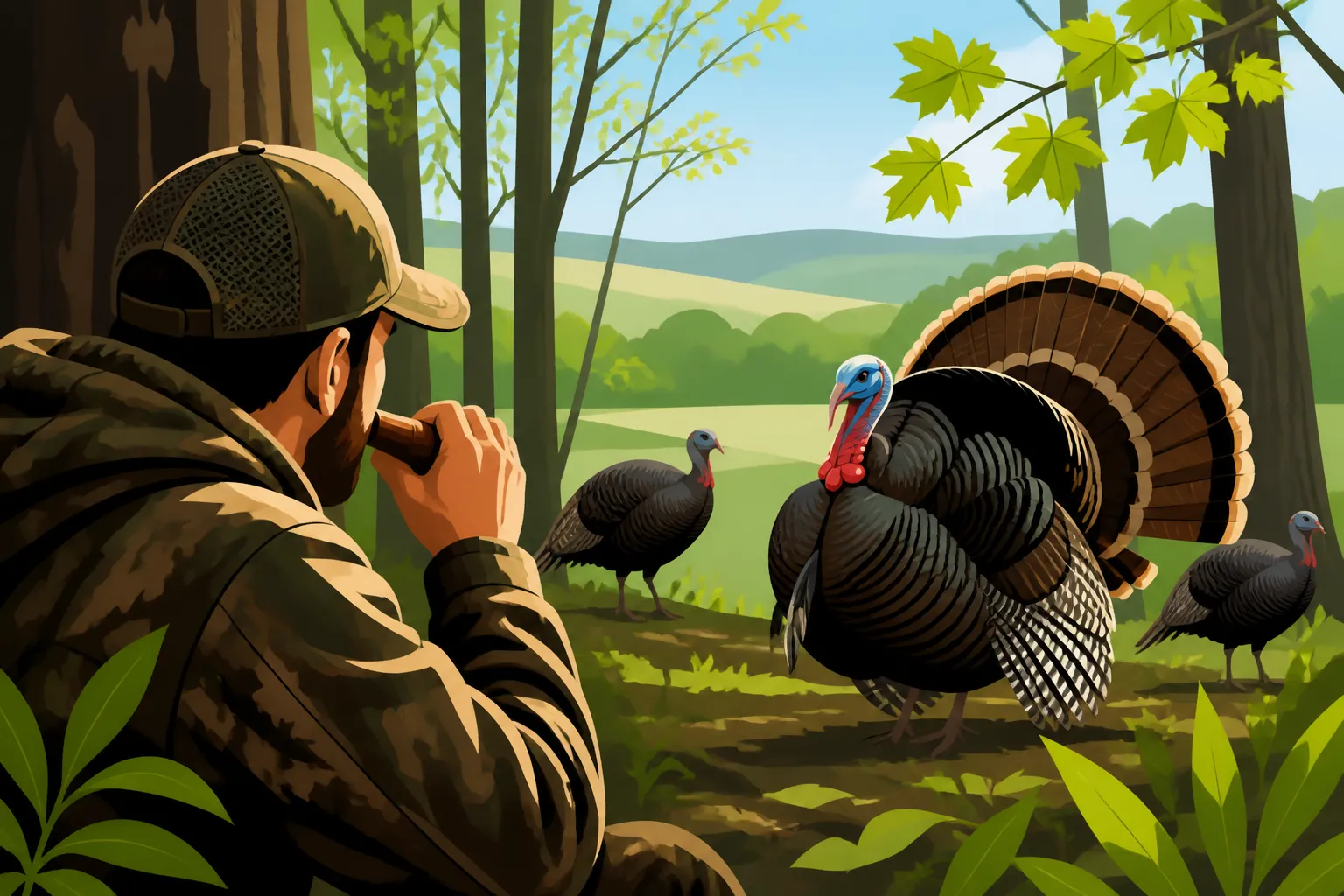
There’s nothing quite like the sound of a big tom gobbling his head off on a crisp spring morning, but sometimes getting him to commit and come within range in Nebraska’s timber can feel like an impossible task. Those river bottoms, cedar breaks, and dense hardwood groves present unique challenges that can frustrate even the most seasoned turkey hunter. This guide is here to walk you through proven calling strategies, setup considerations, and how to navigate those tough timber scenarios to bring that spring gobbler right into your lap.
Understanding Nebraska's Spring Gobblers and Their Habitat
Before you even think about putting a call to your lips, it's crucial to understand the turkeys you're pursuing and the specific environments they call home in Nebraska. The state's diverse landscapes mean that what works in a Sandhills pasture won't necessarily cut it in a thick eastern timber block.
Turkey Subspecies and Their Timber Preferences
Nebraska is unique in that it's one of the few states where you can find all four common wild turkey subspecies: Eastern, Rio Grande, Merriam's, and even hybrids. For our purposes in timber, you'll primarily be dealing with Easterns and Rio Grandes, depending on your location. Easterns thrive in the dense, mature hardwood forests typical of southeastern Nebraska river drainages. Think big oak, hickory, and cottonwood stands along the Missouri River and its tributaries. These birds are known for being a bit more call-shy and often require a subtler approach, especially on pressured public ground.
Rio Grandes, on the other hand, are more at home in the mixed woodlands, cedar breaks, and riparian corridors of central and western Nebraska. They adapt well to areas with a mix of timber and open agricultural fields or grasslands. While they can be a bit more responsive to aggressive calling, they still often use timber for roosting, loafing, and escaping predators. Understanding the predominant subspecies in your chosen hunting area can significantly influence your initial calling decisions. You can learn more about the specific characteristics of these birds in our detailed article on Turkey Subspecies Found in Nebraska.
The Impact of Habitat on Calling Strategy
Nebraska's timber, whether it’s a tight cedar draw or a sprawling river bottom, plays a massive role in how you should call. Sound doesn't travel nearly as far in thick woods as it does across open fields. This means your calls need to be more assertive to get a distant gobbler's attention, but also more nuanced once he closes the distance. Obstacles like thick underbrush, downed timber, and changes in elevation can create acoustic barriers, making it difficult for turkeys to pinpoint your exact location or even hear you at all.
Furthermore, timbered terrain often dictates turkey movement. Birds will naturally follow paths of least resistance, like old logging roads, game trails, or open ridges. They’ll also use terrain features for security, often strutting on a slight rise or just over a knoll where they can survey for hens. As you scout, pay close attention to these natural travel corridors and how the timber funnels or blocks movement. This knowledge will be invaluable when setting up. Getting out there beforehand and Scouting Nebraska Public Ground Before Opening Day can make a huge difference in understanding these nuances.
Essential Calling Techniques for Timbered Areas
Calling spring gobblers in timber isn't about blasting out the loudest series of yelps you can muster. It's about a dynamic conversation, adjusting your volume and cadence to the bird's mood and the surrounding cover. You need a full toolbox of sounds, from the softest clucks to the most aggressive cutting.
Soft Calls and Close-Range Tactics
Once a gobbler has acknowledged your presence, especially if he's close or already heading your way, it's time to ease up on the volume. Overcalling a bird that's approaching in timber can actually push him away. Think subtle clucks, purrs, and soft yelps. These sounds mimic a contented hen and can often be the final convincing notes that draw a bird the last 50 yards. If he's already gobbling enthusiastically, a soft tree yelp or a few clucks might be all it takes to get him to commit.
These subtle calls are also crucial when a bird is "hung up" – gobbling but refusing to come closer. Often, a henned-up gobbler will respond to a soft, inquisitive purr, hoping the "new" hen will join his flock. Friction calls, like a slate or crystal call, are excellent for producing these soft, realistic sounds with great control. Mouth calls (diaphragm calls) are also fantastic, allowing for hands-free operation, which is critical as the bird closes in and you need to shoulder your shotgun. Mastering these quiet calls can be the difference between a bird that hangs up just out of sight and one that steps into your shooting lane.
Aggressive Calling to Cut Through Cover
While subtlety is key up close, sometimes you need to get loud, especially when trying to locate birds or grab the attention of a distant gobbler through dense timber. Aggressive calling – loud, sharp cutting, rapid yelps, and even cackles – is designed to mimic a boss hen confidently moving through the woods. This can often provoke a "shock gobble" from a tom that might otherwise remain silent. It's about getting a reaction and making him believe there's a hot hen he needs to investigate.
The trick with aggressive calling in timber is knowing when to temper it. You don't want to sustain loud calling for too long, as it can sound unnatural or make you seem too eager, potentially raising a gobbler's suspicion. The strategy usually involves a burst of loud, excited calls to get a response, then backing off and switching to softer, more contented sounds once he's acknowledged you. Think of it like shouting across a crowded room to get someone's attention, then lowering your voice for a normal conversation once they approach. Remember, the goal is always to get him to commit and come to you, not to have a shouting match.
Setting Up for Success in Nebraska's Timber
Even the best calling won't matter if your setup isn't solid. In timber, your concealment, the ability to see and shoot, and your decoy placement are paramount. Turkeys have exceptional eyesight, and the broken light and shadows of the woods can work both for and against you.
Concealment and Shot Lanes
Your primary goal when setting up in timber is to break up your silhouette completely. A big, wide tree that offers cover from multiple angles is your best friend. Don't just pick any tree; pick one that has natural vegetation or shadows to further conceal you, and ideally, one that’s wider than your shoulders. You want to disappear into the background. While the turkey's primary focus will often be on where the calling is coming from, they are constantly scanning for movement and unnatural shapes.
Once you’re settled against your tree, the next critical step is creating clear shooting lanes. You might be perfectly hidden, but if a branch or sapling blocks your shot at the bird's head and neck, all that effort is wasted. Spend a few minutes clearing a small fan of shooting lanes in the direction you expect the turkey to approach. Don't overdo it and remove too much cover, but ensure you have a few unobstructed paths for your shot. In some situations, a portable ground blind can be incredibly effective, especially if you’re hunting with kids or just need more flexibility in movement. Learning to set these up properly, particularly Ground Blinds in Open Nebraska Country, can really help. If you're going a more traditional route, finding a good cottonwood or oak and learning Setting Up Against a Cottonwood offers prime concealment.
Decoy Strategies for Timbered Settings
Decoys in timber can be a mixed bag, but when used correctly, they can be incredibly effective. The primary challenge is visibility. Unlike open fields where decoys can be seen from hundreds of yards, timber limits sightlines. This means your decoy placement needs to be closer to your position, usually within your effective shooting range, and in a spot where it's visible as the gobbler approaches. A slight rise, a small clearing, or just at the edge of denser cover can be ideal.
Typically, a single hen decoy, or a small spread of one hen and a jake, works best in timber. The jake decoy can be a powerful attractant for a dominant gobbler, making him feel challenged and eager to confront the intruder. Ensure your decoys are placed so the turkey will approach them from a direction that puts him in your shooting lane. Many hunters find that when they are Run-and-Gun Turkey Tactics on Nebraska Public Ground, decoys can slow them down, but for a more stationary setup, they are invaluable. Consider using realistic, soft-bodied decoys that pack down small and don't make a lot of noise when you're moving through the woods. Brands like Avian-X and Primos make excellent, realistic turkey decoys that are easy to deploy and can withstand the rigors of timber hunting.
Navigating Common Timber Challenges
No matter how well you call or how perfectly you set up, turkeys often have a mind of their own. In timber, two of the most common frustrations are the hung-up gobbler and the henned-up bird. Understanding how to react to these scenarios is key to punching your tag.
The Hung-Up Gobbler and What to Do
The hung-up gobbler is the bane of every turkey hunter's existence. He's gobbling his head off, you know he's close, but he just won't take those last few steps into your shooting lane. This often happens because he expects the hen (you) to come to him, or he’s hit an invisible barrier, a patch of thick brush, or a slight rise that makes him feel exposed. The signs are clear: consistent gobbling from the same spot, or perhaps a slight movement back and forth, but no discernible progress towards you.
Patience is your absolute best tool here. Resist the urge to call aggressively or move too soon. Sometimes, silence is the loudest call. Let him stew for a bit. If he continues to gobble from the same spot, try switching to very soft, contented clucks and purrs, almost as if you’re a hen feeding casually, uninterested in his presence. You could also try a short, subtle cutting series, mimicking a hen losing interest and walking away. This can sometimes trigger his possessive instinct, making him rush in. If all else fails, and you're confident in your ability to move silently and undetected, a subtle, slow flank around him might put you in a better position, but this is a high-risk, high-reward maneuver in timber.
Dealing with Henned-Up Gobblers
Perhaps even more frustrating than a hung-up gobbler is one that's "he-n-n-e-d up." This means he's already with real hens, and he has no reason to abandon his current flock to find your lonely calls. He might gobble in response, but he'll stay put, content with his harem. This is a common occurrence during the peak of the rut, often described as When the Whitetail Rut Peaks in Nebraska for deer, but applies to turkeys too when hens are readily available.
When faced with a henned-up gobbler, you have a few strategies. One is to try to "call the hens away." If you can get the real hens interested in your calling, they might lead the gobbler closer to your setup. Mimic their calls, be persistent, and try to sound like a more dominant hen. Another tactic is to simply wait. Turkeys often break up their flocks as the morning progresses. If you can stay patient, the gobbler might eventually leave his hens and become more receptive to your calls later in the day. The "run-and-gun" approach, while typically used to cover ground, can also be adapted here. If you know where they're heading, get ahead of them and try to intercept their path. Alternatively, try to make yourself appear like a new hen entering his territory, using soft, subtle calls, and letting him think he’s discovering you, rather than being lured in.
Advanced Tactics and Gear for Timber Turkeys
Once you've mastered the basics, there are always ways to refine your timber turkey hunting approach. From locating birds before first light to making sure your gear can withstand the demands of the Nebraska woods, these details can elevate your success.
Locating Calls and Shock Gobbles
Even if you’ve done your Scouting Nebraska Public Ground Before Opening Day, sometimes you just can’t pinpoint where the turkeys are. This is where locator calls shine. Before legal shooting hours begin, or during midday lulls, an owl hoot, crow call, or even a coyote howl can elicit a "shock gobble" from a roosted or quiet bird without giving away your exact position as a potential hen. These sounds are typically non-threatening and often cause a tom to gobble reflexively to assert his dominance or location.
For example, before dawn, a series of realistic owl hoots echoing through a river bottom can make a gobbler on the roost sound off, letting you know exactly where to set up for a morning fly-down. Similarly, a crow call can work wonders later in the day when birds are quiet. It’s important to vary the volume and cadence of these locator calls to sound natural. Be mindful of not overdoing it, as too much noise can also alert birds to your presence. These calls are designed to get a reaction, then you move in stealthily to establish your calling setup. Mastering Calling a Nebraska Gobbler Off the Roost is critical, and locator calls are often the first step.
Electronic Calls and Their Legality
It’s important to mention that while electronic calls are a common tool for certain types of hunting, they are generally illegal for wild turkey hunting in Nebraska. The Nebraska Game and Parks Commission regulations are quite clear on this. The spirit of turkey hunting emphasizes fair chase and the skill of the hunter to mimic turkey sounds manually.
Therefore, your focus should always be on mastering traditional mouth, slate, box, and diaphragm calls. This makes the challenge even more rewarding and ensures you're hunting ethically and legally. Always double-check the latest regulations with the Nebraska Game and Parks Commission before heading afield, as rules can occasionally change.
Gear Considerations for Timber Hunters
Hunting in Nebraska's timber often means more walking, tighter spaces, and dealing with potentially erratic weather. Your gear needs to be up to the task.
First, your clothing should be quiet, comfortable, and offer good camouflage. Avoid noisy fabrics that rustle with every step or brush against a branch. Layering is always smart for fluctuating spring temperatures. While you don't necessarily need the full Blaze Orange Caps and Vests in Nebraska during the archery spring turkey season, if you happen to be out during the firearm deer season overlap, it's absolutely crucial.
For your shotgun, versatility is key. Most turkey hunters favor a 12-gauge or 20-gauge, often with a tight choke like a full or extra-full to keep patterns dense for head and neck shots. A good turkey load with heavy shot will give you the range and knockdown power you need. Consider looking into Choke Choice for Walking Birds to optimize your spread.
A good calling vest with plenty of pockets for various calls, shells, and other essentials is invaluable. It keeps everything organized and accessible. Finally, a mapping tool on your phone, such as GoHunt's mapping features or OnX Hunt, can be incredibly useful for navigating timbered areas, marking roost trees, and ensuring you know property lines, especially when you're on public land. These tools, which often feature onX Layers for Nebraska Land Status, can prevent accidental trespassing and help you find those hidden pockets of timber that hold undisturbed birds.
| Call Type | Pros | Cons | Best Uses in Timber |
|---|---|---|---|
| Mouth Call | Hands-free, wide range of sounds, versatile | Learning curve, can stick to roof of mouth | Close-range soft calls, aggressive cutting, run-and-gun |
| Slate Call | Realistic soft purrs and clucks, good volume control | Requires two hands, can be affected by moisture | Mid-range calling, subtle finishing calls |
| Box Call | Easy to use, great volume, authentic yelps | Requires two hands, can be bulky/noisy to carry | Locating distant birds, aggressive yelps |
| Locator Call | Elicits shock gobble, non-threatening | Not for direct turkey communication, can spook birds | Before dawn, mid-day lulls, identifying roosts |
Disclaimer
Hunting is an inherently dangerous activity. Always prioritize safety, adhere to all Nebraska Game and Parks Commission regulations, and obtain proper permits and licenses before heading afield. Be mindful of private property, respect landowners, and practice ethical hunting at all times.