Turkey Subspecies Found in Nebraska
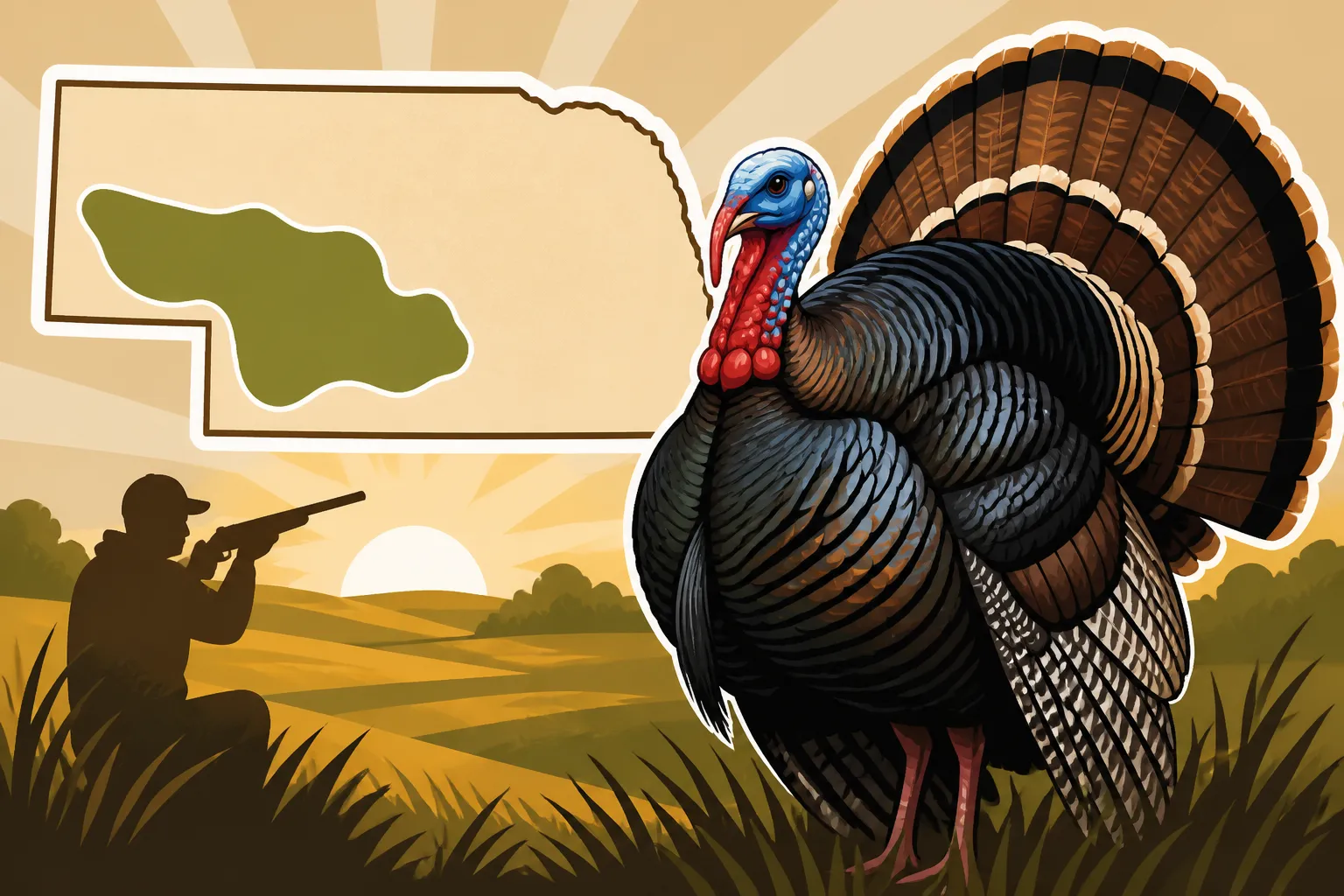
It's incredibly exciting to chase wild turkeys, but let's be honest, sometimes it feels like you're playing a guessing game when it comes to figuring out which type of gobbler is strutting through your neck of the woods. Many hunters wonder if that bird they're after is an Eastern, a Rio Grande, or maybe even a Merriam's, and the truth is, Nebraska is a fascinating melting pot for these magnificent birds. This guide will clarify the different turkey subspecies found across the Cornhusker State, detailing their unique characteristics, preferred habitats, and distribution to help you better understand and appreciate these magnificent birds and tailor your hunting approach accordingly.
The Grand Slam and Nebraska's Contribution
For many ardent turkey hunters, the ultimate quest is the "Grand Slam"—harvesting all four of the North American wild turkey subspecies. This includes the Eastern, Rio Grande, Merriam's, and the elusive Osceola (Florida turkey). It's a challenging endeavor that takes hunters across diverse landscapes, and Nebraska, surprisingly to some, plays a significant role in achieving this dream for many.
Understanding the "Grand Slam" Concept
The Grand Slam isn't just a fancy term; it's a testament to a hunter's dedication and travel. Imagine the thrill of calling in a wary Eastern in the humid southern forests, then trekking out west for a high-country Merriam's, and then heading down to the arid lands for a Rio Grande. Each subspecies presents its own unique challenges and requires different strategies, making the pursuit incredibly rewarding. Nebraska is one of the few states where you can realistically pursue three of these four subspecies, making it a bucket-list destination for many. This confluence of turkey genetics adds a layer of excitement, but also a dash of confusion for those trying to identify what exactly they've got strutting on their back forty.
Why Subspecies Matter for Hunters
You might be thinking, "A turkey is a turkey, right?" Well, not exactly. While all wild turkeys share fundamental behaviors, their specific subspecies often dictate nuances in how they interact with their environment, their calling habits, and even their wariness levels. Knowing which subspecies you're pursuing can significantly impact your hunting success. For instance, a Merriam's in the Pine Ridge might respond differently to a call than an Eastern in dense river timber. This understanding helps you refine your calling sequences, scout more effectively for specific habitats, and even choose your setup location more wisely. Utilizing powerful scouting tools like GoHunt, which can help pinpoint public land access and habitat types, becomes even more valuable when you're trying to match your strategy to the specific turkey you're after. These subtle differences in behavior and habitat preference can be the key to turning a quiet morning into a successful harvest.
Eastern Wild Turkeys: The River Bottom Ghosts
When most people think of wild turkeys, the image of a majestic Eastern gobbler often comes to mind. These birds are the most widespread and are known for their striking appearance and often challenging disposition. In Nebraska, they are quintessential inhabitants of our state's rich, timbered river corridors.
Identifying Easterns in Nebraska
Eastern wild turkeys are truly a sight to behold. They tend to have the darkest overall plumage of the three subspecies found in Nebraska, with their body feathers boasting a rich copper and bronze iridescence that truly shines in direct sunlight. A key identification feature for Easterns is the dark chestnut or reddish-brown tips on their tail feathers and upper tail coverts. Their wing feathers are generally barred with distinct black and white bands. Behaviorally, Easterns are often described as exceptionally wary and intelligent birds. They're masters of their dense forest domain, capable of melting into the undergrowth with surprising stealth. Their gobbling can be loud and resonant, but they can also be notoriously tight-lipped, making them a formidable challenge for even seasoned callers. Hearing that booming gobble echo through a still morning in a river bottom is an experience that truly gets the heart racing.
Eastern Turkey Habitat and Range
In Nebraska, Eastern wild turkeys primarily make their home in the eastern and southeastern parts of the state. This means you'll find them thriving along the extensive, mature hardwood forests of the Missouri River and its tributaries, as well as the Platte River system and other major drainages like the Nemaha and Big Blue. They absolutely adore dense, old-growth timber, where they can find ample roosting trees, a diverse understory for foraging, and plenty of cover to escape predators. Think towering cottonwoods, oaks, and walnuts that create a mosaic of shade and sunlight. Hunting these areas can be tricky, as the thick cover provides endless escape routes for turkeys. It's an environment that often requires stealth and patience, much like the challenges encountered when River-Bottom Whitetail Hunting in Eastern Nebraska. The rich food sources available in these riparian corridors, from acorns to insects, keep these turkeys well-fed and often congregated, though always on high alert.
Rio Grande Wild Turkeys: Plains Adaptability
Moving westward from the dense river bottoms, you'll start to encounter the resilient Rio Grande wild turkey, a subspecies perfectly adapted to Nebraska's more open, agricultural landscapes. These birds are a testament to the turkey's ability to thrive in a variety of environments.
Recognizing Rio Grandes in the Prairie
Rio Grande wild turkeys present a slightly different aesthetic compared to their Eastern cousins. Their overall plumage tends to be a bit lighter, with more of a green-bronze iridescence on their body feathers. The most distinguishing feature for a Rio Grande is the buff or tan-colored tips on their tail feathers and upper tail coverts, rather than the chestnut of the Eastern. Their wing barring can also appear less stark. Behaviorally, Rio Grandes are often perceived as being a touch less shy than Easterns, particularly in their more open habitat. They are frequently seen in close proximity to agricultural fields, where they'll feed on waste grain, and they're known to roost in isolated trees, shelterbelts, or even smaller, scattered timber stands that wouldn't typically hold an Eastern. While their gobble is still a powerful sound, some hunters report a slightly different cadence or tone compared to Easterns. Seeing a flock of Rio Grandes emerge from a cornfield edge at dawn is a classic Nebraska hunting scene.
Rio Grande Habitat and Distribution
Rio Grande turkeys are predominantly found in central and western Nebraska, particularly in areas characterized by a mix of agricultural fields, scattered timber, shelterbelts, and smaller river systems. You'll find them along the Loup, Republican, and other prairie rivers, as well as in the Sandhills where suitable tree cover exists. Their adaptability to more open landscapes is truly remarkable; they've learned to utilize the often-sparse timber resources and the abundant food provided by Nebraska's vast croplands. They're masters of navigating these mosaic environments, often moving between feeding areas in fields and roosting cover in nearby trees or brushy draws. When you're considering a hunt, think about how these birds use linear features for travel and cover. It's a prime example of how crucial features like a Hunting a Shelterbelt Between Nebraska Fields can be for both turkeys and other game. Understanding these preferences helps hunters predict turkey movement patterns and select prime ambush spots.
Merriam's Wild Turkeys: The Pine Ridge Gems
For a truly unique turkey hunting experience in Nebraska, you need to head to the rugged beauty of the panhandle. Here, amidst the ponderosa pines and dramatic bluffs, lives the stunning Merriam's wild turkey, a bird synonymous with the western mountains and an undeniable jewel of the Nebraska turkey hunting scene.
The Distinctive Merriam's Appearance
The Merriam's wild turkey stands out with its strikingly light coloration. The most obvious difference is the nearly white or very light buff tips on their tail feathers and lower back feathers. Their overall body plumage tends to have strong blue and purple iridescent highlights, appearing quite different from the bronzy hues of the Easterns and Rios. The Merriam's also typically has very distinctive white-barred wing feathers, which are noticeable even from a distance. While they often appear calm and somewhat tolerant of human presence compared to Easterns, don't let that fool you into thinking they're easy to hunt. They are strong gobblers on the roost, making them exciting to locate in the mornings, but closing the distance in their often-open, steep terrain can be incredibly challenging. Their ability to cover ground quickly and utilize the topography makes them a tough adversary.
Merriam's Habitat Preferences
In Nebraska, Merriam's turkeys are almost exclusively found in the northwestern part of the state, primarily concentrated within the Pine Ridge and the Wildcat Hills regions. These areas are characterized by vast stands of ponderosa pine forests, deeply carved canyons, rocky outcroppings, and steep, timbered slopes. This rugged, high-country environment provides everything a Merriam's needs: secure roosting trees, diverse forage including pine nuts and berries, and plenty of places to escape. Hunting in this habitat is a completely different ballgame than chasing birds in river bottoms or agricultural fields. It often involves significant elevation changes, extensive walking, and relying heavily on glassing techniques. The sheer beauty of the landscape combined with the challenge of the hunt is what draws many to Hunting Merriam's in the Nebraska Pine Ridge. It's a truly wild experience, requiring robust physical conditioning and an understanding of how birds navigate such steep and vast terrain.
Hybrid Zones and Overlapping Ranges
One of the most intriguing aspects of wild turkeys in Nebraska is the existence of "hybrid zones." Due to the state's unique geography, the ranges of Eastern and Rio Grande turkeys, and to some extent, Merriam's, can overlap, creating areas where distinguishing between subspecies becomes a real head-scratcher.
Where the Subspecies Meet
Nebraska's central position in the flyway means it acts as a transitional zone for several species, and wild turkeys are no exception. The most notable overlap occurs between the Eastern and Rio Grande subspecies, particularly in central Nebraska along river systems where eastern hardwood forests begin to blend with more western prairie habitats. Here, it's not uncommon to find birds that exhibit characteristics of both subspecies. You might see a turkey with primarily Eastern plumage but with buff-tipped tail feathers, or vice-versa. These "hybrid" birds can display a mix of physical traits and sometimes even behavioral tendencies. It's an interesting biological phenomenon that often leaves hunters scratching their heads, trying to make a definitive identification. The difficulty in clearly labeling every bird in these zones is a common frustration, but it also highlights the dynamic nature of wildlife populations. For detailed insights into these blended populations, our article Eastern and Rio Grande Turkeys in Nebraska delves deeper into these specific areas.
Hunting Strategies in Hybrid Zones
When you're hunting in these hybrid zones, trying to definitively identify the exact subspecies might be less productive than focusing on the practicalities of the hunt. Instead of agonizing over feather tips, your strategy should prioritize understanding the local habitat and the birds' behavior. Are they acting more like wary Easterns in thick timber, or more like adaptable Rios in open fields and shelterbelts? Adjust your calling and setup based on their observable actions and the terrain around you. Scouting becomes even more critical in these areas, as knowing how the birds are using the specific landscape will yield better results than relying solely on subspecies-specific knowledge. Tools like the Nebraska Public Access Atlas Mobile App can be incredibly helpful for mapping out potential habitat transitions and identifying public access points in these complex areas. Regardless of their exact lineage, a gobbling turkey in range is a gobbling turkey in range, and adapting to their current disposition is key.
Management and Conservation Efforts
Nebraska's wild turkey populations, like many across the nation, have faced their share of challenges in recent years. Understanding the different subspecies and their distribution is crucial for the Nebraska Game and Parks Commission (NGPC) in their ongoing efforts to manage and conserve these magnificent birds.
Nebraska's Turkey Management Challenges
The NGPC has the intricate task of managing wild turkey populations across diverse habitats, ensuring healthy numbers for future generations of hunters and wildlife enthusiasts. This involves continuous monitoring, habitat improvement projects, and setting appropriate hunting seasons and bag limits. A significant concern in recent years has been the observed Nebraska Turkey Population Decline, which has prompted deeper research into potential causes such as habitat loss, disease, predation, and poor poult survival rates. Understanding the distribution of Wild Turkeys in Nebraska and Their Decline across subspecies helps management efforts to be more targeted. For example, habitat restoration efforts in the Pine Ridge might focus on different aspects than those in eastern river bottoms, tailored to the specific needs of Merriam's versus Easterns. Effective management relies on a clear picture of where each subspecies thrives and what pressures it faces.
How Hunters Contribute to Conservation
Hunters play an absolutely vital role in the conservation of wild turkeys in Nebraska. The funds generated from the sale of hunting permits, including spring and fall turkey permits, and the mandatory Nebraska Habitat Stamp, directly support the NGPC's wildlife management programs. This revenue is reinvested into habitat acquisition, enhancement, research, and law enforcement, all of which benefit turkey populations and other wildlife. Additionally, hunter-reported harvest data provides critical information for biologists to assess population trends and make informed management decisions. Every hunter who purchases a permit and accurately reports their harvest contributes directly to the future of turkey hunting in the state. By adhering to regulations, practicing ethical hunting, and advocating for habitat preservation, we ensure that the thrilling experience of calling in a Nebraska gobbler, whether it's an Eastern, Rio, or Merriam's, remains a possibility for generations to come. For more information on ethical hunting and tactics, you might want to review our guide on Fall Turkey Tactics in Nebraska.
| Turkey Subspecies | Key Identification Features | Primary Habitat in Nebraska | Typical Behavior |
|---|---|---|---|
| Eastern | Darker overall, chestnut/red-brown tail tips | Dense river bottom hardwoods (East/Southeast) | Very wary, strong vocalizations, often dense cover |
| Rio Grande | Lighter overall, buff/tan tail tips | Agricultural areas, shelterbelts, prairie rivers | Adaptable, less shy in open country, uses scattered trees |
| Merriam's | Very light/white tail tips, white-barred wings | Ponderosa pine forests, canyons (Panhandle) | Roosts strongly, covers ground quickly in open terrain |
Disclaimer
This article is for general informational purposes only and does not constitute professional advice. Laws, prices and regulations vary by location and change over time. Consult a qualified professional for guidance on your specific situation.