Mule Deer in the Nebraska Sandhills and Panhandle
The dream of chasing western big game often conjures images of towering mountains and vast deserts. But for many hunters, the frustration sets in when they realize those distant horizons might be out of reach, both physically and financially. However, many overlook the incredible, challenging, and deeply rewarding experience of hunting mule deer right here in Nebraska’s expansive Sandhills and the rugged Panhandle. This comprehensive guide is here to shed light on exactly where these magnificent animals thrive, what makes hunting them so unique, and how you can prepare to pursue them successfully in our often-underestimated big game country.
The Geography of Nebraska Mule Deer
Nebraska might be known as the Cornhusker State, but beyond the row crops and river bottoms of the east, lies a vast, wild landscape that is prime mule deer habitat. It’s a world away from what many envision, offering a truly western hunting experience right in the heart of the Central Flyway. Understanding these distinct regions is the first step to unlocking success.
The Vastness of the Sandhills Region
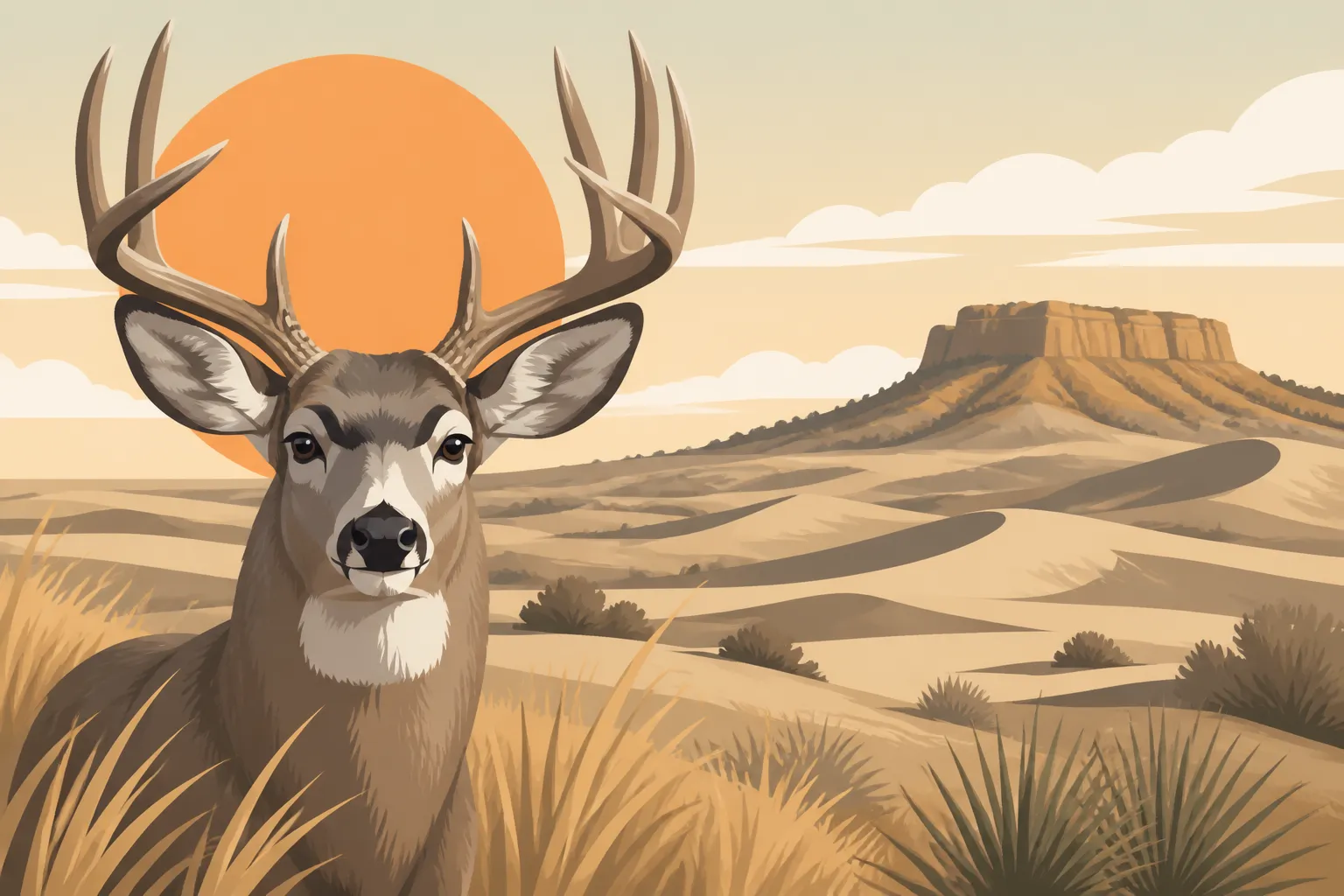
Imagine a sea of rolling, grass-covered dunes, stretching as far as the eye can see, punctuated by wetlands, hay meadows, and deep, cedar-filled canyons. This is the Nebraska Sandhills, one of the largest intact grass ecosystems in the world, and it’s home to a significant population of our state’s mule deer. This landscape is a mosaic of public and private ground, characterized by its "choppy" terrain—constant ups and downs, hidden pockets, and unexpected blowouts that can conceal an entire herd.
Mule deer in the Sandhills have adapted perfectly to this open country, utilizing the varied vegetation for both forage and cover. Unlike whitetails, which prefer dense, contiguous timber, mule deer thrive on the mixture of grasses, forbs, and scattered browse found across these rolling hills. They often bed down on high ridges where they can observe their surroundings, using subtle depressions or the slight shade of a yucca plant for concealment. Finding them here often means covering immense ground, whether on foot or using a vehicle for glassing, followed by a long, arduous stalk. It's a landscape that rewards patience and keen eyesight.
Vehicle access can be tricky, with many two-track trails disappearing into private ranches or ending abruptly in a sandy washout. Hunters quickly learn that the Sandhills demand physical fitness and a willingness to hike, often miles from any road. The sheer scale of the landscape can feel overwhelming at first, making you feel like a tiny speck in a giant, undulating green ocean. But it's this very challenge that makes finding a big mule deer buck here such a triumph.
Rugged Terrain of the Panhandle and Pine Ridge
Moving west, the landscape shifts dramatically as you enter the Nebraska Panhandle, culminating in the rugged beauty of the Pine Ridge. Here, the rolling grasslands give way to dramatic canyons, towering buttes, and vast expansions of ponderosa pine forests. This is a completely different world from the Sandhills, presenting unique challenges and opportunities for the mule deer hunter. Areas like the Wildcat Hills or the expansive Oglala National Grassland offer a taste of true mountain hunting, albeit on a smaller scale.
The Panhandle's mule deer utilize the steep, rocky outcrops and dense timber for security and thermal cover. Their movements are often dictated by these geological features, using draws and ridges as natural travel corridors. Unlike the open country of the Sandhills, where concealment is sparse, the Pine Ridge offers plenty of shadows and thickets for deer to disappear into, demanding a more tactical approach, often closer-quarters than the long-range glassing of the Sandhills.
The terrain in places like the Pine Ridge can be incredibly steep, with deep ravines and rocky slopes that test even the most experienced hunter's endurance. You might find yourself scrambling up a shale slide one moment and navigating a dense stand of pines the next. The effort is well worth it, however, as these rugged canyons hold some impressive mule deer bucks that are experts at evading detection. It's an environment that requires sturdy boots and a good understanding of contour maps, as the deer can literally be around any bend in a canyon.
When planning your Panhandle adventure, remember that accessing some of the prime hunting spots within the Hunting the Nebraska Pine Ridge Escarpment or even the Oglala National Grassland Hunting requires meticulous planning and often a good bit of walking. Don't expect to drive right up to a trophy buck here; these areas make you earn every step.
Understanding Mule Deer Behavior and Biology in Nebraska
To consistently find mule deer in Nebraska, it’s not enough to simply know where they live; you need to understand how they live. Their behaviors, preferences, and even their physical differences from whitetails are crucial pieces of the hunting puzzle.
Seasonal Movements and Habitat Use
Nebraska mule deer, like most big game, exhibit distinct seasonal movements influenced by forage availability, weather, and pressure. In spring and summer, they often spread out across the landscape, frequenting areas with lush forbs and grasses. Does with fawns prefer secluded, protective cover, while bucks might form bachelor groups in more open, high-elevation areas where they can feed undisturbed and grow their antlers. During these months, you might find them in hay meadows, alfalfa fields, or the fringes of agricultural areas, especially in the Panhandle where irrigation provides abundant food.
As fall approaches and the hunting seasons begin, their patterns shift. Cooler temperatures and the rut can push bucks to cover more ground, seeking out receptive does. In the Sandhills, this might mean moving between large expanses of grassland and the deeper cedar draws, which offer protection from wind and cold. In the Panhandle, they might move from higher elevations to more sheltered canyons or pine thickets. Understanding these shifts is paramount to successful hunting. You won't find them in the same places during the early archery season in September as you will during the November firearm season or the December muzzleloader hunt.
One of the most significant differences from whitetail behavior is their general preference for open-country travel. While a whitetail might sneak through the thickest river bottom timber, a mule deer is more likely to navigate along open ridges or across wide-open flats, using their excellent eyesight and speed to detect and evade threats. This doesn't mean they don't use cover, but they often utilize it differently, favoring vantage points or subtle depressions rather than dense, continuous woods. Paying attention to these subtle nuances will give you an edge, allowing you to anticipate their movements rather than simply reacting to them.
Identifying Mule Deer Versus Whitetails
In parts of Nebraska, especially where the Sandhills meet river drainages or the Panhandle transitions to mixed habitat, the ranges of mule deer and whitetails can overlap significantly. Knowing how to definitively tell the two species apart is not just about bragging rights; it's often a legal requirement. Many permits are species-specific, and harvesting the wrong deer can lead to serious penalties. The key lies in observing both their physical characteristics and their typical behavior.
Physically, mule deer are named for their large, mule-like ears, which are noticeably larger than a whitetail's. Their antlers typically fork evenly, with main beams that branch into two tines, and then those tines branch again (a bifurcated pattern). Whitetails, on the other hand, usually have antlers with tines that grow directly off a single main beam. The tails are also a dead giveaway. Mule deer have a narrow, rope-like tail that is usually white with a black tip, whereas whitetails have a broader, longer tail that is brown on top and pure white underneath, often flagged high when startled. Observing these details, even at a distance, is crucial for accurate identification. You might find this challenging when trying to distinguish them from a great distance, but practice makes perfect. It's particularly important when hunting units that have "mule deer restrictions" or "antlerless-only" permits, as mistakes can be costly.
Behaviorally, mule deer often exhibit a characteristic "stotting" or "bounding" gait when alarmed, where all four feet push off the ground simultaneously. This is an efficient way for them to cover broken, rocky, or brushy terrain quickly. Whitetails, conversely, tend to run with a more fluid, galloping motion, often "flagging" their white tails as they retreat. Mule deer also tend to be less spooky than whitetails in some situations, sometimes allowing a hunter to get a bit closer before bolting, especially if they haven't been pressured. Understanding these distinctions is vital, particularly in areas Where Whitetails and Mule Deer Overlap, as a misidentification can quickly ruin a hunt or lead to legal issues.
Here's a quick comparison to help you tell them apart:
| Feature | Mule Deer | Whitetail Deer |
|---|---|---|
| Ears | Large, mule-like (8-10 inches) | Smaller (6-8 inches) |
| Antlers | Typically bifurcated (forked tines) | Tines grow off a single main beam |
| Tail | Narrow, rope-like, white with black tip | Broad, long, brown on top, white underneath |
| Gait (when spooked) | "Stotting" or "bounding" (all four feet) | Galloping, often "flagging" tail |
| Coloration | Often lighter brown/tan, more grey in winter | Reddish-brown in summer, greyer in winter |
| Metacarpal Gland | Large, conspicuous | Small, inconspicuous |
Even with this table, it can still be tricky in the field. So, when in doubt, especially in low light or at extreme distances, always err on the side of caution. Focus on these key features; don't rely on just one. Mastering the nuances of Ear Size and Tail Colour at Distance will significantly improve your chances of making the right call in a critical moment.
The Art of Spot-and-Stalk Hunting
Hunting mule deer in Nebraska, particularly in the vast Sandhills and open Panhandle, is largely a game of spot-and-stalk. Unlike dense timber hunting where you might rely on stand placement or drives, this method requires patience, keen observation, and precise execution.
Mastering Glassing Techniques in Open Country
The number one tool for a successful mule deer hunter in Nebraska's open country isn't your rifle; it's your optics. You’ll spend far more time behind glass than you will looking through a scope. Quality binoculars and a spotting scope, mounted on a sturdy tripod, are absolutely non-negotiable. The expansive nature of these landscapes means deer are often spotted at extreme distances, sometimes a mile or more away. Without powerful, clear optics, they’ll simply blend into the endless grasslands or rugged canyons.
Effective glassing isn't just about pointing your binoculars at a hill. It's a systematic approach. Find a good vantage point that offers a wide view of the terrain. This might be a high ridge in the Sandhills or a prominent butte in the Pine Ridge. Start by slowly scanning the closest terrain, working outward, using a grid pattern. Look for anything out of place: a horizontal line in a vertical landscape, a flicker of movement, a patch of different color. Pay close attention to shaded areas, the edges of cedar draws, or the tops of ridges where deer often bed to catch a breeze and watch their backtrail.
As you scan, pause frequently and let your eyes relax, allowing them to pick up subtle details. Often, what looks like a rock or a dead tree stump will, with prolonged observation, resolve into the outline of a deer. Don't just look for an entire deer; look for parts of a deer—an ear, a leg, the glint of an antler. Many veteran hunters will tell you that the deer "appear" out of nowhere once you've looked long enough. If you’re struggling to decide if it’s a deer, swing your spotting scope onto it for a closer look. This disciplined approach to searching every inch of a distant landscape is what separates the consistently successful spot-and-stalk hunters from those who just wander around hoping to bump into a buck. For a deeper dive into choosing the right tools, check out our guide on Optics for Glassing the Nebraska Sandhills.
Executing the Stalk: Wind, Thermals, and Cover
Once you’ve spotted a mule deer you want to pursue, the real chess match begins: the stalk. This is where your knowledge of terrain, wind, and deer behavior comes into play. The goal is to close the distance to an ethical shooting range without being seen, heard, or smelled. In open Nebraska country, this is far easier said than done.
Your first priority is to assess the wind direction. Mule deer, like all deer, rely heavily on their sense of smell. Always approach from downwind, even if it means taking a significantly longer, more circuitous route. In the rolling terrain of the Sandhills, thermals can also play a major role. In the mornings, air often flows downhill; in the evenings, it tends to rise. Understanding these subtle air currents is critical for staying undetected, especially if you're stalking in a deep canyon or draw. Neglecting the wind or thermals will almost guarantee you’ll be busted. Our article on Wind and Thermals in the Sandhills offers valuable insights into these critical environmental factors.
Next, identify your cover. Look for anything that can shield your approach: a low ridge, a deep washout, a stand of cedars, or even just taller grass. Plan your route meticulously, moving slowly and deliberately. Avoid skylining yourself on ridges, which makes you an easy target for a deer's keen eyesight. If you have to cross an open area, move when the deer is looking away or has its head down feeding. This often means moving only a few steps at a time, then pausing, sometimes for minutes, to observe and wait for an opportunity. In some cases, you might find yourself crawling on your hands and knees for hundreds of yards, pushing through yucca plants and prickly pear, all to gain those precious few yards of cover. The patience required is immense, but the reward of a successful stalk is unmatched.
Closing the Distance and Shot Placement
After a careful, often grueling stalk, you’ll eventually find yourself within what you hope is an ethical shooting range. This final phase of the stalk is often the most nerve-wracking and requires composure and preparedness. Before you even begin your stalk, know your personal effective range with your rifle, and be honest about it. Practice shooting from various field positions – prone, kneeling, and using shooting sticks or a bipod – because a bench rest shot is rarely an option in the field.
As you get closer, assess the wind one last time. Set up in a position that offers a stable shooting platform, whether it’s prone using a bipod, kneeling with shooting sticks, or leaning against a natural rest like a large rock or a sturdy fence post. Take your time to control your breathing and calm your nerves. The shot on a mule deer should be aimed for the vitals, typically the heart and lungs, which are located just behind the shoulder. This area provides the largest target zone and leads to the quickest, most humane harvest.
The adrenaline rush at this point is immense. Your heart will be pounding, and your hands might tremble. This is natural. Take a few deep breaths, focus on your target, and execute a clean, smooth trigger squeeze. It’s crucial to remember that Rifle Ranges Realistic in Open Country means understanding that what's possible on a shooting range might not be practical or ethical in field conditions. A 400-yard shot might be doable at the range, but if the wind is swirling or you don't have a stable rest, it might be too far in the field. Always prioritize a clean kill over a long shot. After the shot, observe the deer's reaction. If it runs, mark the last spot you saw it and listen for any sounds of it falling. Then, wait a bit before beginning your recovery.
Essential Gear for Nebraska Mule Deer Hunters
Just like any specialized pursuit, hunting mule deer in Nebraska's unique landscapes requires specific gear to maximize your chances of success and ensure comfort and safety. From your rifle to your boots, every piece plays a crucial role.
Rifles and Ammunition for Long-Range Accuracy
When you're hunting in country where shots can stretch out, your rifle and ammunition setup are paramount. Unlike dense eastern timber, you might find yourself looking at a buck across a wide-open prairie or a deep canyon, making longer shots a real possibility. Caliber choice is often debated, but reliable options for Nebraska mule deer include the versatile .270 Winchester, the hard-hitting .308 Winchester, or more modern cartridges like the 6.5 Creedmoor, known for its flat trajectory and excellent wind-bucking capabilities. If you're looking for something with a bit more punch for those truly long-range encounters, a .300 Winchester Magnum or 7mm Remington Magnum could be considered, though recoil management becomes a factor.
The key isn't necessarily the biggest caliber, but rather one you shoot accurately and consistently. A quality bullet construction is equally important, one designed for controlled expansion at various ranges, ensuring deep penetration and reliable energy transfer. Premium bullets like those from Nosler AccuBond, Barnes TTSX, or Hornady ELD-X are excellent choices that perform well on tough mule deer. Investing in a quality rifle scope with clear glass, reliable turrets for dialing in elevation, and a good reticle can make all the difference when those long-range opportunities arise. For a more detailed look at what works best, consider reading our guide on Rifle Setups for Nebraska's Open Country.
While Nebraska does allow straight-wall cartridges in certain units, particularly for whitetail hunting in more populated areas, the primary mule deer units typically permit standard rifle cartridges, giving you a wider range of ballistic choices. Focus on a setup that allows you to confidently and ethically make shots out to your maximum effective range, because those opportunities often won't come closer.
Optics That Make the Difference
As we touched on earlier, optics are arguably the most important tools for a successful spot-and-stalk mule deer hunt. Your ability to locate and evaluate animals at long distances directly impacts your success. For binoculars, a 10×42 or 12×50 power is a great all-around choice. For even more detailed scanning in the vast Sandhills, some hunters prefer 15×56 binoculars, though these often require a tripod for steady viewing. The larger objective lens in a 12×50 or 15×56 gathers more light, making them excellent for low-light conditions at dawn and dusk. For a closer look, refer to Binocular Magnification for the Sandhills.
A spotting scope is indispensable for judging mule deer antlers and verifying if that distant brown speck is indeed a legal buck. A 60-80mm objective lens with 20-60x or 25-75x magnification will give you the clarity and power needed. Remember, you'll be spending hours behind this glass, so prioritize optical quality over raw magnification. A good laser rangefinder, preferably with ballistic capabilities to help with angle compensation and holdovers, is also essential for accurate shot placement in this open terrain. Don't forget a sturdy, lightweight tripod for both your binoculars (especially if using 12x or higher) and your spotting scope; it eliminates shake and greatly reduces eye fatigue during those long glassing sessions.
When researching and planning your hunt, tools like GoHunt can be incredibly valuable for mapping out potential glassing points, understanding terrain features, and even checking draw odds for specific units. Their mapping overlays can help you identify high points, draws, and potential bedding areas before you ever set foot in the field, making your glassing efforts much more efficient. Don't underestimate the power of good optics and the digital tools available today; they truly are your eyes in the wide-open spaces.
Clothing, Footwear, and Navigation for Rugged Terrains
Nebraska weather can be notoriously unpredictable, especially during hunting season. A mild, sunny morning can quickly turn into a windy, bone-chilling afternoon or even a sudden snow squall. Layering is key to staying comfortable and adaptable. Start with a good moisture-wicking base layer, add an insulating mid-layer (fleece or down), and top it off with a windproof and waterproof outer shell. Wind is a constant factor in Nebraska, especially in the Sandhills, so a truly wind-blocking outer layer is non-negotiable.
Your feet are your most important asset in spot-and-stalk hunting, so invest in high-quality, comfortable, and durable boots. Look for boots with good ankle support, a stiff sole for traversing uneven terrain, and waterproof membranes. The Sandhills are often soft and sandy, while the Panhandle can be rocky and steep, so your boots need to handle a variety of conditions. Make sure they are well broken-in before your hunt to avoid blisters. Our guide on Boots for Walking Nebraska Grass and Sand offers excellent recommendations for footwear suited to our diverse landscapes.
Finally, navigation is critical, especially when you're miles from your vehicle in unfamiliar terrain. A reliable GPS unit or a robust smartphone app with downloaded maps (like those offered by GoHunt or similar services) is essential. These tools allow you to mark your vehicle, track your path, identify property boundaries (crucial for public land hunting), and navigate back in the dark. Always carry a power bank for your phone and consider bringing a physical map and compass as a backup, because technology can fail. A good day pack to carry water, snacks, extra layers, and your essential gear rounds out your loadout for a productive day afield.
Strategic Planning and Permit Acquisition
Success in mule deer hunting in Nebraska, especially for non-residents, starts long before you ever step foot in the field. It begins with meticulous planning, understanding the permit system, and effective pre-season scouting.
Navigating Nebraska's Big Game Draw System
Nebraska's big game permits, especially those for mule deer in desirable units, are often allocated through a lottery draw system. For non-residents, this means understanding the application periods and the concept of preference points. The main application period for big game permits in Nebraska typically runs through June. This is when you'll apply for the coveted "Any Deer" permits in units known for mule deer, such as the Sandhills, Pine Ridge, or Plains units. These permits allow you to harvest either a whitetail or a mule deer buck.
Non-residents face stiffer competition, as a significant portion of permits are reserved for residents. However, Nebraska does offer a preference point system. If you apply for a permit and are unsuccessful in the draw, you have the option to purchase a preference point for the following year. These points accumulate, increasing your odds of drawing a permit in subsequent years. This strategy is vital for non-residents targeting specific, high-demand mule deer units. It’s a long game, but a worthwhile one if you’re serious about hunting Nebraska's best mule deer habitat. You can dive deeper into the process with our guide on Nebraska Big Game Permits and How to Get One.
Tools like GoHunt are invaluable for navigating this complex system. They provide detailed draw odds for each unit, historical data on success rates, and insights into which units offer the best chances for a quality mule deer. Using these resources can help you make informed decisions about where to apply and whether to build points or try for a longshot draw. Don't just apply blindly; do your homework and understand the odds before submitting your application.
Scouting and Intelligence Gathering
Even if you've drawn a permit, your work isn't done. Pre-season scouting, both digital and in-person, is critical for increasing your odds of success. E-scouting from home is a powerful first step. Utilizing satellite imagery on mapping apps (like GoHunt, onX Hunt, or Google Earth) allows you to identify potential glassing points, bedding areas, water sources, and natural travel corridors. Look for isolated cedar draws in the Sandhills, prominent ridgelines in the Panhandle, and areas where different habitat types converge. Mark these spots on your digital maps for future reference.
Once you have a better understanding of the terrain, an in-person scouting trip, if feasible, is highly recommended. This allows you to verify what you saw on the maps, find fresh sign (tracks, rubs, droppings), and get a feel for the scale of the landscape. Pay close attention to water sources, especially during dry years, as deer will often frequent them. Locate distinct bedding areas, which often offer good vantage points for the deer. Look for heavily used trails, indicating regular movement patterns. You might even discover a hidden gem, like a secluded basin or a remote canyon, that deer use as a sanctuary.
While trail cameras can be useful, remember to adhere to specific regulations for public lands regarding their placement and use, as rules can vary. On private land, always obtain permission before placing cameras. The goal of scouting is to build a comprehensive picture of deer movement and habitat use in your hunting area. Even if you can't scout in person, the detailed topographic and satellite imagery provided by platforms like GoHunt can offer a surprisingly thorough understanding of the terrain, allowing you to plan your approach and anticipate deer locations. Remember, a well-scouted area can drastically reduce the amount of "blind" hunting you have to do, increasing your efficiency in the field. Understanding how to interpret what you see is crucial, and our article on Reading Sign on a Nebraska Sandhills Two-Track can help you refine your observational skills.
Public Land Access and Regulations
Navigating public land access in Nebraska requires a good understanding of the resources available. The Nebraska Game and Parks Commission's Public Access Atlas is an invaluable tool for every hunter. This atlas, available online and in print, details all public hunting lands, including Wildlife Management Areas (WMAs), National Forests, National Grasslands, and lands enrolled in the Open Fields and Waters (OFW) program. Many of the prime mule deer hunting opportunities exist on these public lands.
The Open Fields and Waters program is particularly beneficial, opening up private land for public hunting. These tracts are marked with distinctive yellow signs, and they often provide access to excellent mule deer habitat that might otherwise be inaccessible. It’s crucial to understand the specific rules for each type of public land. For instance, some WMAs might have special regulations regarding vehicle use, camping, or specific hunting methods. Always verify the most current regulations for your chosen hunting area. Our comprehensive guide to Public Hunting Land in Nebraska is an excellent resource to start your research.
Beyond public lands, gaining private land permission is always an option, though it can be challenging. Always ask respectfully, well in advance of the season, and be prepared for rejection. If you do gain permission, be an exemplary guest. It’s also important to understand Nebraska's posted-land and trespass laws. Always respect property boundaries, which can often be identified with mapping apps. When hunting during overlap with the November firearm deer season, remember that archers, by law, must wear at least 400 square inches of blaze orange on their head, chest, and back. Knowing the specific legal shooting hours is also vital for ethical and legal hunting. Always carry your permits and licenses, and be prepared to show them if requested. A thorough understanding of Reading the Nebraska Public Access Atlas will prove indispensable for any hunter looking to maximize their opportunities.
Conservation and Future of Nebraska's Mule Deer
As hunters, we are also conservationists. Understanding the broader health of Nebraska's mule deer population, the challenges they face, and how we contribute to their future is an essential part of the hunting tradition.
Population Trends and Management Efforts
Nebraska's mule deer population has seen its share of ups and downs over the decades. Historically, mule deer were more widespread, but habitat changes and other factors led to some declines. In recent years, while certain areas might experience localized fluctuations due to environmental factors, the overall population has shown signs of stability and, in some key areas like the Panhandle, a heartening recovery. The Nebraska Game and Parks Commission (NGPC) actively monitors these populations through aerial surveys, harvest data, and research studies to make informed management decisions.
Several factors continuously influence mule deer numbers. Habitat loss and fragmentation, while less severe in the vast Sandhills, can impact populations near agricultural expansion or development. Disease outbreaks, such as epizootic hemorrhagic disease (EHD), can cause localized die-offs, particularly in drought years when deer congregate near limited water sources. Chronic Wasting Disease (CWD) is also a persistent concern, though its long-term impacts are still being studied. Severe winters, characterized by deep snow and prolonged cold, can also affect fawn survival and adult health, especially in the more northern parts of their range.
The NGPC employs various management strategies, including setting permit quotas, establishing specific unit boundaries, and implementing antler point restrictions in certain units to protect younger bucks and allow for age structure development. Their aim is to balance hunter opportunity with sustainable, healthy deer populations. Hunters play a crucial role by adhering to regulations, accurately reporting harvest data, and supporting conservation initiatives through permit fees and habitat stamp purchases. Our article on Mule Deer Harvest Recovery gives more context on how these efforts are shaping the future of mule deer in our state.
Challenges and Threats to Mule Deer
While Nebraska’s mule deer are resilient, they face ongoing challenges that require vigilance from wildlife managers and hunters alike. Chronic Wasting Disease (CWD) remains a significant concern. This fatal neurological disease impacts deer, elk, and moose, and it has been detected in Nebraska. The NGPC conducts mandatory and voluntary CWD testing to monitor its prevalence and spread. Hunters are encouraged to submit samples from harvested deer, especially in known CWD zones, to help with this critical surveillance. Understanding and following carcass transport rules, particularly if you're taking your deer across state lines, is vital to prevent the further spread of this disease. For more information, you can read about Chronic Wasting Disease in Nebraska and its implications.
Habitat fragmentation, even in less developed areas, can occur due to fencing, road construction, or conversion of native grasslands. These changes can disrupt traditional migration routes, limit access to essential forage, and increase stress on deer populations. Human development, even in rural areas, can also lead to increased human-wildlife conflicts. Drought cycles, which are a recurring feature of the Great Plains, also pose a threat by reducing forage quality and quantity, and concentrating deer at limited water sources, potentially increasing disease transmission.
As hunters, our involvement in conservation goes beyond just buying a permit. It involves supporting organizations that fund habitat projects, participating in public input processes for wildlife management, and educating others about responsible land stewardship. Groups like GoHunt, through their advocacy and information resources, often highlight the importance of these conservation efforts for Western big game species, including mule deer. By staying informed and engaged, we ensure that the hunting tradition, and the mule deer themselves, will thrive for generations to come.
Ethical Hunting and Respect for the Resource
Ethical hunting is the cornerstone of our sport and essential for maintaining public support for hunting. For mule deer in Nebraska, this means a commitment to fair chase, responsible shot placement, and thorough game recovery. Always ensure you have a clear, ethical shot opportunity before squeezing the trigger. Avoid hasty shots at running animals or in situations where you cannot guarantee a clean kill. Practicing your shooting from field positions, as discussed earlier, will dramatically improve your ability to make ethical shots when it counts.
After the shot, it is your responsibility to make every effort to recover the animal. Mark the exact spot where the deer was standing and the direction it ran. Even if you think it was a bad hit, assume it was a good one and follow the blood trail meticulously. If the blood trail is sparse or conditions are difficult, wait a few hours before continuing the search, or even return the next morning if the weather is cool. A well-placed shot will often result in a short blood trail, but being prepared for a challenging recovery is part of the hunt. In warmer early season conditions, prompt Field Dressing and Cooling Game in Warm Weather is critical to preserve the meat.
Finally, show respect for the land, landowners, and other outdoor enthusiasts. Leave no trace, pack out all your trash, and leave gates as you found them. If you’re on private land, thank the landowner for the opportunity. If you're on public land, be considerate of other hunters and users. The privilege of hunting these magnificent mule deer in Nebraska’s wild landscapes is something to cherish and protect, ensuring that the reputation of hunters as dedicated conservationists remains strong.
Disclaimer
Please be aware that hunting regulations, season dates, and permit requirements in Nebraska are subject to change. Always consult the most current Nebraska Game and Parks Commission regulations and official publications before planning and undertaking any hunting activity.