Chronic Wasting Disease in Nebraska
The unsettling reality of Chronic Wasting Disease (CWD) casts a long shadow over the hunting community, especially here in Nebraska, where deer hunting is more than just a pastime—it's a deeply ingrained tradition. Many of us feel a mix of concern, confusion, and a little bit of helplessness when it comes to understanding this disease and what it means for our cherished herds and hunting seasons. This guide aims to clear up some of that mystery, walking you through what CWD is, how it's impacting our state, and what practical steps you, as a responsible hunter, can take to help manage its spread and ensure the future of hunting in Nebraska.
What Exactly is Chronic Wasting Disease?
CWD is one of those topics that can make your head spin with scientific jargon, but at its heart, it's a neurological disease that affects cervids – that's deer, elk, and moose. It's not new, but it's certainly gained a lot of attention over the last few decades, and for good reason. It’s a serious threat to the health and sustainability of wild populations.
The Prion Problem: What Makes CWD Unique?
Unlike most diseases caused by bacteria or viruses, CWD is caused by abnormal proteins called prions. Think of prions like rogue agents. Normal prion proteins are found in the brain and other tissues of healthy animals. But in CWD, these proteins misfold, becoming infectious and then causing other normal prion proteins to misfold as well. This creates a chain reaction, accumulating these abnormal prions, which eventually damage the brain and nervous system. It's a slow, progressive process, which is why animals can carry the disease for a long time before showing any symptoms. This latency period is one of the things that makes CWD so challenging to detect and manage. These prions are incredibly resilient, surviving in the environment for years, which adds another layer of complexity to containment.
How CWD Spreads Among Wildlife
CWD isn't typically transmitted through casual contact, but it spreads in ways that make it particularly insidious. The primary modes of transmission are direct contact, such as animal-to-animal interaction, and indirect contact with environments contaminated by infected animals. This means an infected deer can shed prions through saliva, urine, and feces. When a healthy deer then comes into contact with contaminated soil, plants, or even carcass remains, it can pick up the disease. Shared feeding and watering sites, mineral licks, and even popular deer trails can become hotbeds for transmission. This environmental persistence is a huge factor in why CWD is so difficult to eradicate once it's established in an area. It’s not just about removing infected animals; it’s about decontaminating the landscape, which is a nearly impossible task in the wild.
Signs and Symptoms in Infected Animals
Recognizing CWD in the field can be tricky, especially in the early stages, because the symptoms don't appear overnight. It's a progressive disease, meaning it gets worse over time. Initially, you might not notice anything unusual, which is precisely why surveillance and testing are so vital. However, as the disease advances, infected animals will start to exhibit a range of neurological symptoms. The most obvious sign is significant weight loss over time, leading to the "wasting" appearance that gives the disease its name. You might also notice behavioral changes: an infected deer could appear lethargic, have a vacant stare, walk in repetitive patterns, or show a lack of fear of humans. Excessive drooling, difficulty swallowing, and an insatiable thirst are also common indicators. If you ever observe an animal exhibiting these signs, it's crucial to report it to the Nebraska Game and Parks Commission. While these symptoms can sometimes overlap with other conditions, reporting is key to helping wildlife officials monitor the spread of CWD.
CWD's Presence and Spread in Nebraska
For many years, we hoped CWD would stay west, confined to other states, but the reality is it's here, and it's something every hunter in Nebraska needs to understand. The disease has steadily moved across the landscape, challenging our wildlife management agencies and requiring vigilance from all of us.
A Brief History of CWD in the Cornhusker State
Nebraska's journey with CWD began in 2000, when it was first detected in a mule deer from Kimball County in the Panhandle. That initial discovery was a wake-up call, confirming our fears that the disease had crossed into our borders. Since then, the Nebraska Game and Parks Commission has been actively monitoring and managing the disease, tracking its slow but inexorable spread. From those western counties, CWD has gradually moved eastward, affecting both mule deer and white-tailed deer populations across a growing number of management units. It's a testament to the persistent nature of prions that even with management efforts, the disease continues to pop up in new areas, making it a statewide concern rather than just a regional one. Understanding this history helps us appreciate the scale of the challenge we face today.
Current CWD Hotspots and Prevalence Rates
Today, CWD is present in a significant portion of Nebraska. While it was initially concentrated in the western reaches, particularly in the Pine Ridge and Sandhills regions, it has been detected in deer management units across more than half of the state's counties. The prevalence rates—meaning the percentage of tested animals that come back positive—vary widely depending on the unit and the species. Some of the highest rates tend to be found in the western mule deer populations, but white-tailed deer in central and even eastern units are increasingly testing positive. This dynamic spread requires hunters to be aware of the specific CWD status of the unit they plan to hunt. The Nebraska Game and Parks Commission annually updates its data, often highlighting areas of concern. Resources like the Public Access Atlas, and even mapping tools like those offered by GoHunt, can help you visualize the current CWD prevalence by deer unit, informing your hunting decisions.
Here's a simplified look at the progression of CWD detections in Nebraska:
| Year of First Detection | Region/Counties (Initial) | Primary Species Affected | Current Status (General) |
|---|---|---|---|
| 2000 | Panhandle (Kimball Co.) | Mule Deer | Established, high prevalence |
| Early 2000s | Western Sandhills | Mule Deer, Whitetail | Spreading, moderate prevalence |
| Mid-2000s | Central Nebraska | Whitetail, Mule Deer | Growing, localized hotspots |
| 2010s-Present | Eastern & Southern NE | Whitetail | Increasing detections, lower prevalence (currently) |
Please note this table provides a general overview, and specific prevalence rates can change annually. Always consult the latest Nebraska Game and Parks Commission reports for the most up-to-date information.
Monitoring and Surveillance Efforts by Nebraska Game and Parks
The Nebraska Game and Parks Commission is at the forefront of monitoring CWD. They employ a comprehensive surveillance program that relies heavily on samples submitted by hunters. This includes both mandatory and voluntary sampling efforts, typically focused on specific deer management units where CWD is known or suspected to be present. During certain seasons and in designated units, hunters might be required to submit samples from harvested deer. This crucial data allows the Commission to track the geographic spread of the disease, estimate prevalence rates, and understand how it's affecting different populations. They also conduct surveillance on road-killed deer and animals reported as sick. All of this information helps shape their management strategies and public advisories. If you're wondering about your harvest, you can find information on Getting a Nebraska Deer Tested for CWD on the Game and Parks website.
Impact on Nebraska's Deer and Elk Herds
The big question on every hunter's mind is, "What does CWD actually do to our deer?" It's not just a statistic; it's about the health of the animals we pursue and the future of the herds we care so much about.
Population Effects and Herd Health
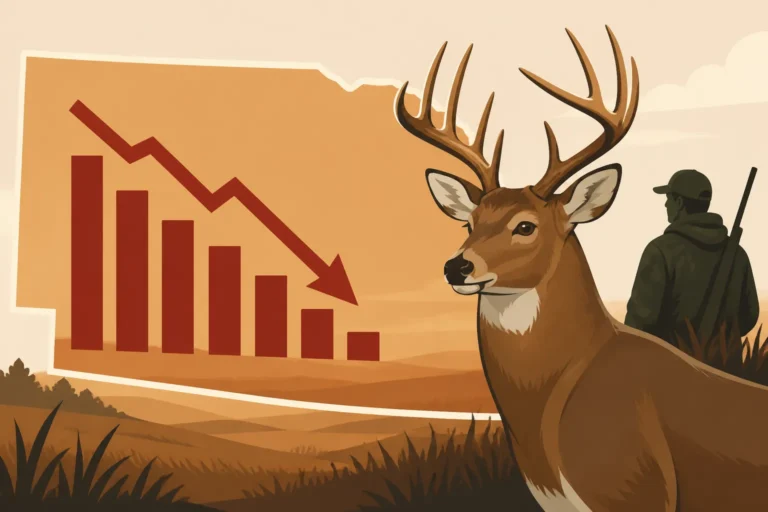
While CWD is always fatal to individual animals, its long-term impact on overall deer populations is a complex and evolving area of study. In areas with low prevalence, the disease might not immediately cause a noticeable decline in numbers. However, in "hotspot" areas where CWD has been present for a longer time and prevalence rates are higher, wildlife biologists have observed potential localized population declines and changes in herd demographics. The disease disproportionately affects older bucks, which are often the most sought-after by hunters. This can lead to a younger age structure in the buck population. Beyond outright mortality, CWD can weaken animals, making them more susceptible to other stressors, like harsh winters, EHD outbreaks in Nebraska deer, or predation. It's a slow burn, but over time, high CWD prevalence can chip away at the vitality and resilience of a deer herd, making it less healthy overall.
Mule Deer Versus Whitetail Susceptibility
It's a common observation that mule deer populations seem to be hit harder by CWD, particularly in the western parts of the state where the disease was first detected. While white-tailed deer are certainly susceptible and CWD is spreading among them, some studies suggest that mule deer may be more vulnerable to contracting the disease and might have higher prevalence rates in shared habitats. This could be due to differences in social behavior, habitat use, or even genetic factors. Mule Deer in the Nebraska Sandhills and Panhandle face additional challenges, as CWD is well-established in many of their core habitats. For hunters, this means being particularly diligent when hunting mule deer in known CWD areas. Understanding these species-specific differences is important for both management efforts and individual hunter awareness.
Public Land Considerations and CWD Risk
Hunting on public land often means navigating higher hunter density and, in some cases, higher deer density, which can play a role in CWD transmission. When deer concentrate in certain areas, such as during the rut or around limited food sources, the potential for direct and indirect transmission increases. Many of Nebraska's Wildlife Management Areas and Open Fields and Waters tracts provide excellent hunting opportunities, but they also represent shared spaces where CWD prions could persist in the environment. For example, if multiple hunters harvest infected deer and improperly dispose of carcasses, it creates a risk. Being mindful of these dynamics when hunting on public ground, especially regarding carcass disposal, is a critical step in preventing further spread. This vigilance applies whether you're chasing White-Tailed Deer Across Nebraska's river bottoms or pursuing mule deer in the wide-open Sandhills.
The Hunter's Role in CWD Management
As hunters, we are often the first line of defense and critical partners in wildlife management. When it comes to CWD, our actions, or inactions, can have a significant impact on the health of Nebraska's deer herds. This isn't just about following rules; it's about being part of the solution.
Mandatory and Voluntary Sampling Guidelines
Participating in CWD surveillance is one of the most important things you can do. The Nebraska Game and Parks Commission has specific guidelines for submitting samples, which can change depending on the hunting season, the management unit, and whether it's a mandatory or voluntary submission year for that area. Typically, biologists or designated check stations collect samples, usually the retropharyngeal lymph nodes from the neck, which are the most reliable tissue for CWD detection. Keep an eye on the latest regulations for your specific unit; they'll usually announce mandatory sampling dates and locations well in advance. Even if it's not mandatory, voluntarily submitting a sample, especially from an older animal or one that showed any suspicious behavior, provides invaluable data. Many hunters use tools, like the permit system on GoHunt, to keep track of their harvest information and ensure they are compliant with all tagging and sampling rules. This data directly helps wildlife managers understand Where CWD Has Been Found in Nebraska and its true prevalence.
Proper Carcass Disposal and Transport Rules
This is perhaps one of the most critical aspects of preventing CWD spread. If you harvest a deer in a CWD-positive area, simply tossing the carcass remains in a ditch or leaving them exposed in the field can contribute to the environmental contamination. The resilient prions can remain infectious in the soil for years. The Nebraska Game and Parks Commission has strict Nebraska Deer Transport Requirements to prevent the spread of CWD, especially from high-prevalence areas to low-prevalence ones. Generally, you can transport whole carcasses within the unit or to an adjacent unit, but there are restrictions on moving certain high-risk parts (brain, spinal cord, lymph nodes) across unit boundaries or out of the state entirely. The safest practice is to debone the meat in the field, leaving the skull plate (if you want to keep the antlers) and all other high-risk parts at the harvest site or disposing of them in an approved landfill. If you need a more detailed refresher, check out the specific guidelines on the Game and Parks website.
Best Practices for Handling and Processing Harvested Deer
When you've harvested a deer, especially in an area where CWD is present, taking some simple precautions can give you peace of mind. First and foremost, wear latex or rubber gloves when field dressing and processing the animal. This is a good practice for any animal, but it's especially important with CWD. Avoid cutting through the brain or spinal cord, as these tissues contain the highest concentrations of prions. The muscle meat is considered safe to eat, but it's generally advised not to consume brain, spinal cord, eyes, spleen, or lymph nodes. Use separate knives and cutting surfaces for CWD-positive animals if possible, and thoroughly clean and disinfect all tools with a bleach solution (1 part bleach to 10 parts water) after use. When it comes to processing, many hunters opt for the gutless method in the field to minimize contact with internal organs and reduce the amount of material that needs to be transported. For those who track their hunts and units using platforms like GoHunt, understanding the CWD status of your hunting area can inform these processing decisions even before you head out.
Looking Ahead: Research, Management, and the Future
CWD isn't going away overnight, but that doesn't mean we're helpless. The future of hunting in Nebraska depends on ongoing research, adaptive management strategies, and an informed, engaged hunting community.
Nebraska Game and Parks Commission's Strategy
The Nebraska Game and Parks Commission has a multi-faceted approach to CWD management. Their strategy centers on surveillance to monitor the disease's spread and prevalence, educating the public and hunters about CWD, and implementing regulations designed to slow its transmission. This often includes targeted harvest recommendations, encouraging hunters to take more deer, especially antlerless animals, in high-prevalence areas to help reduce herd densities and thus potential contact rates. They also work closely with researchers to better understand CWD, including its environmental persistence and potential genetic resistance in deer populations. The Commission continuously updates its policies and recommendations based on the latest scientific findings and the specific dynamics of CWD in Nebraska. You can find detailed information on the CWD Prevalence by Deer Unit directly from their resources, which is vital for planning your season and obtaining your Nebraska Big Game Permits.
Hunter Education and Awareness
Knowledge truly is power when it comes to CWD. Being an informed hunter is one of the best defenses against the disease's continued spread. This means staying up-to-date on the latest regulations, understanding the symptoms of CWD, and knowing how to properly handle and dispose of harvested animals. Many resources, including online courses, workshops, and informational materials, are available from the Nebraska Game and Parks Commission. If you're new to hunting or need a refresher, knowing about the Nebraska Hunter Education Age Requirement and course offerings can be beneficial, as CWD information is often integrated into these programs. The more hunters who understand CWD, the more effectively we can collectively reduce its impact. Don't hesitate to ask questions if you're unsure about any aspect of CWD management.
The Future of Deer Hunting with CWD
It's natural to worry about what CWD means for the long-term future of deer hunting. The reality is, CWD is now a persistent challenge that we must learn to live and hunt with. It's likely to influence hunting strategies and regulations for the foreseeable future, potentially leading to increased antlerless harvest opportunities in some areas or specific testing requirements. However, it's not a death knell for deer hunting. With continued research, vigilant management, and responsible hunter practices, our herds can continue to thrive, albeit in an environment where CWD is a factor. Organizations like GoHunt provide valuable tools for hunters to adapt, offering insights into specific unit conditions, drawing odds, and harvest data that can help you make informed decisions about where and how to hunt effectively and responsibly in the presence of CWD. By staying informed, participating in surveillance, and following best practices, we can all contribute to the resilience of Nebraska's deer populations and ensure that hunting traditions endure for generations to come. While it's a tough reality, it's one we face together, much like adapting to changes in EHD Outbreaks in Nebraska Deer or shifting weather patterns.
Disclaimer
This information is for educational purposes only and should not be considered legal advice. Always consult the official regulations and guidelines published by the Nebraska Game and Parks Commission or other relevant authorities before making any hunting decisions. Regulations and disease prevalence can change rapidly.