Mountain Lion Numbers in Nebraska
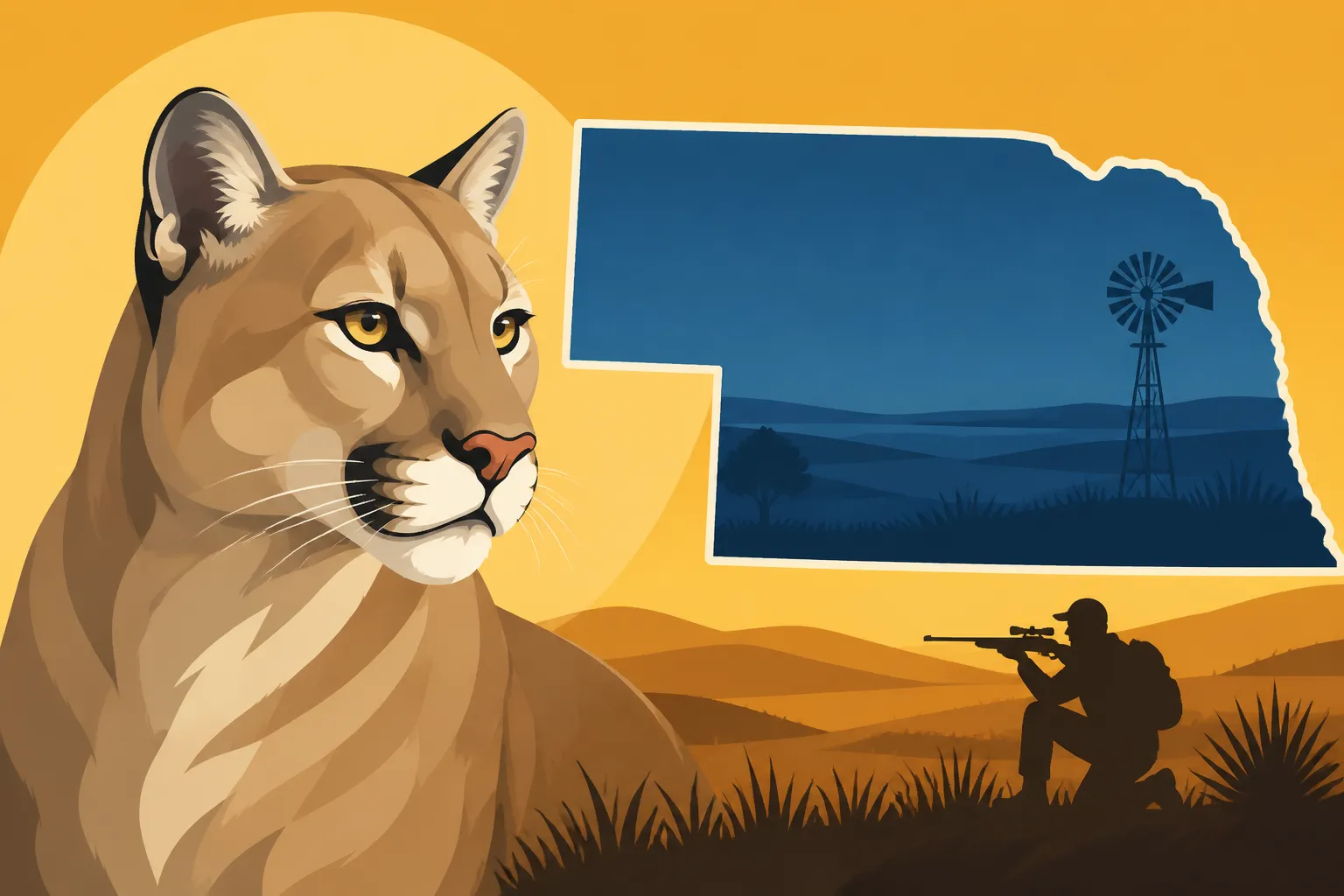
The thought of encountering a mountain lion in Nebraska might sound like something out of a wild west tale, a distant dream or a nightmare, depending on your perspective. Yet, these elusive apex predators are indeed part of our state's rich, albeit quietly guarded, wildlife narrative. If you've heard whispers or seen a blurry photo online and wondered, "Are they really here, and how many?", then you're in the right place. This guide will dive deep into understanding mountain lion numbers, where they're found, and what it means for Nebraskans, separating fact from folklore.
The Elusive Presence of Mountain Lions in Nebraska
For decades, many Nebraskans thought mountain lions were a thing of the past, relegated to history books or much wilder western states. But nature, as it often does, finds a way to reclaim lost territory, and these magnificent big cats have slowly, steadily, and very discreetly made their return. It's a testament to their adaptability and the wildness that still thrives in pockets of our state.
Historical Context and Recent Sightings
Historically, mountain lions roamed much of North America, including what is now Nebraska. However, by the early 20th century, extensive hunting and habitat loss led to their disappearance from the state. For nearly a hundred years, any sighting was often dismissed as mistaken identity or an escaped captive animal. Fast forward to the late 1990s and early 2000s, and something began to shift. Confirmed sightings, often backed by trail camera footage, tracks, or scat, started trickling in. These initial reports were often of transient individuals, young males dispersing from established populations in neighboring states like South Dakota's Black Hills or Wyoming.
What began as rare occurrences has evolved into a more consistent, albeit still infrequent, pattern. We've seen evidence not just in the far reaches of the Panhandle but occasionally much further east. While these eastern sightings often involve a single animal passing through, they certainly grab headlines and spark conversations at the coffee shop or around the campfire. It’s a stark reminder that wilderness isn't always as far away as we imagine.
How Nebraska Game and Parks Monitors Population
Trying to count a ghost is tough work, and that's essentially what wildlife officials are up against when it comes to mountain lions. Unlike deer, which can be observed in herds or from aerial surveys, mountain lions are solitary, nocturnal, and incredibly adept at staying hidden. The Nebraska Game and Parks Commission relies on a variety of methods to piece together the puzzle of their presence and numbers. Public reports are crucial, but they must be verified with concrete evidence—clear photos, distinct tracks, or scat that can be analyzed for DNA. Wildlife biologists also set up remote trail cameras in potential habitat, hoping to capture a glimpse of these secretive cats.
Beyond opportunistic sightings, more scientific methods are employed. This includes looking for sign like scratch marks on trees or scent posts, which can be indicators of lion activity. If hair samples or scat are found, DNA analysis can confirm the species and, in some cases, even identify individual animals. This painstaking work helps build a clearer picture of where mountain lions are, if they're resident, and how many might be present. It's a continuous, challenging effort, made even harder by the vast, rugged landscapes where these animals prefer to dwell.
The Pine Ridge: Nebraska's Primary Mountain Lion Habitat
If there's one area in Nebraska that truly serves as a stronghold for mountain lions, it's the Pine Ridge in the northwestern part of the state. This dramatic landscape, characterized by towering Ponderosa pines, deep canyons, rugged buttes, and steep escarpments, offers exactly what a mountain lion needs: dense cover for stalking and hiding, and an abundant prey base. Deer, especially mule deer, thrive in this broken country, providing a steady food source.
The Pine Ridge's remoteness and difficult terrain also offer these cats the seclusion they crave, minimizing interactions with humans. It's a wild, unforgiving place, and that's precisely why it's become the epicenter of Nebraska's mountain lion population. Young lions dispersing from the Black Hills of South Dakota find a natural corridor into the Pine Ridge, making it an ideal location for them to establish territories and, eventually, a breeding population. If you're wondering about Hunting Mule Deer in the Nebraska Pine Ridge, you're also wandering through prime lion country. This area is the focus of most of Nebraska’s mountain lion management efforts, as it's where a self-sustaining population is most likely to persist.
Understanding Mountain Lion Numbers and Trends
Getting a precise count of mountain lions in Nebraska is a bit like trying to count raindrops in a thunderstorm—you can estimate, but an exact figure is incredibly difficult to achieve. Their lifestyle simply doesn't lend itself to easy enumeration. However, wildlife experts have developed ways to understand the general population dynamics and trends, even without exact numbers.
Challenges in Estimating Population Size
The inherent challenges in counting mountain lions stem directly from their nature. They are solitary creatures, meaning they don't form large groups that can be easily spotted. They cover vast territories, often moving many miles in a single night. Plus, their camouflage is incredible, making them practically invisible even when present. Imagine trying to conduct an aerial survey for a creature that spends most of its time hidden in thick cover or camouflaged against rocks and trees; it's nearly impossible to do effectively.
This contrasts sharply with, say, White-Tailed Deer Across Nebraska, where herd sizes, vehicle collisions, and even hunter harvest numbers provide clear indicators of population health. For lions, every piece of evidence—a track, a photo, a verified kill—is a valuable data point, but they rarely combine to give a simple, definitive number. Biologists often rely on modeling and extrapolation based on confirmed evidence, but these are always estimates with a wide margin of error.
Confirmed Versus Transient Lions
When we talk about mountain lion numbers in Nebraska, it’s crucial to distinguish between two categories: resident, established populations and transient individuals. The Pine Ridge, as we discussed, is where Nebraska has its small, established breeding population. These are lions that have set up permanent territories, are hunting regularly, and are reproducing within the state's borders. These are the "Nebraska lions" that are truly making a home here.
Then, there are the transient lions. These are typically young males, sometimes covering hundreds of miles, dispersing from more robust populations in neighboring states. They're looking for new territory, often pushed out by older, more dominant males. These transients are the ones that occasionally turn up in unexpected places, like river bottoms in eastern Nebraska or near urban centers. While their presence is exciting (or alarming), they don't represent an established population. They are often just passing through, and many will eventually return to more suitable habitat or, sadly, meet their end due to vehicle collisions or other human-related incidents. Understanding this distinction is key to grasping Mountain Lions in the Nebraska Pine Ridge versus a lone cat near Omaha.
Population Estimates and Trends Over Time
Given the challenges, exact figures are hard to come by, but the general trend indicates a small, stable, and slowly growing resident population primarily within the Pine Ridge. Outside of this core area, the trend for transient lions is an increase in confirmed sightings over the last couple of decades. This doesn't mean Nebraska is suddenly teeming with mountain lions, but it does confirm their return as a persistent, albeit low-density, predator.
Wildlife agencies typically describe the Pine Ridge population as "small but established," with evidence of breeding. For the rest of the state, most sightings are still attributed to transient animals. The increasing number of confirmations likely reflects a combination of factors: an actual increase in dispersing lions from robust populations in states like Wyoming and South Dakota, improved public awareness leading to more reported sightings, and better technology (like trail cameras) to capture evidence. While you can't go to GoHunt to see a live map of lion activity, their general insights into Nebraska Big Game Permits and How to Get One or typical deer movements can still help you understand the broader wildlife context in lion country. The overarching narrative is one of a slow, natural recolonization, mostly driven by individuals moving into suitable habitat from outside Nebraska's borders.
Interaction and Coexistence on the Nebraska Landscape
With mountain lions re-establishing a presence in Nebraska, especially in the western part of the state, questions naturally arise about how humans, our pets, and other game species will interact with these powerful predators. It’s a learning curve for everyone, and understanding coexistence is paramount.
Encounters with Mountain Lions
The good news is that human encounters with mountain lions are exceedingly rare, especially aggressive ones. These animals are naturally shy and generally avoid people. They are far more likely to detect your presence long before you see them and slip away unnoticed. However, as their numbers slowly increase, particularly in the Pine Ridge, the possibility of an encounter, however remote, also rises. It's wise to be aware, not fearful.
If you ever find yourself face-to-face with a mountain lion, the advice is consistent:
- Don't run: Running can trigger their chase instinct.
- Stand your ground and make yourself look large: Open your jacket, raise your arms, and make eye contact.
- Make noise: Yell, clap your hands, or speak in a loud, firm voice.
- Fight back if attacked: Use anything at your disposal—sticks, rocks, even your bare hands.
- Protect pets and livestock: In areas where lions are known to be present, keep pets secured, especially at night. Secure livestock in barns or use predator-resistant fencing. For more information on dealing with predators generally, look into Nebraska Predators and Furbearers.
Mountain Lions and Other Game Species
As apex predators, mountain lions play a vital ecological role. They primarily hunt deer, especially Mule Deer in the Nebraska Sandhills and Panhandle and White-Tailed Deer Across Nebraska, but will also prey on smaller mammals if given the opportunity. In areas like the Pine Ridge, their presence contributes to the natural balance of the ecosystem, potentially helping to keep deer populations healthy by culling sick or weaker animals.
However, given their relatively low numbers in Nebraska, their impact on statewide deer populations is generally considered minor compared to factors like habitat availability, EHD outbreaks, or hunter harvest. You won't see a significant drop in deer numbers across the state due to mountain lions. Their influence is much more localized, primarily within their core range in the Pine Ridge, and less so in general hunting areas you might explore like Scouting Nebraska Public Ground Before Opening Day. They are one piece of a complex puzzle, but not the dominant force shaping big game numbers in Nebraska.
Management and Hunting Seasons
Nebraska manages its mountain lion population cautiously, reflecting their sensitive status as a recovering species. The focus remains on monitoring their distribution and numbers, and understanding their impact on the landscape. The state has implemented very limited hunting seasons for mountain lions, specifically focused on the Pine Ridge units, which typically occur under highly restricted conditions. These seasons are not about eradication; they are primarily management tools.
The reasons for such seasons often include:
- Population Control and Monitoring: Allowing a controlled harvest provides valuable biological data (age, sex, health) that helps biologists better understand the population.
- Mitigating Conflicts: In some cases, hunting can help address specific depredation issues on livestock or reduce the likelihood of human-lion encounters in particular areas, though this is carefully considered.
- Public Understanding: Managed seasons, though controversial for some, can also be part of a broader conservation strategy to educate the public about the species' presence and management efforts.
It's important to remember that these are not open-ended hunting opportunities, and participation is extremely limited and highly regulated. For instance, knowing about Nebraska Mountain Lion Season History will tell you these are not traditional big game draws. Tools like GoHunt might show general big game draw information, but you'd need to check official Nebraska Game and Parks channels specifically for lion season details, as they are often very different from other species.
Here's a quick look at common signs of mountain lion presence:
| Sign | Description | What to Look For |
|---|---|---|
| Tracks | Distinctive paw prints without claw marks (claws are retractable). | Four toes, large heel pad, often larger than dog tracks. |
| Scat (Feces) | Segmented, often containing hair, bone fragments, and teeth. | Usually cylindrical, about 1-1.5 inches in diameter. |
| Kills/Caches | Prey animals (often deer) killed and partially eaten, then covered with leaves, dirt, or debris for later feeding. | Unevenly covered carcass, usually in secluded spots. |
| Scratch Marks | Vertical claw marks on trees or logs, used for marking territory. | Often on larger trees, multiple parallel scratches. |
| Visual Sighting | Direct observation of the animal. | Very rare, typically at dawn or dusk, often fleeting. |
For anyone who spends time outdoors in Nebraska, whether you're hunting Prairie Grouse Hunting on Nebraska's Open Range or simply hiking in the Pine Ridge, understanding the signs and respecting the presence of these incredible animals is key to successful coexistence.
Disclaimer
This article is for general informational purposes only and does not constitute professional advice. Laws, prices and regulations vary by location and change over time. Consult a qualified professional for guidance on your specific situation.