Where Nebraska Bighorns Live
Many hunters dream of chasing iconic big game species, but for most, the idea of pursuing bighorn sheep feels like a far-off, impossible fantasy, especially in a state like Nebraska. The truth is, Nebraska does have bighorn sheep, but their presence is incredibly localized and their populations are still working hard to establish themselves. If you're wondering where these magnificent animals carve out their existence in the Cornhusker State, this guide will lead you through their unique story, their specific haunts, and the dedicated efforts to ensure their future.
The Unique Story of Nebraska's Bighorn Sheep
The very notion of bighorn sheep in Nebraska often raises eyebrows, and for good reason. It's not exactly the first animal that comes to mind when you picture the state's sprawling cornfields or rolling Sandhills. Yet, these impressive mountain dwellers are indeed part of Nebraska's wildlife tapestry, thanks to a remarkable tale of historical presence, disappearance, and a determined effort to bring them back home.
The Return of a Native Species
It might surprise you to learn that bighorn sheep were once native to Nebraska, roaming the rugged bluffs and canyons of the western part of the state. However, like many wildlife species across the American West, their populations faced immense pressure from westward expansion, disease introduced by domestic livestock, and unregulated hunting during the 19th and early 20th centuries. By the early 1900s, bighorn sheep were extirpated from Nebraska—gone, completely. For decades, the craggy hills of the Pine Ridge echoed without the clatter of their hooves.
The dream of seeing bighorns return to Nebraska persisted among conservationists and wildlife enthusiasts. After years of planning and careful preparation, a reintroduction program began in the 1980s. This wasn't a simple task; it involved trapping wild sheep from established herds in other states, transporting them, and releasing them into carefully selected habitat. The initial releases were small, cautiously managed ventures, planting the seeds for what we hope will become thriving, self-sustaining herds. This process is complex, fraught with challenges, and represents a significant achievement in wildlife management, as detailed in Bighorn Sheep Restoration in Nebraska. It’s a testament to the dedication of wildlife agencies and partners that these animals are back.
Why the Pine Ridge is Prime Bighorn Habitat
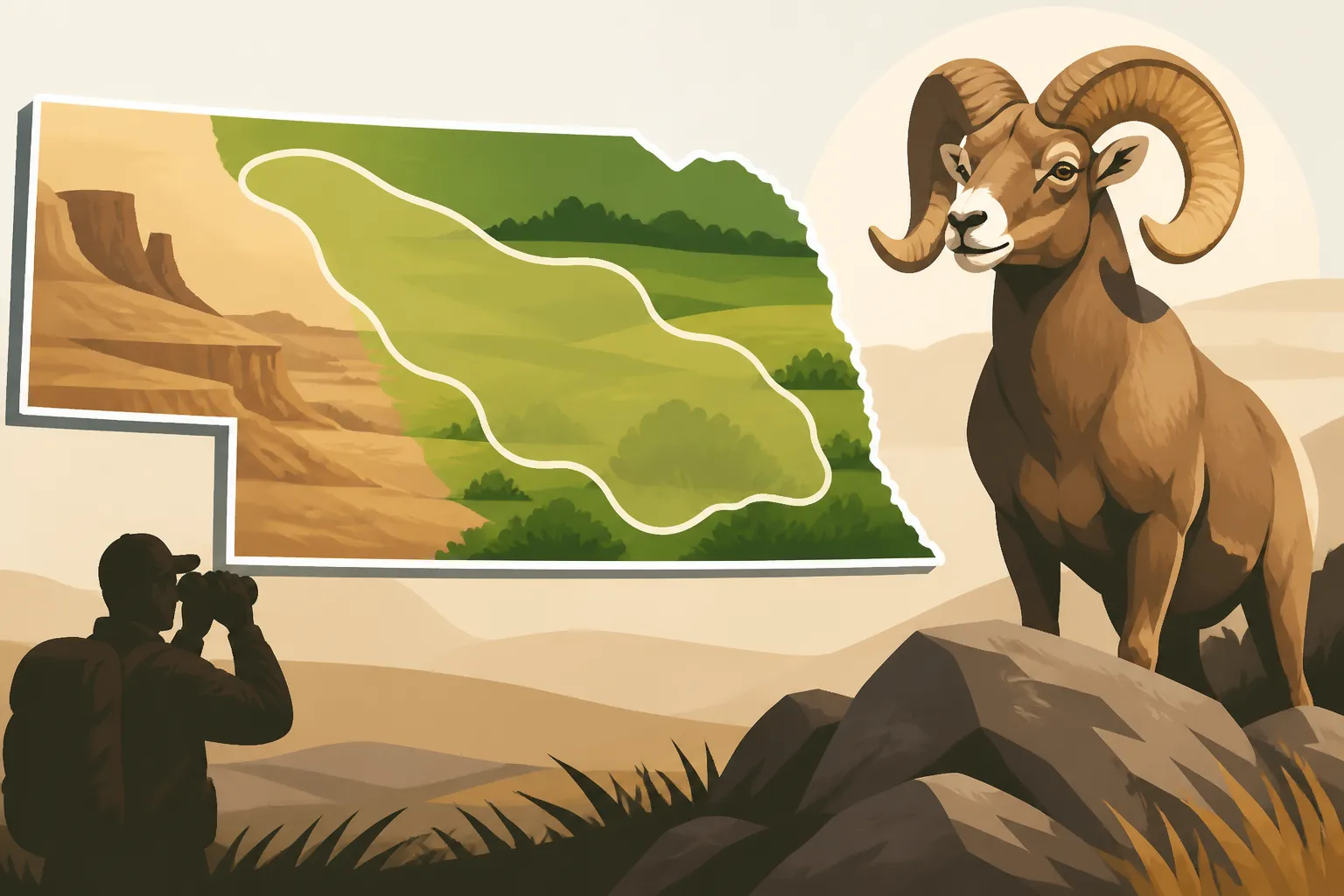
If you're going to talk about bighorn sheep in Nebraska, you're almost exclusively talking about one region: the Pine Ridge. This isn't by accident. The Pine Ridge, located in the northwestern panhandle of Nebraska, is a geographical anomaly in the state. Instead of the flat plains or rolling Sandhills found elsewhere, this region features dramatic buttes, steep canyons, ponderosa pine-covered hillsides, and rocky outcrops. It's a stark contrast to much of the state and provides exactly the kind of rugged, broken terrain that bighorn sheep thrive in.
Bighorns are animals of steep, open country where they can use their incredible climbing abilities to escape predators and find safety. The Pine Ridge offers this in spades. The vertical relief and rocky cliffs provide ideal escape terrain, while the scattered open grasslands between the pines offer foraging opportunities. The mixed terrain of pines, junipers, and native grasses creates a diverse habitat. They need areas where they can see for long distances to spot danger and then quickly retreat to the safety of rocky ledges. The erosional patterns and geological formations of the Pine Ridge create a maze of these perfect escape routes and vantage points, making it the only truly viable habitat for bighorns in the state.
Pinpointing Bighorn Hotspots in the Pine Ridge
While the entire Pine Ridge offers suitable habitat, bighorns don't just randomly spread themselves across the landscape. Like all wild animals, they gravitate towards the areas that offer the best combination of food, water, cover, and security. Knowing these preferred zones is key, whether you're a curious observer or one of the incredibly fortunate few to draw a permit.
Key Areas and Landscape Features
Within the larger Pine Ridge region, certain areas tend to hold more bighorn sheep. These hotspots are characterized by their extreme ruggedness and relative isolation. Think of places with prominent buttes, deep, pine-filled canyons, and extensive rock formations. The steep, south-facing slopes, warmed by the sun, often clear of snow quickly in winter, offering crucial forage when other areas are locked up. The broken topography also means that water sources, even small seeps or springs, can be more protected and reliable.
Specific features like high mesas with abrupt drop-offs, sheer cliff faces, and deep, eroded gullies are where you'll most likely find them. The bighorns use these geographical advantages to their fullest. They'll bed down on ledges with commanding views, allowing them to spot potential threats long before they become a danger. Areas with a mosaic of open meadows for grazing directly adjacent to steep, timbered escape cover are especially attractive. When you're looking at a map or exploring the Pine Ridge Public Land in Nebraska, identify these types of features – the highest points, the deepest cuts, and the steepest faces.
Understanding Bighorn Movement and Behavior
To truly understand where Nebraska's bighorns live, you also need to understand how they live. Bighorn sheep are generally diurnal, meaning they are most active during the day. They spend their mornings and late afternoons grazing on grasses and forbs, moving efficiently across the steep terrain. During the midday hours, especially in warmer weather, they often seek refuge in shaded areas or on cool, breezy ledges where they can chew their cud and rest.
Their movements can be influenced by weather, food availability, and the presence of predators. In winter, they might concentrate on south-facing slopes where snow melts faster, exposing vital forage. During the rut, rams will be actively seeking ewes, leading to more widespread movement and the spectacular clashes of horns that they are famous for. Water is also a critical factor; while they can survive for periods on moisture from vegetation, they will seek out permanent water sources, particularly during dry spells. You’ll find them moving between these key resources, often traversing incredible distances across incredibly challenging terrain. Knowing their general patterns helps anticipate where they might be, and learning about Nebraska Bighorn Sheep Numbers can give you an idea of the overall population health and distribution.
Challenges and Conservation Efforts for Nebraska Bighorns
The reintroduction of bighorn sheep to Nebraska is a conservation success story, but it's not without its ongoing struggles. Establishing a wild population in fragmented habitat, even in a seemingly ideal place like the Pine Ridge, comes with a unique set of challenges that require constant vigilance and dedicated management.
Disease, Predation, and Habitat Limitations
One of the most persistent and devastating threats to bighorn sheep populations, both in Nebraska and across North America, is disease. Respiratory diseases, particularly those caused by Mycoplasma ovipneumoniae (Movi), can sweep through a herd with deadly efficiency, especially affecting lambs and leaving adults vulnerable. The relatively small and isolated nature of Nebraska's herds makes them particularly susceptible to these outbreaks, and a single event can set back years of conservation work. It's a constant concern for wildlife managers, as evidenced by incidents like Bighorn Pneumonia in Nebraska Herds.
Predation from mountain lions and coyotes also plays a role, especially on young lambs or weaker adults. While bighorns are adept at using their escape terrain, a determined predator can still take its toll. Habitat fragmentation, though less severe in the Pine Ridge than in more developed areas, still limits their potential range. They are reliant on specific types of terrain, and the encroachment of human activity or less-than-ideal habitat can hinder their expansion and connectivity between smaller groups of sheep. These factors mean that even with their return, the bighorns are not entirely out of the woods.
The Role of Conservation and Research
Given the fragile nature of these herds, conservation and ongoing research are paramount. The Nebraska Game and Parks Commission, along with partners like the Wild Sheep Foundation, actively monitors the bighorn populations. This includes tracking movements, assessing population health, and studying disease prevalence. Understanding herd dynamics, birth rates, and survival rates helps inform management decisions to ensure the long-term viability of the species in Nebraska.
Funding for these crucial efforts often comes from a variety of sources, including federal grants, donations, and, notably, from hunting permits. Nebraska offers a highly limited number of bighorn sheep permits, typically one resident permit through a lottery, and occasionally an additional permit for auction. The revenue generated from both the Nebraska Bighorn Sheep Lottery and the Nebraska Bighorn Sheep Auction Permit directly supports bighorn research, habitat improvement projects, and ongoing conservation work. It's a unique model where the pursuit of these animals by a few helps protect them for the many, contributing significantly to their continued presence in the state since The First Bighorn Season Since Restoration. Tools like GoHunt can provide some background on the rarity of these tags, though for Nebraska bighorns, it's truly a once-in-a-lifetime draw.
Practical Advice for Spotting and Appreciating Bighorns
For most Nebraskans and visitors, seeing a wild bighorn sheep isn't about hunting; it's about the sheer thrill of witnessing such a magnificent, rare animal in its natural habitat. While a hunting tag is an incredibly rare draw, experiencing these sheep visually is a much more attainable goal for anyone willing to put in the effort.
Best Times and Methods for Viewing
If your goal is to spot bighorn sheep in the Pine Ridge, timing is everything. They are generally most active during the cooler parts of the day: early morning, shortly after sunrise, and late afternoon, leading up to sunset. During these times, they are often moving from their bedding areas to feed, making them more visible. Midday can be productive too, especially in cooler weather, as they might still be grazing or resting on exposed ledges. In the winter months, their dark coats can stand out against snow, and they may congregate on sun-exposed slopes.
Good optics are absolutely essential. This isn't flat-ground mule deer hunting where you might get away with less; these animals are often at extreme distances and in challenging terrain. A quality pair of binoculars, at least 10x, is a must, but a spotting scope (20-60x or even higher) will truly allow you to pick apart the distant slopes and appreciate their details. Many serious spotters use a tripod with their binoculars or spotting scope for stability, making it much easier to glass for extended periods. Setting up on a high vantage point overlooking a large expanse of their preferred habitat and patiently glassing is the most effective strategy. Just as you might use Spotting Scopes for Judging Antelope in open country, the same principles apply here for dissecting the landscape.
Here's a quick reference for optimal viewing conditions:
| Factor | Best for Viewing Bighorn Sheep |
|---|---|
| Time of Day | Early Morning (sunrise to 10 AM), Late Afternoon (4 PM to sunset) |
| Season | Spring (lambs present), Fall (rutting activity), Winter (snow contrast) |
| Weather | Clear, calm days for visibility; Cooler temperatures increase activity |
| Equipment | High-quality binoculars (10x+), Spotting scope on tripod, Map |
| Location | High vantage points overlooking rugged, rocky slopes and canyons |
Respecting Their Space and the Rules
When you are fortunate enough to spot bighorn sheep, it's crucial to remember that they are wild animals, and their well-being is paramount. Always observe them from a distance that does not disturb their natural behavior. If they become aware of your presence and change their actions (e.g., stop feeding, look directly at you, move away), you are too close. Use your optics to get a closer look, not your feet. Never attempt to approach or feed them.
For the extremely rare hunters who draw a bighorn tag, the journey is even more significant. Getting a tag for a bighorn sheep in Nebraska is truly a once-in-a-lifetime opportunity. It's a testament to incredible luck and perseverance, often involving years of applying. For these hunters, understanding the terrain, scouting thoroughly, and respecting the animal and the hunting regulations is critical. Whether you're a viewer or a hunter, cherishing and protecting these magnificent animals in their limited Nebraska home is a shared responsibility.
Disclaimer
This article is for general informational purposes only and does not constitute professional advice. Laws, prices and regulations vary by location and change over time. Consult a qualified professional for guidance on your specific situation.