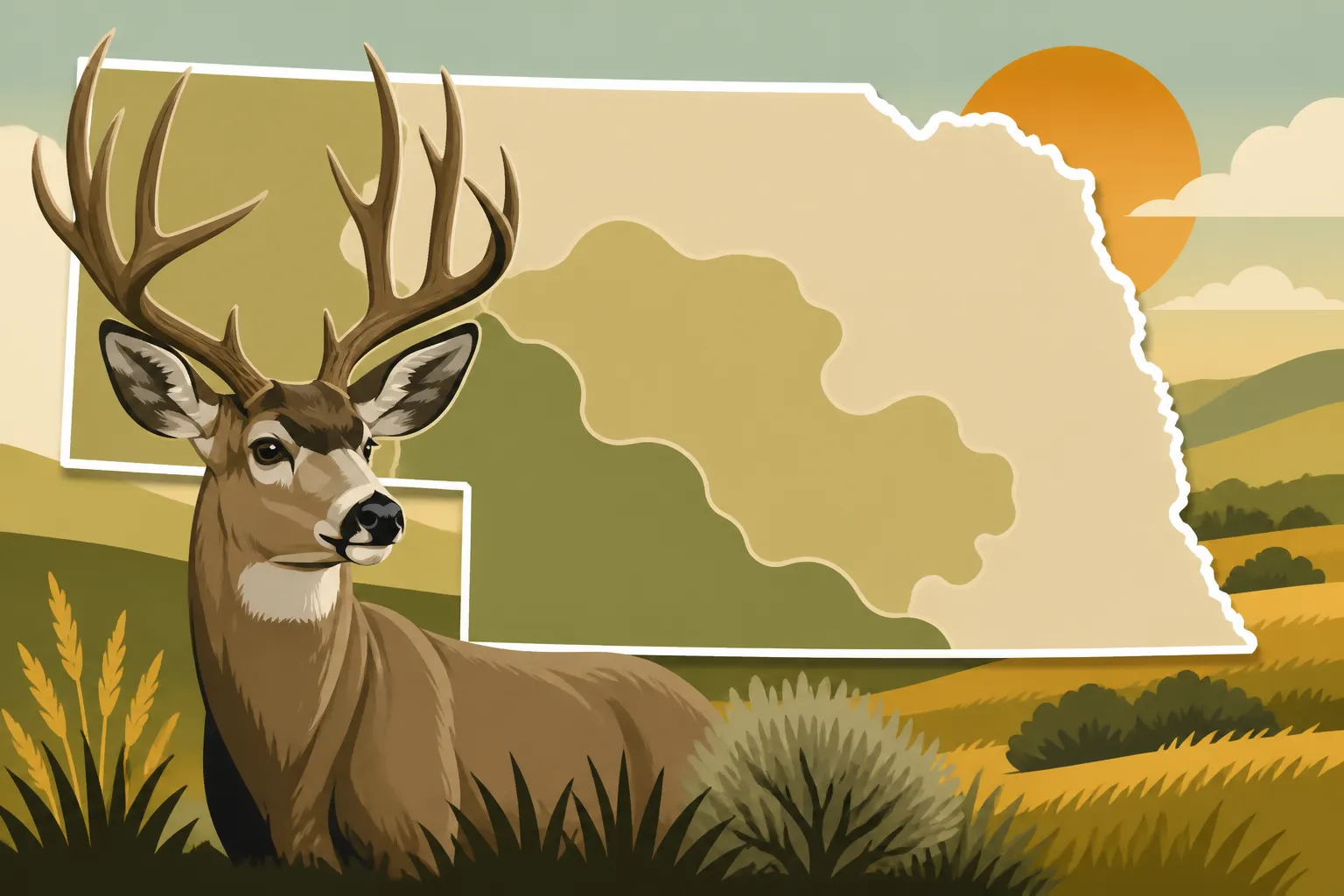
Where Nebraska Mule Deer Range
For many hunters, the thought of chasing mule deer conjures images of towering mountains or vast western plains. But right here in Nebraska, we have a healthy population of these magnificent animals, albeit in specific, often challenging, terrains. It can be incredibly frustrating to spend hours glassing only to find whitetails where you expected a big muley. This guide will meticulously break down exactly where mule deer call home in Nebraska, helping you narrow your focus and increase your odds of success.
Understanding the Mule Deer's Preferred Nebraska Habitat
Mule deer are creatures of specific tastes when it comes to habitat. Unlike their adaptable whitetail cousins who can thrive almost anywhere, mule deer have distinct preferences for terrain that offers specific cover, forage, and escape routes. Understanding these fundamental needs is the first step to knowing where to find them across the varied Nebraska landscape. It's not just about looking for big ears; it's about looking for big country that provides both security and sustenance.
Key Environmental Factors Shaping Mule Deer Distribution
Mule deer are generally associated with more open, rugged, and semi-arid environments. They love broken topography – think canyon systems, bluffs, rimrock, and wide-open grasslands dotted with cedars or pockets of brush. They aren't big fans of dense, homogenous timber, which is why you won't find them thick in the eastern Nebraska river bottoms like you would whitetails. Their primary forage often consists of forbs, browse, and various grasses, making areas with diverse plant communities particularly attractive. These aren't the deer that will be hiding in a dense cornfield all day; they prefer to use elevation and distance for security, often bedding on a ridge where they can see for miles. This preference for expansive views is crucial to remember when scouting; they want to see danger coming from a long way off.
Another critical factor is water. While they can go longer without direct water sources than many other species, they still need access to it, especially during hotter months. Springs, windmills, and scattered ponds become magnets in otherwise dry country. The very nature of the terrain in western Nebraska, with its dramatic changes in elevation, deep canyons, and scattered timber patches, lends itself perfectly to mule deer survival. Hunters often overlook the subtle changes in elevation, assuming everything is flat, but even a slight dip or rise can provide the thermal cover or vantage point a mule deer seeks. The quality of vegetation, often influenced by rainfall and soil type, also plays a significant role, ensuring they have consistent food sources throughout the year.
Behavioral Differences Impacting Range
Mule deer behavior significantly influences their distribution. They are often more visible than whitetails, prone to using wide, open spaces for feeding and travel. This is why glassing is such a critical skill for hunting these animals; they might be bedded in plain sight a mile away. Unlike whitetails, which often prefer to hide in thick cover and sneak out under darkness, mule deer frequently stand and stare when spooked, using their incredible eyesight and endurance to flee across vast distances. This "flight over fight" mentality means they need room to run, which directly correlates to their preference for open, expansive habitats. Their curious nature can sometimes be exploited, but typically, they maintain a healthy distance from perceived threats.
Their seasonal movements can also affect where you find them. While not as pronounced as some migratory herds, mule deer in Nebraska will often utilize different elevations or types of cover depending on the time of year. During the rut, bucks might travel extensively across their home range in search of does, sometimes covering several miles in a single day. In deep winter, they might concentrate in areas with better thermal cover or more accessible forage, such as south-facing slopes that melt faster or areas with persistent browse. Understanding these subtle shifts is key to consistent success. For a deeper dive into their overall presence, check out the article on Mule Deer in the Nebraska Sandhills and Panhandle. Knowing their seasonal patterns helps predict their location.
The Panhandle: A Mule Deer Stronghold
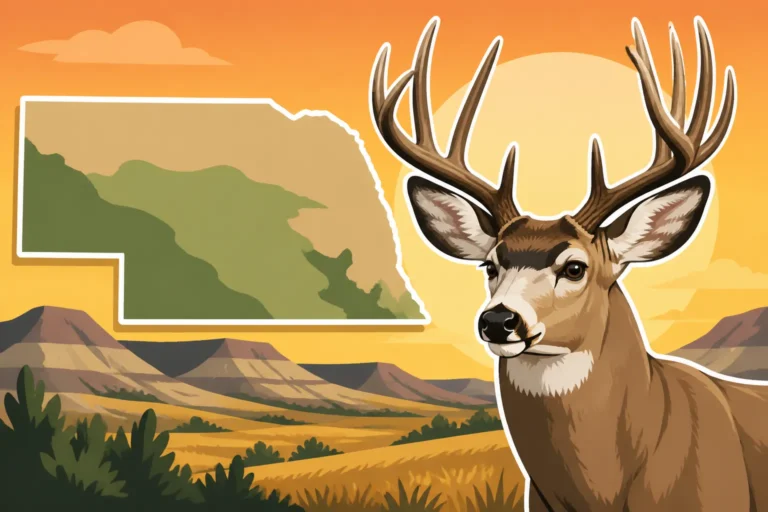
When most people think of mule deer in Nebraska, their minds immediately go to the Panhandle. And for good reason! This region, stretching across the westernmost part of the state, truly is a prime location for mule deer, offering exactly the kind of diverse, rugged terrain they thrive in. It's a stark contrast to the agricultural fields of eastern Nebraska, and that difference in landscape is exactly what attracts and holds these big-eared deer. The Panhandle provides a mosaic of habitats, from towering bluffs to sweeping grasslands, all of which contribute to a robust mule deer population.
Pine Ridge Escarpment: Cover and Forage Haven
The Pine Ridge, a dramatic escarpment running through Dawes, Sioux, and Sheridan counties, is arguably the most iconic mule deer country in Nebraska. Here, you'll find ponderosa pine forests clinging to steep slopes, interspersed with deep canyons, rugged draws, and open grass flats. This incredible mix provides everything a mule deer needs: dense timber for thermal cover and security, varied forage in the meadows and along the forest edges, and endless broken terrain for escape routes. The elevation changes make for challenging hiking but also offer fantastic glassing opportunities. When you're Hunting Mule Deer in the Nebraska Pine Ridge, you're looking into classic mule deer habitat.
The canyons and draws of the Pine Ridge act like natural highways and bedding areas for mule deer. Bucks often seek out the north-facing slopes during warmer weather, where the cooler temperatures and thicker timber offer respite. During colder periods, they might shift to south-facing slopes to soak up the sun. The accessibility can be tough, with many roads being gravel or dirt, and cell service often spotty, but for those willing to put in the effort, the rewards can be substantial. This region's unique geological features create microclimates and distinct habitat pockets that mule deer utilize year-round, making it a truly special place to hunt.
Wildcat Hills and Oglala National Grassland
South of the Pine Ridge, the Wildcat Hills, near Scottsbluff, offers another fantastic mule deer habitat. This area is characterized by dramatic bluffs, canyons, and buttes, with a mix of pine and cedar trees, alongside open grasslands. It's visually stunning and provides the same kind of rugged, broken country that mule deer prefer. While perhaps not as extensive as the Pine Ridge, it's a significant area for mule deer, and its unique geology makes for fascinating hunting. The Wildcat Hills are a gem for those seeking dramatic scenery and challenging terrain.
Further north and west, the Oglala National Grassland, particularly around the Toadstool Geologic Park, presents a different but equally productive landscape. This vast expanse of shortgrass prairie is dotted with dramatic badlands, deep drainages, and scattered cedars. While it might seem open, the subtle undulations and broken terrain offer surprising cover for mule deer. Spot-and-stalk is the name of the game here, and understanding how to use the terrain to your advantage is paramount. For those looking to explore this vast area, the insights in Oglala National Grassland Hunting can be incredibly helpful. This is prime country for using good optics to pick apart distant hillsides. Many hunters rely on powerful binoculars and spotting scopes here, often mounted on tripods, to locate deer miles away. Top-tier hunting resources like GoHunt often highlight these regions for their mule deer potential, offering valuable maps and data for planning a successful trip.
The Nebraska Sandhills: A Unique Mule Deer Domain
Venture into the heart of Nebraska, and you'll find the Sandhills, a truly unique ecological region unlike anywhere else. This immense grass-covered dune field is not only breathtakingly beautiful but also harbors a robust mule deer population that has adapted to its distinct landscape. While it's vast and appears homogenous at first glance, the Sandhills hide incredible variations that mule deer exploit, making it a challenging yet rewarding destination for hunters.
Vast Grasslands and Isolated Cedar Canyons
The Sandhills are famous for their rolling, grass-covered dunes, intermixed with numerous wetlands, lakes, and scattered ranchlands. On the surface, it seems like endless open country, but beneath that vastness lie crucial features for mule deer: deep, often winding valleys, isolated pockets of cedar trees, and the occasional timbered creek bottom. These "cedar canyons" or "choppies," as locals sometimes call them, provide essential thermal cover during harsh winters and much-needed shade in hot summers. They also offer excellent bedding areas and escape cover when pressure is high. Finding these hidden oases within the vast grasslands is key to locating mule deer in the Sandhills.
The sheer scale of the Sandhills can be intimidating for hunters, particularly if you're used to smaller, timbered tracts. Here, distances are measured in miles, not yards, and your ability to patiently glass vast areas becomes your most valuable asset. The deer often bed on north-facing slopes of dunes or within the cedars, emerging in the late afternoon or early morning to feed on the surrounding grasses and forbs. This is where long-range glassing strategies, as discussed in Glassing the Nebraska Sandhills for Mule Deer, truly shine. Many successful Sandhills hunters spend more time behind their binoculars and spotting scopes than they do walking, letting their optics do the hard work of covering ground.
Adaptations to a Semi-Arid Landscape
Mule deer in the Sandhills have truly adapted to this semi-arid environment. They are incredibly hardy animals, capable of covering vast distances and utilizing sparse resources. Water sources, often in the form of windmills, stock tanks, or natural springs, become critical focal points, especially during dry periods. Deer will travel significant distances to water, and understanding these travel corridors can be a major advantage. These water points can concentrate deer, especially during dry spells, making them strategic locations to observe or set up for a hunt.
The sandy soil, while challenging to walk through, also offers advantages. It's often quiet underfoot, allowing for stealthy approaches if you can manage the exhausting climbs up and down the dunes. The vegetation, while mostly grass, includes a wide array of forbs and shrubs that provide important dietary variety for mule deer. The lack of traditional "forests" means that mule deer often rely on the topography itself – the folds and rises of the dunes – for concealment, a characteristic that defines Spot-and-Stalk Mule Deer in the Nebraska Sandhills hunting. Successful hunters here learn to "read" the ground, identifying likely bedding areas and travel routes from a distance. Tools like those offered by GoHunt, with their detailed topographic maps and public/private land overlays, are invaluable for navigating this challenging yet rewarding landscape.
River Systems and Overlapping Territories
While mule deer primarily favor the rugged western and Sandhills regions, their range isn't entirely exclusive to these areas. Certain river systems, particularly those that maintain a more open, broken character, can also host healthy mule deer populations, and it's in these transition zones that you often find the interesting overlap with whitetail deer. This creates unique hunting scenarios where hunters must be acutely aware of both species.
Niobrara and Loup River Drainages
The Niobrara River Valley, winding through northern Nebraska, is a fantastic example of a river system that offers suitable mule deer habitat. This valley is often characterized by steep, rugged bluffs, cedar canyons, and scattered ponderosa pines, especially as you move west. The broken topography and diverse vegetation along the Niobrara create ideal conditions for mule deer, making it a critical corridor for their expansion further east. While the numbers might not rival the Pine Ridge or central Sandhills, finding a big muley along the Niobrara is definitely possible. It requires focusing on the rougher, less agricultural sections of the river.
Similarly, parts of the Loup River drainage, particularly where the terrain becomes more rolling and less intensively farmed, can also hold mule deer. These areas often represent a "fringe" habitat, but with careful scouting and an understanding of their preferred cover, hunters can find success. It's often about finding those isolated pockets of cedars or steep, grassy banks that offer the security mule deer crave away from the more dense river bottom cover favored by whitetails. The key here is not to just hunt any river bottom, but to seek out those sections that mimic the broken, open country they truly prefer. These transition zones test a hunter's ability to adapt and observe subtle environmental cues.
Where Mule Deer and Whitetails Coexist
Perhaps one of the most intriguing aspects of Nebraska deer hunting is the opportunity to encounter both mule deer and whitetails in the same general area, especially along these transitional river systems and the eastern fringes of the Sandhills. This overlap can be a blessing and a curse. On one hand, you have more opportunities for deer. On the other, accurately identifying your target becomes crucial, especially given specific permit regulations. Understanding Telling Mule Deer From Whitetails at a distance is a skill every Nebraska deer hunter in these zones must master, as mistakes can lead to serious legal issues.
In these overlapping territories, mule deer will often stick to the higher, more open bluffs and pastures, while whitetails will gravitate towards the thicker riparian timber and cultivated fields below. However, during the rut or in response to hunting pressure, these distinctions can blur. It's not uncommon to see a mule deer buck cruising a fenceline that also sees whitetail activity. Hunters here must be prepared for either species and carefully confirm identification before taking a shot, especially if they hold a species-specific permit. This shared habitat can be incredibly productive, but it demands a sharp eye and thorough understanding of both deer species' habits and the specific regulations tied to Nebraska Big Game Permits and How to Get One.
Population Trends and Management Insights
Understanding where mule deer range isn't just about geology and habitat; it's also about knowing the health and dynamics of the population itself. Mule deer numbers have seen their ups and downs across Nebraska, and ongoing management efforts play a crucial role in their distribution and overall availability for hunters. It's a constant balancing act for wildlife agencies, dealing with habitat changes, disease, and hunter interest, all of which impact the opportunities available.
Factors Influencing Mule Deer Numbers
Historically, mule deer populations in Nebraska have experienced fluctuations, much like in other parts of the West. Habitat loss and fragmentation due to agricultural expansion and development are ongoing concerns, even in seemingly vast areas like the Sandhills. Severe winters, particularly those with deep snow and prolonged cold, can also impact survival rates, especially for fawns and older deer. Disease, such as Epizootic Hemorrhagic Disease (EHD) and Chronic Wasting Disease (CWD), also poses threats. While CWD prevalence in mule deer is generally lower than in whitetails, it's a serious concern that wildlife managers constantly monitor. The article discussing CWD Prevalence by Deer Unit can give you a better idea of what areas are monitored.
Interestingly, changes in land use practices, such as prescribed grazing or targeted cedar removal, can sometimes benefit mule deer by opening up more forage and maintaining diverse plant communities. The balance between open grassland and suitable cover is delicate, and subtle changes can have ripple effects on mule deer density. For instance, the general trend of Nebraska Mule Deer Harvest Recovery is a positive sign, indicating that management strategies and environmental conditions are currently favorable in key areas. Hunters need to stay informed about these trends, as they directly influence permit availability and success rates, often reported through platforms like GoHunt.
Nebraska Game and Parks Commission Efforts
The Nebraska Game and Parks Commission (NGPC) is actively involved in managing the state's mule deer population. This includes conducting aerial surveys to estimate populations, analyzing harvest data, and implementing specific permit structures to maintain healthy herds. Permits, particularly for antlered mule deer, are often managed more conservatively than whitetail permits, especially in the prime western units. This careful allocation is designed to ensure sustainable hunting opportunities and protect the genetic quality of the herd. If you're looking to hunt mule deer, understanding Nebraska Big Game Permits and How to Get One and applying through the Nebraska's June Big Game Draw Explained are crucial steps, and often, this is where nonresidents find out What a Nonresident Pays to Hunt Nebraska.
NGPC also works with private landowners on habitat improvement projects, recognizing that a significant portion of mule deer habitat is on private land. These partnerships are vital for creating and maintaining quality habitat across their range. For hunters, staying updated on NGPC's annual reports and permit quotas, often available through platforms like GoHunt, is essential for planning a successful mule deer hunt. They provide the most accurate, up-to-date information on where populations are strong and where opportunities might be more limited, helping hunters make informed decisions about where to apply for permits and focus their efforts.
Scouting Strategies for Nebraska Mule Deer
Finding mule deer in Nebraska, especially in their preferred, often vast and rugged habitat, requires diligent scouting. It's not just about showing up the week of the hunt; it's about putting in the groundwork long before the season opens. This species, more than any other in Nebraska, rewards those who invest time in understanding the landscape and predicting animal movement. Without proper scouting, you're essentially hunting blind in some of the most expansive landscapes in the country.
Utilizing Topographic Maps and Aerial Imagery
Before you even set foot in the field, modern tools can give you a massive advantage. Detailed topographic maps and high-resolution aerial imagery are your best friends when scouting for mule deer. Look for terrain features that scream "mule deer": deep, broken canyons; steep ridges with isolated pockets of timber; areas with a mix of grass and browse; and proximity to water sources. Identify natural funnels, pinch points, and potential bedding areas on north-facing slopes or in dense cedars. Services like those offered by GoHunt, with their advanced mapping layers, can help you identify public land boundaries, track ownership, and visualize terrain in a way that traditional paper maps simply can't. They also have excellent resources on Where Cameras Help on Pressured Ground which can be very insightful when you want to pinpoint specific bedding or feeding areas.
Pay close attention to contour lines. Steep, broken country, even small draws and washes in the Sandhills, can offer enough cover to hide a herd of mule deer. Identify potential access points, but also be aware of areas that are difficult to reach – these often hold less pressured animals. Cross-referencing these maps with historical harvest data or local insights can further refine your search, giving you a strong starting point for your on-the-ground reconnaissance. Remember, mule deer often prefer to use the terrain to their advantage, so look for lines of sight, escape routes, and areas where they can feed without feeling exposed. Understanding Reading a Nebraska Deer Unit Boundary is also critical to ensure you're in the right place.
On-the-Ground Reconnaissance and Trail Cameras
Once you've done your homework with maps, it's time to get boots on the ground. This is where you confirm your theories and find fresh sign. Look for tracks, droppings, rubs (though less common and less distinct than whitetails), and most importantly, actual deer. Mule deer often leave distinct, well-worn trails in their preferred habitat, especially leading to water or between bedding and feeding areas. During the pre-season, focus on glassing during the early mornings and late evenings from high vantage points. If you spot deer, study their patterns: where they feed, where they bed, and how they react to pressure.
Trail cameras can also be incredibly useful, especially in identifying specific bucks or confirming presence in a particular area. Place them on travel corridors, near water sources, or along the edges of bedding areas. However, be mindful of rules regarding Trail Camera Rules on Nebraska Public Land if you're hunting public ground. Keep a detailed log of what you find, including time of day, weather conditions, and precise locations. This information is invaluable for developing a hunting plan. Don't be afraid to cover a lot of ground, but always be thinking about how you would actually hunt a specific area. Remember, mule deer hunting in Nebraska is often a physically demanding endeavor, rewarding patience and persistent effort.
| Region | Primary Counties Involved | Key Habitat Features | Typical Terrain | Mule Deer Density (Relative) |
|---|---|---|---|---|
| Pine Ridge | Dawes, Sioux, Sheridan | Ponderosa pine forests, deep canyons, rugged draws, grass flats | Steep, broken, forested escarpment | High |
| Wildcat Hills | Scotts Bluff, Banner | Bluffs, canyons, buttes, scattered pines/cedars, grasslands | Rugged, rocky, elevated plateaus | Medium-High |
| Sandhills | Cherry, Grant, Hooker, McPherson, Arthur, Thomas, Garden, Blaine | Rolling grass dunes, wetlands, isolated cedar canyons, ranchland | Vast, open, rolling grasslands with hidden features | High |
| Niobrara Valley | Cherry, Keya Paha, Brown, Rock, Holt (western sections) | Rugged bluffs, cedar canyons, scattered pines, riverine habitat | River breaks, bluffs, mixed forest/grassland | Medium |
| Loup River Drain. | Garfield, Loup, Custer (western sections) | Rolling grasslands, scattered cedars, agricultural fringes, river breaks | Transition zone, rolling hills, some timber | Low-Medium |
Disclaimer
Always consult the latest Nebraska Game and Parks Commission regulations before planning any hunt. Hunting laws and seasons can change, and it is your responsibility to be aware of and comply with all current rules and requirements.