Oglala National Grassland Hunting
Hunting public land in Nebraska can often feel like a puzzle, especially for those vast, sprawling tracts that aren't neatly timbered river bottoms or small wildlife management areas. Many hunters find themselves staring at maps, wondering how to even begin to tackle the sheer scale of places like the Oglala National Grassland in the state's far northwest corner, a truly unique piece of public hunting paradise. This comprehensive guide will walk you through everything you need to know to confidently plan and execute a successful hunt on this expansive and wild landscape.
Understanding the Oglala National Grassland: A Unique Landscape
The Oglala National Grassland isn't just another parcel of public land; it's a distinct ecosystem with its own character, history, and management approach. Spanning a significant portion of Dawes and Sioux counties, it’s a place where the sky feels bigger, the wind blows stronger, and the game feels truly wild. For hunters accustomed to denser cover or more structured terrain, the vast, rolling prairies and scattered badlands of Oglala present a new set of challenges and immense rewards.
Geographic Scope and Landscape
Imagine a canvas painted with endless horizons, rolling hills blanketed in shortgrass prairie, dotted with sagebrush, and punctuated by dramatic badland formations. That's the Oglala. It's part of the national grassland system, managed by the U.S. Forest Service, and it’s a remnant of the vast American prairie. This isn't flat, monotonous land; it's sculpted by wind and water, creating draws, small canyons, and "blowouts" – depressions in the sandy soil that can offer surprising pockets of cover. The elevation varies, creating subtle thermal shifts and vantage points that are critical for spotting game. When you're standing on a high point here, it feels like you can see forever, and that immense scale can be both exhilarating and daunting for a hunter.
The grassland often blends seamlessly with private ranchland, making it absolutely crucial to know precisely where you are at all times. The terrain can be deceptively rugged, with deep cuts and washes that are invisible until you're right on top of them. While much of it is open prairie, you'll also find isolated groves of Ponderosa pine, particularly along the Pine Ridge escarpment which borders sections of the grassland, providing crucial winter cover and unique hunting opportunities. Understanding this diverse topography is the first step in unlocking its hunting potential.
History and Management
The Oglala National Grassland has a fascinating history, born from the Dust Bowl era when much of the land was heavily eroded and deemed unsuitable for farming. The federal government acquired these distressed lands, rehabilitating them and dedicating them to multiple uses, including grazing, recreation, and wildlife habitat. This history means the land management priorities here are different from, say, a state park or a densely forested national forest. Grazing is a significant activity, and you'll often see cattle roaming freely, which can impact game distribution and behavior.
The management by the U.S. Forest Service (USFS) aims for a balance of uses. This includes maintaining healthy grasslands, controlling invasive species, and providing public access for activities like hunting. For hunters, this translates to specific rules and regulations that might differ slightly from state game lands. For instance, while Nebraska's general hunting laws apply, the USFS might have additional regulations regarding vehicle access, camping, or the use of certain structures. Knowing who manages the land helps you understand the framework of rules you'll be operating within. This land isn't just for hunting; it's a working landscape that supports local economies and preserves a vital ecological heritage.
Prime Game Species and Hunting Opportunities
The Oglala National Grassland is a hunter's dream for certain species, offering classic western-style hunts that are hard to come by in other parts of Nebraska. The vast, open nature of the landscape dictates the types of game you'll find and the tactics you'll employ. It's a place where you truly earn your harvest, relying on keen eyesight, patience, and a willingness to cover a lot of ground.
Mule Deer and Pronghorn
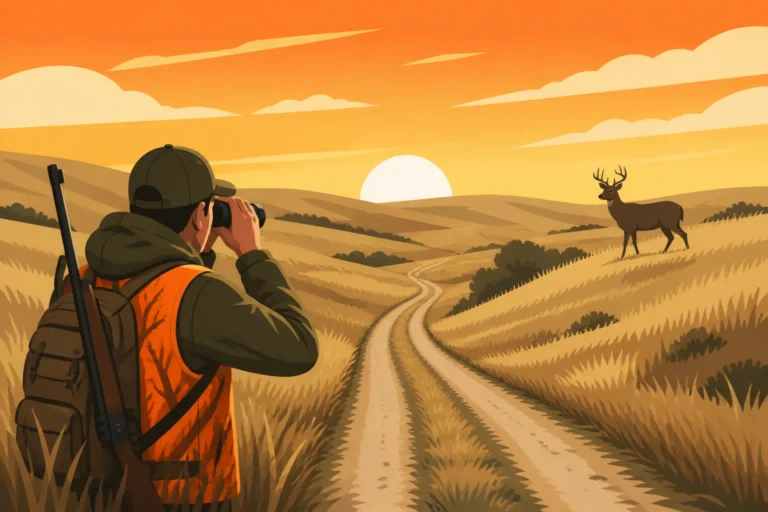
If you dream of glassing vast expanses for deer and antelope, the Oglala is your arena. Mule Deer in the Nebraska Sandhills and Panhandle are a prized species here, often found in the more broken country, the badland formations, and the draws where they can find some cover from the elements. Unlike whitetails, mule deer are known for "mulie-bouncing" when spooked, covering ground with an incredibly efficient bounding gait. Hunting them requires a solid pair of binoculars and often a spotting scope, as you'll spend hours searching distant hillsides and canyon rims. Once spotted, a patient stalk is key, utilizing the natural contours of the land to remain undetected. The challenges are real – the wind, the lack of immediate cover, and the sheer distance between you and your quarry – but the rewards of bringing down a public land mule deer are immense.
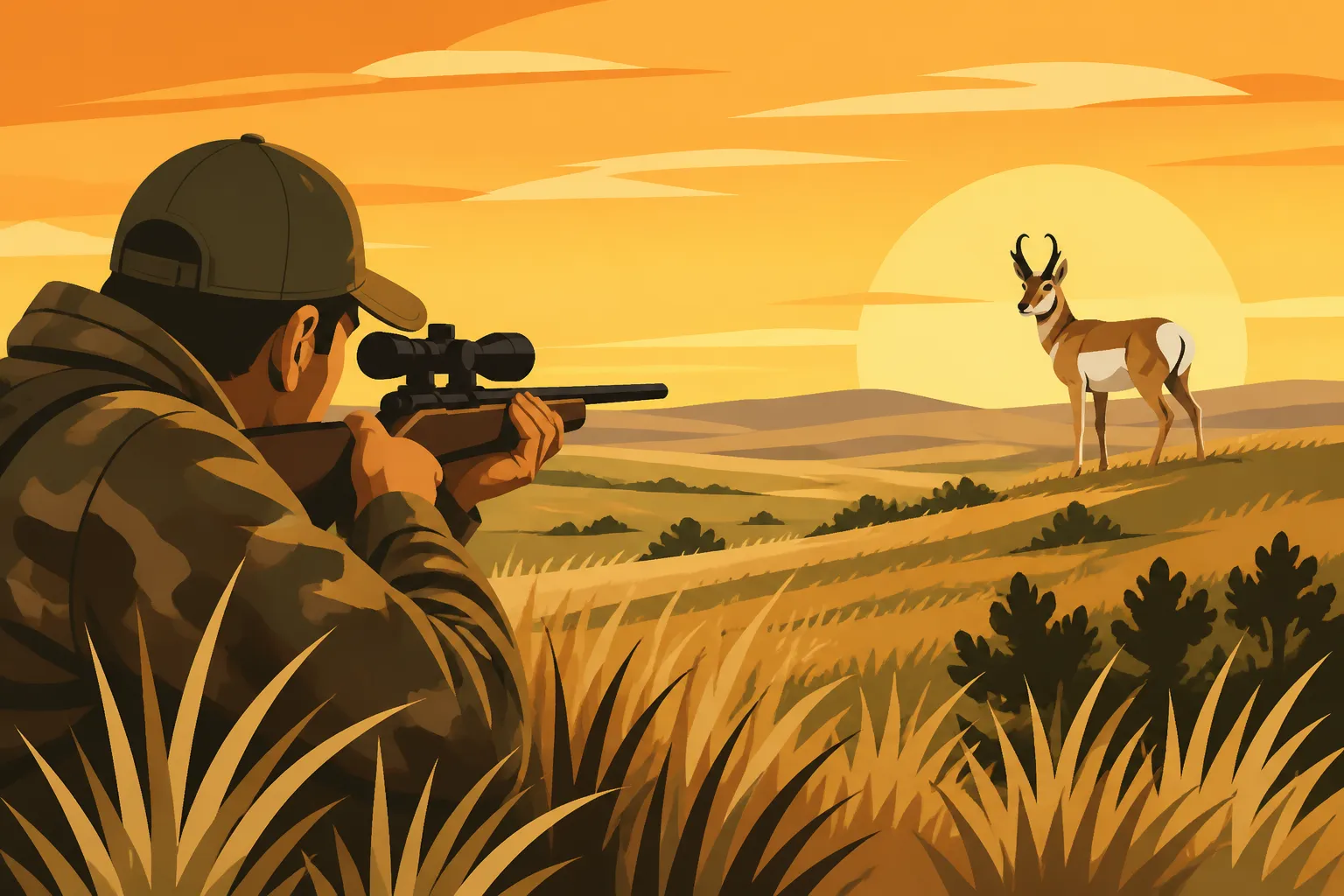
Equally iconic are the Pronghorn Antelope on the Nebraska Plains. These speedsters are built for the open country, and the Oglala provides ideal habitat. Spotting them isn't usually the problem; they're often visible from miles away. The real test comes in closing the distance. Pronghorn have incredible eyesight, often described as eight-power binoculars. They're wary, and a direct approach in open terrain is almost always futile. Stalking them requires strategic use of terrain features – small rises, draws, or even the occasional hay bale – and often involves long crawls on your belly. Bowhunters often find success by setting up over water sources during hot weather, as Archery Antelope From a Water Blind can be a very effective tactic. The thrill of watching these animals navigate their prairie home, and then trying to outsmart them, is what draws many hunters to the Oglala.
Upland Birds and Predators
Beyond the big game, the Oglala also provides excellent opportunities for upland bird hunting and predator calling. This vast landscape is home to Greater Prairie-Chickens and Sharptails in Nebraska, offering unique wingshooting experiences. Sharptails are particularly well-suited to the rolling grasslands, often holding tight in patches of denser cover or along the edges of draws. Prairie chickens, while sometimes found in similar habitats, often prefer larger, more open expanses. Walking miles of this country with a good bird dog, watching them work the wind and eventually lock up on a covey, is a truly classic experience. The flushes are often explosive, and you'll need to be quick on the trigger to connect with these fast-flying birds. Don't forget to review Working Sharptails and Prairie Chickens on Foot tactics before you go.
For those interested in extending their time in the field or adding another layer of challenge, predator hunting is a year-round option. Coyotes are abundant on the grassland, drawn by the prey base of small mammals and deer. Coyote Calling on Winter Grassland can be incredibly productive, especially during the colder months when their fur is prime. Setting up with a good electronic caller or even traditional mouth calls, you can often bring coyotes in from surprisingly long distances across the open terrain. Bobcats are also present, though far more elusive. The Oglala's wide-open nature means you can often spot approaching predators from a long way off, giving you time to set up for a shot. It's a great way to hone your calling and shooting skills while contributing to game management.
Navigating the Grassland: Access and Terrain
The sheer size of the Oglala National Grassland can be overwhelming, but effective navigation is key to a successful hunt. This isn't a place where you just pull over and start walking; understanding its access points, roads, and unique terrain features is crucial for both finding game and ensuring your safety.
Reading the Public Access Atlas and Digital Tools
Before you even set foot on the Oglala, your most valuable tool will be the Nebraska Public Access Atlas. This annually updated guide from the Nebraska Game and Parks Commission (NGPC) is indispensable for identifying public lands, including the Oglala, and outlining specific access rules. While it's primarily focused on state-managed lands and Open Fields and Waters (OFW) tracts, it will clearly delineate the boundaries of the Oglala National Grassland. Pay close attention to the legends and any specific regulations noted for the USFS land.
However, for navigating the vast interior of the Oglala, a digital mapping application like onX Hunt is almost mandatory. These apps use GPS to show your precise location relative to property lines, allowing you to clearly distinguish between public grassland and private land. This is incredibly important in country where fence lines might be non-existent or hard to discern, and where adjacent landowners may not tolerate trespass. GoHunt can also be a valuable resource for pre-season scouting and understanding permit options. Layering in satellite imagery and topographic maps on these apps can reveal hidden draws, water sources, and potential bedding areas that are invisible on a basic map. Learning to use these tools effectively will save you countless hours of wandering and prevent accidental trespass.
Roads, Two-Tracks, and Off-Road Travel
Accessing the Oglala involves a network of county roads, minimum maintenance roads, and unmaintained two-tracks. Paved highways like Highway 2, 20, or 71 provide main arteries, but to get into the heart of the grassland, you'll be on gravel and dirt. Many of these roads are passable in a two-wheel-drive vehicle during dry conditions, but heavy rains can quickly turn them into impassable muddy quagmires. A four-wheel-drive vehicle is highly recommended, especially if you plan to explore deeper sections or hunt during inclement weather.
The two-track roads, often just faint trails worn by previous vehicles, can be tricky. Some are open to public vehicle traffic, while others might be restricted or lead onto private land. Always refer to your maps, like onX Hunt, to confirm road status and land ownership. Off-road travel is generally prohibited on the Oglala National Grassland to protect the fragile prairie ecosystem and prevent erosion. This means you'll be doing a lot of walking, which is precisely what makes the Oglala such a rewarding hunting experience – the farther you get from a road, the fewer other hunters you're likely to encounter. Be prepared to park and hike, and always carry recovery gear if venturing onto less-traveled tracks, as Getting Stuck in Sandhills Sand can happen even in a 4×4.
Understanding the Topography
The topography of the Oglala is its defining characteristic and its biggest challenge for hunters. While it might look "flat" from a distance, it's anything but. The landscape is a complex mosaic of rolling hills, broad valleys, deep erosion cuts, and distinctive badland formations, especially prominent around areas like Toadstool Geologic Park. These badlands are mini-canyons and sculpted buttes that can hold deer and create incredible opportunities for strategic stalking.
Wind is an omnipresent factor on the Oglala. It can change quickly, swirling in draws, and impacting scent control and shot placement. Understanding Wind Direction on Open Nebraska Prairie Stands and how it interacts with the terrain is critical. Thermals also play a role, especially in the deeper draws and badland areas, with air currents rising as the sun warms the ground and sinking as it cools. Learning to "read" the land, identifying natural funnels, bedding areas (often on south-facing slopes or in dense patches of sage), and travel corridors along ridges or through drainages, is essential. The constant elevation changes, even subtle ones, offer numerous vantage points for glassing, but also require significant physical exertion to traverse, especially when carrying gear or, hopefully, game.
Regulations and Special Considerations for the Grassland
Hunting on the Oglala National Grassland means adhering to both statewide Nebraska hunting regulations and specific rules set by the U.S. Forest Service. Being well-versed in both will ensure a legal and enjoyable hunt. Ignorance of the rules is never an excuse, and violations can quickly turn a memorable hunt into a costly headache.
General Hunting Regulations
First and foremost, all hunters on the Oglala must comply with Nebraska's statewide hunting regulations. This includes having the appropriate permits for the species you are pursuing, such as a Nebraska Archery and Muzzleloader Deer Permits or general hunt permits. For deer and antelope, you'll need the correct unit-specific permit, which can often be competitive in the draw process. Always check the current year's Nebraska Game and Parks Commission regulations booklet for season dates, bag limits, and specific weapon restrictions. Don't forget your Nebraska Habitat Stamp and Hunter Education requirements as well.
It's also crucial to remember rules like legal shooting hours, blaze orange requirements (especially during the firearm deer season, even for archers, as detailed in Orange Requirements for Archers in November), and carcass tagging and reporting procedures. For example, Nebraska Deer Tagging and Checking Rules mandate tagging your animal immediately after harvest and reporting it online or via phone. When hunting upland birds, shot size and shell capacity limits are important. The Oglala, being federal land, may have specific rules regarding lead shot for certain species, so always double-check non-toxic shot regulations if hunting waterfowl or within specific refuge zones, though generally, upland hunting permits lead shot.
Specific Grassland Rules
Beyond state regulations, the U.S. Forest Service (USFS) manages the Oglala National Grassland and has its own set of administrative rules that hunters must follow. These often pertain to access, camping, and the use of structures. For instance, while you can hunt Oglala National Grassland Hunting during open seasons, vehicle use is typically restricted to designated roads and parking areas. Off-road travel is generally prohibited to protect the delicate prairie ecosystem. This means you’ll often need to park and walk, sometimes for miles, to reach prime hunting spots.
Camping is often allowed on the Oglala, but usually only in designated areas or under dispersed camping rules, which means setting up a camp away from developed sites. Always check with the local USFS ranger district office for current camping regulations, fire restrictions, and any temporary closures. Leave No Trace principles are paramount: pack out everything you pack in, and minimize your impact on the land. Camping on the Oglala Grassland is a fantastic way to immerse yourself in the experience, but doing so responsibly is critical. Additionally, permanent blinds or stands are generally not allowed, and any temporary structures must be removed daily. Be aware of any rules regarding baiting or the use of trail cameras, as these can vary on federal lands.
Safety and Respect for the Land
Safety on the Oglala is a serious consideration. The remote nature of the grassland means help can be a long way off. Always let someone know where you are going and when you expect to return. Carry a reliable communication device, whether it's a satellite messenger, a fully charged cell phone (though service is spotty), or a two-way radio if hunting with partners. Dehydration is a real risk in this arid environment, even in cooler weather. Always carry more water than you think you'll need.
Respect for the land and other users is also vital. The Oglala is a multi-use area; you may encounter hikers, campers, bird watchers, or cattle ranchers. Always identify your target and know what's beyond it. Be mindful of livestock, and if you encounter cattle, give them a wide berth. Remember, this land is also someone's livelihood. When hunting near Toadstool Park and Grassland Access, be especially vigilant for non-hunters and photographers. Practicing ethical hunting, following all regulations, and leaving the land better than you found it ensures that future generations can enjoy the unique hunting opportunities the Oglala offers.
Planning Your Hunt: Logistics and Gear
Hunting the Oglala National Grassland isn't a spur-of-the-moment affair. It demands meticulous planning, from scouting the vast landscape to assembling the right gear that can withstand the elements and rugged terrain. Proper preparation is the difference between a frustrating trip and a successful, memorable adventure.
Pre-Season Scouting and Maps
Given the immense size of the Oglala National Grassland, effective pre-season scouting is absolutely critical. While physically walking every acre isn't feasible for most, digital scouting can be incredibly effective. Utilizing tools like onX Hunt or GoHunt on your computer, you can pour over satellite imagery and topographical maps for hours. Look for key features: water sources (stock tanks, ephemeral creeks, reservoirs), badland formations, drainages that offer cover and travel corridors, and any slight elevation changes that could provide a vantage point. Identify potential bedding areas on south-facing slopes, and feeding areas with specific vegetation. Don't just focus on the grassland itself; look at how it interfaces with private land, as deer and antelope will often move between the two.
If possible, a physical scouting trip can provide invaluable ground truth. Even driving the main access roads and stopping at various points to glass can reveal patterns and areas of game sign that satellite images might miss. Pay attention to how the wind affects certain draws, and identify specific trees or rock formations that could serve as landmarks. Understanding the sheer scale of the landscape and the time it takes to traverse it will help you manage your expectations and plan your hunt more efficiently. Remember, the Oglala is dynamic, and game patterns can shift, but foundational knowledge of the terrain remains constant.
Essential Gear for Open Country
Hunting the Oglala requires gear that's up to the challenge of vast, open, and often rugged terrain. Optics are paramount. A good pair of 10x or 12x binoculars are your most important tool for Optics for Glassing the Nebraska Sandhills and the grassland. Many hunters also carry a spotting scope (15-45x or 20-60x) on a sturdy tripod to pick apart distant hillsides and verify antler size on potential trophy animals. Combine this with a reliable rangefinder, and you'll be well-equipped to locate and assess game.
For your weapon, a flat-shooting rifle caliber is often preferred for the long distances common on the plains. Calibers like .270, 6.5 Creedmoor, .308, or .30-06 are popular choices, paired with a quality scope that allows for precise adjustments at extended ranges. Refer to Rifle Setups for Nebraska's Open Country for more specifics. Footwear is another critical component; sturdy, comfortable hiking boots that can handle miles of walking over varied terrain, from prairie grass to rocky badlands, are a must. Dress in layers, as temperatures can fluctuate wildly, and wind is almost always a factor. A good wind-blocking outer shell is essential. Don't forget a quality backpack for carrying water, snacks, extra layers, and hopefully, game bags for packing out meat.
Food, Water, and Emergency Preparedness
This is not a place where you can easily pop into a convenience store for supplies. You must be entirely self-sufficient. Water is arguably the most critical item. There are very few reliable public water sources on the Oglala, and while cattle tanks exist, they are for livestock and not suitable for human consumption without purification. Plan to carry several liters of water per person per day, especially during warmer seasons. Electrolyte supplements can also be beneficial to prevent dehydration.
Beyond water, pack high-energy, non-perishable food that's easy to eat on the go. Think jerky, trail mix, energy bars, and dried fruit. A compact first-aid kit is non-negotiable, stocked with essentials for cuts, blisters, snake bites, and pain relief. A headlamp or flashlight, knife, fire-starting materials, and an emergency blanket or shelter are also smart additions. A fully charged power bank for your phone or GPS device is wise, as is a physical compass and map as a backup. Finally, consider carrying a small shovel or a digging tool if you plan to deal with vehicle issues, and always have a full tank of gas before heading deep into the grassland. Being prepared for the unexpected is not just a suggestion; it's a necessity on the Oglala.
Common Challenges and How to Overcome Them
Hunting the Oglala National Grassland is an adventure, and like any grand adventure, it comes with its own set of unique challenges. Being aware of these potential hurdles and having strategies to overcome them will dramatically increase your chances of success and enjoyment.
Weather Extremes and Wind
Nebraska weather, especially in the panhandle, is notoriously unpredictable and can change on a dime. The Oglala is particularly exposed to the elements. Summers can be scorching hot with temperatures well over 90 degrees, leading to rapid dehydration and heat exhaustion. Winters bring bitter cold, heavy snow, and brutal wind chills that can make sitting for even short periods unbearable. Spring and fall offer more moderate temperatures but are often accompanied by strong, relentless winds. Wind and Thermals in the Sandhills play a massive role in how game moves and how your scent travels.
Overcoming these weather challenges requires meticulous preparation. For warm weather hunts, prioritize hydration, hunt early and late, and seek shade whenever possible. Light, breathable clothing is essential. In cold weather, layering is key. Start with a moisture-wicking base layer, add insulating mid-layers, and top with a windproof and waterproof outer shell. Hand warmers and insulated boots are also critical for staying comfortable on a cold sit. Always check the forecast religiously before heading out, and be prepared for it to be wrong. Packing an extra set of dry clothes and emergency supplies in your vehicle is a wise precaution, as getting caught unprepared can be dangerous.
Finding Water and Hydration
As mentioned previously, water scarcity is one of the most significant challenges on the Oglala. Natural water sources are few and far between, and many stock tanks are for livestock and may not be safe for human consumption without proper filtration and purification. This means you must be proactive and meticulous about your hydration strategy.
The best way to overcome this challenge is simple: carry more water than you think you need. For a full day of active hunting, especially in warm weather, that could mean several liters per person. Consider using a hydration pack for easy access while on the move, and carry additional bottles in your backpack. If you're planning a multi-day trip or are deep in a remote area, having a reliable water filter or purification tablets can provide a backup, but never rely solely on finding natural water. Plan your routes to potentially pass by known stock tanks if you absolutely need to, but always have a way to purify that water. Conserving water by limiting high-sodium foods and avoiding excessive physical exertion during the hottest parts of the day can also help.
Dealing with Solitude and Self-Sufficiency
The Oglala National Grassland offers an incredible sense of wildness and solitude. For many hunters, this is a huge part of its appeal. You can truly disconnect and immerse yourself in the landscape. However, this solitude also comes with the demand for absolute self-sufficiency. You are often hours from the nearest town, and cell phone service is notoriously unreliable across much of the grassland. If you have an emergency, help will not be immediate.
To overcome this, embrace the self-reliance but prepare diligently. Ensure your vehicle is in top mechanical condition, and carry emergency repair supplies like a spare tire, jack, jumper cables, and basic tools. A satellite communication device (like a Garmin inReach or a Zoleo) is highly recommended for emergency communication when cell service is absent. Practice basic first aid and knot-tying. Mentally prepare for long hours alone, and consider hunting with a partner if the idea of remote solitude is intimidating. This landscape can be unforgiving, but with proper planning and a resilient mindset, the solitude becomes part of the profound experience of hunting in one of Nebraska's wildest places.
| Species | Best Season | Primary Habitat | Key Hunting Tactic |
|---|---|---|---|
| Mule Deer | Archery, Firearm | Badlands, Draws, Pine Ridge | Glassing, Spot-and-Stalk, Still-Hunting |
| Pronghorn | Archery, Firearm | Open Prairie, Rolling Hills | Long-range Glassing, Stalking, Water Blinds |
| Sharptail Grouse | Fall Upland | Rolling Grassland, Sagebrush | Walking with Dog, Flushes |
| Prairie Chicken | Fall Upland | Large Expanses of Tall Grass | Walking with Dog, Identifying Lek Ranges |
| Coyote | Year-round | All Habitats | Calling (electronic or mouth), Stand Hunting |
Disclaimer
This article is for general informational purposes only and does not constitute professional advice. Laws, prices and regulations vary by location and change over time. Consult a qualified professional for guidance on your specific situation.