Nebraska National Forest at Halsey
Hunting a truly unique landscape like the Nebraska National Forest at Halsey can be an incredible experience, but it also presents its own set of challenges. This isn't your typical river-bottom timber or vast open prairie; it's a hand-planted forest in the middle of the Sandhills, offering a different kind of public land puzzle. This guide will walk you through what to expect, how to prepare, and the best ways to approach hunting this distinctive piece of Nebraska.
The Unique Landscape of Halsey National Forest
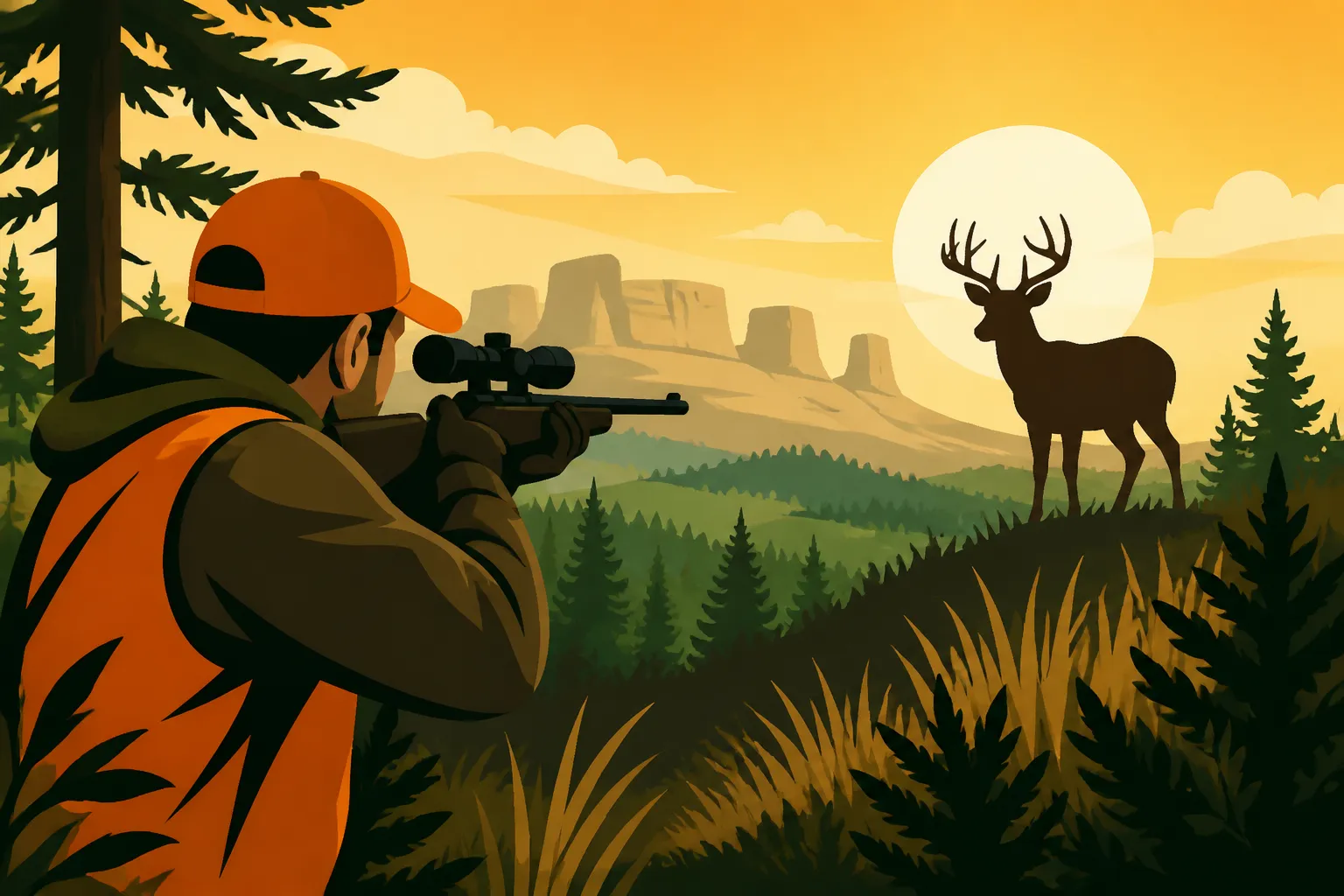
Stepping into the Nebraska National Forest at Halsey, you might blink and wonder if you've been transported to the Black Hills of South Dakota or a Ponderosa pine forest out West. It's truly unlike anywhere else in Nebraska, and that's precisely what makes it so special – and so challenging – for hunters. This is a place where you'll trade your usual row-crop field edges for sandy trails and pine needle beds, and that requires a shift in perspective and tactics.
A Forest Born from the Prairie
The very existence of Halsey National Forest is a testament to human ingenuity and perseverance. It's not a naturally occurring forest in the traditional sense, but rather a monumental reforestation project that began over a century ago. Imagine the sheer effort it took to plant millions of Ponderosa pine trees on what was once vast Sandhills prairie. This unique history means the forest canopy can vary in density, from mature, towering pines to younger, thicker stands, all interspersed with native Sandhills grasslands, brushy draws, and the occasional wetland or creek bottom. It’s a patchwork, not a monoculture, which creates incredible habitat diversity.
This blend of towering pines and rolling grasslands offers a distinct visual and tactical challenge. You might be still-hunting through a dense pine stand one minute, then emerge onto an open, sandy knoll overlooking miles of classic Sandhills habitat the next. The ground underfoot is often soft and sandy, absorbing sound, which can be both a blessing and a curse. It makes for quiet stalking but also means you’re working harder with every step. Understanding this history helps you appreciate the layered habitat you're moving through and predict how game might use the different cover types.
Navigating the Sandy Terrain
One of the most immediate and often underestimated challenges of hunting Halsey is the terrain itself. You are, after all, in the heart of the Sandhills. While the pines provide welcome shade and cover, the ground beneath them and in the surrounding areas is predominantly sand. This isn't just a minor inconvenience; it dictates everything from your choice of vehicle to your footwear and your physical endurance. Many an unprepared hunter has found themselves bogged down, literally, in the soft, deep sand of Halsey’s two-track roads or even its more established paths.
For vehicle access, a four-wheel-drive vehicle is not just recommended, it's often essential. Even then, knowing how to drive in sand – often involving airing down your tires for better traction – can save you a significant headache and a long walk. Don't assume that because a road looks "established" it's firm ground. Many of these trails are sandy through and through. When it comes to walking, be prepared for a workout. Every step in soft sand requires more effort than walking on firm soil, and combined with the occasional steep incline of a sand dune, your leg muscles will feel it. Planning shorter routes or packing lighter can make a big difference in maintaining your energy throughout the day.
Game Species and Seasons at Halsey
Halsey National Forest isn't just a pretty place; it's a productive hunting area for a variety of game, particularly deer and upland birds. The mix of pine forest, grassland, and scattered water sources creates a diverse ecosystem that supports a healthy population of several species that are popular with Nebraska hunters. Knowing what to expect and when to hunt can significantly improve your chances of success.
Deer Hunting in the Ponderosas
Halsey is a fantastic spot for deer, offering opportunities for both whitetails and mule deer, often within the same general area. Whitetails tend to stick to the denser pine stands, creek bottoms, and brushier areas, utilizing the thick cover for bedding and security. Mule deer, while they might use the pines for thermal cover or shade, often prefer the more open, rolling Sandhills grassland that borders or intersperses with the forest, especially during feeding times. This dual presence means you need to be observant of both species' habits.
The pines themselves provide excellent thermal cover in colder weather and deep shade during warm early seasons, making them prime bedding areas. Deer also browse on various plants and forbs found within the forest and its edges. Nearby agricultural fields outside the forest boundaries can draw deer, especially in the evenings, but within Halsey, natural browse is key. Both archery, firearm, and muzzleloader hunters can find success here, though each season presents its own challenges and advantages. Nebraska Archery and Muzzleloader Deer Permits are popular choices for hunters looking to explore the unique environment of Halsey. During firearm season, the ability to make longer shots across openings or through the pines is crucial, while archery hunters will focus on pinch points, trails, and bedding areas within the thicker cover.
Upland Birds: Grouse and Quail
Beyond deer, Halsey and its surrounding areas are a magnet for upland bird hunters. The Sandhills are renowned for their prairie grouse, specifically sharp-tailed grouse and greater prairie-chickens, and you'll find these birds using the vast grasslands adjacent to the forest. These open-country birds prefer the native grasses, forbs, and scattered shrubbery for feeding and cover. Early season hunting often involves walking large tracts of these grasslands, working wind and terrain to locate coveys. As the season progresses, they might seek more shelter in brushy draws or the edges of the pines, especially during harsh weather.
While grouse dominate the open areas, the forest edges, shelterbelts, and brushy pockets within Halsey can hold good numbers of bobwhite quail. These birds prefer denser cover, making the transition zones between pines and prairie ideal. Hunting quail in Halsey means working these specific types of cover, often involving tight flushes. For those looking to experience true Sandhills bird hunting, Halsey offers a unique blend. I've had some incredible days walking the fringes of Halsey for sharp-tailed grouse, marveling at the contrast between the pines and the endless prairie. If you're looking for more specific tactics, check out Working Sharptails and Prairie Chickens on Foot or even Quail and Grouses Around Halsey.
Predator and Small Game Opportunities
Halsey National Forest also offers year-round opportunities for predator and small game hunting, providing additional reasons to explore its unique landscape. Coyotes are abundant in the Sandhills, and the mixed habitat of Halsey—dense pines, open grasslands, and brushy draws—provides excellent cover and travel corridors for them. Calling coyotes in this environment can be very effective, especially using the pine stands for concealment while calling out into open areas. The varied terrain makes for interesting setups, as you can often get a vantage point from a higher knoll within the pines to survey a large expanse of open country.
Beyond coyotes, you might encounter bobcats, particularly in the thicker timber and rocky draws, although they are more elusive. For small game, rabbits and squirrels thrive in different parts of the forest. Cottontail rabbits are common in the brushy edges and denser undergrowth, while fox squirrels will frequent the pine stands, especially where there are mature trees. These opportunities can provide fun, high-action hunts, particularly during the off-season for big game, or can be combined with a bird or deer hunt to make for a truly diverse day afield.
Essential Tactics for Halsey Hunters
Hunting Halsey National Forest requires a different playbook than many other Nebraska locations. The combination of dense pine forest, rolling sandhills, and often unpredictable weather means you need to be prepared with specific strategies. Success here often comes down to careful planning, adaptability, and a willingness to work for your game.
Scouting and Pre-Season Preparation
Effective scouting is paramount when hunting a complex area like Halsey. Given the unique mix of pines and prairie, traditional scouting methods need to be adapted. Before you even set foot in the forest, spend significant time studying maps and aerial imagery. Tools like onX Hunt or GoHunt are invaluable here, allowing you to identify dense timber blocks, open grasslands, water sources, and potential travel corridors. Look for fingers of timber extending into the prairie, or brushy draws cutting through the pines; these are often highways for deer. Pay attention to changes in elevation, as even subtle rises can offer vantage points or funnel game movement.
Once on the ground, even during the off-season, physically scouting helps you understand the scale and nuances of the terrain that maps simply can't convey. Walk the forest edges, look for deer trails entering and exiting the pines, and identify potential bedding areas within the thickest cover. Understanding the predominant wind patterns is also critical. While the pines can provide some buffer, the Sandhills are notoriously windy. Knowing how the wind typically blows in your chosen area will help you plan your approach and exit routes to avoid being scented. For more on this, consider reading Wind Direction on Open Nebraska Prairie Stands.
Still-Hunting and Stand Placement
The nature of Halsey National Forest lends itself well to still-hunting, especially for deer. Moving slowly and deliberately through the pine stands, pausing frequently to glass ahead and listen, can be incredibly effective. The soft, sandy ground often muffles your footsteps, allowing for quieter movement than in crunchier terrain. Focus on glassing into the dark shadows of the pines, where deer often bed or move undetected. Look for flicking ears, a horizontal line in a vertical world, or the glint of an antler. Patience is key; it’s not about covering ground quickly but covering it thoroughly and quietly.
For hunters who prefer to sit, stand placement needs careful consideration. Traditional treestands can work in the taller, more mature pine stands, but finding the right tree and a clear shooting lane can be a challenge in denser areas. Ground blinds, especially those brushed in naturally, can be very effective in Halsey. They offer excellent concealment in the understory of the pines or along the edges of brushy draws. Remember that high winds are common, so ensuring your blind is well-anchored is crucial, as is effective concealment. For more on this, check out Ground Blinds That Handle Nebraska Wind. Look for pinch points between different habitat types, transition lines from dense cover to more open feeding areas, or approaches to water sources.
Water Sources and Game Movement
In the often-dry Sandhills environment, water sources become absolute magnets for game, and Halsey National Forest is no exception. Identifying and understanding how deer, elk, and even upland birds utilize these precious resources can be a game-changer for your hunting strategy. While the forest itself might not have many large, permanent bodies of water, there are natural seeps, small ponds, and the Middle Loup River flows along portions of its boundary. Beyond these, cattle stock tanks, which are often found on adjacent private or public grazing lands, can also be critical water points, particularly during drier periods.
Game animals in this arid region are often highly patterned around water. During hot early seasons, deer will visit water sources more frequently, often in the early morning or late evening. As temperatures drop, their reliance might decrease but still remains important. Scouting these areas for tracks, droppings, and fresh sign can tell you a lot about the volume and timing of animal activity. Setting up on a travel corridor leading to a water source, or patiently observing a tank from a distance, can be a highly effective tactic. Just remember to be mindful of other users, including livestock, if hunting near stock tanks.
Gear and Safety Considerations
Hunting in Halsey National Forest, with its unique terrain and variable weather, demands careful attention to your gear and safety protocols. Being unprepared here can quickly turn an exciting hunt into a frustrating, or even dangerous, situation. Planning ahead for footwear, clothing, navigation, and vehicle needs is essential for a successful and safe experience.
Footwear and Clothing for Variable Conditions
Your feet are your most important tools when hunting Halsey. The constant walking in deep sand, often over uneven terrain, will test even the most experienced hunter. You'll want sturdy, comfortable boots with good ankle support that can handle miles of walking. Consider boots that are designed for rugged, sandy conditions, or those with excellent shock absorption to reduce fatigue. For more specific recommendations, take a look at Boots for Walking Nebraska Grass and Sand. Avoiding blisters and discomfort means you can stay out longer and focus on the hunt.
Clothing choices should revolve around layering, given Nebraska's often unpredictable weather, especially in the Sandhills. Early seasons can be surprisingly warm, even hot, requiring breathable layers that protect from sun and thorns. Later in the fall, temperatures can plummet, with strong winds making it feel even colder. A good base layer, insulating mid-layers, and a windproof outer shell are crucial. Don't forget rain gear, as a Sandhills thunderstorm can blow in quickly. During the firearm deer season, remember Nebraska's blaze orange requirements: you'll need to display at least 400 square inches of blaze orange on your head, chest, and back. Make sure your outer layers, including your hat, meet these requirements. For a deep dive into this, see Nebraska's 400-Square-Inch Orange Rule.
Optics and Navigation
Effective optics are a non-negotiable part of hunting Halsey. While the dense pines might seem to limit visibility, glassing for deer moving through the timber or spotting grouse on the open prairie requires good quality binoculars. A 10×42 or 12×50 binocular will serve you well for scanning both the dark shadows of the forest and the vastness of the surrounding Sandhills. A spotting scope might be overkill unless you plan on spending significant time glassing the open prairie for mule deer or pronghorn outside the forest boundaries.
For navigation, relying solely on your internal compass or memory in an unfamiliar pine forest can be a recipe for getting lost. A GPS unit or a reliable hunting app on your smartphone, like onX Hunt, is absolutely essential. These tools allow you to pinpoint your location, mark waypoints, track your movement, and easily identify public land boundaries. Always download offline maps before heading out, as cell service can be spotty or non-existent in many parts of Halsey. Carry a compass and a paper map as a backup, and know how to use them. Technology is great, but a dead battery can leave you disoriented. You can learn more about this in GPS Units Versus Phone Apps.
Vehicle Preparedness and Emergency Gear
As previously mentioned, a 4×4 vehicle is highly recommended, if not essential, for navigating the sandy roads of Halsey. Beyond having four-wheel drive, it’s wise to be prepared for getting stuck. Carry a shovel, a tow strap, and a traction aid (like traction boards or even sturdy floor mats). Consider lowering your tire pressure slightly when driving on deep sand for better flotation, but remember to reinflate them once you hit harder surfaces. Getting stuck far from assistance is a common scenario in Halsey, and self-rescue might be your only option.
Beyond vehicle recovery, pack essential emergency gear. This includes extra water (more than you think you'll need, especially in warmer weather), extra food, a first-aid kit, a flashlight or headlamp (with extra batteries), a fire starter, and warmth layers, even if the forecast looks mild. Cell phone service can be unreliable in many remote areas, so don't count on it for emergencies. Inform someone of your hunting plans, including your general location and expected return time. This "hunt plan" is crucial for anyone heading into remote public lands.
Respecting the Resource and Other Users
Hunting Halsey National Forest is a privilege, and with that comes a responsibility to both the environment and other people who enjoy this unique public land. Practicing ethical behavior and being mindful of your impact ensures that Halsey remains a high-quality hunting destination for years to come.
Practicing Leave No Trace Principles
Halsey National Forest, despite its managed nature, is still a wild and special place. Adhering to Leave No Trace principles is fundamental here. This means packing out everything you pack in, including all trash, spent shell casings, and any food wrappers. Don't leave anything behind. If you're field dressing game, choose a location away from trails, water sources, and common use areas. Properly dispose of offal to minimize impact and avoid attracting scavengers to inappropriate spots.
Fire safety is also paramount, especially in a pine forest, even one surrounded by sand. Dry pine needles and undergrowth can ignite quickly, and a wildfire in a national forest is devastating. Be extremely careful with any open flames, campfires (if permitted in designated areas), or even hot exhaust pipes parking over dry grass. Always check current fire restrictions before your trip. The goal is to leave the area as you found it, or even better, for the next person to enjoy.
Shared Use and Hunter Etiquette
Halsey National Forest is not exclusively for hunters. It's also a destination for hikers, campers, horseback riders, birdwatchers, and other outdoor enthusiasts. During your hunt, you will likely encounter other users. Practicing good hunter etiquette is crucial for fostering positive relationships and ensuring continued public access. This means being courteous, respectful, and understanding that you are sharing the space.
Communication is key. If you see other individuals or groups, make your presence known verbally to avoid startling anyone, particularly during firearm season. If approaching an area where other users are present, consider adjusting your plans to avoid conflicts or unsafe situations. For instance, if you encounter hikers on a popular trail, choose to hunt a different area. Be aware of Nebraska Wildlife Management Area Rules and general guidelines for public lands, which often include specific regulations about camping, vehicle use, and blind placement. Also, be mindful of any livestock you might encounter, as grazing often occurs on parts of the forest. The more we respect each other and the resource, the better the experience for everyone. If you're planning to camp, review Camping on Nebraska Public Ground for relevant regulations.
Halsey National Forest Hunting Snapshot
| Game Species | Primary Habitat | Season Opportunities | Unique Considerations |
|---|---|---|---|
| Whitetail Deer | Dense Pine Stands, River Bottoms | Archery, Firearm, Muzzleloader | Use thick cover for bedding; wary of human presence. |
| Mule Deer | Open Grasslands, Pine Edges | Archery, Firearm, Muzzleloader | Often utilize both pines and prairie; glassing is key. |
| Sharp-tailed Grouse | Native Sandhills Grasslands | Upland Bird Season | Found in open areas; coveys can be large; require walking. |
| Prairie-Chicken | Native Sandhills Grasslands | Upland Bird Season | Similar to Sharptails; focus on native tallgrass. |
| Bobwhite Quail | Forest Edges, Brushy Draws | Upland Bird Season | Prefer dense cover; strong flushes; good dog work helpful. |
| Coyote | All Habitats | Year-Round | Calling is effective; use pines for concealment. |
| Rabbit/Squirrel | Brushy Pockets, Pine Stands | Year-Round | Good for off-season; focus on dense undergrowth. |
Disclaimer
This article is for general informational purposes only and does not constitute professional advice. Laws, prices and regulations vary by location and change over time. Consult a qualified professional for guidance on your specific situation.