Wind Direction on Open Nebraska Prairie Stands
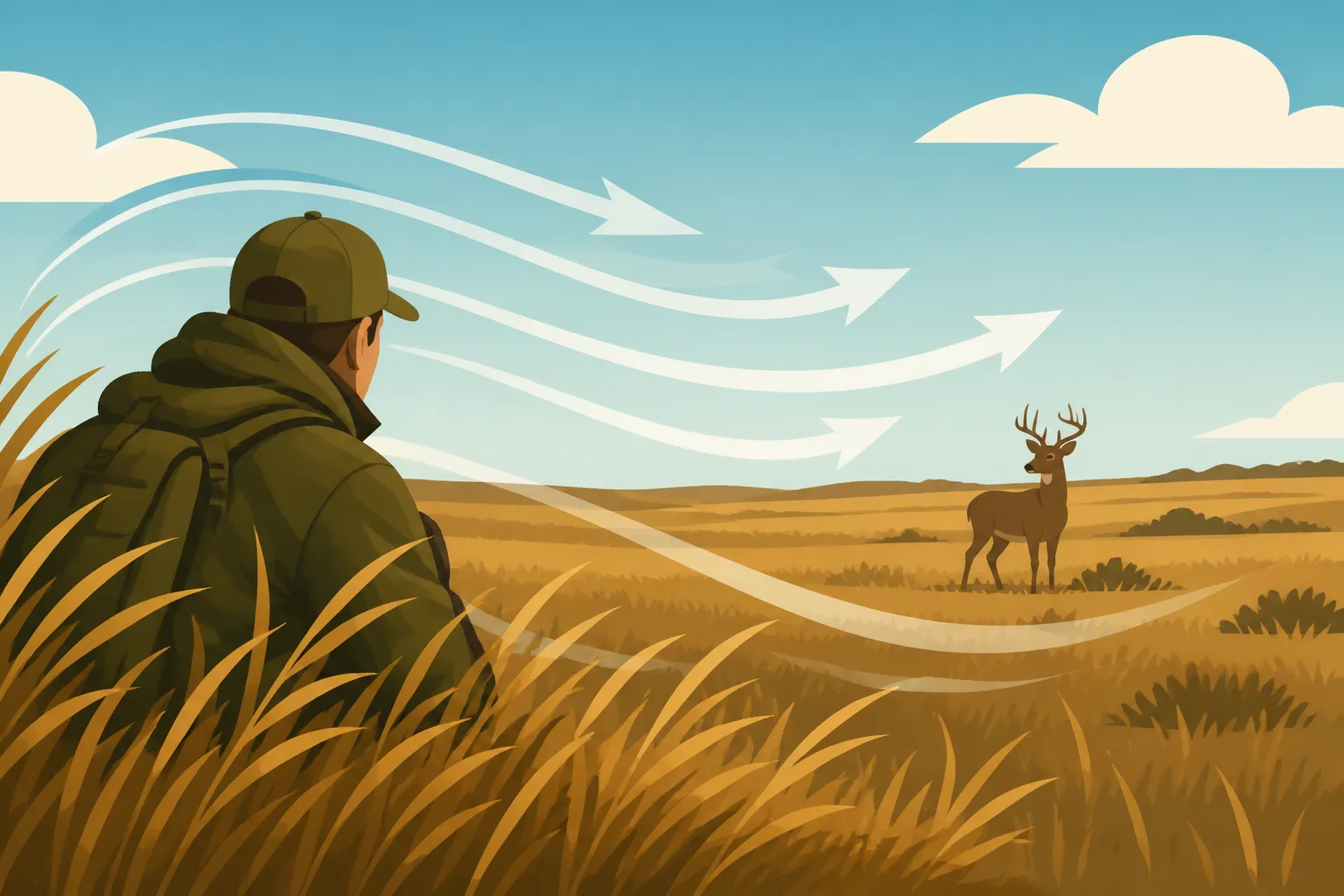
Hunting open country in Nebraska presents a unique set of challenges, and perhaps none is more frustrating than the relentless, unpredictable wind. You’ve put in the scouting, found what looks like a perfect stand location, only to have a sudden shift in the breeze ruin your hunt before it even begins, sending your scent swirling directly into where you expect deer or antelope to appear. This guide is here to walk you through understanding, predicting, and ultimately mastering wind direction to increase your success on those wide-open Nebraska prairie stands.
Why Wind Is Your Constant Companion on the Nebraska Prairie
The open expanse of Nebraska’s grasslands and croplands is a beautiful, yet demanding, hunting environment. Unlike the dense timber of other regions, there’s often little to break the prevailing winds, making them an omnipresent factor in every decision you make.
The Unforgiving Nature of Open Landscapes
Think about hunting a whitetail in a thick river bottom in eastern Nebraska. You might have timber, brush, and creek banks that help funnel wind, create swirls, or even provide pockets of calm. On the open prairie, especially in areas like the Sandhills or the vast tracts of farmland, those natural barriers are few and far between. A steady 10-15 mph breeze feels like a gale when you’re sitting on a solitary terrace bench or trying to intercept game along a fenceline. This lack of cover means your scent cone can spread unchecked for hundreds of yards, making an undetected approach or a long sit incredibly difficult if you haven’t accounted for every possible shift. It's a constant battle, and one that requires a different kind of strategy than the typical woodsman might employ.
How Thermals Play a Role, Even in Flat Country
While thermals—those rising and falling air currents driven by temperature changes—are often associated with mountainous terrain, they absolutely play a role in Nebraska’s open country, too. Don't let the seemingly flat landscape fool you. Subtle elevation changes, even just a slight rise and fall of a few feet, can create localized thermal drafts. Early morning, as the sun begins to warm the ground, you might experience rising thermals, pulling your scent up and away from a low-lying creek bed. Conversely, in the late afternoon and evening, as the air cools, thermals will begin to fall, dragging your scent down into those same low areas. Consider areas around river-bottom whitetail hunting or where a creek crossing in the Sandhills cuts through the prairie. Even the edges of shelterbelts can create slight thermal effects as one side warms faster than the other. Ignoring these subtle shifts can be just as detrimental as misjudging the prevailing wind.
Understanding and Predicting Wind for Your Stand Location
Successfully hunting with the wind isn't about ignoring it; it's about becoming its student. This means looking beyond the simple arrow on your weather app and delving into the nuances of what the wind is truly doing and how it interacts with the land.
Reading the Forecast Beyond Just Direction
Just knowing the wind is from the west isn't enough when you're planning your hunt on the open prairie. You need to dive deeper into the forecast details. What is the predicted wind speed? Are there significant gusts expected? A steady 5 mph breeze might be manageable, but if it's gusting to 20 mph, that means your scent is being pushed out in unpredictable bursts and eddies. Gusts can also carry sound further, making you more detectable. Furthermore, pay attention to predicted changes in wind direction throughout the day. Many apps and weather services, including those integrated into hunting platforms like GoHunt, offer hourly wind forecasts. You might start your morning hunt with a perfect north wind, but if it's predicted to shift southwest by mid-morning, you need a backup plan or a different approach for the latter part of your sit. Ignoring these nuances is a surefire way to educate every animal downwind.
Using Topography to Your Advantage
Even in seemingly flat Nebraska, topography offers opportunities to manage wind. Those subtle draws, creek beds, terrace lines, and shelterbelts aren't just travel corridors for game; they're also tools for the savvy hunter. A gentle ridge can offer a slight break from a direct crosswind, while a deeper blowout in the Sandhills might create a temporary pocket of swirling air, but also offer some visual concealment.
For example, when considering still-hunting Nebraska cedar draws, the cedars themselves, even if sparse, can create a funnel or a buffer. On flatter farmland, an elevated terrace bench might put you above the immediate ground-level scent stream, but also exposes you more. When you’re scouting, walk the area and feel the wind. Notice how it behaves around different features. Does it get quieter in that shallow dip? Does it pick up speed as it funnels between two small rises? Using a ground blind on Nebraska public ground can be especially effective here, as it allows you to adapt to these micro-terrain features and position yourself for optimal scent control. Knowing how to read a cedar draw for deer movement is directly tied to understanding how wind will move through it.
Tactical Approaches to Setting Up with the Wind in Mind
Once you understand the wind, it's time to put that knowledge into action. This often means making compromises and embracing flexibility in your setup.
The Downwind Dilemma: Balancing Scent and Visibility
The cardinal rule of hunting is to always keep the wind in your face, or at least a crosswind. But on open Nebraska prairie stands, this isn't always practical, especially if you're trying to set up on a scrape line along a fenceline or a well-used trail in a wide-open basin. If the perfect travel corridor or feeding area requires you to be slightly downwind, you face a dilemma: do you stick to the "perfect" wind and abandon the best sign, or do you take a calculated risk?
Sometimes, accepting a slightly quartering wind (where your scent is blowing mostly away, but potentially catching a corner of their approach) is necessary. In these situations, your visual and auditory concealment become paramount. This is where options like ground blinds in open Nebraska country really shine. They provide a visual break and can help mask small movements. The goal isn't just to be "downwind" but to ensure your scent doesn't reach the animal before you have a shot opportunity. This means thinking about the full picture: prevailing wind, thermals, game travel patterns, and your ability to remain undetected visually and audibly. This is why entry and exit routes on flat farm ground are so critical; you want to get in and out without spreading scent into the hunting area.
Portable Blinds and Strategic Movement
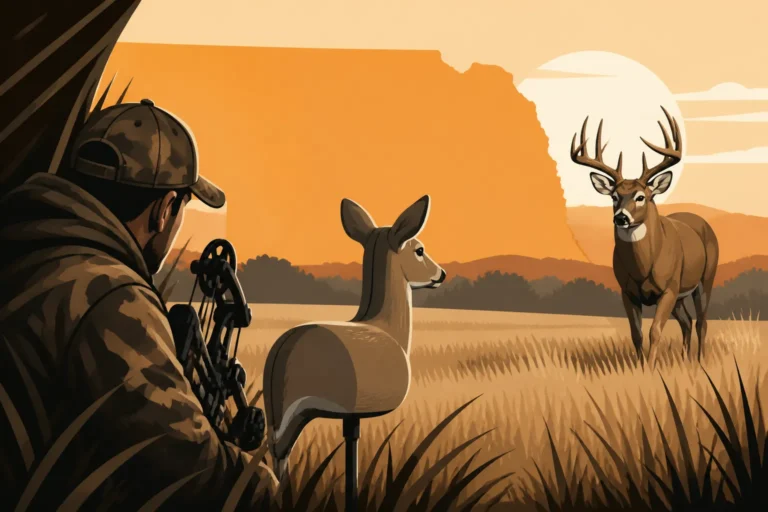
In wide-open country, portable ground blinds are often your best friend. They can be set up quickly to capitalize on a specific wind, moved to adapt to changing conditions, and provide crucial concealment. Imagine you're hunting a particular grass waterway cutting through a cornfield. You scouted it, and there's fresh sign. A pop-up blind allows you to brush in a blind on open range effectively, breaking up your outline and offering some protection from the elements.
This flexibility also applies to how you hunt. Instead of a static stand all day, consider a more active approach like still-hunting, especially on days with variable winds. By slowly moving into the wind, you reduce your scent signature. When you encounter sign, or believe game is ahead, you can set up quickly with minimal gear, utilizing natural contours or a small folding stool to make a short sit. Even rattling and grunting in Nebraska's rut can be more effective with a mobile approach, allowing you to cover ground and call from optimal wind positions before quickly relocating. This strategy empowers you to react to the environment rather than being locked into a single, potentially compromised position.
Real-World Scenarios and Adaptations for Prairie Hunting
The key to mastering wind on the prairie is not just understanding theory, but applying it with practical adaptations in the field. Every day is a new challenge.
The Shifting Sands of a Gusty Day
There are those days on the Nebraska prairie when the wind simply refuses to cooperate. It swirls, it gusts, it shifts. What started as a promising north wind suddenly clocks around to the northeast, then back to the north, all within an hour. On days like this, sitting in a static stand can be an exercise in futility. This is where having multiple pre-scouted stand locations for different wind directions becomes invaluable. You might have one spot for a north wind near a particular creek crossing, another for a south wind on a field edge, and a third for a west wind along a timber strip. Tools like GoHunt's mapping capabilities allow you to mark these different spots and plan your access routes accordingly.
When the wind is truly unpredictable, sometimes the best adaptation is to adjust your expectations and hunt differently. Instead of waiting for deer to come to you, consider a slow, quiet walk, always quartering into the wind, constantly re-evaluating the current direction with a wind checker. Focus on smaller pieces of cover, like a finger of taller grass or a lone plum thicket, that might offer a momentary advantage. During the pre-rut in late October, deer movement can be frequent, and being adaptable to shifting winds means you can still capitalize on that activity.
Planning for the Unexpected: Wind Changes and Backup Plans
No matter how diligently you check the forecast, the wind can and will surprise you. That’s just life on the prairie. The most successful hunters on open ground are those who have a contingency plan for a wind shift. This starts with thorough scouting and understanding the terrain's nuances. Identify areas where deer naturally funnel or hold up, and then consider how you can approach and hunt those areas from at least two different wind directions.
Wind Considerations for Different Prairie Stand Types
| Stand Type | Ideal Wind Direction | Primary Challenge | Adaptation Strategy |
|---|---|---|---|
| Creek Crossing | Crosswind/Quartering | Thermals, funneling wind | Set up slightly elevated or with a ground blind |
| Field Edge | Off-field | Scent blowing into field | Use edge cover, hunt morning exit/evening entry |
| Shelterbelt | Parallel/Crosswind | Swirling wind along dense cover | Set up inside, watching prevailing, or use a blind |
| Sandhills Basin | Down-slope | Thermals, unpredictable swirls | Approach from high ground, use elevational changes |
| Terrace Bench | Off-ridge | Exposure, scent over the ridge | Hunt wind parallel to bench, use natural vegetation |
| Two-Track Road | Crosswind | Linear scent corridor | Set up off the road, watching for approach from either side |
Having the option to quickly move a portable ground blind to a new location, or even abandon a compromised spot for a pre-planned alternative, can save your hunt. Don't be afraid to pull up stakes if the wind turns foul. It's far better to pack up and try a new spot with a favorable wind than to sit for hours blowing your scent into the exact area you hope deer will emerge from. Think about the big picture: what does the wind do across the entire property, or in the specific area of the Oglala National Grassland you're hunting? Your setup needs to align with that. Scouting Nebraska public ground before opening day includes identifying these multi-directional stand options.
Disclaimer
Always consult the latest Nebraska Game and Parks Commission regulations before hunting, as rules and seasons can change. This guide is for informational purposes only and does not constitute legal advice.