Entry and Exit Routes on Flat Farm Ground
Hunting deer on Nebraska's flat farm ground can feel like trying to sneak into a football stadium without anyone noticing. There’s often so little natural cover, and the deer are acutely aware of anything out of place, making a quiet, undetected approach and departure incredibly difficult. This comprehensive guide will walk you through the art of planning and executing your entry and exit routes, helping you maximize your chances of success without spooking the very deer you're trying to hunt.
The Unique Challenge of Flat Farm Ground
Nebraska's agricultural landscape, with its vast cornfields, bean stubble, and open pastures, presents a distinct set of challenges for deer hunters. Unlike timbered river bottoms or the rugged Sandhills, there aren't many places to hide your approach. Deer in these environments become incredibly savvy to human presence, and a careless entry or exit can ruin a hunt before it even begins.
Reading the Subtle Landscape
Even on seemingly flat ground, there are always subtle topographical features that deer use for cover and hunters can exploit for stealth. Think about the slight elevation changes that create a rise or dip in the land, even just a few feet. A shallow drainage ditch, a fenceline with overgrown brush, or even a line of old shelterbelt trees can provide crucial concealment. These aren't always obvious from a distance, but up close, they can make all the difference. Deer learn to navigate these nuances, often favoring the low spots or the backside of a small ridge to stay out of sight. They'll use these features to travel between bedding areas, often found in thick CRP grass or isolated pockets of timber, and feeding areas in crop fields. Understanding these subtle contours is the first step to planning your route.
In areas where natural cover is truly sparse, deer become masters of using any available break in the landscape. A single cedar tree in an otherwise open field might become a key landmark for their travel. The way a fenceline creates a slight depression where tall weeds grow, or how a pivot irrigation track creates a bit of visual obstruction – these are the tiny details you need to be on the lookout for. It's not about finding a dense forest; it's about identifying those slivers of opportunity that allow you to blend in or break up your silhouette. Every little dip and rise, every overgrown waterway, is a potential pathway or hiding spot that has been overlooked by less observant hunters.
Wind, Scent, and Deer Sensitivity
On flat ground, the wind is your absolute master, and ignoring it is the fastest way to blow your hunt. There's nothing to block or swirl the air currents like dense timber, so a consistent wind direction will carry your scent for long distances across open fields. Deer, particularly mature bucks, rely heavily on their sense of smell for survival. They know when something is amiss long before they see or hear it. Your scent cone can spread hundreds of yards, alerting every deer downwind to your presence. This sensitivity is heightened in areas where they aren't used to constant human disturbance, like a secluded corner of a large cornfield that rarely sees foot traffic.
Moreover, while thermals are usually more pronounced in hilly or mountainous terrain, they still play a role even on relatively flat landscapes. In the morning, as the sun rises, air warms and begins to lift, carrying scent upwards. In the evening, as the sun sets and the air cools, scent will often drop and settle, flowing downhill or across flat ground. Understanding these subtle shifts, combined with the prevailing wind, is paramount. You need to approach and depart in a way that keeps your scent from drifting into known bedding or feeding areas, or crossing a common deer trail. Many hunters make the mistake of focusing solely on the wind at their stand, forgetting that their entry and exit routes expose them just as much, if not more, to detection.
The Magnetism of Food and Cover
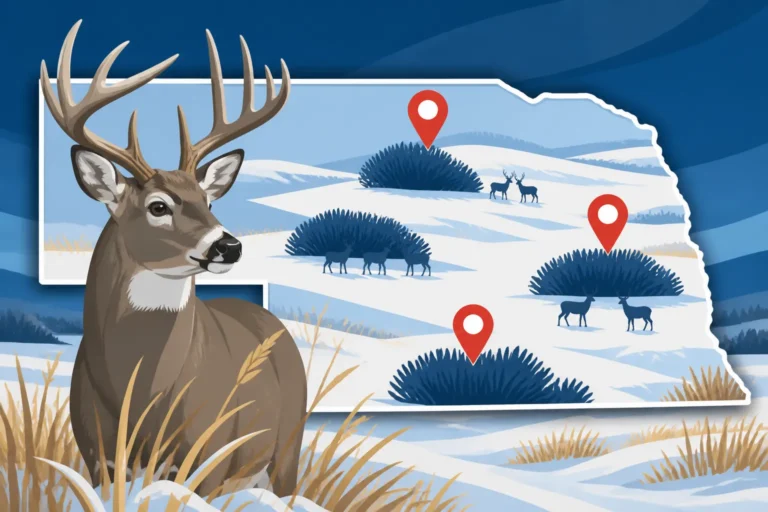
Deer on flat farm ground often live by a simple routine: bed in the thickest cover available during the day, then move to feeding areas, typically crop fields, under the cover of darkness or low light. Identifying these key locations is crucial for predicting their travel patterns and thus, your best entry and exit. Bedding areas might be small, isolated woodlots, dense CRP fields, thickets along creek beds, or even standing corn well into the season. Feeding areas are almost always crop fields – corn, soybeans, alfalfa, or winter wheat.
The challenge lies in the distance between these two points. Unlike timbered areas where bedding and feeding can be relatively close, flat farm ground often requires deer to travel across open areas. This travel usually happens along the edges of fields, in drainage ditches, or through standing crops. Your job is to find the precise travel corridors they use and plan your approach to intercept them without disturbing their routine. This means understanding exactly Where Nebraska Whitetails Bed in Row-Crop Country and how they move to feed. Knowing the preferred food sources at different times of the year is also critical. For instance, deer behavior Hunting Standing Corn Before Harvest will be vastly different from What Changes in Nebraska After the Corn Comes Off.
Pinpointing Your Stealthy Approach: The Scouting Phase
Effective scouting is the bedrock of successful deer hunting, especially when it comes to navigating the subtle complexities of flat farm ground. You can't just walk in blindly; you need a strategic plan, and that plan starts with thorough reconnaissance, both digital and on-the-ground.
Digital Tools and Topographical Clues
Before you ever set foot in the field, spend significant time poring over satellite imagery and topographical maps. Tools like GoHunt, or other similar platforms, offer invaluable insights. Look for those subtle changes in elevation, even a two-foot contour line can indicate a slight rise or depression that acts as a natural screen. Identify drainage ditches, old farm lanes, fencelines with overgrown vegetation, and any pockets of timber, no matter how small. These are your potential travel corridors and concealment points. Note where different crop types meet, as these edges are often highways for deer.
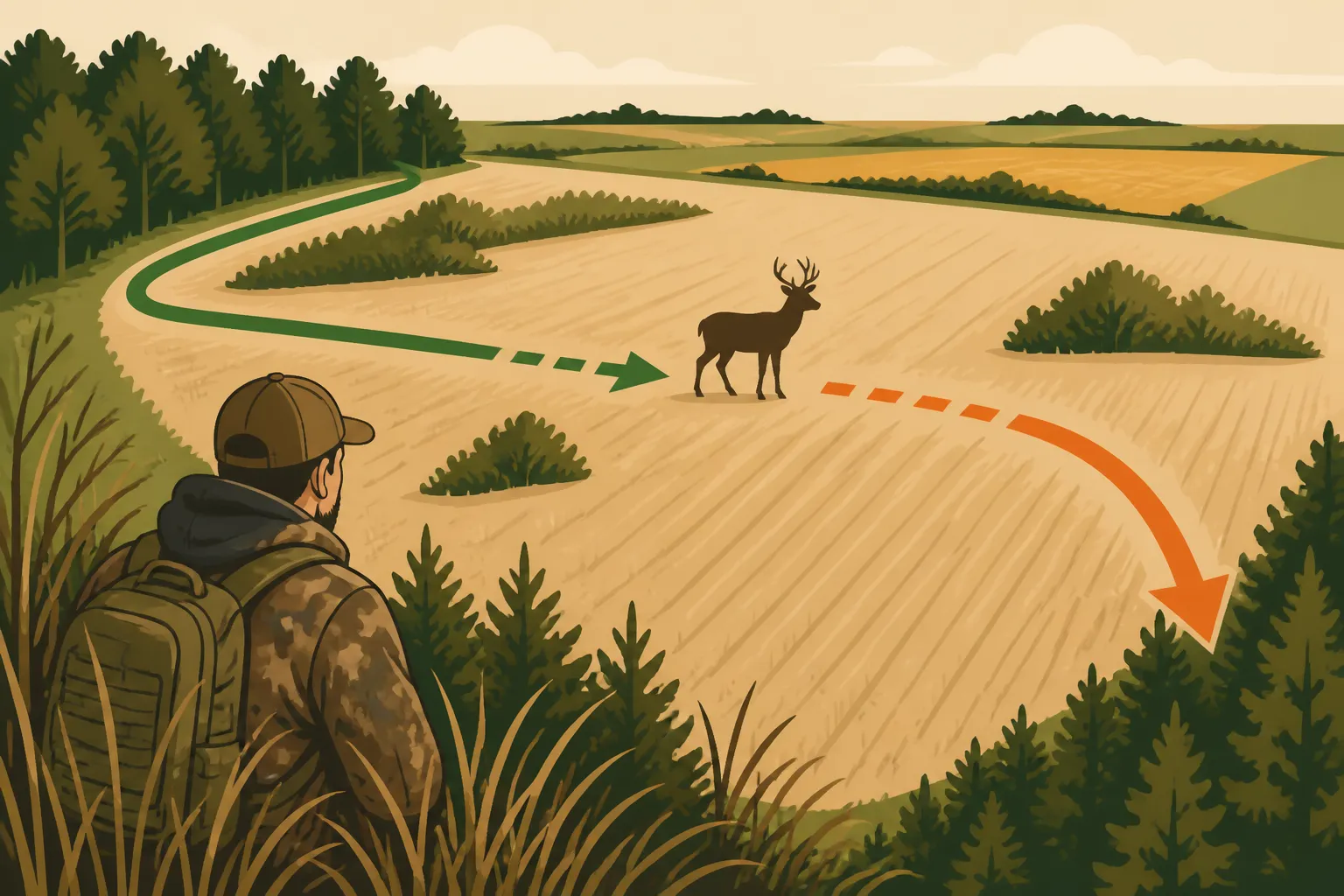
Pay close attention to how these features connect known bedding areas to feeding zones. Mark potential stand locations, but more importantly, mark multiple potential entry and exit routes for each stand, considering varying wind directions. Sometimes, the only "cover" might be a wide, grassed waterway running through a field. Zoom in close and imagine yourself as a deer, moving from point A to point B. What path would offer the most security? What path offers you, the hunter, the most concealment from prying deer eyes? Look for pinch points where natural or man-made features funnel deer movement.
Boots-on-the-Ground Validation
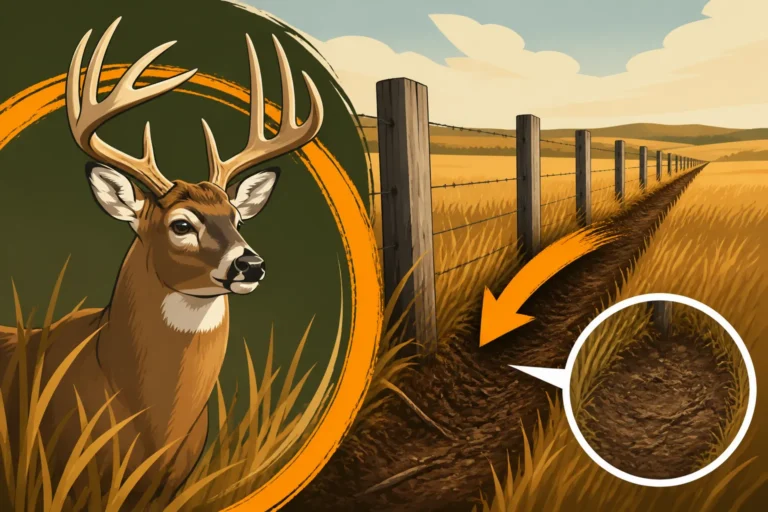
Once you've done your digital homework, it's time to hit the field. This is where you validate your theories and discover what the satellite images couldn't tell you. Walk the potential routes you identified, but do so at times when deer are least active, such as midday or during the off-season. Look for fresh deer sign: tracks, droppings, rubs, and scrapes. These will confirm active travel corridors. Pay attention to how deer cross fences or navigate field corners. Are there well-worn trails leading under a fence? Is there a particular low spot in a field edge that shows heavy use?
While scouting, think about your silhouette. Can you walk along that drainage ditch without being seen from the nearest bedding area? Is there enough cover along that fenceline to break up your outline? This is also a good time to identify specific landmarks you can use in the dark – a certain tree, a uniquely shaped rock, or a fence post – to guide your approach. Never scout in a way that pressures the deer you intend to hunt; keep human intrusion minimal and strategic. Consider how you might use Still-Hunting Nebraska Cedar Draws for movement, even if it's just a small pocket of cedars, to get to your location.
Trail Cameras for Confirmed Movement
Trail cameras are an incredibly powerful tool for fine-tuning your entry and exit strategies on flat farm ground. Rather than just confirming deer presence, use them to understand how and when deer are using specific travel corridors. Place cameras along potential entry/exit routes, focusing on pinch points, field edges, and intersections of cover. You'll want to deploy them well before the season starts, allowing deer to get used to their presence.
Analyze the timestamps and movement patterns. Are deer using a particular ditch primarily at dawn or dusk? Are they cutting across an open field at night, but sticking to a fenceline during legal shooting hours? This information is invaluable. If you see a mature buck consistently using a specific hidden trail, you know that's a route you absolutely must avoid with your scent cone and direct disturbance. Cameras can also help you understand the impact of your own scouting efforts – if deer disappear after you visit an area, you know you need to adjust your approach or give that spot a break. They can show you Where Cameras Help on Pressured Ground by revealing how deer react to intrusion.
Executing a Flawless Entry and Exit
Having scouted your routes meticulously, the next challenge is to execute your plan with the utmost precision. On flat farm ground, where every move feels exposed, mastering your approach and departure is non-negotiable for consistent success.
Mastering Scent and Sound Control
Scent control isn't just a suggestion on flat farm ground; it's a golden rule. Your scent can travel further and more unimpeded here than almost anywhere else. Start with your clothing: wash it in scent-free detergent, store it in airtight containers, and only put it on just before you head out. Avoid using any scented products on your body – no cologne, no scented deodorant, nothing. Consider a scent elimination spray for your outer layers. While no system is foolproof, every little bit helps in these open environments.
Beyond scent, sound control is equally critical. Every rustle of clothing, every misplaced step, will carry in the quiet, open air. Wear quiet fabrics that don't swish. Take slow, deliberate steps, especially when walking on crunchy crop stubble or dry grass. Walk on the softest ground available, like the edge of a planted field or a damp ditch bottom, rather than across gravel roads or dry leaves. Practice moving silently in the off-season so it becomes second nature. If you're walking through tall grass or standing crops, move with purpose but without speed, parting the vegetation gently rather than crashing through it. This diligence is especially important during your entry; Wind Direction on Open Nebraska Prairie Stands becomes secondary if you're making too much noise.
Leveraging Every Bit of Available Cover
On flat ground, you need to become a master of using every single piece of cover available to you. This might mean crawling on your hands and knees through a drainage ditch, staying hunched over behind a fenceline, or moving slowly through standing corn or soybeans. When Hanging a Stand on a Cornfield Edge, your approach through the standing corn itself can be your best bet, but it becomes trickier once the corn is harvested. Remember, even a small rise in the ground, a thick hedge row, or a strip of tall weeds can be enough to break up your silhouette and keep you from being skylined against the open sky.
If using a ground blind, ensure it's brushed in thoroughly well in advance, giving deer time to get accustomed to its presence. Knowing Using a Ground Blind on Nebraska Public Ground effectively means paying attention to how it blends with the surroundings. You want to move along the edges of fields, in the lowest points of the landscape, or directly through the densest available cover. Avoid walking across open fields at all costs, especially in daylight. If you must cross an open area, time it perfectly with low light, or wait for heavy fog or precipitation to provide natural concealment. Sometimes, even the shadow of a single large tree or a piece of farm equipment parked in a field can provide a moment of visual break if used intelligently.
The Art of Timing Your Movement
Timing is everything on flat farm ground. Deer are most active during low-light periods – dawn and dusk. This means your entry and exit need to be planned to coincide with these times, but with a critical caveat: you need to be in your stand before deer start moving and leave after they've moved away. Entering too late or leaving too early is a sure way to bump deer.
For morning hunts, plan to be in your stand at least an hour before first light. This often means walking in complete darkness. Use a reliable GPS or a scouting app on your phone (with downloaded maps for areas with poor cell service) to navigate your pre-scouted route. For evening hunts, plan to stay in your stand until well after dark, allowing deer to clear out of the feeding areas before you make your move. If you're hunting an area where deer regularly feed late into the night, you might need to exercise extreme patience, sometimes waiting for an hour or more after legal shooting light before slipping out. The temptation to leave earlier is strong, but succumbing to it often results in spooking deer that will then associate that area with human intrusion.
Avoiding Common Blunders on the Farm
Even with the best intentions and meticulous planning, hunters can easily fall victim to common pitfalls when navigating flat farm ground. Recognizing these mistakes and actively working to avoid them is crucial for long-term success.
Underestimating the Wind's Dominance
This cannot be stressed enough: the wind is the single most critical factor on flat farm ground. Many hunters get fixated on a particular stand or location and try to hunt it regardless of the wind direction. This is a recipe for failure. If the wind is wrong, your scent will be carried directly into the deer's primary travel corridors or bedding areas, alerting them instantly. On open ground, deer often rely on their nose more than their eyes or ears because there are fewer obstructions.
Always have multiple stand locations or hunting plans for different wind directions. If your primary spot requires a north wind, but you wake up to a south wind, don't try to force it. Instead, switch to a different pre-scouted location that accommodates the current conditions. It’s far better to hunt a secondary spot with the wind in your favor than to ruin your prime location by hunting it with the wrong wind. Pay close attention to subtle shifts; Wind and Thermals in the Sandhills can be complicated, and while farm ground might seem simpler, it still demands vigilance. Use a wind checker constantly to confirm the wind direction and adjust your movements if it swirls.
The Peril of Rushing Your Hunt
Impatience is a deer hunter's worst enemy, and on flat farm ground, it's amplified. Rushing your entry means you might make too much noise, or arrive too late, catching deer already on the move. Rushing your exit means you're almost guaranteed to spook deer that are still feeding or just starting to move into the area after dark. The consequences of rushing are significant: spooked deer become educated deer. They'll alter their patterns, become more nocturnal, or abandon the area entirely.
Build extra time into your hunting schedule for every step. Allow ample time for a slow, silent walk to your stand. Plan to sit longer than you think necessary, especially in the evenings. If you hear deer still feeding or moving around after dark, stay put. Read the situation. Let them clear out naturally. If a deer is directly between you and your exit route, you have two choices: wait it out, or find an alternative, even if it's a longer, more circuitous path. This patient approach pays dividends over the long run by keeping deer feeling secure in their routines.
Pressuring Your Prime Spots
Flat farm ground often has limited areas of ideal cover or natural funnels, making certain spots real hotspots. The mistake many hunters make is over-hunting these prime locations. Consistent human presence, even with the best entry and exit strategies, can put undue pressure on deer and make them change their behavior. Deer in these environments are keenly aware of intrusion, and even subtle changes in their environment can send them seeking refuge elsewhere.
Rotate your hunting spots, even if it means hunting a less productive area for a day or two. Give your best spots time to "cool off" and allow deer to settle back into their natural patterns. If you notice a decline in daylight activity or a shift in travel patterns in an area, it might be a sign you've pressured it too much. Consider Second Season Pressure on Nebraska Public Ground when planning your hunts, as often public lands see concentrated effort. Sometimes, the best strategy is to scout a new, less obvious location to give your main areas a much-needed break. Remember, successful long-term hunting isn't just about finding deer; it's about keeping them comfortable and predictable.
| Factor | Optimal Entry Strategy | Optimal Exit Strategy | Why it Matters on Flat Ground |
|---|---|---|---|
| Wind Direction | Always approach downwind of target area. | Always exit downwind of target area. | Scent carries unimpeded for long distances. |
| Cover Utilization | Maximize use of ditches, fencelines, standing crops, low spots. | Use same concealed routes, or new ones to avoid spooking game. | Minimal natural cover requires deliberate use of subtle features. |
| Time of Day | At least 1 hour before first light (morning). | 1+ hour after legal shooting light (evening). | Deer are most active in low light; avoid daytime exposure. |
| Noise Level | Silent, deliberate steps; quiet clothing. | Silent, deliberate steps; quiet clothing. | Sound travels far across open fields. |
| Scent Control | Full scent-free regimen; dress at vehicle. | Maintain scent control; avoid contaminating routes. | Deer's primary defense is smell; scent will radiate. |
| Deer Activity | Ensure deer are not already moving towards you. | Wait until deer have cleared feeding areas/trails. | Avoid bumping deer directly on their travel paths. |
Disclaimer
Please note that hunting regulations, seasons, and permit requirements in Nebraska can change. Always consult the latest Nebraska Game and Parks Commission regulations before planning any hunt. This guide is for informational purposes only and does not supersede official state regulations.