What Changes in Nebraska After the Corn Comes Off
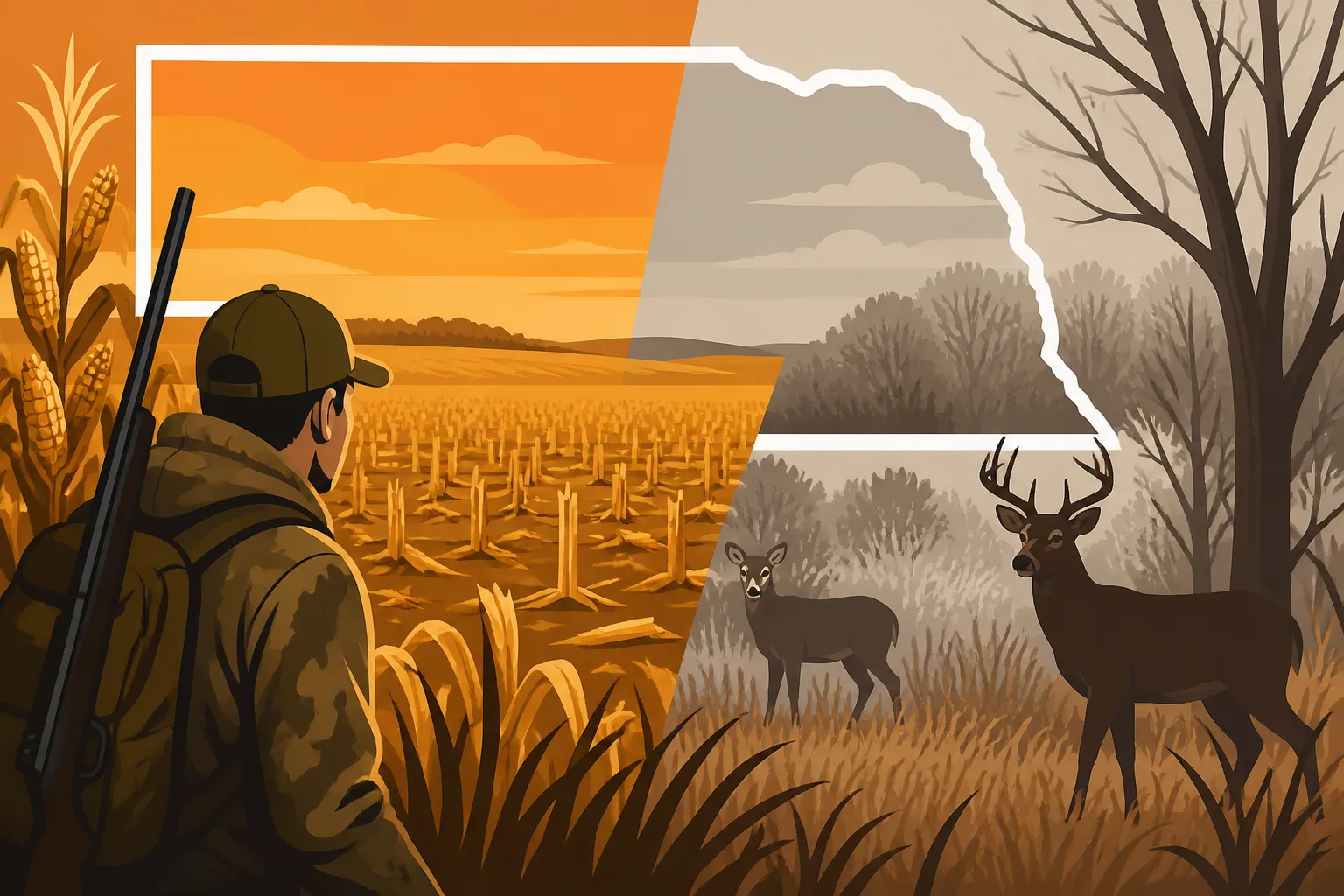
For many hunters in Nebraska, the early fall is characterized by towering walls of corn. These fields offer unparalleled cover and security for deer, pheasants, and countless other wildlife, making them a crucial factor in hunting strategy. But then, almost overnight, the combines roll, the fields disappear, and suddenly, the landscape you knew is completely transformed. This drastic shift leaves many hunters scratching their heads, wondering how to adjust their tactics. This guide will walk you through the significant changes that occur after the corn comes off and how you can adapt to continue your success.
The Dramatic Landscape Shift After Harvest
It’s almost like the land takes a deep breath and lets it all out at once. What was once a dense, impenetrable fortress of green or golden stalks becomes a flat, open expanse of stubble. This isn't just an aesthetic change; it fundamentally alters how game animals live and move across the landscape, which in turn demands a complete rethinking of your hunting approach.
Loss of Cover and Bedding Areas
Before the harvest, standing corn fields are the ultimate sanctuary. They provide incredible visual cover, allowing deer to move unseen, often within mere yards of roads or human activity. They also offer thermal cover, shielding animals from biting winds and harsh sun, and acoustic cover, muffling sounds that might alert them to danger. For pheasants and other upland birds, corn provides essential escape cover from aerial predators and a safe place to roost.
When the combines clear these fields, all that security vanishes. Suddenly, deer that relied on the corn for bedding and travel corridors are exposed. They can no longer simply slip through the rows unnoticed. This forces them to seek out new, often less ideal, bedding locations. Hunters often find deer pushing into smaller, more fragmented pockets of timber, CRP fields, shelterbelts, or even dense cattail sloughs if available. This concentration of animals in fewer, smaller patches of cover can be a boon for hunters who put in the legwork to find these new havens, but it also means those areas will likely experience increased pressure. Understanding these new bedding preferences is paramount, especially as you might be contemplating how to apply strategies like still-hunting Nebraska cedar draws.
Exposure of Food Sources and Changed Patterns
Standing corn isn't just cover; it's a massive buffet. Deer, turkeys, and birds spend countless hours feeding on the kernels. While the harvest removes the standing stalks, it also reveals a significant amount of dropped grain. This becomes an exposed, easily accessible food source that can attract animals for a period immediately after the harvest. However, this feast is also out in the open, leaving animals vulnerable.
Initially, deer might venture out into these open fields under the cover of darkness to vacuum up spilled kernels. But as hunting pressure mounts and the grain dwindles, their feeding patterns will shift dramatically. They'll start to prioritize food sources that offer more security, such as food plots nestled near timber, natural browse in brushy creek bottoms, or acorns in hardwood groves. Upland birds, too, will feed on exposed grain, but they'll be much more apt to feed quickly and retreat to thick cover. As a hunter, your focus needs to shift from finding deer in the corn to finding deer near alternative, more secure food sources. Knowing Late-Season Food Sources in Nebraska is crucial for success here.
Increased Visibility and Hunting Pressure
One of the most immediate and noticeable changes post-harvest is the sheer increase in visibility. Where you once saw nothing but corn stalks, you can now glass for miles across rolling terrain. This can be a double-edged sword. On one hand, it makes spotting distant deer, antelope, or even turkeys significantly easier. You can cover a lot more ground with your binoculars or a spotting scope, especially in open country like the Sandhills.
On the other hand, this increased visibility applies to the animals too. They can spot you just as easily. Deer become incredibly wary and nocturnal in open, harvested fields. Any movement or sound can send them scurrying. Furthermore, with the removal of vast stretches of cover, game animals are forced into smaller, more concentrated areas, which often leads to a significant increase in hunting pressure. Public lands, in particular, will see a surge of hunters trying to capitalize on the newly exposed landscape. This means deer on these pressured areas become even more cautious, moving mainly at night or in the densest available cover.
Adapting Your Hunting Strategy for Post-Harvest Nebraska
The good news is that while the landscape changes, the principles of hunting remain the same: find food, water, and cover. It’s just that the locations of these necessities have been drastically altered, requiring a more agile and observant approach from hunters.
Locating New Bedding and Security Cover
With the corn gone, deer and pheasants will gravitate towards the thickest, most secure cover they can find. For deer, this often means creek bottoms choked with cedars and brush, dense shelterbelts planted for windbreaks, CRP (Conservation Reserve Program) fields with tall, thick grasses, and timber blocks along river corridors. These areas offer the visual and thermal protection that the corn once provided.
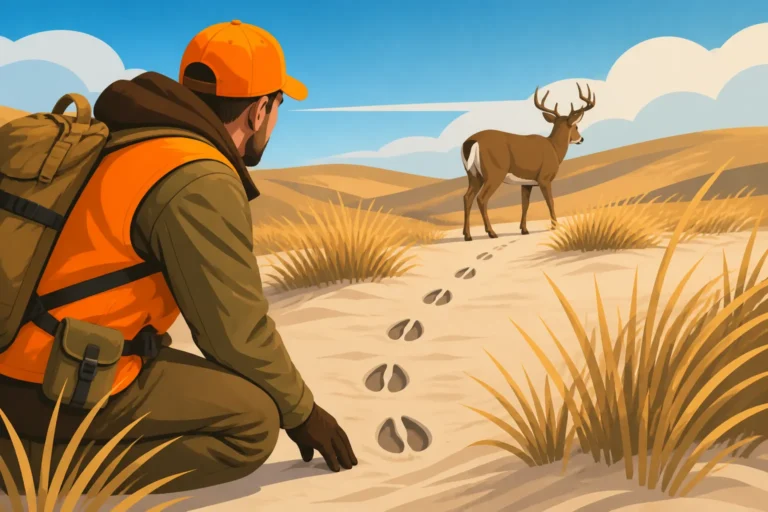
Your first step post-harvest should be extensive scouting, either on foot or by using mapping applications like GoHunt. Look for fresh tracks, rub lines, and droppings leading into and out of these new cover areas. Pay close attention to subtle topographical features like terrace benches, drainage ditches, and small draws that might not have seemed significant before but now offer critical, low-profile travel routes or bedding sites. For pheasants, focus on the heaviest cattail sloughs, plum thickets, and stands of switchgrass. Remember, these areas will likely be heavily used, so consider your entry and exit routes on flat farm ground to minimize disturbance.
Adjusting Food Source Focus
The immediate post-harvest period can offer good opportunities on exposed grain. Deer and turkeys will hit these fields, especially in the first week or two after the combines pass. However, as mentioned, this diminishes quickly. Your long-term strategy should shift to identifying alternative, secure food sources.
Think about standing food plots—alfalfa, brassicas, winter wheat, or even late-season soybeans that haven't been harvested yet. Natural browse in wooded areas, like dogwood, sumac, and young saplings, becomes increasingly important as winter approaches. Acorns, if present, are also a huge draw. For upland birds, besides residual corn, look for milo or sorghum fields that provide both food and overhead cover. When Setting Up on a Nebraska Cornfield Edge, consider if there's an adjacent food plot or natural cover the deer will use. Using GoHunt's satellite imagery can help identify these areas from a distance, saving valuable scouting time.
Utilizing Increased Visibility to Your Advantage
While the openness makes deer wary, it also offers opportunities for hunters willing to adapt. One of the biggest advantages is the ability to glass vast areas. Instead of still-hunting through dense cover, consider setting up on a high vantage point at dawn or dusk and systematically glassing harvested fields, distant tree lines, and new bedding areas. A good pair of binoculars and a spotting scope are indispensable here. You might spot deer moving from distant bedding to feeding areas, allowing you to plan a stalk or adjust your stand location for the next hunt.
When hunting mule deer in the Sandhills or Panhandle, increased visibility is often the norm, so these tactics might already be familiar. But even for whitetails, using this openness to your advantage, especially from a carefully concealed ground blind or a strategically placed treestand overlooking a pinch point between cover and food, can be highly effective. Just remember that the animals are also using their eyes, so meticulous camouflage, scent control, and minimizing movement are more critical than ever.
Specific Game Adaptations and Tactics
The post-harvest landscape demands different tactics for different species. Understanding these nuances will significantly increase your odds of success.
Deer: Whitetails and Mule Deer
Whitetails:
Once their cornfield sanctuaries are gone, Nebraska whitetails often become more nocturnal and congregate in the remaining pockets of dense cover. This is where your scouting pays off. Focus your efforts on river bottoms, cedar draws, and shelterbelts. When still-hunting a snow-covered river bottom, move slowly, using the topography and vegetation to break up your outline. Look for fresh tracks leading into thickets or along creek banks. These deer will often use the same escape routes, so identifying these can be key.
Consider using rattling and grunting in Nebraska's rut, but adjust your volume for the more open conditions. A loud, aggressive sequence might carry too far and alert deer without drawing them in close. Decoying a Nebraska whitetail buck can also be effective, especially if you set up along a travel corridor between new bedding and feeding areas. During the November firearm season, which often falls post-harvest, hunters should be mindful of Orange Requirements for Archers in November, even if you’re rifle hunting, to ensure safety in the more open landscape.
Mule Deer:
Mule deer are naturally more accustomed to open country, but the removal of corn can still push them towards specific features. In areas where Whitetails and Mule Deer Overlap, understanding the subtle differences in their behavior is crucial. Mule deer will often use blowouts, deep draws, and the lee side of hills for bedding. The increased visibility can be great for glassing Sandhills blowouts for mule deer at a distance.
When you spot a buck, a well-executed spot-and-stalk is often the most effective method. This requires patience, keen wind awareness, and the ability to use every bit of available topography for concealment. They'll still prioritize security, often moving between feeding areas and their preferred bedding at first light and last light.
Pheasants and Other Upland Birds
Pheasants, quail, and other upland birds also suffer a significant loss of habitat when corn fields are harvested. They will concentrate heavily in remaining dense cover. This includes:
- Cattail Sloughs: Especially those with a good mix of dry and wet areas, offering both food and thermal cover. Working a cattail slough in January can be incredibly productive, but prepare for tough walking.
- Shelterbelts and Tree Rows: These provide critical roosting and escape cover. Quail coveys in Nebraska shelterbelts are a common sight after the crops come off.
- CRP and Switchgrass Fields: These provide excellent nesting, brooding, and winter cover.
- Milo and Sorghum Fields: If left standing, these provide both food and overhead protection. Walking milo and corn stubble for pheasants can be very effective, especially with a good bird dog.
Tactics for Upland Birds:
- Dogs are a huge advantage: They can sniff out birds hidden in dense cover that you might otherwise walk past.
- Strategic Blocking and Driving: With the open landscape, you can often see where birds are running. Blocking the end of a Nebraska field or working a field with a group of hunters can push birds towards blockers.
- Focus on the thickest cover: Don't waste time on sparse areas. Birds will be concentrated where they feel safest.
- Walk slowly and deliberately: Flush birds close for better shot opportunities. Late-season roosters and longer flushes are common, so be ready for them to get up further out.
Gear and Technology Considerations for Post-Harvest Hunting
The change in landscape impacts not just strategy but also the gear that gives you the best advantage. Don’t underestimate how much the right tools can simplify and enhance your hunt.
Optics and Longer Shots
With the vast, open views that characterize Nebraska after the corn comes off, quality optics become absolutely essential. You're no longer limited to short glimpses in dense cover; you can often see game at incredible distances.
- Binoculars: A good pair of 10×42 or 12×50 binoculars are a must for glassing Sandhills blowouts for mule deer or spotting distant whitetails in harvested fields. The ability to scan and pick apart distant cover will save you countless steps and increase your chances of finding game.
- Spotting Scope: For truly long-range observation, especially when trying to judge a mule deer buck in the field or verify if that distant speck is an antelope, a spotting scope is invaluable.
- Rangefinder: With increased visibility comes the potential for longer shots. A reliable rangefinder is critical for ethical shot placement, whether you're rifle hunting or considering a longer archery shot from a ground blind. Many hunters now opt for rangefinding binoculars worth the cost to combine two essential tools.
- Tripod: Using your binoculars or spotting scope on a tripod will significantly reduce fatigue and steady your view, allowing you to pick out subtle movements or hidden animals that you’d miss freehand.
Concealment and Scent Control
In an open landscape, there's nowhere to hide. This makes concealment and scent control paramount.
- Camo Patterns: Choose camouflage patterns that blend with the browns, tans, and grays of stubble fields, dormant grass, and leafless trees. Patterns designed for open country or late-season deciduous woods will be more effective than deep forest patterns.
- Ground Blinds: If hunting from a fixed position, a well-brushed-in ground blind that can handle Nebraska wind is crucial. Take the time to properly anchor and camouflage your blind.
- Scent Control: With less vegetation to absorb your scent, it will carry further. Use scent-eliminating sprays, wash your hunting clothes in scent-free detergent, and pay close attention to wind direction on open Nebraska prairie stands. A sudden swirl of wind can bust your hunt from a mile away.
Mapping and Scouting Tools
Modern technology has revolutionized how we approach hunting, and it's particularly impactful when adapting to post-harvest changes.
- GPS Units and Phone Apps: While a dedicated GPS unit is great for battery life and ruggedness, phone apps like GoHunt's mapping system offer incredible detail. They allow you to overlay private and public land boundaries, identify potential bedding areas, mark food sources, and track your movements. When Scouting Nebraska Public Ground Before Opening Day, these tools are invaluable for identifying new access points and understanding the terrain.
- Satellite Imagery: GoHunt and similar apps provide current satellite imagery, which is far more useful than dated paper maps. You can often see which fields have been harvested, where new roads have been cut, or where pockets of dense cover remain. This allows for virtual scouting from home, saving precious time and fuel.
- Trail Cameras: While the open fields might not seem ideal, placing trail cameras along the edges of remaining cover or near secluded food sources can reveal nocturnal movement patterns and confirm the presence of target animals. Just be mindful of trail camera rules on Nebraska public land.
| Feature | Pre-Harvest Conditions | Post-Harvest Conditions | Hunter Adaptation |
|---|---|---|---|
| Cover | Abundant (standing corn, tall crops) | Scarce (stubble, open fields) | Focus on natural cover: timber, CRP, draws, shelterbelts |
| Food Sources | Hidden within crops, natural browse | Exposed grain, natural browse, food plots | Prioritize secure food sources, glass open fields at night |
| Visibility | Limited, short sight lines | Expansive, long sight lines | Utilize quality optics for glassing; meticulous concealment |
| Deer Movement | Cryptic, within corn, established trails | Concentrated in cover, nocturnal, cautious | Scout new travel corridors, hunt edges of thick cover |
| Bird Movement | Scattered through crops, diverse feeding | Concentrated in thickest cover, quick flushing | Focus on dense sloughs, plum thickets; use dogs, blocking |
| Hunting Pressure | Spread out across larger areas | Concentrated in remaining cover | Adapt to higher pressure, focus on overlooked pockets |
After the corn comes off, Nebraska’s hunting landscape transforms, but it also opens up new opportunities for the adaptable hunter. By understanding these changes, adjusting your scouting and hunting strategies, and leveraging the right gear, you can continue to find success and enjoy the challenge of late-season hunting in the Cornhusker State.
Disclaimer
Hunting involves inherent risks, including but not limited to those associated with firearms, archery equipment, and outdoor conditions. Always prioritize safety, adhere to all local, state, and federal hunting regulations, and obtain proper licenses and permits. The information provided in this guide is for informational purposes only and should not be considered a substitute for professional instruction, thorough research of current regulations, or personal experience. Always obtain permission before hunting private land.