Second Season Pressure on Nebraska Public Ground
For many of us who cherish the solitude and challenge of hunting, the thought of hitting public ground during Nebraska's "second season" can be a bit daunting. You've heard the stories, maybe even lived them: parking lots full of trucks, hunters seemingly appearing from every direction, and game that's suddenly warier than a ghost. This guide is all about understanding that increased pressure and, more importantly, equipping you with the strategies and mindset to still find success on Nebraska's public lands when it feels like everyone else has the same idea.
Understanding "Second Season" Pressure in Nebraska
The term "second season" might conjure different images for various hunters, but on Nebraska public ground, it largely boils down to periods of intense hunting activity following the initial fervor of opening days. This isn't just about more hunters; it's about what those hunters do to the landscape and, critically, to the animals we pursue.
Defining the Second Season
In Nebraska, "second season" is less about a formal calendar designation and more about the psychological and physical impact on the landscape and wildlife after the initial hunting blitz. For deer hunters, this often means the period immediately following the archery opener, leading into the heart of the rut, and certainly the muzzleloader season in December which sometimes feels like a completely different world. It's when the deer have seen and heard it all, and the woods feel a little more "used." Think about the transition from the relatively calm early archery season into the chaos of How Nebraska's Archery Deer Season Overlaps the Rut or the intense nine-day firearm season. This creates a ripple effect, making subsequent archery or muzzleloader hunts feel like a "second season" entirely, characterized by wary game and increased competition for prime spots.
This isn't to say it's impossible; it just means the game has changed. The deer aren't moving with the same naive patterns they did in September. They've been pushed, bumped, and perhaps even shot at. They know what human scent means, and they're quick to recognize the sound of an approaching hunter. For upland bird hunters, this might mean the later parts of the pheasant or grouse seasons, after thousands of acres have been walked multiple times, and the birds have learned to run long or flush wild. It's the period where easy shots are a thing of the past, and success hinges on smarter tactics rather than just showing up.
Why Pressure Escalates
Several factors contribute to the escalating pressure on Nebraska's public lands during these periods. Firstly, accessibility. Many of Nebraska's public lands, particularly the Wildlife Management Areas (WMAs) and Open Fields and Waters (OFW) tracts, are designed to be accessible. This is fantastic for hunter opportunity, but it also means that entry points are often well-known and quickly become congested. You pull into a parking area, and if there are already three or four trucks, you know you're not going to have the woods to yourself. The sheer number of hunters drawn to these accessible areas amplifies the pressure.
Secondly, specific season structures can concentrate hunters. For instance, Nebraska's Nine-Day November Firearm Deer Season is a huge draw, and even though it's a short window, the sheer volume of hunters during that time can drastically alter deer patterns for weeks afterward. The same goes for the early archery season for antelope over water, or the initial pheasant opener; these events create a spike in activity that fundamentally changes the animals' behavior. This constant human presence, even if non-harmful, teaches animals to avoid open areas, move at night, and seek out the densest cover. They become educated, and that education makes our job as hunters much harder.
The Impact on Game Behavior
When hunting pressure escalates, game animals, especially deer, shift their behavior significantly. They become largely nocturnal, moving predominantly under the cover of darkness. This means that those prime daylight hours, which were so promising earlier in the season, now see far less activity. Deer will often bed down in the thickest, nastiest cover they can find – cedar thickets, impenetrable willow bottoms, or deep, remote pockets of timber – far from well-worn trails or easily accessible food sources. They learn to associate human presence with danger, making them extremely skittish.
Furthermore, they'll often abandon traditional travel corridors if those routes are frequently disturbed. Instead, they'll find obscure, often more difficult-to-navigate paths that offer better concealment. For a hunter, this means your old stand locations or favorite ambush points might suddenly become unproductive. You might even observe deer using Hunting a Creek Crossing in the Sandhills or dense shelterbelts in ways you hadn't seen before, purely as a response to pressure. Understanding these behavioral shifts is paramount. It’s not just about finding where the deer are, but when and how they are moving in response to constant human activity.
Scouting Strategies to Beat the Crowds
Beating the crowds and finding success on pressured public ground isn't about luck; it's about smart, dedicated scouting. You have to be willing to do the work others aren't, both from your armchair and with your boots on the ground.
Pre-Season Digital Reconnaissance
Before you even step foot in the field, modern technology offers incredible tools for digital scouting. Start by thoroughly studying The Nebraska Public Access Atlas. This invaluable resource provides maps of all public lands, including WMAs, OFWs, and other accessible tracts. Look for areas with irregular boundaries, small isolated pockets of public ground adjacent to private land, or sections that appear less accessible due to waterways or dense cover. Online mapping tools, like those offered by GoHunt, can be a game-changer here. They allow you to layer satellite imagery with property lines, topo maps, and even historical weather data. This gives you a comprehensive view of the terrain from above, helping you identify potential bedding areas, hidden food sources, and subtle travel corridors that might be overlooked by others.
Pay close attention to topography. Look for pinch points, saddles, and benches that might funnel deer movement, especially in areas where they might be seeking refuge. Use the contour lines to predict how deer might travel to avoid roads or open fields. Identify potential remote entry points that are not obvious parking areas, even if it means a longer walk. The more effort it takes to get there, the less likely other hunters will be present. Don't just focus on the visible areas; look for those overlooked corners or dense thickets where a deer might feel safe.
Boots-on-the-Ground Scouting Post-Opener
Digital scouting is a great start, but nothing replaces putting boots on the ground. The key for second-season scouting is to do it after the initial hunting pressure has hit, but before your actual hunt. This means you're looking for fresh sign that reflects current deer behavior, not just historical patterns. Look for fresh tracks, rub lines, and especially Scrape Lines Along a Fenceline or in transition areas. These tell you where deer are moving now, in response to the current pressure. Focus on areas away from easily accessible trails and parking lots. Walk deeper, explore those thickets you identified digitally, and look for subtle deer trails that lead into seemingly impenetrable cover.
Don't be afraid to cross waterways or navigate dense vegetation. These are often the places where deer feel secure. Pay attention to Wind Direction on Open Nebraska Prairie Stands and how it might dictate a deer's escape route. Look for areas that offer both cover and food sources, even if they are small. A small patch of Hunting Standing Corn Before Harvest or a secluded oak flat dropping acorns can be a magnet for deer seeking refuge and sustenance. Remember, deer on pressured ground will often move minimally during daylight, so finding their bedding areas and understanding their short, quick movements from bed to security is crucial.
Identifying Sanctuary Areas
On public land, sanctuary areas are gold. These are places where deer feel safe from human intrusion, typically because they are difficult to access, very thick, or simply overlooked. They might be dense cedar draws where deer are still-hunting, a remote river-bottom thicket, or even an island in a large body of water. Use your GoHunt maps to find these "green dots" of cover that are surrounded by more open or frequently hunted terrain. The deeper you are willing to walk, the better your chances of finding one. These sanctuaries often hold the most mature bucks, as they are the wariest and most adept at avoiding pressure.
Once you identify potential sanctuary areas, the challenge is understanding how deer enter and exit them. They will often use subtle, low-impact routes, especially during daylight. These routes might involve skirting the edges of private land, using creek beds, or moving through deep ravines. Your scouting should focus on finding these less-obvious travel corridors leading into and out of these safe zones. You might not want to hunt inside the sanctuary itself, as that could blow out the deer, but rather set up on the fringes where deer transition in low light. This is where understanding Entry and Exit Routes on Flat Farm Ground becomes critical, as deer will exploit any cover available to them.
Tactics for Hunting Pressured Public Land Deer
Once you've done your scouting, it's time to adapt your hunting tactics to the realities of pressured public ground. This isn't your grandma's leisurely stroll in the woods; it requires precision, patience, and a willingness to break from conventional wisdom.
Adjusting Your Approach in the Rut
Hunting during When the Whitetail Rut Peaks in Nebraska on pressured public land requires a nuanced approach. While the rut does make bucks more vulnerable, the increased hunter activity during this time can make them even more wary. Instead of relying solely on traditional Rattling and Grunting in Nebraska's Rut, which can sometimes alert other hunters or pressure-sensitive bucks, consider more subtle calling. Focus on single doe bleats or soft grunts to pique curiosity without sounding aggressive or attracting unwanted attention.
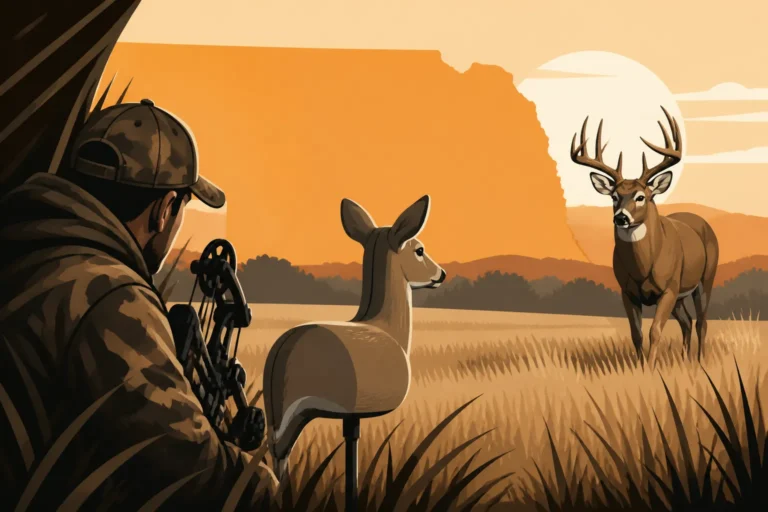
The key is to leverage the rutting behavior without exposing yourself or spooking deer. Bucks will still be cruising for does, but they'll often do so in thicker cover or during low-light conditions. Setting up on funnels between known bedding areas and feeding spots, particularly those offering dense cover, becomes paramount. Look for areas where deer might cross a creek or follow a natural pinch point. Consider using a Ground Blinds in Open Nebraska Country, especially if it's Brushing In a Blind on Open Range, as it offers concealment and helps contain your scent. Being patient and staying in your stand or blind for longer durations, especially during midday, can pay off, as pressured bucks often make their moves when other hunters have left the woods for lunch or a break.
Utilizing Terrain and Cover for Concealment
On pressured public land, concealment is your best friend. This means not just wearing good camouflage, but truly becoming part of the landscape. Use natural terrain features to your advantage. A small rise, a subtle ditch, or even a lone cedar tree can offer enough cover to break up your silhouette. When Choosing a Treestand Site on Nebraska Farmland, think about angles and backgrounds. Can you blend into a clump of cottonwoods or will you silhouette against the sky? The goal is to disappear.
Ground blinds are also incredibly effective, especially in open country or on the edges of fields. Make sure to brush them in thoroughly, integrating natural vegetation to make them virtually invisible. Consider Setting Up on a Terrace Bench, a slight elevation change that might not seem significant but can offer a crucial vantage point while keeping you out of sight of approaching deer. Remember that deer use cover differently under pressure. They will hug the thickest edges, travel through drainages, and avoid open areas whenever possible. By mimicking their need for concealment in your own setup, you increase your chances of getting within range.
Timing Your Hunts for Success
When everyone else is hunting, you need to think about when and how to hunt differently. On pressured public ground, early mornings and late evenings are still crucial, but midday hunting can be surprisingly effective. As other hunters leave the woods or head back to their vehicles, pressured deer might feel a brief window of safety to move. This is especially true for mature bucks who have learned to avoid peak human activity. Consider extended sits, staying in your stand or blind from before dawn until well into the afternoon, or even all day if conditions allow.
Another effective tactic for pressured areas is still-hunting, particularly in dense cover or during adverse weather. Still-Hunting Nebraska Cedar Draws during a light snow or in drizzly conditions can be incredibly productive, as it allows you to move quietly through areas where deer are likely bedded. The weather acts as a natural noise dampener, and other hunters are less likely to be out. Focus on moving slowly, pausing frequently to glass ahead, and paying meticulous attention to wind direction. The idea is to intercept a deer before it knows you're there, taking advantage of the quiet conditions and the deer's tendency to seek refuge in thick cover.
Gear and Mindset for High-Pressure Environments
Success on pressured public land isn't just about tactics; it's also about having the right gear and, perhaps even more importantly, the right mental attitude.
Essential Gear for Stealth and Endurance
Hunting pressured public land often means longer walks, tougher terrain, and the need for absolute stealth. Your gear needs to be up to the task. Comfortable, supportive boots that can handle anything from sandhills grass to frozen river bottom are non-negotiable. Look for Boots for Walking Nebraska Grass and Sand, providing both comfort and ankle support. Layered clothing is also critical for dealing with Nebraska's notoriously unpredictable weather, from mild fall mornings to freezing December winds. A good set of Base Layers for a Nebraska November sit, paired with Wind-Blocking Outerwear for the Plains, will keep you comfortable and focused.
Quiet fabrics are paramount. Every rustle or swish can alert a wary deer. Invest in clothing that allows you to move silently through brush. A reliable rangefinder is essential for confirming distances quickly and quietly, especially when a pressured deer might only offer a fleeting shot opportunity. For those deep walks, a quality pack to carry essentials like water, snacks, and extra layers is key. If you're using a treestand or Saddle Hunting in Cottonwood Timber, make sure your climbing sticks are quiet and secure. Don't forget small items like Hand Warmers That Last a Full Sit in cold weather. Every piece of gear should contribute to your ability to be quiet, comfortable, and persistent.
The Mental Game of Public Land Hunting
Let's be honest: public land hunting can be frustrating. You'll see other hunters, hear distant shots, and sometimes feel like you're constantly dodging other people. This is where the mental game comes in. You need to develop patience, persistence, and a positive attitude. Don't let the presence of other hunters deter you; instead, consider how their actions might benefit you. Sometimes, other hunters inadvertently push deer your way. By anticipating where deer will go when pressured, you can turn a negative into a positive.
Cultivate a mindset of adaptability. If your initial spot is blown out, have a backup plan. Be willing to move, to walk further, or to try a completely different area. The most successful public land hunters are often the ones who can adjust on the fly. Focus on the process: enjoying the outdoors, the challenge of the hunt, and the satisfaction of outsmarting a wary animal. Don't compare your hunt to others you see on social media; focus on your own experience and what you can learn from it.
Leveraging Technology Like GoHunt for an Edge
In today's hunting world, technology can provide a significant edge, especially on pressured public lands. While nothing replaces boots-on-the-ground scouting, digital tools like those offered by GoHunt elevate your preparation. GoHunt's mapping features, which integrate public and private land boundaries, topography, and various satellite overlays, allow you to identify remote access points, potential sanctuary areas, and subtle travel corridors that might go unnoticed by casual hunters. You can mark waypoints, track your movement, and even download maps for offline use, which is invaluable in areas with spotty cell service.
Using such an app allows you to quickly assess the landscape for things like pinch points, water sources, and bedding cover. It helps you visualize the terrain and potential animal movement in response to pressure. For example, you can identify areas of thick thermal cover Where Deer Yard Up in a Nebraska Winter, or secluded creek crossings where mule deer might move undetected. Being able to access this detailed information on your phone while in the field can help you make real-time adjustments to your hunt plan, adapting to changes in wind, weather, or perceived pressure from other hunters. GoHunt provides a layer of intelligence that can help you find that unpressured pocket, even when it feels like every inch of public ground is being hunted.
General Principles for Navigating Public Ground
Beyond specific tactics, there are overarching principles that will serve you well when navigating Nebraska's public lands, especially during periods of high pressure.
Respecting Other Hunters
This is crucial for everyone's experience. Remember that you're sharing these resources. Be mindful of your noise levels, especially when approaching or leaving a hunting area. Avoid setting up too close to another hunter, even if you think you found a better spot. If you encounter another hunter, a friendly nod or brief, respectful greeting is usually appropriate. If you see someone already in an area you planned to hunt, simply move on. There's plenty of ground to cover, and getting into a confrontation is never worth it.
Being a good steward of the land also falls under this umbrella. Pack out everything you pack in, and leave no trace. If you're using trail cameras, be aware of Trail Camera Rules on Nebraska Public Land and respect those regulations. The more we, as hunters, demonstrate courtesy and respect for each other and the land, the better the overall experience will be for everyone, and it helps maintain a positive image for hunting as a whole. Nobody wants to deal with a rude or territorial hunter, especially when we're all out there trying to enjoy the same pursuit.
Adapting to Changing Conditions
Nebraska weather can change on a dime, and so can animal behavior. What worked last week might not work today. A sudden cold front, a heavy snow, or even a period of high winds can completely alter deer movement and bird locations. Be prepared to adapt your strategy. If it's windy, deer might bed down in sheltered ravines or the leeward side of hills. If it's warm, they might move earlier or later, or spend more time near water.
Stay informed about local conditions and recent game activity. Talk to local sources if you can, or simply observe fresh sign. Don't be rigid in your plans. Sometimes, a plan B, C, or D is necessary. This might mean shifting from a stand hunt to a still-hunt, moving to a different WMA, or even changing species if one isn't cooperating. The ability to pivot and make smart, informed decisions in the field is a hallmark of a successful hunter, especially when dealing with the unpredictable nature of pressured public land and wild animals. Remember, the animals are always adapting, and so should you.
| Strategy Component | Early Season (Low Pressure) | Second Season (High Pressure) |
|---|---|---|
| Deer Movement | Predictable, often daylight activity on food sources. | Nocturnal, using thick cover, subtle, brief daylight movements. |
| Preferred Cover | Can be more open, less dense areas near food. | Thickest, nastiest, least accessible cover (sanctuaries). |
| Scouting Focus | Food sources, obvious travel routes, fresh sign. | Bedding areas, remote funnels, subtle escape routes, current sign. |
| Hunting Time | Peak movement at dawn/dusk. | Midday becomes more important; extended, all-day sits beneficial. |
| Calling Tactics | More aggressive rattling/grunting can be effective. | Subtle, quiet calls; focus on doe bleats, soft grunts. |
| Stand Location | Can be closer to prominent food sources or open trails. | On fringes of sanctuaries, hidden funnels, deep in cover. |
| Hunter Density | Moderate, less competition for spots. | High, expect other hunters; focus on out-maneuvering them. |
| Required Patience | Moderate. | High; persistence and adaptability are key. |
Disclaimer
Hunting is an inherently dangerous activity. Always prioritize safety, follow all local and state regulations, and obtain appropriate licenses and permits. The information provided in this guide is for informational purposes only and should not be taken as legal advice or a substitute for personal research and professional guidance. Be aware of your surroundings, respect private property, and practice ethical hunting at all times.