Late-Season Antlerless Hunting in Nebraska
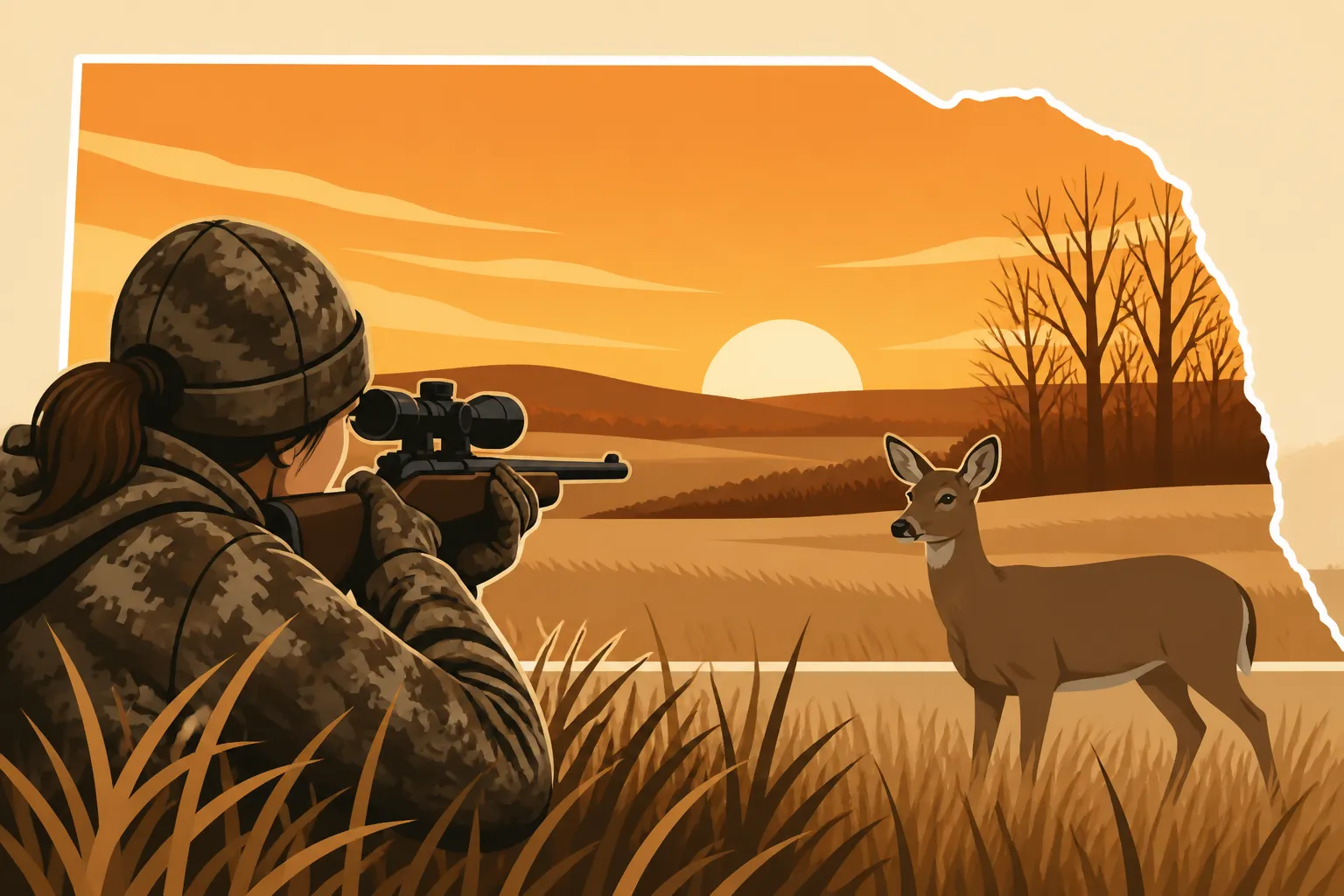
The brisk winds of a Nebraska January can make deer hunting feel like a completely different sport, leaving many hunters frustrated by sparse deer sightings and bone-chilling cold. When the prime rifle seasons have passed, and big bucks are no longer the primary focus, shifting your strategy to late-season antlerless hunting can be incredibly rewarding, helping to fill the freezer and manage local deer populations. This guide dives deep into the nuances of extending your deer season, providing practical advice to succeed when the mercury drops.
The Appeal and Challenges of Late-Season Antlerless Hunting
Hunting antlerless deer in the bitter cold of late season isn't for the faint of heart, but it offers a unique set of rewards and a distinct set of challenges. It's a time when many fair-weather hunters have packed up their gear, leaving more ground open for those willing to brave the elements. Yet, deer behavior changes dramatically, and simply applying earlier season tactics won't cut it.
Why Focus on Antlerless Deer?
Focusing on antlerless deer in the late season serves several important purposes beyond just putting venison in your freezer. For starters, it's often a much more accessible tag to acquire. After the main draws and primary seasons, antlerless permits frequently remain available, sometimes even over-the-counter, giving hunters an excellent opportunity to extend their time in the field. These permits are crucial for herd management, helping to balance deer populations with available habitat and reduce agricultural damage, especially in areas with high deer densities. By participating in these hunts, you're directly contributing to the health of Nebraska's deer herds.
Furthermore, the late season provides a unique opportunity for new hunters or those looking to hone their skills without the intense pressure of trophy hunting. The focus shifts from antler size to simply locating and harvesting a deer, making the experience less about a specific rack and more about the hunt itself. It’s a chance to learn about winter deer patterns, practice stealth in quiet conditions, and truly earn your venison. Many seasoned hunters appreciate the simplicity and purpose of these hunts, finding satisfaction in providing high-quality meat for their families during a time when other hunting opportunities are scarce.
Navigating the Late-Season Landscape
The challenges of late-season hunting are significant, primarily due to the weather and its impact on both hunters and deer. Extreme cold, often accompanied by strong Nebraska winds, demands specialized gear and a high tolerance for discomfort. Sitting still for long periods can become a monumental task, and the risk of frostbite or hypothermia is very real if you're not properly prepared. Beyond personal comfort, the landscape itself undergoes a drastic transformation. Crop fields that provided abundant cover and food earlier in the fall are now often harvested, leaving deer exposed and pushing them into much smaller, denser pockets of remaining cover. This reduction in available cover makes deer inherently warier and harder to approach.
Moreover, the deer themselves are under immense pressure. They've been hunted for months, and their survival instincts are finely tuned. They move less during daylight hours, often sticking to thick cover, and their feeding patterns become highly predictable, revolving almost entirely around calorie conservation and efficient foraging. Understanding these shifts is paramount. You're no longer hunting deer enjoying the bounty of autumn; you're hunting deer that are actively surviving the harshest part of the year, making every advantage you can gain through scouting and careful planning critically important. The silence of a frozen landscape means every rustle or crunch of snow underfoot can alert deer from a considerable distance, demanding extreme caution and slow, deliberate movements.
Understanding Nebraska's Late-Season Opportunities
Nebraska offers specific opportunities for antlerless deer hunting well beyond the traditional November firearm season. These hunts are primarily designed to help manage deer populations and provide additional harvest opportunities in units that can sustain it. Knowing when and where these opportunities exist is the first step toward a successful late-season hunt.
January Antlerless Seasons and Unit Availability
For many dedicated deer hunters, the month of January brings a final, often challenging, chance to pursue deer in Nebraska. These special seasons are typically designated as "antlerless-only" and are confined to specific Deer Management Units where population objectives require additional harvest. Not all units participate in a January antlerless season, so it’s crucial to check the current Nebraska Game and Parks Commission (NGPC) regulations carefully. The units most likely to offer these permits are often those in agricultural regions with high deer densities, where landowners experience significant crop damage, or units that simply have a robust enough doe population to withstand additional harvest pressure.
Historically, units in eastern and central Nebraska that are rich in agricultural lands and river bottoms tend to have more consistent late-season antlerless opportunities. These areas provide the necessary food sources and cover to support larger deer numbers throughout the year. The availability of these permits can fluctuate annually based on population surveys and management goals, so always consult the most current hunting guide. Knowing Which Units Have January Antlerless Hunts can save you a lot of time and effort in your planning. These special hunts are a testament to the NGPC's adaptive management strategies, allowing for flexibility while ensuring sustainable deer populations.
Permit Types and Acquisition
Acquiring the right permit for late-season antlerless hunting in Nebraska is usually a straightforward process, especially compared to the highly competitive lottery for coveted buck tags. Most late-season antlerless permits, particularly those available for January hunts, are sold over-the-counter. This means you don't typically need to enter a draw or accrue preference points, which is a huge relief for hunters looking for last-minute opportunities. These permits are designed to be accessible, reflecting the management goal of increasing antlerless harvest.
You can usually purchase these permits directly from the NGPC website or through authorized vendors. It's always a good idea to buy your permit well in advance, even if they are over-the-counter, as some units might still see permits sell out if demand is unexpectedly high. Pay close attention to the specific permit type; ensure it's valid for the correct species (whitetail or mule deer, if specified), the correct sex (antlerless), and the correct unit and season dates. Sometimes, permits might be available as part of Nebraska's Extra Antlerless Opportunities that combine multiple seasons or specific methods. Always double-check the regulations for any unique conditions, such as weapon restrictions or specific blaze orange requirements, which may differ slightly from the regular seasons. Services like GoHunt can be invaluable here, offering up-to-date information on permit availability and regulations specific to Nebraska.
| Feature | Early Archery/Firearm Season (Fall) | Late-Season Antlerless (Winter) |
|---|---|---|
| Primary Goal | Trophy buck, general harvest | Herd management, venison |
| Deer Behavior | Rut-driven, abundant food, less pressured | Survival-driven, concentrated food, pressured |
| Food Sources | Diverse, standing crops, mast | Limited, specific waste grain, browse, evergreen |
| Cover | Extensive, standing crops, full foliage | Sparse, thickets, draws, river bottoms |
| Weather | Mild to cold, variable | Extreme cold, snow, wind |
| Hunter Pressure | High, especially opening weeks | Low to moderate, fewer hunters |
| Permit Type | Draw, competitive OTC options | Often over-the-counter, easily accessible |
| Clothing Needs | Layered, less extreme insulation | Heavy layering, extreme cold weather gear |
Essential Tactics for Late-Season Success
Hunting in January requires a complete shift in strategy from the comfortable days of early fall. Deer are focused almost entirely on survival, meaning their patterns become highly predictable if you know what to look for. Your success hinges on understanding these core survival needs: food, thermal cover, and efficient movement.
Locating Post-Harvest Food Sources
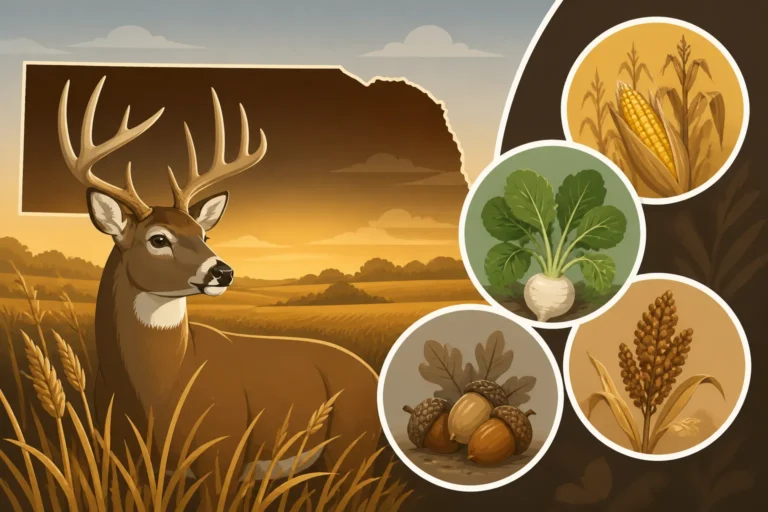
By late season, the landscape has been stripped bare. Most agricultural fields have been harvested, and natural food sources like acorns are long gone or buried under snow. This drastically limits deer options, forcing them to concentrate around the few remaining high-calorie food sources. Your primary scouting mission should be to identify these vital areas. Waste grain in corn or soybean stubble fields, particularly those with good cover nearby, becomes a major draw. Deer will risk exposure to feed in these fields, especially during low light hours. Look for heavy tracks, droppings, and even partially eaten kernels in these fields.
Beyond waste grain, deer will turn to browse. Examine brushy areas, hedgerows, and river bottoms for signs of heavy browsing on woody stems and evergreen vegetation. Cedar thickets, though often dense and challenging to hunt, can provide both food and critical thermal cover. Think about Late-Season Food Sources in Nebraska as not just what's available, but where it's available in relation to thick cover. Deer won't travel far from safety in the cold, so the intersection of food and cover is your sweet spot. A key strategy is to pinpoint these areas using online mapping tools, then boots-on-the-ground scouting to confirm deer activity before you ever set up a stand. GoHunt maps, for example, often provide detailed terrain and land cover data that can highlight potential feeding and bedding areas even before you step foot in the field.
Tracking Deer Movement in Cold Weather
Cold weather dramatically alters deer movement patterns. Unlike the rut, when bucks are ranging widely, late-season deer prioritize energy conservation. They will move efficiently between bedding and feeding areas, often using the path of least resistance and seeking out thermal advantages. Expect deer to be less active during the middle of the day, preferring to move during the first and last hours of daylight, or even at night if conditions are too harsh. Snow can be a hunter's best friend in tracking these movements, revealing fresh trails, bedding areas, and feeding sign that would otherwise go unnoticed.
Look for heavily used trails leading from dense cover to food sources. Pay attention to how deer navigate terrain, often seeking out south-facing slopes that catch more sun or sheltered creek bottoms that offer a break from the wind. In areas with Deep Snow and Deer Movement, deer will often create established travel corridors, making their patterns even more predictable. Setting up along these routes, especially where they funnel through pinch points or cross open areas, can be highly effective. A crucial aspect is understanding wind direction; deer will almost always approach a feeding area with the wind in their favor, using their nose to detect danger. Plan your approach and stand placement accordingly to intercept them downwind.
Utilizing Cover and Thermal Hubs
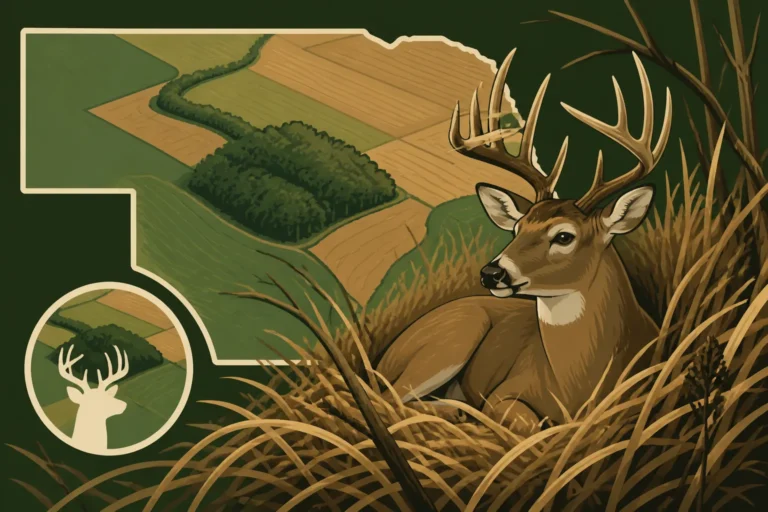
In extreme cold, thermal cover becomes as important as food. Deer expend immense energy just staying warm, so they will seek out the densest cover available to shelter from the wind and retain body heat. This includes thick cedar thickets, dense willow and dogwood stands in river bottoms, unharvested swampy areas, or even large evergreen stands in the Pine Ridge. These areas act as thermal hubs, where deer will bed down during the day, especially if they are sunny and out of the wind.
Think about how topography influences thermal cover. South-facing slopes, for instance, soak up more sunlight and can be significantly warmer than north-facing ones. Deer will often bed on these slopes in thick brush during sunny winter days. River bottoms and deep draws also offer excellent protection from howling winds, becoming key bedding and travel corridors. When considering Where Deer Yard Up in a Nebraska Winter, you'll find them in the thickest, most sheltered spots available. Your setup should focus on ambushing deer as they move in and out of these cover areas. A blind or stand placed on the downwind edge of a dense thicket, overlooking a trail leading to a food source, can be incredibly productive. Remember, in these conditions, deer will often hold tight, only moving when absolutely necessary, so patience and quiet observation are paramount.
Gear and Preparation for the Cold
Late-season hunting in Nebraska isn't just about strategy; it's also about survival. The right gear isn't a luxury, it's a necessity. Being unprepared for the cold can quickly turn a hopeful hunt into a miserable, and potentially dangerous, experience.
Layering for Extreme Nebraska Winters
When the wind chill plunges below zero, your clothing system becomes your most critical piece of gear. Effective layering is paramount to staying warm and comfortable during long sits or slow stalks. Start with a moisture-wicking base layer against your skin. This is crucial for pulling sweat away from your body, preventing it from chilling you once you stop moving. Merino wool or synthetic blends are excellent choices here.
Next, build up with insulating mid-layers. Fleece jackets, down vests, or synthetic insulated pieces create dead air space that traps warmth. Focus on multiple thinner layers rather than one thick one, as this allows for better temperature regulation. Finally, your outer layer needs to be both windproof and waterproof. The biting Nebraska winds are relentless, and even light precipitation can quickly lead to hypothermia if your outer shell isn't up to the task. Look for garments with Gore-Tex or similar wind-blocking membranes. A good insulated bib or pair of insulated pants is also a must for staying warm from the waist down. Don't forget extremities: heavily insulated gloves or mittens, a warm hat that covers your ears, and a neck gaiter are non-negotiable for comfort and safety during any Cold Weather Sitting Strategy. Hand warmers and foot warmers are also cheap insurance that can make hours in the stand much more tolerable.
Optics and Shot Placement Considerations
In late season, especially during low light, your optics are your eyes. High-quality binoculars are essential for scanning vast, open landscapes or peering into dense cover for the subtle flicker of an ear or twitch of a tail. Look for models with excellent light transmission to help pick out deer at dawn and dusk. A rangefinder is also critical, particularly in open country, to accurately judge distances and ensure ethical shot placement. The cold can play tricks on your perception of distance, and every yard matters for a clean shot.
When it comes to shot placement on an antlerless deer, the same ethical principles apply as with any deer. Aim for the vital organs – the heart and lungs – which are located in the shoulder pocket. In cold weather, it's even more important to ensure a quick, clean kill to minimize tracking and recovery time. A wounded deer in deep snow or extreme cold can be incredibly difficult to track, and a long blood trail can quickly fade or freeze. Consider the limitations of your weapon in the cold. Muzzleloaders, for example, require special attention to keeping powder dry in moist, snowy conditions. If you're using a rifle, ensure it's zeroed for the anticipated conditions and understand how bullet drop might be affected by cold air, although this is usually minimal for typical hunting ranges. A steady rest, whether from a bipod, shooting sticks, or a natural support, is crucial for precision in the field.
Public Land Strategies for January Hunts
Hunting public land in Nebraska during the late season presents a fantastic opportunity, but it demands a different approach than the high-pressure early hunts. Many public areas, while busy in November, see significantly less traffic by January. However, finding success requires smart scouting and an understanding of deer behavior under pressure.
Scouting Pressure and Finding Secluded Spots
Even with reduced hunter numbers, deer on public land are often well-educated and wary. They know where the pressure typically comes from and will adjust their movements accordingly. Your scouting in late season should focus on finding those overlooked pockets of cover or food that offer sanctuary. This might mean walking further than most hunters are willing to go, or exploring areas with difficult access like creek crossings or dense, thorny thickets that deter others. Don't be afraid to put in the miles; deer will often retreat to the nastiest, most inaccessible cover they can find.
Using digital mapping tools like GoHunt, combined with the Nebraska Public Access Atlas mobile app, can be incredibly effective. Look for features that create natural funnels or pinch points that might concentrate deer movement. Identify areas with steep ravines, dense stands of timber, or wetlands that are difficult to traverse, as these often hold deer that have eluded earlier season pressure. Pay attention to small parcels of public ground adjacent to large private holdings; deer will often move between these areas for food and bedding. Scouting for fresh tracks in the snow or heavily browsed vegetation will confirm deer presence and help you pinpoint their preferred travel routes. The less obvious the spot, the more likely it is to hold deer.
Leveraging Open Fields and Waters
Nebraska's Open Fields and Waters (OFW) program is an invaluable resource for public land hunters, particularly during the late season when access can be limited. These private lands enrolled in the program open up millions of acres to public hunting, often including prime agricultural fields and river bottoms that hold deer. During the late season, many of these tracts will have standing waste grain or excellent thermal cover that becomes a magnet for deer. Regularly checking the NGPC website or the Public Access Atlas app for newly enrolled tracts or updated maps is a smart move, as some properties may open up or change seasonally.
When utilizing OFW lands, pay attention to the specific rules for each tract, which are clearly marked on signs and in the Atlas. Some might be walk-in only, while others allow vehicle access on designated paths. These areas often receive less pressure in January compared to the main firearm season, making them prime candidates for a patient late-season hunt. Focus on those OFW tracts that offer a good mix of food and cover, especially where they connect to larger blocks of timber or other public lands. Consider setting up a ground blind along a field edge where deer are likely to enter for evening feeding, or still-hunting through a Hunting a Frozen Nebraska River Bottom on an OFW tract where thick cover provides both shelter and travel lanes. Remember, respecting the landowner's property and leaving no trace is crucial to the continued success of this vital program.
Ethical Considerations and Game Care
Harvesting a deer, even an antlerless one, comes with significant responsibilities. In the late season, these responsibilities are amplified by the harsh conditions, making proper ethical conduct and game care more critical than ever.
Responsible Harvest and Meat Care in Winter
Ethical hunting dictates that we strive for a quick, humane kill and ensure the recovery of any animal we shoot. In the late season, this means being even more disciplined with shot selection. Cold temperatures and potentially deep snow can make blood trailing incredibly difficult, as a light blood trail can freeze quickly or be obscured by falling snow. Only take shots you are absolutely confident in, and always aim for the vitals. If you shoot a deer and it doesn't drop immediately, give it ample time before beginning the track. Even if you don't find a strong blood trail, assume it's hit and systematically search the area, expanding your circles, and following any tracks you can find.
Once harvested, caring for the meat in cold weather is generally easier than during warmer early seasons, but still requires diligence. The cold acts as a natural refrigerator, which is a huge advantage. However, you still need to field dress the animal quickly to allow the body heat to escape and prevent bacterial growth. While Field Dressing and Cooling Game in Warm Weather focuses on heat, in winter, you want to ensure the carcass cools thoroughly but doesn't freeze too quickly if you plan to age it. Protect the cavity from snow and dirt, and transport the deer efficiently to a cooler location or processor. If temperatures are extremely low, protect the meat from freezing solid before you can process it, as this can make butchering more challenging.
Respecting Private Land Boundaries
Nebraska has strict trespass laws, and respecting private land boundaries is paramount for all hunters. This is especially true when hunting close to agricultural fields or properties during the late season. Deer will often cross property lines, moving between public and private land, so it is your responsibility to know exactly where you are at all times. Use a GPS unit or a reliable mapping app like GoHunt or the Public Access Atlas on your phone to identify property boundaries. These tools, especially with property line overlays, are indispensable for staying on the right side of the law.
Before you even step foot in the field, study your maps and understand the lay of the land, noting any adjacent private parcels. Never assume public access; always verify. If your shot deer runs onto private land, you must obtain permission from the landowner before pursuing it. Attempting to retrieve game without permission is trespassing and can lead to severe penalties, not to mention damaging the reputation of all hunters. Building positive relationships with landowners, even if you're not hunting their property, can be beneficial. A simple knock on a door to ask permission to retrieve a deer, even if you've never met them before, is always the right approach. Many landowners are receptive to ethical hunters, and clear communication helps maintain good relations between hunters and private property owners. Remember, hunters are guests on both public and private lands, and our actions reflect on the entire hunting community.
Disclaimer
Please note: Hunting regulations and seasons can change. Always consult the most current Nebraska Game and Parks Commission regulations and official publications before planning any hunt. This guide is for informational purposes only and does not supersede state laws or official directives.