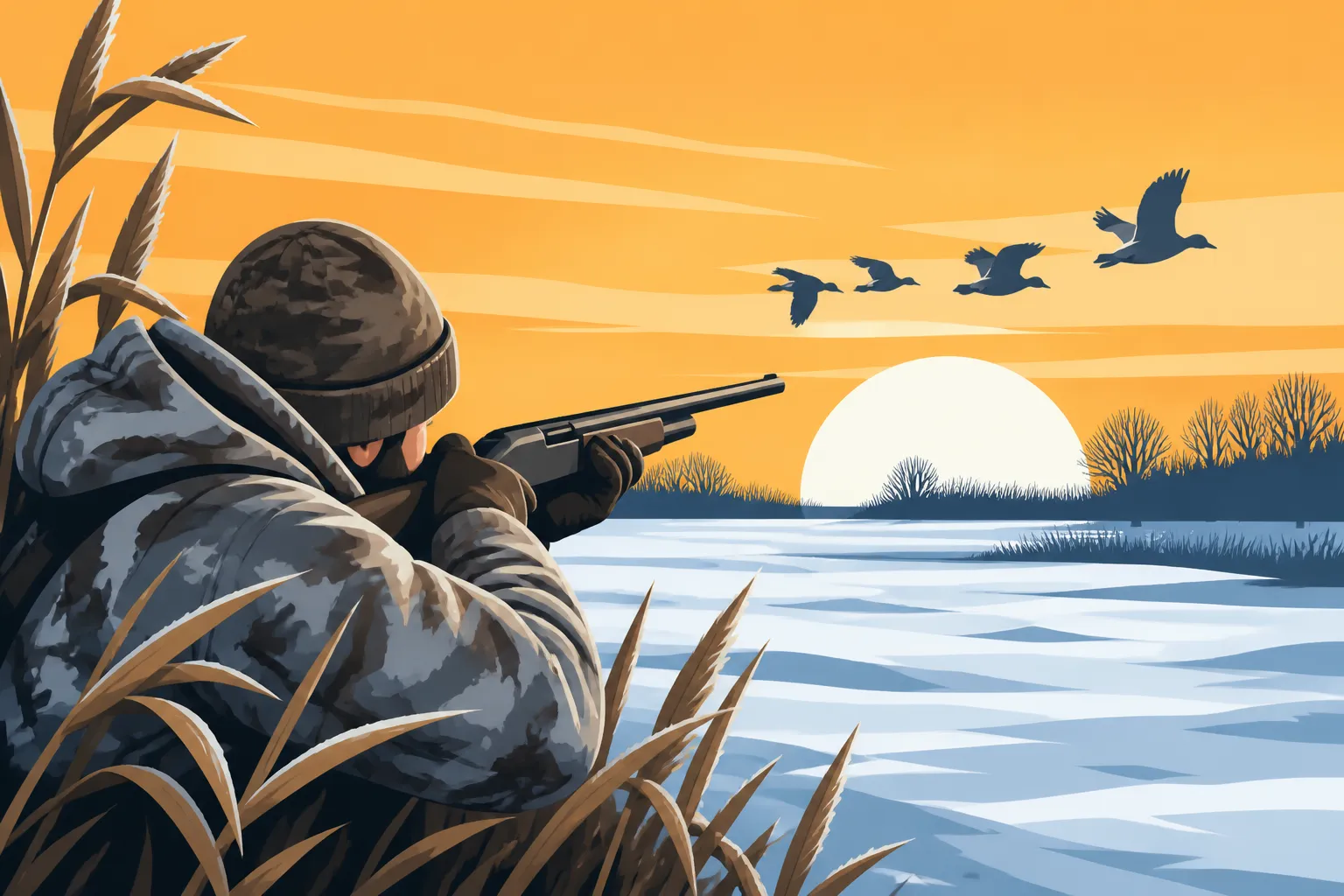
Hunting a Frozen Nebraska River Bottom
There's a raw, almost brutal beauty to a Nebraska winter, isn't there? That biting wind, the crisp air that stings your nostrils, and the way everything transforms under a blanket of snow and ice. But as beautiful as it is, it throws a serious curveball at hunters, especially when your sights are set on a river bottom. The familiar landscape changes entirely, creating both immense challenges and incredible opportunities. This guide will walk you through the specifics of hunting a frozen Nebraska river bottom, helping you understand how deer adapt, what signs to look for, and the tactics that put venison in the freezer when the mercury drops.
The Unique Landscape of a Frozen River Bottom
When temperatures plummet and the flowing water of a Nebraska river yields to solid ice, the entire ecosystem shifts. This isn't just a pretty backdrop; it fundamentally alters how deer move, feed, and seek refuge. Understanding these changes is your first step toward success.
How Ice Transforms Deer Movement
Deer are creatures of habit, but winter's icy grip forces them to adapt or perish. When a river bottom freezes, it can completely change their travel patterns. Imagine a winding creek that deer normally cross at specific shallow points. Once that creek is a sheet of ice, it might become a superhighway, allowing them to traverse areas they'd normally avoid, or it might cut off access if the banks are too steep and slick. Similarly, sloughs and backwaters that were once barriers or deep hiding spots become traversable, potentially exposing deer or offering new escape routes.
The frozen ground itself plays a massive role. Crunchy snow and ice make quiet movement incredibly difficult for both deer and hunters. Deer become more sensitive to sound, often holding tighter to cover or moving only when absolutely necessary, usually during periods of lower human activity or under the cover of strong winds. They conserve energy, which means less aimless wandering and more purposeful movement between bedding and feeding areas. They're looking for the path of least resistance and the warmest, most protected spots they can find. If you've ever tried to sneak through frozen cattails, you know the struggle is real, and deer are experiencing the same thing.
Identifying Critical Winter Cover and Food Sources
In a frozen river bottom, deer are absolutely fixated on two things: thermal cover and readily available food. Thermal cover is paramount; think dense cedar thickets, stands of evergreens, thick brush piles, or even steep, south-facing banks that catch the limited winter sun. These areas offer respite from the brutal Nebraska winds and provide a slightly warmer microclimate. They're trying to escape the chill, and these are their sanctuaries.
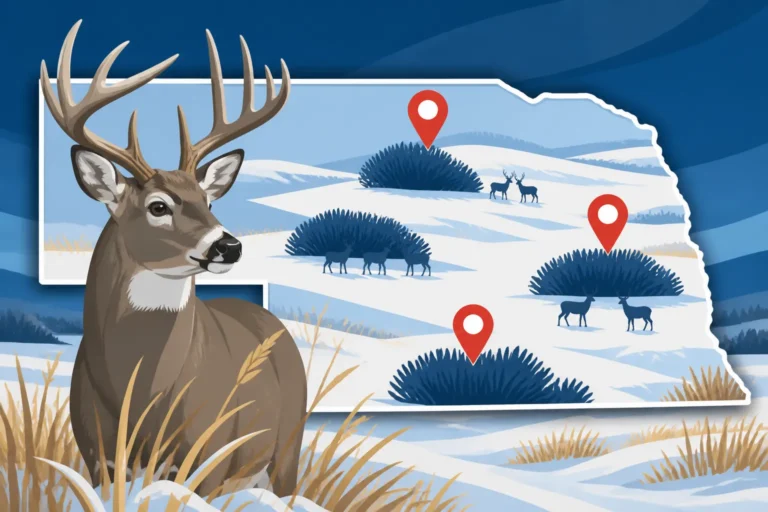
Food sources also become incredibly concentrated. With much of the natural browse covered in snow or simply dormant, deer will seek out anything that provides calories. This often means waste grain in adjacent agricultural fields that border the river bottom, standing corn if any is left, or even persistent browse like honeysuckle or multiflora rose that remains palatable. Identifying these limited food sources and the densest thermal cover will tell you where the deer are spending their time. A frozen river bottom effectively shrinks the huntable landscape, pushing deer into predictable, albeit challenging, pockets. This concentration can be a blessing for hunters who know where to look.
Scouting Strategies for Icy Conditions
Effective scouting is always crucial, but it takes on a whole new dimension in a frozen river bottom. The cold demands a strategic approach, where every step counts and every piece of information gleaned is invaluable.
Interpreting Tracks and Sign on Snow
Snow acts as a giant, pristine canvas, revealing stories of deer movement that are otherwise hidden. Fresh tracks are your absolute best friend. Look for crisp edges, distinct dew claws (especially on bucks), and a lack of snow sifting back into the print. The depth of the track can also tell you about the deer's pace and size. A large, plodding track might indicate a mature buck conserving energy, while lighter, scattered prints could be a doe or fawn.
Beyond tracks, look for areas where deer have been browsing. In winter, this might be stripped bark, nipped twigs, or even pawed-through snow to access latent vegetation. Bedding areas are also key – depressions in the snow, often under dense cover or on south-facing slopes, where deer have melted away the snow with their body heat. Pay attention to how many deer are bedding together, which can indicate group size and favored hideouts. The frozen river itself might show tracks leading across, revealing new travel corridors that weren't there when the water was open. Being able to correctly interpret these signs is like reading a secret language, telling you exactly when and where deer are moving.
Leveraging Digital Tools and Aerial Views
While boots-on-the-ground scouting is essential, modern digital tools can give you a significant advantage, especially when dealing with expansive or hard-to-access frozen river bottoms. Aerial photographs and topographical maps become incredibly powerful. You can pinpoint dense cedar stands, identify bottlenecks created by the river's bends, and locate agricultural fields adjacent to the timber. Services like GoHunt provide detailed satellite imagery that can help you see cover variations and potential bedding areas from the warmth of your home. You can even identify potential entry and exit routes that minimize disturbance, which is critical when sound carries so far in the cold, still air.
Many hunters use the Nebraska Public Access Atlas to identify public ground along river systems. Combining this with high-resolution satellite imagery allows you to pre-plan routes and identify high-percentage areas before you even step foot in the field. You can mark potential ambush points, bedding areas, and travel corridors on your phone's GPS or a dedicated unit, saving valuable time and energy in challenging conditions. Look for pinch points where the river bottom narrows, or where a dense thicket forces deer into a predictable path.
Planning Quiet Entry and Exit Routes
This is where the rubber meets the road, or more accurately, where your boot meets the crunching snow. Moving quietly through a frozen river bottom is incredibly difficult. Every step can sound like a gunshot in the stillness of a winter morning. Therefore, planning your entry and exit is paramount to avoid spooking deer before your hunt even begins.
Identify routes that utilize natural sound-dampening features, if possible, like deep drifts of fluffy snow or areas with less frozen ground. Sometimes, the best route might be right down the frozen river itself, if the ice is safe and smooth, offering a quieter approach than battling crunchy shorelines. Always approach from downwind, no matter what. In the cold, scent hangs heavy and travels far. Consider using existing deer trails, if they offer a quieter path, or even frozen access roads if they lead to your desired stand location without pushing deer. Your goal is to be a ghost, appearing and disappearing without a trace, preserving the natural movement patterns of the deer as much as possible. This might mean longer walks, but it's often the difference between seeing deer and just seeing their tracks.
Effective Hunting Tactics for Frozen River Deer
Hunting a frozen river bottom requires a blend of patience, stealth, and a deep understanding of winter deer behavior. The tactics you employ here will be different from a warm October morning.
The Art of Still-Hunting the River Banks
Still-hunting is perhaps the most effective tactic in a frozen river bottom. This isn't about rushing; it's about moving at a snail's pace, often taking minutes to cover just a few yards. Think of it as a slow, deliberate stalk. You're using your eyes and ears to pick apart the dense cover, looking for a horizontal line, an antler tine, or the flicker of an ear. The crunch of your steps on frozen snow can be a disadvantage, but sometimes it can be used to your benefit – a slow, rhythmic crunch can sometimes sound like another animal, or the wind.
The key is to pause frequently, sometimes for 10-15 minutes at a time, surveying your surroundings with binoculars before taking another step. Deer in thick winter cover are masters of concealment, and they will often let you walk by if they think they're undetected. Look for areas where the river bank itself offers natural concealment, or where thick brush creates visual barriers. Focus on the leeward sides of ridges and thickets where deer will be out of the wind. A good approach for Still-Hunting a Snow-Covered River Bottom often involves hugging the edges of dense cover, moving into the wind, and using every tree and bush for cover.
Ambushing Deer at Wintertime Funnels
As discussed earlier, frozen river bottoms create natural funnels and pinch points. Deer movement becomes more concentrated in winter, making these spots absolute goldmines for ambush hunting. Look for areas where dense thermal cover meets a limited food source, or where the river bottom itself narrows, forcing deer into a smaller corridor. Creek crossings, especially those with stable banks, or sections of the frozen river that offer easy access to both sides, can be ideal.
Consider placing a portable stand or a ground blind strategically within these funnels. Ground blinds can be particularly effective in open country or on a frozen river edge, especially if you can brush them in effectively. Remember that deer will be extra cautious in winter, so perfect wind direction is non-negotiable. Cold air currents can be tricky, often sinking into low-lying areas. Understanding Wind Direction on Open Nebraska Prairie Stands is critical, even when hunting within a river bottom. Set up well before first light, and be prepared for a long, cold sit. Deer often move during the warmest parts of the day in winter, or just before dark, to minimize energy expenditure.
Utilizing Small Drives in Dense Thickets
While large deer drives are often associated with the Nebraska Nine-Day November Firearm Deer Season, small, controlled pushes can be incredibly effective in a frozen river bottom, especially when dealing with dense, hard-to-penetrate cover. If you've identified a thick cedar stand or a heavy brush patch where deer are likely yarded up, a one or two-person drive can be just what you need to nudge them out.
One hunter acts as the "pusher," slowly and deliberately walking through the thicket, making just enough noise to encourage deer to move. The other hunter, or "stander," is positioned at a known escape route or bottleneck at the downwind end of the thicket. Communication is key, especially given the sound-carrying properties of cold air. Safety is paramount, so always know where your hunting partner is and where your shooting lanes are clear. This tactic is especially useful for Two-Person Deer Drives on Small Timber where the deer have limited escape options due to the frozen landscape. Just remember to move slowly; you're not trying to run them out, but gently encourage them to walk past your partner.
Essential Gear and Safety for Winter River Hunts
Hunting a frozen river bottom in Nebraska winter is not for the faint of heart. The cold is relentless, and safety is paramount. Having the right gear isn't a luxury; it's a necessity.
Layering for Extreme Nebraska Cold
The brutal cold can suck the warmth right out of you, making a long sit unbearable and potentially dangerous. Layering is your best defense against the frigid temperatures. Start with a good base layer that wicks moisture away from your skin, like merino wool or synthetic thermals. Avoid cotton at all costs, as it retains moisture and will make you cold. Your mid-layers should provide insulation, such as fleece or down, and you might need multiple depending on the severity of the cold.
Your outer layer needs to be both windproof and waterproof. The wind chill along a frozen river can be extreme, and stopping that biting wind is crucial for staying warm. Look for quality insulated jackets and pants that allow for full range of motion. Don't forget extremities: a warm, insulated hat, a neck gaiter or balaclava, thick gloves or mittens, and good wool socks are non-negotiable. For a detailed guide, check out Layering for a Nebraska November Sit. Remember, you can always shed layers if you get too warm while walking, but you can't add what you don't have if you get too cold on stand.
Navigating Ice and Snow Safely
The beauty of a frozen river bottom quickly turns dangerous if you're not careful. Ice can be deceptively thin, especially over flowing water or near springs. Always exercise extreme caution on ice. If possible, avoid walking directly on river ice, or at the very least, use a spud bar or heavy stick to test the thickness as you go. Look for areas where the ice is thick and opaque, indicating stability. Clear, dark ice often means it's thin.
Beyond the ice itself, the terrain will be slippery. Snow-covered ice, frozen mud, and slick embankments can lead to nasty falls. Consider investing in a good pair of insulated boots with aggressive tread, and even add a pair of ice cleats or spikes to your boots, especially when traversing steep or questionable areas. A sturdy trekking pole can also provide much-needed stability. Knowing how to react if you fall through ice – staying calm, reaching for the solid edge, and pulling yourself out – is also crucial. Safety must always be your top priority.
Proper Field Care for Cold-Weather Harvests
While the cold weather on a frozen river bottom might seem to simplify meat care, it introduces its own set of considerations. Unlike a warm early archery opener where rapid cooling is critical, in freezing temperatures, your primary concern shifts slightly. The cold acts as a natural refrigerator, which is fantastic for preserving meat, but you still need to get your animal field dressed quickly and efficiently.
Once you've harvested a deer, the cold air will begin to cool the carcass immediately. However, you still need to remove the entrails to prevent spoilage from internal heat and bacterial growth. If it's truly sub-zero, the carcass might freeze before you can properly skin it, making processing more difficult. If you're planning to process it yourself later, try to get it to a garage or shed where it can slowly thaw if it freezes solid. If you're taking it to a professional processor, they are well-equipped to handle frozen game. Ensure you have the necessary knives and tools, as cold hands can make detailed work challenging. Also, consider specialized game bags that protect the meat from dirt and snow while allowing it to breathe. Even in the bitter cold, proper care is still essential to ensure high-quality venison on your plate.
It's a tough environment, but the rewards of a successful hunt in a Nebraska frozen river bottom are immense. Good luck out there!
Disclaimer
Hunting is an inherently dangerous activity. Always prioritize safety, adhere to all Nebraska Game and Parks Commission regulations, and obtain appropriate licenses and permits. Conditions in frozen river bottoms can be unpredictable and hazardous. This guide provides general information and should not replace professional safety advice or personal judgment.