Layering for a Nebraska November Sit
Oh, a Nebraska November sit. If you've spent any time in a treestand or ground blind during that month, you know the emotional rollercoaster of our weather. One hour you're shedding layers, sweating through your clothes, and the next, a cold front rolls in, the wind picks up, and you're shivering uncontrollably. It's truly maddening! This guide is all about mastering a smart layering system so you can stay comfortable, focused, and ultimately, more successful in your stand, no matter what the unpredictable prairie throws at you.
The Emotional Rollercoaster of a Nebraska November Hunt
Let's be honest, hunting in Nebraska in November isn't just about finding deer; it's often a battle against the elements. The weather can swing wildly, and what feels comfortable at 7 AM can leave you freezing by lunchtime, or vice-versa. It’s this constant uncertainty that really grinds on a hunter.
When the Thermometer Plays Tricks
One of the biggest frustrations about November hunting in Nebraska is the sheer unpredictability of the temperatures. You might wake up to a crisp, frosty dawn, bundle into every warm layer you own, and then by 10 AM, the sun is high, the wind dies down, and you’re suddenly sweating profusely. Conversely, a mild, calm morning can quickly turn into a brutal afternoon when a cold front blasts through, dropping temperatures twenty degrees in an hour. It's a constant game of guessing, and more often than not, it feels like the thermometer is playing tricks on you, leaving you perpetually either too hot or too cold.
These rapid temperature swings can lead to what I call "false starts." You might look at the morning forecast, see "low 30s," and decide to wear your heaviest gear, only for the day to warm into the 50s. Or, you underestimate a slight chill, thinking it'll be a mild day, and then you're caught completely off guard when the mercury plummets. It’s frustrating because your mental game needs to be strong in the deer woods, and when you’re constantly worrying about your physical comfort, your focus on the hunt diminishes significantly.
This inability to stay consistently comfortable profoundly impacts your hunt. If you're shivering so hard your teeth are chattering, or if you're sweating bullets, you're not paying attention to the subtle rustle in the leaves or the faint flick of a deer's ear. Your mind is on your misery, not on the deer. This is where many hunts get cut short or simply become ineffective.
It's a common story: a hunter leaves the stand early, not because they’ve seen nothing, but because they simply can't take the cold (or heat) any longer. This lost time in the field, when a mature buck might finally decide to cruise by, is a direct consequence of being unprepared for the dynamic nature of Nebraska's November weather.
The Wind: Nebraska's Silent Hunt Killer
If the temperature swings are tricky, Nebraska's wind is downright brutal. It's not just a breeze; it's a relentless, biting force that seems to penetrate every layer of clothing you own. Even on days when the thermometer reads a seemingly mild 30 degrees, a sustained 20-30 mph wind can make it feel like 0 degrees, thanks to the wind chill factor. This silent killer robs your body of warmth at an alarming rate, making any stand sit feel exponentially colder. You can be bundled up with plenty of insulation, but if your outer layers aren't windproof, that cold air will cut right through you, no matter how many layers you have on.
The insidious nature of the wind is how it strips away your core temperature without you always realizing it until it's too late. You might feel fine for the first hour, but the constant exposure to biting gusts slowly drains your body heat. Suddenly, you're shivering uncontrollably, your muscles are tensed, and your hands and feet feel like blocks of ice. This isn't just uncomfortable; it's mentally exhausting. The sheer effort of trying to stay warm when the wind is constantly battering you can make even the most dedicated hunter want to pack up and head for the warmth of the truck.
Beyond the physical discomfort, the wind dramatically impacts the hunt itself. It can carry your scent for miles in directions you didn't anticipate, making your carefully chosen stand site ineffective. It also makes hearing deer incredibly difficult, masking the subtle sounds of footsteps or antler rubs that often signal an approaching buck. You become less aware of your surroundings, effectively reducing your chances of seeing or hearing game before they see or smell you.
The mental fatigue of fighting the wind all day, whether you're still-hunting a cedar draw or perched in a Choosing a Treestand Site on Nebraska Farmland, is a significant factor in early departures from the field. It makes holding your bow steady or aiming your rifle in open country even more challenging. Mastering how to block this relentless force is perhaps the single most important aspect of Cold Weather Sitting Strategy in Nebraska.
The Foundational Pillars of a Smart Layering System
When it comes to hunting in Nebraska, especially in the fickle month of November, a casual approach to clothing just won't cut it. You need a deliberate, strategic system. It's about empowering yourself to face whatever our diverse climate throws your way.
Beyond Just "More Clothes": The Purpose-Driven Approach
The concept of layering for hunting is far more sophisticated than simply throwing on "more clothes." It's a purpose-driven approach where each garment serves a specific, vital function within your overall system. You're not just piling on bulk; you're building an adaptable armor designed to manage your body's temperature, moisture, and exposure to the elements. This distinction is crucial for comfort and effectiveness in the field.
The primary objective of a good layering system is to regulate your body temperature, keeping it in that sweet spot where you're neither sweating nor shivering. This isn't about constant warmth, but about constant comfort. By combining different layers, you create air pockets that trap warmth, and by having the ability to add or remove these layers, you can make micro-adjustments as your activity level or the outside temperature changes. It’s like having a personal thermostat for the outdoors.
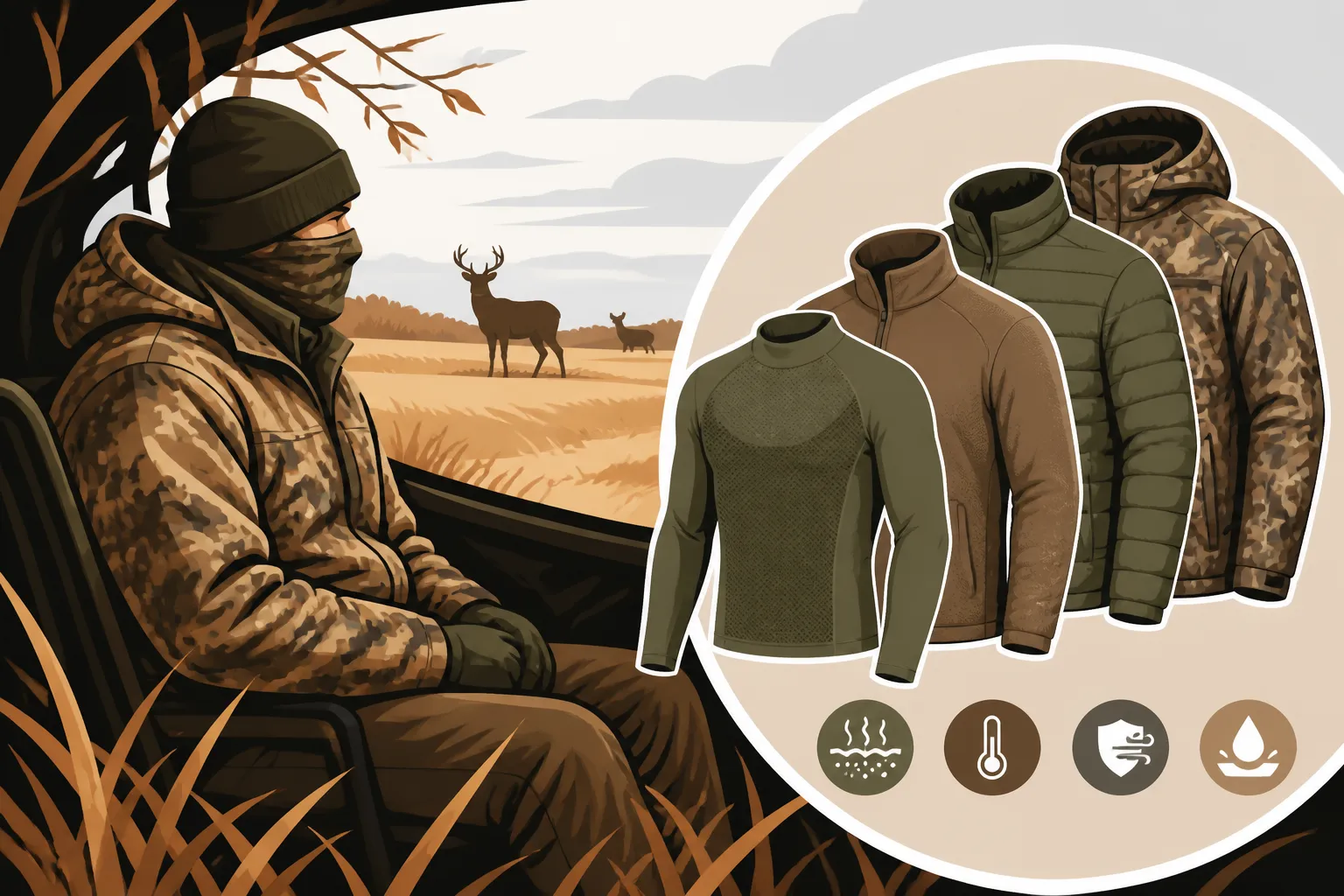
Each layer in this intelligent system has a distinct job: the base layer handles moisture management, keeping your skin dry; the mid-layers provide the crucial insulation that traps warmth; and the outer shell offers protection from wind, rain, and snow. When these three functions are addressed by specialized garments, you have a much more effective and comfortable setup than relying on one bulky piece of clothing.
Consider the traditional approach: one heavy, insulated hunting jacket. While it might be warm in static, mild conditions, it's a nightmare if you have to walk far, or if the temperature unexpectedly rises. You quickly overheat, sweat, and then become dangerously cold when you stop moving. This is why the "one heavy coat" method often fails in Nebraska's dynamic conditions; it lacks the adaptability needed to handle rapid changes.
The Core Components: Base, Mid, Outer, and 'Active'
A truly effective layering system for a Nebraska November sit consists of three core components: the base layer, the mid-layers, and the outer shell. However, for a hunter, there's a fourth, often overlooked, "active" layer that makes all the difference during your trek to and from the stand. Understanding how these work together is paramount.
The base layer, worn directly against your skin, is your moisture manager. Its job is to wick sweat away from your body, preventing that clammy, cold feeling that leads to rapid heat loss. The mid-layers are your insulation engines. These are the garments that trap warm air and prevent your body heat from escaping. Finally, the outer shell is your protective barrier, shielding you from wind, rain, and snow, acting as a fortress against the external environment.
The "active" layer is usually a lighter, breathable mid-layer that you wear only for the walk into your stand. The idea is to avoid sweating on your heavier, static insulation. You hike in with your active layer, shed it (or your entire main mid/outer system remains off), and then put on your full, warm system once you've reached your destination and cooled down. This prevents your core insulating layers from getting damp, which compromises their effectiveness.
These layers are designed to work in concert, creating a highly efficient system that traps air, which is the actual insulator. Think of it like a thermos: multiple layers with air in between keeping the contents hot. The more air pockets you can create and control, the warmer you'll be. The beauty of this system is its modularity; you can easily add or subtract layers as needed, fine-tuning your comfort level throughout the day. This adaptability is critical for long days afield where conditions can change on a dime. When planning for such variable conditions, it's helpful to use advanced weather tools, and I often hear folks checking platforms like GoHunt for detailed forecasts that help them decide precisely which layers to pack for their hunt.
The Base Layer: Your Second Skin
The base layer is arguably the most critical component of any layering system, yet it's often overlooked or misunderstood. It's not just another shirt; it's the foundation upon which all your other layers depend for maximum effectiveness.
The Critical Role of Moisture Management
When you're out hunting, especially if you have to walk a fair distance to your stand or blind, you're going to sweat. Even when sitting still in cold weather, your body generates some moisture. If that sweat remains on your skin, it cools rapidly, drawing heat directly away from your body through evaporation. This phenomenon is known as evaporative cooling, and it's a primary culprit for feeling miserably cold, even when you're heavily insulated. The base layer's paramount job is to wick that moisture away from your skin and transfer it to outer layers, allowing it to evaporate away from your body.
This is precisely why the old adage "cotton kills" is so true in cold-weather hunting. Cotton fabric absorbs moisture like a sponge and holds it against your skin. Once wet, cotton loses almost all of its insulating properties, and the moisture continues to pull heat from your body. Imagine walking into your stand, breaking a sweat, and then sitting for hours in chilly November air with a damp cotton shirt clinging to you. It's a recipe for hypothermia and a miserable hunt.
To combat this, you need materials specifically engineered for moisture management. The two primary categories are merino wool and synthetic fabrics. Merino wool is a natural fiber known for its incredible warmth-to-weight ratio, its ability to insulate even when damp, and its natural odor-fighting properties. It's soft against the skin and highly breathable. Synthetic fabrics, typically made from polyester blends, are designed to be extremely fast-drying and durable. They excel at wicking moisture rapidly and are often more affordable than merino.
Both merino and synthetics are excellent choices, far superior to cotton. Merino wool tends to feel warmer even when slightly damp and is naturally resistant to holding odors from sweat, which is a huge plus for multi-day hunts. Synthetics, on the other hand, usually dry faster if they get thoroughly soaked and can be more resistant to abrasion. Having the right base layer sets the stage for comfort and warmth, allowing the rest of your Base Layers for a Nebraska November to do their job properly.
Choosing the Right Weight and Fit
Beyond the material, the weight and fit of your base layer are crucial considerations for maximizing its effectiveness during a Nebraska November hunt. Base layers come in various weights – light, mid, and heavy – each designed for different temperature ranges and activity levels. A lightweight base layer is ideal for early November when temperatures might still be moderate, or if you anticipate a high level of activity. Midweight is your all-around workhorse, suitable for most general cold-weather hunting. Heavyweight base layers are reserved for truly frigid conditions or extremely sedentary sits, like during the late firearm or muzzleloader seasons.
The fit of your base layer is just as critical as its material and weight. It should fit snugly against your skin, almost like a second skin, but without being constrictive. This close contact is essential for the fabric to effectively wick moisture away from your body. If the base layer is too loose, there will be air gaps between the fabric and your skin, reducing its wicking efficiency and allowing cold air to circulate. However, it shouldn't be so tight that it restricts your movement or blood flow, which can also lead to cold spots.
Consider the different styles available. You'll find full-leg bottoms, which are great for maximum coverage, but also ¾-length options that stop above the boot line, preventing bunching inside your Insulated Boots for a Firearm Season Sit. Tops come in crew neck or zip neck versions; a zip neck allows for quick ventilation if you start to overheat during a strenuous walk. Having a variety of weights and styles means you can adapt your base layer to the specific conditions of each hunt, rather than a one-size-fits-all approach.
Ultimately, investing in a couple of good quality base layers of varying weights gives you the flexibility to adapt. On a colder day, you might opt for a heavyweight merino. On a day with more walking or milder temps, a midweight synthetic might be perfect. This adaptability is the core principle of a smart layering system, allowing you to fine-tune your comfort from the very first layer.
Mid-Layers: The Heart of Your Insulation
Once your base layer is taking care of moisture, your mid-layers step up to do the heavy lifting in terms of insulation. This is where you trap the warmth your body generates and build a customizable thermal barrier against the cold.
Insulating Materials: Fleece, Down, and Synthetics
Mid-layers are primarily about trapping heat, and different materials excel at this in various ways. Fleece is a popular and versatile choice. It's lightweight, breathable, and provides excellent warmth even when slightly damp. Fleece layers are great for active insulation because they allow some moisture vapor to escape, preventing you from overheating during moderate activity. They are also relatively affordable and durable, making them a staple in many hunters' wardrobes. A good fleece jacket or vest can be an indispensable part of your kit, often worn as the "active" layer on the walk in.
Then there's down insulation, the marvel of nature. Down offers an unparalleled warmth-to-weight ratio, meaning it provides incredible warmth with very little bulk. It's incredibly packable, compressing down to a small size, which is fantastic for carrying in your pack until you reach your stand. However, down's major weakness is moisture; once it gets wet, it loses almost all of its insulating properties and takes a long time to dry. For this reason, many hunters use down as an 'emergency' layer or as an outer-most insulating layer that they only put on once they are in the stand and are sure it will stay dry.
Synthetic insulation, such as Primaloft or Thinsulate, aims to mimic the properties of down but with improved performance in wet conditions. These man-made fibers are designed to retain warmth even when damp, making them a more reliable choice in situations where rain or wet snow is possible. While synthetic insulation is generally bulkier and heavier than down for the same amount of warmth, its resilience in adverse weather makes it a favorite for many hunters in damp climates or during extended, stormy sits.
In a practical Nebraska scenario, you might start with a lightweight fleece vest for a crisp morning, adding a thicker fleece jacket as the day progresses. For those truly bitter, static sits, a puffy down or synthetic insulated jacket could be deployed over your other mid-layers, ensuring you stay warm for hours. When you're scouting out potential stand locations or reviewing maps, tools like GoHunt can sometimes offer insights into prevailing winds, helping you anticipate the kind of insulation you'll need for specific areas.
Strategic Layering and Packability
The real magic of mid-layers lies not just in their material, but in their strategic application and packability. Instead of one thick, bulky mid-layer, think about utilizing multiple thinner mid-layers. This strategy often provides more warmth because it creates additional air pockets, and crucially, it offers far more precise temperature regulation. You can easily add or subtract a vest, a light jacket, or a heavier fleece as conditions change or your activity level shifts throughout the hunt. This adaptability is paramount for comfort during a long day in the field.
A key strategy for avoiding sweat-induced chills is the "active layer" for the walk in. This is typically a lighter, breathable mid-layer that you wear while hiking to your stand. Your heavier, primary insulating mid-layers stay tucked away in your pack. Once you reach your destination, you can shed the active layer (which might be damp from sweat) and then put on your dry, warm, static insulation. This keeps your most critical warmth-trapping layers from becoming compromised by internal moisture.
Packability is a huge consideration, especially when hunting public land that might require a significant hike. Bulky layers can quickly fill your pack and become cumbersome. Down and modern synthetic insulated garments are designed to compress significantly, making them easy to carry. This allows you to bring sufficient insulation for even the coldest conditions without having to carry an enormous, heavy pack. The ease with which you can pack and deploy these layers dictates how readily you'll adjust to changing conditions.
The ability to easily add or remove these layers without much fuss is what makes the system truly functional. You don't want to be fumbling with too many zippers or struggling to get a layer on or off when a buck might appear at any moment. Your mid-layers should allow for smooth, quick adjustments, making sure your focus remains on the hunt, not on your clothing.
The Outer Shell: Your Fortress Against Nebraska's Fury
The outer layer is your last line of defense, the armor that shields you from the full onslaught of Nebraska's November weather. This is where wind, rain, and snow meet their match, and it's also where noise and visibility become critical considerations for a successful hunt.
Windproof and Waterproof: Non-Negotiables for November
We've talked about Nebraska's relentless wind, and it truly cannot be overstated: a windproof outer layer is absolutely non-negotiable for comfort and safety in November. Even a relatively warm jacket will fail you if the wind can slice right through its fibers, stripping away your body heat. Look for materials specifically labeled as windproof, often utilizing membranes like GORE-TEX, Windstopper, or proprietary brands that create an impenetrable barrier to air movement. This is your primary defense against that pervasive, bone-chilling cold.
Equally important, especially as November progresses, is a waterproof and breathable outer shell. Unpredictable rain can turn to sleet, and then to snow, all within a few hours. Getting wet, particularly in cold, windy conditions, can quickly lead to hypothermia and prematurely end your hunt. A truly waterproof membrane will keep moisture out while still allowing your body's moisture vapor to escape, preventing you from getting clammy and cold from the inside out. Don't confuse "water-resistant" with "waterproof"; for long, static sits in potentially nasty weather, you need the full protection of a waterproof garment.
When evaluating waterproof garments, pay attention to features like fully taped seams. Even the best waterproof fabric is useless if water can seep in through the stitching. A durable water repellent (DWR) coating on the fabric's exterior is also vital; it causes water to bead up and roll off, preventing the face fabric from becoming saturated and allowing the breathable membrane to function effectively. Without DWR, the outer fabric can "wet out," feeling heavy and making you cold.
Investing in high-quality Wind-Blocking Outerwear for the Plains is one of the smartest decisions you can make for deer hunting in Nebraska. It’s the difference between enduring a tough weather day and actually enjoying it, knowing you're protected from whatever the skies decide to throw your way. This protection is what allows you to stay in the stand when others are heading home, potentially catching that mature buck on the move.
Stealth and Functionality in Your Final Layer
Beyond battling the elements, your outer shell needs to support your hunting objectives, meaning it must be quiet and functional. A noisy outer layer that rustles with every slight movement is a deer's alarm system. High-performance waterproof and windproof fabrics can sometimes be a bit stiffer, but modern advancements have led to incredibly quiet options, often with soft-touch finishes or brushed exteriors. Always test out how noisy a garment is by moving around in it before you commit to it for hunting. Silence is paramount, especially when that trophy buck steps into range and you need to make a subtle adjustment.
Functionality is also key. Look for well-placed pockets that are easily accessible, even when you're wearing gloves or sitting in a stand. Adjustable cuffs with Velcro or elastic can prevent cold air from sneaking up your sleeves and can be tightened to keep rain out. A well-designed hood is critical; it should offer excellent protection without obscuring your peripheral vision or muffling your hearing. Many hoods are designed to integrate with a cap or beanie, ensuring maximum warmth without sacrificing awareness.
The camouflage pattern on your outer layer should also be chosen with Nebraska's diverse terrain in mind. Whether you're hunting river bottoms, cedar draws, or agricultural fields, a pattern that breaks up your outline and blends with the natural surroundings is important. Many popular patterns offer versatility across different environments. Remember that safety is also a concern during certain times of the year; if you're bowhunting during the firearm season overlap, ensure your outer layer complies with Orange Requirements for Archers in November to stay visible to other hunters.
Ultimately, your outer shell is your protective fortress, combining defense against the weather with the stealth and practical features necessary for successful hunting. It's the layer that lets you ignore the conditions and focus on the hunt, knowing you're well-equipped for anything.
Protecting the Extremities: Hands, Feet, and Head
It doesn't matter how many layers you have on your torso; if your head, hands, and feet are cold, you will be miserable. These "extremities" are heat loss hotspots, and protecting them effectively is crucial for staying comfortable and extending your time in the stand during a chilly Nebraska November.
The Heat Loss Hotspots
Your head is a significant radiator of body heat. Though the old myth that "you lose 70% of your body heat through your head" isn't strictly true, you do lose a substantial amount, especially if it's uncovered. A cold head will make your entire body feel colder. Protecting your head, ears, and neck is non-negotiable for warmth. This is why a good insulated beanie, often made of merino wool or fleece, is a hunter's best friend. For truly frigid conditions, a balaclava or a combination of a beanie and a neck gaiter provides comprehensive coverage, ensuring no skin is exposed to the biting wind.
Cold hands can quickly turn a potential shot into a missed opportunity. Dexterity is crucial for handling your bow or rifle, releasing an arrow, or simply staying comfortable. A layering system for your hands is also advisable: thin, wicking liner gloves for basic dexterity, covered by a warmer, insulated glove or mitt. For extreme cold, or during long periods of inactivity, an insulated hand muff worn around your waist can be a game-changer, allowing you to keep your hands warm and ready to go. You can even stash Hand Warmers That Last a Full Sit inside for an extra boost.
Your feet are often the first to get cold, especially when sitting motionless. Good, insulated Boots for Walking Nebraska Grass and Sand are a must, but the right sock system amplifies their performance. Avoid cotton socks at all costs, as they will quickly make your feet cold and clammy. Instead, opt for a thin, wicking liner sock (synthetic or merino) to pull moisture away from your skin, paired with a thicker, insulated merino wool sock on top. Ensure your boots aren't too tight when wearing multiple socks, as this can restrict blood flow and actually make your feet colder.
Accessories for Comfort and Endurance
Beyond the basic head, hand, and foot coverings, a few key accessories can dramatically improve your comfort and extend your endurance during those long, cold Nebraska sits. Hand warmers, whether the disposable chemical packets or rechargeable electric versions, are absolute necessities. Tuck them into your gloves, hand muff, or even your pockets to keep your digits warm and responsive. They provide targeted heat that can make a huge difference, especially during the last hour of daylight when the cold really sets in.
For your feet, especially during extended static sits in a stand, boot blankets or insulated overboots can be a lifesaver. These are essentially insulated bags that slip over your already-booted feet, providing an extra layer of warmth and stopping heat loss to the cold air or stand platform. They allow you to wear a slightly less bulky boot on the walk in, then add serious warmth once you're settled. Many hunters swear by them for keeping their feet comfortable for hours.
Another often-underestimated accessory is an insulated seat pad or cushion. Sitting directly on a cold metal stand, a frozen log, or the chilly ground will rapidly draw heat from your core. A good insulated pad provides a thermal barrier, keeping your backside warm and comfortable, which in turn helps keep your entire body warmer. This small investment makes a huge difference in your ability to sit still and stay focused for longer periods.
Finally, while not worn directly, always consider having emergency warmth in your pack. An extra puffy jacket, a space blanket, or even a small survival bivy can provide critical warmth if you get unexpectedly stuck or injured. When planning a hunt, especially in remote areas or if Scouting Nebraska Public Ground Before Opening Day, consulting tools like GoHunt for detailed topographical maps and area information can also be invaluable for preparing for various scenarios and choosing routes that minimize exposure. These small additions to your gear can make all the difference between a miserable, short hunt and a successful, comfortable one.
| Layer Type | Purpose | Common Materials | Pros | Cons |
|---|---|---|---|---|
| Base Layer | Wicks moisture from skin | Merino Wool, Synthetics | Odor control (merino), quick-drying (synth) | Can be expensive (merino), less warm when wet (some synth) |
| Mid-Layer | Provides insulation | Fleece, Down, Synthetic Fill | Excellent warmth, breathable (fleece) | Down loses warmth when wet, synthetic can be bulky |
| Outer Layer | Protects from elements | GORE-TEX, Proprietary Membr. | Windproof, waterproof, breathable | Can be noisy, often higher cost |
| Active Layer | Light insulation (mobile) | Lightweight fleece, softshell | Breathable, flexible, easy to shed | Not ideal for prolonged static sits |
| Extremities | Prevents heat loss from head, hands, feet | Wool, Fleece, Synthetic Insulation | Critical for overall body warmth, dexterity | Can be bulky, specialized for specific needs |
Disclaimer
This article is for general informational purposes only and does not constitute professional advice. Laws, prices and regulations vary by location and change over time. Consult a qualified professional for guidance on your specific situation.