Rattling and Grunting in Nebraska’s Rut
There’s nothing quite like the excitement of the deer rut, but let's be honest, it can also be incredibly frustrating. One minute bucks are chasing does through the timber, and the next, it feels like every deer has vanished into thin air, leaving you wondering if you're doing something wrong. This guide is here to help you navigate the nuances of rattling and grunting, giving you the confidence and techniques to effectively pull in those elusive Nebraska whitetails and mule deer when they're focused on breeding.
Understanding the Rut Dynamics in Nebraska
The rut is a magical time for deer hunters, transforming patterns and behaviors almost overnight. In Nebraska, the peak of the whitetail rut typically falls in the second and third weeks of November, though the pre-rut and post-rut phases can offer fantastic action too. Understanding these phases and how they influence deer behavior is crucial for effective calling.
The Phases of the Rut and Deer Behavior
The rut isn't a single event; it's a progression, and each stage has its own set of deer behaviors that dictate how you should approach calling.
- Early Pre-Rut (Late October): This is when bucks start feeling the urge. Scrapes and rubs appear, and younger bucks might start light sparring. Does aren't receptive yet, so buck activity is often about establishing dominance and marking territory. During this time, rattling can work to challenge smaller bucks, while grunting can pique the curiosity of mature bucks looking for early action. It’s a great time to start scouting and observing, trying to locate those dominant bucks before they lock down with does. If you're wondering about the timing, you can read more about Hunting the Pre-Rut in Late October.
- Peak Rut (Mid-November): This is the high-octane period when does are receptive, and bucks are actively seeking them out, often covering vast amounts of ground. Chasing is common, and bucks are less cautious, focused almost entirely on breeding. This is generally the best time for aggressive calling, as bucks are more likely to respond to the sounds of a rival or a potential receptive doe. However, they might also be locked down with a doe, making them temporarily "un-callable." This is also often When the Whitetail Rut Peaks in Nebraska.
- Late Rut/Post-Rut (Late November into December): After the main breeding push, many does have been bred. Bucks are exhausted, often losing significant body weight. While some does may come into estrus again, the intensity of the chase phase wanes. Calling can still be effective, especially grunting, as a tired buck might investigate a lone doe, or another buck might be looking for any last breeding opportunity. Patience becomes even more critical during this phase.
Environmental Factors Influencing Calling Success
Beyond the rut phases, several environmental factors in Nebraska can significantly impact how successful your rattling and grunting efforts will be. Ignoring these can lead to frustration.
- Wind Direction and Speed: Wind is perhaps the most critical factor, especially in Nebraska's open terrain. Deer rely heavily on their nose, and a buck approaching your calls will almost always try to circle downwind to scent-check the area. Always set up so your scent cone is blowing away from where you expect deer to approach. In the vast Sandhills, wind can carry sound a long way, but it also disperses your scent. Conversely, in thick river bottom timber, the wind might be swirly and less predictable. Understanding Wind Direction on Open Nebraska Prairie Stands is paramount.
- Habitat and Cover: The type of cover you're hunting in dictates your calling strategy. In thick timber or dense cedar draws, sound doesn't travel as far, so you can call more aggressively and more frequently, and deer often have less room to circle widely. In open agricultural fields or the expansive Sandhills, sound carries for miles, requiring a more subtle approach or longer waiting periods between call sequences. Cover also affects a deer's sense of security; a buck might be more willing to charge into thick cover than expose himself in the open.
- Hunting Pressure: Public land or areas with high hunting pressure can make bucks much warier of calls. They might have encountered hunters calling before, making them call-shy. In these situations, less aggressive, shorter sequences of calls, or even just soft grunts, might be more effective than a full-blown rattling sequence. Sometimes, silence and patience are the best tactics on pressured ground.
The Art of Rattling Antlers
Rattling is one of the most exciting ways to call in a buck during the rut. The sound of two bucks fighting can trigger an aggressive response, bringing deer charging in to investigate or challenge. But it's not just about clanging antlers together; there's a technique to it.
Choosing the Right Rattling Antlers or Bag
The equipment you use for rattling can make a difference, particularly in replicating realistic sounds that resonate with Nebraska bucks.
- Real Antlers: Nothing truly replicates the sound of real bone-on-bone contact like actual deer antlers. You can find shed antlers or purchase sets. Look for antlers that have good mass and multiple points for varied sounds. A heavy set of antlers can create deep, loud clashing sounds, while lighter sets might be better for sparring sounds or in situations where you need less volume. The natural imperfections of real antlers add to the realism, creating a sound that's hard to distinguish from the real thing.
- Synthetic Rattling Antlers: Many companies make synthetic versions that are often lighter, more durable, and easier to pack. Brands like rattling forks from Knight & Hale or Rackensack rattling bags are popular. While they might not have the exact resonance of real bone, modern synthetics are very good at mimicking the "tine ticking" and "crashing" sounds. They're often a great choice for hunters who don't want to carry bulky real antlers or are concerned about bone fragments.
- Rattling Bags: These are often fabric bags filled with small wooden dowels or composite sticks. They are extremely portable and quiet to carry. While they excel at simulating the "tick" and "grind" of antlers, they sometimes lack the loud "crashing" sounds of a full-blown fight. They are excellent for subtle calling or light sparring sequences, especially in thick cover or when you want to avoid spooking deer with overly aggressive sounds. They’re also great for a quick, single clash to get attention.
Techniques for Effective Rattling
Just like playing an instrument, rattling requires technique to sound convincing. It's about more than just noise; it's about mimicking a story.
- Light Sparring: This is generally best during the early pre-rut or when you're being cautious on pressured ground. Gently tick the antler tips together, creating soft clashing and grinding sounds. This mimics younger bucks testing dominance or light sparring sessions. Follow up with a few soft grunts. A 30-second sequence, followed by 5-10 minutes of silence, can be effective.
- Aggressive Fighting Sequence: This is your go-to for the peak rut when you want to challenge a dominant buck. Start with some light ticking, then build quickly into aggressive crashing and grinding, as if two bucks are truly going at it. Throw in some pushes against a tree or the ground to mimic body contact. This sequence should last 1-2 minutes, followed by a grunt or two, and then a long period of silence (10-15 minutes or even longer). Remember, a real fight doesn't last forever. For Rattling Volume for Open Country, you'll want to be louder, letting the sound carry, whereas in thick cover, you might soften it.
- Adding Realism: Don't just hold the antlers in front of you. Brush them against brush, scrape them on the ground, or even hit them against a tree to simulate an actual fight moving through cover. The more realistic you make the scene, the more convincing your call will be. Always have your bow or rifle ready, as bucks can charge in fast and from unexpected directions, often circling downwind to get a whiff before committing. Using a platform like GoHunt can help you understand the landscape and identify potential approach routes, so you're not caught off guard.
Mastering the Grunt Call
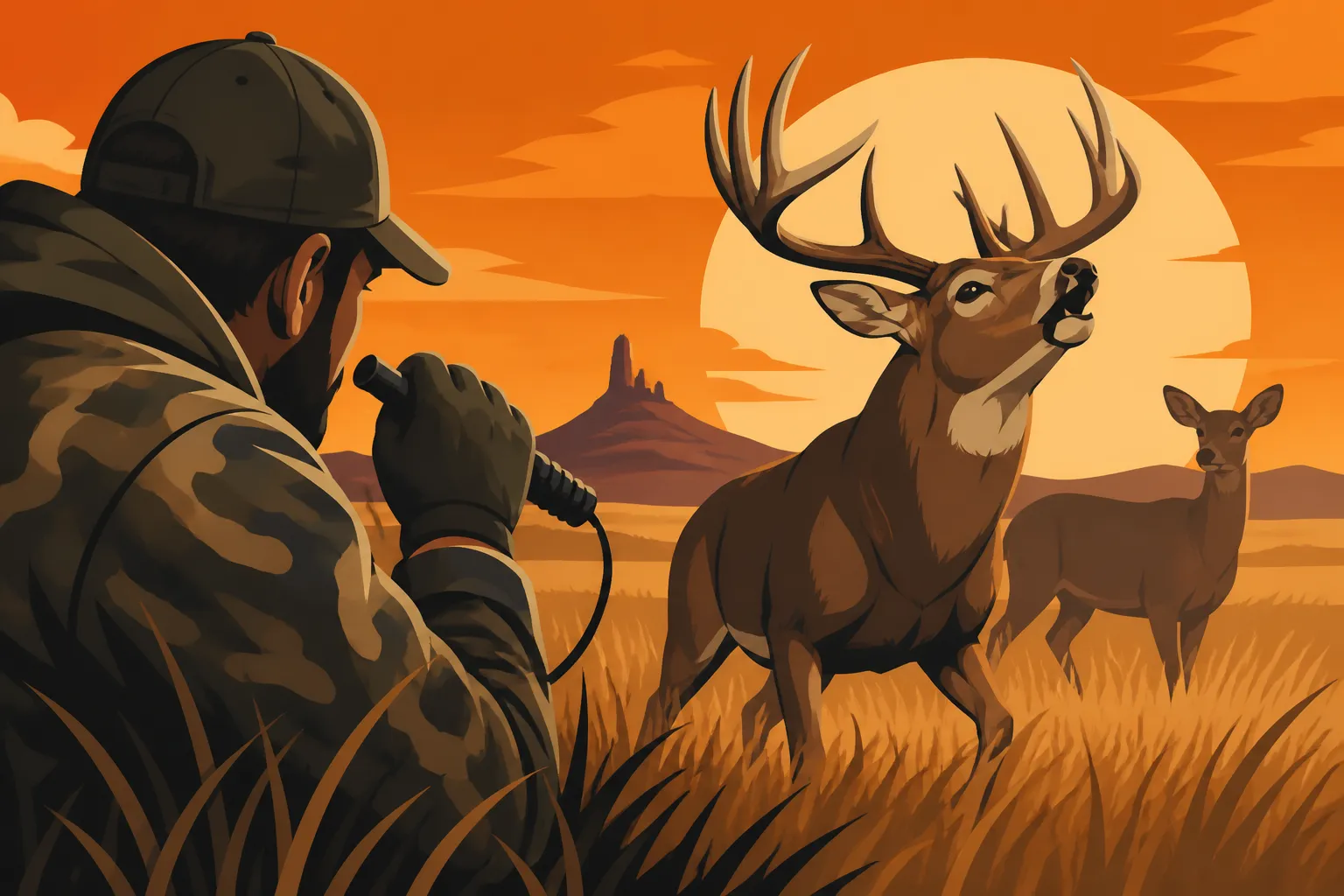
The grunt call is arguably the most versatile and consistently effective deer call. It's the primary vocalization bucks use to communicate with does and other bucks, conveying everything from curiosity to dominance.
Types of Grunt Calls and Their Sounds
Like rattling, there's a variety of grunt calls, each with slight differences in sound and how they're operated.
- Tube-Style Grunt Calls: These are perhaps the most common. They consist of a tube with a reed inside and often have a flexible hose or adjustable ring to change the pitch. These are excellent for producing a wide range of grunts, from deep, guttural buck grunts to softer doe bleats. Calls like the Primos Buck Roar or HS Strut Mac Daddy are popular choices. The ability to vary pitch makes them very versatile for mimicking different deer.
- Bellow-Style Calls: These calls often have a rubber or plastic bellows that you squeeze to force air over a reed. They are great for quick, sharp grunts and can be very easy to operate with one hand, which is helpful when a deer is approaching. They might not offer the same range of tones as a tube call, but for consistent, realistic grunts, they are highly effective.
- Electronic Calls (where legal): Some states permit electronic calls for deer, though Nebraska does not. However, it's worth noting their existence. These can produce a perfect replica of various deer sounds, but always check local regulations before considering one. For Nebraska, stick to manual calls.
When and How to Grunt Effectively
Knowing when to grunt and what kind of grunt to make is key. It's about speaking the deer's language.
- Buck Grunt: A short, low-pitched "unh-unh-unh" sound. This is used by bucks to communicate generally, to signal their presence, or to try and locate other deer. It's effective for pulling in curious bucks or making a cruising buck stop and look. If you see a buck at a distance and he's not paying attention, a single, sharp buck grunt can often stop him in his tracks, giving you a shot opportunity. In Grunt Calls in Thick River Timber, you'll want to use a little more volume to cut through the dense cover.
- Tending Grunt: This is a longer, softer, more drawn-out grunt, often heard when a buck is actively chasing or tending a doe. It sounds like a series of soft grunts, almost a purr. This call is extremely effective during the peak rut, as it suggests a buck is with a hot doe, which can draw in other bucks looking to steal her away. It tells a story of an active breeding situation.
- Doe Bleat/Estrus Bleat: While primarily buck calling, a doe bleat can be incredibly useful. A short, sharp "maaaah" sound can signify a doe looking for company. An estrus bleat is a drawn-out, nasal "maaaaaaah," indicating a doe in heat. Using an estrus bleat, especially if followed by a tending grunt, can convince a buck that there's a hot doe and a rival buck in the area, often bringing him in aggressively. This is one of the most powerful calls during the peak rut.
- Fawn Distress: While not a "grunt," a fawn distress call can sometimes draw in does (who are curious or protective) and occasionally bucks (who might be following does). It's more of a desperation call, but it can work when other methods fail.
Combining Rattling and Grunting
The real magic often happens when you combine rattling and grunting. These calls work in tandem to create a more believable and compelling scenario for approaching deer.
Synchronizing Sounds for Realism
Think of it as creating a mini-drama in the woods. You're not just making noises; you're painting a picture with sound.
- The Fighting Scenario: Start with an aggressive rattling sequence (1-2 minutes). Immediately after you stop rattling, throw in a few loud, aggressive buck grunts, as if one of the fighting bucks is asserting dominance or chasing off the loser. Then, quickly transition to some tending grunts, as if the victorious buck has found a doe. The entire sequence might last 3-4 minutes, followed by a long silence. This tells the story of two bucks fighting over a doe, with one winning and now tending his prize. This full scenario is excellent during the peak of the rut when bucks are most competitive.
- The Curiosity Approach: Begin with a soft rattling sequence, just a minute or so of light sparring. Stop, wait 30 seconds, then emit a single, soft buck grunt. This suggests two bucks are lightly sparring, and one is just checking his surroundings. This is perfect for the pre-rut or when you're uncertain about how aggressively to call. It piques curiosity without immediately challenging a dominant buck.
- The "Here I Am" Sequence: If you're on a stand and haven't seen anything for a while, a single, clear buck grunt every 15-20 minutes can work wonders. It's not aggressive, just a statement of presence. Follow it up with scanning the area, as a buck might appear silently. This can be particularly effective when you're hunting an area like a cedar draw, where visibility is limited, and you're trying to let deer know you're there. More on this can be found in Reading a Cedar Draw for Deer Movement.
Strategic Silences and Observation
Silence is just as important as the calls themselves. Many hunters make the mistake of calling too often or not waiting long enough after a sequence.
- The Waiting Game: After any calling sequence, especially aggressive ones, you need to wait. Bucks rarely charge in immediately. They will often circle, stop, listen, and scent-check. A good rule of thumb is to wait 10-15 minutes after an aggressive sequence before moving or calling again. For lighter calls, 5-10 minutes might suffice. During this time, be absolutely still and scan intensely, especially downwind.
- Listen, Listen, Listen: Don't just make noise; listen for a response. A buck might grunt back, stomp his foot, or you might hear brush breaking as he approaches. These are critical clues. Sometimes, a subtle grunt is all you need to hear to know a buck is interested.
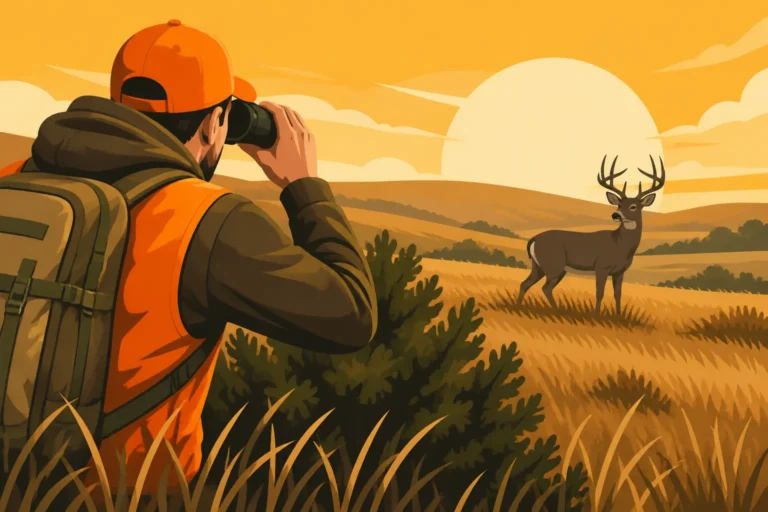
- Visual Cues: While waiting, pay close attention to visual cues. Look for flicking ears, movement in the brush, or the tell-tale white of a flag as a deer approaches. Bucks often come in cautiously, using cover to their advantage. This is where high-quality binoculars are essential, allowing you to pick apart cover at a distance. Checking deer density data, which you can often find compiled on platforms like GoHunt, helps determine how aggressively to call, as a higher density might mean more competition and more responsive deer.
Situational Calling Strategies
Effective calling isn't one-size-fits-all. Different terrains, deer populations, and rut phases demand adapted strategies.
Open Country Calling (Sandhills, Farm Fields)
Nebraska has vast stretches of open country, from the undulating Sandhills to the expansive farm fields. Calling here requires a different approach than in dense timber.
- Maximizing Sound Travel: In open terrain, sound travels far, so you don't necessarily need to be overly loud, but clarity is important. A good, clean rattling sequence followed by clear grunts can carry for hundreds of yards. The key is to project the sound without it sounding fake. You might consider using calls that have good volume potential without being shrill.
- Longer Waiting Periods: Bucks in open country have more room to circle and approach cautiously. They will almost always try to get downwind of your position. This means you need to wait longer after each calling sequence, often 15-20 minutes, and be extra vigilant about scanning all potential approach routes.
- Using Decoys: Decoys can be incredibly effective in open country because they provide a visual confirmation for a distant buck. A standing buck decoy, perhaps with an estrus doe decoy nearby, combined with rattling and grunting, creates a very convincing scene. Ensure your decoys are placed where approaching bucks will see them from a distance and where you have clear shooting lanes. More on this can be found in Decoying a Nebraska Whitetail Buck.
- Choosing a Stand/Blind Location: In open terrain, concealment is paramount. Ground blinds are excellent choices, allowing you to move and call without being easily spotted. Make sure to brush in your blind well to break up its outline. If using a treestand, choose one that offers good background cover. Whether you're using a Ground Blinds in Open Nebraska Country or Choosing a Treestand Site on Nebraska Farmland, ensure your setup provides cover and a good downwind advantage.
Thick Cover Calling (River Bottoms, Cedar Draws)
Dense river bottoms and thick cedar draws are classic whitetail habitat in Nebraska, offering excellent cover and different calling challenges.
- Shorter, More Frequent Sequences: Sound is absorbed quickly in thick cover. You'll need to call more frequently and often more loudly to ensure your sound penetrates the dense foliage. However, your sequences can be shorter, as deer don't need as much time to approach.
- Close-Quarters Encounters: Bucks in thick cover will often come in very close, sometimes silently. Be ready for a quick shot. Your focus should be on creating shooting lanes around your stand or blind. This is where Grunt Calls in Thick River Timber can be particularly effective, as the deep tones resonate well.
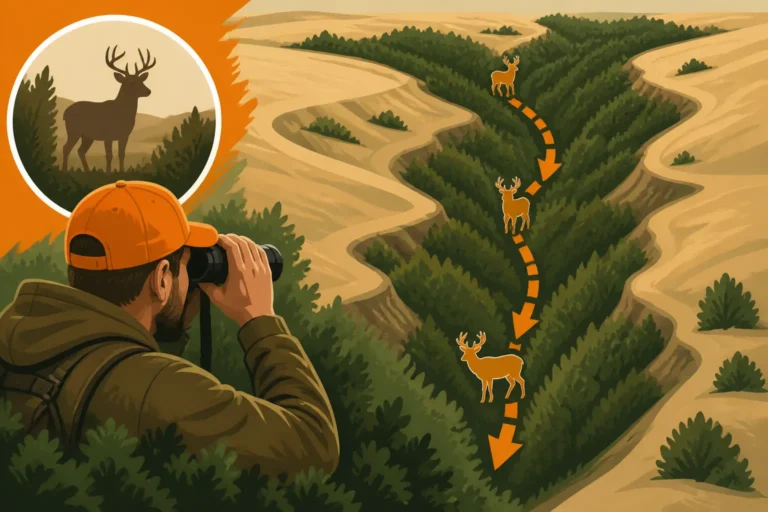
- Limited Visibility: The challenge here is seeing deer before they see you. Use terrain features like creek beds, ditches, or existing trails to your advantage. Focus on bottlenecks and pinch points where deer are funneled. Setting up in a spot where you can see a bit further into the thickets will give you an edge.
- Still-Hunting with Calls: In thick cover, a more active approach can sometimes work. Still-hunting slowly through a cedar draw, stopping every 50-100 yards to emit a few soft grunts or a short, light rattling sequence, can be very effective. This makes it sound like a buck is moving through the cover, which is a natural behavior. Check out Still-Hunting Nebraska Cedar Draws for more on this method.
Table: Rut Phase Calling Strategy
| Rut Phase | Primary Calls | Intensity | Frequency | Ideal Conditions | Notes |
|---|---|---|---|---|---|
| Early Pre-Rut | Light Rattling, Buck Grunts | Moderate | Infrequent | Cool, calm | Challenge young bucks, pique curiosity of mature bucks. Focus on scrapes/rubs. |
| Peak Rut | Aggressive Rattling, Tending Grunts, Estrus Bleats | High | Moderate-Frequent | Any weather (bucks are driven) | Challenge dominant bucks, mimic breeding. Be ready for fast approaches. |
| Late Rut/Post-Rut | Soft Buck Grunts, Doe Bleats | Low-Moderate | Infrequent | Cold, clear | Target exhausted bucks looking for last opportunities or does coming into estrus again. |
Common Mistakes and How to Avoid Them
Even seasoned hunters can make mistakes when rattling and grunting. Avoiding these pitfalls can significantly increase your chances of success.
Calling Too Much or Too Little
Finding the right balance of calling is a subtle art. It's often where hunters either scare deer away or miss opportunities.
- Over-Calling: This is one of the most common mistakes. If you call too often or too aggressively, especially on pressured ground or in smaller timber, it can sound unnatural or alarm deer. They might associate repeated, loud calling with danger. A real buck fight doesn't last for 10 minutes straight. Be patient after a calling sequence, letting the woods settle before calling again.
- Under-Calling: On the flip side, not calling enough can mean missed opportunities. If you're in an area with good deer density and it's the peak rut, a quiet approach might not be getting the attention you need. Sometimes, a loud, attention-grabbing sequence is necessary to pull a buck from a distance. The trick is knowing when to be subtle and when to be bold. Consider your location and the deer's behavior. If you are scouting a new area, using tools that offer satellite imagery and historical harvest data (like GoHunt) can give you a better idea of deer presence and potential pressure, informing your calling intensity.
Ignoring Wind and Approach Angles
As mentioned before, wind is a deer's primary defense, and neglecting it is a recipe for disaster.
- Scent Control is King: No matter how good your calling sounds, if a buck catches your scent, he's gone. Always approach your stand or blind with the wind in your favor. Set up your calling position so that any deer circling downwind will pass through a shooting lane before they hit your scent cone. This often means setting up on the edge of a field or an opening, with thick cover behind you for concealment. For tips on navigating your entry and exit on flat ground, look into Entry and Exit Routes on Flat Farm Ground.
- Anticipating the Circle: Deer, especially mature bucks, will almost always circle downwind of your calls to confirm there isn't a predator or a trap. Mentally map out where you expect a buck to come from, and where he will try to get downwind. Have shooting lanes cleared in those directions, and be ready. If you're hunting open country, this circle can be quite wide, so scan your surroundings constantly.
Lack of Realistic Presentation
A convincing call isn't just about the sound; it's about the entire scene you create.
- Visual Movement (Decoys): While not always necessary, adding a decoy can make your calling much more effective, especially in open areas. A visual cue combined with auditory stimulation is a powerful attractant. Make sure your decoy is placed correctly, facing into the wind (which is natural for a deer) and in an area where it can be seen from a distance.
- Sound Dispersion: Don't call from the absolute same spot every time. If possible, move your rattling sequence slightly to mimic two bucks moving as they fight. If you're on the ground, use natural terrain features to project sound and break up your outline.
- Practicing Your Calls: Don't wait until opening day to start practicing your rattling and grunting. Practice in your backyard or a secluded area to get the rhythm and sounds right. Listen to actual deer vocalizations online to get a feel for what real bucks and does sound like. The more realistic you are, the better your chances of fooling a cagey Nebraska buck. You might also want to explore Scouting Nebraska Public Ground Before Opening Day to pinpoint ideal locations for practicing your calling techniques.
Disclaimer
Please ensure you always check the current Nebraska Game and Parks Commission regulations before hunting, as rules and seasons can change. This guide is for informational purposes only and does not supersede official regulations. Stay safe and ethical in the field.