Reading a Cedar Draw for Deer Movement
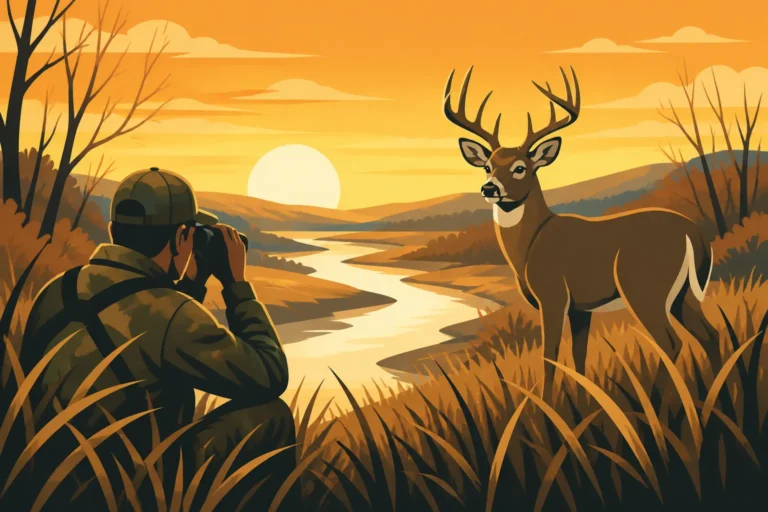
There's nothing quite as frustrating as feeling like you're walking through a maze when you're deer hunting, especially when you know deer are in the area but you just can't pinpoint their movements. In many parts of Nebraska, especially where big timber blocks are few and far between, those dense cedar draws become absolute magnets for deer, providing crucial cover and security. This guide is all about helping you unlock the secrets of these natural deer havens, showing you how to read the landscape and the subtle signs deer leave behind to boost your hunting success.
Understanding the Cedar Draw Ecosystem
Cedar draws are incredibly vital pieces of habitat in Nebraska, often acting as linear oases of security in an otherwise open or agricultural landscape. If you've spent any time scouting or hunting here, you know how critical finding good cover can be, and these draws are often exactly what deer are looking for.
Why Cedar Draws Attract Deer
Think about what a deer needs: food, water, and most importantly, cover to feel safe. Cedar draws deliver on that last point in spades. The dense, interlocking branches of eastern red cedar trees create an almost impenetrable fortress against the elements and predators alike. On a frigid December morning, that thick canopy holds warmth, offering much-needed thermal cover from bitter winds and blowing snow. Conversely, during a scorching early season archery hunt, those same dense cedars provide deep, cooling shade.
Beyond just thermal regulation, these draws are prime security cover. Deer feel safe bedded down in the thick stuff, knowing they're hidden from aerial predators and, yes, from hunters. They'll often use the draws as travel corridors, moving undetected from bedding areas to feeding grounds. While cedars themselves aren't a primary food source, the sheltered environment often allows other browse to thrive within the draw, and the edges frequently border agricultural fields or native browse, providing easy access to sustenance. When you're out there, really look at the landscape – where else can a deer disappear so completely in many parts of Nebraska? It’s why understanding Still-Hunting Nebraska Cedar Draws is such a valuable skill for any hunter.
Typical Structure of a Nebraska Cedar Draw
Cedar draws typically form in eroded creek beds, ravines, or along natural drainages. Over time, eastern red cedars, which are prolific colonizers of disturbed ground and thrive in Nebraska's soil, take root and multiply, creating dense thickets. The density within a draw can vary wildly. You might find areas of almost impenetrable cedar brakes where the trees grow so tightly you can barely push through them, interspersed with more open pockets or areas where hardwoods like oak or elm also grow.
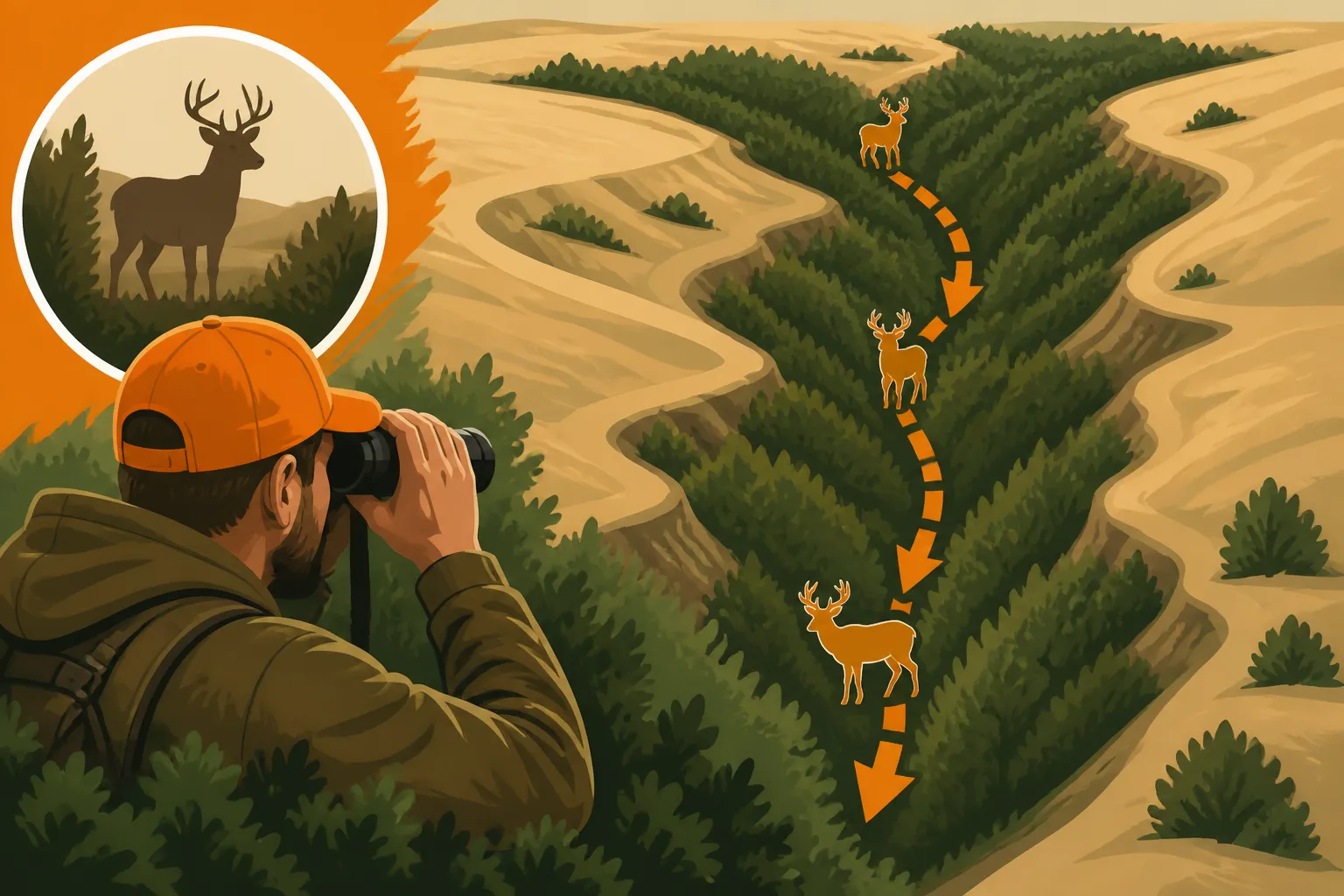
These draws are rarely uniform. They often have distinct "fingers" or smaller pockets that extend out into the adjacent prairie or cropland, creating natural pinch points and funnels. The transition zones where the cedars meet open ground or agricultural fields are particularly important. These edges are where deer often stage before entering fields to feed, or where they might sneak back into cover after a night of grazing. Pay close attention to any subtle changes in elevation, old fence lines, or small clusters of trees within or around the draw. These features can significantly influence deer movement and can be key locations for setting up a stand or planning a still-hunt. Sometimes, if the draw is deep enough, it might even hold seeps or small pools of water, making it even more attractive to deer, especially in dry periods.
Identifying Key Deer Sign Within a Cedar Draw
Once you're physically in or around a cedar draw, your detective skills really come into play. Deer leave behind a wealth of clues if you know what to look for, and reading these signs is the fastest way to understand how deer are using a particular area.
Decoding Tracks and Trails
Tracks and trails are arguably the most obvious and informative signs you'll find. When you enter a draw, the first thing to look for are established deer trails. These are often worn paths, especially visible where the draw opens up or crosses softer ground. But don't just look for any trail; differentiate between main travel routes and more subtle bedding trails. Main travel routes will be wider, more heavily used, and often connect the draw to a known food source or another bedding area. Bedding trails, on the other hand, might be fainter, branching off the main trails and leading into the thickest, most secure pockets of cedars.
The freshness of tracks is paramount. Crisp, well-defined edges on tracks indicate recent passage. If you see displaced leaves or fresh mud pushed up by a hoof, you know a deer was there very recently. Pay attention to the size of the tracks – larger, blunter tracks typically belong to bucks, especially those with dew claws showing. Look for where trails enter and exit the draw. Deer tend to take the path of least resistance, so look for saddles, low spots, or subtle breaks in the timber line. These are natural funnels where you can almost guarantee consistent movement. Before you even lace up your boots, using a mapping application like GoHunt can help you identify these topographical features and potential pinch points from above, giving you a serious advantage in knowing where to focus your ground-level scouting efforts. Understanding these travel patterns is crucial, just as it is when planning Entry and Exit Routes on Flat Farm Ground.
Rubs, Scrapes, and Browsing
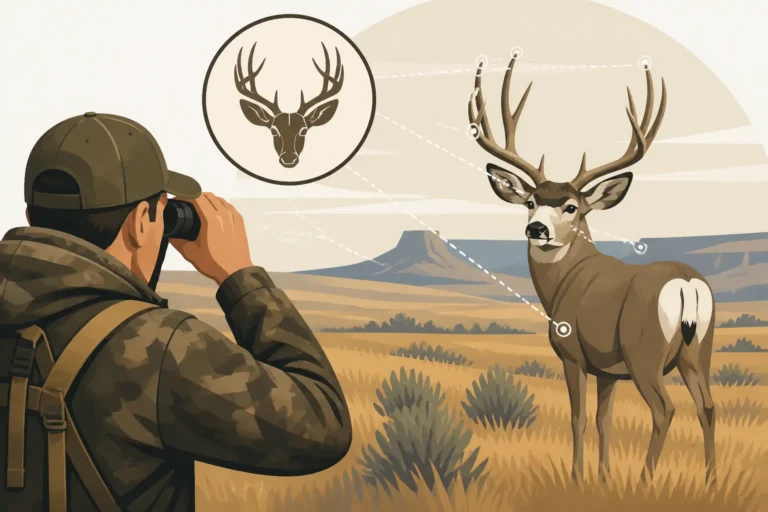
Beyond tracks, rubs, scrapes, and browsing sign are like reading a deer's diary. Rubs are where bucks have rubbed their antlers against trees, stripping the bark. Fresh rubs, especially on saplings or small trees within or along the edges of a draw, indicate recent buck activity. The height and diameter of the rub can give you a clue about the size of the buck, with larger rubs usually pointing to bigger deer. Follow a line of rubs, and you'll often find a buck's preferred travel corridor or even a parallel rub line that runs deeper into the security of the cedars.
Scrapes are another powerful indicator, often found along the edges of a draw or in subtle openings within it. These are spots where a buck clears a patch of ground with his hooves, then typically urinates over a low-hanging branch above it, depositing scent. Fresh scrapes, especially those with a strong musky odor, are communication hubs for deer. They tell you a buck is actively marking his territory and checking for does. During the pre-rut and rut, scrapes become incredibly active, and placing a stand nearby can be a game-changer. For more insights on this period, check out Hunting the Pre-Rut in Late October.
Finally, look for browsing. Deer are browsers, not grazers, meaning they eat twigs, leaves, and buds from woody plants. While they might nibble on cedar, they're more likely to browse on other palatable plants within or bordering the draw. Look for clipped twigs with ragged ends (deer lack upper incisors, so they tear rather than cut) and signs of consumption on saplings and bushes. This tells you where deer are feeding and can help you identify preferred forage within the draw itself, not just in adjacent fields.
Strategic Hunting Approaches Based on Draw Reading
Knowing where the deer are isn't enough; you need to know how to hunt them effectively. This means careful planning for your approach and where you choose to set up.
Setting Up for Success: Wind and Entry/Exit
The wind is your ultimate friend or foe when hunting deer in a cedar draw. Because these draws often funnel wind or create swirling currents due to their uneven terrain and dense cover, paying meticulous attention to wind direction is paramount. Deer rely heavily on their sense of smell, and a shifting breeze can instantly give away your presence, even if you're well-hidden. Always approach and set up with the wind in your favor, carrying your scent away from where you expect deer to be. Sometimes, this means having to walk further around a draw to get to the "downwind side," but it's always worth the extra effort. For an even broader understanding of wind dynamics, you might find Wind Direction on Open Nebraska Prairie Stands helpful, as the principles often translate.
Your entry and exit routes are just as critical. A silent approach is non-negotiable. Plan a path that minimizes noise, avoids known bedding areas, and keeps you out of sight as much as possible. This often means using natural terrain features, other lines of timber, or even walking in a ditch to get to your setup point undetected. Spooking deer on your way in or out can ruin a hunt for days, as they will quickly learn to avoid that specific area. Consider how deer will typically move through the draw at different times of the day. They might use deeper, thicker sections for bedding during the day and transition to the edges or adjacent fields during dawn and dusk to feed. Your setup should anticipate these movements.
Still-Hunting and Stand Placement Tactics
Hunting a cedar draw often presents a choice: still-hunting through it or setting up a stand. Both can be incredibly effective depending on the draw's characteristics and the deer activity you've observed. Still-hunting, which involves moving through the cover very slowly and deliberately, stopping frequently to glass and listen, can be highly productive in cedar draws. The thick cover allows you to move with greater stealth, using the cedars to break up your outline. Take one step, pause for several minutes, scan, listen, then take another step. This method is particularly effective if you suspect deer are bedded deep within the draw, as you can often jump them or catch them slipping through the cover. You'll definitely want to master Still-Hunting Nebraska Cedar Draws to make the most of this strategy.
For stand placement, look for natural funnel points, pinch points where the draw narrows, or areas where multiple trails converge. Overlooking a fresh scrape line or a heavy rub line along the edge of the draw can also be deadly. When you're dealing with very dense cedars, a ground blind can be an excellent option, allowing you to set up directly within the cover. Just make sure it's brushed in well and ideally has been in place for a while to allow deer to get used to it. Find out more about maximizing ground blinds with Using a Ground Blind on Nebraska Public Ground. If you're opting for a tree stand, look for the few hardwoods or taller cedars that offer a good vantage point without compromising your concealment. Think about what a deer will see and smell, and position your stand to give you the best shot opportunity at their most likely travel paths.
Here’s a quick overview of what deer sign might be telling you:
| Deer Sign | What It Indicates | Best Time to Look | Optimal Hunting Scenario |
|---|---|---|---|
| Fresh Tracks | Recent deer movement, preferred travel routes | Anytime, especially after rain/snow | Set up on or near trail, anticipate similar movement |
| Heavy Trails | Established travel corridors between bedding & feeding | Pre-season, during season | Ideal stand location, especially at pinch points |
| Rubs | Buck presence, active travel, territorial marking | Pre-rut, rut | Follow rub lines, set up downwind of active rubs |
| Scrapes | Buck communication, seeking does, active rut sign | Pre-rut, rut | Overlook fresh scrapes, use grunt calls |
| Browsing | Feeding areas, preferred forage | Anytime | Identify food sources within or bordering the draw |
| Bedding Areas | Security cover, daytime hiding spots | Post-season scouting | Hunt downwind near bedding, not directly in it |
Seasonal Considerations and Pressure
Deer behavior in cedar draws isn't static; it changes dramatically with the seasons and in response to hunting pressure. Understanding these shifts is crucial for consistent success.
Early Season to Mid-Season Dynamics
In the early archery season, when temperatures can still be quite warm, cedar draws offer excellent shade and often hold some moisture, making them prime spots for deer seeking refuge from the heat. Deer will often bed deep within the coolest, densest parts of the draw during the day, emerging in the late afternoon or early morning to feed in adjacent agricultural fields or along the draw's edges. Water sources, even small seeps within the draw, become especially attractive. Focusing your efforts on the edges where deer transition out to feed, or on interior trails leading to water, can be very productive.
As we move into mid-season, particularly the pre-rut and then the peak rut in November, cedar draws become even more dynamic. Bucks, full of testosterone, will use these draws as safe travel corridors between different groups of does, constantly scent-checking and marking territory. You'll see a significant increase in rub and scrape activity during this time. The draws provide bucks with both security and efficient travel. This is a fantastic time for still-hunting these areas or setting up a stand to overlook key travel paths or active scrape lines. Keep in mind that during the peak of When the Whitetail Rut Peaks in Nebraska, deer activity can be almost constant, making the draws a hotspot of movement.
Late Season and Post-Season Scouting
When Nebraska's bitter winter truly sets in, cedar draws become absolutely essential for deer survival. The thermal cover they provide is invaluable, sheltering deer from harsh winds and heavy snow. As other food sources diminish, deer will concentrate their efforts on the remaining available forage, often found within the sheltered confines or immediately adjacent to the draws. Focusing on Late-Season Food Sources in Nebraska around the edges of these draws can be very effective. Deer will spend more time bedded deep in the thickest cedars during the coldest parts of the day, moving only during low light to feed. This is when patience and understanding deer's need for security become paramount.
Post-season scouting in cedar draws is an often-overlooked but incredibly valuable activity. After the hunting pressure has subsided and deer have settled back into more predictable patterns, you can walk these draws more aggressively to truly map out their usage. Look for shed antlers, which will often be concentrated in bedding areas within the draws or along primary travel routes. Take pictures, mark locations on a mapping app like GoHunt, and make notes about where you found rubs, scrapes (even old ones), and heavy trails. This information is gold for planning your next season. By understanding these patterns when deer are less pressured, you can gain insights into how they use the draws year-round, which will directly translate to better hunting strategies when the season reopens. Learning about Scouting Nebraska Public Ground Before Opening Day is a great way to prepare.
Disclaimer
Hunting is an inherently dangerous activity. Always prioritize safety, understand and follow all Nebraska Game and Parks Commission regulations, and obtain appropriate licenses and landowner permission before entering any hunting area. This guide is for informational purposes only and does not substitute for proper hunter education, common sense, or real-world experience.