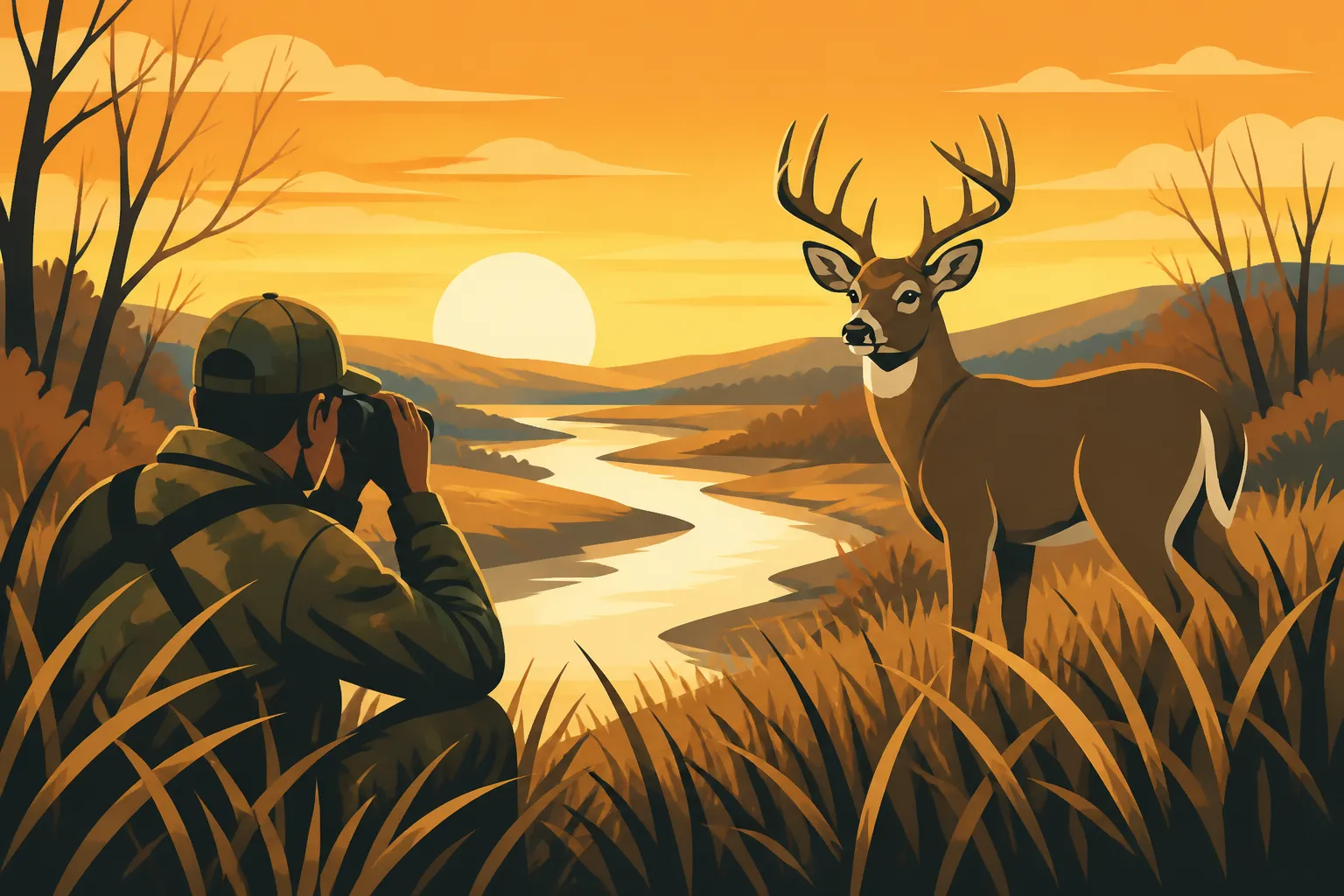
River-Bottom Whitetail Hunting in Eastern Nebraska
The winding river bottoms of Eastern Nebraska are legendary among whitetail hunters, but they’re also some of the most challenging terrain you’ll ever face. The dense cover, unpredictable waterways, and often significant hunting pressure can make finding and consistently harvesting a mature buck feel like an impossible puzzle. This comprehensive guide will walk you through the nuances of successful river-bottom whitetail hunting, helping you unravel its mysteries and put you on the path to success.
Understanding Eastern Nebraska's River Bottom Habitat
Eastern Nebraska's river bottoms are a world unto themselves, often a stark contrast to the surrounding agricultural fields. These corridors, tracing the path of rivers like the Platte, Elkhorn, and Missouri, create a unique ecosystem that whitetails absolutely thrive in. But what makes them so special, and simultaneously so tough to hunt?
The Unique Ecology of River Corridors
Think of these river bottoms as linear oases. They're characterized by a lush, diverse vegetation that offers everything a deer could want: abundant food, incredible cover, and a constant water source. You'll find towering cottonwoods providing crucial thermal cover and shedding browse, dense stands of red cedar offering evergreen sanctuary, and a thick understory of dogwood, willow, and various thorny bushes that make movement for humans a true chore. This incredible biodiversity is a deer magnet. They use these river systems as natural travel corridors, moving between bedding areas within the thickets and feeding grounds in nearby crop fields or openings.
The linear nature of these habitats means deer movement is often funneled along the riverbanks, old oxbows, or subtle elevation changes. This can be both a blessing and a curse. While it theoretically concentrates deer, the sheer density of the vegetation makes spotting them incredibly difficult and gives them countless escape routes. It’s not uncommon to walk within yards of a bedded buck in these bottoms and never know he was there until he explodes from cover. Understanding this dynamic – that deer feel incredibly secure in this dense environment – is the first step to truly appreciating and adapting to river-bottom hunting.
Identifying Key Deer Holding Areas
Within these sprawling river bottoms, certain features consistently hold deer, particularly mature bucks. You're not just looking for any patch of woods; you're looking for specific pockets of security and advantage. Keep an eye out for hidden oxbows – old river channels that have been cut off, often forming stagnant ponds surrounded by exceptionally thick, almost impenetrable brush. These are prime bedding areas. Similarly, look for dense, overgrown creek beds or drainage ditches feeding into the main river, as these act as natural highways, allowing deer to move unseen between different parts of the bottom.
Subtle elevation changes, even a slight rise in terrain within an otherwise flat river bottom, can create a vantage point for deer and offer a drier, more comfortable bedding site. Also, focus on areas where the dominant tree species shifts, or where there’s a transition zone between dense timber and a more open canopy. These "edge" habitats are often where deer feel safe but can still access food or observe their surroundings. Remember, a mature buck isn't just looking for cover; he's looking for secure cover with multiple escape options and a good downwind vantage point. This kind of terrain demands meticulous scouting, often at times of the year when the foliage is thinner, allowing you to see the lay of the land more clearly.
Strategic Scouting for River Bottom Whitetails
Successful river-bottom hunting starts long before opening day. It's an ongoing process of observation, analysis, and interpretation. You can't just show up and expect to find deer in this intricate environment; you need to understand their patterns, their hideouts, and their highways.
Pre-Season Aerial and On-Foot Reconnaissance
Before the leaves burst forth in spring, or right after they drop in the fall, is your prime time for pre-season scouting. Start with aerial imagery using tools like Google Earth or even dedicated hunting apps. Platforms like GoHunt can be incredibly powerful for this, allowing you to identify critical features from above that are invisible on the ground during peak foliage. Look for distinct edges, hidden clearings, tight bends in the river that might create pinch points, and especially, the thickest, darkest green patches that scream "bedding area." Pay attention to subtle topographical changes, even a few feet of elevation can make a difference in how deer use the landscape. Mark potential stand sites, travel corridors, and bedding areas on your digital maps.
Once you have a good aerial overview, it's time to hit the ground. Timing your on-foot reconnaissance after a good rain can be a game-changer, as it washes away old scent and dampens the noise of crunching leaves, minimizing your disturbance. During these walks, confirm what you saw on the maps. Are those thickets truly impenetrable? Do those drainage ditches really have heavy sign? Look for old rubs from previous seasons, remnants of scrape lines, and heavily pounded trails. This is your chance to understand the terrain without the pressure of an active hunting season. However, be mindful not to over-scout or disturb potential bedding areas too close to the season, as this can push deer out of your target zones.
Interpreting Deer Sign and Travel Patterns
Finding deer sign is one thing; understanding what it means is another entirely. In river bottoms, where cover is abundant, interpreting sign becomes even more critical. Fresh rubs, especially those on larger trees, indicate a buck marking his territory. Pay attention to the height and size of the rub; larger rubs often mean larger bucks. Active scrape lines, typically found along edges or travel corridors, are communication hubs for deer. Look for fresh pawings and overhanging branches that have been chewed. The fresher the sign, the more recent the activity.
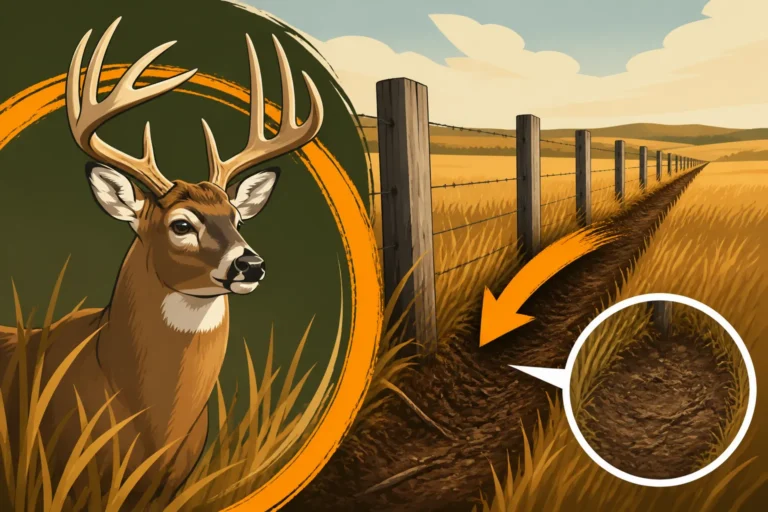
Heavily used trails are your roadmap. In river bottoms, these often follow the contours of the riverbank, old fence lines, or subtle rises in terrain. Deer are creatures of efficiency; they'll use the path of least resistance. Observe if trails lead from a dense bedding area to a suspected feeding area, or if they connect two different patches of cover. Don't overlook subtle sign, like deer droppings. Fresh droppings can tell you about recent activity and even what they're eating. If you find a cluster of fresh sign in a particular area, it's a strong indicator that deer are using that spot frequently. This is particularly true when you're Reading a Cedar Draw for Deer Movement, where sign inside those dense thickets can pinpoint bedding. Remember, you’re trying to piece together a story of daily deer movement, identifying where they bed, where they feed, and how they get from one to the other.
Selecting and Setting Up Stand Locations
Once you’ve scouted and identified promising areas, the next critical step is choosing where to place your stand. In the dense and dynamic environment of Eastern Nebraska’s river bottoms, this decision can make or break your hunt. Both treestands and ground blinds have their place, each offering distinct advantages depending on the specific micro-terrain.
Treestand Advantages in River Bottom Timber
Treestands are often the go-to for many river-bottom hunters, and for good reason. The primary advantage is elevation, which provides improved visibility over the typically dense undergrowth and helps with scent dispersal. In a thick river bottom, getting 15-20 feet off the ground can transform a claustrophobic view into a commanding one, allowing you to spot deer moving through the brush that you'd never see from the ground. The height also helps your scent rise and dissipate, reducing the chances of a wary buck winding you.
When choosing a treestand site, look for sturdy, mature trees that offer good cover for your silhouette, especially those with multiple limbs or a thick canopy. Cottonwoods, often abundant along Nebraska's rivers, can be excellent candidates due to their size, but always inspect them for dead limbs or instability. You'll need to consider different types of stands: hang-ons offer flexibility for tricky trees, climbers are great for mobile hunting on smooth-barked trees, and ladder stands provide easy access and stability if you’re leaving a stand up for an extended period. Focus on locations that intercept natural travel funnels, like a narrow strip of timber between two fields, a bottleneck where the river bends sharply, or an intersection of multiple trails. For more on picking a spot, check out Choosing a Treestand Site on Nebraska Farmland.
Utilizing Ground Blinds for Close Encounters
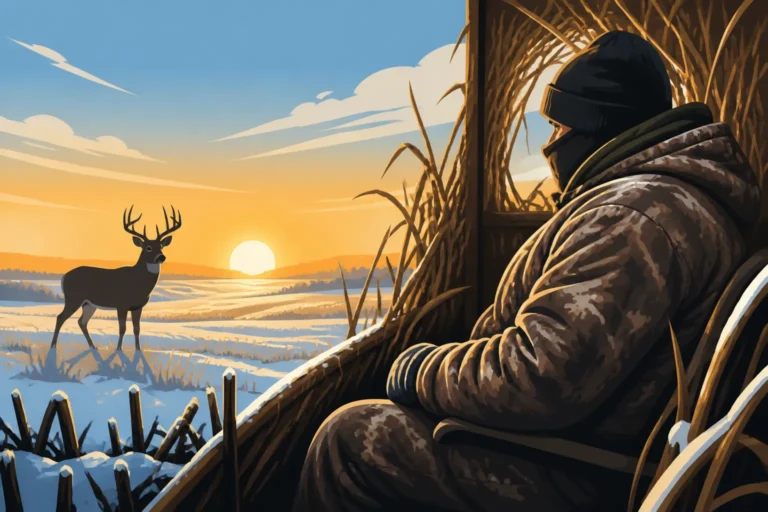
While treestands have their benefits, ground blinds are incredibly effective, and often necessary, in the dense confines of a river bottom. There are countless situations where suitable treestand trees are scarce, or the thick canopy makes getting high enough impossible. Ground blinds excel here, offering superb concealment at eye level, making them a favorite for bowhunters seeking close encounters. They can be particularly useful near bedding areas or active scrape lines where deer activity is naturally concentrated within tight quarters.
The key to successful ground blind hunting in river bottoms is brushing them in properly. Don't just pop up a blind and expect deer to ignore it. Take the time to weave natural vegetation – branches, deadfall, tall grasses – into the blind's framework until it completely disappears into its surroundings. This makes it part of the landscape rather than an alien object. Position your blind to take advantage of natural openings or shooting lanes that deer habitually use. Consider a semi-permanent blind set up well in advance of the season to allow deer to get accustomed to its presence. For deeper insights on effective setup, refer to Ground Blinds in Open Nebraska Country. Remember, ground blinds offer warmth and protection from the elements, which can be a huge advantage during late-season hunts or in unpredictable Nebraska weather.
Effective Hunting Tactics for River Bottom Bucks
Once you've done your scouting and set your stand, the real game begins: the execution of your hunting strategy. River bottoms require a blend of patience, stealth, and sometimes, aggressive calling, to draw out those elusive whitetail bucks.
Mastering Still-Hunting and Stalking
In the dense tapestry of a river bottom, still-hunting is an art form. It's about moving incredibly slowly, taking one or two deliberate steps, then pausing for several minutes to scan, listen, and let the woods settle. This isn't about covering ground quickly; it's about covering it effectively. Use your eyes to pick apart every shadow, every tangle of brush, looking for horizontal lines in a vertical world – the back of a deer, the curve of an antler, a flick of an ear. The key is to see the deer before it sees you. Pay attention to the wind, always moving into it or with a crosswind, so your scent is carried away from potential deer.
The thick cover, while a challenge for visibility, also provides excellent concealment for you. Use every piece of available brush, every tree, to break up your outline. Stalking is similar, but often involves a more targeted approach after spotting a deer from a distance. It’s a slow, deliberate chess game where you use terrain, shadows, and sometimes even the sound of the wind or passing traffic to mask your movement. This method is particularly effective in areas where deer are known to bed down, allowing you to slowly pick apart their sanctuary. The dense vegetation and varying terrain of a river bottom provides the perfect cover for this intense, intimate style of hunting, much like Still-Hunting Nebraska Cedar Draws.
Calling and Decoying During the Rut
While stealth is paramount, sometimes you need to get aggressive, especially during the rut. River bottoms, with their linear nature and dense cover, are fantastic places to employ calling and decoying tactics. The sounds of rattling antlers, grunts, and doe bleats can carry well through the timber and mimic the sounds of an active deer "party," drawing curious bucks from their hideouts. The pre-rut (typically late October in Nebraska) and the peak rut (often the first two weeks of November) are prime times for this. During the pre-rut, bucks are establishing dominance and may respond aggressively to rattling. As the rut intensifies, a grunt or a doe bleat can pull a lovesick buck right into your shooting lane. You can learn more about this in Hunting the Pre-Rut in Late October and When the Whitetail Rut Peaks in Nebraska.
Adding a decoy to your setup can exponentially increase your success. A life-sized doe decoy, placed strategically to give the illusion of a hot doe, can draw a buck in for a closer look, often distracting him enough to present a shot. Some hunters even use a small buck decoy during the pre-rut to challenge dominant bucks. Position your decoy so that an approaching buck will present a broadside shot at your preferred distance, and ensure it’s visible from common travel corridors. Just be sure to set it up so the buck approaches past your stand, keeping his focus on the decoy and not on you. Remember, when rattling or grunting, always be ready; a response can come suddenly and from unexpected directions. Rattling and Grunting in Nebraska's Rut provides even more specific advice for these critical tactics.
Overcoming River Bottom Hunting Challenges
Hunting Eastern Nebraska’s river bottoms isn’t just about finding deer; it’s about conquering the unique environmental hurdles these areas present. From the ground underfoot to the unseen forces of human pressure, understanding and preparing for these challenges is key to consistent success.
Navigating Tricky Terrain and Waterways
The ground in a river bottom is rarely flat, firm, or predictable. You'll encounter everything from ankle-deep mud to shifting sandbars, hidden potholes, and tangled masses of fallen trees and vines. Negotiating this terrain can be exhausting and noisy. Waterproof boots are an absolute non-negotiable, not just for river crossings but for the perpetually damp ground. You might find yourself needing to cross small feeder creeks or sloughs, so knowing the water levels and having a plan to safely traverse them is crucial. A good walking stick can be invaluable for testing footing and maintaining balance.
Beyond the physical challenge, the constant variability means deer have an advantage. They navigate this terrain effortlessly, while hunters often stumble and make noise. This makes stealth even more difficult and reinforces the value of patience in still-hunting. Always prioritize safety around water, especially during colder months. Never assume a frozen surface is safe, and carry appropriate gear if you anticipate deeper crossings. Being prepared for the physical demands and the unpredictable nature of river bottom terrain will help you stay focused on the hunt rather than the trek.
Managing Hunting Pressure and Deer Movement
Unfortunately, river bottoms, especially those with public access or near population centers, often receive significant hunting pressure. Deer quickly learn to adapt to this pressure, becoming more nocturnal, seeking out the densest, most inaccessible cover, or moving into pockets of private land that see less disturbance. It’s easy to get frustrated when you feel like every good spot has been walked by another hunter. However, this doesn't mean success is impossible; it just means you need to be smarter and often work harder.
One strategy is to venture deeper into areas that other hunters might deem too difficult or unappealing. This could mean pushing through an extra-thick cattail swamp or crossing a particularly muddy slough that deters others. Sometimes, the biggest bucks are found just a few hundred yards beyond where most hunters quit. Another tactic is to hunt during less popular times, like weekdays or during less-than-ideal weather conditions (within reason for safety). Deer that are pressured during the day might move more freely at dawn and dusk. Focusing on understanding Entry and Exit Routes on Flat Farm Ground and how that connects to the river bottoms can also give you an advantage, as deer will often move between the two. Furthermore, being aware of Second Season Pressure on Nebraska Public Ground and adjusting your approach accordingly can dramatically improve your odds. Consider setting up farther from traditional access points or focusing on areas that require more effort to reach.
Essential Gear for River Bottom Success
Hunting the demanding environment of Eastern Nebraska's river bottoms means your gear needs to be up to the task. The right equipment can make the difference between a miserable, unproductive hunt and a comfortable, successful one.
Weapon and Ammunition Choices
In the tight confines and often short shooting distances of a river bottom, your weapon choice is critical. Bowhunters find this environment ideal, as shots are frequently within 30 yards. A reliable compound or recurve bow with fixed blade or mechanical broadheads that offer deep penetration is essential. For firearm hunters, the choice often comes down to maneuverability and effective range. A shotgun loaded with slugs or a lever-action rifle chambered in a straight-wall cartridge (which are legal for deer in Nebraska) can be incredibly effective. These offer quick handling in thick cover and sufficient knockdown power for typical river bottom shot distances. You can dive deeper into specific archery setups in Bow Setups for Nebraska Whitetails.
While longer-range rifles might be overkill, ensure your chosen firearm is zeroed accurately for the distances you expect to encounter. Given the possibility of brush deflections, some hunters prefer heavier, slower projectiles. Always consider the ethical shot placement given the dense cover; a clean, quick kill is paramount. Having a scope with lower magnification (e.g., 1-4x or 2-7x) can be advantageous, allowing for quick target acquisition in close quarters. For more information on what's legal and effective, read up on Legal Firearms for Nebraska Deer.
Clothing, Scent Control, and Navigation
River bottoms demand rugged, layered clothing that can withstand thorns, mud, and fluctuating temperatures. Start with a moisture-wicking base layer, add insulating layers, and top it with a durable, waterproof, and breathable outer shell. Brush pants or chaps are highly recommended to protect against thorns and briars. Given the variable Nebraska weather, be prepared for anything from warm, humid early season conditions to freezing rain and snow later on. Good quality, waterproof boots with aggressive tread are non-negotiable for navigating slippery banks and muddy terrain.
Scent control is absolutely paramount in river bottoms where deer often get close before you see them. Take every precaution: scent-free laundry detergent, scent-blocking sprays, and storing hunting clothes in airtight containers. Pay extra attention to your boots, as they pick up a lot of ground scent. For navigation, relying solely on old-school maps can be risky in dense, confusing timber. A reliable GPS unit or a smartphone with a dedicated hunting app like GoHunt is invaluable for marking stand locations, trails, and finding your way back to your vehicle, especially in low light. Always carry a portable power bank to keep your devices charged. For more on getting your gear into the field, consider Packs for a Day on Public Ground.
| Feature | Treestand (Hang-on/Climber) | Ground Blind (Pop-up/Permanent) |
|---|---|---|
| Pros | – Elevated vantage point | – Excellent concealment |
| – Better scent dispersal | – Protection from elements (wind, rain, snow) | |
| – Improved visibility over thick cover | – Easier access for less mobile hunters | |
| – Versatile for different tree types | – Can be set up in areas without suitable trees | |
| Cons | – Requires suitable, sturdy trees | – Limited visibility over dense undergrowth |
| – More exposed to wind and cold | – Potential for deer to "pattern" a permanent setup | |
| – Can be noisy to set up or climb | – May require more extensive brushing-in | |
| – Safety harness required | – Limited shooting angles | |
| Ideal Scenario | – Mature timber with clear shooting lanes | – Dense thickets with limited clearings |
| – Overlooking natural funnels or pinch points | – Near bedding areas or active scrape lines | |
| – When seeking a wider field of view | – For bowhunting close-range opportunities | |
| – Hunting during periods of high deer movement | – During inclement weather or colder periods |
Timing Your Eastern Nebraska River Bottom Hunts
Timing is everything in deer hunting, and this holds especially true for river bottoms. Knowing when deer are most active and what motivates their movement can significantly increase your odds of success. From the early season to the late winter, each phase offers unique opportunities and challenges.
Capitalizing on Early Season and Pre-Rut
The early archery season, typically opening in September in Nebraska, presents a unique set of advantages in river bottoms. Deer are often still on predictable summer patterns, moving between consistent bedding areas within the thick riverine cover and nearby food sources like alfalfa, soybeans, or acorns. The foliage is still thick, offering excellent concealment, but it also makes visibility a challenge. Focus your scouting on identifying these predictable food-to-bedding routes. Set up quietly on the edges of known feeding areas or along major travel corridors. Temperatures can be warm, so scent control and quiet entry/exit are paramount. Read up on When Nebraska's Archery Deer Season Opens to time your early hunts perfectly.
As October progresses, you enter the "pre-rut." This is an exciting time when bucks begin to shift their focus from strictly food to finding does. Rubs and scrapes start appearing with greater frequency, and buck-on-buck aggression increases. River bottoms become even more important as travel corridors for bucks cruising for the first receptive does. This is a prime time for aggressive calling tactics like rattling and grunting, as bucks are testing their dominance and establishing territories. Understanding Hunting the Pre-Rut in Late October can help you capitalize on this transition period, as bucks become more vulnerable to curiosity.
The Peak Rut and Late Season Opportunities
Without a doubt, the peak of the whitetail rut, which often falls in the first half of November in Nebraska, is the time to be in the river bottoms. Bucks are throwing caution to the wind, actively chasing does, and covering significant ground. This heightened activity makes them more visible and vulnerable, even in the densest cover. River bottoms become major highways for bucks checking doe groups. Be prepared for long sits, as a buck could show up at any moment. While the firearms season often overlaps with the back half of the rut, savvy archers can still find success by hunting dense cover where rifle hunters are less likely to penetrate. You can get more details on this peak activity in When the Whitetail Rut Peaks in Nebraska.
Later in the season, after the firearms season concludes, river bottoms continue to offer excellent hunting, especially if you have an antlerless permit. With crops harvested and temperatures dropping, deer focus heavily on remaining food sources and seek out thermal cover. The evergreens found in many river bottoms, especially cedars, become crucial bedding areas. Deer may yard up in these areas, making them prime targets for late-season antlerless hunts. This is a great opportunity to fill the freezer, but requires adapting to colder weather and focusing on food availability. Remember that Nebraska's Nine-Day November Firearm Deer Season can push deer deeper into thick cover, so adjust your tactics accordingly immediately after.
Responsible Hunting and Post-Harvest
Bringing a deer down is just one part of the hunt; the responsible and ethical aspects of game recovery and meat care are equally vital, especially in the challenging environment of a river bottom.
Ethical Shot Placement and Game Recovery
In the thick, unforgiving cover of river bottoms, ethical shot placement is absolutely critical. Given the typically closer ranges and potential for limited visibility, it’s imperative to take only shots you are 100% confident in. A wounded deer can be incredibly difficult to recover in dense brush, over waterways, or in tangled vegetation. Always aim for the vital organs – the heart and lungs – for a quick, humane harvest. If you have any doubt about the shot, it's always better to wait for a clearer opportunity.
Once you’ve taken a shot, patience is key. Resist the urge to immediately jump out of your stand, especially if the deer didn't drop within sight. Give the deer time to expire. The general rule is 30 minutes for a good lung shot, and several hours (or overnight) for a suspected liver or gut shot. When you begin tracking, do so methodically. Look for blood, broken branches, disturbed leaves, and tracks. In the dense river bottom, it’s easy to get disoriented, so mark your trail with flagging tape if necessary. If you lose the trail, back out and return with more help, or at first light if it’s getting dark. Learning Blood Trailing After Dark in Nebraska is a valuable skill, but always proceed cautiously to avoid pushing a wounded animal further.
Field Dressing and Meat Care in Variable Weather
Proper field dressing and meat care begin immediately after recovery. In a river bottom, this can be challenging due to thick cover, potential waterways, and often, varying temperatures. The goal is to cool the carcass as quickly as possible to prevent spoilage. Remove the entrails promptly, and if the temperature is warm (common during early archery season), consider skinning the deer in the field or quartering it to aid in cooling. For more detailed advice, refer to Field Dressing and Cooling Game in Warm Weather.
Getting a deer out of a river bottom can be a strenuous task. If you’re hunting alone, quartering the animal may be your only practical option, especially if you need to navigate water crossings or dense tangles. Utilize a good game cart if the terrain allows, or invest in a sturdy frame pack to carry out quarters. Always have game bags to protect the meat from dirt, insects, and debris. Once the deer is out, transport it quickly to a cooler with ice, especially if the weather is still warm. Thinking ahead about your extraction plan, whether it's via a long drag, quartering, or even a boat if you’re near a larger river, is a crucial part of your overall hunting strategy in these challenging environments. Having Meat Care Gear for Warm Nebraska Openers on hand is a smart move.
Disclaimer
Please note: Hunting regulations and seasons can change. Always consult the most current Nebraska Game and Parks Commission regulations before planning any hunting trip. This guide is for informational purposes only and does not supersede official regulations.