Meat Care Gear for Warm Nebraska Openers
The excitement of a Nebraska hunting opener is unparalleled, whether you're chasing early season archer deer or a sharp-tailed grouse in September. But let's be real, those early season temperatures in the Cornhusker State can throw a serious wrench into your plans for delicious, hard-earned venison or game birds. Nothing's more frustrating than putting in the work only to worry about your meat spoiling. This guide is all about equipping you with the knowledge and gear to keep your game cool and pristine, no matter how warm the weather gets.
Understanding the Challenge: Nebraska's Warm Openers
Hunting in Nebraska often means contending with unpredictable weather, especially when the seasons first open. We might dream of crisp, cool mornings, but the reality can often be far from it, leaving hunters scrambling to protect their harvest.
The Reality of Early Season Heat
Think about it: archery deer season often kicks off in September, and it's not uncommon to see days push into the 80s, or even 90s. Even late October, during the heart of the pre-rut, can surprise you with unseasonably warm afternoons. It's the same for upland bird hunters heading out for pheasants or grouse early in the season; those high plains can get hot. This isn't just uncomfortable for you; it's a critical threat to the quality of your game meat. A lot of hunters underestimate how quickly meat can spoil, especially when the air temperature is higher than ideal. You can spend hours meticulously scouting public ground, perfecting your calling technique, or stalking for miles, but if you don't nail the post-harvest meat care, all that effort can literally go to waste.
Why Heat is the Enemy of Good Venison
When an animal is harvested, its body temperature starts to drop, but this process is significantly hindered by warm ambient air. The heat from the animal's core needs to dissipate, and if it can't, bacteria begin to multiply at an alarming rate. This isn't just about surface bacteria; it's about enzymes within the meat itself starting to break down tissue in an undesirable way, leading to spoilage. Think of it like leaving groceries out on the counter. The warmer it is, the faster things go bad. For game meat, this internal heat, combined with external warmth, creates a perfect incubator for spoilage organisms. It's a race against the clock, and understanding this biological reality is the first step in winning that race.
The Dreaded "Gamey" Taste
Many hunters and non-hunters alike have experienced what they describe as "gamey" meat. While wild game does have a distinct flavor profile, that overwhelmingly strong, off-putting "gamey" taste is almost always a result of poor field care, particularly insufficient cooling. When meat heats up and bacteria proliferate, it produces metabolic byproducts that contribute to that undesirable flavor and aroma. It's not the fault of the animal; it's the result of delaying proper cooling. Imagine bringing home a trophy buck or a limit of pheasants, only to have the meat taste less than stellar because you didn't prioritize chilling it down immediately. It's a real disappointment, and completely avoidable with the right approach.
Essential Field Dressing for Warm Weather
Field dressing is the absolute first line of defense against spoilage in warm weather. It's not just about removing the guts; it's about opening up the carcass to allow heat to escape as quickly as possible.
The Race Against the Clock
When an animal is down, the clock starts ticking. Every minute counts, especially when temperatures are above 40 degrees Fahrenheit. Your absolute priority after ensuring the animal is dispatched safely and legally tagged according to Nebraska Deer Tagging and Checking Rules is to get it field dressed. Don't stop to admire your trophy for an hour, don't take a long phone call, and don't drag it back to the truck before opening it up. The internal organs hold a tremendous amount of residual heat, and they're also a primary source of bacteria. Getting them out immediately allows that heat to begin escaping and removes the biggest source of contamination. This urgency applies whether you're harvesting a deer, antelope, or even multiple large pheasants.
Beyond the Basics: Proper Evisceration Techniques
For deer-sized game, field dressing involves more than just slitting the belly and pulling out the intestines. To truly promote rapid cooling, you need to open the animal from the sternum all the way back to the pelvis. This means going around the anus to completely free the lower GI tract. For the chest cavity, you'll need to reach up and sever the windpipe and esophagus as high as possible, pulling the lungs and heart free. A good, sharp Field Dressing Knives Worth Carrying is indispensable here. You want to make sure the cavity is as clear and open as possible. Don't forget to break the pelvis, if appropriate and safe, to further aid airflow and accessibility for cleaning. The goal is maximum exposure to the cooler ambient air.
Cleaning the Cavity: Why a Spotless Interior Matters
Once all the organs are removed, you'll be left with a cavity that might still have some blood and stray bits. While it's tempting to rinse it with water, especially if you have some on hand, sometimes this can actually cause more harm than good if the water isn't clean or if the cavity can't dry quickly. Water, combined with residual heat, can create moisture that encourages bacterial growth. A better approach, if possible, is to use clean paper towels or a rag to wipe the cavity as dry and clean as you can. Remove any clots or loose tissue. If you do rinse with water, make absolutely certain you can then thoroughly dry the cavity, perhaps by propping it open in a light breeze. The cleaner and drier the cavity, the less hospitable it is for bacteria, and the more efficiently it can cool.
Getting Airflow: The Key to Rapid Cooling
Once field dressed, the next critical step is maximizing airflow around and within the carcass. Air movement is what draws heat away from the meat.
Propping Open the Cavity
Simply field dressing an animal isn't always enough to ensure good airflow within the cavity, especially if the animal is lying on its side or if the chest cavity is still somewhat collapsed. You need to actively prop it open. For deer, a small stick or even two pieces of cut-off rib bone can be used to hold the chest cavity wide. This creates a literal chimney effect, allowing warm air to rise and escape, drawing cooler air in from below. If you're quartering the animal in the field, this becomes less of an issue, but for a whole carcass, this step is vital. Don't overlook this simple, yet incredibly effective, tactic.
Elevating the Carcass
Leaving a field-dressed animal lying flat on the ground, particularly if the ground itself is warm, is a huge mistake. The ground acts as an insulator, preventing heat from radiating away from the underside of the carcass. Get that animal elevated! Even small logs, rocks, or a cooler lid can create enough space for air to circulate underneath. If you're fortunate enough to be near a truck, hoist the animal into the bed, or even better, hang it from a sturdy branch or game hoist. Hanging allows air to flow completely around the carcass, which is the most efficient way to cool it. For larger game, this might require a bit more ingenuity, especially if you're on public land far from a vehicle, but it's worth the effort.
Shade, Shade, and More Shade
This might seem obvious, but it's often overlooked in the excitement of a successful hunt. Direct sunlight will bake your meat, rapidly raising its temperature and accelerating spoilage. As soon as the animal is field dressed and propped open, move it to the densest shade you can find. This could be under a large cottonwood tree along a Nebraska river bottom, on the north side of a dense cedar draw, or even under a tarp or blanket if natural shade isn't available. Remember, the sun moves throughout the day, so check back periodically to ensure your game is still fully shaded. Even a little bit of sun can make a significant difference in internal meat temperature. Consider using a mobile app like GoHunt to scout for areas with good tree cover or topographical features that will provide shade during different parts of the day.
Game Bags: Not Just for Bugs, But for Cooling Too
Game bags are often seen as purely a way to keep flies off your meat. While that's a crucial function, their design also plays a significant role in promoting proper cooling.
The Breathable Barrier
High-quality game bags are made from breathable materials, typically a cotton blend or synthetic fabric that allows air to circulate freely while keeping insects, dirt, and debris away from the meat. This breathability is key for allowing the carcass to "sweat" out its residual heat and moisture. If you enclose warm meat in a non-breathable plastic bag, you're essentially steaming it, which is the worst thing you can do for spoilage. Good game bags protect the integrity of the meat without hindering the critical cooling process. They act as a protective skin, allowing the meat to breathe and form a protective "crust" that further seals it from bacteria.
Material Matters
Not all game bags are created equal. You'll find options ranging from cheap cheesecloth-like bags to heavy-duty synthetic blends designed for multiple uses and serious backcountry hunts.
- Cheesecloth/Muslin: Inexpensive and lightweight, these offer basic protection from flies. They're often single-use. While better than nothing, they tear easily and don't offer much protection from dirt or abrasion.
- Cotton Blend: A step up, these are more durable, often washable and reusable. They provide better protection and airflow.
- Synthetic Game Bags (e.g., Alaska Game Bags, KUIU, Argali): These are the premium choice. Made from lightweight, strong, and breathable fabrics, they are incredibly durable, often washable, and designed for repeated use. They resist tearing and offer excellent protection from flies, dirt, and even some abrasion. Brands like Caribou Gear are excellent examples of this type of quality.
Choosing the right material depends on your budget, how often you hunt, and how rough you expect the conditions to be. For a warm Nebraska opener, investing in good quality, breathable bags is a non-negotiable step. They're especially important when you might be Getting a Deer Out of a Nebraska Sandhills Basin where dirt and sand are everywhere.
| Game Bag Material Type | Pros | Cons | Best Use Case |
|---|---|---|---|
| Cheesecloth/Muslin | Inexpensive, lightweight | Tears easily, minimal protection | Emergency, single-use, small game |
| Cotton Blend | More durable, reusable, good breathability | Can absorb moisture, heavier when wet | General purpose, medium game, short transport |
| Synthetic Blend | Highly durable, breathable, washable | Higher cost, may require specific care | Backcountry, large game, multi-day hunts, heavy use |
Size and Fit
Make sure you have game bags appropriate for the size of the animal you're hunting. For deer, you'll typically want four quarter bags and a separate bag for the backstraps and tenderloins, or a large main bag if you plan to keep the carcass whole for a short period. For pheasants or other upland birds, smaller, breathable game bags or even specialized bird vests with game pockets are useful. Don't try to cram a deer quarter into a bag that's too small; it restricts airflow and makes handling more difficult. Having a variety of sizes on hand in your hunting pack, perhaps even a small bag for your heart and liver, is a smart move. When planning your hunt, use a tool like GoHunt's mapping features to identify potential game rich areas, and then pack your game bags accordingly.
Coolers and Ice: Your Best Friends for Transport
Once the animal is field dressed, elevated, shaded, and bagged, the next step is to actively cool it down and transport it to its final destination. This is where coolers and ice become absolutely critical.
The Power of Pre-Chilling
Just like you pre-chill a cooler for your drinks and snacks, you should pre-chill a cooler for your game meat. A warm cooler will actively heat the meat for a period before it starts to cool, wasting valuable time and ice. The night before your hunt, fill your coolers with ice or even freeze some large water bottles and place them inside. Let them sit overnight with the lid closed. This brings the internal temperature of the cooler down significantly, creating a much more efficient cold environment from the moment you put your meat inside. This simple step can make a huge difference, especially during those notoriously warm Nebraska early seasons when every degree counts.
Ice Strategies
Different types of ice offer different benefits for cooling game meat:
- Cubed Ice: Readily available from gas stations and grocery stores. It's great for quickly filling gaps around meat but melts faster than block ice. It's good for getting initial contact and surface cooling.
- Block Ice: Melts much slower than cubed ice, making it ideal for longer journeys or extended storage. You can often find it at convenience stores, or make your own by freezing water in milk jugs or large plastic containers. Place block ice strategically, preferably on top of or around the meat bags.
- Dry Ice: This is the ultimate cooling agent, but it requires careful handling. Dry ice is extremely cold and can cause freezer burn if it directly contacts meat. It's best used by placing it on top of a layer of regular ice or a barrier, and only for short periods. Always use gloves when handling dry ice.
For most situations, a combination of block ice (for longevity) and cubed ice (for quick chilling) works best. Remember the advice in Coolers for a Warm Nebraska Opener about insulation and size – a good cooler paired with smart ice strategy is unbeatable.
Protecting the Meat from Direct Water
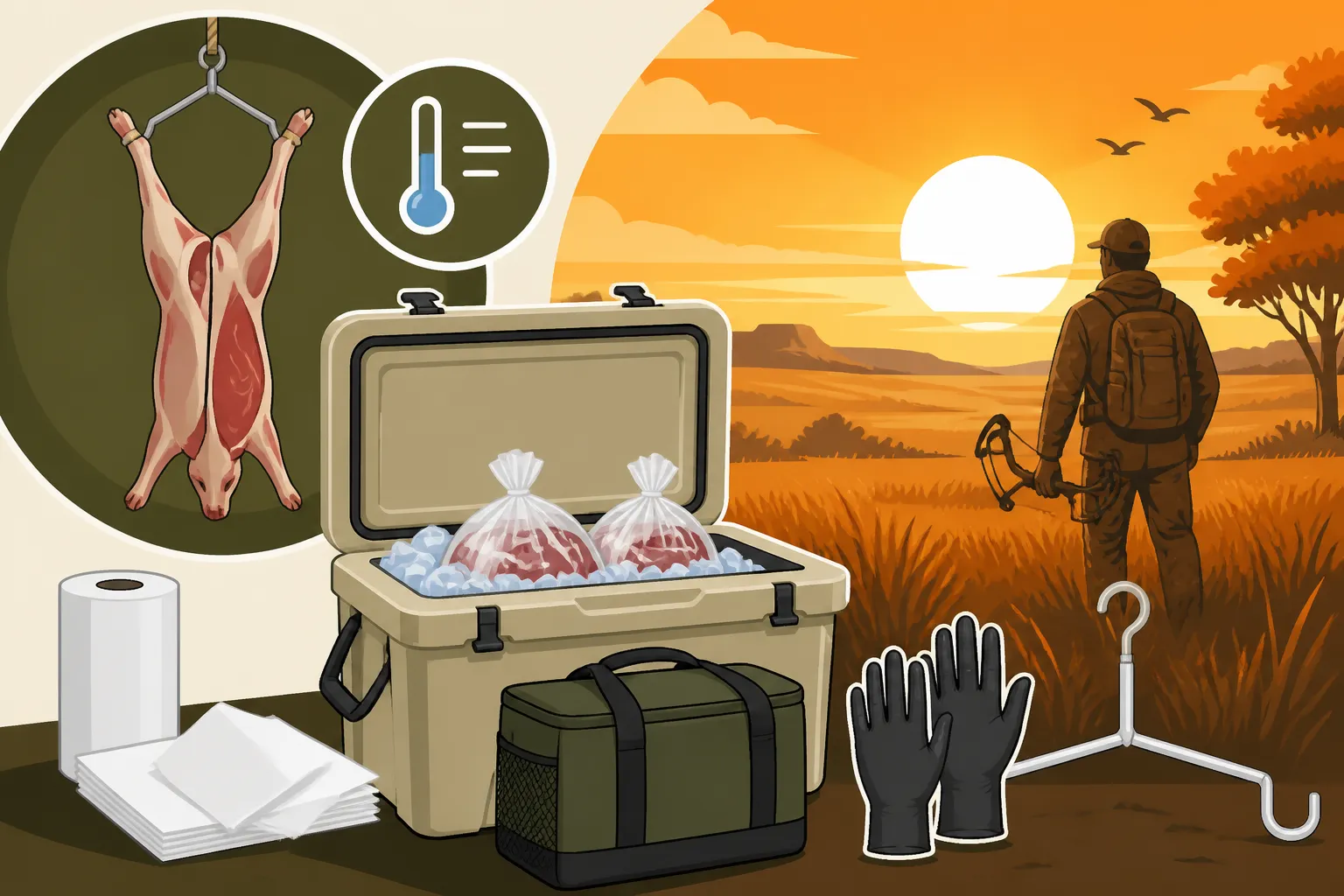
This is a critical point that often trips up new hunters. While you want your meat cold, you generally don't want it sitting directly in melted ice water. Water promotes bacterial growth, can leach flavor from the meat, and makes a mess. The best practice is to put your game meat, ideally already in game bags, into separate heavy-duty trash bags or large Ziploc-style bags before placing it in the cooler with ice. This creates a barrier. The ice can then sit directly on top of or around these bagged meat sections. This "meat-in-bag, ice-on-top" method keeps the meat dry, cold, and clean. For detailed info on how much ice you'll need, refer to Ice Requirements for Hauling a Deer.
Advanced Cooling and Transport Techniques
Sometimes, getting an animal from the field to a cold storage facility isn't straightforward. Knowing how to further process or transport your game efficiently can be a lifesaver for meat quality.
Quartering in the Field
For larger animals like deer or antelope, especially if you're a long way from the truck or hunting solo, quartering the animal in the field is often the most practical solution. This involves breaking the animal down into its primal cuts: the two front shoulders, two hind quarters, and the backstraps and tenderloins. Removing the bone and excess fat can further reduce weight and allow for more rapid cooling of the individual muscle groups.
- Advantages: Lighter loads, easier to carry (especially with a frame pack), faster cooling of smaller sections.
- Process: After field dressing, skin the animal. Then, remove the front shoulders (they're attached by muscle, not bone). Detach the hindquarters at the hip joint. Finally, carefully slice out the backstraps along the spine and the tenderloins from inside the cavity. Place each section into a separate, breathable game bag.
This technique is particularly useful if you're hunting in remote areas of the Sandhills or Pine Ridge where dragging a whole animal out is simply not feasible. You can find more details on this process, including considerations for tools, in Bone Saws Versus the Gutless Method.
Hauling Gear for Bigger Game
Once you've field dressed or quartered your animal, you still need to get it out of the field.
- Meat Carts: For relatively flat terrain, a sturdy meat cart can be a back-saver. Look for models with large, pneumatic tires that can handle rough ground and potentially muddy conditions.
- Sleds: In snowy conditions or on slick, wet ground, a plastic game sled can make dragging an animal much easier. Even without snow, a sled can protect the carcass from abrasive ground.
- Frame Packs: If you're quartering an animal in truly rugged or remote terrain, a good external frame pack is essential. These packs are designed to carry heavy, awkward loads and distribute the weight efficiently. They're a significant investment but invaluable for serious backcountry hunters.
When planning your route, consider the terrain. The Nebraska Public Access Atlas Mobile App or GoHunt can help you identify access points and potential extraction paths.
Temporary Storage Solutions
What if you're hunting multiple days, or you harvest an animal late in the evening and can't get to a processor or walk-in cooler immediately?
- Coolers with Ice (as above): This is your primary solution. Pack those quarters tightly in pre-chilled coolers with plenty of ice, ensuring meat is bagged to stay dry.
- Hanging in a Cool Place: If night temperatures drop significantly, and you have access to a secure, well-ventilated, and predator-free space (like a garage, barn, or even a sturdy tree branch), hanging the carcass (or quarters) overnight can allow for further cooling. Make sure it's fully protected by game bags to prevent insects.
- Insulated Blankets/Tarps: In a pinch, if you can't get immediate ice, wrapping bagged quarters in insulated blankets or tarps, and placing them in the coolest, shadiest spot available, can help slow the warming process. This is a temporary measure, though, and not a substitute for active cooling with ice.
The Role of a Processor and Butcher
For many hunters, a professional game processor is an invaluable part of the meat care chain. They have the facilities and expertise to quickly and efficiently handle your harvest.
Why a Good Processor is Invaluable
A reputable game processor has walk-in coolers specifically designed to chill large amounts of meat quickly and safely. This rapid chilling, often referred to as "aging" (though true aging is a different process), helps tenderize the meat and prevents spoilage. They also have the specialized equipment and knowledge to break down the animal into cuts, grind burger, and package everything properly. Their services can save you a tremendous amount of time, effort, and worry, especially if you're not equipped for home butchering or if you're traveling a long distance. For hunters participating in Nebraska's Nine-Day November Firearm Deer Season, where multiple animals might be harvested, a good processor is often essential.
Pre-Planning Your Processor Visit
Don't wait until the moment you have an animal down to think about a processor. This is a crucial pre-hunt step:
- Locate Processors: Identify several reputable game processors in the area you plan to hunt, or along your route home.
- Check Hours: Confirm their operating hours, especially around opening day and weekends. Some processors have extended hours during peak seasons, while others might be closed on certain days.
- Capacity: Call ahead to see if they anticipate being busy and if they can accept your animal. Some processors reach capacity quickly during popular seasons.
- Services and Pricing: Understand what services they offer (e.g., cutting, grinding, sausage, jerky) and their general pricing structure. While we can't share specific costs, always ask for an estimate.
Having this information squared away ensures a smooth transition from field to freezer. This planning can be made easier by researching services through GoHunt or similar platforms that might feature local businesses catering to hunters.
Do-It-Yourself Breakdown: Tools and Techniques
For the DIY enthusiast, processing your own game at home can be a rewarding experience, but it requires the right setup and knowledge.
- Dedicated Space: You'll need a clean, cool working area. A garage or basement space, ideally with a stainless steel table, is perfect.
- Cooling Capacity: A large refrigerator or walk-in cooler is essential for chilling and optionally aging the quarters.
- Tools: A good set of boning knives, a butcher saw (or reciprocating saw with a clean blade), a grinder for burger, and a vacuum sealer for packaging are the basic necessities.
- Knowledge: Invest in a good wild game butchering guide or online tutorials. Understanding muscle groups and proper cutting techniques will yield far better results.
Processing your own game allows for complete control over the cuts and packaging, and it's incredibly satisfying. Just ensure you have the means to keep the meat properly chilled throughout the entire process, as temperature control is paramount. If you're going to Get Venison Home From Nebraska, knowing these skills can save you time and money.
Disclaimer
This article is for general informational purposes only and does not constitute professional advice. Laws, prices and regulations vary by location and change over time. Consult a qualified professional for guidance on your specific situation.