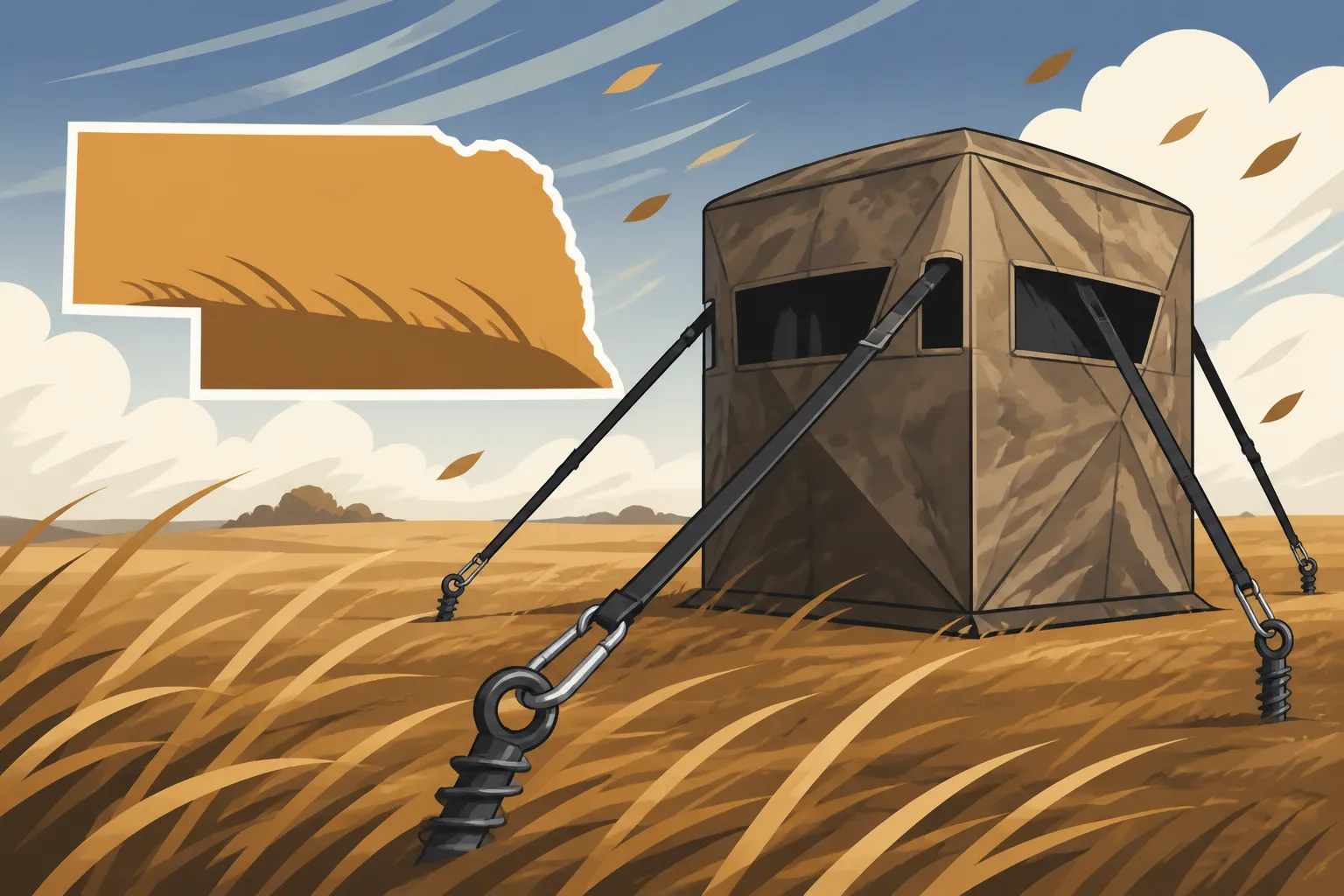
Ground Blind Anchoring in Prairie Wind
There’s nothing quite like the feeling of watching a perfectly placed ground blind flutter, then violently tumble across a field in a sudden gust of Nebraska prairie wind. It’s happened to the best of us, turning a carefully planned hunt into an immediate retrieval mission. This guide is all about ensuring your ground blind stays exactly where you put it, even when the notorious Nebraska winds decide to put it to the test.
Understanding the Nebraska Wind Challenge
If you've spent any time hunting in Nebraska, you know the wind isn't just a gentle breeze; it's a force of nature that can change direction and intensity in a heartbeat. From the wide-open expanse of the Sandhills to the exposed edges of harvested cornfields, there's often little to break its relentless push. This isn't just an annoyance; a blind flapping wildly or, worse, completely blowing away, can ruin a hunt, spook game, and even damage expensive gear. It's a frustration many of us know all too well, especially when you’ve put in the effort to find that perfect spot.
Why Ground Blinds are So Susceptible to Wind
Ground blinds, by their very nature, are lightweight and designed for portability. This is fantastic when you're packing it in on your back or moving it frequently. However, that lightweight construction, combined with their broad surface area, makes them a prime target for wind. Think of it like a sail. A traditional pop-up blind catches the wind easily, and if not properly secured, it acts like a kite. The wind lifts it, pushes it, and can even turn it inside out. We've all seen blinds that look like they've been hit by a tornado after a particularly bad storm, their fiberglass poles snapped and fabric shredded. It's a sad sight, and an expensive lesson. This is why robust anchoring isn't just a suggestion; it's an absolute necessity.
The Impact of Unsecured Blinds on Your Hunt
Beyond the financial cost of a damaged blind, an unsecured blind can absolutely devastate your hunting success. Imagine spending hours Scouting Nebraska Public Ground Before Opening Day, finding the perfect pinch point along a creek bottom, and setting up your blind under the cover of darkness. You settle in before first light, only for a sudden gust to send your blind tumbling, not only scaring off any game in the area but also leaving you exposed and scrambling. Deer, turkeys, and even pheasants are incredibly sensitive to movement and foreign objects. A blind that’s not only moving but also making noise as it shifts and scrapes against the ground is a dead giveaway. Even if it doesn't blow away entirely, constant flapping can create enough visual and auditory disturbance to alert game from a considerable distance, turning your prime location into a bust.
Essential Anchoring Methods for Ground Blinds
The good news is that with a bit of foresight and the right tools, you can anchor your ground blind so securely that even a legitimate Nebraska gale will struggle to dislodge it. It’s all about creating multiple, redundant points of contact with the earth. Don't rely on just one method; combine them for maximum stability.
Heavy-Duty Stakes and Tie-Downs
Most ground blinds come with a few flimsy metal stakes. These are usually sufficient for a calm day or to simply keep the corners from lifting, but they are absolutely not enough for serious wind. You need to upgrade immediately.
- Auger Stakes: These are my go-to. Auger stakes, or screw-in stakes, are like giant screws that you twist into the ground. They grip the soil much better than straight stakes and are far less likely to pull out, especially in sandy or softer soils. They come in various lengths and materials; look for durable steel ones. Using a drill or a T-handle to drive them in can save your hands and make the process much faster.
- Heavy-Duty Tent Stakes: Beyond the cheap aluminum ones, you can find heavy-duty plastic or steel tent stakes that have a wider profile, more aggressive hooks, or even a corkscrew design. These offer a better bite than standard straight stakes.
- Rebar Stakes: For a truly unmovable setup, some hunters opt for cut pieces of rebar, pounded into the ground. Just be aware of the safety implications and make sure they're visible to prevent tripping.
- Tie-Down Straps and Ropes: Instead of just using the small elastic loops on your blind, invest in some sturdy ratcheting tie-down straps or good quality rope. These can be secured from the blind's frame directly to your stakes. Ensure you’re tying to the frame of the blind, not just the fabric, to prevent tearing. Consider adding guy lines from the top corners of your blind, extending outwards at an angle to additional stakes, creating a wider, more stable base against lateral wind forces. This tripod-like tension is incredibly effective.
When you're dealing with extreme wind, it's wise to double up. Use two stakes at each corner, angled slightly away from each other, and cross-tie them if possible. This redundancy means if one stake pulls loose, the other is still holding strong.
Sandbags and Rocks for Extra Weight
Even the best stakes can struggle in really loose soil or during hurricane-force gusts. That's where adding weight comes in. This method complements your staking strategy by directly increasing the blind's resistance to being lifted or pushed.
- Sandbags: Purpose-built sandbags are excellent for this. You can buy them empty and fill them with sand, gravel, or even dirt from the area. Place one or two heavy bags inside each corner of your blind, directly on the floor. For even more security, you can place additional sandbags on the outside skirts of the blind, pinning them to the ground. This also helps seal the blind against drafts and keeps scent in. You can even find sandbags with clips or loops that allow you to attach them directly to the blind's frame or stake lines.
- Natural Rocks or Logs: If you're hunting in an area where sandbags aren't practical (maybe you don't want to pack in bags, or you forgot them), look for heavy rocks or logs. Place these inside the blind corners or on the outside skirt. While not as secure as dedicated sandbags, they offer a significant improvement over no weight at all. Just be mindful not to create tripping hazards if using them externally.
A combination of robust staking and internal weight makes your blind a much more formidable opponent to the wind. Think of it as giving your blind a low center of gravity and strong roots.
Advanced Tips and Considerations for Extreme Wind
Sometimes, the wind isn't just strong; it's downright vicious. Nebraska often sees sustained winds that would impress coastal residents, let alone gusts that can tear through a flimsy setup. For those days, or if you plan to leave your blind out for extended periods, you need to think beyond the basics.
Strategic Blind Placement
Before you even start staking, consider the wind direction, which can be found using tools like the GoHunt app or a simple weather forecast. A little strategic placement can make a huge difference.
- Utilize Natural Cover: Always try to position your blind with natural windbreaks. A thick shelterbelt, the lee side of a significant hill, a dense cedar draw, or even the edge of a standing cornfield can provide crucial protection. This doesn't just block the wind; it also helps break up your silhouette and provides better concealment. This is particularly important when learning how to effectively use Ground Blinds in Open Nebraska Country.
- Avoid High, Exposed Ridges: While a ridge might offer a great vantage point, it's also a wind tunnel. If you must be on a ridge, try to tuck into a slight depression or behind a clump of larger vegetation.
- Angle with the Wind: If possible, orient your blind so the narrowest part faces the prevailing wind. This minimizes the surface area presented to the direct force of the wind, reducing the "sail" effect. Of course, hunting dictates where you can face, but it's a consideration for stability.
Remember, even the strongest anchoring can struggle against sustained, direct abuse. By smart placement, you give your anchoring system a head start. When considering Wind Direction on Open Nebraska Prairie Stands, this planning becomes critical.
Reinforcing the Blind Structure
Some blinds are built tougher than others, but even the best can benefit from a little reinforcement, especially if you're leaving them out for an entire season.
- Reinforce Pole Hubs: The hubs where the fiberglass poles connect are often stress points. You can sometimes reinforce these with heavy-duty tape (like Gorilla Tape) or by adding hose clamps around the plastic hubs, being careful not to impede the collapse mechanism.
- Use Extra Poles (if applicable): Some blinds have options for extra support poles or tension rods. If your blind system allows for this, it's a worthwhile investment to stiffen the structure.
- Guy Lines from the Roof: Don't just stake the corners. If your blind has loops or points on the roof, run guy lines from these to stakes placed further out. This creates a dome-like tension that prevents the roof from caving in or flapping excessively. When I'm setting up for a long weekend, I often use three or four additional guy lines coming off the roof, anchored well away from the blind's footprint. This really distributes the load of the wind.
Preparing for the Unexpected: Emergency Anchoring
Even with the best preparation, Mother Nature sometimes throws a curveball. It’s always good to have some emergency options in your pack, especially when hunting in environments like Hunting the Nebraska Sandhills where conditions can change rapidly.
- Extra Rope/Paracord: A coil of strong rope or paracord is lightweight and invaluable. You can use it to lash your blind to a fence post, a sturdy tree, or even a large, immobile rock if your stakes aren't holding.
- Zip Ties: Heavy-duty zip ties can quickly secure flapping fabric or reinforce a struggling pole joint in a pinch. They're not a permanent solution, but they can buy you time.
- Tent Repair Kit: Always carry a basic tent repair kit with patches and pole splints. Wind damage can happen, and a quick field repair might save your hunt or at least allow you to pack out a usable blind. A GoHunt pro might even pack a mini first-aid kit for their gear!
Maintenance and Pre-Season Checks for Longevity
Proper anchoring isn't just about setting it up right; it's also about maintaining your gear and checking it regularly. A damaged blind is a weak blind, and a weak blind is an easy target for Nebraska's notoriously strong winds.
Inspecting Your Blind Before and After Use
Just like you wouldn't head into the field with a damaged rifle scope, you shouldn't deploy a compromised ground blind. A quick inspection can reveal potential weak spots before they become major problems.
- Fabric Integrity: Look for small tears, fraying seams, or worn areas in the fabric, especially around pole sleeves and tie-down points. Small holes can quickly become large rips in high winds. Patch these immediately with a good fabric repair kit.
- Pole Condition: Carefully check all fiberglass or aluminum poles for cracks, splinters, or bends. Even a small crack can lead to a snapped pole under stress. Also, check the elastic shock cords inside the poles to ensure they are still taut and effective.
- Hub and Connector Points: The plastic hubs where the poles converge are critical. Inspect them for cracks or stress marks. If a hub fails, the entire blind structure can collapse. Consider reinforcing any showing signs of wear.
- Zipper Functionality: While not directly related to wind, well-functioning zippers ensure your blind stays sealed, which helps maintain its structural integrity by preventing wind from getting inside and turning it into a balloon.
By catching these issues early, you prevent minor wear from turning into catastrophic failure when the wind picks up. Regularly setting up and taking down your blind in the yard or a local park can help you identify these weak points without the pressure of a hunt.
The Importance of Quality Anchoring Accessories
Don't skimp on your anchoring gear. Those cheap, flimsy stakes that come with most blinds are a false economy. Investing in high-quality stakes, ropes, and tie-downs will save you money and headaches in the long run.
- Durability: Look for stakes made from hardened steel or heavy-duty plastic that won't bend or break easily. Your tie-down straps should have strong buckles and be rated for significant loads.
- Visibility (Optional): Some hunters prefer brightly colored ropes or reflective tape on their stakes to prevent tripping, especially when getting in or out of the blind in the dark. This is a personal preference, but safety should always be a consideration.
- Storage and Transport: Keep all your anchoring gear organized in a separate bag. There's nothing worse than arriving at your hunting spot only to realize your stakes are scattered or missing. A dedicated "blind kit" ensures you have everything you need.
Remember, your ground blind is an investment, and protecting that investment from the relentless Nebraska wind requires a robust anchoring strategy. From choosing the right Ground Blinds That Handle Nebraska Wind to employing smart setup tactics and maintaining your gear, every step contributes to a more secure, more effective hunt.
Here’s a quick overview of common anchoring methods and their best uses:
| Anchoring Method | Best Use Cases | Pros | Cons |
|---|---|---|---|
| Standard Stakes | Light wind, temporary setups, soft ground (as an aid) | Lightweight, often included with blind | Very prone to pulling out in strong wind, easily bend or break |
| Auger/Screw-in Stakes | Moderate to strong wind, all soil types, extended setups | Excellent grip, resists pulling out, reusable | Can be slower to install, may require a tool (drill/T-handle) |
| Rebar Stakes | Extreme wind, very soft or loose ground, permanent setups | Incredibly strong, nearly impossible to pull out | Heavy, difficult to install/remove, potential safety hazard |
| Sandbags (internal) | All conditions, adds weight, scent control | Increases blind's base weight, easy to position | Requires filling, can be bulky to transport |
| Sandbags (external) | Moderate to strong wind, seals blind edges | Pins blind skirt to ground, adds weight | Can be tripping hazard, requires filling and transport |
| Guy Lines | Any condition, enhances structural stability | Spreads tension, prevents flapping/collapse | Requires additional stakes, can create tripping hazard |
| Natural Weight | Emergency anchoring, minimalist approach | Readily available, free | Less secure than purpose-built weights, can be bulky/awkward |
Ultimately, being prepared for the wind is just part of hunting in Nebraska. A little extra effort in anchoring your blind can mean the difference between a successful, comfortable sit and a frustrating battle against the elements. Stay safe out there, and happy hunting!
Disclaimer
This article is for general informational purposes only and does not constitute professional advice. Laws, prices and regulations vary by location and change over time. Consult a qualified professional for guidance on your specific situation.