Cleaning a Rifle in Sandhills Dust
Hunting in the vast, beautiful expanse of the Nebraska Sandhills is an experience like no other, but it comes with a unique set of challenges, not least of which is the pervasive, fine, and incredibly abrasive dust that seems to get into everything. This guide is dedicated to helping you understand why that dust is such a menace to your rifle and, more importantly, how to meticulously clean and protect your firearm to ensure it performs flawlessly when that shot opportunity finally arises.
The Unique Challenge of Sandhills Dust on Your Rifle
The Nebraska Sandhills, while breathtakingly scenic and teeming with game, present a formidable adversary to your hunting gear: its omnipresent dust. It's not just any dust; it's a fine, insidious grit that can quickly turn a precision instrument into a sluggish, unreliable tool if not properly managed. This isn't just about aesthetics; it's about the mechanical integrity and reliability of your firearm.
What Makes Sandhills Dust So Destructive?
At its core, Sandhills dust is composed of extremely fine silica particles, the very same material glass is made from. Imagine tiny shards of glass, microscopic but countless, invading every crevice of your rifle. This isn't the heavy, clumpy mud you might find in a river bottom, nor the relatively benign topsoil from a freshly tilled field. This is a super-fine, almost talc-like powder that dries quickly, turns airborne with the slightest breeze or vehicle movement, and penetrates even seemingly sealed components.
When you're out chasing mule deer or antelope across the open prairie, whether you're stalking on foot or driving slowly on a two-track, that dust is constantly settling. The constant Nebraska wind whips it around, sandblasting exposed surfaces and carrying it into places you wouldn't expect. It works its way into the smallest gaps – between the bolt and the receiver, into the trigger group housing, under optics mounts, and even inside your barrel. The real danger lies in its abrasive nature; these silica particles, when combined with the friction of moving parts or the force of a bullet traveling down the bore, act like a grinding paste, slowly but surely wearing away the metal surfaces of your rifle. This unique composition makes it a far greater threat than the average dirt encountered in other hunting environments.
Common Problems Caused by Dust Ingress
The consequences of Sandhills dust infiltration can range from minor annoyances to catastrophic failures in the field. One of the most common and frustrating issues is a gritty, inconsistent trigger pull. Imagine spending hours stalking a trophy buck in the Sandhills, finally getting into position for that crucial shot, only to find your trigger feels like it's full of sand. This isn't just distracting; it can directly impact your accuracy and confidence. Beyond the trigger, dust leads to accelerated wear on all moving parts. The bolt assembly, the locking lugs, the firing pin channel, and even the magazine well can become caked with abrasive dust, causing sluggish operation. This increased friction means parts wear out faster, leading to loose tolerances and potential malfunctions.
More seriously, dust can lead to outright mechanical failures. A dirty, gritty action might struggle to cycle rounds, resulting in a failure to feed, extract, or even fire. If you find yourself in a situation where you need a quick follow-up shot, a dust-bound action could mean the difference between a successful hunt and a missed opportunity. This is particularly critical when hunting animals that might require quick ethical follow-ups. Furthermore, if moisture is introduced – say, from morning dew, a light rain shower, or even just humidity – that fine dust can trap it against metal surfaces, creating an environment ripe for corrosion and rust. Even a tiny speck of rust in the bore or on a critical action component can compromise the rifle's performance and longevity. Over time, allowing dust to accumulate can degrade the overall reliability of your rifle, turning a trusted companion into a liability.
Essential Field Cleaning Practices in Dusty Conditions
When you're out in the Sandhills, a full workbench breakdown isn't usually an option. That means you need a solid strategy for field cleaning that focuses on immediate damage control and maintaining basic functionality until you can get back to camp or home for a more thorough job. Prevention and quick reactions are key here.
Immediate Steps After Exposure to Dust
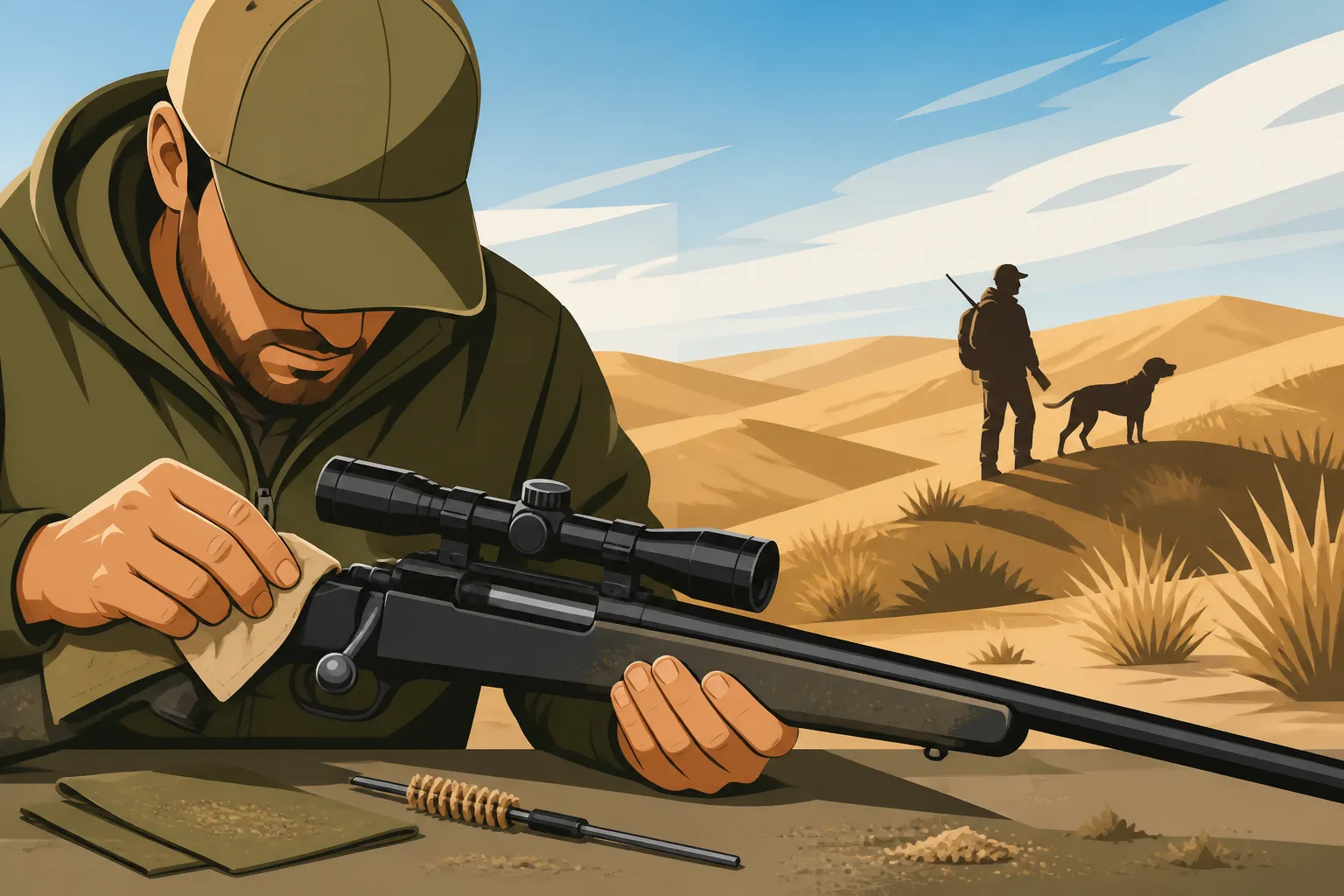
The moment you notice dust accumulating on your rifle, or especially after a long stalk, a bumpy drive on a dusty track, or a windy setup, it's time for some immediate attention. The first step is always a simple wipe-down of all exterior surfaces. Use a clean cloth or even a soft-bristled brush (a dedicated rifle brush or even a clean paintbrush works wonders) to gently brush off any visible dust from the stock, barrel, receiver, and especially around the action and optics. Avoid rubbing the dust into the finish; instead, try to lift it away. Think of it like dusting fine furniture – gentle strokes are best.
Next, pay close attention to the critical areas where dust loves to hide. Use compressed air, if you have a small portable canister, or a hand-powered air blower (like those used for camera lenses) to blast dust out of the bolt face, the ejection port, the magazine well, and around the trigger group. If you don't have air, a soft brush can help dislodge particulate matter from these areas. For the bore, a quick pass with a bore snake or pull-through will help remove any loose dust that might have entered the muzzle or chamber, which is particularly important if you've been carrying the rifle muzzle-down or in strong wind. A common mistake is to over-lubricate the action in dusty conditions, thinking more oil equals more protection. In reality, excess oil will act like a magnet for fine Sandhills dust, turning a light lubricant into an abrasive paste. A very thin, almost dry film of lubricant is often better in extremely dusty environments. By taking these few quick steps, you can prevent most of the immediate damage and keep your rifle running smoothly for the rest of your hunt.
Basic Field Cleaning Kit for the Sandhills
Having a compact, accessible field cleaning kit can be a game-changer when hunting in dusty Nebraska. This isn't about deep cleaning, but rather about having the tools to address immediate dust issues and prevent them from becoming bigger problems. Your kit should be small enough to easily fit in your pack or even a cargo pocket, ready at a moment's notice.
Here's a look at what you should consider packing:
| Item | Purpose | Notes |
|---|---|---|
| Bore Snake/Pull-Through | Quick bore cleaning to remove loose dust and debris. | Match caliber to your rifle. |
| Small Bottle of CLP | Cleaner, lubricant, protectant – for light lubrication and wiping | Choose a non-gummy formula. |
| Soft Bristle Brush | Dislodging dust from action, bolt face, trigger group. | An old toothbrush or dedicated rifle brush works well. |
| Clean Microfiber Cloths | Wiping down exterior surfaces, applying light lubricant. | Pack several; they get dirty quickly. |
| Cotton Swabs/Picks | Reaching into small crevices and tight spaces. | Great for cleaning around optics mounts and trigger guards. |
| Small Can of Compressed Air (optional) | Blasting dust from hard-to-reach areas. | Not always practical for weight/space, but very effective. |
When selecting a multi-purpose CLP (cleaner, lubricant, protectant), look for one that doesn't leave a heavy, sticky residue, as this will only attract more dust. Many hunters find that a very light, dry-film lubricant is ideal for the gritty environment of the Sandhills. Companies like GoHunt often review and recommend compact field kits and cleaning solutions that are well-suited for such conditions, so it's worth checking their resources for products designed with portability and effectiveness in mind. Remember, the goal of this kit is quick maintenance to keep your rifle operational, not a museum-quality shine.
Thorough Cleaning and Maintenance Back at Camp or Home
While field cleaning keeps your rifle running, it’s not a substitute for a thorough, detailed cleaning after your hunt, especially if you’ve spent multiple days immersed in the dusty Sandhills environment. This is where you address the insidious grit that worked its way into every nook and cranny, ensuring long-term reliability and accuracy.
Disassembly and Detailed Cleaning of Components
Once you're back in a more controlled environment, it's time to give your rifle the deep clean it deserves. Start by carefully performing a partial disassembly, focusing on removing the bolt assembly, any detachable magazines, and if appropriate for your rifle, the trigger group. Always refer to your rifle's owner's manual for proper disassembly instructions. With the action open and components separated, you can truly get into the areas where Sandhills dust loves to accumulate.
Begin by using a solvent specifically designed to cut through carbon, old lubricant, and residue. Apply it liberally to the bolt, the receiver interior, and any other metal parts that were exposed to the dust. Allow the solvent to work for a few minutes, then use stiff nylon brushes, small picks, and cotton swabs to scrub away all the caked-on grit and fouling. Pay particular attention to the locking lugs on the bolt and in the receiver, as these are critical for safety and smooth operation. For the bore, use a cleaning rod with a bore brush appropriate for your caliber, followed by patches soaked in bore solvent. Push patches through from the chamber end (if possible) to avoid damaging the crown. Repeat this process until patches come out clean. Don't forget to clean the magazine bodies and followers, as they can also accumulate dust and affect feeding reliability. This detailed process ensures that every abrasive particle is removed, preventing further wear and tear.
Lubrication and Protection for Dusty Environments
After you've meticulously cleaned every component and ensured they are completely dry, the next critical step is proper lubrication and protection. The adage "less is more" truly applies in dusty environments like the Sandhills. You want to apply a very light, almost imperceptible film of lubricant to all friction points – the bolt rails, locking lugs, trigger components, and any other metal-on-metal contact areas. Excessive oil will only attract new dust particles, quickly turning your freshly cleaned rifle into a grit magnet. Consider using a lubricant specifically designed for dry, dusty conditions; some modern lubricants create a dry film that reduces friction without being sticky.
Beyond lubrication, think about long-term protection. For the exterior metal surfaces, a light coating of a rust preventative or a gun wax can provide an extra barrier against moisture and dust adhesion. This is especially important if you anticipate storing your rifle for any length of time, or if you frequently encounter changing weather conditions in the field. When it comes to storage, a good quality gun sock can provide a layer of protection against dust while your rifle is in a soft or hard case. If you're transporting your rifle frequently, especially in vehicles that kick up dust, a high-quality, dust-proof case is invaluable. Many hunters use online resources like GoHunt to research and compare different lubricants and protective measures, ensuring they choose products best suited for the challenging hunting conditions found in Nebraska. Proper lubrication and protection, tailored for dusty conditions, will extend the life of your rifle and maintain its peak performance.
Preventative Measures and Best Practices
While knowing how to clean your rifle after it gets dusty is essential, proactively preventing dust from getting into critical areas in the first place is even better. A few simple habits and the right gear can significantly reduce the amount of cleaning required and extend your rifle's lifespan and reliability.
Protecting Your Rifle While Afield
Out in the Sandhills, your rifle is constantly exposed to the elements, especially that pervasive dust. Implementing some simple preventative measures can make a huge difference. When you're not actively carrying your rifle or preparing for a shot, keep it protected. A simple neoprene gun sock or even a heavy cloth wrap can act as an excellent barrier against airborne dust. This is especially true if you're riding in a vehicle on dusty two-tracks. Placing your rifle in a dedicated gun rack inside the cab, rather than in the open bed or on a dusty floor, also helps immensely. If you have to place it on the ground while taking a break or glassing, try to keep it elevated, perhaps on your pack, or at least lay it on a clean jacket or cloth to minimize direct contact with the dusty soil.
Even when carrying your rifle, be mindful. If it's slung over your shoulder, the muzzle might be pointing down, making it a funnel for dust. A small piece of electrical tape over the muzzle or a dedicated muzzle cover can prevent dust, sand, and even moisture from entering the bore. Just remember to remove it before firing! If you're hunting from a ground blind, ensure the blind is well-sealed against dust. A good, well-brushed-in ground blind designed to handle Nebraska wind will also help keep your gear cleaner. Proactive protection like this means less dust to clean out later, and a more reliable rifle throughout your hunt.
Regular Inspection and Maintenance Schedule
Beyond cleaning after each hunt, establishing a regular inspection and maintenance schedule is crucial for any firearm, but especially one used in harsh environments like the Nebraska Sandhills. Don't wait until you see a problem; make it a routine. Before the season even begins, conduct a thorough pre-season deep clean and inspection. This involves taking down your rifle, meticulously cleaning every component, checking for any signs of wear, corrosion, or damage, and ensuring all screws and mounts (especially for your optics) are torqued to spec. This is a great time to ensure your rifle is zeroed for open country and ready for the season ahead.
Throughout the season, even if you haven't been on a dusty hunt, a quick visual inspection of the action, bore, and optics should be part of your routine. Check the smoothness of the bolt operation. Listen for any gritty sounds. Look for any unusual wear patterns. After the season wraps up, perform another detailed post-season deep clean. This is your opportunity to address any accumulated dust or grime from the entire hunting year. This proactive approach helps you identify early signs of dust-related wear or potential issues before they escalate into major problems in the middle of a crucial hunt. Consistent maintenance will ensure your rifle remains a dependable tool for years to come, whether you're chasing deer in River-Bottom Whitetail Hunting in Eastern Nebraska or glassing for pronghorn in Stalking Pronghorn Across Open Nebraska Ground. This diligent care, combined with knowing how to handle your Rifle Setups for Nebraska's Open Country, ensures you're always prepared.
Regular inspection and cleaning also involve checking your optics. Dust can settle on lens surfaces, impacting clarity and potentially scratching them if wiped improperly. Always use a dedicated lens brush or compressed air first, then a microfiber cloth with appropriate lens cleaner. When considering optics for glassing the Sandhills, remember that clarity is paramount, and regular cleaning will maintain that. If you're traveling a long distance, proper storage is key; look into Rifle Cases for Flying to Nebraska to protect your firearm during transit. When planning your hunt, consider resources like GoHunt for up-to-date information on hunting regulations and tips for preparing your gear.
The fine dust of the Nebraska Sandhills is a formidable opponent for any rifle, but with diligent cleaning practices, a well-stocked field kit, and a commitment to preventative maintenance, your firearm will remain a reliable companion through many hunting seasons. Remember to consider all aspects of your gear, from Zeroing a Rifle for Open Country to understanding Bullet Weight for Windy Conditions, to ensure a successful and enjoyable hunt.
Disclaimer
This article is for general informational purposes only and does not constitute professional advice. Laws, prices and regulations vary by location and change over time. Consult a qualified professional for guidance on your specific situation.