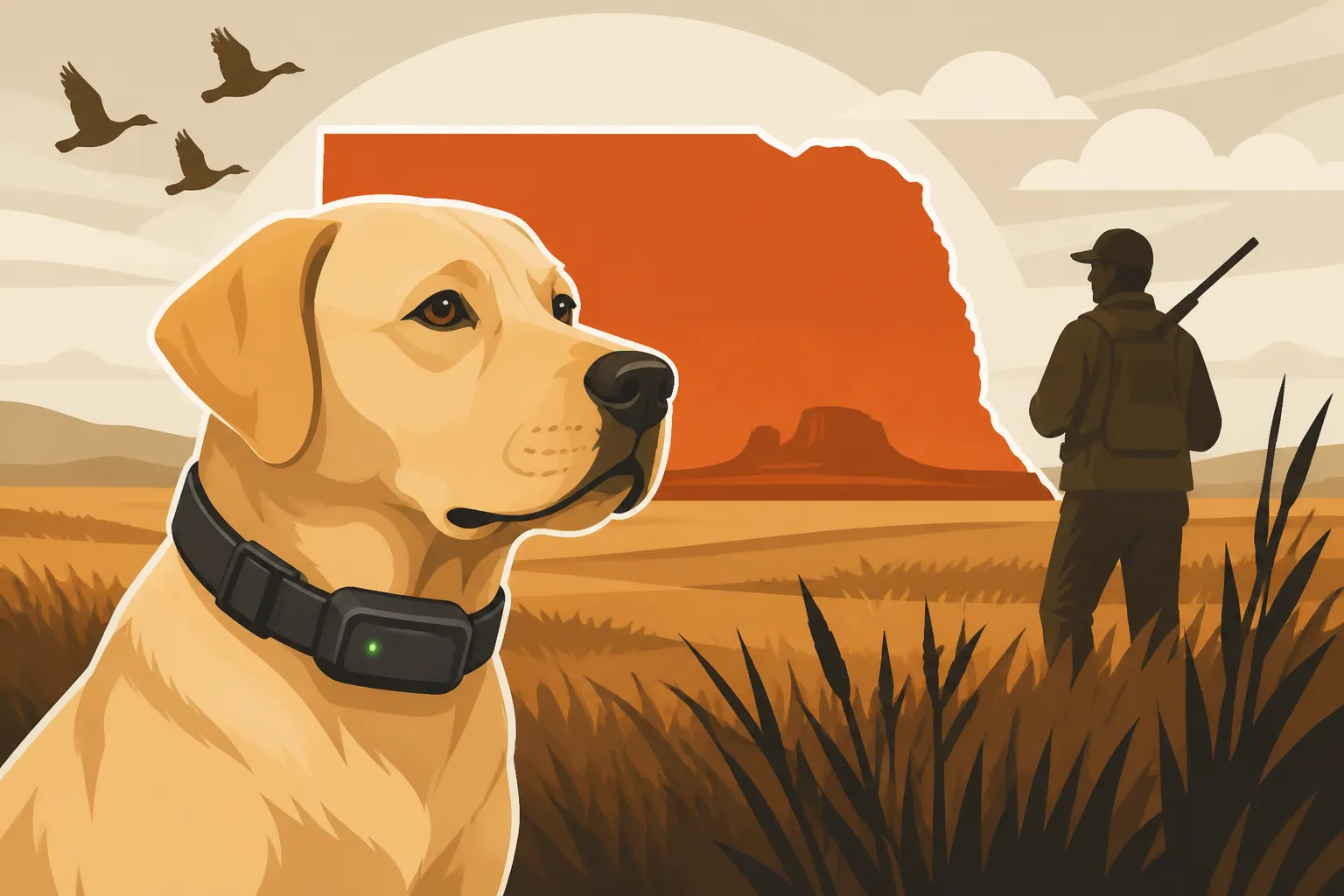
E-Collar Use on Public Ground
Navigating public hunting lands with a well-trained dog is one of life's true joys, but the discussion around using electronic collars, or e-collars, on these shared spaces can be a tricky one. Many hunters wonder if it's even allowed, let alone what constitutes responsible and ethical use. This guide aims to demystify the rules and best practices for using e-collars on public ground in Nebraska, ensuring you and your canine companion can enjoy the outdoors safely and respectfully.
Understanding Nebraska's Public Land Rules for E-Collars
It's easy to get caught up in the debate around e-collars, but first and foremost, you need to understand the lay of the land, literally. Public hunting ground in Nebraska isn't a monolith; it's a diverse patchwork of state, federal, and privately enrolled lands, each with its own set of rules and unwritten expectations. While an outright ban on e-collars is rare, their use is always tethered to broader regulations concerning animal welfare, dog control, and overall respect for other users.
General Regulations on Public Hunting Areas
When you step onto public land in Nebraska, you're entering a shared space. This means your actions, and those of your hunting dog, are under a certain level of scrutiny, not just from game wardens, but from fellow outdoor enthusiasts. Most general regulations don't explicitly forbid e-collar use. Instead, they focus on ensuring that your dog remains under control and doesn't harass wildlife or disturb other visitors. Think about it: if your dog is ranging out of control, even with an e-collar on, and causing a ruckus, you could still be in violation of general public land rules. The e-collar is a tool to help achieve control, not a magical pass for negligence.
Consider the potential for perceived animal mistreatment. While you might be using the e-collar gently and correctly, someone unfamiliar with dog training might interpret its use as cruel. This isn't just about legality; it's about public perception and ensuring that hunting, and dog training within it, remains a respected activity. It's always wise to err on the side of caution and ensure your dog's behavior, with or without the collar, is exemplary. Being a good ambassador for hunters and dog owners often means avoiding situations where your methods could be misunderstood or cause concern to others.
Specific Rules for Wildlife Management Areas (WMAs) and Open Fields and Waters (OFW)
Nebraska's Wildlife Management Areas (WMAs) are prime destinations for dog training and hunting, particularly for upland birds and waterfowl. These lands are managed by Nebraska Game and Parks, and their regulations are primarily geared towards protecting wildlife, managing habitat, and providing quality recreational experiences. You'll find that explicit rules regarding e-collars are generally absent, which implies their use is permissible so long as it aligns with the overall objectives of animal control and ethical hunting. Many dedicated bird dog enthusiasts utilize these areas specifically for training, often relying on e-collars to reinforce commands in a realistic field setting. However, the onus is always on the owner to ensure the dog is not chasing protected species or running amok. You can find comprehensive details in the Nebraska Wildlife Management Area Rules to stay informed.
The Open Fields and Waters (OFW) program offers public access to private lands, a fantastic resource for hunters. While these are technically private lands, they operate under public access rules set by the state, which largely mirror general state hunting regulations. Again, you won't typically find specific prohibitions on e-collar use. However, always remember you are on someone else's property, even if it's enrolled in a public access program. Respect for the land and the landowner's wishes is paramount. If you're unsure about any specific tract, a quick glance at The Nebraska Public Access Atlas can often clarify any unique rules or boundaries. Whether on a WMA or an OFW tract, the fundamental principle remains: your dog must be under your control, and the e-collar is a tool to facilitate that control, not to excuse a lack of training or oversight.
Ethical Considerations and Responsible Use
Beyond the letter of the law, there's the spirit of responsible dog ownership and hunting. Using an e-collar isn't just about what's allowed; it's about what's right for your dog, for other people, and for the integrity of hunting as a whole. This means prioritizing your dog's welfare and being acutely aware of your surroundings and fellow outdoor enthusiasts.
Prioritizing Dog Welfare and Training Philosophy
Let's be clear: an e-collar is a training aid, not a shortcut or a substitute for fundamental training. A well-trained dog has learned basic commands through positive reinforcement, repetition, and consistency. The e-collar then becomes a tool to reinforce those commands, often at a distance or when distractions are high. It's about clear communication, not punishment. Introducing an e-collar should be a gradual process, starting at very low, "tickle" levels that simply get your dog's attention, associating it with known commands. If you're using it to punish or out of frustration, you're not using it correctly, and you risk damaging your dog's trust and enthusiasm.
There's a negative stigma around e-collars, often fueled by misconceptions or stories of misuse. As responsible hunters and dog owners, it's our job to challenge that stigma through our actions. When your dog responds perfectly to a command from a distance, or stops dead in its tracks to avoid flushing a bird prematurely, that's a testament to good training, with the e-collar as a subtle reinforcement. Consider using tools like the GoHunt app not just for mapping, but for keeping notes on your dog's progress, tracking training sessions, and documenting their responses in various conditions. This kind of systematic approach ensures you're training effectively and humanely, making the e-collar a positive part of your dog's learning experience.
Minimizing Disturbance to Other Public Land Users
Public land is, by its very nature, a shared resource. You might encounter birdwatchers, hikers, photographers, or other hunters. Your dog, even if friendly, can unintentionally disrupt their experience if not under control. An e-collar, used responsibly, is an invaluable tool for ensuring your dog remains respectful of others. Imagine you're walking a field, and another hunter is approaching. A quick, low-level reminder from your e-collar can ensure your dog stays close, avoiding an unwanted greeting or potential conflict. This is especially crucial during busy times like Opening Weekend Crowds on Nebraska Public Ground, when multiple groups might be sharing the same cover.
A dog that's constantly running wild, even if it's just "being a dog," can unintentionally harass non-target wildlife like deer, rabbits, or nesting birds. This not only causes stress to the animals but can also be against regulations. The e-collar allows you to correct these behaviors instantly, bringing your dog back to heel and preventing them from disturbing the natural environment or other wildlife. By maintaining control, you're not just being considerate; you're actively contributing to a positive image of hunting and outdoor recreation. Sometimes, if you're planning intensive training sessions, seeking out less crowded areas or less popular times of day can further minimize potential conflicts and allow you to focus more effectively on your dog.
Practical Tips for E-Collar Use in the Field
Having the right gear and knowing how to integrate it seamlessly into your hunting routine is key to maximizing the benefits of an e-collar. It’s not just about slapping it on; it’s about strategic use and proper maintenance.
Equipment Selection and Maintenance
Choosing the right e-collar is the first step toward responsible use. Don't just grab the cheapest one you find. Invest in a reputable brand that offers a durable, waterproof, and reliable unit suitable for the rigors of hunting. Look for features like different stimulation levels (from a gentle vibration to a higher stim), tone, and continuous or momentary options. This versatility allows you to tailor the feedback to your dog's temperament and the specific situation. A well-designed e-collar should fit snugly enough to make consistent contact with your dog's skin, typically on the neck, but not so tight that it causes discomfort or chafing. Always check the contact points regularly for any signs of irritation or sores.
Maintenance is just as crucial as selection. There's nothing worse than heading out into the field, only to discover your e-collar battery is dead or the unit isn't working. Make it a habit to charge both the receiver and the transmitter after every outing. Periodically test the collar at home to ensure all functions are working correctly. In Nebraska's often dusty or wet conditions, ensuring the units are waterproof and clean is essential for longevity. Many modern e-collars also come with GPS tracking capabilities, which can be an absolute game-changer in vast landscapes like the Sandhills or dense river bottoms. Integrating this tracking with a mapping application like GoHunt can give you real-time location data for your dog, enhancing safety and making it easier to manage their range. This combination of reliable e-collar and advanced mapping technology truly elevates your ability to keep tabs on your dog.
Integrating E-Collars with Real-World Hunting Scenarios
The true value of an e-collar shines when it's seamlessly integrated into real-world hunting scenarios, acting as an extension of your voice and leash. Think of those moments when your dog is locked on a scent, maybe pushing too far ahead in a dense cover, or about to break point on a pheasant. A gentle, timely correction or reminder via the e-collar can reinforce the "whoa" command you've trained, or bring them back to heel before they spook the game. It's about preventing unwanted behaviors rather than solely correcting them after the fact.
For instance, if you're Walking Nebraska Pheasant Cover With a Dog in tall grass, and your dog starts to get a little too "birdy" and push past where you want them, a quick tone or low-level stim can refocus them without you having to yell. Or consider hunting in a challenging environment like Working a Cattail Slough in January. Visual cues can be minimal, and the sound of your voice might not carry well. A reliable e-collar ensures your commands cut through the noise and distance, keeping your dog safe and effective. It's about reinforcing learned behavior when distractions are high, such as a strong scent or the sight of running game. Furthermore, using an app like GoHunt to scout potential hunting areas means you're already familiar with the terrain, allowing you to anticipate situations where your dog might need an e-collar prompt, leading to more proactive and gentle corrections. This predictive approach is far more effective than reactive punishment.
Legal and Safety Considerations
Using an e-collar correctly means always keeping legal boundaries and safety, for both your dog and yourself, at the forefront of your mind. There are ethical lines that, when crossed, not only put you at risk of legal trouble but also undermine the very principles of responsible hunting.
Avoiding Accidental Wildlife Harassment
While your primary goal with an e-collar is to train and control your hunting dog for ethical hunting, it's crucial to understand that using it to intentionally harass or injure non-target wildlife is illegal and morally wrong. The e-collar is for reinforcing your commands, not for encouraging your dog to chase a deer, corner a rabbit, or disturb nesting birds. A well-trained dog, whose control is reinforced by an e-collar, is far less likely to accidentally harass wildlife because you can quickly and effectively call them off or bring them back under control if they stray or show undue interest in non-game animals.
Be particularly mindful in areas where protected species might be present, or during sensitive times like spring nesting seasons. Knowing your dog's tendencies and being proactive with the e-collar can prevent situations where your dog might be perceived as a threat to wildlife. For example, if you know your pointer has a tendency to chase deer when it sees them, a quick correction as soon as it spots one can prevent a lengthy, illegal, and potentially dangerous chase. It’s about using the tool to enforce discipline and respect for all wildlife, not just the game you're pursuing. This approach ensures you remain compliant with local regulations and uphold the highest ethical standards.
Ensuring Safety for Dog and Hunter
Safety is paramount when hunting with dogs, and the e-collar can play a significant role in mitigating risks. Beyond its training function, it can be a vital safety device. Consider visibility: even with an e-collar on, your dog should wear bright orange collars or vests, especially during any firearm seasons. Just as Orange Requirements for Archers in November are crucial for human safety, ensuring your dog is highly visible to other hunters is non-negotiable. Many e-collars now come with integrated lights or are designed to be worn under a visibility vest.
Think about the myriad hazards your dog might encounter: icy waters while retrieving waterfowl, barbed wire fences, slippery terrain, or even passing vehicles on nearby roads. An e-collar with reliable range allows you to issue an immediate "stop" or "come" command, potentially preventing your dog from running onto a busy road or falling into a precarious situation. If you're hunting in cold weather, ensure your dog is properly outfitted, perhaps with specialized Dog Vests for Cold Water Retrieves, and that your e-collar is waterproof and robust enough for the conditions. In warmer weather, always carry sufficient Water Carriers for Dogs in Heat. The e-collar is an additional layer of protection, giving you direct, remote control when seconds count, adding peace of mind in challenging environments.
Here's a quick summary of responsible e-collar use:
| Aspect | Responsible Use | Irresponsible Use |
|---|---|---|
| Training Philosophy | Reinforces known commands, gentle corrections | Punitive, primary means of control, frustration-based |
| Dog Welfare | Proper fit, low stimulation, regular checks | Ill-fitting, high stimulation, causes fear/pain |
| Public Etiquette | Maintains control, prevents disturbance | Dog runs wild, harasses others or wildlife |
| Equipment | Quality, charged, tested, GPS-enabled | Cheap, dead battery, unreliable, no tracking |
| Wildlife Interaction | Prevents harassment, calls off distractions | Allows chasing non-target species, injures animals |
| Safety | Aids in preventing hazards, ensures control remotely | No visibility, ignores environmental dangers, dog runs free |
Disclaimer
This article is for general informational purposes only and does not constitute professional advice. Laws, prices and regulations vary by location and change over time. Consult a qualified professional for guidance on your specific situation.