Walking Nebraska Pheasant Cover With a Dog
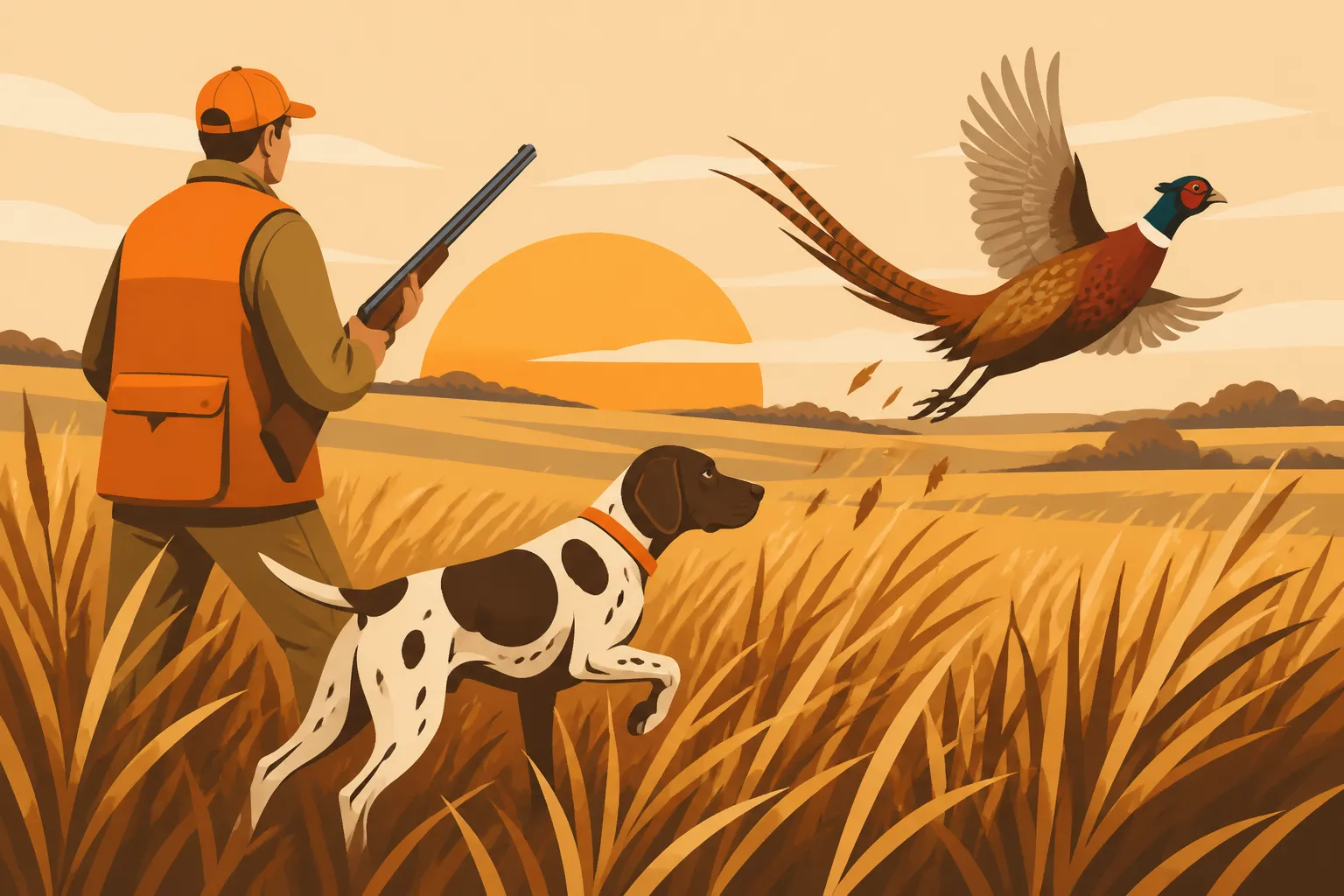
The distinct crackle of dry cornstalks underfoot, the crisp autumn air hinting at the coming winter, and the anxious whine of a good bird dog by your side – these are the hallmarks of pheasant hunting in Nebraska. But anyone who's spent a frustrating afternoon watching roosters flush wild, just out of range, or disappear into impossibly thick cover knows it's not always a walk in the park. This guide is dedicated to helping you master the nuanced dance of walking Nebraska pheasant cover with your canine companion, transforming those challenging days into successful, memorable hunts.
Understanding Nebraska Pheasants and Their Habitat
Before you even step foot in the field, truly understanding the ring-necked pheasant – how it thinks, where it hides, and what makes it tick – is paramount. Nebraska offers a diverse tapestry of habitats, and pheasants adapt their behavior to each one.
Pheasant Behavior in Different Cover Types
One of the biggest frustrations for pheasant hunters is trying to predict whether a bird will hold tight or flush wild. It often comes down to the type of cover and the weather. In dense cover, like thick CRP (Conservation Reserve Program) grasses or the gnarly tangles of a cattail slough, pheasants often feel secure enough to hold, letting your dog work right up to them. This is where a well-trained dog really shines, pinning birds that a human hunter would walk right past. However, in more sparse cover, such as short stubble fields or thinly grassed areas, pheasants are much more prone to running, using their impressive speed to create distance before taking flight.
Weather plays a huge role here, too. On a cold, blustery day, pheasants will burrow deep into the thickest thermal cover they can find – think dense cedar draws or those aforementioned cattail sloughs – and might hold incredibly tight, almost daring your dog to step on them. Conversely, on a mild, sunny day, they might be more spread out, feeding in lighter cover, and quicker to run or flush. Pay attention to the wind, too; pheasants typically flush into the wind, giving them more lift, so always try to approach them with the wind in your face, helping carry your scent away and masking your approach. Understanding these subtle cues can save you a lot of wasted steps and increase your chances significantly.
Key Habitat Features to Focus On
Nebraska's pheasant strongholds aren't just vast, unbroken fields. They're a mosaic of diverse features that birds rely on throughout the day and the season. Edge cover is a classic hotspot. This is where two different types of habitat meet – say, a milo field next to a grass ditch, or a CRP field bordering a wooded shelterbelt. Pheasants love these transitions for their blend of food and escape cover. Draws, especially those with some woody growth or thick grass, act as natural travel corridors and excellent holding cover, especially on windy days.
Shelterbelts, often planted as windbreaks, are pheasant magnets. They provide crucial thermal cover during harsh winters and escape cover when pressured. Waterways, even dry creek beds, often have denser vegetation along their banks, creating linear cover that pheasants will use. Throughout the season, a bird's needs shift. Early in the season, after the Nebraska Pheasant Season Opening Date, they'll be more focused on abundant food sources like standing corn or milo, and may be found in lighter cover closer to these food plots. As winter sets in, their priorities shift to thermal cover and protection from predators, pushing them into the thickest, most impenetrable spots, like those massive cattail sloughs or dense CRP fields. Knowing these shifts will help you predict where the birds are likely to be.
Preparing Your Dog for Nebraska Pheasant Hunts
Having a well-trained, physically fit bird dog is not just a luxury; it's practically a necessity for consistently successful pheasant hunting in Nebraska. Your dog is your most valuable asset, covering ground you can't and using its superior nose to locate birds.
Essential Training for Upland Dogs
The foundation of a good pheasant dog lies in a few key behaviors. First and foremost is steadiness to wing and shot. There's nothing more frustrating (or dangerous) than a dog that busts birds prematurely or chases a flushing bird, getting in the line of fire. Your dog should be trained to stop or "whoa" when a bird flushes and only move to retrieve on command, after the shot. This not only keeps everyone safe but also ensures the bird is truly down before the retrieve begins, preventing lost game. Retrieving to hand is another non-negotiable. A pheasant retrieved directly to your hand, without argument or chewing, is a testament to good training and ensures you don't lose a valuable bird in thick cover.
Quartering, the systematic back-and-forth pattern your dog performs in front of you, is crucial for effectively covering ground. Your dog should learn to stay within gun range and adjust its pattern based on your movement and the cover. This isn't just about covering ground; it's about doing so efficiently, ensuring no pockets of cover are missed. Obedience to basic commands like "heel," "sit," "stay," and "come" under duress is also critical. A bird dog, in the heat of the moment, can get tunnel vision. Being able to stop them with a whistle or voice command, even when a bird is tempting them, is vital for safety and effective hunting. Practice these commands in various environments, gradually introducing distractions, so your dog is bomb-proof when a rooster explodes from the cover.
Conditioning and Health Considerations
Nebraska pheasant hunting means miles of walking, often through tough, abrasive cover like corn stubble or frozen ground. Your dog needs to be in peak physical condition to endure these hunts. Start a conditioning program well before the season, gradually increasing the duration and intensity of walks. A fit dog will hunt harder, longer, and be less prone to injury. Just like an athlete, they need to be warmed up before a hunt and cooled down afterward.
Paw care is often overlooked but incredibly important. The sharp edges of milo and corn stubble, frozen clods of dirt, and the occasional cactus or burr can wreak havoc on a dog's pads. Consider protective dog boots, especially for multiple-day hunts or particularly rough terrain. Regularly check your dog's paws for cuts, cracks, or embedded debris during and after hunts. Hydration is critical, especially during warmer early season hunts. Always carry plenty of water for your dog and offer it frequently. Dogs can overheat rapidly, so be mindful of temperatures and humidity. If your dog starts panting excessively or lagging, it's time for a break in the shade. The danger of Water and Heat Risk for Bird Dogs is very real in the early pheasant season. Furthermore, be aware of environmental hazards like barbed wire fences, which are common in Nebraska, and ensure your dog is vaccinated and protected against common illnesses. In some areas, rattlesnakes can also be a concern, so consider snake aversion training if hunting in known snake country.
Mastering the Art of Walking Pheasant Cover
Successfully walking pheasant cover with a dog is a nuanced dance between you and your canine partner. It's about more than just putting one foot in front of the other; it's about strategy, observation, and communication.
Reading the Cover and Formulating a Strategy
Before you even send your dog out, take a moment to "read" the cover. Look for visual cues: thicker patches, changes in vegetation height, draws, fence lines, or isolated islands of cover within a larger field. These are the "pheasanty" spots where birds are most likely to hold. Use mapping tools, perhaps even an app like GoHunt, to pre-scout areas and identify potential holding spots and escape routes. Imagine you're a pheasant; where would you go if pressured? This helps you anticipate their movements.
Once you have a mental map, formulate a plan. The wind is your friend, but also a factor for the birds. Try to work into the wind as much as possible, allowing your dog's nose to pick up scent more effectively and preventing your scent from carrying ahead and spooking birds. Plan your walk to push birds towards a natural barrier or a blocking hunter, if you're hunting with a group. If you're solo, try to use terrain features or edge cover to your advantage, funneling birds into a manageable area. For instance, when Walking Milo and Corn Stubble for Pheasants, consider walking parallel to a fenceline, knowing birds will often run along it before flushing. Adjust your pace to match your dog's quartering pattern; you want them to thoroughly work the cover without getting too far ahead.
Effective Teamwork Between Hunter and Dog
This is where the magic happens. A truly effective pheasant hunt is a seamless collaboration between hunter and dog. Communication is key. Use clear, consistent commands, whether verbal, hand signals, or whistle commands. Your dog should understand what you want without hesitation. Watch your dog closely: a sudden change in tail action, a subtle head turn, or a quickening pace often signals they're on scent. Trust their nose! When they get birdy, slow down, get ready, and let them work. Sometimes, a slight pause from the hunter can make a bird hold just long enough for the dog to pinpoint it.
Adjust your pace and direction based on your dog's behavior. If they're working a hot scent, follow their lead, but be prepared for a flush at any moment. Don't be afraid to change your route mid-walk if your dog indicates birds are elsewhere. As the hunter, you also play a crucial role in flanking or blocking. If you're hunting with a partner, one person might walk the main cover with the dog, while the other flanks the edges, cutting off escape routes. Even solo, you can use your positioning to encourage birds to move in a particular direction. Always be ready for the shot, but remember to prioritize your dog's safety. Never shoot if your dog is in the line of fire. It's a dance, a partnership, and when it clicks, it's incredibly rewarding.
Navigating Nebraska's Diverse Landscapes
Nebraska's pheasant hunting opportunities are as varied as its geography. From the vast row crop fields of the east to the Sandhills' grass pockets and the thick river bottoms, each landscape presents unique challenges and rewards.
Hunting Row Crops and Stubble Fields
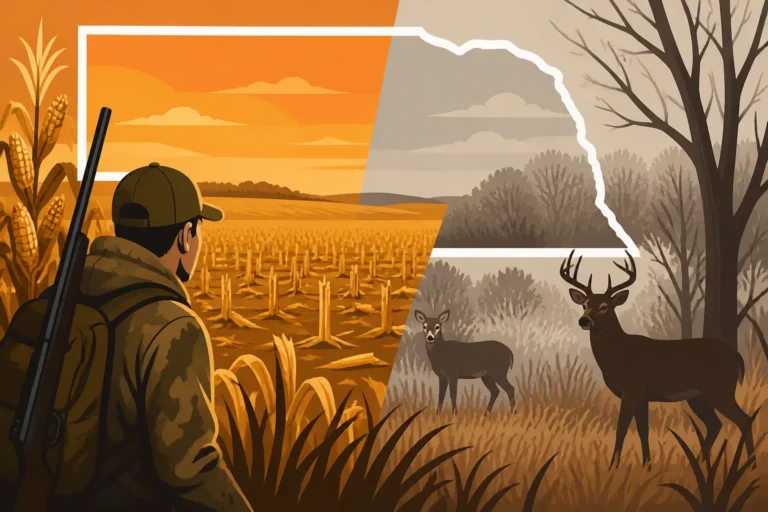
The heart of Nebraska's agricultural country offers abundant pheasant habitat, especially in the form of corn and milo stubble fields after harvest. The challenge here is the sheer size of these fields and how birds use the remaining cover. After the combine has gone through, birds often concentrate in the thicker, standing strips of corn that might be left, or in grassy waterways and ditches that run through the fields. When Walking Milo and Corn Stubble for Pheasants, focus your efforts on these features. Walk slowly and deliberately, especially where the stubble is thick, as birds will often burrow down and hold tight.
Pheasants in these fields are masters of running, so often, it's about pushing them towards a corner, a road, or a thicker block of cover. If you're hunting with multiple people, consider blocking the ends of a field or a particular patch of standing corn, while one or two hunters and dogs walk through. Always keep the wind in mind, working into it to give your dog the best chance to scent birds. Pay close attention to field edges adjacent to thicker cover like CRP or shelterbelts, as birds will often travel between these areas. Irrigation pivots can also create unique habitat, with the circular patterns offering different densities of cover that birds will exploit.
Working CRP, Grasslands, and Shelterbelts
CRP (Conservation Reserve Program) fields are goldmines for pheasants, offering dense nesting, brooding, and winter cover. The trick with CRP is its thickness. Birds will hold incredibly tight in tall, dense grass, allowing your dog to get very close. However, they can also flush much farther out in more open grasslands, so staying alert is key. When working CRP, maintain a steady, slightly slower pace to allow your dog to thoroughly sniff out birds that are hunkered down. Again, working into the wind is essential here.
Shelterbelts, those linear strips of trees and shrubs, are prime pheasant habitat, especially later in the season when thermal cover is critical. They act as travel corridors, escape routes, and excellent holding areas. When hunting a shelterbelt, consider walking both sides simultaneously with dogs, or one hunter walking the middle and others flanking. Birds will often run the length of the belt before flushing out an end. Don't forget the thinner, brushy edges, as pheasants often use these transitions. The Nebraska Game and Parks Commission's Open Fields and Waters Tracts for Pheasants often include excellent examples of these habitat types, providing public access to prime hunting ground.
Cattail Sloughs and Wetlands
These are the late-season strongholds for Nebraska roosters. When the snow flies and temperatures drop, pheasants retreat into the seemingly impenetrable fortresses of cattail sloughs and other wetlands. Hunting these areas is tough, physically demanding work, but often yields big, mature roosters. The cover is incredibly dense, wet, and often mucky, which impacts both you and your dog. Birds will hold incredibly tight here, often forcing your dog to be right on top of them before they flush. This is where Late-Season Roosters and Longer Flushes become the norm, meaning you'll need to be quick on the draw.
Strategy is key in a slough. Identify potential entry and exit points. Often, pheasants will try to run to the densest part or escape out the end of the slough. If possible, position blockers at the ends, or walk the slough from the downwind side, pushing birds into the wind and towards an open area where you can get a shot. Your dog will be working extra hard in this heavy cover, so monitor them closely for signs of fatigue or cold. Retrieving birds from frozen water or dense muck requires a dedicated and hardy dog.
Gear and Safety for Hunter and Dog
Preparing for a Nebraska pheasant hunt involves more than just a shotgun and a dog. The right gear ensures your comfort, efficiency, and safety, as well as that of your canine partner.
Essential Gear for the Hunter
Your shotgun is, of course, central. A 12 or 20 gauge is standard, with many hunters preferring a 12 gauge for the extra punch it provides on hard-flushing roosters, especially later in the season. Consider different chokes; an improved cylinder or modified choke is often suitable for early season birds holding tight, while a more open choke might be better for those Late-Season Roosters and Longer Flushes. Ammunition choice is crucial. Many public lands and Wildlife Management Areas in Nebraska require nontoxic shot, so always check regulations. For lead shot, choose between 4, 5, or 6 shot, adjusting for early or late season birds. Smaller shot (6s) are good for early, closer birds, while larger shot (4s or 5s) are better for longer shots on late-season, tougher roosters. Shot Sizes for Late-Season Nebraska Roosters will generally be larger to carry more energy.
Clothing should be layered, as Nebraska weather can be highly unpredictable. Start with a moisture-wicking base layer, add insulating layers, and top it with a windproof and waterproof outer shell. Blaze orange is a non-negotiable safety item. Make sure you meet Nebraska's 400 square inch requirement, often achieved with a vest and hat. Many hunters prefer an Upland Vests and Blaze Orange combination that also offers plenty of storage for shells, water, and harvested birds. Comfortable, broken-in boots designed for walking miles over varied terrain are a must. A good GPS unit or a reliable mapping app on your phone (like the one offered by GoHunt, which can show land ownership and public access) is invaluable for navigating vast fields and staying on public ground. Always carry a small first-aid kit for yourself and your dog, along with plenty of water and snacks.
Dog Gear and Safety Precautions
Your dog's gear is just as important. An e-collar is a critical tool for communication and control, especially when working a big field or dealing with a dog that might be prone to breaking on a flush. Ensure it's fitted properly and your dog is thoroughly trained to it. A bright orange vest for your dog increases its visibility to you and other hunters, especially in dense cover. Some hunters also use bells on their dog's collar to help track their movements in thick stuff.
Paw protection, as mentioned earlier, is vital. Dog boots can prevent cuts and abrasions. In extreme cold, they also offer protection against frostbite. Always carry plenty of water and a collapsible bowl. High-energy dog food is important for multi-day hunts. Be prepared for emergencies: a dog first-aid kit should include items for cuts, thorns, allergic reactions, and pain relief (consult your vet for specific medications). In Nebraska, particularly in areas with a known presence of Chronic Wasting Disease (CWD) in deer, be mindful of safe handling practices for harvested game, even though pheasants aren't susceptible. Always be aware of your surroundings; barbed wire fences, forgotten farm equipment, and even some native plants can pose hazards to your dog. Regular breaks for water and rest are crucial for their well-being throughout the day.
Season-Specific Tactics and Considerations
Pheasant hunting isn't a static sport; it changes dramatically as the season progresses, largely driven by weather and available cover. Adapting your tactics to these shifts is key to consistent success.
Early Season Hunts (October/November)
The early pheasant season in Nebraska often means milder temperatures, sometimes even surprisingly warm days. This presents a unique set of challenges and opportunities. Birds tend to be more spread out, often found in lighter cover closer to active food sources like still-standing crops or freshly harvested fields with residual grain. They may also hold tighter, having experienced less hunting pressure.
The primary concern for early season hunts is your dog's well-being in warmer weather. Overheating is a serious risk. Plan your hunts for cooler parts of the day, like early mornings or late afternoons. Take frequent breaks, especially if your dog is panting heavily, and offer water constantly. While birds might hold tighter, they're also less concentrated, meaning you might need to cover more ground. Focus on working edges, smaller patches of cover, and areas where food and light cover meet. The pheasants haven't been pushed around much yet, so they're often less wary. This is a great time to work younger dogs and build their confidence on birds. The lush vegetation of early fall also provides excellent cover for these birds.
Late Season Hunts (December/January)
As winter descends on Nebraska, the landscape changes dramatically, and so do the pheasants. Cold winds, freezing temperatures, and often snow cover force birds to concentrate in the thickest, most protective thermal cover available. This typically means dense cattail sloughs, heavy shelterbelts, thick cedar draws, and any remaining patches of tall, un-mowed grass. The birds are now harder to move, holding incredibly tight, but once flushed, they tend to fly stronger and higher. This is when Late-Season Roosters and Longer Flushes truly test your shooting skills.
Hunting late season requires a different approach for both you and your dog. Dress in layers, prioritizing warmth and wind protection for yourself. For your dog, consider a protective vest against cold and abrasions, and be extra diligent about paw care on frozen ground. The biggest challenge is often navigating the dense cover and the elements. You might need to slow your pace even further, allowing your dog to meticulously work through the impenetrable stuff. Sometimes, you'll feel like you're wrestling through the cover, but that's precisely where the roosters are hiding. If you're hunting with a group, strategic blocking of escape routes becomes even more critical, as birds will try to run rather than flush. Look for areas with a combination of food (like picked cornfields) and heavy cover nearby; birds will feed during the day and retreat to the thick stuff for protection. While late-season hunting can be physically demanding, it often yields some of the biggest, most beautiful roosters of the year.
| Cover Type | Typical Density | Bird Behavior | Recommended Dog Strategy | Hunter Pacing |
|---|---|---|---|---|
| Milo & Corn Stubble | Medium to Low | Runs frequently, holds in thicker patches | Quarter wide, follow scent trails, push to edges | Moderate to Fast |
| CRP Grasslands | High | Holds tight, may flush wild on open edges | Thorough quartering, slow down on "birdy" scent | Slow to Moderate |
| Shelterbelts & Tree Rows | Medium to High | Runs length, flushes at ends/gaps | Work edges and center, push towards ends, use blockers | Moderate |
| Cattail Sloughs & Wetlands | Very High | Holds extremely tight, strong flushes | Slow, methodical work, careful retrieves, push to open | Very Slow |
| Light Field Edges | Low | Often feeds, quick to run/flush | Quick sweep, focus on transitions, anticipate movement | Fast |
Disclaimer
Hunting involves inherent risks, and it is the responsibility of each hunter to understand and comply with all applicable hunting regulations, licensing requirements, and safety protocols. Always prioritize safety for yourself, your hunting partners, and your dog. Ensure you have proper training and equipment for the conditions you will encounter. This guide is for informational purposes only and does not substitute professional advice or official hunting regulations.