Scrape Lines Along a Fenceline
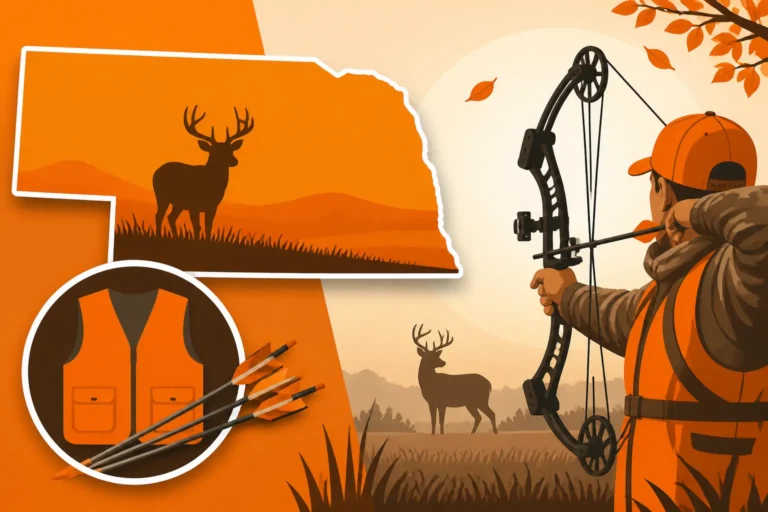
Finding a hot scrape line can ignite any deer hunter's excitement, but when that scrape line appears along a fenceline, it often comes with a unique set of challenges. These linear features, while acting as natural deer highways, demand careful thought regarding wind, stealth, and proper setup. This guide aims to demystify hunting scrape lines along fencelines in Nebraska, providing you with practical strategies to turn these tricky spots into successful encounters.
Understanding Scrape Lines Along Fencelines
Fencelines are far more than just property markers; they are often integral components of a buck's travel and communication network. Recognizing why deer use them and understanding the seasonal ebb and flow of scrape activity are your first steps toward effective hunting.
Why Fencelines Attract Bucks
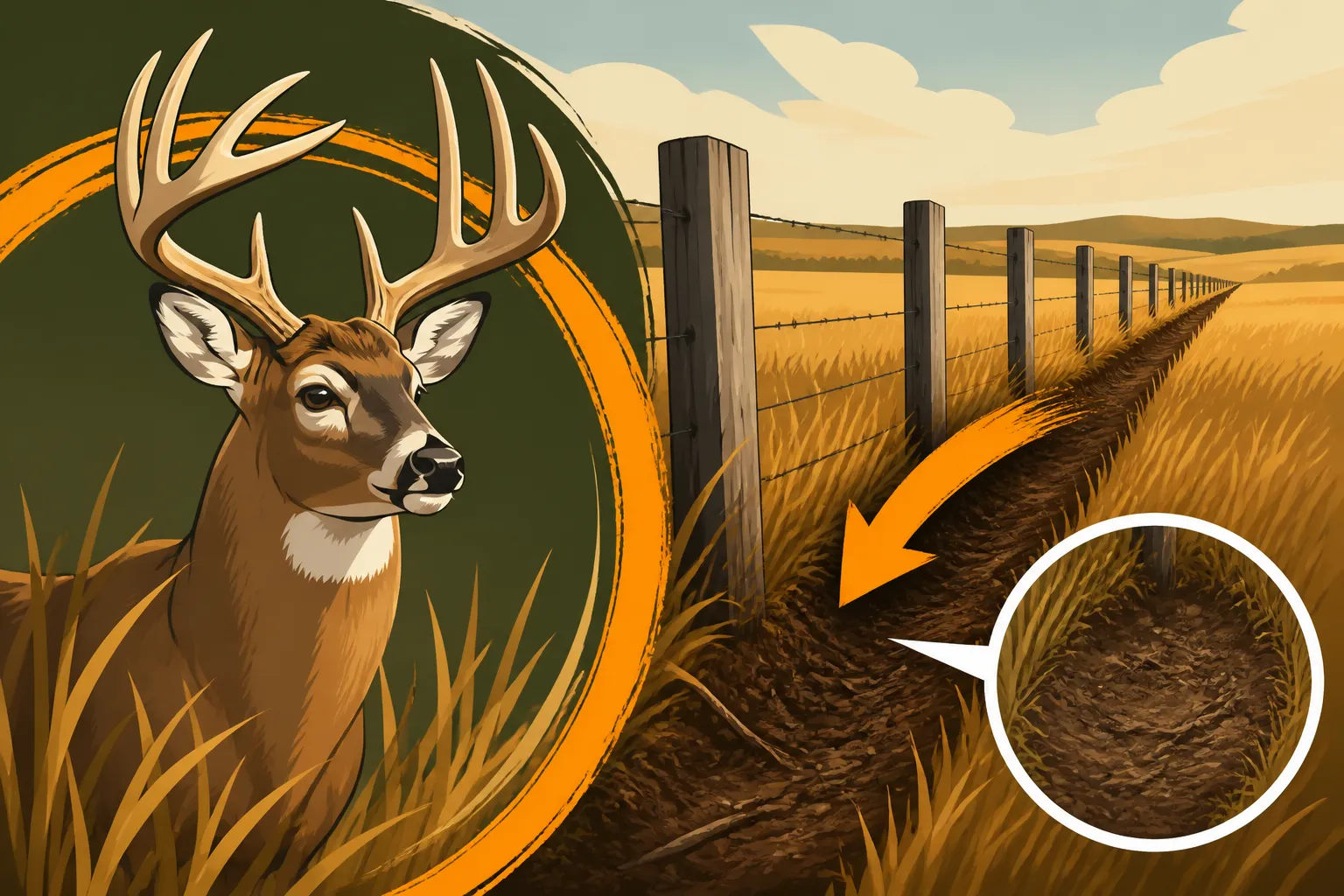
Think about any fenceline in Nebraska, whether it separates a lush alfalfa field from a dense timber block, or marks the boundary between two landowners' properties. These linear features create natural funnels and edge habitats that deer frequently utilize for movement. Bucks, especially the older, wiser ones, appreciate the security and navigational simplicity that a fenceline provides. They can cruise along an edge, often on the downwind side, scent-checking for does and avoiding wide-open exposure.
When a fenceline intersects with a creek crossing, a change in cover type (like where cedars meet open grassland), or a frequently used trail leading to a prime food source, it becomes an irresistible location for a buck to establish a scrape line. These scrapes act as deer social media — a place for bucks to leave their scent, signifying their presence and readiness to breed, and for does to leave their own signals. It’s a communication hub, a liquid-ambar scented bulletin board telling the world, "I'm here, who's next?" This behavior is particularly pronounced when a fenceline dictates where deer must cross, effectively funneling them to specific points where scrapes become a natural extension of their territorial marking.
Seasonal Scrape Activity
Scrape activity isn't a year-round phenomenon; it’s a dynamic process tied directly to the whitetail breeding cycle. While you might occasionally stumble upon a "mock" scrape in late summer or early fall, these are typically exploratory and don't hold much consistent action. The real excitement begins with the pre-rut, usually starting in late October in Nebraska. This is when bucks seriously begin to mark their territories, pawing the ground, urinating into the bare earth, and chewing on overhead licking branches.
As When the Whitetail Rut Peaks in Nebraska, these fenceline scrapes become absolutely indispensable. Bucks will actively and frequently visit them, sometimes multiple times a day, to check for receptive does. This intense period is your prime window for hunting these locations. Once the peak rut subsides, typically in late November or early December, scrape activity will generally dwindle. However, don't write them off completely; a late-breeding doe or a persistent young buck might occasionally reactivate a scrape. Understanding this seasonal timing allows you to focus your scouting and hunting efforts when these fenceline scrapes are at their most potent. Finding a freshly worked scrape along a fenceline in mid-November, for instance, is like hitting the lottery; you know a buck is actively using that area right now.
Reading the Sign and Interpreting Activity
Once you’ve located a scrape along a fenceline, the next critical step is to accurately assess its current activity level. Not all scrapes are created equal, and knowing how to distinguish a hot, active scrape from an old, abandoned one is paramount to success.
Distinguishing Active vs. Old Scrapes
An old scrape is generally a faded affair – a bare patch of dirt, perhaps overgrown with a few weeds, with no fresh sign. It might have faint deer tracks or old rubs nearby, but nothing screams "buck was here moments ago." In stark contrast, an active scrape is a vibrant, freshly worked calling card. The ground will be freshly pawed, exposing moist, dark earth. You’ll often see clear, fresh tracks in the soil, sometimes even small indentations from hooves. The overhead licking branch, often the most crucial component, will be chewed, frayed, and may even appear wet or glistening from fresh saliva and pre-orbital gland scent deposits. This branch is a buck's personal scent dispenser, and its condition is a direct indicator of recent activity.
When examining a fenceline scrape, take your time. Look for fresh deer droppings around the scrape, which are a definitive sign of recent visits. A strong, musky odor is another giveaway. If you see leaves or debris in the scrape, gently move them aside; if the soil underneath is still soft and pliable, it indicates very recent activity. If the leaves are dry and have accumulated over time, it’s likely an older scrape. Many hunters use digital mapping tools like those offered by GoHunt to pinpoint and log these scrape locations, helping them track changes in activity over days or weeks without disturbing the area with repeated visits.
Identifying Primary Scrapes and Community Scrapes
Not all scrapes hold the same importance to deer. Understanding the hierarchy of scrapes will help you prioritize where to focus your hunting efforts. A primary scrape is typically larger, deeper, and is repeatedly used by one or more bucks, often including the dominant male in the area. These are usually found in highly strategic locations along a fenceline, such as where multiple deer trails converge, where a distinct terrain feature creates a natural funnel, or at a transition point between different cover types.
Community scrapes are essentially primary scrapes on steroids. They are massive hubs of activity, visited by numerous deer of all ages and sexes. These are often easy to spot due to their size and the sheer amount of sign around them – multiple licking branches, heavily pawed earth, and numerous tracks. They serve as central communication points for the entire local deer population.
In contrast, secondary scrapes are smaller, less maintained, and often found strung out along a fenceline or travel corridor, sometimes 50-100 yards apart. These act as "breadcrumb" scrapes, leading deer towards the more important primary or community scrapes. Your absolute best bet for success lies in identifying and hunting near these larger, more active primary or community scrapes along a fenceline. If you encounter a series of smaller scrapes, keep following the fenceline, observing the sign, until you find that undeniable magnet of deer activity.
Hunting Strategies for Fenceline Scrapes
Once you've located an active fenceline scrape, the next challenge is positioning yourself effectively without alerting the deer. This often requires careful consideration of stand placement, blind selection, and how to use calls and decoys strategically.
Stand Placement and Blind Selection
Hunting fenceline scrapes, especially in open Nebraska country, often means dealing with limited natural cover compared to dense timber. This makes your stand or blind placement absolutely critical. For a treestand, scout for the largest, most concealing tree available, preferably 20-30 yards downwind of the scrape. This distance allows for a good shot angle while providing some room for error. Look for trees that offer natural broken branches or heavy foliage to help break up your outline. Always consider the sun's position throughout the day to avoid being silhouetted or having direct sunlight in your eyes during prime hunting hours.
If treestands aren't an option — perhaps due to lack of suitable trees, or if the fenceline runs through very open grassland or agricultural fields — a ground blind becomes an indispensable tool. The key here is proper setup and concealment. Don't just plop a blind down; make sure it's brushed in thoroughly with natural vegetation from the area. If possible, set it up a week or two in advance to allow deer to acclimate to its presence. As you consider Choosing a Treestand Site on Nebraska Farmland, remember that deer frequently use fencelines as safety edges. Many hunters rely on mapping applications like GoHunt to pre-scout potential stand locations, analyzing terrain features, wind patterns, and cover without ever stepping foot on the property, minimizing scent disturbance.
Using Calls and Decoys Effectively
The rut is a highly vocal period for whitetails, and incorporating calls and decoys into your strategy can significantly increase your odds near active fenceline scrapes. A combination of rattling and grunting can effectively mimic a buck fight or a buck trailing a doe, often drawing in curious or dominant bucks looking for a confrontation or a breeding opportunity. Start with softer calls, then escalate to more aggressive rattling sequences if you don't get an immediate response. Following up with soft grunts can add to the realism. A subtle doe bleat can also be very effective, especially if you suspect a doe might be in estrus nearby.
Pairing your calls with a decoy, particularly a single buck or a doe decoy, can be a game-changer. Position your decoy strategically so that an approaching buck sees it from a distance, ideally with a clear, direct path towards it that also puts him into your optimal shooting lane. For example, setting up a buck decoy about 25-30 yards from the scrape, facing slightly away, can often provoke an aggressive response from a dominant buck coming to check the scrape. Remember that Decoying a Nebraska Whitetail Buck requires careful consideration of the wind and the buck's likely approach angle to maximize the visual appeal and avoid spooking him.
| Tactic | When to Use | How to Execute | Considerations |
|---|---|---|---|
| Light Rattling | Early pre-rut, subtle encounters. | Short, soft clashing of antlers or a rattling bag. | Don't overdo it. Listen for responses. |
| Aggressive Rattling | Peak rut, dominant buck challenge. | Loud, sustained rattling, mimicking a full-blown fight. | Best for areas with known mature bucks. |
| Grunting | Throughout rut, trailing a doe, challenging a rival. | Short, throaty grunts. Can be varied in intensity. | Follow up with rattling or doe bleats for realism. |
| Doe Bleat | Throughout rut, to attract curious bucks. | Soft, pleading bleats. | Use sparingly. Sounds like a receptive doe. |
| Buck Decoy | Peak rut, to challenge dominant bucks. | Position 20-30 yards from scrape, quartering away. | Ensure wind is in your favor. Can draw aggressive charge. |
| Doe Decoy | Peak rut, to simulate a receptive doe. | Position near scrape or along travel corridor. | Less aggressive response, but can still attract. |
Mastering the Elements: Wind, Thermals, and Scent
No matter how perfect your setup or how enticing your calls, ignoring the elements will lead to disappointment. On Nebraska's plains and river bottoms, wind and scent control are non-negotiable for success.
Playing the Wind on Open Fencelines
In Nebraska’s expansive landscapes, especially along open fencelines that cut through prairie or agricultural fields, the wind is an ever-present factor. Ignoring it when hunting a fenceline scrape is a surefire way to get busted. Deer, particularly mature bucks, will almost always approach a scrape from downwind to scent-check for rivals or receptive does. This behavior dictates your entire setup. You must position yourself on the opposite side of the fenceline from where you anticipate the deer will approach, ensuring your scent is carried away from the scrape and their likely travel path.
For instance, if your fenceline runs north to south, and the prevailing wind is from the west, you would expect deer to approach the scrape from the east to get the wind in their favor. To counter this, you would need to set up on the west side of the fenceline, allowing your scent to blow to the west, away from the scrape and the eastern approach. This strategy directly relates to understanding Wind Direction on Open Nebraska Prairie Stands. Always check the most current wind forecasts, and ideally, have multiple stand or blind options prepared for various wind directions. Many advanced hunting apps, including those from GoHunt, offer integrated wind prediction tools that can be incredibly valuable for planning your approach and setup for the day.
Aggressive Scent Control Tactics
Even with the wind in your favor, residual human scent can still be enough to alert a wary buck. Aggressive scent control isn't just a recommendation; it's a fundamental necessity. This means adopting a comprehensive routine: washing all your hunting clothes in scent-free detergent, storing them in airtight containers or scent-proof bags, and dressing in the field just before heading to your stand if practical. Generously apply scent-eliminating sprays to your boots and outer layers.
Perhaps the most critical aspect of scent control is minimizing disturbance on your approach. Plan your Entry and Exit Routes on Flat Farm Ground meticulously, ensuring you avoid walking through areas where you expect deer to travel. If you must cross a known deer trail, do so quickly and apply a scent eliminator or cover scent to your tracks. For those extra cautious hunters, using an ozone generator in your blind or clothing bag, particularly during the intense rut when bucks are hyper-aware, can provide an additional layer of protection. The ultimate goal is to become an undetectable ghost in the deer's world, leaving no trace that signals your human presence.
Maximizing Your Success on Fenceline Scrapes
Beyond the immediate tactical considerations, a broader approach to scouting, patience, and ethical hunting will solidify your success when targeting fenceline scrapes.
Scouting Beyond the Scrape
While an active scrape is your immediate target, it's just one piece of a much larger puzzle. To truly maximize your chances, you need to scout beyond the scrape itself to understand the buck's full range of movement. Look for rub lines leading to and from the fenceline, which indicate preferred travel corridors. Identify nearby bedding areas, such as dense cedar thickets, thick river bottom cover, or even brushy draws. Pinpoint primary food sources in the vicinity, whether it’s a standing cornfield, an alfalfa patch, or an oak timber dropping acorns.
Understanding this complete picture—where a buck beds, feeds, and how he travels between these areas, often utilizing the fenceline as a key corridor—will drastically improve your ability to intercept him. Detailed scouting is also where digital tools like the Nebraska Public Access Atlas Mobile App can be invaluable, helping you identify surrounding public lands or potential access points that align with deer movement patterns. Remember, the scrape is where a buck communicates, but the surrounding habitat dictates when and how he gets there. Applying principles from Reading Sign on a Nebraska Sandhills Two-Track, even outside of the Sandhills, can provide crucial insights into deer behavior and movement.
Patience and Persistence Through the Rut
Hunting fenceline scrapes, especially during the often-chaotic rut, demands both immense patience and unwavering persistence. Bucks don't operate on a strict schedule, and while a dominant buck might visit a scrape daily, the exact timing can vary widely. Longer sits are frequently rewarded, so be prepared to spend extended hours in your stand or blind, particularly during the early morning and late afternoon, and especially if you've identified a primary community scrape that shows consistent activity.
Don't let short-term lulls in activity discourage you. Deer movement can be heavily influenced by sudden weather changes, hunting pressure from other hunters, or the availability of receptive does. If one fenceline scrape isn't producing, don't hesitate to shift your focus to another promising location. Nebraska's Four-Month Archery Deer Season provides ample opportunity to adapt your tactics as the season progresses. Keep meticulous notes on your observations, including specific buck encounters and the environmental conditions surrounding them. Logging this information, perhaps within a digital hunting journal on GoHunt, can help you build valuable patterns over time, enhancing your predictive abilities for future hunts.
Ethical Considerations and Deer Health
As responsible, ethical hunters, our commitment extends beyond the pursuit of game. When hunting scrape lines, it's crucial to be mindful of broader deer health issues, such as Chronic Wasting Disease in Nebraska. Always stay informed about and adhere to the latest carcass transport rules and CWD testing guidelines issued by the Nebraska Game and Parks Commission. If you are fortunate enough to harvest a deer, ensure you follow proper Field Dressing and Cooling Game in Warm Weather procedures to maintain the quality of the meat, regardless of the ambient temperature. Our role is not just to harvest, but to act as diligent stewards of the wildlife resource.
Disclaimer
Please note that hunting regulations, seasons, and disease advisories are subject to change. Always consult the latest Nebraska Game and Parks Commission regulations and guidelines before participating in any hunting activities. This guide provides general information and should not replace official state resources.