Decoying a Rutting Pronghorn Buck
The sight of a rutting pronghorn buck, with his dark cheek patches and a neck swollen with testosterone, is enough to get any hunter’s heart pounding. But getting within range of these notoriously sharp-sighted animals on the vast Nebraska plains can feel like an impossible feat. This guide is all about one of the most exciting and effective ways to do just that: decoying a rutting pronghorn buck. We'll delve into the nuances of their behavior during this frenzied time and equip you with the strategies to turn that challenge into a successful hunt.
Understanding the Pronghorn Rut and Behavior
The pronghorn rut in Nebraska is a period of intense activity, marked by bucks constantly herding does, chasing off rivals, and generally being highly territorial. This aggression is what makes decoying so effective; you're essentially challenging a buck's dominance right in his own backyard.
When the Nebraska Pronghorn Rut Peaks
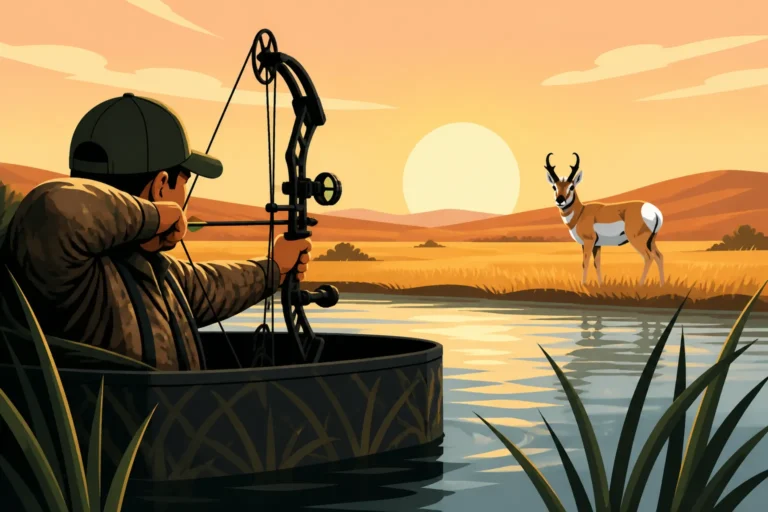
The timing of the pronghorn rut in Nebraska typically kicks off in late August and runs through most of September. While you might see some pre-rut activity in mid-August, the peak action often falls in the first few weeks of September. This is when bucks are at their most aggressive, constantly vying for breeding rights and protecting their harems. If you're planning an archery antelope hunt over water in Nebraska, you might catch the very beginning of this intense period, but for pure rutting aggression, those first couple of weeks of September are prime. The weather can still be quite warm during this time, which can impact when antelope water in hot weather, but it doesn't slow down the bucks' territorial instincts.
During the peak rut, you'll observe bucks tirelessly trailing does, often nudging them to keep them within their chosen territory. They might perform impressive displays of speed and agility, chasing off younger bucks or even challenging a dominant buck from a neighboring territory. This constant high-stakes interaction makes them vulnerable to a well-placed decoy, as they're already primed for conflict and territorial defense. The sheer exhaustion from these continuous chases and challenges also plays a role, making them sometimes less wary of an "intruder" than they would be during other times of the year.
Why Bucks Respond to Decoys During the Rut
Pronghorn bucks are highly territorial, especially when they have a harem of does to defend. During the rut, their primary instinct is to maintain dominance and secure breeding opportunities. When a buck decoy is presented, it taps directly into this instinct. A buck sees what he perceives as a rival buck encroaching on his territory or attempting to steal his does. His immediate, almost reflexive, response is often to confront this perceived intruder. It's a primal reaction, driven by hormones and a deep-seated need to protect his status.
This territorial drive often overrides their typically excellent eyesight and caution. They become so focused on running off the "other" buck that they may not fully process the finer details of the decoy or your hidden position. Imagine a buck that has spent days, even weeks, fending off challengers. Suddenly, another buck appears out of nowhere, seemingly brazenly inviting a fight. This is a challenge he simply cannot ignore. The trick is to mimic this territorial invasion effectively, making the decoy look as natural and challenging as possible to draw him in close enough for a shot.
Reading Buck Body Language and Challenges
Successfully decoying a rutting pronghorn buck requires a keen eye for their body language. When a buck spots your decoy, his initial reaction will tell you a lot. He might freeze, staring intently, trying to discern if this new buck is a real threat. Look for his head to be high, ears swiveling, trying to pick up any scent or movement. Often, he’ll start circling downwind, attempting to get a better look and smell. This is crucial: the wind and thermals in the Sandhills are always a factor, and a buck will use them to his advantage. If he circles too far and gets a whiff of human scent, the game is over.
An aggressive buck will often lower his head, flair his cheek patches, and may even paw at the ground or take a short, choppy run towards the decoy. He might strut, trying to intimidate the intruder. A true challenge will see him commit to a direct approach, sometimes even running at full tilt. You need to be ready for this fast approach. If he's hesitant, stomping his foot or just observing from a distance, he might not be fully committed, and you might need to adjust your strategy or be prepared for a longer shot. Understanding these subtle cues is key to predicting his movement and positioning yourself for the shot.
Essential Gear for Decoying Pronghorn
Decoying pronghorn isn't just about having a decoy; it's about having the right tools to execute the strategy effectively. From the decoy itself to your optics and clothing, every piece of gear plays a vital role in increasing your chances of success.
Choosing the Right Decoy
When it comes to decoying, the type of decoy you choose can make a significant difference. You'll find several options on the market, each with its pros and cons. Full-body decoys, like those from Montana Decoy or Ultimate Predator Gear, offer a realistic 3D appearance that can be very convincing, especially from a distance. However, they are larger, heavier, and can be cumbersome to carry across vast plains. On the other hand, a silhouette decoy is lightweight, easy to pack, and quick to deploy, but its two-dimensional nature might be less convincing to a wary buck up close. Some hunters even prefer a doe decoy, as a buck might approach to check out a potential new member for his harem, though a buck decoy tends to elicit a more aggressive, confrontational response during the rut.
Consider factors like portability, realism, and ease of deployment. If you're covering a lot of ground in the Nebraska Sandhills, a lighter, more compact option might be preferable. Some decoys even allow you to attach them to your bow, making them part of your stalk, which can be incredibly effective when you're trying to close the last hundred yards on sand. The key is to have something that can be quickly set up and look natural from the perspective of an approaching buck.
Here's a quick comparison of decoy types:
| Decoy Type | Pros | Cons | Ideal Use Case |
|---|---|---|---|
| Full-Body 3D | Highly realistic, convincing from any angle | Bulky, heavier, slower to deploy, harder to pack | Situations where stealthy setup allows for distant deployment, longer waits. |
| Silhouette 2D | Lightweight, compact, quick to deploy | Less realistic up close, can look unnatural from certain angles | Run-and-gun tactics, when covering large distances on foot. |
| Stalker Decoy | Attaches to bow, becomes part of the stalk | Requires active concealment behind the decoy, limited shooting angles | Aggressive closing of distance, engaging bucks quickly. |
| Doe Decoy | Can draw curious bucks, less confrontational | May not elicit the strong territorial response of a buck decoy | For wary bucks that might be intimidated by another male. |
Optics and Rangefinding for Decoying
Excellent optics are non-negotiable when hunting pronghorn, and this holds especially true for decoying. You need to locate bucks, assess their rutting activity, and watch their approach to your decoy. High-quality binoculars, like 10×42 or even 12×50 for open country, are essential for glassing the Nebraska Sandhills for mule deer or pronghorn from a distance. You'll use them constantly to spot bucks, identify their harems, and gauge their level of aggression. A good spotting scope can be invaluable for judging antelope horn length and deciding if a buck is worth the effort before you commit to a stalk.
A rangefinder is equally critical. When a buck is charging your decoy, he can cover ground incredibly fast. You won't have time to estimate distances by eye. A reliable rangefinder allows you to quickly get accurate yardage to your shooting lanes, ensuring you can make an ethical shot when the moment arrives. Many modern rangefinders, including those integrated into high-end binoculars, offer ballistic compensation, which can be helpful if you anticipate a longer shot. Even if you plan on bowhunting, knowing the exact distance is paramount, especially when adrenaline is high. Using a trusted mapping platform like GoHunt can also help you identify terrain features that might influence a buck's approach, allowing you to pre-range potential shooting lanes.
Clothing and Concealment Considerations
While the decoy is doing the work of drawing the buck's attention, your concealment is what keeps you from being spotted. Pronghorn have incredibly keen eyesight, akin to an 8x binocular, so blending into your surroundings is paramount. Choose camouflage patterns that match the prairie grasses, sagebrush, and sand of the Nebraska landscape. Deserts and open country patterns are often highly effective.
Layering your clothing is also important. Early September mornings can be cool, but the midday sun on the open plains can be brutally hot, especially when you're exerting yourself during a stalk. You’ll want breathable, moisture-wicking base layers, with outer layers that can be shed or added as temperatures fluctuate. A good pair of brush pants for Nebraska cover can protect against thorns and abrasive grasses. Don't forget a full face mask and gloves to break up your human outline. Even a subtle flash of skin or a bright piece of gear can spook a buck from hundreds of yards away. Ensure your setup, including your bow or rifle, has a matte finish to prevent glare.
Strategic Decoy Placement and Approach
Successfully decoying a rutting pronghorn buck isn't just about showing up with a plastic buck; it's a chess match involving terrain, wind, and understanding animal psychology. The setup and execution are everything.
Locating Rutting Bucks and Setting Up
The first step is always thorough scouting to locate rutting bucks. This often means spending a lot of time glassing from elevated positions, using your binoculars and spotting scope to identify dominant bucks, their harems, and their general movement patterns. Look for areas where bucks are actively pushing does, chasing off smaller rivals, and frequently patrolling. Often, these will be areas with good visibility for the pronghorn, but also with slight terrain features that you can use for concealment during your approach. Remember, you might see these animals at incredible distances, so a good strategy for Glassing Sandhills blowouts for mule deer might also apply to pronghorn.
Once you've identified a target buck, your approach and setup are critical. You need to get close enough to deploy your decoy without being spotted. This often involves using terrain features like drainages, hills, or even tall grass to stay out of sight. The wind direction is paramount; you must approach and set up with the wind in your face or quartering. Pronghorn have an excellent sense of smell, and if they catch your scent, the game is over. Once you're within a reasonable distance (200-400 yards, depending on terrain and how aggressive the buck is), you'll need to deploy your decoy quickly and seamlessly. One popular tactic is to use a partner: one person holds the decoy, drawing the buck's attention, while the other moves into a shooting position, concealed behind the decoy or nearby terrain. Utilizing resources like GoHunt's mapping features can help you identify strategic approach routes and potential setup locations before you even step foot on the ground.
The Art of the Stalk and Decoy Presentation
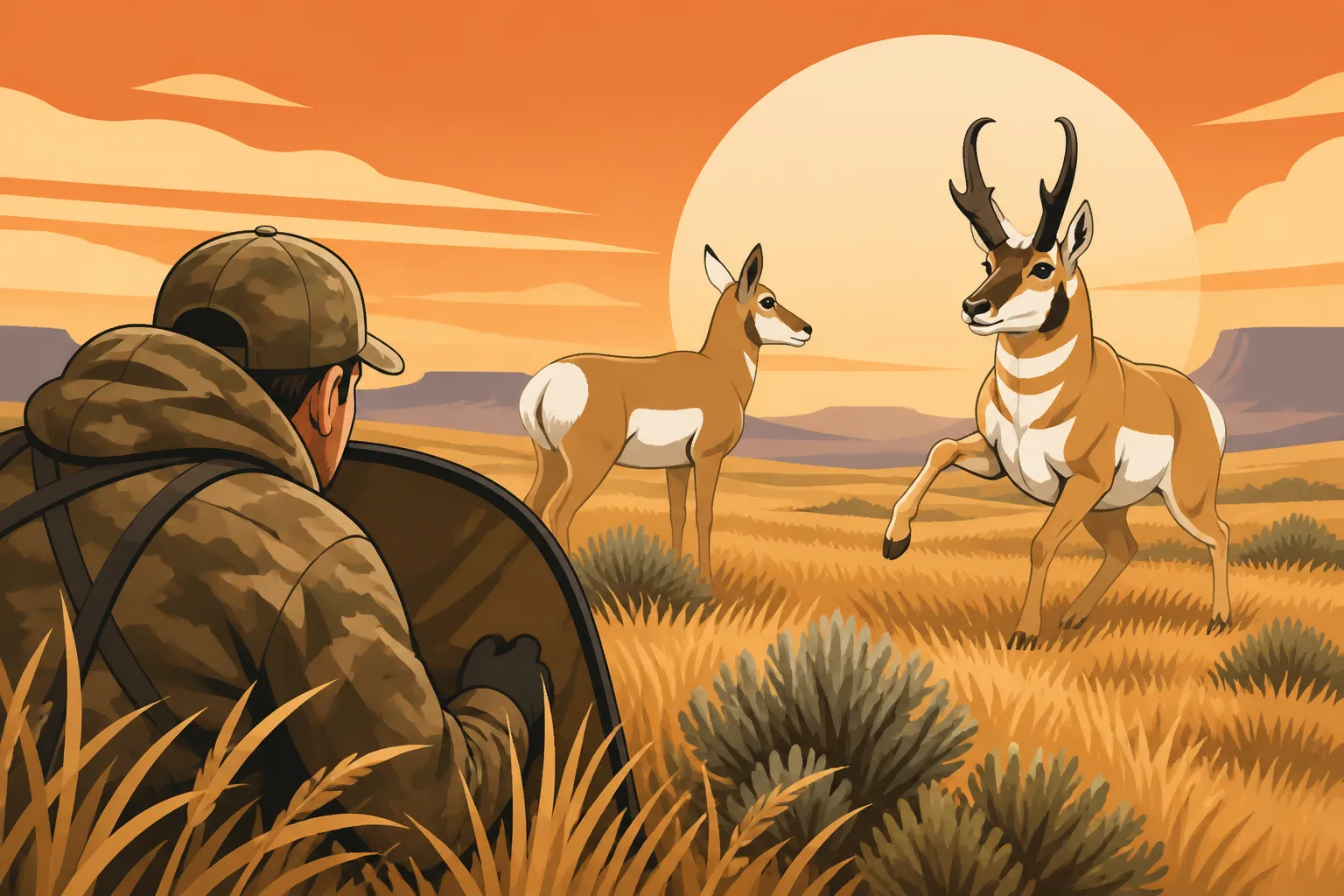
The stalk is the make-or-break moment. You need to move slowly, deliberately, and always stay out of sight until it's time to reveal the decoy. This often means crawling on your hands and knees, or even belly-crawling, across the open prairie. It’s hard work, but essential. Once you're ready to deploy the decoy, do so quickly. Position it so it appears to be moving towards the buck or challenging him. Facing the decoy towards the buck, as if it's advancing, can be very provocative. If possible, make the decoy appear to be slightly raised or moving, perhaps by gently rocking it or using a small flag to simulate ear movement.
The goal is to convince the real buck that this is a tangible threat or challenge. Sometimes, gently waving the decoy from side to side can mimic a buck moving. As the buck approaches, stay absolutely still behind your decoy or in your chosen concealment. Don't peek over the decoy; let it do its job. The moment of truth will arrive quickly, as rutting bucks can close the distance at an astonishing speed. Be ready to draw your bow or shoulder your rifle as soon as he commits and turns his attention fully to the decoy, giving you the best chance for a clean shot before he focuses on you. This is where practicing your quick draw or shouldering is invaluable.
Making the Shot Count
When decoying, the shot opportunity often comes fast and furiously. A rutting buck, especially one that's charging, isn't going to stand still for long. You need to be ready to execute your shot quickly and accurately. This means having your equipment ready, ranging your lanes beforehand, and being mentally prepared for the adrenaline surge. If you're bowhunting, practice shooting from a kneeling or prone position, as these are common stances when decoying on flat ground. For rifle hunters, having shooting sticks or a bipod ready will be crucial for stability. Rifle ranges realistic in open country are often much further than what you might be used to in timber, so practice those longer shots.
Wait for the buck to present a broadside or slightly quartering-away shot. Resist the urge to shoot a frontal charging buck, as this significantly reduces your chances of a clean kill and increases the risk of merely wounding the animal. He will almost certainly pause or turn as he gets within confrontation range of the decoy, giving you that precious window. Remain calm, focus on your aiming point, and execute your shot when the opportunity is clear. This is the culmination of all your effort, and a composed shot is vital for a successful harvest.
Common Mistakes and Advanced Tips
Decoying pronghorn is incredibly rewarding, but it's also easy to make mistakes that will send a buck bounding away. Learning from others' experiences and incorporating advanced tactics can greatly improve your success rate.
Avoiding Common Decoying Pitfalls
One of the biggest mistakes hunters make when decoying pronghorn is underestimating their eyesight. Even a slight movement from you, a glint from your equipment, or a piece of non-matching camo can blow the entire stalk. Stay absolutely motionless once the decoy is deployed and the buck has spotted it. Another common error is not paying enough attention to the wind. Always, always, always stay downwind of the buck. If he circles and catches your scent, he's gone. Using a wind checker constantly is not overkill.
Failing to commit to the stalk is another pitfall. Sometimes, you'll have to crawl hundreds of yards, getting uncomfortable and dirty. Don't give up too soon; the reward is worth the effort. Lastly, many hunters get so fixated on the charging buck that they forget about their shooting lane or fail to pre-range distances. When the buck finally commits, he might be at an odd angle or pass through a patch of taller grass. Knowing your distances and having a clear shot path is crucial. Utilize scouting tools, like the digital maps provided by GoHunt, to identify potential hazards and optimal shooting lanes before the real action starts.
Combining Decoying with Other Tactics
Decoying doesn't have to be a standalone tactic; it can be incredibly effective when combined with other strategies. For instance, if you're hunting with a partner, one hunter can be the "decoy runner," drawing the buck's attention and leading him towards the other hunter who is set up in a static position, concealed in a ground blind in open Nebraska country or behind natural cover. This can be especially useful in areas with limited terrain features for concealment.
Another effective combination is to use rattling and grunting in Nebraska's rut in conjunction with your decoy. If a buck seems hesitant to commit, soft rattling or a grunt tube can sometimes provide that extra bit of encouragement to bring him within range. Just be careful not to overdo it, as excessive calling can sometimes spook wary bucks. Observe the buck's reaction to your decoy first, and if he needs a little more coaxing, then consider adding some vocalizations. Remember, the goal is to convince him there's a rival, and a visual combined with an auditory challenge can be a powerful combination.
Post-Shot Strategy and Recovery
Once you've made a successful shot on a pronghorn buck, the work isn't over. These animals can cover a lot of ground even after a lethal hit. Always watch the animal intently after the shot, noting its direction of travel and the exact spot where you last saw it or where it fell. This initial observation is critical for recovery. If the buck doesn't drop in sight, give it some time, especially if it's not a perfectly placed shot. For a good hit, waiting 30-60 minutes can be sufficient. For a questionable hit, it's often better to wait several hours, or even overnight if conditions allow.
Begin your blood trailing process from the exact spot where the animal was standing when you shot. Look for blood, broken vegetation, and tracks. Pronghorn blood can be sparse and hard to follow on the open prairie. If you lose the trail, expand your search in circles around the last confirmed sign. In warm Nebraska weather, particularly in early September, field dressing and cooling game in warm weather is paramount to preserve the meat. Getting a deer out of a Nebraska Sandhills basin is tough, and the same applies to an antelope. If you're far from your vehicle, consider using game bags and a pack frame to quarter the animal and get the meat cooled as quickly as possible to prevent spoilage.
Disclaimer
Please note: Hunting regulations, seasons, and permit requirements in Nebraska can change. Always consult the latest Nebraska Game and Parks Commission regulations before planning any hunt. This guide is for informational purposes only and does not supersede official state regulations.