Power Banks for Long Days Afield
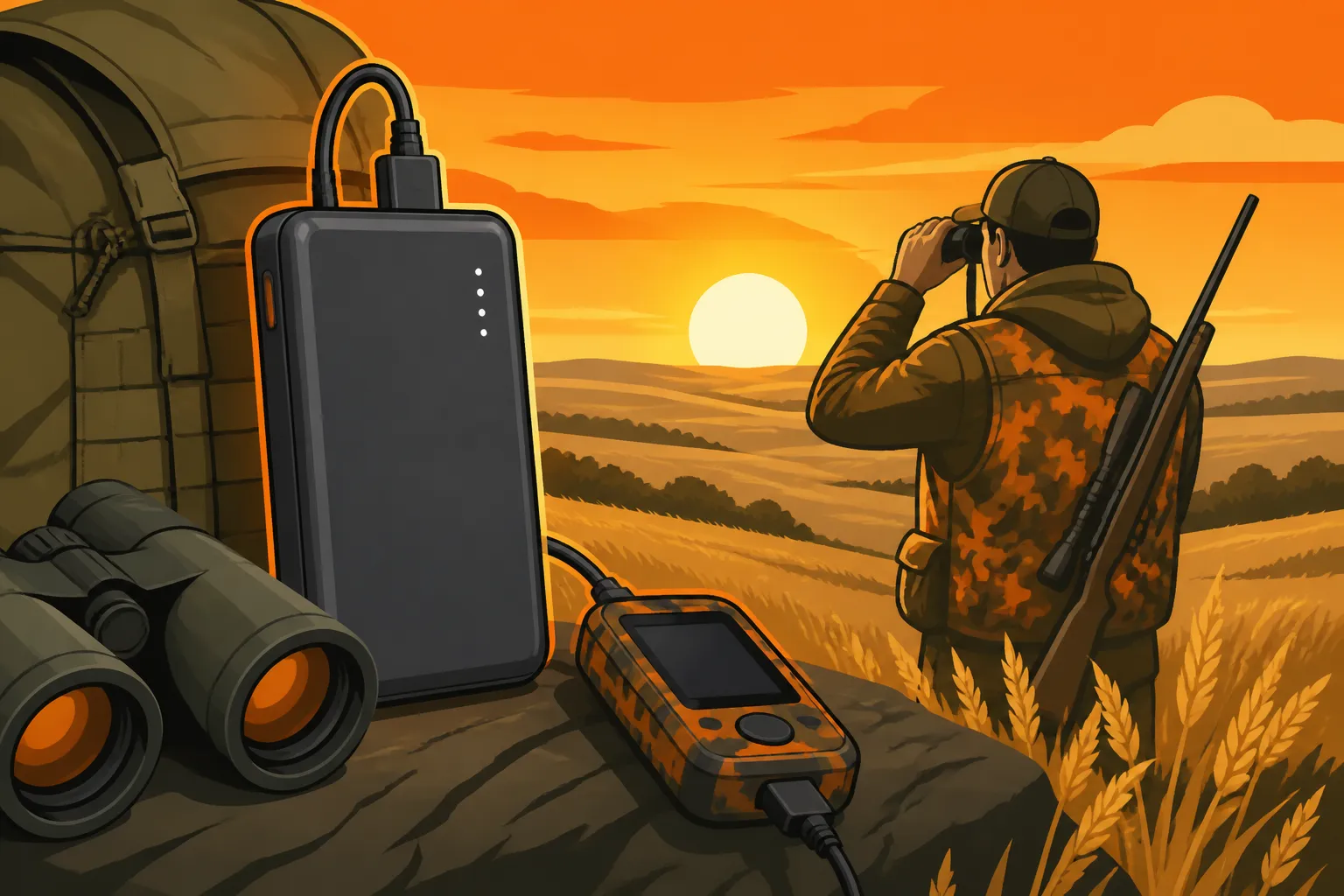
There's nothing quite as frustrating as being deep in a sprawling cornfield or tracking a wary mule deer across the Sandhills, only for your phone or GPS device to suddenly blink out. In the vast, open spaces of Nebraska, where a quick trip back to the truck to charge isn't always an option, a dead battery can turn a minor inconvenience into a real problem. This guide is all about equipping you with the knowledge to choose and use power banks effectively, ensuring your essential electronics stay alive when it truly matters, keeping you safe and connected on those long days afield.
Why You Absolutely Need a Power Bank on Your Nebraska Hunt
Hunting in Nebraska often means long hours away from civilization, traversing expansive public land, or working deep into private tracts where electricity is a distant dream. Our devices are more integrated into our hunting lives than ever, and relying solely on their internal batteries is a gamble you don't want to take.
The Digital Demands of Modern Hunting
Think about everything you use your phone or other electronics for during a hunt. It's more than just snapping a photo of your success.
- Navigation is Key: Whether you're chasing pheasants through a cattail slough or still-hunting a snow-covered river bottom for deer, having a reliable GPS app is paramount. Apps like onX Hunt or GoHunt are incredibly powerful tools, showing property lines, public access, and your exact location. But these apps, especially with their detailed mapping and constant GPS tracking, are notorious battery drainers. Imagine trying to navigate out of a confusing block of timber as dusk settles, and your phone dies. It's a scary thought. A power bank ensures you can refresh your location, mark a downed animal, or find your way back to your vehicle without a hitch.
- Communication for Safety and Coordination: In remote areas of Nebraska, cell service can be spotty, but when you do have a signal, your phone is your lifeline. It's how you communicate with hunting partners about strategy, check in with family, or, most critically, call for help in an emergency. If you're out Tracking a Deer in Sandhills Grass or on a solo hike in the Pine Ridge, a dead phone isn't just an inconvenience; it's a safety hazard. Keeping your communication device charged is non-negotiable.
- Game Tracking, Photography, and More: Beyond navigation and safety, our phones capture memories. That epic sunrise over the Niobrara River, the proud moment with your harvested whitetail, or even just documenting interesting tracks – these are all battery-dependent. Many hunters also use their phones to manage trail cameras, pulling images or adjusting settings via Bluetooth, which can further tax a battery. Even something as simple as using a headlamp app in a pinch after dark requires power.
Unpredictable Nebraska Weather and Power Outages
Nebraska weather is legendary for its extremes and sudden shifts. These conditions play havoc with battery life, and often, you're far from a wall outlet.
- Cold Weather Drains Batteries Faster: Anyone who's hunted in a Nebraska December knows the biting cold. Unfortunately, cold temperatures significantly reduce battery efficiency. Your phone might show 50% charge when you start your morning sit in a treestand, only to drop to 10% within an hour as the device gets cold. A power bank, especially one kept close to your body heat, can mitigate this issue, allowing you to charge your devices when they start to dip, rather than waiting for them to completely die in the frigid air.
- Unexpected Storms and Vehicle Issues: A sudden blizzard, an unexpected downpour, or even just getting your truck stuck deep on a sandy two-track in the Sandhills can turn a routine hunt into an extended stay. If you're relying on your vehicle's charging ports, a dead battery in your truck means no power for your devices. Having an independent power source can be a lifesaver, allowing you to stay powered while waiting for help or working your way out of a tight spot.
- Lack of Charging Points in Remote Areas: This one's a no-brainer. When you're miles from the nearest town, exploring vast tracts of Oglala National Grassland Hunting or hunting Nebraska National Forest at Halsey, there are no cafes with outlets or convenient stores to pop into for a charge. Your power bank is your personal, portable charging station, ensuring you're self-sufficient for as long as your hunt requires.
Choosing the Right Power Bank for Nebraska's Backcountry
Not all power banks are created equal, especially when you're subjecting them to the rigors of a Nebraska hunt. You need something reliable, durable, and suited to your specific needs.
Understanding Capacity: mAh and What It Means for Your Devices
The most critical specification for any power bank is its capacity, measured in milliampere-hours (mAh). This number tells you how much juice the power bank can hold.
- What Does mAh Translate To? A typical smartphone battery ranges from 3,000 mAh to 5,000 mAh. So, a 10,000 mAh power bank can usually charge a standard smartphone 2-3 times. If you're running a tablet, or a more power-hungry device, it will provide fewer charges. For a long weekend hunt without vehicle access, especially if you're using battery-intensive apps, a power bank with 20,000 mAh or more is often a wise choice. Some hunters even opt for 30,000 mAh or higher for multi-day trips or if they're charging multiple devices.
- Balancing Capacity vs. Weight and Size: Here's the trade-off. More capacity generally means a heavier and bulkier power bank. If you're a minimalist hunter who counts every ounce, a smaller 10,000 mAh unit might suffice for a day trip to keep your phone topped off. But for longer expeditions, or if you're charging a GPS, phone, and maybe a headlamp, the extra weight of a 20,000+ mAh unit is well worth the peace of mind. Consider how you carry your gear – in a day pack, a larger frame pack for hauling meat, or perhaps a blind bag for waterfowl hunting.
Durability, Weatherproofing, and Rugged Design
The Nebraska outdoors is tough, and your gear needs to be tougher. A fragile power bank won't last long.
- IP Ratings for Water and Dust Resistance: Look for power banks with an IP (Ingress Protection) rating. An IP67 rating, for instance, means the device is dust-tight and can withstand immersion in water up to 1 meter for 30 minutes. While you might not plan on dropping it in a creek while Jump Shooting the Platte River, accidents happen. A splash-resistant or fully waterproof power bank can be a game-changer if you're caught in a sudden rain shower or experience heavy dew in the early morning. Dust resistance is equally important, especially when navigating sandy areas or dealing with the fine silt that Nebraska winds whip up.
- Shock Resistance for Drops: We've all fumbled gear. Your power bank needs to withstand an accidental drop from a treestand, a pocket, or the back of a UTV. Many ruggedized power banks feature rubberized bumpers and reinforced casings designed to absorb impacts, protecting the internal components.
- Operating Temperature Ranges: As mentioned, cold is a battery killer. Check the operating temperature range for the power bank itself. While you'll still want to keep it warm, a power bank designed to function in lower temperatures will be more reliable than a generic consumer model not built for extreme cold.
Output Ports and Charging Speed
Modern devices have varying charging needs. Ensure your power bank can keep up.
- USB-A, USB-C, and Quick Charge Technology: Most power banks come with standard USB-A ports. However, many newer phones and devices, especially larger ones, use USB-C for faster charging. Ideally, your power bank should have both, or at least a USB-C Power Delivery (PD) port for rapid charging. Quick Charge (QC) technology also allows compatible devices to charge much faster, which can be crucial when you only have a short window to top off a device. Imagine trying to get your phone from 10% to 50% in the time it takes to grab a quick snack during a midday break.
- Simultaneous Charging for Multiple Devices: If you carry a phone, a GPS unit, and perhaps a handheld radio, having multiple output ports means you can charge several items at once. This is incredibly convenient for Two-Person Deer Drives on Small Timber or if you're out with a partner and need to share charging capabilities. Make sure the total output (measured in Amps) is sufficient to handle multiple devices efficiently.
- Solar Charging Features (Pros and Cons): Some power banks come with small integrated solar panels. These can be useful for maintaining a charge or providing a trickle charge over a very long period, especially if you're planning an extended backcountry trip where resupply isn't an option. However, don't rely on them for quick, substantial charging. The small panels on portable units are generally slow, heavily dependent on direct sunlight, and often insufficient for fully recharging a dead phone, let alone multiple devices, in a reasonable timeframe. Think of them as a backup of a backup. For most Nebraska hunting scenarios, a large capacity power bank charged fully before you leave will be more practical.
| Feature | Small (10,000 mAh) | Medium (20,000 mAh) | Large (30,000+ mAh) |
|---|---|---|---|
| Phone Charges | 1-2 | 3-5 | 5-8+ |
| Best Use | Day trips, emergency backup, minimalist | Weekend hunts, charging 2-3 devices | Multi-day trips, powering multiple devices, extended backcountry stays |
| Weight/Size | Compact, pocketable | Moderate, fits day pack | Heavier, larger, better for larger packs |
| Durability | Varies, look for IP-rated | Often ruggedized, IP-rated common | Usually rugged, high IP-ratings |
| Charging Speed | Standard USB-A, some QC | USB-A/C, QC, PD common | Fast charging essential, multiple ports |
| Cost | Lower | Mid-range | Higher |
Maximizing Your Power Bank's Performance in the Field
A power bank is only as good as how you use it. Smart preparation and usage can significantly extend its utility and your peace of mind.
Pre-Hunt Preparation and Smart Usage
Don't wait until you're already in the field to think about power. A little planning goes a long way.
- Fully Charge Before Leaving Home: This might seem obvious, but it's the most common oversight. Always ensure your power bank is at 100% capacity before you even leave your driveway. Top it off the night before, not just an hour before you head out. This ensures you're starting with maximum available power for your trip.
- Keep It Warm in Cold Weather: As we discussed, cold zaps battery life. Store your power bank, and the devices you plan to charge, in an inside pocket of your jacket or vest, close to your body heat. This keeps the battery's chemicals at an optimal temperature, allowing for more efficient charging and power retention. When you need to charge, pull out the power bank, connect, and then immediately tuck both devices back into your warm pocket. This is especially vital during Cold Weather Sitting Strategy in December.
- Only Charge When Necessary: Resist the urge to constantly charge your phone from your power bank. Treat your power bank as a reserve. Keep your phone in low-power mode, turn off unnecessary apps, and minimize screen time. When your phone drops to 20-30%, that's often a good time to give it a quick boost from the power bank, just enough to get it back up to 60-70%, rather than fully charging it every time. This conserves your power bank's energy for when it's truly needed.
Integrating Power Banks into Your Nebraska Hunting Strategy
Think of your power bank as another essential piece of your hunting gear, just like your binoculars or your blaze orange.
- Keeping a Primary Device Alive: Your smartphone or dedicated GPS unit is likely your most important electronic. Prioritize keeping it charged. Whether you're navigating using GoHunt on your phone to find Public Ground in Southeast Nebraska or marking waypoints, that device needs power. A power bank ensures it remains functional, allowing you to focus on the hunt.
- Backing Up Navigation Tools: Even if you carry a dedicated GPS unit, having a phone with a mapping app like onX as a backup, powered by your bank, is a smart move. Technology can fail, and having redundant navigation is crucial, especially when you're exploring Landlocked Public Land in Nebraska or unfamiliar territory. Imagine finding yourself turned around in a dense cedar draw; a working GPS is invaluable.
- Emergency Communication: Your ability to call for help, even if it's just a text message, can be the difference in a serious situation. A power bank can recharge your phone enough to send that critical message or make that one important call when you have a signal, even if your phone's battery had completely died. It's an integral part of your emergency preparedness kit, right alongside your first aid supplies.
- Powering Other Hunting Accessories: Beyond phones and GPS, consider other items you might bring. Some hunters use rechargeable headlamps or flashlights, or even heated vests that can be powered by a USB output. If you're using Trail Camera Rules on Nebraska Public Land or Cellular Cameras and Season Restrictions, your power bank can often give those cameras a vital boost of power if their internal batteries are low, or help you quickly download images to your phone without having to pack extra camera batteries.
Power banks are no longer just a luxury; they're a necessity for modern hunters in Nebraska's varied and sometimes challenging landscapes. Choosing the right one and knowing how to use it effectively can truly make your long days afield safer and more successful.
Disclaimer
This article is for general informational purposes only and does not constitute professional advice. Laws, prices and regulations vary by location and change over time. Consult a qualified professional for guidance on your specific situation.