Dog Vests for Cold Water Retrieves
There’s nothing quite like watching your retriever burst through the water, focused on a downed duck or goose. But as much as we love seeing our dogs work, the thought of them shivering uncontrollably after multiple retrieves in icy Nebraska waters can be a real worry. Keeping your hunting partner safe, warm, and performing at their best in those brutal conditions is paramount, and this guide is going to walk you through everything you need to know about choosing and using dog vests specifically designed for cold water retrieves here in the heartland.
Why a Cold Water Vest is Non-Negotiable for Your Nebraska Retriever
Let's be honest, Nebraska weather can be fickle, especially during waterfowl season. One day it's a crisp autumn morning, the next you're breaking ice in a Rainwater Basin wetland. Your dog feels that cold just as much as you do, even with their thick coat. A proper cold water vest isn't just a luxury; it's a vital piece of gear for their health, safety, and continued performance.
The Silent Threat of Hypothermia in Nebraska's Waters
Hypothermia is a very real, very dangerous threat for any dog working in cold water, and it can creep up faster than you think. Even if the air temperature feels mild, the water itself can be shockingly cold. Picture those early September teal hunts when the air is warm but the river water is still chilly from deeper currents, or those late-season pushes for mallards when thin ice covers everything. Each retrieve, each dip into that cold water, saps your dog's core body temperature.
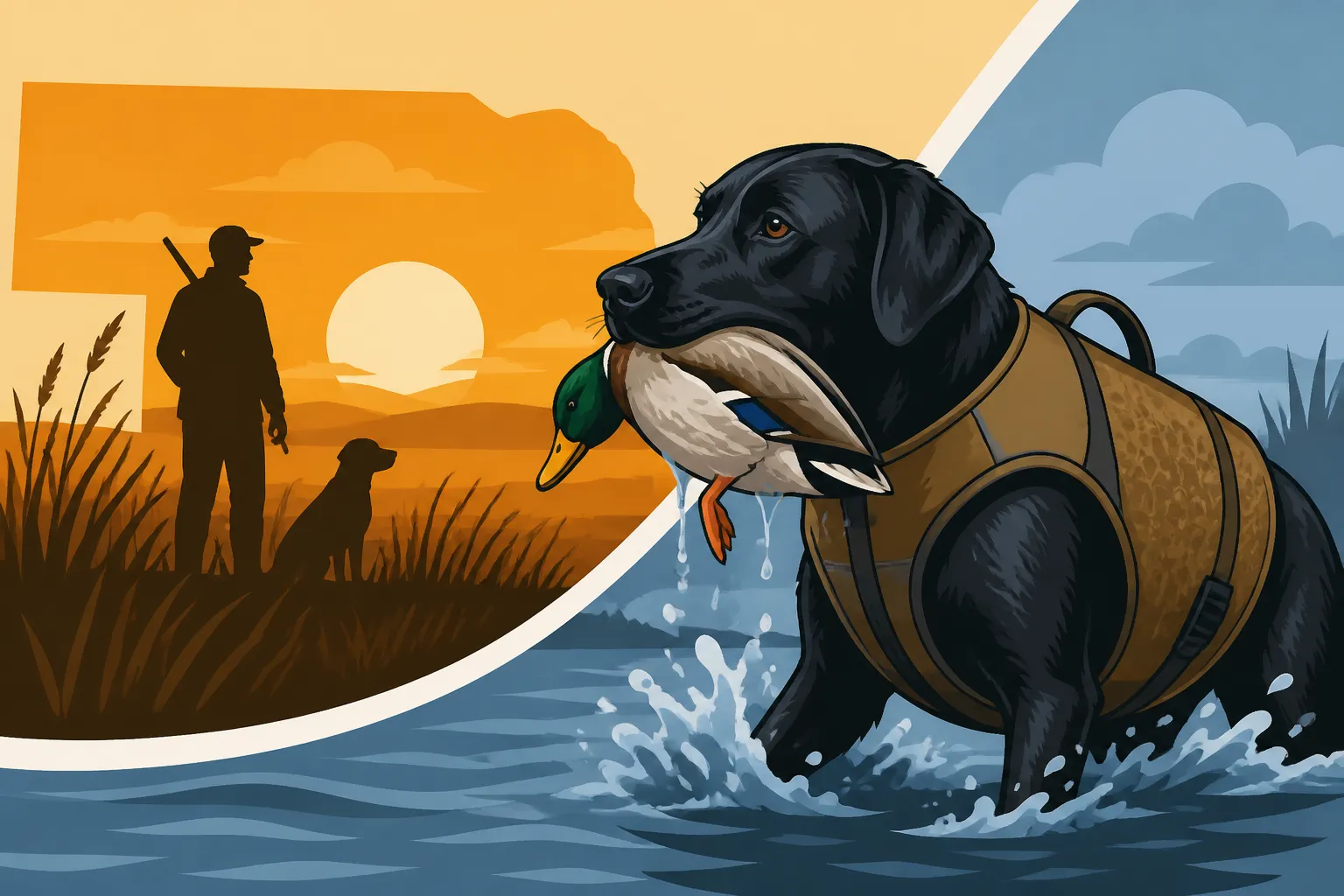
Your dog might shiver a little at first, and you might think, "Oh, they're fine, they'll warm up." But repetitive exposure, especially with the added exertion of swimming and breaking ice, can quickly lead to a dangerous drop in their internal temperature. A good neoprene vest acts like a wetsuit for your dog, trapping a thin layer of water against their skin that quickly warms up from their body heat. This insulation drastically slows heat loss, allowing them to make multiple retrieves without risking hypothermia. Without it, you're not just risking a cold dog; you're risking a sick dog, or worse, one that can't continue to hunt for you.
Protecting Your Dog from Abrasions and Hazards
Nebraska's waterways are not always pristine, manicured ponds. We've got river bottoms full of submerged logs and snags, cattail sloughs with sharp, brittle stalks, and the occasional rocky lakebed. Running through dense cover on shore or plunging into water can lead to nasty cuts, scrapes, and punctures. Imagine your dog busting through a patch of frozen cattails to retrieve a goose, or scrambling over a submerged stump.
A durable cold water vest provides a crucial layer of protection against these environmental hazards. Many vests feature reinforced chest and belly panels, which are exactly the areas most vulnerable to injury. This extra padding can prevent a minor scrape from becoming a deep wound that sidelines your dog for weeks. It’s an investment in their long-term health and your peace of mind. Knowing that they have that extra layer against hidden dangers means you can focus more on the hunt and less on potential vet bills.
Enhancing Visibility for Safety
Let's face it, hunting often happens in challenging visual conditions. Think about those foggy mornings on the Platte River, the gloomy, overcast days that often accompany good goose weather, or simply twilight during those last minutes of legal shooting light. A dog, especially one with a dark coat, can easily disappear in these conditions or blend into the natural surroundings.
Many cold water vests come in bright, highly visible colors like blaze orange or yellow. This isn't just for aesthetics; it's a critical safety feature. A bright vest makes your dog much easier for you to spot, whether they're working dense cover on shore, swimming across a large expanse of water, or simply moving through the field. It also makes them more visible to other hunters in the area, which is incredibly important, especially on busy public hunting grounds. When you're trying to quickly mark a bird and keep track of your dog, that flash of color can make all the difference, helping you maintain control and ensure everyone's safety. Just as you wear blaze orange, your dog benefits from similar high-visibility gear.
Key Features to Look for in a Nebraska Cold Water Dog Vest
When you're outfitting your four-legged hunting partner for those frosty Nebraska retrieves, not just any vest will do. You need to consider specific features that will stand up to the elements and protect your dog. It's about finding that sweet spot of warmth, durability, and a fit that allows them to work effectively.
Insulation and Buoyancy: The Double Whammy
The core function of a cold water vest is to keep your dog warm and safe in the water. This comes down primarily to two things: insulation and buoyancy. Most effective cold water vests are made from neoprene, the same material used in wetsuits. Neoprene thickness is crucial here; you'll typically find vests ranging from 3mm to 5mm. A 3mm vest offers good insulation for moderately cold water and early season hunts, while a 5mm vest is designed for truly frigid conditions, breaking ice, and prolonged exposure in late-season hunting.
The closed-cell foam within the neoprene not only insulates but also provides buoyancy. This is a huge benefit for your dog, especially if they're making long retrieves in deep water or getting a bit tired toward the end of a strenuous day. The added flotation helps them conserve energy, keeping them higher in the water and making it easier to swim and maintain speed. This means less fatigue for your dog, which translates to better performance throughout the hunt. When you're checking out options, whether it's through online resources or by talking to fellow hunters who rely on tools like GoHunt for their trip planning, pay close attention to these specifications.
Durability and Material Construction
Nebraska hunting conditions can be tough on gear, and a dog vest is no exception. Your retriever isn't just swimming; they're crashing through brush, scrambling over banks, and potentially busting through ice. You need a vest that can take a beating and come back for more. Look for vests made with heavy-duty stitching, especially in stress points like seams and around the straps. Reinforced panels on the chest and belly are also a huge plus, as these areas are most likely to encounter abrasive surfaces or sharp objects.
Materials like Cordura or ballistic nylon overlays on top of the neoprene add an extra layer of protection against tears and punctures. Consider the strength of the zippers, if present, or the quality of the hook-and-loop closures (Velcro). Cheaper vests might save you a few bucks upfront, but they'll quickly fall apart under the rigors of a Nebraska waterfowl season, leaving your dog exposed. Investing in a well-constructed vest means it will last for many seasons, providing consistent protection. Think about the rough and tumble of Working Sharptails and Prairie Chickens on Foot or crashing through a frozen cattail slough; your dog's vest needs to be as tough as they are.
Fit and Adjustability for Comfort and Performance
An ill-fitting vest is worse than no vest at all. Too loose, and it can shift, chafe, and even come off in the water, becoming a hazard rather than a help. Too tight, and it restricts your dog's movement, causes discomfort, and can hinder their ability to swim and run effectively. The ideal vest offers a snug fit that conforms to your dog's body without being constrictive.
Look for vests with multiple adjustable straps, often around the girth and neck. This allows you to fine-tune the fit for your specific dog's build, ensuring it stays in place during vigorous activity. Many vests also feature a tapered cut around the legs and shoulders to prevent chafing and allow for a full range of motion. Pay close attention to how the vest sits around the neck and behind the front legs—these are common areas for rubbing and irritation if the fit isn't right. A vest that fits properly not only keeps your dog comfortable but also maximizes the insulation benefits and ensures they can perform their job without distraction. Dog Vests for Cold Water Retrieves need to be comfortable for your dog to wear all day long.
| Feature Category | Specific Feature | Why it Matters in Nebraska Waterfowl Hunting |
|---|---|---|
| Insulation | Neoprene Thickness (3mm – 5mm) | Direct protection against hypothermia in varying water temps, from chilly early fall to icy late season. |
| Buoyancy | Closed-Cell Foam | Helps dogs float higher, conserving energy during long retrieves across big lakes or strong river currents. |
| Durability | Reinforced Chest/Belly | Shields against sharp ice, submerged debris, cattails, and rocky banks common in local wetlands and rivers. |
| Heavy-Duty Stitching | Ensures the vest holds up to repeated abuse, brush, and dog's pulling, preventing early wear and tear. | |
| Visibility | Blaze Orange/Yellow | Makes your dog easy to spot in low light, fog, or dense cover, crucial for safety on busy public lands. |
| Fit & Comfort | Adjustable Straps | Allows for a snug, custom fit to prevent chafing, shifting, and restriction of movement, improving performance. |
| Tapered Leg/Shoulder Cut | Reduces friction points, ensures full range of motion for swimming and running on various terrains. | |
| Functionality | Grab Handle | Provides a quick way to help your dog in or out of boats, over obstacles, or in strong currents. |
| D-ring for Leash | Convenient for keeping your dog close when moving between hunting spots or on shore. |
Choosing the Right Vest for Different Nebraska Waterfowling Scenarios
Nebraska's diverse waterfowl habitats, from the wide-open expanse of the Rainwater Basin to the timbered river bottoms and the Sandhills lakes, present different challenges. The "right" dog vest often depends on where and when you're hunting. Thinking through these scenarios will help you make a more informed decision for your retriever.
Early Season vs. Late Season Considerations
The weather across Nebraska can swing wildly between the early teal season in September and the final goose hunts in January. Your vest choice should reflect this. In the early season, when air temperatures might still be quite warm but the water is cool, a lighter 3mm neoprene vest is often sufficient. It provides enough insulation to take the chill off without causing your dog to overheat during periods of high activity or on warmer sunny days. Overheating can be just as dangerous as hypothermia. These lighter vests also tend to be less bulky, allowing for more agile movement in and out of the water.
As the season progresses, especially into late November, December, and January, the cold truly sets in. This is when a heavy-duty 5mm neoprene vest becomes indispensable. These thicker vests offer superior thermal protection, vital for those days when you're Hunting a Frozen Nebraska River Bottom or sitting in a blind with snow falling. They're built to withstand breaking through skim ice and provide sustained warmth during long retrieves in frigid water. Some hunters even keep both a lighter and heavier vest, switching them out based on the forecast and conditions of their specific hunt. Tools like GoHunt can help you assess historical weather patterns for your chosen hunting area, which can subtly inform your gear choices, including which vest to pack.
River vs. Lake vs. Rainwater Basin Hunting
The type of water body you're hunting significantly impacts the demands on your dog's vest. Hunting the strong, swift currents of the Platte or Missouri Rivers, for example, requires a vest that provides maximum buoyancy and doesn't hinder your dog's powerful strokes. A vest with a good, secure fit is crucial here to prevent it from shifting or being pulled down by the current. Jump Shooting the Platte River or retrieving from fast-moving water puts a premium on vests that aid flotation and streamlined movement.
Lakes and large reservoirs, like Harlan County or McConaughy, might have calmer water but often present longer retrieves and deeper water. Here, the energy-saving buoyancy of a good vest is key. The dog needs to cover more distance, and anything that helps them conserve energy is a win. Meanwhile, the shallow, often muddy, and vegetation-choked wetlands of the Rainwater Basin Wetland Access present unique challenges. Vests here need to be tough enough to handle dense cattails, reeds, and potentially unseen submerged obstacles. They also need to allow the dog to move easily through mud and thick vegetation without getting hung up. For any waterfowling venture in Nebraska, the vest needs to be as adaptable as the dog wearing it.
Integrating a Vest with Your Overall Hunt Strategy
A dog vest isn't just about protection; it's about optimizing your hunting partner's performance. When a dog is comfortable and warm, they are more focused, more energetic, and ultimately, more effective. A cold, shivering dog is a distracted dog, less likely to listen to commands or make that challenging retrieve. Integrating a vest into your strategy means thinking about how it impacts every aspect of the hunt.
For instance, a vest with a strong grab handle on the back can be incredibly useful for lifting your dog into and out of boats, or helping them over tricky banks without grabbing their scruff, especially when Hunting Nebraska Sandpits for Ducks. The added visibility can help you guide them more precisely from a distance. Furthermore, ensuring your dog is comfortable extends their working duration. If you're planning a full day of field hunting geese in Nebraska's Rainwater Basin, where retrieves can be long and cold, that vest means the difference between a dog that quits after an hour and one that happily works until the limit is reached. The vest becomes an extension of their ability, allowing them to perform at their peak even when the conditions are brutal.
Maintenance and Care for Longevity
You've invested time and money into finding the perfect cold water vest for your hunting companion. Now, to make sure that investment pays off for many seasons to come, proper maintenance is key. Neglecting care can lead to premature wear, unpleasant odors, and compromised performance.
Post-Hunt Cleaning and Drying Rituals
After a long, muddy, and often wet day of hunting Nebraska Duck Zones and Split Seasons, your dog's vest is going to need some attention. The most critical step is rinsing it thoroughly. Mud, grit, and organic matter from the water can break down neoprene and stitching over time. A simple rinse with fresh water, perhaps a gentle scrub with a soft brush if it's particularly dirty, will remove most of the harmful debris. Avoid harsh detergents or bleach, which can damage the material. If there's a strong odor, a specialized neoprene cleaner designed for wetsuits or a mild, dog-safe enzymatic cleaner can be used.
Equally important is proper drying. Neoprene, like many technical fabrics, needs to be dried completely to prevent mildew and unpleasant smells. Hang the vest in a well-ventilated area, away from direct sunlight and excessive heat, which can degrade the material. Turn it inside out after a few hours to ensure both sides dry thoroughly. Never machine wash or machine dry a neoprene vest, as this can severely damage its structure and insulation properties. A completely dry vest is a clean-smelling vest that performs optimally on your next outing.
Storage Tips to Keep Your Investment Sound
Once clean and thoroughly dry, how you store your dog's cold water vest also plays a role in its longevity. Avoid cramming it into a tight space where it can become creased or folded sharply for extended periods. Constant creasing can weaken the neoprene and lead to cracks over time, compromising its insulating and protective qualities.
Ideally, hang the vest on a wide hanger, much like you would a wetsuit, or lay it flat if space allows. Storing it in a cool, dry place, away from extreme temperatures and direct sunlight, will help maintain the integrity of the neoprene and other materials. Keeping it in a breathable bag rather than an airtight container can also help prevent any residual moisture from causing mildew. Treat your dog's vest with the same care you'd give your own high-end hunting gear, and it will serve you and your retriever faithfully through countless cold water retrieves across Nebraska's diverse landscapes.
Disclaimer
This article is for general informational purposes only and does not constitute professional advice. Laws, prices and regulations vary by location and change over time. Consult a qualified professional for guidance on your specific situation.