Practical Range for a Prairie Rifle
One of the biggest struggles hunters face on the vast, open plains of Nebraska is the temptation to shoot farther than they should. We see those wide-open spaces, we get caught up in the excitement of a buck or antelope in the distance, and sometimes, our ambition outweighs our capability. This guide is all about helping you figure out your true, practical shooting range for a prairie rifle, ensuring ethical, clean harvests on those incredible Nebraska hunts.
Understanding "Practical Range" on the Nebraska Prairie
When we talk about hunting the Nebraska prairie, whether it's the sprawling Sandhills, the broken breaks of the Panhandle, or the rolling hills of the eastern units, the concept of "practical range" is vastly different than hunting thick timber. There's an allure to those long shots, especially when game seems so far away. But what's truly practical, and more importantly, ethical, for you and your rifle?
The Myth of the "Thousand-Yard Shot"
Let's be real for a moment. You see the videos, you read the articles—the incredible thousand-yard shots on elk or big deer, often in highly controlled, very specific conditions. While those feats are impressive, they are not the norm for the average hunter, especially not on a typical Nebraska hunting trip. The prairie isn't a bench rest range, and the animals aren't static targets. The myth of the everyday thousand-yard shot can put undue pressure on hunters, encouraging them to take risks they shouldn't. It's a disservice to the animal and often leads to disappointment or, worse, wounded game.
In Nebraska, a "long shot" for most hunters might be 300-400 yards, and even that requires considerable skill and confidence. Anything beyond that usually involves a whole different level of equipment, training, and mental fortitude that most recreational hunters simply don't possess. It’s crucial to separate what's possible in a highly specialized, controlled environment from what's responsible and realistic in a dynamic hunting scenario. Focus on what you can do, not what some internet sensation might do.
Defining Your Personal Practical Range
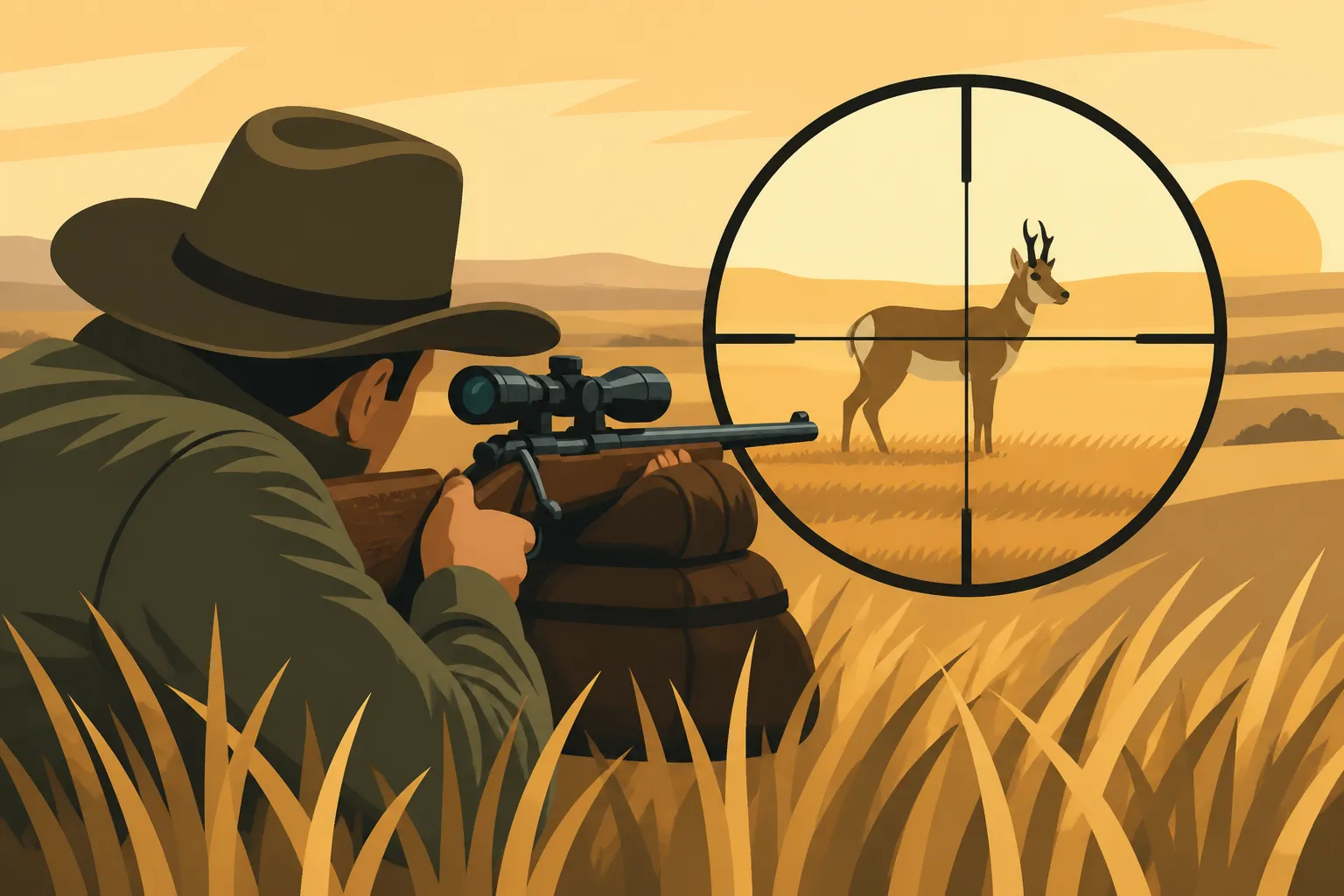
So, how do you figure out your practical range? It's not about what your rifle can do on paper; it's about what you can do with your rifle, consistently and ethically, under real-world hunting conditions. This isn't just about bullet drop; it's about your ability to hold steady, manage recoil, make a clean trigger break, and accurately estimate distance and wind. Your practical range is the maximum distance at which you can confidently place a shot into a vital area (think a 6-8 inch circle) every single time, even when your heart is pounding and adrenaline is surging.
This takes honest self-assessment. Are you consistently shooting sub-inch groups at 100 yards? Can you replicate that precision from field positions – kneeling, prone, off shooting sticks – at 200, 300, or even 400 yards? If you're consistently putting all your shots into that vital zone at 300 yards, then 300 yards might be your practical range. If you start seeing flyers or group dispersion beyond 200 yards, then 200 yards is probably your limit. It's better to underestimate your range and get closer than to overestimate and take a risky shot.
Why Conditions Dictate Range More Than Caliber
Many hunters get hung up on caliber choice, thinking a magnum automatically extends their range. While flatter-shooting calibers certainly help, the real dictator of practical range on the Nebraska prairie is almost always the conditions. Wind, light, temperature, and terrain all play a far greater role in extending or shrinking your effective shooting distance than the specific bullet leaving your barrel. Rifle Setups for Nebraska's Open Country will often prioritize accuracy over raw power for this very reason.
Imagine a calm, clear morning. You might feel confident taking a 300-yard shot if that's your practice benchmark. Now, imagine that same shot with a 20 mph crosswind, mirage shimmering off the hot sand, and a deer quartering away. Suddenly, 300 yards feels like 600, doesn't it? The best caliber in the world won't compensate for a strong crosswind that you misjudged or poor light conditions that obscure your target. The prairie is an unforgiving teacher when it comes to external factors impacting bullet flight.
Factors That Limit Your Effective Range in Nebraska
Hunting in Nebraska presents unique challenges that quickly humble even experienced shooters. It's not just about pulling the trigger; it's about reading the environment and understanding how it affects your bullet and your ability to make a precise shot.
Wind: The Silent Bullet Bender
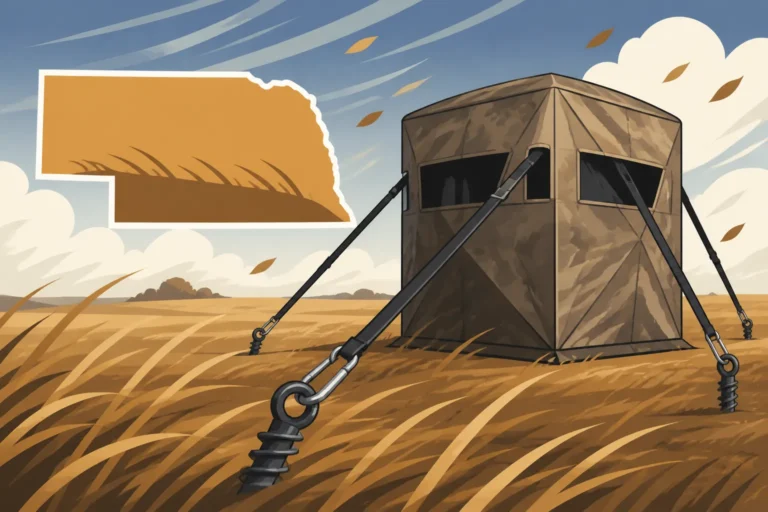
If there's one constant on the Nebraska prairie, it's the wind. It's a relentless, invisible force that can turn a seemingly perfect shot into a frustrating miss. Even a moderate 10 mph crosswind can push a bullet several inches off target at 200 yards, and considerably more at 300 or 400. And a 10 mph wind often feels like a light breeze out here! Gusts can come out of nowhere, swirling and changing direction, making wind calls incredibly difficult. Reading Wind on the Nebraska Plains is an absolute art form.
Many hunters fail to practice shooting in windy conditions, which is a huge mistake if you plan to hunt anywhere in Nebraska. You need to develop an eye for reading wind flags (even impromptu ones like grass or dust), learn how to compensate with your scope's turrets or holdovers, and most importantly, know when the wind is simply too strong to make an ethical shot. A true prairie hunter understands that sometimes, the best shot is no shot at all, especially when the flags are whipping around like crazy. This is a common frustration for hunters; that perfect buck steps out, but the wind just won't cooperate.
Open Country Optics and Spotting Game
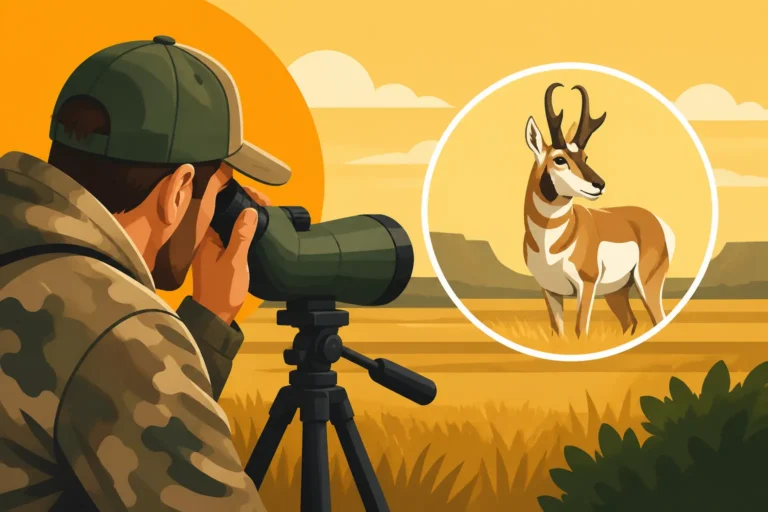
The vastness of the Nebraska landscape means you're often glassing for extended periods and attempting to identify and judge animals at significant distances. This requires top-tier optics. Trying to stretch your shooting range with mediocre binoculars or a fuzzy scope is a recipe for disaster. If you can't clearly see your target, precisely identify the vitals, and confidently read the animal's posture, you have no business pulling the trigger. Optics for Glassing the Nebraska Sandhills are crucial for success here.
Beyond just clarity, the type of optics you use matters. A good rangefinder is non-negotiable for prairie hunting. Guessing distances is a surefire way to miss or wound. Many hunters are discovering the value of ballistic rangefinders that can give you a corrected holdover for the exact distance. A quality spotting scope, especially in mule deer or antelope country, can help you judge an animal thoroughly before even thinking about a stalk or a shot, preventing wasted effort or unethical decisions. Your ability to properly utilize your optics directly impacts your ethical shooting range.
The Human Element: Training and Confidence
Ultimately, your practical range boils down to you, the shooter. How much have you practiced? Are you consistently drilling from various field positions, not just off a bench? Can you remain calm when that big buck finally steps out? Adrenaline is a powerful thing, and it can wreak havoc on your form, your breathing, and your trigger control. Choosing a Rifle Caliber for Nebraska Deer is one thing, but knowing how to shoot it is another.
Confidence comes from consistent, deliberate practice. It's not just about shooting paper targets; it's about simulating hunting scenarios. Practice quick target acquisition. Practice getting into a stable shooting position quickly. Practice with your hunting clothing on. Practice in adverse weather conditions, if possible. The more you simulate the real hunt, the more ingrained your shooting skills become, and the less likely adrenaline is to throw you off when it truly matters. A hunter who has practiced and is confident at 250 yards will consistently make that shot, while a hunter who thinks they can shoot 400 yards with no practice will often fail.
Setting Realistic Expectations and Ethical Boundaries
Hunting isn't just about bagging an animal; it's about doing so responsibly and ethically. This means setting realistic expectations for your own abilities and establishing firm ethical boundaries before you ever step foot in the field. This is where the real integrity of a hunter shines.
Knowing Your Rifle and Ammunition
Before you even consider stretching your range, you absolutely must know your rifle inside and out. That means understanding its ballistic trajectory with your chosen hunting ammunition. You need to zero it properly, typically at 100 or 200 yards for prairie hunting. Then, you need to shoot it at extended ranges—200, 300, 400, and perhaps even 500 yards—to understand its real-world drop and drift. Many hunters will Zeroing a Rifle for Open Country at 200 yards, as this often gives a good middle ground for common prairie distances.
A ballistic calculator can get you close, but there's no substitute for actual trigger time. Knowing your rifle means understanding how it performs in different temperatures, how quickly your chosen bullet sheds velocity, and how sensitive it is to wind. This knowledge empowers you to make informed decisions in the field, rather than just guessing. Using the same ammunition you practice with during your hunt is also crucial; don't swap bullet types right before opening day.
Practicing for Real-World Scenarios
The shooting range is a great place to hone fundamentals, but it rarely replicates hunting conditions. If you plan to shoot off shooting sticks, practice with them. If you anticipate shooting prone off a bipod, get comfortable in that position. Shooting Sticks and Bipods on Grass can make a huge difference in stability in the field. Practice shooting quickly, but deliberately. Practice under mild stress, if you can, to simulate the physiological effects of hunting.
This also means practicing target transitions and engaging multiple targets, even if you only have one permit. The more fluid and natural your movements become, the better you'll perform under pressure. Consider joining local long-range shooting clubs or taking a long-range shooting class. These environments can drastically improve your skills and understanding of external ballistics, pushing your ethical range outward safely. Platforms like GoHunt offer a lot of educational content and tools that can help with planning and understanding topography for shooting scenarios.
When to Pass on a Shot
This is perhaps the most important aspect of practical range: knowing when to say "no." It takes incredible discipline to watch a trophy animal walk away because the shot isn't right. Maybe the wind is too high, the light is fading, the animal is moving too erratically, or the distance is simply beyond your comfortable, ethical range. This is where your pre-set ethical boundaries come into play.
If there's any doubt in your mind about making a clean, humane kill, do not take the shot. Period. A quick, clean kill is our responsibility as hunters. Wounding an animal because we were overly ambitious is a failure of that responsibility. The prairie is vast, and there's always a chance for another opportunity, or another animal. Don't let buck fever or perceived pressure override your good judgment. Sometimes, simply observing an animal through your Rifle Scopes for Long Nebraska Shots is enough.
Gear That Helps Extend Your Ethical Range (Safely)
While skill and practice are paramount, the right gear can certainly aid in extending your ethical range. This isn't about compensating for poor shooting, but rather enhancing your capabilities and providing you with the data needed to make informed decisions.
Quality Optics Are Non-Negotiable
We've touched on this, but it bears repeating: investing in high-quality optics is one of the best decisions a prairie hunter can make. Clear, bright binoculars, a crisp spotting scope, and a reliable rifle scope are your eyes on the vastness. They allow you to confidently identify, judge, and observe animals at distances where a lesser optic would leave you guessing. This clarity is vital when you're trying to decide if you're looking at a mature buck or a younger one, or if you can truly pick out the vitals on an antelope across a canyon.
A good scope, especially, should have precise adjustments for windage and elevation. Many modern scopes offer advanced reticles or turrets designed for long-range shooting, allowing you to dial in corrections rather than guessing holdovers. Remember, if your optics are fogged, dirty, or simply not clear enough to differentiate a branch from a leg at distance, your practical range shrinks to nothing. You might be glassing areas Where Mule Deer Feed at First Light, and clarity at dawn is crucial.
Rangefinders and Ballistic Tools
Gone are the days of guessing yardage by eye on the open prairie. A reliable laser rangefinder is an essential piece of equipment. It provides instant, accurate distance readings, which is the first step in calculating bullet drop. Many modern rangefinders also offer angle compensation, which is incredibly useful when shooting uphill or downhill, a common scenario in the broken country of the Pine Ridge or Wildcat Hills. GoHunt's mapping tools often integrate rangefinding capabilities and ballistic calculations, making it easier to plan shots in varied terrain.
Pairing your rangefinder with a ballistic app on your phone or a dedicated ballistic calculator is the next logical step. These tools, once fed your rifle and ammunition data, can provide precise bullet drop and windage corrections for almost any given distance and environmental condition. Some high-end rangefinders even integrate these ballistic calculations directly. Learning to use these tools accurately and efficiently in the field is a game-changer for extending your ethical range. However, remember that these are tools to assist your judgment, not replace it.
Stable Shooting Platforms
On the open prairie, finding a stable shooting position can be challenging. Unlike timber hunting where you might lean against a tree, the prairie often offers little in the way of natural rests. This is where artificial shooting aids become invaluable. A good bipod attached to your rifle, especially when shooting prone, provides rock-solid stability. If you're hunting in taller grass or from a kneeling position, sturdy shooting sticks are a must. They elevate your rifle, allowing you to clear obstructions and get a consistent rest.
Even a backpack or a rolled-up jacket can serve as an improvised rest in a pinch. The key is to eliminate as much human movement as possible. The more stable your shooting platform, the more accurately you can place your shot, especially at longer distances where even a slight wobble can mean a significant miss. When Closing the Last Hundred Yards on Sand, finding a stable rest can be the difference between success and failure. Don't underestimate the benefit of practicing with these aids; they should feel like a natural extension of your shooting process.
| Factor | Impact on Practical Range | Mitigating Strategy |
|---|---|---|
| Wind | Significant drift | Practice in wind, use a Kestrel, learn to hold off |
| Distance | Bullet drop, target size | Rangefinder, ballistic calculator, practice at range |
| Light Conditions | Target visibility | Quality optics, avoid twilight shots |
| Shooter Skill | Consistency & confidence | Extensive practice, field positions, simulate stress |
| Stability | Accuracy at distance | Bipods, shooting sticks, natural rests |
| Animal Movement | Shot window, vitals | Patience, pass on moving shots, anticipate stops |
The Nebraska prairie offers some incredible hunting opportunities, but it demands respect and preparation. By understanding your true practical range, investing in the right gear, and committing to disciplined practice, you'll be well on your way to ethical and successful hunts on the plains.
Disclaimer
This article is for general informational purposes only and does not constitute professional advice. Laws, prices and regulations vary by location and change over time. Consult a qualified professional for guidance on your specific situation.