Treestand Rules on Nebraska Public Land
There's nothing quite like the anticipation of finding that perfect treestand spot on public land, perched high above a deer trail or overlooking a creek bottom, ready for an early morning sit. But that excitement can quickly turn to frustration if you're not absolutely sure about the rules for leaving your stand out there. It's a common struggle for hunters in Nebraska – knowing what's permitted and what could get you into hot water. This guide is here to untangle the complexities of treestand regulations on Nebraska's public hunting grounds, helping you hunt smarter and stay on the right side of the law.
The Basics of Treestand Use on Nebraska Public Land
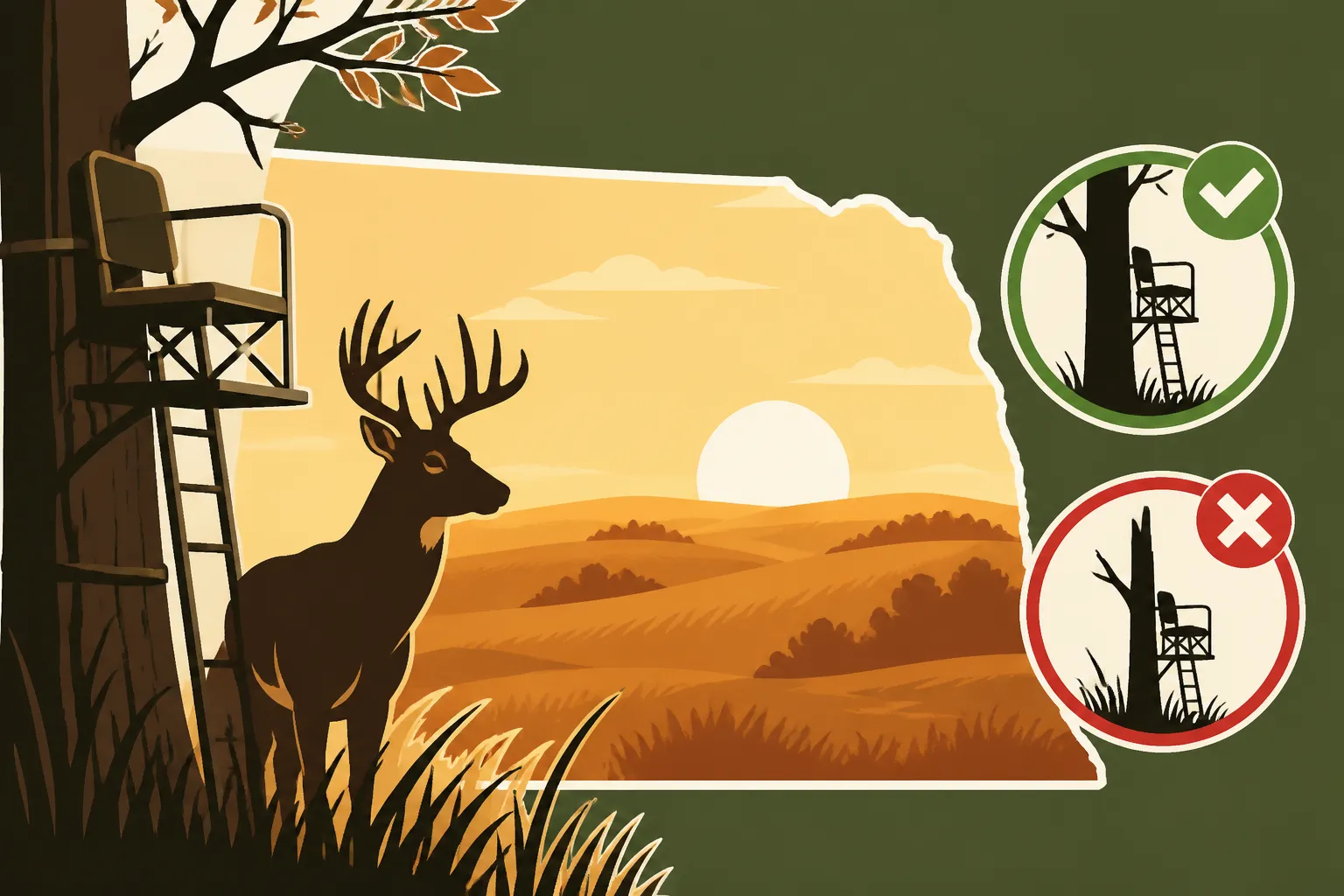
Hunting public land is a privilege, and with that comes a responsibility to understand and abide by the rules. When it comes to treestands, the primary concern revolves around the impact on natural resources and equitable access for all users. Nebraska, like many states, has specific guidelines to prevent long-term damage to trees and to ensure stands aren't left as permanent fixtures.
Understanding "Temporary" Versus "Permanent" Structures
The cornerstone of treestand regulations on public land often comes down to the distinction between a "temporary" and "permanent" structure. This isn't just bureaucratic jargon; it's a critical difference that determines whether your stand is allowed at all.
A temporary treestand is generally defined as one that can be easily removed and leaves minimal to no lasting impact on the tree or surrounding environment. Think of the classic climbing treestand, a hang-on stand with straps that don't bite into the tree, or even a lightweight saddle hunting setup. These are designed for single-hunt use or short-term deployment during a season, with the expectation that they are taken down after the hunt or by a specific seasonal deadline. They are typically attached in a way that doesn't cause damage, relying on straps or chains rather than penetrating the tree itself. This temporary nature allows for flexibility and ensures that the land remains available for diverse recreational activities without being marked by abandoned hunting equipment.
On the other hand, a permanent structure implies a fixture that is intended to stay for extended periods, or one that causes irreparable damage to the tree. This could include ladder stands or box blinds that are left out year-round, stands that use screw-in steps to ascend the tree, or any stand that requires cutting branches or driving nails into the trunk. These types of permanent modifications are almost universally prohibited on public hunting lands in Nebraska. The rationale is clear: public land is a shared resource, and no single user or group should be allowed to permanently alter it for their personal convenience. Such actions can harm the trees, pose hazards to other users, and create an appearance of private ownership on public ground.
General Rules for Placement and Removal
Once you grasp the temporary versus permanent distinction, the next crucial step is understanding the rules for placing and removing your treestand. These regulations are designed to manage hunting pressure, protect the environment, and maintain fairness for all hunters.
In Nebraska, most public land rules stipulate that treestands must be removed by a certain date after the close of the hunting season. This date can vary, but it's often within a few weeks of the last deer season. Failing to remove your stand by this deadline can result in it being considered abandoned property, which means it can be confiscated by wildlife officials. You might also face fines or other penalties, including the loss of hunting privileges. Imagine driving all the way out to a favorite spot, only to find your carefully chosen stand gone, or worse, receiving a citation in the mail. It's a frustrating situation that's easily avoidable by knowing and following the dates.
Furthermore, proper attachment methods are key. Screwing anything into a tree, whether it's steps, a stand, or even a small hook, is generally forbidden. These actions damage the tree, creating wounds that can lead to disease or structural weakness. Instead, you're expected to use non-damaging straps, ropes, or chains. The goal is to leave no trace of your presence once your stand is removed. Hunters who embrace these "leave no trace" principles contribute to the long-term health of our public lands and ensure that future generations have access to the same quality hunting experiences. Always double-check the specific rules for the area you plan to hunt, as regulations can sometimes vary slightly between different types of public ground.
Specific Regulations Across Different Public Land Types
Nebraska offers a diverse array of public hunting opportunities, from sprawling state-managed lands to federally designated forests and privately owned tracts enrolled in public access programs. Each of these categories can have distinct rules regarding treestand use, making it vital to do your homework before heading out.
Wildlife Management Areas (WMAs)
Wildlife Management Areas, often simply called WMAs, are arguably the most common and accessible public hunting lands in Nebraska. These areas are managed by the Nebraska Game and Parks Commission with the primary goal of wildlife conservation and public recreation, including hunting. The rules for treestands on WMAs tend to be the most detailed and strictly enforced. Generally, treestands are permitted on WMAs, but with clear stipulations. They must be portable and cannot be left unattended for extended periods, particularly outside of hunting seasons.
The exact dates for when treestands can be placed and must be removed are critical. For many WMAs, stands can only be placed a certain number of days (e.g., 10-14 days) before the opening of the archery deer season and must be removed within a similar timeframe after the close of the last deer season (often mid-January). Any treestand or blind left outside these windows will be considered abandoned property and may be removed and disposed of by Game and Parks staff. Furthermore, damaging trees, such as by driving nails, screws, or any other metal objects into them, is strictly prohibited. This includes screw-in steps or permanent modifications. Hunters are expected to use non-marring attachment systems. Understanding these Nebraska Wildlife Management Area Rules is paramount to a successful and compliant hunt. It's always a good idea to check the latest Public Access Atlas or the Game and Parks website for any changes or area-specific regulations before you deploy your stand.
Open Fields and Waters (OFW) Program Lands
Nebraska's Open Fields and Waters (OFW) program is a fantastic initiative that provides public hunting access on private lands. These agreements between landowners and the state open up thousands of acres that would otherwise be inaccessible. However, because these are private lands, albeit with public hunting agreements, the rules for treestands can sometimes be more nuanced, or even more restrictive than on WMAs.
Many OFW tracts allow walk-in hunting only, and while portable treestands are often permitted for temporary use during a hunt, leaving them overnight or for extended periods might be subject to the landowner's specific agreement with the state. In some cases, landowners may explicitly forbid any stands from being left unattended, or they may have stricter rules about tree modifications. The key here is to thoroughly read the specific details for each OFW tract you plan to hunt. The Public Access Atlas is your best friend for this, as it often lists special conditions for each enrolled property. Generally, if you're using a treestand on an OFW tract, treat it as a temporary tool for that day's hunt and remove it when you leave. While the program offers great opportunities, remember you are on private land, and respecting the property and the landowner's wishes, even indirectly through the program rules, is crucial. If you're wondering about specifics like Blinds and Stands on Open Fields Ground, the Atlas or a call to Game and Parks is your best bet.
National Forests and Grasslands
Nebraska is home to parts of the Nebraska National Forest and several National Grasslands, such as the Oglala National Grassland. These federal lands operate under different management agencies (like the U.S. Forest Service) and therefore have their own set of regulations that might differ from state WMAs. For hunters accustomed to state land rules, this can sometimes be a surprise.
On National Forests and Grasslands, portable treestands are generally allowed for temporary use. However, the definition of "temporary" can sometimes be more stringent, or the timeframes for placement and removal might vary. Similar to state lands, damaging live trees with screw-in steps, nails, or other invasive attachments is almost always prohibited. The emphasis on these federal lands is often on preserving the natural ecosystem and preventing long-term impacts. For areas like the Oglala National Grassland Hunting, you'll find expansive, open country where traditional treestand use might be less common than ground blinds, but where it is applicable, the rules regarding tree damage and removal still hold. It's always recommended to consult the specific regulations for the National Forest or Grassland you intend to hunt. These can often be found on the Forest Service website or by contacting the local ranger district office. Don't assume that rules learned on state land will automatically apply to federal property – always verify!
Practical Considerations and Ethical Hunting
Beyond the explicit rules and regulations, there are a host of practical considerations and ethical principles that every hunter should embrace when using treestands on public land. These practices not only enhance your own hunting experience but also contribute to a positive perception of hunters and the health of the public resource.
Securing Your Stand and Preventing Theft
Let's be real: public land, by its very nature, means shared access, and unfortunately, that can sometimes lead to issues like theft. There's nothing more disheartening than returning to your carefully placed stand only to find it gone. While laws are in place to deter such actions, the reality is that prevention is often the best defense.
When using a hang-on or ladder stand that you intend to leave out for a few weeks during the season, consider using locking cables or chains. Secure your stand to the tree with a sturdy, cut-resistant chain and a heavy-duty padlock. While no lock is foolproof against a determined thief with power tools, it certainly makes your stand a less attractive target than one that's unsecured. Some hunters go so far as to paint their stands in less conspicuous colors or position them where they're not easily visible from main trails or roads. Additionally, utilizing mapping tools, like those offered by GoHunt, can help you precisely mark your stand locations, making it easier to return to them and to describe their position if a theft ever occurs. Remember, your stand is an investment, and taking a few extra steps to secure it can save you a lot of headache and expense in the long run.
Minimizing Impact and Leave No Trace Principles
Ethical hunting on public land goes hand-in-hand with minimizing your environmental impact. This isn't just about following the rules; it's about being a good steward of the land. When it comes to treestands, this means ensuring your presence leaves as little trace as possible.
Avoid damaging trees at all costs. This means absolutely no screw-in steps, nails, or any other method that penetrates the bark and wood of a live tree. Use straps, ropes, or chains that hug the tree securely without cutting into it. When choosing a stand location, try to find a tree that doesn't require excessive limb trimming. While a small amount of trimming for shooting lanes might be necessary, clear-cutting a wide swath around your stand is detrimental to the tree and noticeable to other users. Always pack out everything you pack in – and then some. This includes any trash, discarded broadhead packaging, and even those little plastic zip ties you might use. The goal is that when you remove your stand, the tree and the surrounding area should look as if you were never there. Adopting these Scouting Nebraska Public Ground Before Opening Day principles and leave no trace ethics helps preserve the natural beauty and ecological health of these shared resources for everyone.
Sharing Public Land and Avoiding Conflicts
Public hunting land is, by definition, shared. This means you're going to encounter other hunters, and sometimes, you might even stumble upon someone else's stand. Navigating these situations with respect and courtesy is vital for a positive hunting community.
If you find a stand that's clearly occupied by another hunter, especially if it's during an active season and seems well-maintained, the best practice is to move on and find another spot. Claiming someone else's spot, or even setting up too close, is poor etiquette and can lead to unnecessary friction. While no one "owns" a spot on public land, there's an unwritten rule of respecting another hunter's effort and chosen location. Using advanced mapping applications, such as the detailed overlays found on platforms like GoHunt, can sometimes help identify popular hunting pressure zones, allowing you to seek out less frequented areas where you're more likely to have a spot to yourself. Remember, a friendly wave or a polite conversation goes a long way. We're all out there for the same reason – to enjoy the outdoors and pursue game. A little courtesy ensures everyone has a better experience.
Common Mistakes and What to Avoid
Even with the best intentions, hunters can sometimes inadvertently violate treestand rules on public land. Being aware of these common pitfalls can help you avoid fines, loss of equipment, and unnecessary headaches.
Assuming Rules Are Universal
One of the biggest mistakes hunters make is assuming that the rules for treestands are uniform across all public lands. This couldn't be further from the truth. What might be perfectly acceptable on a state WMA could be prohibited on a federal National Grassland, or heavily restricted on an Open Fields and Waters tract. Each managing agency, whether it's the Nebraska Game and Parks Commission, the U.S. Forest Service, or even the Army Corps of Engineers (for lands around some reservoirs), will have its own specific set of regulations.
This is why "doing your homework" is not just a suggestion, but a critical step before every hunt. Before heading out, make it a point to consult the specific rules and regulations for the exact piece of public land you plan to hunt. The Reading the Nebraska Public Access Atlas is an indispensable tool for this, providing details on various public and public-access lands across the state. Don't rely on word-of-mouth or what you did last year on a different property. Regulations can change, and ignorance of the law is rarely an excuse for violations. A quick check can save you a lot of trouble.
Damaging Trees or Leaving Permanent Fixtures
This point bears repeating because it's such a frequent source of issues on public land. The temptation to make a stand site "perfect" can lead to actions that are both illegal and unethical. Leaving permanent fixtures like screw-in steps, or worse, cutting large limbs or driving spikes into a tree, will inevitably lead to problems.
First and foremost, these actions damage the trees, which are part of the public resource that belongs to everyone. Beyond the environmental impact, such damage can weaken trees and pose a safety hazard to other recreationists. From a legal standpoint, these actions are almost universally prohibited on Nebraska public lands and can result in significant fines and revocation of hunting privileges. Wildlife agencies take tree damage seriously. If you're using a treestand, ensure it is designed for temporary use and attaches to the tree without causing any lasting marks or injury. If you can't access a comfortable shooting position without permanently altering the tree, it's a strong sign that you need to find a different tree or a different stand location altogether.
Not Marking Your Stand (When Required)
While not every public land area in Nebraska requires it, some regulations stipulate that any unattended treestand must be clearly marked with the owner's name and address or a state identification number. This rule serves a few purposes: it helps identify abandoned property, allows wildlife officials to contact owners if a stand is found outside of legal dates, and can deter theft (as a marked stand is harder for a thief to claim as their own).
Failing to mark your stand when it's required can lead to it being confiscated, even if it's otherwise legally placed. It's a small detail that's easy to overlook but can have big consequences. Before setting up your stand, always check the specific regulations for the WMA, National Forest, or OFW tract you are on. If marking is required, use a durable, waterproof tag or plate that is securely attached and clearly legible. This simple step ensures compliance and can save you the hassle of trying to reclaim a confiscated stand later.
Here's a quick reference table summarizing general treestand rules on different public land types in Nebraska. Always remember to verify specific regulations for your chosen hunting area.
| Public Land Type | Temporary Stands Allowed? | Screw-in Steps/Permanent Fixtures | Removal Deadline Notes | Key Action |
|---|---|---|---|---|
| Wildlife Mgmt Areas (WMAs) | Yes (portable only) | No | Within specified days after season close (e.g., mid-Jan) | Check NE Game & Parks website for specific WMA rules. |
| Open Fields & Waters (OFW) | Yes (often day-use only) | No | May vary by tract; often must be removed daily. | Consult Public Access Atlas for tract-specific info. |
| National Forests/Grasslands | Yes (portable only) | No | Rules may vary; check Forest Service/NPS websites. | Contact local Ranger District for details. |
| Other Public Lands | Varies | No | Highly variable | Always confirm with managing agency. |
Hunting in Nebraska can be an incredibly rewarding experience, and understanding the nuances of treestand rules on public land is a vital part of making that experience positive and responsible. Always prioritize safety, respect the resource, and leave the land better than you found it.
Disclaimer
This article is for general informational purposes only and does not constitute professional advice. Laws, prices and regulations vary by location and change over time. Consult a qualified professional for guidance on your specific situation.