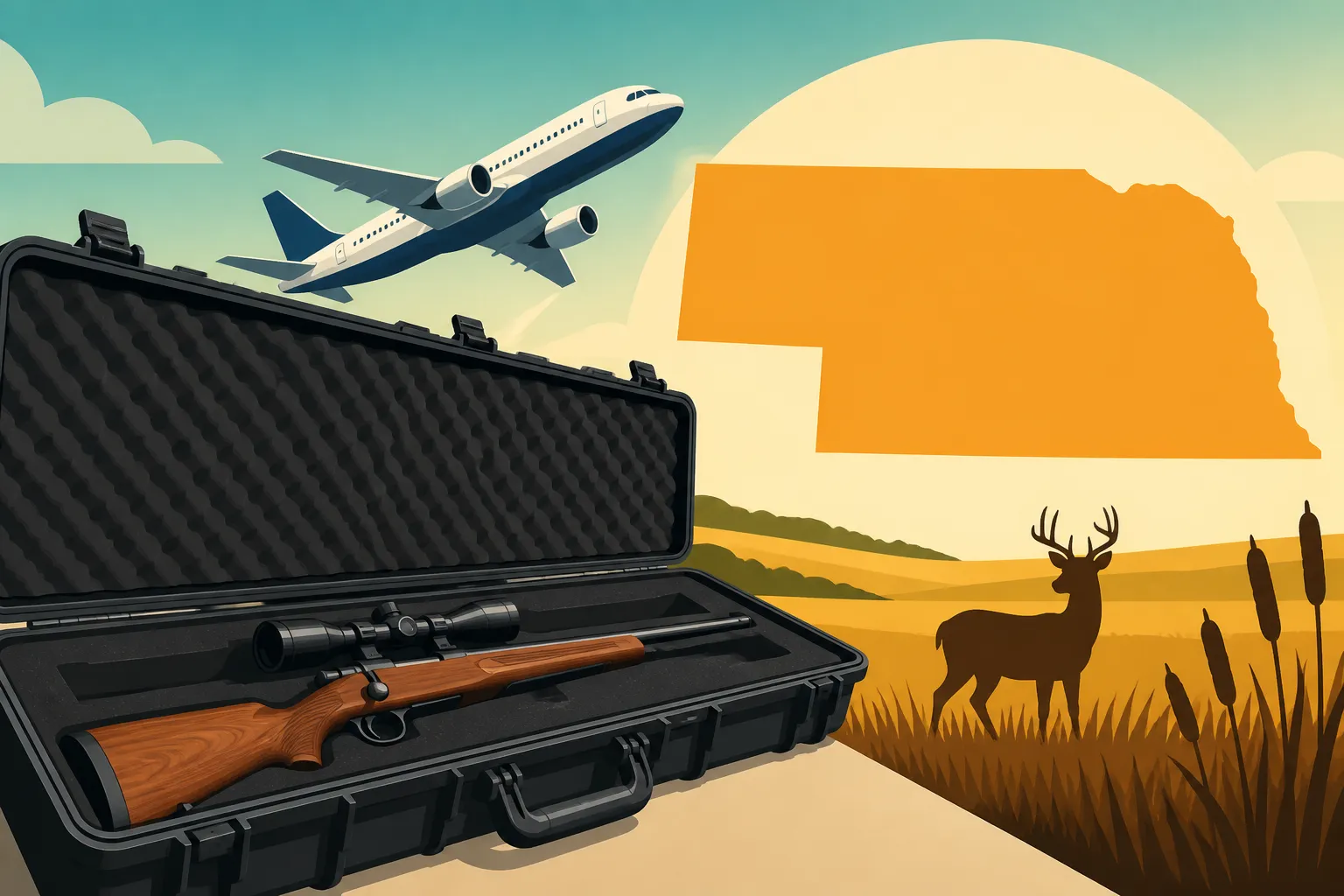
Rifle Cases for Flying to Nebraska
You've finally drawn that coveted Nebraska deer permit, whether it's for a majestic mule deer in the Sandhills or a wary whitetail along a river bottom, and the excitement is building! But then the practicalities set in, especially if you're flying in from out of state: how on earth do you get your trusted hunting rifle to Nebraska safely and legally? It can feel like navigating a minefield of regulations, potential damage, and airport bureaucracy, making many hunters dread the logistics almost as much as missing a shot. This guide is here to demystify the process, ensuring your rifle arrives ready for your hunt, without any unexpected headaches.
Understanding TSA and Airline Regulations for Firearms
The first hurdle in flying with a firearm is understanding the rules. It's not just a free-for-all; there are specific federal regulations and additional rules imposed by individual airlines and even certain states. Ignoring these details can lead to your rifle being confiscated, you missing your flight, or worse. The key is to be meticulously prepared and understand that airport personnel, from check-in agents to TSA officers, are simply following procedures.
Federal Guidelines from the TSA
The Transportation Security Administration (TSA) sets the baseline for flying with firearms. Their regulations are non-negotiable and apply to all travelers across the United States. You absolutely cannot carry a firearm or ammunition onto a plane in your carry-on luggage. It must be in checked baggage. This is a fundamental rule that, frankly, some folks still try to skirt, leading to all sorts of trouble.
Your firearm must be unloaded and declared to the airline at the check-in counter. This is a crucial step that often causes anxiety. When you declare it, the airline will typically have you fill out a declaration card to place inside your case. The case itself must be hard-sided, lockable, and specifically designed for firearms. It cannot be easily opened or broken into. It also needs to be locked with a key or combination lock; TSA-approved locks (those that TSA agents can open) are generally not permitted for firearm cases because only you should have access to the contents. This means you’ll be the only one with the key or combination. These federal guidelines are the foundation, but remember, individual airlines often have even stricter policies.
Airline-Specific Policies
While the TSA provides the federal framework, each airline has its own detailed policy regarding firearms and ammunition. This is where many hunters get tripped up, assuming that following the TSA rules is enough. It's not. Before you even book your flight, you must check the specific airline's website for their firearms policy. Some airlines might have stricter rules on the type of case, the amount of ammunition, or even how the ammunition is packaged.
For example, one airline might limit ammunition to 11 pounds in original manufacturer packaging, while another might allow it in secure containers within the locked gun case. Some airlines might require the ammunition to be in a separate, locked hard-sided case within your checked luggage, not necessarily the same case as the firearm. It pays to know these details. Don't rely on hearsay; pull up the official policy online and even consider printing it out to have with you, just in case there's any confusion at the counter. A quick call to the airline's special services desk a few days before your flight can also clear up any last-minute questions and give you peace of mind.
Choosing the Right Rifle Case for Air Travel
Once you've wrapped your head around the regulations, the next big decision is the rifle case itself. This isn't just about protecting your firearm from bumps and scrapes; it's about meeting stringent security requirements and ensuring your valuable hunting tool makes it to your Nebraska destination intact and ready for action. Skimping here is a false economy.
Hard-Sided and Lockable Cases
The TSA and airlines are clear: your rifle must be transported in a hard-sided container. This isn't the time for a soft gun case, no matter how much padding it has. A quality hard case is designed to withstand the rigors of baggage handling—and let's be honest, those bags get tossed around! These cases are typically made from durable plastics or composites, designed to resist crushing, impact, and even puncture.
Crucially, the case must be lockable. And not just any lockable; it needs to be secured with your own locks (padlocks, combination locks, etc.), for which only you retain the key or combination. As mentioned earlier, TSA-approved locks, which they can open with a master key, are generally not allowed for firearm cases because the intent is that only the owner can access the firearm. Look for cases with multiple padlock points for added security. Many modern cases come with heavy-duty latches that can be secured with robust padlocks, offering peace of mind that your rifle isn't going anywhere without you. These cases aren't just for show; they're your primary defense against theft and damage during transit.
Durability and Protection Features
Beyond being hard-sided and lockable, consider the overall durability and protective features of the case. Think about the conditions your gear will face. If you're heading to the Nebraska Sandhills for mule deer, your rifle might endure dusty truck rides and rough handling once it leaves the airport. A good case will have dense foam inserts, often customizable, that cradle your rifle snugly, preventing it from shifting around inside. This is paramount to maintaining your rifle's zero. There's nothing worse than arriving in Nebraska, setting up your Rifle Setups for Nebraska's Open Country, and realizing your scope is knocked off after the flight.
Look for cases that are weather-sealed, perhaps with O-ring gaskets, to protect against moisture and dust—essential for varying Nebraska weather. Wheels can be a game-changer, especially for longer cases or if you're also hauling other bulky gear. Imagine lugging a heavy case through a busy airport terminal; wheels will save your back and sanity. Companies like Pelican, SKB, and Boyt make excellent hard cases that are well-regarded by hunters and competitive shooters who frequently fly with their firearms. When you're researching options, using a comprehensive resource like GoHunt can help you compare different models and read reviews from other hunters who have flown with their gear, giving you a better idea of what holds up best.
| Feature | Description | Importance for Air Travel |
|---|---|---|
| Hard-Sided Material | Durable plastic or composite shell to resist impact and crushing. | Essential |
| Multiple Lock Points | Reinforced spots for padlocks, preventing unauthorized access. | Essential |
| User-Controlled Locks | Locks (key/combination) for which only you have access; no TSA-approved. | Essential |
| Customizable Foam | Dense foam inserts that can be cut to fit your rifle snugly. | High |
| Weather Sealing | O-ring gaskets or similar to protect against moisture and dust. | High |
| Wheels | Integrated wheels for easier transport through airports. | Medium-High |
| Pressure Equalization | Valve to equalize internal pressure for air travel. | Medium |
| Reinforced Hinges | Heavy-duty hinges that won't break under stress. | Medium |
Packing Your Rifle Case for the Journey
Once you have the right case, packing it correctly is the next step to a smooth journey. It's not just about tossing your rifle in; it’s about securing it, understanding ammunition rules, and knowing what else can (or can't) go into that case.
Securing Your Firearm
Your rifle needs to be unloaded. Double-check, triple-check, then check again. There should be absolutely no ammunition in the chamber or magazine. Many hunters even use a chamber flag to visually indicate that the chamber is empty, which can offer an extra layer of reassurance at the check-in counter. Once confirmed empty, place your rifle securely within the foam inserts of your hard case. If your case has pluck-and-pull foam, spend the time to create a perfect, snug fit for your rifle and any mounted optics. You want zero movement once the case is closed. Some hunters even take their scope off the rifle and pack it separately in its own padded compartment within the case or in another piece of checked luggage to further protect its zero.
Consider adding desiccant packs if you're flying to a humid area or if your rifle is susceptible to rust, though Nebraska tends to be drier, especially during fall hunts. Label your case clearly with your contact information, but avoid making it obvious that it contains a firearm to reduce the risk of theft. Many hunters use discreet luggage tags rather than large, bold stickers proclaiming "Firearm Inside!" Remember, this case is going to be handled by numerous people, so security and discretion are paramount.
Ammunition Rules and Packaging
This is another area ripe for confusion. Ammunition must be in your checked luggage, never in a carry-on. The quantity allowed varies by airline, but a common limit is 11 pounds gross weight. It must be stored in the manufacturer’s original packaging or in a sturdy container specifically designed for ammunition. This means no loose rounds rattling around in a baggie or dumped into a box. The packaging needs to protect the rounds from accidental discharge.
Some hunters prefer to pack their ammunition in a separate, small, locked hard-sided container within their main checked bag (not necessarily the rifle case itself, depending on airline rules). This keeps it segregated and secure. For a Nebraska deer hunt, you won't need an excessive amount of ammo, perhaps a box or two for sighting in and the hunt itself. If you're unsure about specific limits or packaging, always refer back to the airline's policy you reviewed earlier. It's much better to be over-prepared and follow the strictest interpretation of the rules than to face delays or confiscation at the airport. You want all your gear, including your ammo, to arrive with you so you can focus on Zeroing a Rifle for Open Country and getting ready for the hunt.
Navigating the Airport Process
You've got your permits, your Nebraska Habitat Stamp and Hunter Education, your rifle is in its secure case, and your ammunition is properly packaged. Now comes the actual airport experience. While it can feel daunting, knowing the steps and remaining calm will make it a smooth process.
Check-in and Declaration
Arrive at the airport earlier than you normally would, especially if you’re checking a firearm. Give yourself ample time—at least two to three hours before your flight's departure, maybe more during peak travel seasons. Head directly to the airline's check-in counter. Do not try to use a self-service kiosk if you are checking a firearm. You need to speak to an agent.
When you get to the counter, immediately declare that you are checking a firearm. They will guide you through the process, which usually involves completing a declaration card and placing it inside your locked case. The agent will visually verify that the case is hard-sided and properly locked. They may ask you to open the case to confirm the firearm is unloaded, so be prepared to do so. Once everything is verified, they'll tag your case, and it will often go through a special baggage screening process. Be aware that sometimes, they might ask you to wait near the oversized baggage area until the case has cleared screening, in case TSA needs to inspect it further. This is normal and nothing to be alarmed about.
TSA Screening and Retrieval
After you've declared your firearm and checked the case, it enters the TSA screening process. This is often where hunters get a little anxious. As mentioned, the TSA will likely screen your firearm case separately. If for any reason they need to open it (e.g., if the X-ray image is unclear), they will typically try to locate you first. This is why staying near the check-in area for a short time after dropping off your case is a good idea. Make sure your phone is charged and accessible.
When you arrive at your destination in Nebraska, retrieving your rifle case might be different than regular luggage. It often doesn't come out on the main baggage carousel. Sometimes it will be at the oversized baggage claim, or you might need to pick it up at the airline's baggage office. Again, inquire with the check-in agent about the retrieval process at your destination airport. Knowing this in advance can save you a lot of waiting and confusion. Confirm that all your locks are still in place and the case is secure before you leave the airport. If you're heading straight to the field, make sure you have all your other gear like Optics for Glassing the Nebraska Sandhills and your hunting license ready to go.
A Quick Checklist for Flying with Your Rifle
To help minimize stress, here’s a simplified checklist for your travel day:
- Before You Leave Home:
- Verify your firearm is unloaded.
- Secure your firearm in a hard-sided, lockable case (you hold the keys/combo).
- Pack ammunition in original manufacturer packaging or secure ammo containers.
- Review your airline's specific firearm policy (print it if possible).
- Ensure you have all necessary permits and licenses for Nebraska, like Nebraska Big Game Permits and How to Get One.
- Consider a tool like GoHunt to organize your trip details and gear.
- At the Airport:
- Arrive early (2-3 hours before departure).
- Go directly to the airline check-in counter (no self-service kiosks).
- Declare your firearm to the agent.
- Complete any required declaration forms.
- Be prepared to open your case for inspection if requested.
- Confirm where to retrieve your case at your destination airport.
- Stay near the check-in area briefly after dropping off your case.
- Upon Arrival:
- Proceed to the designated retrieval area (oversized baggage or airline office).
- Inspect your case to ensure all locks are intact and no damage has occurred.
- Head out and enjoy your Nebraska hunt!
Following these steps will help ensure that your rifle arrives safely and that you can focus on the exciting part: your hunt in the Cornhusker State! Don't let the anxiety of flying with firearms deter you from experiencing what Nebraska has to offer, from chasing White-Tailed Deer Across Nebraska to calling Wild Turkeys in Nebraska and Their Decline. With proper planning and adherence to regulations, it's a routine part of many hunters' adventures.
Disclaimer
This article is for general informational purposes only and does not constitute professional advice. Laws, prices and regulations vary by location and change over time. Consult a qualified professional for guidance on your specific situation.