Stalking Pronghorn Across Open Nebraska Ground
Stalking pronghorn across the vast, open expanses of Nebraska can feel like trying to sneak up on a ghost in a parking lot. These incredible animals are famously alert, equipped with eyesight that many compare to a set of 8x binoculars, and they thrive in environments where cover is as scarce as a blizzard in July. Many hunters get incredibly frustrated trying to close the distance, finding themselves busted before they've even truly begun their approach. This comprehensive guide is designed to equip you with the knowledge, strategies, and mental fortitude needed to successfully stalk pronghorn on Nebraska’s wide-open ground, turning those seemingly impossible distances into achievable opportunities.
Understanding the Pronghorn and Its Environment
Before you even think about crawling, it's crucial to understand the creature you're after and the landscape it calls home. Pronghorn are uniquely adapted to open country, and their survival hinges on their incredible senses and speed. Nebraska offers prime pronghorn habitat, especially in the western half of the state, but it presents significant challenges for hunters used to timber hunting.
The Pronghorn's Super Senses
Let's not sugarcoat it: a pronghorn's eyes are practically a superpower. They have an incredibly large eye-to-body ratio, providing them with a wide field of view and an almost unbelievable ability to detect movement from astonishing distances. Experts often say a pronghorn's vision is equivalent to a human looking through 8-power binoculars, making them incredibly difficult to approach unnoticed. This means that if you can see them clearly with your naked eye, chances are they’ve already spotted you and are deciding whether to bolt. Their sense of smell is also sharp, though not quite as legendary as their eyesight, and their hearing is keen enough to pick up subtle sounds of an approaching predator.
Beyond their senses, pronghorn are built for speed. They are the fastest land animal in North America, capable of sustaining speeds upwards of 50 mph for miles. This incredible athleticism allows them to cover vast distances quickly when threatened, often outrunning any perceived danger long before it becomes a real threat. Knowing their ability to instantly vanish over the horizon means every step of your stalk must be calculated and deliberate, as a mistake rarely grants a second chance.
Reading the Nebraska Landscape
Nebraska's open plains might look flat and featureless to the untrained eye, but they are full of subtle undulations, cuts, and draws that can be your best friend during a stalk. The key is to learn to read these nuances from a distance, understanding how a small rise or a shallow drainage can offer precious moments of concealment. Tall grass, even knee-high, can provide a surprisingly effective screen when you’re on your hands and knees. Hay bales, pivot irrigation tracks, and even isolated shelterbelts can be game-changers if you can incorporate them into your approach.
Wind direction is paramount when hunting in open country. Not only does it carry your scent, but it can also influence the thermals – those rising and falling air currents that become more pronounced as the sun warms or cools the ground. Understanding how to use the wind to your advantage, always trying to stay downwind or crosswind, is critical for closing the distance. You'll often find yourself trying to predict how the wind might shift as the day progresses, which can be an added layer of complexity. For more on this, check out our guide on Wind and Thermals in the Sandhills. Observing pronghorn habits – where they feed at different times of day, their bedding areas, and their favored routes to water sources – will help you choose your initial approach point and plan an effective stalk. Nebraska's Pronghorn Antelope on the Nebraska Plains are highly patterned animals, and a little observation can go a long way.
Stalking Strategies for Nebraska Pronghorn
Successfully stalking pronghorn is an exercise in extreme patience, stealth, and adapting to the land. It’s a chess match where the smallest misstep can mean the game is over.
The Art of the Approach
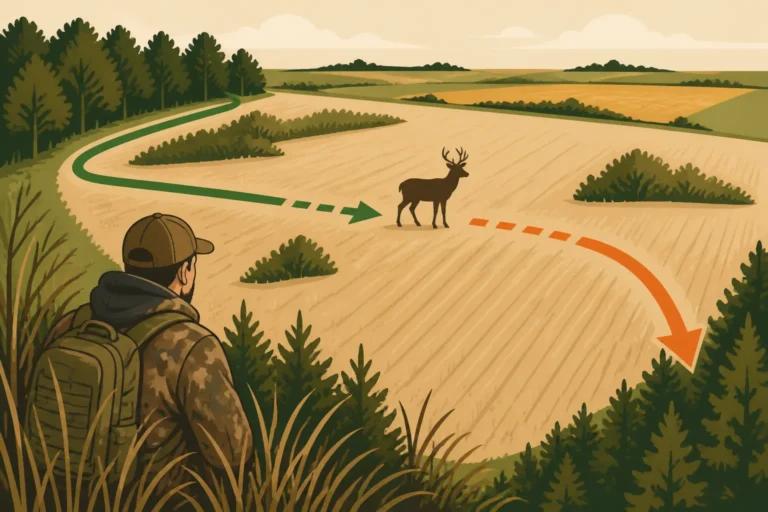
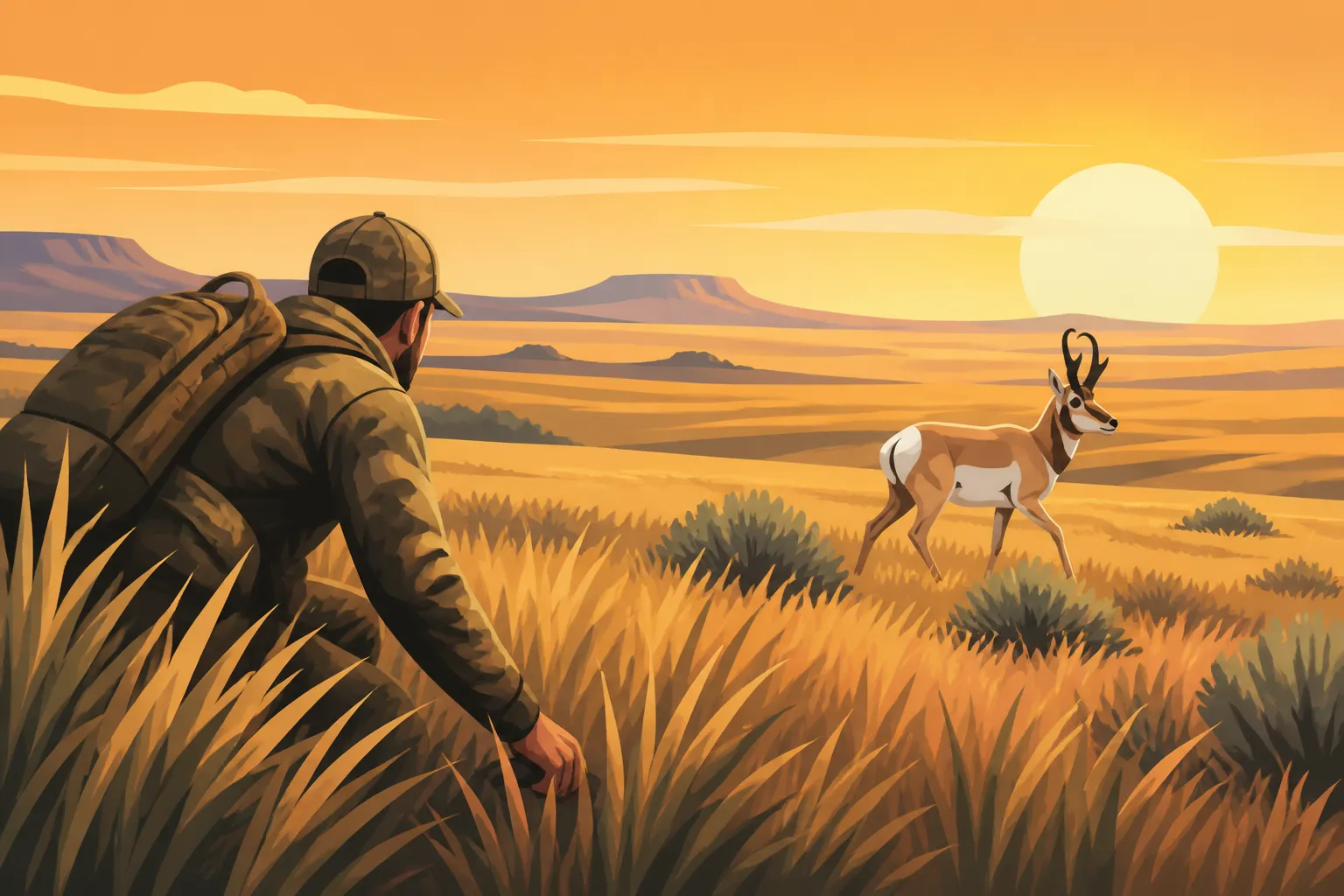
Once you've spotted your target, the real work begins. The first rule of pronghorn stalking is to use every single bit of available cover. This often means getting low – very low. Crawling on your hands and knees, or even on your belly, will become second nature. You’ll find yourself moving at an agonizingly slow pace, often taking several minutes to cover just a few yards. It’s not just about staying out of sight; it’s about appearing as non-threatening as possible, almost like another slow-moving feature of the landscape.
Maintaining strict wind discipline is non-negotiable. Pronghorn have a keen sense of smell, and any whiff of human scent will send them packing instantly. Always approach from downwind, or at least crosswind, constantly checking wind direction with a puffer bottle or even by watching grass blades or dust. Sometimes, the only viable stalk path means a significantly longer route to get into the correct wind advantage. Patience is your most important tool. Rush it, and you’re busted. Take your time, make slow, deliberate movements, and pause frequently to glass ahead, not just for the pronghorn but for any other animals that might spook and alert your target. This is where quality optics become invaluable; being able to pick apart the terrain ahead with your binoculars can prevent walking into an exposed situation.
Leveraging Topography and Features
The open country of Nebraska, while challenging, offers unique stalking advantages if you know how to look for them. Drainages, even shallow ones you might barely notice from a distance, can provide excellent cover for an approach. Ravines and creek beds, often more pronounced, are natural highways for moving unseen. Even a subtle change in elevation, like a terrace bench, can offer a crucial blind spot. These "micro-terrain" features are your best friends. It’s about using what nature provides, no matter how small.
Fence lines, while common, must be used judiciously and legally. Some hunters find success using a fence line to close on antelope by approaching parallel to it, using the fence posts or even the shadows they cast for intermittent cover. However, always be acutely aware of property boundaries and ensure you have permission if crossing into private land. Planning your route isn't just about getting to the animal; it's also about having an exit strategy and knowing which routes allow you to stay concealed even after you’ve taken a shot. Sometimes, the easiest path to the animal isn't the best path to stay hidden, or to recover your game.
When to Abort and Restart
One of the hardest lessons in pronghorn hunting is knowing when to give up on a stalk and start over. It's often said that if a pronghorn looks at you for more than a few seconds, you're probably already busted. That intense stare, the raised head, the flick of an ear – these are all clear signals that you've been made. Continuing to press forward at that point usually just results in a long, dusty run as the animal bounds away, leaving you winded and frustrated.
Instead, when you know you’re busted, often the best move is to freeze, drop low, and let them calm down or move off. Sometimes they will only trot a short distance and then resume feeding, giving you a chance to relocate and re-evaluate for a new approach. Other times, they will disappear entirely. Learning to recognize these cues and having the discipline to back off, even when you're close, saves energy and prevents you from unnecessarily pressuring animals, which can make them even more wary for future hunts. It's a humbling experience, but a vital one for consistent success.
Essential Gear and Mental Preparation
While stealth and knowledge of the land are paramount, the right gear can make a world of difference. Furthermore, stalking pronghorn will test your mental toughness like few other hunts.
Optics are Your Best Friend
Given a pronghorn's legendary eyesight, it should come as no surprise that quality optics are non-negotiable. A good pair of binoculars, ideally 10×42 or 12×50, will be constantly in your hands. You'll spend hours glassing vast landscapes, picking apart every detail, looking for subtle movements or the tell-tale white patch of a pronghorn's rump. For more detailed insights on what to look for, our guide on Binocular Magnification for the Sandhills can offer some tips.
Beyond binoculars, a spotting scope is incredibly useful, especially when trying to judge a buck from a long distance. It allows you to really evaluate horn length and mass without spooking the animal by getting too close. Pair your spotting scope with a lightweight tripod for steady viewing. We also have a dedicated guide on Spotting Scope Magnification for Antelope that you might find helpful. And, of course, a reliable rangefinder is absolutely critical. In open country, distances are often deceptive, and knowing the exact yardage to your target is essential for making an ethical shot. Brands like GoHunt often review optics that perform well in wide-open Western landscapes, making it easier to choose reliable gear.
Clothing and Camouflage
Your clothing choices should prioritize both concealment and functionality. For camouflage, think earthy tones – tans, browns, and sage greens that blend seamlessly with the prairie grasses and dirt. Avoid anything with stark contrasts or large, dark patterns that might silhouette you against the bright sky. Layering is also key, as Nebraska weather can change dramatically throughout the day, especially from a chilly morning to a scorching afternoon sun. You'll be doing a lot of crawling and low-profile movement, so durable fabrics that won't tear easily are important.
Consider investing in knee pads and elbow pads. Seriously. Your knees and elbows will take a beating from the rough ground, cacti, and sharp stubble. These small additions can significantly increase your comfort during a long, arduous stalk, allowing you to focus on the hunt rather than the pain. A wide-brimmed hat and sunglasses will also help you battle the intense prairie sun and reduce glare, making it easier to spot game and keep your eyes from fatiguing.
The Mental Game
Stalking pronghorn is as much a mental game as it is a physical one. It demands incredible patience. You might spend hours glassing only to find no animals, or initiate a stalk that takes a full hour only to get busted at 200 yards. Frustration is inevitable, but perseverance is key. Developing a positive attitude, even in the face of repeated setbacks, will keep you in the game.
Physical fitness also plays a role. While pronghorn country might look flat, you'll cover miles on foot, often carrying your gear, and then engage in long periods of crawling or low movement. Being in decent shape will help you endure the physical demands without tiring out prematurely. Remember, every successful stalk starts with the belief that it can be done, no matter how many times you’ve failed before. Embrace the challenge, learn from each experience, and enjoy the unique thrill of trying to outsmart one of North America's most vigilant big game animals.
Tips for Success and Ethical Considerations
Putting it all together requires practice, a commitment to ethical hunting, and smart planning. These final tips will help you round out your approach to stalking Nebraska pronghorn.
Pre-Season Scouting and Planning
Don't wait until opening day to start thinking about your hunt. Pre-season scouting is invaluable, especially in open country where understanding the land can make or break your success. Use tools like the Nebraska Public Access Atlas or mapping apps like GoHunt to digitally scout potential hunting areas, identify key terrain features, and mark water sources or known bedding areas. Pay attention to private land boundaries and access points. For public ground, understanding where the animals might concentrate and how other hunters might move them is crucial. Our guide on Scouting Nebraska Public Ground Before Opening Day offers deeper insights into this process.
When you're actually in the field scouting, even weeks before the season, look for signs of pronghorn movement. These might be faint trails leading to water, or areas where they've been feeding. Notice how the wind interacts with the terrain in different spots. Understanding how the subtle rises and falls of the land can obscure your approach, or reveal you, is a skill best honed through observation before the pressure of the hunt is on. Being able to read subtle features, such as a barely visible two-track road, can sometimes provide an easier path or an observation point. Learning to use tools like reading a Nebraska Sandhills two-track can be a surprising advantage.
Ethical Stalking and Shot Placement
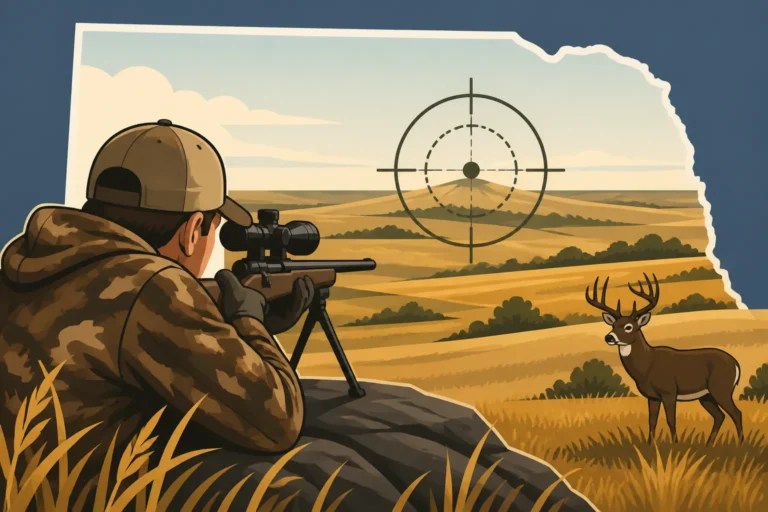
As with any hunt, ethical considerations are paramount. A successful stalk doesn't just mean getting within range; it means getting within responsible range for a clean, humane shot. In open country, it's easy to push the limits of your shooting ability, but you must resist that temptation. Know your rifle and your personal maximum effective range. Practice shooting from various positions – prone, kneeling, and off a bipod or shooting sticks – because you rarely get a perfect bench rest scenario in the field. Our article on Rifle Ranges Realistic in Open Country can help you understand the practical limits.
Once you’ve taken a shot, focus on tracking and recovery. Pronghorn can be tough animals, and sometimes they don't react much to a well-placed shot before running. Mark the spot where the animal was standing and the direction it fled. Wait a reasonable amount of time before tracking, especially if you suspect a less-than-perfect hit. Be prepared for a potentially long track, and always prioritize recovering your animal, even if it means sacrificing more hunting time. Learning to quickly field dress and cool your game, especially if hunting during warmer August or September openers, is also critical for meat preservation. For tips on this, see Recovering an Antelope in Warm Weather. And before you even consider pulling the trigger, make sure you know how to differentiate a legal buck from a doe and how to gauge horn length – our guide on Judging Pronghorn Horn Length can assist.
Dealing with Hunting Pressure
Nebraska's pronghorn hunting can attract a good number of hunters, especially on public ground. This pressure can significantly impact pronghorn behavior. Animals that might typically follow predictable patterns can become much more wary and move into areas with more cover or rougher terrain. You might find that once a few shots ring out, the animals become incredibly skittish and nearly impossible to approach.
To combat this, consider hunting during weekdays if possible, or focusing on areas that require more effort to reach, as these often see less pressure. Early morning and late evening are typically the best times for stalking, as the cooler temperatures and lower light can make animals feel a bit more secure, and their feeding patterns are more predictable. If you encounter other hunters, always be courteous and communicate your intentions to avoid interfering with their hunt or creating unsafe situations. Sometimes, finding areas Where Nebraska Pronghorn Herds Are Largest can mean more animals to spread out the pressure, but it also often means more hunters. A bit of adaptability and willingness to move can greatly improve your odds of success.
| Aspect of Stalking | Key Challenge | Stalking Strategy | Essential Gear |
|---|---|---|---|
| Vision | Pronghorn see everything, far away | Stay low, move slow, use micro-terrain | High-power binoculars, spotting scope |
| Speed | Can escape in seconds | Plan escape routes for yourself, abort if busted | Rangefinder for precise shots |
| Scent | Sharp sense of smell | Always stay downwind or crosswind | Wind indicator (puffer bottle) |
| Terrain | Appears flat, but has subtle cover | Utilize all available drainages, rises, fences | Durable clothing, knee pads |
| Patience | Long stalks, frequent setbacks | Mental fortitude, positive attitude, break up stalks | Comfortable pack, water |
Disclaimer
Please note: Hunting regulations and seasons can change. Always consult the most current Nebraska Game and Parks Commission regulations before planning any hunt. This guide is for informational purposes only and does not supersede official regulations.