Cleaning Birds in the Field
There’s nothing quite like the feeling of a successful hunt. Whether it’s the flush of a pheasant from heavy cover, the whistling wings of ducks over a wetland, or a tom gobbling aggressively on the roost, that moment when you make a clean shot is exhilarating. But then, the immediate task shifts from hunting to stewardship: cleaning your bird in the field. This isn't just about being efficient; it’s about honoring the animal, preserving the quality of your hard-earned meat, and adhering to important regulations, all while often battling the elements of the Nebraska outdoors.
Why Field Dressing Your Birds Matters
You’ve put in the time, walked the miles, and made the shot. Now, the real work of caring for your harvest begins. Skipping this crucial step or doing it poorly can quickly diminish the value of your efforts. It’s more than just a chore; it's an integral part of the hunting experience that ensures you get the best possible table fare and stay within the letter of the law.
Preserving Meat Quality in Nebraska's Conditions
Let's face it, Nebraska weather can be fickle. An early September teal opener might feel like mid-summer, with temperatures easily soaring into the 80s, while a late-season pheasant hunt can bring crisp, cold air. Regardless of the temperature, heat is the enemy of good meat. A bird that isn't field dressed promptly starts to degrade from the inside out. The internal organs retain heat, creating a perfect breeding ground for bacteria. This is especially true for birds that are gut shot or those hunted on unusually warm days.
By removing the entrails as soon as possible, you allow the carcass to cool much more efficiently. This halts bacterial growth, prevents off-flavors from developing, and significantly extends the freshness of the meat. Think of it as opening a natural refrigeration system. The quicker you can get that bird cleaned and cooling, the better the final product will be on your dinner plate. It’s a vital step in ensuring your bird tastes as good as the hunt felt.
Legalities and Transport Regulations
Beyond meat quality, there are strict legal requirements you need to be aware of when field dressing and transporting game birds in Nebraska. The Nebraska Game and Parks Commission (NGPC) has specific rules to ensure law enforcement can properly identify the species, sex, and often the number of birds harvested. For many upland birds and waterfowl, you'll need to retain a specific part of the bird—often a fully feathered wing or the head—until you reach your home or place of final processing. This "proof of species" is critical.
For instance, when you're cleaning pheasants, it's common practice to leave one fully feathered wing attached to the breast or carcass during transport. This allows a conservation officer to identify it as a pheasant and, sometimes, determine its sex. This isn't just a suggestion; it's a regulation that ensures fair chase and prevents illegal harvest. Ignoring these rules can lead to citations, fines, and potentially the loss of your hunting privileges. Always double-check the latest regulations in the Nebraska hunting guide or use a reliable app like GoHunt to confirm what's required for each species you pursue. Knowing these rules beforehand will save you a lot of headache in the field.
Essential Gear for Field Cleaning Birds
You don't need a massive tackle box of specialized tools to clean birds in the field, but having a few essential items can make the process much faster, cleaner, and safer. Preparing your kit before you head out is just as important as packing your shotgun shells or binoculars.
The Right Knife Makes All the Difference
A sharp knife is, without a doubt, your most important tool. A dull knife is not only inefficient but also dangerous, as you're more likely to slip and cut yourself. For most game birds, a small, sharp folding or fixed-blade knife with a blade length of 3-4 inches is ideal. Something like a Havalon Piranta or a simple Mora knife works wonderfully. The key is a razor-sharp edge that can easily slice through skin and bone.
Some hunters prefer a gut hook knife, especially for larger birds, but for most upland game and waterfowl, a straight blade is perfectly adequate. Whatever you choose, make sure it’s easy to clean and sanitize. Carrying a small sharpening stone or a portable sharpener can also be a lifesaver if your blade dulls after a few birds. A clean, sharp knife ensures clean cuts, less mess, and better presentation of your meat.
Gloves, Wipes, and Waste Bags
Hygiene is paramount when handling game, both for your health and the quality of the meat. Disposable nitrile gloves are inexpensive, lightweight, and make cleanup a breeze. They protect your hands from blood and other bodily fluids, which is especially important given concerns about diseases like avian influenza. Plus, it just keeps your hands from getting sticky and messy, which is a huge bonus when you're still miles from a sink.
After you've cleaned your bird, a pack of wet wipes or a small hand towel can quickly clean your knife and hands. Follow up with a squirt of hand sanitizer, and you’re good to go. Don't forget sturdy plastic bags for waste. This isn't just about keeping your hunting vest clean; it's about respecting the land. You should always pack out what you pack in, and that includes any bird entrails or feathers. Leaving them scattered can attract scavengers, create an unsightly mess for other users of public land, and sometimes even spread disease. Dispose of waste responsibly, preferably in a trash receptacle at home or a designated site.
Water and Cooler Considerations
Even in the field, a little water goes a long way. A small bottle of water can be used to rinse your knife, hands, or even the bird's cavity if you're gutting it whole. While you won't be doing a full wash-down, a quick rinse can remove loose feathers and blood, making the meat cleaner.
Most importantly, you need a plan for keeping your birds cool, especially if you're hunting in warmer weather. A quality cooler filled with ice is non-negotiable. As soon as a bird is field dressed, get it into that cooler. You don't necessarily need to submerge it in ice water, but having ice packs or loose ice around the bird will rapidly drop its core temperature. This is crucial for preserving the meat, especially during those early season hunts in Nebraska where temperatures can easily reach the 70s or 80s. For more detailed advice on cooling your game properly, check out our guide on Field Dressing and Cooling Game in Warm Weather. It truly makes a difference in how long your harvest will last and how it tastes.
Step-by-Step Field Cleaning Methods
When it comes to field cleaning game birds, there are a few primary methods, each with its advantages. Your choice will often depend on the type of bird, local regulations, and your personal preference for how you want to prepare the meat.
The Breast-Out Method for Upland Birds
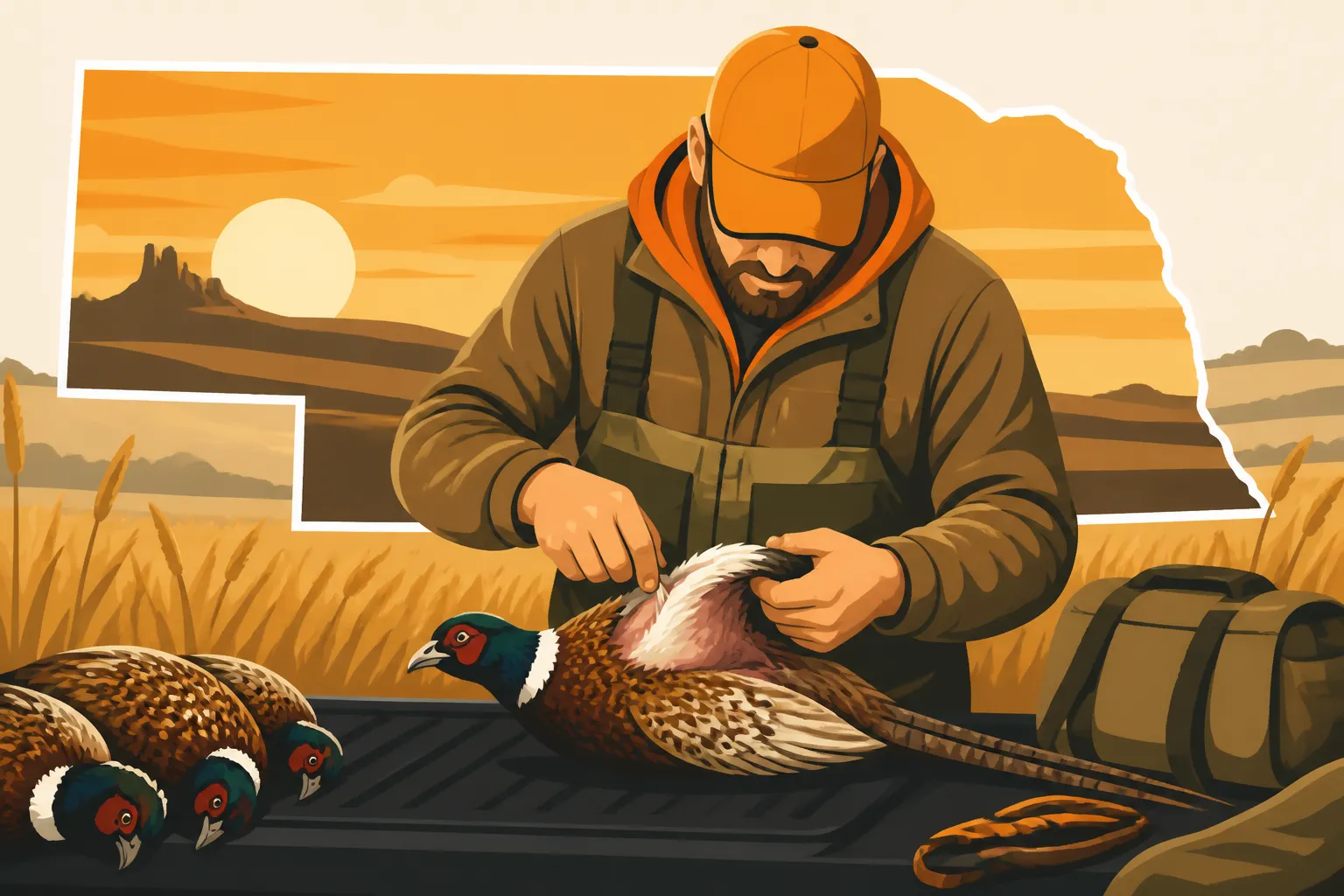
For most upland birds like pheasants, quail, and grouse, the "breast-out" method is incredibly popular and efficient. It allows you to quickly remove the prized breast meat while leaving the rest of the carcass. This is especially useful when you're bagging multiple birds and want to lighten your load for the walk back to the truck. Remember, for pheasants and often other upland species in Nebraska, you'll need to retain one fully feathered wing attached to the breast or carcass for identification until you reach home. Always check the current regulations regarding Pheasant Tagging and Transport Rules in Nebraska.
Here's how to do it:
- Lay the Bird on its Back: Find a clean, flat surface, or simply lay the bird on the ground or a tailgate.
- Locate the Breastbone: Feel for the prominent breastbone running down the center of the bird's chest.
- Make an Incision: Using your sharp knife, make a shallow cut along one side of the breastbone, from the top of the chest down to where it meets the abdomen.
- Peel Back the Skin: Starting from your cut, carefully separate the skin from the breast meat. You can use your fingers or the blunt side of your knife to help peel it back, exposing the clean white meat.
- Remove the First Breast: Angle your knife against the breastbone and carefully slice downwards, following the contour of the bone and ribs. Work your way from the front to the back, separating the entire breast fillet. Keep your knife blade close to the bone to maximize meat yield.
- Repeat for the Second Breast: Flip the bird over or reposition it, and repeat the process on the other side.
- Attach the Wing (If Required): If the regulation requires a wing, carefully cut through the wing joint, leaving the wing attached to one of the breast fillets or the remaining carcass. Some hunters will make a cut that leaves one wing attached to both breasts, meaning they're still connected, or simply take the whole bird back and breast it later. The key is that the wing must remain associated with the meat for identification.
- Discard Carcass (Responsibly): Place the remaining carcass and entrails into your waste bag for proper disposal. The breasts can then go directly into a zip-top bag and into your cooler.
This method is quick, clean, and provides the most valuable part of the bird.
Full Pluck vs. Breast-Out for Waterfowl
Waterfowl, like ducks and geese, present a different set of considerations. Their skin and fat are often highly prized, especially for roasting or smoking, which means a full pluck is a common choice. However, breasting out is also an option, particularly if you're processing many birds or if the skin is damaged. For waterfowl, regulations almost always require a fully feathered wing to remain attached to the carcass or breast meat for identification until processed at home.
The Full Pluck: This method keeps the bird whole, preserving the skin and often the legs and thighs, which are delicious when cooked low and slow.
- Get Ready for Feathers: This is a messy job. Find an area where feathers can easily be cleaned up or blown away by the wind.
- Pull Small Sections: Grasp small sections of feathers and pull them in the direction of feather growth. Avoid pulling against the grain, as this can tear the skin. Pluck methodically, working your way around the bird.
- Pin Feathers: Once the larger feathers are gone, you'll be left with tiny pin feathers. You can singe these off with a torch or a lighter, or carefully pluck them with a pair of pliers.
- Gut the Bird: After plucking, cut around the vent and make a small incision down the lower abdomen. Reach inside and remove all internal organs. Check the body cavity thoroughly for any remaining bits.
- Rinse and Chill: Rinse the bird inside and out with cool water and get it into your cooler immediately.
The Breast-Out (Waterfowl): Similar to upland birds, but often involves a bit more fat and tougher skin.
- Lay on its Back: Place the bird on its back.
- Cut Through Skin: Make an incision through the skin along the center of the breastbone.
- Peel Back Skin and Feathers: Aggressively peel back the skin and attached feathers from both sides of the breast. This is often easier than with upland birds due to the thicker skin and fat layer.
- Remove Breasts: Use your knife to slice along the breastbone and ribs, carefully removing each breast fillet.
- Retain a Wing: Crucially, cut through one wing joint, leaving the entire wing (with feathers) attached to one of the breasts or the remaining carcass as required by regulations.
- Consider Legs/Thighs: If you want the legs and thighs, you can easily remove these after breasting out by cutting through the hip joint. They offer fantastic meat that’s often overlooked!
- Discard Responsibly: Dispose of the remaining carcass and feathers ethically.
You can often simplify the pluck by doing a "California pluck," where you only pluck the breast and leg areas, leaving feathers on the back and wings if you're just going for the main meat cuts. This can save a lot of time and effort in the field, especially if you're not planning to roast the bird whole. For retrieving birds, especially in water, knowing the proper handling techniques is key; consider our guide on Retrieving Birds Without a Dog to ensure you're starting with a clean bird.
The "Gutting" Method (Less Common but Sometimes Useful)
While not as common for small game birds, sometimes a full "gutting" or evisceration is the preferred method, particularly if you plan to keep the bird whole for roasting or frying immediately after your hunt. This is more common with larger game like turkeys, but can be done with ducks or pheasants too.
- Access the Abdomen: Lay the bird on its back. Make a careful incision around the vent (anus) and extend it forward a few inches towards the breastbone.
- Reach Inside: Reach into the body cavity and carefully pull out all the internal organs. Be mindful not to rupture the intestines. You'll want to remove the heart, liver, and gizzard, setting them aside if you plan to keep them for cooking.
- Remove Trachea and Esophagus: Reach up into the neck cavity and pull out the trachea (windpipe) and esophagus (gullet).
- Wipe or Rinse: If you have water, a quick rinse of the cavity helps. Otherwise, wipe it out with some paper towels or a clean cloth.
- Chill Immediately: Get the bird into a cooler with ice to bring its core temperature down rapidly.
This method keeps the bird intact, which can be appealing for presentation or certain cooking styles. However, it's generally messier than simply breasting out.
Practical Tips for Nebraska Hunters
Field cleaning your birds efficiently is a skill that improves with practice. Beyond the basic steps, there are several nuances and considerations that can make your experience smoother and ensure you're always acting responsibly in the great Nebraska outdoors.
Dealing with Different Bird Species
Each bird species you hunt in Nebraska might have slightly different characteristics that influence how you clean them.
- Pheasants: Their skin can be a bit fragile, so be gentle when peeling it back during the breast-out method. Remember the wing-attached rule for transport, which is explicitly detailed in regulations like those found in Pheasant Tagging and Transport Rules in Nebraska.
- Quail: These little birds are small, so the breast-out method is often the quickest. Their skin is very delicate, but you're usually after the breast meat anyway.
- Ducks and Geese: Waterfowl typically have a thicker layer of fat under their skin, which can make plucking a bit more involved but also offers more flavor when cooked whole. Their skin is tougher than upland birds, so tearing is less common. Always ensure a fully feathered wing remains attached for identification.
- Turkeys: These are large birds, and while breasting out is common, many hunters choose to take the whole bird home for a full pluck and evisceration. Their legs and thighs also offer a good amount of meat. For Calling Spring Gobblers in Nebraska Timber or any turkey hunt, the sheer size of the bird means a larger cooler is essential.
Knowing these slight differences will help you approach each bird with confidence and efficiency.
Staying Clean and Respecting the Land
Leaving a clean campsite is standard outdoors etiquette, and the same goes for field dressing. No one wants to stumble upon a pile of bird guts or feathers on a beautiful patch of public ground. Always use your waste bags to collect all entrails, feathers, and any other refuse. Pack it out with you and dispose of it properly at home.
When cleaning, try to choose a discreet location away from trails, parking areas, or places where others might be recreating. On public lands, this shows respect for other users and the environment. Also, consider the impact on wildlife; leaving carcasses can attract scavengers, potentially leading to unwanted interactions or habituation. Being a responsible hunter means leaving no trace, or at least minimizing your impact as much as possible. This approach is part of the broader respect for the land and species that’s highlighted in guides like Scouting Nebraska Public Ground Before Opening Day.
Transporting Your Harvest Home
The journey from the field to your freezer is just as important as the cleaning process. As we touched on, adhering to transport regulations, especially the requirement to keep a specific identifying part of the bird attached, is critical. The Nebraska Game and Parks Commission provides clear guidelines, and you can easily look up these specific rules for different species using resources like the GoHunt app or the NGPC website. This helps prevent misidentification and ensures you're legally compliant.
Once cleaned and identified, your birds need to be kept cool. Whether it’s a short drive across the county or a longer journey out of state, a good cooler with plenty of ice is your best friend. For non-resident hunters, understanding Carcass Transport Rules Out of Nebraska is vital to avoid issues when crossing state lines. Make sure your birds are not just cold, but ideally, kept dry within sealed bags inside the cooler to prevent waterlogging and cross-contamination. This diligent care ensures that the delicious wild game you worked so hard for arrives home in prime condition, ready for the dinner table.
| Bird Type | Common Method | Key Considerations | Legal Requirement (Nebraska Example) | Meat Yield |
|---|---|---|---|---|
| Pheasant | Breast-out | Fragile skin, quick process, ideal for field | One feathered wing attached | Mostly breast meat, can remove legs/thighs later |
| Quail | Breast-out | Small size, very delicate skin | Often one feathered wing attached | Primarily breast meat |
| Ducks/Geese | Breast-out or Pluck | Thicker skin/fat, plucking adds flavor | One feathered wing attached | Breast, legs, thighs (if plucked whole) |
| Wild Turkey | Breast-out or Gut/Pluck | Large size, substantial meat, good for whole roast | Head or one leg w/ spur/beard attached (often) | Breast, legs, thighs, wings (significant meat) |
Disclaimer
The information provided in this guide is for general informational purposes only and is not intended to be legal advice. Hunting regulations, permit requirements, and seasons can change frequently. Always consult the most current Nebraska Game and Parks Commission regulations and federal guidelines before hunting. It is the hunter's responsibility to know and comply with all applicable laws and regulations.