Nebraska Antelope Rifle Season Tactics
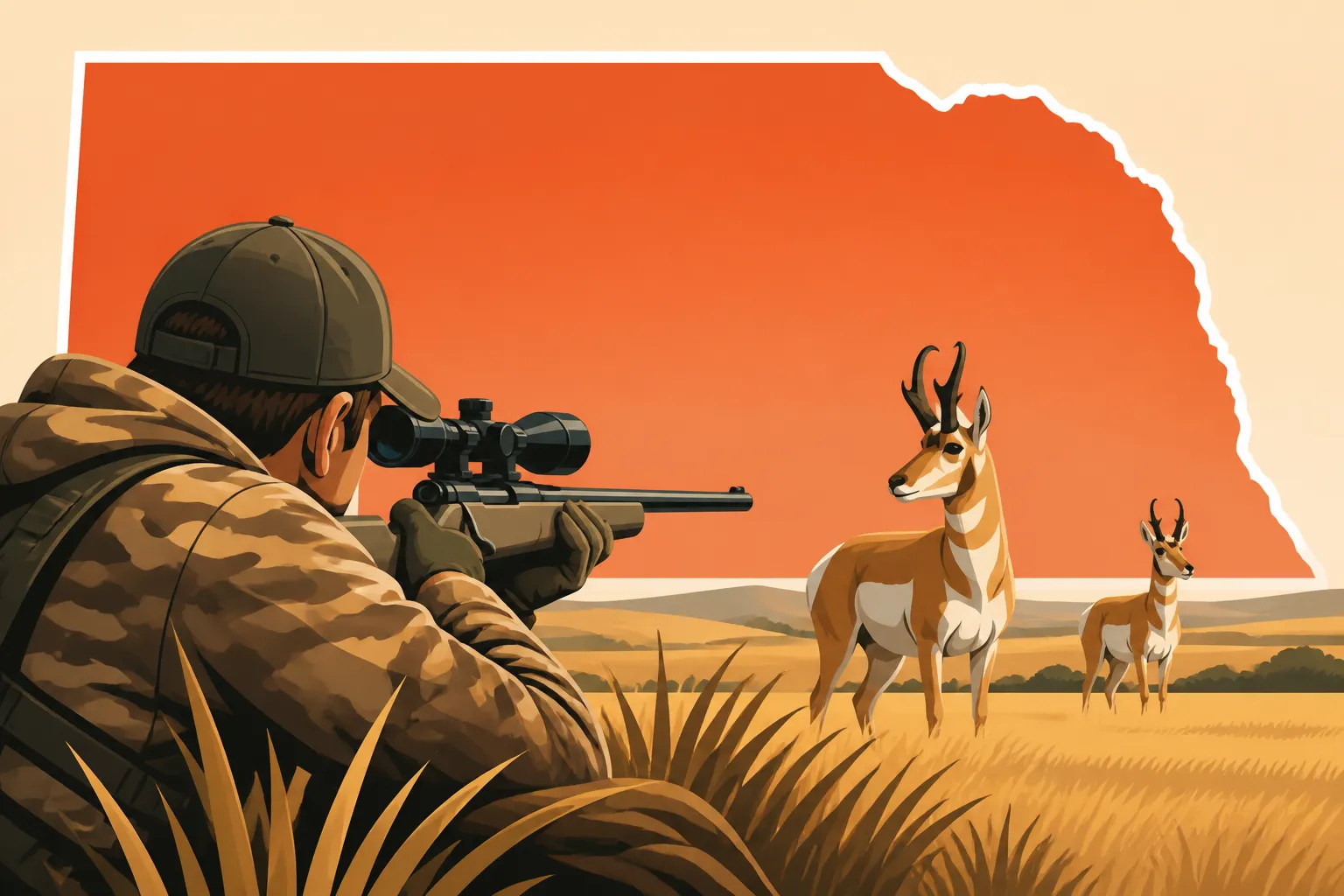
Hunting antelope in Nebraska presents a unique challenge, often testing even the most seasoned hunters with its vast, open landscapes and the pronghorn's legendary eyesight and speed. It's easy to feel overwhelmed by the sheer scale of the country and the seemingly impossible task of closing the distance on an animal that can spot you from miles away. This guide is here to walk you through proven rifle season tactics, helping you navigate the intricacies of scouting, stalking, and successfully harvesting an antelope in the Cornhusker State.
Understanding Nebraska's Antelope Rifle Season
Nebraska's antelope rifle season is a short but exciting window of opportunity, drawing hunters who appreciate the thrill of open-country big game. Unlike deer hunting, where timber and dense cover can often provide concealment, pronghorn hunting demands a different kind of strategy, largely dictated by the expansive environment they call home.
Key Season Dates and Permit Overview
The antelope rifle season in Nebraska typically runs for a limited number of days, usually in late September or early October. These dates are set annually by the Nebraska Game and Parks Commission, so it's absolutely crucial to check the current regulations each year. Getting a permit for antelope, especially for non-residents, is often a matter of navigating a lottery draw system. These permits are limited and highly sought after, reflecting the relatively small but healthy pronghorn population in the state. Many hunters build preference points over several years to increase their chances. While residents have better odds, non-residents often find themselves in a tough draw. Understanding the Nebraska Antelope Permit Cost and the application timeline is paramount, as missing a deadline means missing the season entirely.
For most, applying in the spring and hoping for good luck is the only path. Even if you don't draw, purchasing a preference point is a smart move for future seasons, steadily improving your odds. It's a game of patience, but the reward of drawing that coveted tag makes it all worthwhile. Always verify the specific application periods and draw results through the official channels.
Prime Hunting Units and Habitat
Nebraska's pronghorn population is concentrated in the western half of the state, primarily across the Panhandle and the western fringes of the Sandhills. These areas offer the quintessential open-country habitat that antelope thrive in. You're looking at vast expanses of shortgrass prairie, interspersed with sagebrush, sparse draws, and occasional agricultural fields like winter wheat or alfalfa that become prime feeding grounds. The key is to understand that these animals are built for speed and sight in wide-open spaces.
The Nebraska Antelope Unit List will show you the specific areas where permits are issued, but generally, units like those around the Pine Ridge and the western Sandhills offer the best opportunities. These regions provide the necessary forage, escape cover (which for antelope often means just distance), and water sources. When you're scouting, pay close attention to the subtle changes in elevation, the sparse cedar breaks, and the edges where native prairie meets cultivated land. These transition zones often concentrate animals. Knowing where Nebraska pronghorn concentrate their numbers is the first step to focusing your efforts effectively.
Scouting and Locating Antelope for Rifle Hunters
Successful antelope hunting often hinges more on effective scouting than on the hunt day itself. These animals are incredibly wary, and the terrain offers them few places to truly hide. Your eyes, and the optics you use, will be your most valuable tools.
The Importance of Pre-Season Glassing
Given the vastness of Nebraska's antelope country, sitting on a high point and systematically glassing the landscape is the most efficient way to locate pronghorn. This isn't just about spotting a speck; it's about identifying herds, individual animals, and understanding their general patterns. High-quality binoculars (10x or 12x) are essential for broad scans, but a powerful spotting scope (20-60x or higher) on a sturdy tripod is critical for evaluating animals at extreme distances and confirming trophy quality. The sheer scale of the Sandhills and Panhandle means you'll be looking across miles of terrain, and clear optics are non-negotiable.
Set up on prominent ridges or hills that offer expansive views. Take your time. Scan in a grid pattern, moving slowly and deliberately. Antelope often blend surprisingly well into the tawny grasslands, so look for subtle movements, flashes of white, or distinct shapes. Patience is key; what looks like a distant clump of sagebrush might, with careful observation, reveal itself to be a bedded buck. Many hunters use mapping applications like those offered by GoHunt to identify potential glassing points and public land access before they even leave home. This pre-trip research can save countless hours in the field, helping you pinpoint high-ground vantage points and plan your routes.
Reading Antelope Movement Patterns
Antelope, like all wildlife, have predictable patterns influenced by food, water, and security. During the rifle season, which often falls in warmer weather, water sources become critical focal points. Stock tanks, small ponds, and even damp depressions can draw animals in. Observe these areas during your pre-season scouting or during the early morning and late evening of your hunt. Knowing When Antelope Water in Hot Weather can be a game-changer for ambush opportunities, though stalking them at water can be challenging given the lack of cover.
Beyond water, focus on feeding areas. Antelope are grazers and browsers, favoring forbs, grasses, and sagebrush. Agricultural fields, particularly alfalfa or newly sprouted winter wheat, are magnets. Pay attention to how herds move between these feeding grounds, bedding areas (often subtle depressions or small rises that offer a commanding view), and water. They often use subtle contours of the land, fencelines, or even two-track roads as travel corridors. By understanding these daily routines, you can anticipate their movements and plan your approach more effectively. Look for fresh tracks, droppings, and cropped vegetation as signs of recent activity.
Stalking and Shooting Strategies for Rifle Antelope
Once you've located your target antelope, the real challenge begins: closing the distance for a clean, ethical shot. This is where the wide-open nature of Nebraska's antelope country truly puts your stalking skills to the test.
Mastering the Open-Country Stalk
Stalking a pronghorn is an art form. Their exceptional eyesight means you have to utilize every bit of available cover, no matter how sparse. Small draws, rolling hills, the back side of a low rise, or even isolated clumps of sagebrush can be your allies. The mantra here is low and slow. Keep your profile as small as possible, often crawling or belly-crawling for extended periods. Patience is paramount; a hasty move will send them rocketing across the prairie.
Wind direction is just as critical as visual concealment. While antelope don't have an exceptional sense of smell like deer, the wind can carry sounds and disturb subtle ground cover, alerting them to your presence. Always try to approach with the wind in your face or quartering. The internal link to Stalking Pronghorn Across Open Nebraska Ground offers more detailed insights into these techniques. When planning your stalk, use a mapping app – some even integrate with GoHunt for advanced features – to identify potential dead ground, ravines, or elevation changes that can shield your approach. Remember, it's not about getting to the antelope, it's about getting to a shooting position where you can make a stable, ethical shot.
| Stalking Element | Importance | Key Considerations |
|---|---|---|
| Concealment | Critical | Utilize terrain (draws, ridges, large sagebrush); stay low to the ground; move when antelope heads are down. |
| Wind Direction | High | Approach into the wind; Wind Direction on Open Nebraska Prairie Stands can vary quickly, so pay attention. |
| Patience | Absolute | Take your time; observe antelope behavior; wait for optimal cover or when animals are distracted. |
| Optics | Essential | Use binos/spotting scope for constant observation during the stalk to confirm position and behavior. |
| Route Planning | High | Use mapping apps (e.g., GoHunt) to identify covered routes to a shooting position. |
Essential Rifle Setups and Marksmanship
For antelope, you need a rifle that shoots flat and can deliver enough energy at longer ranges. The open country often necessitates shots beyond 200 yards, so choosing the right caliber is important. Popular choices include cartridges like the .25-06 Rem, 6.5 Creedmoor, .270 Win, .30-06 Springfield, and .308 Win, all known for their inherent accuracy and flat trajectories. Bullet construction is also key; opt for bullets designed for controlled expansion to ensure humane kills on these relatively thin-skinned animals.
Zeroing your rifle for longer distances, typically 200 or 250 yards, is a common practice for antelope hunters. This helps simplify holdover calculations for those inevitable longer shots. Practicing shooting from field positions, especially using shooting sticks or a bipod, is vital. You won't always have a bench rest on the prairie. Understanding Rifle Ranges Realistic in Open Country and confidently knowing your rifle's capabilities are paramount. Many hunters zero their rifle to be slightly high at 100 yards to be dead-on at 200 or 250, giving them a "point blank" range where minimal holdover is needed for most typical shots. For detailed ballistics and precise Zeroing at 200 Yards, resources found on sites like GoHunt can be invaluable. Don't forget that a good quality scope with clear glass and reliable turrets is just as important as the rifle itself.
Post-Harvest Considerations and Ethical Hunting
Harvesting an antelope is a rewarding experience, but the work isn't over when the shot is fired. Proper post-harvest care and adherence to ethical hunting principles are crucial for respecting the animal and ensuring quality meat.
Field Dressing and Meat Care
Nebraska's antelope rifle season can often coincide with warm weather, making quick and efficient field dressing essential to preserve the meat. Unlike colder late-season deer hunts, early fall temperatures can cause meat to spoil rapidly if not cooled down quickly. As soon as you recover your antelope, begin the field dressing process immediately. Get the guts out, open the chest cavity, and ideally, prop the carcass open to allow air circulation. If possible, wipe the cavity clean with a dry cloth to remove any excess blood or debris.
Transporting the carcass out of the field and getting it into a cooler with ice as soon as possible is the next critical step. Many hunters carry large coolers specifically for this purpose. If you're a long way from your vehicle, consider the gutless method to lighten the load and get the meat cooled faster. Remember that Recovering an Antelope in Warm Weather requires proactive steps. Having the right Meat Care Gear for Warm Nebraska Openers, such as game bags, sharp knives, and plenty of ice, can make all the difference in ensuring you bring home delicious, untainted meat.
Ethical Considerations and Respect
Beyond the practical aspects of hunting, ethical considerations are fundamental. This includes making clean, humane shots, knowing your effective range, and diligently tracking any wounded animal. No hunter wants to lose an animal, and in open country, a wounded antelope can cover vast distances quickly. It’s always better to pass on a questionable shot than to risk injuring an animal you cannot recover.
Respect for the land and landowners is also paramount in Nebraska. Much of the prime antelope habitat is private property, and gaining permission is a privilege, not a right. Always secure permission before stepping foot on private land, even if it's just to retrieve a downed animal. Understanding Nebraska Trespass and Permission Law is crucial for all hunters. Treating landowners with respect, following their rules, and leaving no trace are vital for maintaining good relationships and ensuring future hunting opportunities. Hunters using resources like GoHunt often appreciate the detailed public/private land maps which clearly delineate boundaries, helping them hunt responsibly.
Disclaimer
Please note that hunting regulations, season dates, and permit requirements in Nebraska are subject to change. Always consult the official Nebraska Game and Parks Commission website or publications for the most current and accurate information before planning any hunting trip.