Hunting Antelope After a Wet Summer
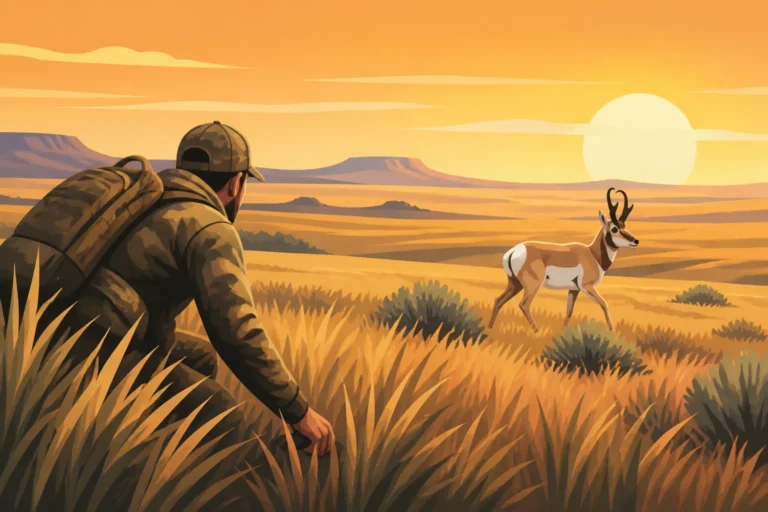
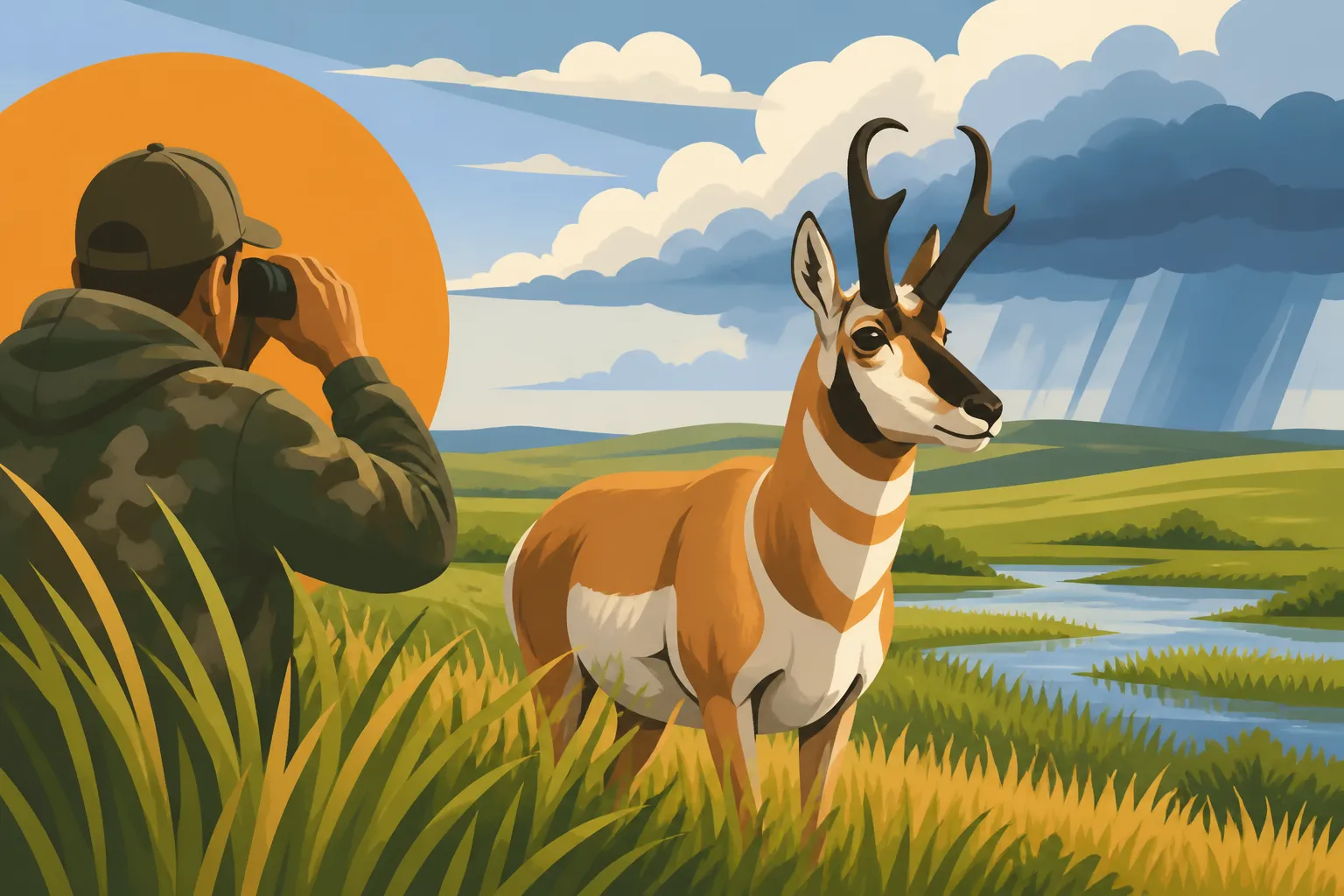
Hunting antelope in Nebraska is usually a game of glassing vast, open plains, spotting herds around sparse waterholes, and executing long, careful stalks across arid terrain. But what happens when Mother Nature decides to drench the landscape with a wet summer? Those classic strategies can go right out the window, leaving many hunters scratching their heads and wondering how to adapt. This guide is here to walk you through the unique challenges and rewarding adjustments needed to successfully hunt pronghorn when the Nebraska plains are greener and wetter than usual.
Understanding How a Wet Summer Changes Antelope Behavior
A summer with abundant rainfall fundamentally alters the environment antelope call home, and with it, their typical routines. What worked last year in dry conditions might be a recipe for frustration this season. You need to get into the pronghorn's head and understand how their needs shift when water and forage are plentiful.
Dispersal and Foraging Patterns Shift
In a normal, dry Nebraska summer, antelope herds tend to concentrate around reliable water sources and areas where sparse forage might still be green. This makes them relatively predictable; you know where to start looking. However, after a wet summer, the entire landscape becomes a smorgasbord. Grasses are lush, forbs are abundant, and temporary puddles might dot the prairie for weeks. This means antelope no longer have to congregate in specific areas. They can spread out, accessing prime forage and water virtually anywhere.
Think of it like this: instead of a single restaurant in town, suddenly there are diners on every corner. Why would everyone go to the same place? This dispersal makes glassing harder, as animals are less likely to be bunched up in large, visible herds. They can graze more casually, moving through taller cover that would normally be parched and brown. This widespread bounty means you'll spend more time covering ground and less time picking apart a few key locations. Their home ranges might also expand temporarily as they explore new, rich feeding grounds, further complicating efforts to pin down their movements.
Water Sources Become Less Critical
The standard antelope hunting playbook often revolves around water. Pronghorn need to drink, and in dry years, that means hitting a few key stock tanks, windmills, or natural springs. Hunters might set up a blind for a morning or evening sit, confident that eventually, a thirsty buck will show up. However, a wet summer changes this dynamic entirely. With abundant rain, temporary pools form, and the vegetation itself holds a lot more moisture. Antelope can often get much of the water they need just by grazing on dew-covered, succulent plants.
This doesn't mean they won't drink from a tank, but their urgency is dramatically reduced. A prime waterhole that was a magnet last year might see only sporadic use this year. Relying solely on a waterhole setup could lead to many long, uneventful waits. You'll need to recognize that water sources become a supplement rather than a necessity for these animals. This shift requires a mental recalibration for hunters. Instead of seeking the most obvious water, you might need to focus more on feeding areas or natural travel corridors, which now hold greater importance.
Taller, Thicker Cover Reduces Visibility
One of the defining features of hunting pronghorn is the vast, open country they inhabit. Traditionally, this openness makes them easy to spot from a distance, allowing for long glassing sessions and methodical stalks. But a wet summer fuels incredible vegetative growth. Those same open plains that were knee-high in dry years might now be waist-high or even chest-high with lush grasses and weeds. This thicker cover dramatically impacts visibility.
Antelope, already masters of blending in, can seemingly disappear into this green labyrinth. Spotting a feeding buck might require you to be much closer, and even then, you might only catch glimpses of his back or horns. This makes long-range glassing incredibly challenging, forcing you to adjust your approach. You might need to cover more ground, hike to higher vantage points, or rely more on subtle movements to give away an animal's presence. Furthermore, this taller grass provides significantly more cover for the antelope themselves, making them feel less exposed and potentially less wary, but also much harder for you to spot and keep track of during a stalk. This change in cover directly impacts how you approach a stalk, making "Stalking Pronghorn Across Open Nebraska Ground" even more complex.
Adjusting Your Scouting Strategy Post-Rain
When conditions shift so dramatically due to a wet summer, your pre-season and in-season scouting efforts need a complete overhaul. Relying on old knowledge alone might set you up for disappointment. It's about being flexible and keenly observing the current reality of the landscape.
Leveraging Satellite Imagery and On-the-Ground Reconnaissance
Gone are the days when you could simply drive known roads and expect to find antelope in their usual haunts. After a wet summer, it's crucial to combine modern technology with boots-on-the-ground investigation. Start with current satellite imagery, perhaps using a tool like GoHunt's mapping features. Look for areas that show different growth patterns – maybe some spots are exceptionally green, indicating deeper soil and sustained moisture, while others might be slightly sparser due to different soil types or drainage. Identify elevated points that could offer better visibility over the newly lush landscape.
While satellite maps are a fantastic starting point, nothing beats putting in the miles. You need to physically visit areas you plan to hunt. Walk through the taller grass; understand just how much cover it provides. Identify subtle changes in elevation, dry washes, or areas where the forage might be slightly more appealing to antelope. These details won't show up on a map, but they can be crucial for an effective stalk. Pay attention to fence lines and other linear features; even in abundant cover, antelope will often use these as travel routes.
Focusing on Movement Corridors and Natural Funnels
Even with widespread forage, antelope still move with purpose. They might not be heading to a specific waterhole, but they'll still travel between feeding areas, bedding grounds, or escape routes. In a wet year, these movement corridors become your primary focus. Look for areas where the terrain naturally funnels animals. This could be a draw between two larger hills, a subtle dip in the landscape, or even a particular gate in a fence line that provides easier passage.
Unlike deer, antelope don't typically use thick timber for cover, but they will use terrain features to avoid detection. Focus your scouting on these subtle changes in elevation or depressions that can offer a few extra feet of concealment as they travel. Pay attention to how the taller grass lies or bends; this can often indicate the most common paths animals are using. While antelope might be widely dispersed, finding these natural funnels can give you a concentrated point of effort, especially if you're planning a blind hunt or an ambush.
Rethinking Water Source Priorities
As mentioned, water sources lose their "magnetic" pull in a wet year. Instead of being the destination, they become just another stop along an antelope's daily circuit. When scouting, still identify all available water, but don't assume a traditional stock tank will be the hot ticket. Instead, consider how these water sources integrate with other features. Is there a lush feeding area nearby? Does a particular tank offer a slightly elevated view that antelope might use to scan for danger before drinking?
Sometimes, the most overlooked "water sources" can be temporary puddles in low-lying areas. These are less predictable, but if you find fresh tracks around them, it tells you antelope are utilizing them. If you are considering "Archery Antelope From a Water Blind", think about setting it up on a less obvious, secondary water source, or even a temporary puddle that has fresh sign, rather than a well-known tank that might see less traffic. The key is diversification and not putting all your eggs in one water basket. Use game cameras on multiple water sources, but also on trails leading to feeding grounds, to get a better picture of current travel patterns.
Hunting Tactics for Wet Summer Antelope Conditions
The shift in antelope behavior and habitat calls for a corresponding evolution in your hunting tactics. Sticking to dry-year methods will lead to frustration; embracing adaptability will lead to success.
Mastering the Spot-and-Stalk in Dense Cover
The essence of antelope hunting, the spot-and-stalk, becomes both more challenging and potentially more rewarding in a wet summer. The initial spotting is harder due to taller grass. You'll need to increase your glassing intensity, using quality optics to pick apart distant patches of cover. Don't just scan; grid-search every likely-looking area. Once an animal is spotted, the stalk itself requires even greater cunning. The taller grass offers more concealment for you, but it also means the antelope can disappear from view much more easily.
Focus on utilizing every contour of the land. A slight swale, a lone yucca plant, or a patch of taller weeds can be your best friend. Move slowly, deliberately, and always keep the wind in your favor. Because visibility is reduced, paying close attention to "Wind and Thermals in the Sandhills" is more crucial than ever. You might find yourself having to crawl for longer distances or waiting out animals that are bedded in surprisingly thick cover. Patience is paramount. Remember, the antelope might also be less wary due to the increased cover, but they still have those incredible eyes. Keep your profile low and your movements minimal. Sometimes, letting the antelope move into a more favorable position for your stalk is better than trying to force an approach through impenetrable cover.
Adapting Blind Hunting Strategies
Traditional waterhole blind hunting can be hit-or-miss in a wet summer. If antelope aren't as thirsty, they won't be as committed to specific water sources. However, blinds can still be effective if positioned strategically. Instead of focusing solely on water, consider placing a ground blind near a well-used movement corridor between lush feeding areas, or overlooking a subtle funnel point you identified during scouting. Look for areas where antelope tracks indicate consistent travel, even if there's no obvious water nearby.
It's about providing a hidden vantage point along their new routine. A good spot might be on the edge of a particularly lush feeding flat, or where a slight rise in the terrain allows you to see animals moving from one basin to another. Build or brush in your blind meticulously; in taller grass, you might need to make it a bit higher than usual to see over the vegetation, while still maintaining excellent concealment. Consider a pop-up ground blind like those from Barronett or Ameristep that can be quickly deployed and brushed in. Remember, the antelope will still use their sight and sense of smell, so scent control and quiet entry/exit remain critical.
Leveraging Decoys with Caution
Antelope decoys can be incredibly effective, particularly during the rut when bucks are territorial and aggressive. But in a wet summer, when antelope are dispersed and potentially less concentrated in areas where rutting activity is typically focused, their effectiveness might be slightly diminished. Bucks might be more spread out, and their territorial instincts might not be as finely tuned if there's less competition for prime resources.
However, a decoy can still be a valuable tool. The key is timing and context. If you've located a small bachelor group of bucks or a lone buck, introducing a decoy can still pique their curiosity or aggression. Use it to pull a buck closer once you've spotted him, especially if you're struggling to close the distance on an otherwise impossible stalk. The taller grass can make it harder for the antelope to immediately identify the decoy as a threat or another animal, buying you precious time. Always be ready for a fast shot, as antelope can come in quickly, and ensure you understand the nuances of "Decoying a Rutting Pronghorn Buck" for optimal success. Position your decoy so you have a clear shooting lane, keeping in mind the increased vegetation.
Essential Gear for a Wet Antelope Season
A successful wet-summer antelope hunt isn't just about tactics; it's also about having the right gear that can stand up to the conditions and give you an edge. Forget the minimalist gear list for dry, hot plains; you'll need to prepare for mud, lush cover, and potentially more challenging visibility.
Upgraded Optics for Diminished Visibility
With taller, thicker grass, your ability to spot game will be significantly hindered. This is where high-quality optics truly shine. You might be accustomed to 10x binoculars, but consider stepping up to a 12x or even 15x magnification to help cut through the increased cover. Brands like Vortex, Leupold, and GoHunt offer excellent options that provide clarity even in challenging light. A good pair of binoculars, like a 12×50, allows you to pick apart distant vegetation and identify subtle movements that would be missed with lesser glass. You can learn more about "Binocular Magnification for the Sandhills" to help you decide.
A quality spotting scope is also a non-negotiable item. You'll need it to confirm details, judge a buck's age and horn length, and ensure it's a legal animal, especially when only glimpses of the animal are available through the grass. An angled eyepiece scope with a magnification up to 60x or 80x will be invaluable. Paired with a sturdy tripod, it allows for long, stable glassing sessions, which you’ll need more of when animals are harder to locate. This setup also helps immensely with "Spotting Scope Magnification for Antelope". Don't forget a good rangefinder, as shots might still be long once an animal is found, and judging distance over varied, green terrain can be deceptive. Many hunters swear by products from Vortex and Sig Sauer for reliable rangefinding.
Robust Footwear and Weather-Appropriate Clothing
Walking through lush, wet grass all day means one thing: wet feet, unless you're prepared. Invest in a pair of high-quality, waterproof hunting boots with good ankle support. Look for options from Danner, Kenetrek, or Schnee's. They should be comfortable for long miles, as you'll likely be doing more walking to find dispersed animals. Ensure they are broken in well before the hunt to avoid blisters. Learn more about "Boots for Walking Nebraska Grass and Sand" to make the right choice.
For clothing, layering is always key in Nebraska's unpredictable weather. However, in a wet summer, focus on materials that dry quickly and offer some water resistance. Synthetic base layers, a fleece mid-layer, and a good waterproof/breathable outer shell are essential. Even if it's not actively raining, morning dew can soak cotton clothing quickly, leading to chills. Pack a lightweight rain jacket and pants, not just for downpours, but also for those dewy mornings. Consider quiet fabrics that won't rustle too much during a stalk through damp vegetation.
Reliable Mapping and Navigation Tools
When the landscape is transformed by a wet summer, familiar landmarks might look different, and new temporary water features can pop up. Having reliable mapping and navigation tools is more critical than ever. A GPS unit or a smartphone with a robust hunting app, such as those that integrate GoHunt maps or onX Hunt, is essential. These apps allow you to mark waypoints, track your movement, and verify property boundaries, especially important on public land.
Make sure your phone is fully charged and consider carrying a portable power bank, as constant screen use can drain batteries quickly. Downloading offline maps for the areas you'll be hunting is also crucial, as cell service can be spotty in remote parts of Nebraska. These tools will help you navigate unfamiliar terrain, relocate previously spotted animals, and ensure you're always aware of your surroundings, even when the visual cues of a dry year are no longer present.
Disclaimer
Hunting is an inherently dangerous activity. This guide provides information for educational purposes only and is not a substitute for proper training, experience, or adherence to all local, state, and federal hunting regulations. Always prioritize safety, respect wildlife, and obtain all necessary permits and licenses before heading afield. Conditions can change rapidly, and personal judgment is always required.