Pheasant Tagging and Transport Rules in Nebraska
There's nothing quite like the rush of a rooster exploding from cover, or the satisfaction of a well-executed shot on a brisk Nebraska morning. But after the excitement of the harvest, many hunters, especially those new to the Cornhusker State or traveling from afar, can feel a knot of confusion forming around the rules for legally tagging and transporting their hard-earned pheasants. This guide aims to clear up all those uncertainties, ensuring you can enjoy your hunt and get your birds home without any unwelcome run-ins with the law.
Understanding Nebraska's Basic Tagging Requirements for Pheasants
When you finally get that beautiful rooster in hand, the immediate joy can quickly turn to a moment of "what now?" It's a valid concern, because Nebraska, like most states, has specific rules about how you identify and handle your game birds from the moment they're harvested. Ignoring these can lead to fines, confiscation, and a ruined hunting trip.
Immediate Tagging After Harvest
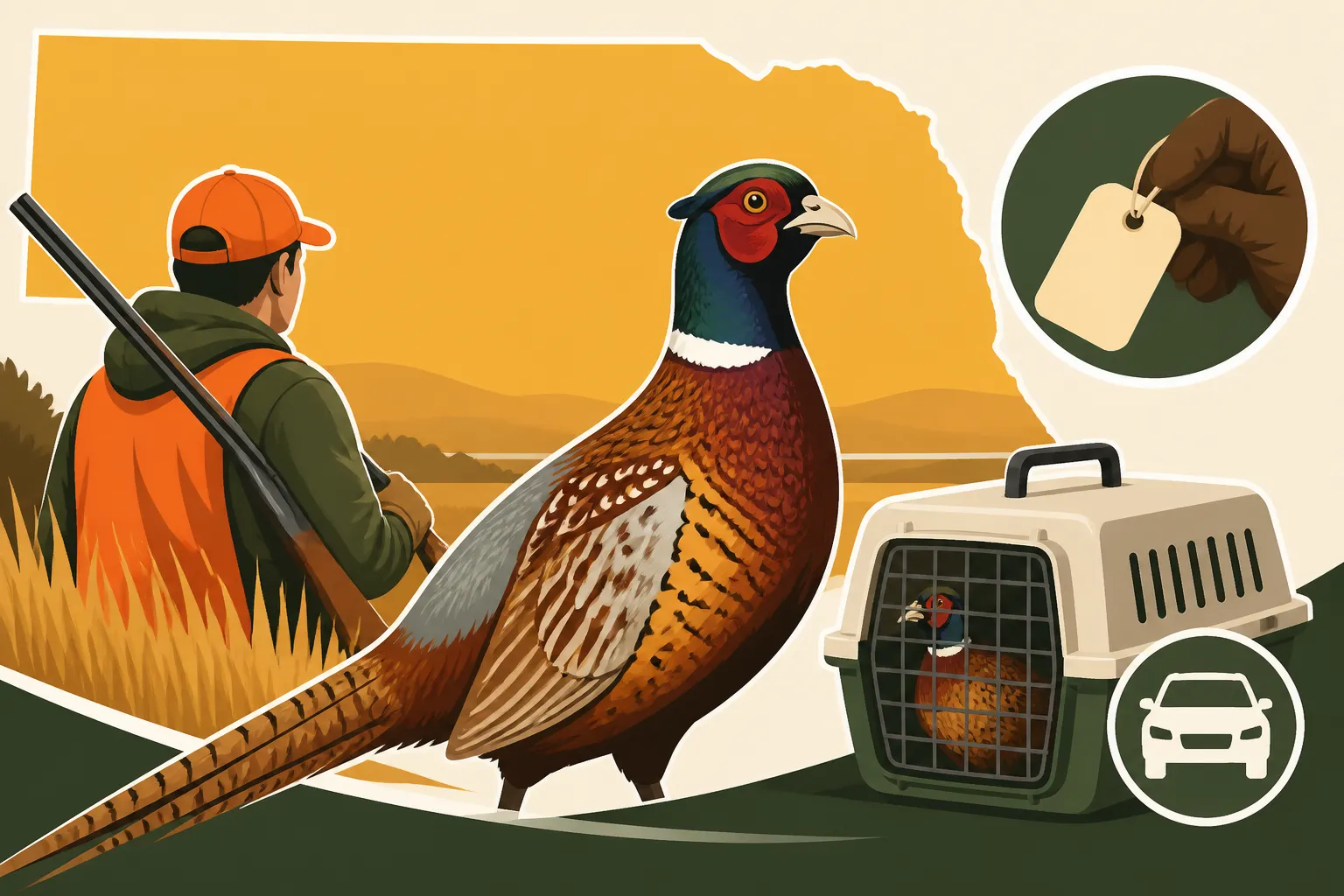
Unlike big game where a physical tag is affixed directly to the animal, pheasant tagging in Nebraska often relies on maintaining the "head or a fully feathered wing" on the bird. This isn't about slapping a sticky label on a pheasant, but rather ensuring that enough of the bird's natural features remain intact to allow for species and sex identification. The Nebraska Game and Parks Commission (NGPC) mandates this for all small game birds, including pheasants, for a very practical reason: it's how conservation officers can verify that the bird you've harvested is a legal species and, in the case of pheasants, a rooster, which often have different bag limits than hens.
This rule means that the moment your bird is down and you've confirmed it's a pheasant and a rooster, you shouldn't immediately gut it or pluck it clean if you plan to transport it. The head or a fully feathered wing must remain attached until the bird reaches your personal residence or a commercial processing facility. This is especially crucial for non-residents or those hunting far from home who might be staying in a hotel or camp. Your temporary lodging doesn't count as your "personal residence" for this purpose. Imagine you’ve just had a fantastic day hunting pheasants in the Sandhills, maybe even utilizing some of the numerous tracts available through the Hunting Open Fields and Waters Tracts for Pheasants program, and you're heading back to your motel in Broken Bow. If you’ve plucked your birds clean, you could face questions from a conservation officer during a routine stop. It's much simpler to leave them intact.
Information Required for Transport
While you don't typically "tag" a pheasant with a physical paper tag like you would a deer, the underlying principle of identification remains paramount. The attached head or wing acts as your natural "tag," providing the necessary information visually. However, this doesn't mean you're free from other responsibilities. When transporting game, you always need to have your valid hunting permit and Habitat Stamp with you. These are your proof of legal right to hunt and possess game. If you’re a resident, this might be second nature, but for non-residents, understanding Nebraska Habitat Stamp and Hunter Education requirements is critical.
Beyond simply having the permit, you, as the hunter, are responsible for knowing and adhering to the Upland Season Dates and Bag Limits. This includes the daily bag limit and the possession limit. For instance, if the daily bag limit for pheasants is three roosters, you can't have five in your cooler unless some were harvested on a previous day and are part of your possession limit. An officer might ask where and when your birds were harvested if you have multiple days' limits. Keep records, even if it's just a mental note or a quick entry in a hunting app like GoHunt. This level of detail helps prevent misunderstandings and demonstrates your adherence to the law.
Proper Transport of Pheasants in Nebraska
Once you've harvested your pheasant, getting it from the field back to your home kitchen or processor requires careful attention to detail. The rules aren't designed to be difficult, but to ensure that wildlife regulations can be enforced effectively.
Whole Carcass vs. Processed Birds
The rule about leaving the head or a fully feathered wing attached is absolutely key here. This means if you're cleaning birds in the field, which many hunters prefer to do to lighten their load or cool the meat, you need to be strategic. You can gut a bird, removing the entrails, but you must leave either the head or one fully feathered wing attached. This allows law enforcement to clearly identify the species (pheasant) and its sex (rooster, by the head plumage or the presence of spurs on the legs, though the wing is often the easiest and most reliable visual).
Consider a scenario: you and your hunting buddies have walked several miles through some dense milo stubble and picked up a few birds, maybe even getting a few extra flushes thanks to practicing good Walking Milo and Corn Stubble for Pheasants techniques. You’re ready to clean them before the long drive home. You can field dress them – remove the guts to cool the meat down faster, especially on a warmer early-season day. But don't pluck them completely or remove the head and both wings. Pick one, the head or a wing, and leave it fully attached. If you decide to completely process the bird in the field, meaning plucking and butchering it into pieces, you then need to maintain evidence of species and sex for each bird, often by keeping a leg or wing attached to a portion of the meat or by clearly labeling each package with the species, date, and location of harvest. While this is permissible, it's often more complicated than simply leaving the head or a wing on. Most hunters opt for the latter until they reach their final destination.
Maintaining Proof of Species and Sex
This point cannot be stressed enough, especially when you're looking at the various upland birds that call Nebraska home. Not all upland birds have the same bag limits or even open seasons. For example, while pheasants are abundant, you might also encounter sharp-tailed grouse or prairie chickens in certain areas, particularly in the Sandhills. If you're hunting in an area where multiple species might be present, maintaining proof becomes even more critical.
A small, easy-to-read tag or label on a cooler or game bag, indicating the number of birds and the date of harvest, can be incredibly helpful for both you and any conservation officer you encounter. Think of it as your personal logbook. While not explicitly required for pheasants, it’s a good practice that hunters using advanced planning tools like GoHunt often incorporate into their trip logistics. It demonstrates a commitment to ethical hunting and compliance. If you're harvesting multiple pheasants over several days, clearly separating them (e.g., in different bags within a cooler) and labeling them by date can prevent confusion regarding the Nebraska Pheasant Daily Bag Limit.
| Scenario | Rule to Follow | Why It's Important |
|---|---|---|
| Field Dressing | Remove entrails, but leave head or one fully feathered wing attached. | Allows identification of species (pheasant) and sex (rooster) by law enforcement. |
| Full Processing | If plucked/butchered, keep a piece of the wing or head with the meat, or label. | Verifies legal harvest; more complex, usually done at home or processor. |
| Transporting | Have valid hunting permit, Habitat Stamp, and keep head/wing attached until home. | Proof of legal right to hunt and possess; avoids fines during transport stops. |
| Multiple Days' Harvest | Separate birds by date or clearly label to distinguish daily bag limits. | Prevents exceeding possession limits and clarifies compliance for officers. |
| Interstate Travel | Check regulations of both Nebraska and your destination state. | Many states have stricter rules for importing game, especially regarding CWD. |
Transporting Across State Lines
This is where things can get a little more complex, especially for non-resident hunters who come to Nebraska for its renowned pheasant hunting. While Nebraska's rules for internal transport are fairly straightforward, the moment you cross state lines, you become subject to the laws of your destination state as well. Some states have very strict rules about importing game animals, particularly concerning Chronic Wasting Disease (CWD). While pheasants are not susceptible to CWD, these rules often apply broadly to all harvested game to prevent any potential spread.
Always, and I mean always, check the game and fish regulations of your home state before you leave Nebraska. Some states may require game birds to be fully processed (no head or wings attached) before entry, or they may have specific packaging or labeling requirements. If you're flying, TSA and airline regulations will also come into play, which usually means fully processed, well-packed, and often frozen birds in checked luggage. A quick call to your state's game agency or a visit to their website will save you a lot of headache and potential legal trouble. Think of it as part of your pre-hunt planning, much like checking the Nebraska Pheasant Season Opening Date.
Specific Scenarios and Common Questions
Hunting isn't always a solitary endeavor, and rules can sometimes feel a bit murky when you add other people or unique situations to the mix. Let's dig into some common questions that arise regarding pheasant transport.
Hunting on Public vs. Private Land
The fundamental tagging and transport rules for pheasants don't change whether you're hunting on public land, like a Wildlife Management Area (WMA), or on private land where you have permission. The bird is a bird, and the rules apply consistently. However, there are often additional considerations on public lands. For instance, some WMAs might have specific vehicle access rules that impact how you retrieve your birds, or certain areas might be designated as "walk-in only." While this doesn't directly affect tagging, it certainly influences your method of transport from the field to your vehicle.
On private land, the landowner's preferences might also come into play. While they can't override state law, they might ask you to clean birds in a certain area or to dispose of offal in a particular way. Always be respectful of these requests. The core requirement of leaving the head or wing attached for transport, until you reach your final processing destination, remains unchanged regardless of land ownership.
When Hunting with a Group
Group hunts are a staple of pheasant culture, especially when you're working a field with blockers and drivers. But who "owns" the bird when multiple shots are fired, or when someone else retrieves it? In Nebraska, the person who shoots the bird is considered the harvester and is responsible for it. This is important for bag limits. If you shoot three roosters, they count against your daily bag limit, even if your friend picks them up.
When transporting as a group, it’s best practice to keep each hunter’s birds separated and clearly identifiable. This could mean individual game bags, or simply careful arrangement in a shared cooler. If you have five pheasants in a cooler, and there are two hunters in your group, an officer needs to easily verify that no individual has exceeded the Nebraska Pheasant Daily Bag Limit. Using a small tag inside each game bag with the hunter's name and permit number, perhaps along with the harvest date, is an excellent way to keep everything above board and avoid potential issues. This is an area where a little organization goes a long way, especially after a successful day where everyone contributes to the bag.
Rules for Youth Hunters
Nebraska actively encourages youth participation in hunting through its mentored hunt programs and specific youth seasons. The good news for young hunters and their mentors is that the tagging and transport rules for pheasants are generally the same. A youth hunter, like any other permit holder, is responsible for their harvested birds. The mentor's role is crucial in teaching these rules and ensuring compliance.
If a youth hunter has harvested a pheasant, they must still maintain the head or a fully feathered wing until the bird reaches its final destination. Their youth permit and Habitat Stamp (if required for their age) must be readily available. The mentor is responsible for ensuring the youth understands these regulations and follows them. It's a fantastic opportunity to instill good habits early on, reinforcing that ethical hunting extends beyond the shot to proper game care and legal compliance.
Avoiding Common Pitfalls and Violations
Nobody wants to deal with a conservation officer under negative circumstances. Understanding common mistakes and how to avoid them can save you a lot of stress and potential penalties.
The Importance of a Valid Permit
This might seem obvious, but it's the foundation of all legal hunting. You absolutely must have a valid Nebraska Hunting Permit and Habitat Stamp before you step into the field. This isn't just a suggestion; it's the law. An officer can, and will, ask to see these documents. Modern technology makes it easier than ever to carry these digitally on your phone through the GoHunt app or the NGPC website, but always ensure your device is charged and accessible.
Beyond having the permit, it must be the correct type for what you're hunting. For pheasants, a small game permit is usually sufficient, but always double-check the current regulations. If you're a non-resident, your permit will also reflect that. Trying to hunt without a valid permit, or with an expired one, is a serious violation that can result in hefty fines, loss of hunting privileges, and confiscation of your equipment and harvested game. It's a preventable mistake that no ethical hunter should ever make.
Consequences of Non-Compliance
The Nebraska Game and Parks Commission takes wildlife violations seriously, and for good reason. These rules are in place to manage wildlife populations, ensure fair chase, and prevent illegal activities. Violations related to tagging and transport of pheasants can include:
- Fines: These can range from a few hundred dollars to more substantial amounts, depending on the severity and nature of the violation.
- Forfeiture of Game: Your harvested pheasants may be confiscated. Imagine the disappointment of losing the birds you worked so hard for.
- Loss of Hunting Privileges: Repeat offenders or those committing severe violations could face suspensions or revocations of their hunting permits, not just in Nebraska but potentially in other states through interstate compacts.
- Criminal Charges: While less common for minor tagging issues, severe violations, especially those involving exceeding bag limits significantly or poaching, can lead to misdemeanor or even felony charges.
The easiest way to avoid all these consequences is simply to know and follow the rules. If you're ever unsure, the NGPC website is an invaluable resource, or a quick call to a local conservation officer can clarify any ambiguities. They are there to help educate and enforce, and often appreciate hunters who make an effort to be compliant. Remember that good hunters are stewards of the land and its wildlife, and that includes respecting the legal framework that protects these resources.
Disclaimer
Please note: This article is intended for informational purposes only and does not constitute legal advice. Hunting regulations can change. Always consult the most current Nebraska Game and Parks Commission hunting guide or website for the official and most up-to-date rules and regulations before heading afield.