Hunting Turkeys With a Bow in Nebraska
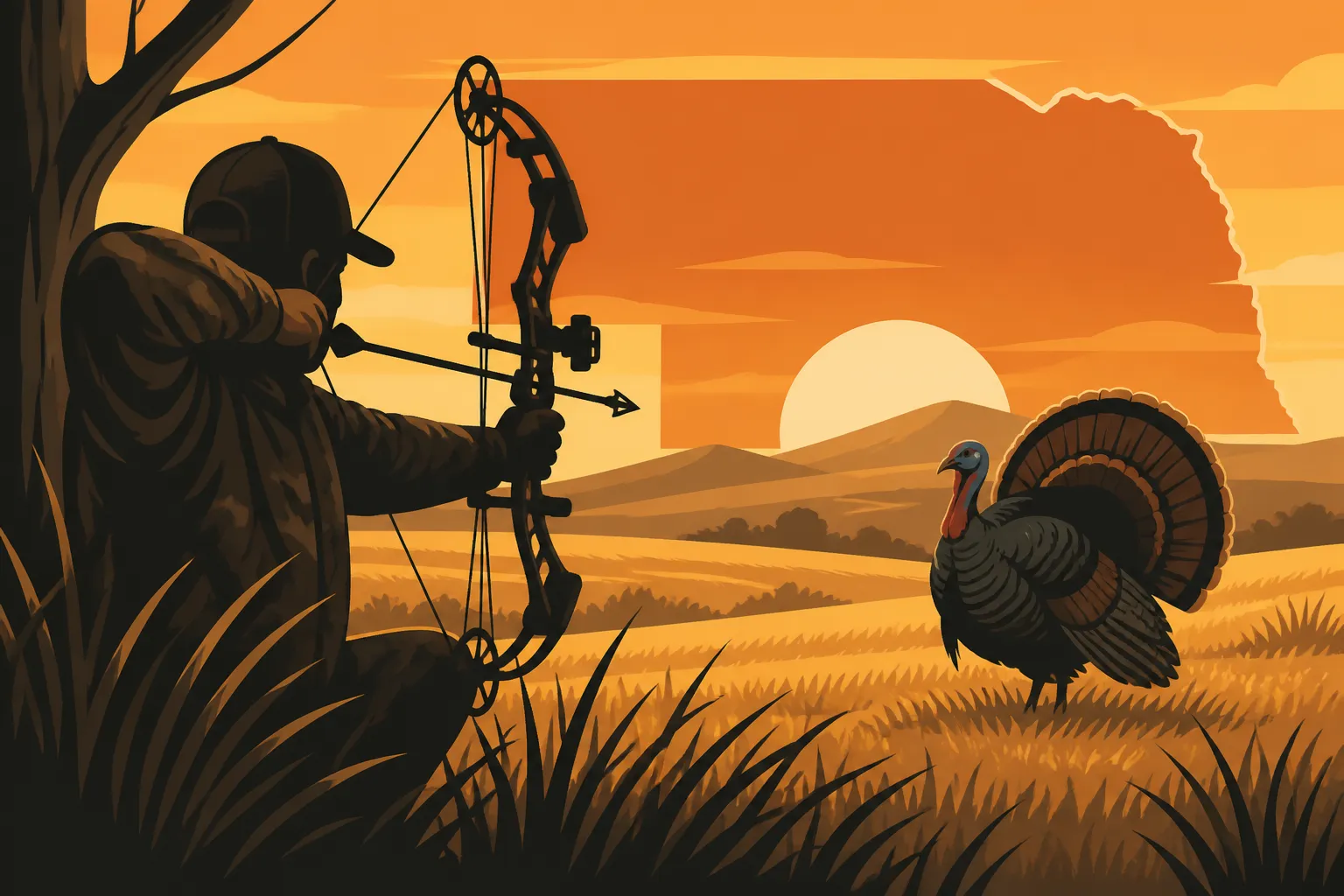
Bowhunting spring gobblers in Nebraska can be one of the most exhilarating and, let's be honest, frustrating pursuits in the hunting world. Getting a wary tom within bow range requires a completely different mindset than hunting with a shotgun, demanding patience, stealth, and a deep understanding of turkey behavior. This comprehensive guide is here to walk you through the nuances of successful bowhunting for turkeys in Nebraska, helping you overcome those close-range challenges.
Navigating Nebraska's Turkey Seasons for Bowhunters
Before you even think about stringing an arrow, you need to understand the framework of Nebraska's turkey seasons. The Nebraska Game and Parks Commission (NGPC) sets the regulations, and being familiar with them is your first step to a successful and legal hunt.
Understanding Spring Turkey Permit Types and Dates
Nebraska offers spring turkey permits that are typically available online and through vendors. For bowhunters, the same permits apply as for firearm hunters, giving you the flexibility to choose your weapon. It's crucial to check the current Nebraska Spring Turkey Season Dates each year, as they can sometimes shift slightly. Generally, the spring season runs from mid-April through late May, offering a generous window of opportunity. Remember, Nebraska also has a specific youth turkey weekend that often precedes the general opener, which is a fantastic opportunity to introduce younger hunters to the sport.
Permits are often unit-specific or statewide. While resident permits are generally easier to acquire, nonresident hunters face a bit more competition, especially with The 10,000 Nonresident Turkey Permit Cap that can lead to permits selling out quickly. It's always a good idea to secure your permits as soon as they become available, which typically happens around the Nebraska Spring Turkey Permit On-Sale Date in early January. You can usually purchase How Many Spring Turkey Permits You Can Buy as well, which allows for multiple harvest opportunities if you're lucky enough to fill your first tag early.
General Hunting Rules and Regulations
Beyond permits and dates, there are other critical rules for bowhunters. Legal shooting hours generally extend from 30 minutes before sunrise to sunset, giving you plenty of time in the field. Unlike deer hunting, there are no specific draw weight minimums for turkey, but you want a setup that can deliver enough energy for a clean kill. Broadheads must be "razor sharp" and have a minimum of two cutting edges. While mechanical broadheads are widely popular for turkeys due to their large cutting diameter, fixed-blade broadheads are also perfectly legal and effective. Make sure to review any regulations regarding baiting and electronic calls, as these are typically prohibited for wild turkeys.
Essential Bowhunting Gear and Setup for Turkeys
Bowhunting turkeys demands specialized gear and a meticulously tuned setup. You're trying to achieve a lethal shot on a relatively small target, often within spitting distance. Every detail matters, from your bow to your boots.
Bow and Broadhead Choices
For turkeys, shot placement is paramount, and your equipment needs to be up to the task. Most modern compound bows or traditional recurves and longbows are perfectly capable. The key is comfort and accuracy. Practice, practice, practice at the exact distances you expect to shoot – typically under 30 yards. Many hunters prefer a higher arrow weight for turkeys, as it provides more kinetic energy and momentum, which can be crucial for penetration through bone and feathers. When considering Fixed Versus Mechanical Broadheads, many turkey bowhunters lean towards mechanicals with a large cutting diameter (1.5 to 2 inches or more). These broadheads create a massive wound channel, increasing the chances of hitting vital organs even if your shot is slightly off. Fixed blades are also highly effective, especially with razor-sharp edges designed for maximum tissue damage. Just ensure whatever you choose flies true with your arrow setup.
Ground Blinds and Decoys
Let's be real, trying to draw a bow on an alert gobbler in the open is an exercise in futility. That's why ground blinds are almost universally considered essential for bowhunting turkeys. A good ground blind offers concealment for your movements, hides your draw, and helps contain scent. Look for blinds that are spacious enough to comfortably draw your bow without hitting the sides, and durable enough to withstand the notorious Nebraska winds. Some excellent options include those from Primos, Ameristep, and Browning, which often feature blackout interiors and multiple shooting windows. For advice on specific features, you might want to read up on Ground Blinds That Handle Nebraska Wind.
Here's a quick comparison of common ground blind types:
| Blind Type | Pros | Cons | Ideal Use Case |
|---|---|---|---|
| Pop-Up Hub Blind | Quick setup, portable, good concealment | Can be noisy in wind, less natural profile | Ambush hunting, field edges, open terrain |
| Panel Blind | Lightweight, adaptable, lower profile | Less concealment for movement, tricky setup | Spot-and-stalk additions, quick cover |
| Natural Blind | Free, blends perfectly, low profile | Time-consuming to build, limited movement | Permanent setups, heavily wooded areas |
| Layout Blind | Excellent concealment in open fields | Limited movement, hot, uncomfortable for long sits | Field hunting geese/turkeys in open stubble |
Decoys are your best friend for pulling a gobbler into bow range. A classic setup involves a hen decoy (or two) with a jake or submissive tom decoy nearby. The jake decoy acts as an intruder, often enraging dominant gobblers enough to charge in for a fight. Placement is key: position your decoys within 10-20 yards, directly in front of your blind, slightly quartering away. This presents an ideal broadside or quartering-away shot angle when the gobbler comes in to interact with the decoys. Brands like Avian-X and Zink make incredibly realistic decoys that can truly make the difference.
Camouflage and Scent Control
While turkeys don't have the nose of a deer, they have some of the best eyesight in the animal kingdom. Full camouflage, including face paint or a mask and gloves, is absolutely non-negotiable. Break up your silhouette with patterns that match the Nebraska terrain you'll be hunting in – whether that's open prairie, river bottoms, or the Pine Ridge. Layering is important, especially during spring in Nebraska, where mornings can be chilly and afternoons can warm up significantly.
Scent control is less critical than for deer, but it never hurts. A good practice is to wash your hunting clothes in scent-free detergent and store them properly. The main goal is to minimize unnatural odors that might alert a highly sensitive gobbler.
Strategic Approaches for Bowhunting Nebraska Gobblers
Bowhunting turkeys isn't just about calling; it's about a combination of scouting, precise setup, and knowing when to be aggressive and when to stay put. Nebraska's diverse landscapes, from the river corridors to the Sandhills, offer varied hunting experiences, each requiring a slightly different touch.
Scouting and Location Selection
Pre-season scouting is invaluable. Head out to your hunting grounds a few weeks before the season opens. Listen for gobbling at dawn, look for tracks, droppings, strut marks, and dusting bowls. These signs tell you where turkeys are actively using the area. Focus on pinch points, field edges, timber breaks, and water sources. Areas with good roosting trees (often tall cottonwoods along rivers or in shelterbelts) and nearby feeding areas are prime spots. Using mapping tools like GoHunt can be incredibly helpful for identifying potential roosting areas, public land boundaries, and access points. A little digital legwork before you even set foot in the field can save you countless hours.
Once you've identified a promising area, choose your blind location carefully. Set it up well in advance if possible (at least a week) to allow the turkeys to get used to its presence. Position it so you have good visibility, a clear shooting lane to your decoy spread, and a solid backdrop to break up your silhouette. Think about sun position – you want the sun at your back, not in your face, to avoid silhouetting yourself and to make it harder for turkeys to see into your blind.
Mastering Turkey Calling Techniques
Calling is the art and science of turkey hunting. For bowhunting, you don't necessarily need to be an award-winning caller, but you need to be realistic and convincing. Start with soft yelps and clucks as day breaks, listening for a response. Once a gobbler sounds off, try to pinpoint his location. Then, a few more yelps and clucks. If he answers, try to sound like a hen interested but not desperate. The goal is to make him curious enough to come investigate, not to call him all the way to your lap.
Sometimes, less is more. Over-calling can spook wary birds, especially on public land. Learn to use a variety of calls: diaphragm calls for hands-free operation (crucial when you're at full draw), slate calls for realistic clucks and purrs, and box calls for volume. Knowing when to use which call, and when to just shut up and listen, comes with practice. Consider practicing various calls by checking out resources like Calling Spring Gobblers in Nebraska Timber. Remember that different subspecies of turkey found in Nebraska, such as Easterns and Merriams, might respond slightly differently to calls, though generally, the core calling techniques remain similar. The Nebraska Turkey Population Decline in recent years makes it even more important to be patient and ethical in your approach.
Decoying and Shot Placement for Bowhunters
Once you've set up your blind and decoys, patience is your greatest virtue. Turkeys can approach silently, so stay vigilant. When a gobbler commits and heads towards your decoys, let him get within your comfort zone – ideally 10-20 yards. Wait for the perfect shot opportunity.
Turkey anatomy for bowhunting is critical. Unlike deer, where you aim for the vitals behind the shoulder, a turkey's vitals are much smaller and protected by wings. The most reliable shot placements for turkeys with a bow are:
- Head and Neck Shot: This is a kill-or-miss proposition, but it’s instantly lethal if you connect. Specialized broadheads like the Guillotine are designed for this, but even a regular broadhead can do the job if you're precise. Only attempt this if the turkey is standing perfectly still and you are extremely confident in your shot.
- Back Shot (Spine): As a gobbler struts, his back feathers flare. A shot aiming for the base of the wing, or the center of the back, can sever the spine, immobilizing the bird. This is a good option when the bird is facing away or broadside, presenting its back.
- Wing Butt Shot: Aiming for the "wing butt" – where the wing connects to the body – can break the wing and penetrate the vitals, particularly the heart and lungs. This is a more forgiving shot than the head/neck and offers a larger target area.
Avoid body shots through the breast or stomach, as these are often non-lethal and can lead to a wounded bird. Always wait for the bird to be calm and stationary. If you're on public land, remember that Run-and-Gun Turkey Tactics on Nebraska Public Ground might be more effective in certain situations, but still requires the right shot opportunity.
Overcoming Common Challenges and Maximizing Success
Even with the best gear and strategy, bowhunting turkeys is tough. Nebraska's variable weather and pressured birds add layers of complexity. Understanding and adapting to these challenges is key to filling your tag.
Dealing with Wary Gobblers and Pressure
Nebraska turkeys, especially those on public land or in areas with consistent hunting pressure, can be incredibly wary. They've seen it all, or at least enough to make them jumpy. If a gobbler hangs up at 60 yards, strutting just out of range, resist the urge to overcall. Sometimes, going silent for a while or making a soft cluck can pique his interest enough to close the distance. Another tactic is to try to call him past your position. Turkeys often like to circle callers to get a better view, so setting your blind up a bit off a natural travel corridor can work in your favor.
If you’re hunting on public ground, expect competition. Other hunters can inadvertently spook birds, or even set up too close. Being aware of your surroundings, utilizing tools like the Public Access Atlas, and moving to less pressured areas can make a difference. Early season can sometimes mean less pressure as well.
Adapting to Nebraska's Weather
Nebraska's spring weather is, in a word, unpredictable. You can start the day in freezing temperatures, only for it to be 70 degrees by noon. This is why layering is so important. Dress in moisture-wicking base layers, insulating mid-layers, and a waterproof/windproof outer shell. A strong wind can make calling difficult, as your calls won't carry as far, and turkeys will have a harder time hearing you. In these conditions, try to set up in sheltered areas or closer to dense cover. Rain can also be a factor, often dampening gobbling activity, but sometimes making turkeys more approachable as they seek shelter or open areas to dry off. If you plan to hunt later in the season, checking out a guide on Hunting Nebraska Turkeys in Late Season can be helpful as turkey behavior and foliage change.
Post-Shot Procedures and Recovery
After you release an arrow, observe the turkey's reaction closely. If it runs or flies off, mark the exact spot where it was standing. Wait at least 30 minutes, or longer if you suspect a marginal hit, before beginning to track. This gives the bird time to expire. Look for feathers, blood, and disturbed ground. Turkeys can be tough and cover surprising distances, even with a fatal hit. If you find blood, move slowly and systematically, looking for more sign. If you lose the trail, expand your search in concentric circles from the last confirmed sign. Remember to properly tag your bird immediately after recovery and know the current Nebraska Game and Parks harvest reporting requirements.
Bowhunting turkeys in Nebraska is a truly rewarding experience, one that tests your patience, skill, and woodsmanship. By understanding the regulations, preparing your gear meticulously, and employing smart strategies, you'll be well on your way to earning a hard-fought spring gobbler.
Disclaimer
The information provided in this article is for general guidance and informational purposes only. Hunting regulations, season dates, and permit requirements can change. Always consult the most current Nebraska Game and Parks Commission regulations prior to any hunting activity to ensure compliance.