Upland Season Dates and Bag Limits
Figuring out exactly when you can hit the fields for pheasants or what the daily limit is for quail can feel like a constantly shifting puzzle, especially with varying dates and specific unit regulations across our great state. It’s frustrating when you just want to plan your hunt, but the details seem buried in a maze of regulations. This guide is here to untangle all those season dates and bag limits for Nebraska's popular upland game birds and small game, giving you a clear picture so you can plan your adventures with confidence.
Understanding Nebraska's Upland Bird Landscape
Nebraska might be known for its big game and waterfowl, but the upland bird hunting here is truly exceptional, offering diverse opportunities from the classic pheasant fields to the wide-open prairies where grouse roam. Each species has its own habitat preferences and, consequently, its own set of rules and seasons designed to manage populations effectively. It's not just about what you're hunting, but where you're hunting it.
The Rich Variety of Nebraska's Upland Game
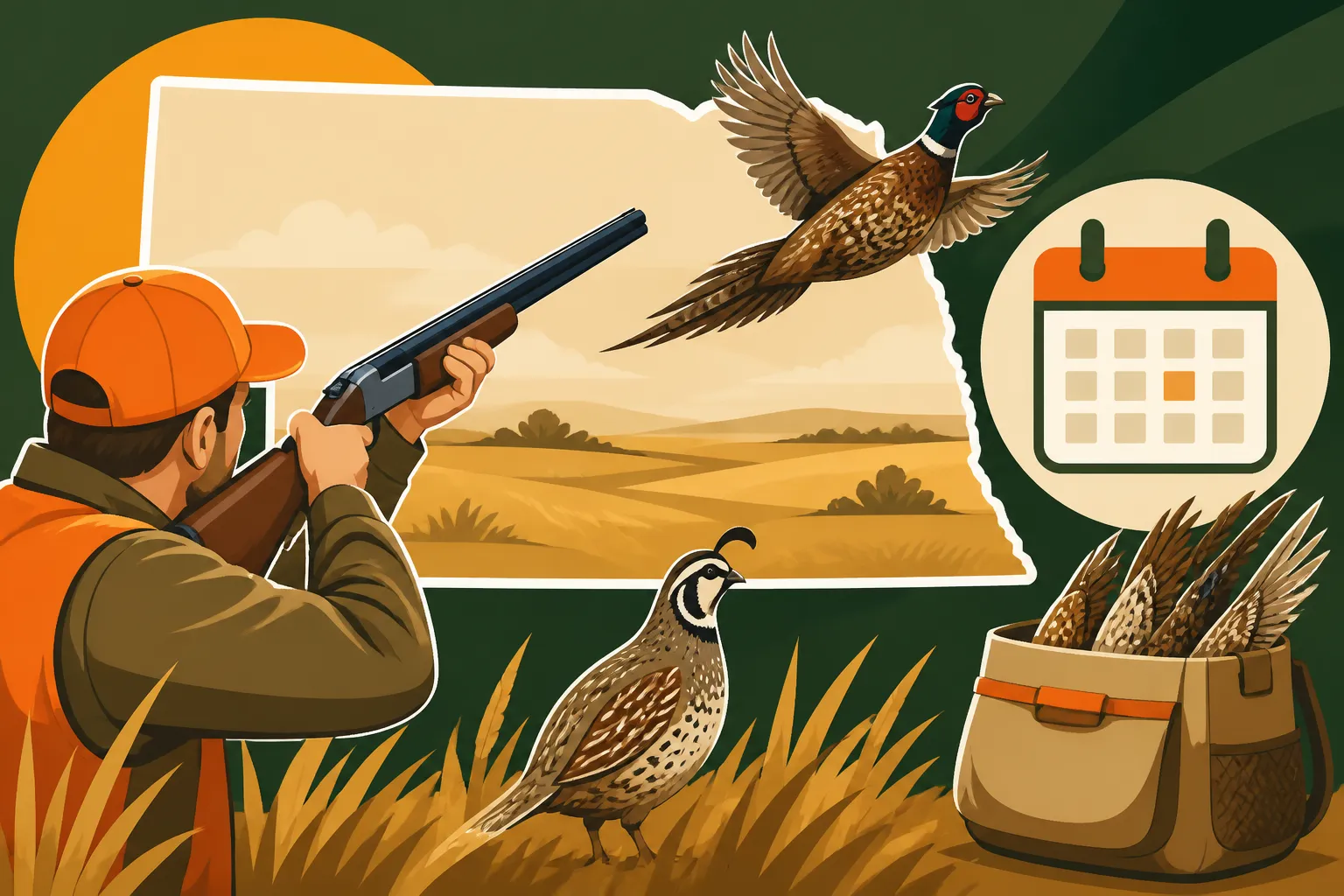
Our state is home to a fantastic array of upland birds, each offering a unique hunting experience. The ring-necked pheasant, of course, is king for many, with its explosive flush and vibrant colors. But don't sleep on the bobwhite quail in the southeast, with their tight coveys and whistling calls, or the prairie grouse – sharp-tailed grouse and greater prairie-chickens – that offer a challenging hunt in the Sandhills. Beyond these marquee birds, we also have opportunities for Hungarian partridge in certain areas, as well as abundant small game like cottontail rabbits and squirrels. Understanding the specific characteristics of each of these species and their preferred habitats is the first step in becoming a successful upland hunter in Nebraska.
General Upland Season Structure
Generally speaking, Nebraska's upland bird seasons kick off in late October for pheasants, quail, and partridge, and extend through much of January. Grouse seasons typically start a bit earlier in September and conclude in late January. Small game like rabbits and squirrels have much longer seasons, often running from early summer well into the following winter. These broad frameworks are then refined with specific opening and closing dates, daily bag limits, and possession limits that vary by species and sometimes even by region. It's crucial to consult the latest Nebraska Game and Parks Commission (NGPC) hunting guide each year, as dates and rules can see minor adjustments. For instance, sometimes youth seasons open a week or two earlier, giving our younger hunters a head start before the main season rush, which is a fantastic way to introduce them to the sport.
Ring-Necked Pheasant: Seasons and Bag Limits
The pheasant is undeniably the most iconic upland game bird in Nebraska, drawing hunters from all over. The thrill of a rooster bursting from cover, cackling as it gains altitude, is a quintessential experience that keeps us coming back year after year. However, successful pheasant hunting involves knowing not just where to go, but exactly when you can go and how many birds you can legally take.
Core Pheasant Season Dates
The general pheasant season in Nebraska typically opens in late October, usually the last Saturday of the month, and runs through January 31st of the following year. This long season offers plenty of opportunities, from mild, sunny autumn days to crisp, snow-covered winter mornings. The opening weekend is always a bustling affair, with hunters eager to walk the corn stubble and CRP fields. If you're planning a trip, be aware that while the season is generous, pheasant populations can fluctuate based on factors like winter severity and spring nesting success. Hunters often look forward to the "second opener" after the deer firearm season, when many fields have been harvested and birds might be concentrated in thicker cover. For detailed strategies on how to navigate these fields, you might find our guide on Walking Milo and Corn Stubble for Pheasants particularly useful.
Daily and Possession Limits for Roosters
When it comes to pheasants, it's always about the roosters. Nebraska regulations strictly limit hunters to male pheasants only, which is a critical conservation measure to protect the breeding hens. The daily bag limit for pheasants is generally 3 roosters. This means you can legally harvest three male birds per day. The possession limit, which is the total number of birds you can have on your person, in your vehicle, or stored at your temporary lodging, is typically 12 roosters. This possession limit is especially important for nonresident hunters or those on multi-day trips, ensuring they don't exceed the legal amount of game harvested over several days. Always ensure you can properly identify a rooster in flight before taking a shot, as accidental hen harvests can lead to fines.
Youth Season and Special Considerations
Nebraska also offers a fantastic youth pheasant season, usually held a week or two before the general opener. This allows young hunters, often those 15 years old and younger, to hunt pheasants under adult supervision without the pressure of crowds. The daily bag limit during the youth season is typically 2 roosters, with a possession limit of 8. It's an incredible opportunity for mentors to teach crucial hunting skills, safety, and ethics in a more relaxed environment. Beyond the youth season, hunters should also be mindful of orange requirements. During the November firearm deer season, even pheasant hunters are required to wear blaze orange, usually a minimum of 400 square inches of visible orange above the waist. This is a crucial safety measure that applies to all hunters in the field during that period. For more specific details on these rules, you can consult resources like Nebraska's 400-Square-Inch Orange Rule.
Bobwhite Quail: Seasons and Regulations
The bobwhite quail, with its distinctive "bob-WHITE!" call, offers a unique and often challenging hunting experience, particularly in the dense coverts of southeastern Nebraska. Their habit of holding tight and exploding into a covey rise is truly exhilarating.
Quail Season and Geographic Focus
Nebraska's quail season generally runs concurrently with the pheasant season, usually opening on the last Saturday of October and extending through January 31st. While pheasants are widespread, bobwhite quail are primarily concentrated in the eastern and southern portions of the state, particularly in areas with good brushy cover, timber edges, and CRP fields. The southeast region, in particular, is often lauded as prime bobwhite country, boasting higher densities. If you're targeting quail, focusing your efforts in these specific regions will significantly increase your chances of success. Our guide to Quail Coveys in Nebraska Shelterbelts provides excellent insights into finding these birds in their preferred habitats.
Daily and Possession Limits for Quail
Quail hunting in Nebraska allows for a generous daily bag limit, typically 5 birds, with a possession limit of 20. Unlike pheasants, there are no gender restrictions for quail; you can harvest both male and female bobwhites. The challenge with quail often isn't the limit, but finding those elusive coveys and getting a clean shot as they burst from cover. A good bird dog is almost essential for consistently finding and retrieving quail, especially when they scatter into thickets. Hunters should always practice good dog management, especially on warmer days, as detailed in guides like Water and Heat Risk for Bird Dogs, to ensure their canine companions stay safe and effective.
Co-Mingled Limits and Habitat Impact
When you're hunting in areas where both pheasants and quail exist, known as "co-mingled" areas, it's important to remember that the daily bag limits for each species are separate. For example, on a single day, you could theoretically harvest 3 pheasants and 5 quail, as long as you adhere to each species' specific limit. The health of Nebraska's quail populations is heavily tied to habitat quality, particularly the presence of diverse native grasses, plum thickets, and woodland edges that provide both food and escape cover. Programs like CRP have a significant impact on quail numbers, and understanding CRP Acres and Nebraska Bird Numbers can help you identify promising hunting grounds. Hard winters or extremely wet springs can sometimes impact quail survival and nesting success, so local conditions can vary from year to year.
Prairie Grouse: Sharptails and Prairie Chickens
For those seeking a more expansive, challenging, and truly unique upland experience, Nebraska's prairie grouse hunting in the Sandhills is an unparalleled adventure. Both sharp-tailed grouse and greater prairie-chickens call these vast grasslands home, offering an incredible opportunity to walk for miles in stunning, open country.
Grouse Season and Specific Range
The season for both sharp-tailed grouse and greater prairie-chickens generally opens earlier than pheasants and quail, typically in mid-September, and runs through January 31st. This earlier start allows hunters to pursue these birds before heavy snows, though late-season hunts can be incredibly rewarding. The hunting grounds for prairie grouse are almost exclusively found in Nebraska's Sandhills and the associated mixed-grass prairies in the north-central and western parts of the state. This expansive, often remote, landscape is where these magnificent birds thrive. If you're planning a trip specifically for grouse, you'll want to focus on units within or adjacent to the Sandhills. Information on Greater Prairie-Chicken Range in Nebraska and Sharp-Tailed Grouse Range in Nebraska can help pinpoint the best areas.
Daily and Possession Limits for Grouse
The daily bag limit for prairie grouse (sharp-tailed grouse and greater prairie-chicken combined) is typically 3 birds, with a possession limit of 12. These limits are for both species collectively, meaning you can't take 3 sharptails and 3 prairie chickens in one day; the total combined must not exceed 3. Accurately identifying whether you've flushed a sharp-tailed grouse or a prairie chicken on the wing can be tricky, especially for new hunters. Both are large, brown, chicken-like birds, but sharptails typically have a more pointed tail and often a more erratic flight pattern, whereas prairie chickens have a shorter, rounded tail and a more direct flight. Taking your time to distinguish between them, if possible, adds to the challenge and appreciation of the hunt.
The Unique Challenge of Hunting Prairie Grouse
Hunting prairie grouse is a marathon, not a sprint. It demands plenty of walking, often across vast, undulating sandhills, so good boots are essential. You might walk for hours before encountering a covey, but when you do, the flush is spectacular. These birds can hold tight, but once pressured, they often fly considerable distances. A good pair of binoculars, like those discussed in Binocular Magnification for the Sandhills, can be invaluable for spotting birds on distant hilltops or marking where a flushed covey landed. It's a truly immersive experience that connects you with the wild spirit of the Nebraska prairie, far from the typical farm country pheasant hunt.
Other Upland Opportunities: Partridge, Rabbits, and Squirrels
While pheasants, quail, and grouse take much of the spotlight, Nebraska offers a suite of other small game opportunities that are equally engaging and provide excellent ways to extend your hunting season or simply enjoy a different kind of challenge. Don't overlook these options, as they can provide thrilling action and delicious table fare.
Hungarian Partridge: A Niche Opportunity
Hungarian partridge, often simply called Huns, are less common across Nebraska than pheasants or quail, but they do exist in huntable numbers in specific areas, primarily in the northern and western parts of the state, often overlapping with grouse habitat. Their season usually aligns with pheasants and quail, opening in late October and running through January 31st. The daily bag limit is typically 3 birds, with a possession limit of 12. Huns are known for their fast, direct flight and their tendency to hold tight until nearly stepped on before flushing as an entire covey. They prefer open, rolling agricultural lands, often near stubble fields or winter wheat. Locating these pockets of birds can be tough, but the reward of a successful hunt for these challenging little birds is immense.
Cottontail Rabbits and Squirrels: Extended Seasons
For a truly accessible and long-running small game hunt, look no further than cottontail rabbits and squirrels. Their seasons are incredibly generous, often running from early summer, typically September 1st, through February 28th of the following year. This means you can pursue them for nearly six months, making them perfect for late-season outings after other bird seasons have closed, or for introducing new hunters to the field.
The daily bag limit for cottontail rabbits is usually 10, with a possession limit of 40, while squirrels (fox and gray combined) have a daily bag of 7 and a possession limit of 28. These high limits reflect their abundant populations across most of the state. Rabbits can be found in almost any brushy cover, shelterbelts, or fencerows, while squirrels are prevalent in timbered areas, especially around oak and walnut trees. Hunting them often involves less specialized gear and offers a chance to hone your shooting skills and stealth. Whether you're still-hunting a snow-covered river bottom for rabbits or stalking through a hardwood stand for squirrels, these hunts offer consistent action.
Essential Rules and Considerations for Upland Hunters
Beyond just knowing the dates and limits, there are several overarching rules and considerations that every upland hunter in Nebraska must adhere to. Understanding these details ensures a safe, legal, and enjoyable experience for everyone.
Permit Requirements and Hunter Education
Before you even step foot in the field, you need the right permits. All resident and nonresident hunters aged 16 and older are required to possess a valid Nebraska hunting permit. Additionally, a Nebraska Habitat Stamp is mandatory for all hunters 16 years of age and older, regardless of residency, when hunting game birds or animals. This stamp directly funds vital habitat improvement projects across the state, which benefits all wildlife, including our upland birds. For those born on or after January 1, 1977, completion of a certified hunter education course is also required to hunt in Nebraska. There are exceptions for apprentice hunters, but it's crucial to understand these requirements. You can learn more about Nebraska Hunter Education Age Requirement or Nebraska Habitat Stamp Requirements to ensure you're fully compliant.
Public Land Access and Regulations
Nebraska offers fantastic public hunting opportunities, particularly through its Wildlife Management Areas (WMAs) and the innovative Open Fields and Waters (OFW) program. The Public Access Atlas is an invaluable tool for locating these areas, providing detailed maps and information. While these areas offer great access, they often come with specific regulations. For example, some WMAs may have restrictions on vehicle access, camping, or even specific hunting methods. It's always a good practice to check the specific rules for any public area you plan to hunt. Using tools like GoHunt, you can overlay public land maps with your target species' habitat, making scouting and planning much more efficient. When hunting public ground, always be respectful of other users and remember that competition can be higher, especially on opening weekends. Consider heading deeper into areas that others might overlook, as detailed in guides like Hunting Open Fields and Waters Tracts for Pheasants.
Tagging, Transport, and Ethical Considerations
While upland birds generally don't require physical tagging like big game, there are still rules for transport. All harvested game birds must have at least one fully feathered wing or the head attached while in transport from the field to your permanent abode or a commercial processing facility. This allows game wardens to identify the species and, in the case of pheasants, the sex of the bird. Once processed, this requirement no longer applies.
Beyond the regulations, ethical hunting practices are paramount. This includes practicing good sportsmanship, knowing your safe zone of fire, and making clean, humane shots. Always ensure you've made every reasonable effort to retrieve downed birds, which is where a good bird dog truly shines. Be respectful of landowners, even on public access lands that might border private property, and always leave the land cleaner than you found it. Our hunting heritage depends on all of us upholding these values.
| Species | Season Opening | Season Closing | Daily Bag Limit | Possession Limit | Special Notes |
|---|---|---|---|---|---|
| Ring-Necked Pheasant | Late October (General) | January 31st | 3 Roosters | 12 Roosters | Youth season typically 1-2 weeks earlier (2/8) |
| Bobwhite Quail | Late October | January 31st | 5 Birds | 20 Birds | Primarily Eastern/Southern Nebraska |
| Sharp-tailed Grouse | Mid-September | January 31st | 3 Birds | 12 Birds | Combined with Greater Prairie-Chicken |
| Greater Prairie-Chicken | Mid-September | January 31st | 3 Birds | 12 Birds | Combined with Sharp-tailed Grouse |
| Hungarian Partridge | Late October | January 31st | 3 Birds | 12 Birds | Niche hunting, mostly Northern/Western |
| Cottontail Rabbit | September 1st | February 28th | 10 Rabbits | 40 Rabbits | Long season, widespread |
| Squirrel (Fox & Gray) | September 1st | February 28th | 7 Squirrels | 28 Squirrels | Long season, widespread in timbered areas |
Disclaimer
The information provided in this guide is for general informational purposes only and is not a substitute for the official Nebraska Game and Parks Commission Hunting Guide. Regulations can change, and it is every hunter's responsibility to consult the most current official regulations prior to hunting.