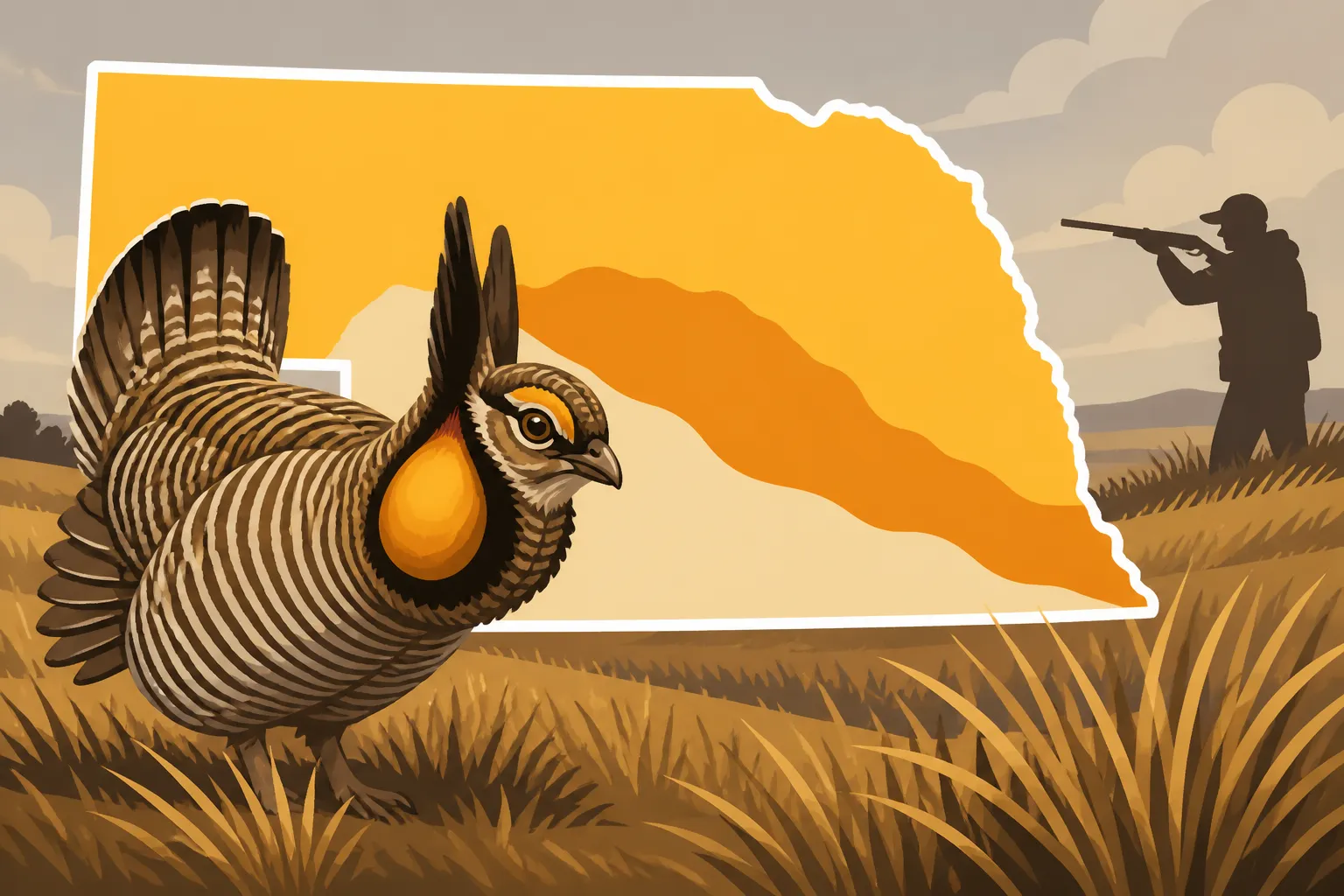
Greater Prairie-Chicken Range in Nebraska
Hunting greater prairie-chickens in Nebraska offers a truly unique, immersive experience, but understanding where these elusive birds call home can be incredibly challenging for even seasoned upland hunters. Unlike pheasants, which can thrive in certain agricultural settings, prairie-chickens demand vast expanses of intact native grassland, a landscape that has become increasingly rare. This guide aims to demystify the specific range and habitat requirements of greater prairie-chickens in Nebraska, helping you pinpoint their strongholds and appreciate the efforts dedicated to their conservation.
The Historical Sweep: Understanding Past and Present Range
To truly grasp where greater prairie-chickens exist today, we need to take a step back and understand the dramatic changes their habitat has undergone over the centuries. Nebraska, once a vast ocean of prairie, was their ancestral home, a testament to the sheer volume of wild spaces that once dominated the heartland.
Nebraska's Original Prairie Tapestry
Picture Nebraska centuries ago: an endless, waving sea of tallgrass and mixed-grass prairie, stretching as far as the eye could see. This was the undisputed kingdom of the greater prairie-chicken. Their booming calls echoed across nearly the entire eastern two-thirds of the state, from the Missouri River breaks to the fringes of the Sandhills. These birds thrived in these immense, interconnected grasslands, which provided everything they needed: dense nesting cover, abundant insects and seeds for food, and open, elevated areas for their famous courtship rituals, known as leks or booming grounds. These original prairies were a dynamic ecosystem, shaped by fire and grazing, which maintained the diverse structure necessary for prairie-chicken survival. Their populations were likely massive, a vibrant component of the original American prairie.
The Long Retreat: Why the Range Shrank
The arrival of European settlers brought profound and irreversible changes to this landscape. The plow was the single greatest driver of the prairie-chicken's decline. As homesteaders converted millions of acres of virgin prairie into croplands for corn, wheat, and soybeans, the birds' habitat was fragmented, isolated, and ultimately destroyed. The vast interconnectedness they relied upon vanished, replaced by a patchwork of fields and towns. Overhunting in unregulated eras also played a role, though habitat loss remains the dominant factor. Pesticide use, while not as impactful as habitat destruction, certainly didn't help, reducing insect populations that are crucial food sources for chicks. By the mid-20th century, the once widespread prairie-chicken had retreated to only a fraction of its former range, clinging to existence in the largest, least disturbed tracts of grassland. This dramatic reduction in their numbers and geographical spread is a stark reminder of humanity's impact on wild spaces.
Current Strongholds: Where Prairie-Chickens Still Roam
Today, the greater prairie-chicken's range in Nebraska is significantly diminished, largely confined to specific regions where expansive native grasslands persist. These areas offer a glimpse into Nebraska's natural heritage and represent crucial conservation targets.
The Unbroken Heart of the Sandhills
Without a doubt, the Nebraska Sandhills are the undisputed epicenter of the greater prairie-chicken's remaining population. This immense, 19,000-square-mile expanse of stabilized sand dunes, blanketed primarily by native mixed-grass prairie, provides the critical habitat these birds demand. The Sandhills are unique because their sandy soils generally prevent extensive cultivation, allowing for vast, unbroken tracts of grassland to endure. Here, the birds find the tall, dense cover necessary for nesting, the abundant insects for their chicks, and the open, slightly elevated ridges for their booming grounds. While the birds are scattered across this vast landscape, areas around the Valentine National Wildlife Refuge, the Bessey Ranger District within the Nebraska National Forest at Halsey, and the Samuel R. McKelvie National Forest are known for holding populations. When planning a trip to hunt these birds, understanding Nebraska Sandhills Public Ground Worth Walking is key, as these large areas offer the best chances of finding them. Many hunters utilize tools like GoHunt's mapping features to identify these expansive grasslands and plan their routes.
Eastern Pockets and Fringe Areas
While the Sandhills are the stronghold, there are occasional, isolated pockets of prairie-chicken activity in mixed-grass regions on the eastern fringe of their traditional range. These populations are generally much smaller, more fragmented, and often face greater pressures from agricultural encroachment. In some of these fringe areas, you might even encounter hybrids between greater prairie-chickens and the closely related lesser prairie-chicken, though the latter is primarily found further south and west. These eastern populations are particularly vulnerable to habitat loss and fragmentation, making their long-term viability a significant concern. For hunters, success in these fringe areas is often a matter of finding the largest, most undisturbed tracts of private rangeland where dedicated conservation efforts are in place. Always remember to check Nebraska Trespass and Permission Law before heading out on any ground that isn't clearly marked as public.
Distinguishing Habitat and Identifying "Lek" Locations
Successfully hunting greater prairie-chickens isn't just about knowing their general range; it's about understanding their specific microhabitats and, crucially, recognizing the tell-tale signs of their lekking grounds.
The Ideal Prairie-Chicken Address
Greater prairie-chickens are true connoisseurs of native grassland. They require large, contiguous blocks of prairie, ideally with a diverse mix of grass heights and species composition. For nesting, hens seek out taller, denser cover, providing concealment from predators. Brood-rearing areas need to be rich in insects, often found in slightly shorter, more open patches with forbs. These areas must also be relatively undisturbed by human activity, allowing the birds to carry out their full life cycle without constant interruption. Subirrigated meadows within the Sandhills are particularly important during dry spells, providing green forage and insect concentrations. Imagine a vast, unbroken prairie where the wind whispers through the tall bluestem and switchgrass, occasionally interrupted by a low, grassy ridge – that's the prairie-chicken's preferred address. For an excellent example of habitat shared by similar species, consider exploring areas described in Prairie Grouse Hunting on Nebraska's Open Range.
Scouting for Booming Grounds
One of the most defining characteristics of prairie-chickens is their elaborate courtship ritual performed on communal display sites called "leks" or "booming grounds." These leks are generally found on slightly elevated, open areas with shorter vegetation, often on ridge tops or subtle rises, allowing the males to be seen and heard from a distance. The males gather at these sites, inflate bright orange air sacs on their necks, fan their tail feathers, and perform a captivating dance accompanied by their distinctive booming call, which can carry for miles on a still morning.
For hunters, identifying potential lek sites during scouting is invaluable. While you won't be hunting on the lek itself (it's often illegal and unethical), knowing where leks are indicates nearby nesting and roosting cover. Look for these slightly elevated, open areas on topographical maps or satellite imagery using mapping apps, particularly those with high-resolution imagery like what you'd find through GoHunt. You might even find historical lek locations marked on older maps or through local conservation resources. In late winter or early spring, before the season, you can often observe the birds on these leks, giving you a fantastic clue as to where to focus your efforts later in the year. Understanding Sharptail Lek Behaviour in Spring can also provide useful context, as both grouse species exhibit similar courtship displays.
Prairie-Chickens vs. Sharptails: A Hunter's Guide to Differences
In Nebraska, especially in the Sandhills, it's common to find both greater prairie-chickens and sharp-tailed grouse in overlapping ranges. Knowing how to tell them apart, both in the field and after a successful flush, is essential for proper identification and adherence to bag limits.
Physical Tells: Spotting the Difference in Hand and Field
While both are impressive prairie birds, there are distinct physical differences between greater prairie-chickens and sharp-tailed grouse.
| Feature | Greater Prairie-Chicken | Sharp-tailed Grouse |
|---|---|---|
| Tail Shape | Short, rounded, dark with dark barring | Longer, pointed, white outer feathers |
| Neck Tufts | Prominent, elongated feathers, usually dark | Less prominent, shorter feathers, often light |
| Neck Sacs (Males) | Large, circular, bright orange/yellow air sacs | Smaller, purplish-red air sacs |
| Plumage Pattern | More horizontal barring, generally darker overall | More v-shaped or crescent barring, lighter appearance |
| Legs | Feathered only to the top of the foot | Feathered down to the toes |
| Overall Size | Slightly larger, heavier build | Slightly smaller, more slender |
In the field, especially during a flush, these distinctions can be fleeting. Prairie-chickens tend to fly with a strong, direct flight path, often rising somewhat steeply. Sharptails can be a bit more erratic, with a mix of strong wing beats and glides. If you are close enough, the distinct calls from a lek are also a dead giveaway. You can learn more about discerning these species by reading Telling a Sharptail From a Prairie Chicken.
Habitat Nuances: Preferred Neighborhoods
While their ranges overlap, there are subtle but important differences in their preferred habitat that can help hunters focus their efforts. Greater prairie-chickens are generally considered "true prairie" specialists. They thrive in large, unbroken tracts of tallgrass or mixed-grass prairie with dense nesting cover, often favoring areas with more native grass species and fewer woody shrubs. They truly embody the spirit of the open plains.
Sharp-tailed grouse, on the other hand, are a bit more adaptable. While they also rely on grasslands, they tend to tolerate and even prefer areas with a slightly brushier component, such as scattered plum thickets, buckbrush, or even very sparse timber. You might find them closer to agricultural edges or in more transitional habitats than pure prairie-chickens. Think of sharptails as preferring a bit more "structure" within their grassland, whereas prairie-chickens prefer the pure, unadulterated wide-open spaces. This nuance is critical when you're walking vast acreages, trying to decide which type of cover to focus on for your desired bird. When exploring Hunting the Wildcat Hills Rimrock, for instance, you might expect to find more sharptails due to the varied terrain.
Conservation and Future Prospects for Nebraska's Prairie-Chickens
The survival of the greater prairie-chicken in Nebraska is a testament to ongoing conservation efforts. Their future, however, remains intricately tied to the preservation and restoration of their critical grassland habitat.
Grassland Initiatives and Private Land Partnerships
Many of Nebraska's remaining greater prairie-chickens reside on private land, making partnerships with landowners absolutely vital for their conservation. Programs like the USDA's Conservation Reserve Program (CRP), particularly those focused on continuous grassland cover (often called Grassland CRP), play a significant role. These initiatives incentivize landowners to convert marginal cropland back to grass or maintain existing grasslands, providing crucial nesting and brood-rearing habitat. The Nebraska Game and Parks Commission (NGPC) also works directly with private landowners on various habitat enhancement projects. These efforts aim to create larger, more connected blocks of suitable habitat, which is essential for the long-term viability of prairie-chicken populations. The success of these birds is deeply intertwined with the commitment of private individuals who steward the land. Understanding CRP Acres and Nebraska Bird Numbers highlights just how impactful these programs can be for upland species.
Public Land Management and Hunting Opportunities
Nebraska offers remarkable public hunting opportunities for prairie-chickens, predominantly within the expansive Sandhills. Areas like the Oglala National Grassland Hunting, portions of the Nebraska National Forest (like the Bessey Ranger District), and numerous Wildlife Management Areas (WMAs) are actively managed to benefit these birds. Management practices often include prescribed burning, rotational grazing, and invasive species control, all aimed at maintaining healthy, diverse grassland ecosystems.
Hunting prairie-chickens on these public lands is a challenging yet incredibly rewarding experience. It's often a walk-up hunt, requiring miles of walking across vast, open terrain, often with a good bird dog. The birds hold tight, offering explosive flushes that test even the most experienced wingshooter. The season is typically set to minimize disturbance during peak breeding and nesting periods, ensuring sustainable harvest. For hunters looking to experience this unique pursuit, resources like the Nebraska Public Access Atlas and tools from GoHunt are invaluable for navigating public land boundaries and identifying promising habitat. Checking Nebraska Wildlife Management Area Rules is always a good idea before heading out to ensure you're aware of any specific regulations.
Disclaimer
This article is for general informational purposes only and does not constitute professional advice. Laws, prices and regulations vary by location and change over time. Consult a qualified professional for guidance on your specific situation.