Sharp-Tailed Grouse Range in Nebraska
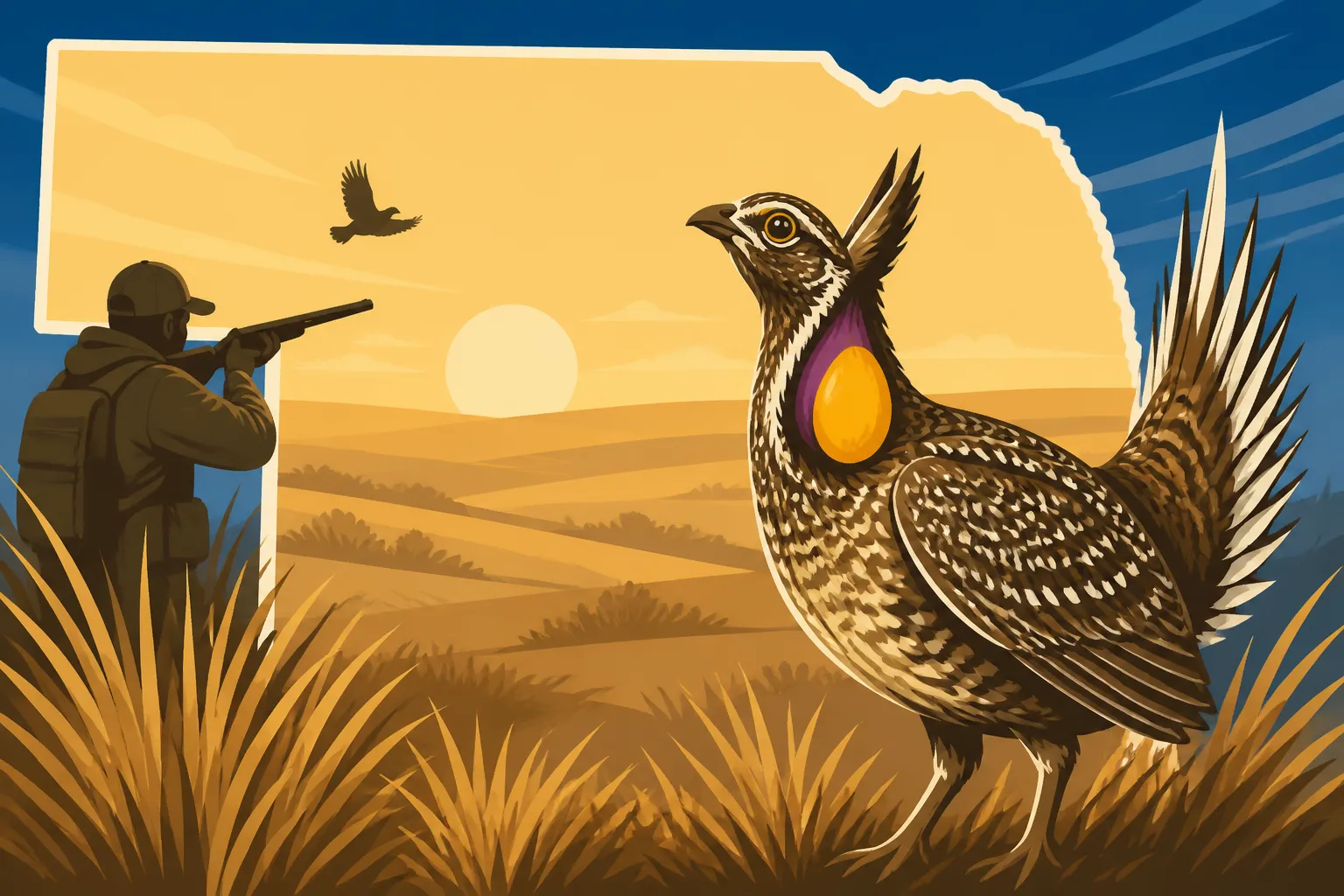
Many hunters dream of chasing Nebraska's iconic sharp-tailed grouse, but actually locating these elusive birds across the vast expanse of the state can feel like a daunting puzzle. Unlike pheasants that often stick to predictable field edges, sharptails require a very specific blend of untouched prairie, and knowing exactly where to find that habitat is the key to a successful hunt. This comprehensive guide will peel back the layers of Nebraska's sharp-tailed grouse range, helping you understand their preferred ecosystems, identify their core strongholds, and boost your chances of finding these magnificent birds.
Understanding Sharp-Tailed Grouse Habitat Needs
Sharp-tailed grouse aren't just any old grassland bird; they are creatures of the open prairie, demanding a very specific environment to thrive. If you understand what makes a habitat perfect for them, you'll be much closer to finding where they live. It’s not just about tall grass; it’s about a complex interplay of vegetation, topography, and water that forms their perfect home.
The Importance of Mixed-Grass Prairie
When we talk about sharp-tailed grouse, the phrase "mixed-grass prairie" is going to come up again and again, and for good reason. These birds absolutely depend on these expansive, native grasslands. This isn't your manicured lawn or even a monoculture hayfield. Mixed-grass prairie is a vibrant tapestry of various grass species—both tall- and short-grass varieties—interspersed with forbs and wildflowers. This diversity provides everything a sharptail needs: dense nesting cover, escape cover from predators, and a continuous supply of food throughout the seasons. The key is that it's mixed, offering different heights and densities of vegetation that these birds utilize for different purposes, all within walking distance.
This type of habitat is crucial because it provides the structure sharptails need to raise their young safely. Hens will often nest in slightly taller, denser clumps of grass, hidden from aerial predators. The varied heights also create natural travel corridors and loafing areas where they can feed and rest during the day without feeling exposed. Losing this complex structure to agricultural conversion or overgrazing is a death knell for sharptail populations, which is why their range is so tied to regions where this native prairie remains largely intact.
Key Vegetation for Food and Cover
Beyond just "grass," specific types of vegetation are paramount for sharp-tailed grouse. In the spring and summer, they forage heavily on the tender shoots of grasses and the leaves and flowers of various forbs. Insects, especially grasshoppers, are a vital protein source for growing chicks. As fall and winter approach, their diet shifts to seeds from prairie plants, buds, and even fruits from small shrubs like chokecherry or buffaloberry if available. This seasonal flexibility in diet means their habitat needs to provide a year-round pantry.
For cover, they seek out areas with a good interspersion of short-to-medium height grasses for easy movement and feeding, alongside patches of taller, thicker grass or low-lying shrubs for concealment. Think of it like a natural patchwork quilt of different cover types. During severe weather, especially heavy snows or biting winds, they might burrow into snowdrifts or seek shelter in the lee of plum thickets or denser grass clumps. The availability of varied cover allows them to evade predators like coyotes or raptors, which is a constant threat in their open environments.
Water Sources and Topography
While sharptails are incredibly hardy birds, even they need access to water, particularly during the hot Nebraska summers. Natural depressions that collect rainwater, dewy vegetation, or even livestock water tanks can provide the necessary moisture. Unlike ducks or geese that require open water, sharptails typically get their hydration from the plants they eat and the dew on the grass, but proximity to more reliable sources can certainly influence where coveys concentrate during dry periods.
Topography also plays a subtle yet significant role in their range. The rolling hills and valleys of the Sandhills, for instance, offer natural windbreaks and thermal cover. Birds might congregate on south-facing slopes in winter to catch the sun's warmth or use depressions for shelter from the elements. Lek sites, where males perform their elaborate courtship displays, are almost invariably on slight rises or open knobs within the prairie, providing good visibility for both the displaying males and potential hens. Understanding these topographical preferences can help hunters pinpoint areas where birds are more likely to be found.
The Core Range: Nebraska's Sandhills
If you ask any seasoned upland hunter in Nebraska where to find sharp-tailed grouse, one answer will resound across the state: the Sandhills. This vast, iconic region isn't just a part of their range; it is, without a doubt, the heart and soul of sharp-tailed grouse country in Nebraska.
Why the Sandhills are Prime Sharptail Country
The Nebraska Sandhills are a unique geological wonder, a sprawling expanse of stabilized sand dunes covered primarily by mixed-grass prairie. What makes this area so special for sharptails is its sheer size and the fact that it largely escaped the plow. While much of the surrounding plains succumbed to agriculture, the Sandhills' sandy, undulating terrain was deemed unsuitable for conventional farming. This left an enormous, contiguous block of native grassland, a true remnant of the American prairie, spanning millions of acres. This uninterrupted habitat provides the vastness and wildness that sharptails require.
The mosaic of different grass heights, the abundance of native forbs, and the relative lack of human disturbance make the Sandhills an ideal environment for these birds. The consistent presence of cattle grazing, when managed properly, can actually benefit sharptails by creating varied vegetation heights and disturbing the soil in a way that promotes forb growth—all critical elements of their diet and cover needs. Furthermore, the numerous wetlands and sub-irrigated meadows interspersed throughout the Sandhills contribute to the overall biodiversity, supporting a robust insect population vital for young grouse.
Navigating Public and Private Access in the Sandhills
While the Sandhills are a sharptail paradise, hunters often face the challenge of access. The vast majority of the Sandhills are privately owned ranchland. Securing permission from landowners is often the best, and sometimes only, way to gain entry to prime areas. This requires respect, courtesy, and often, advance planning. Building relationships with local ranchers can open up incredible hunting opportunities that are otherwise inaccessible.
However, Nebraska does offer significant public hunting opportunities within the Sandhills, primarily through federal lands like the Samuel R. McKelvie National Forest and parts of the Nebraska National Forest at Halsey, as well as various state Wildlife Management Areas (WMAs). These public tracts are invaluable for hunters without private land access. Utilizing resources like the Nebraska Public Access Atlas is crucial for identifying these parcels. When you're trying to piece together a hunt plan from afar, or even just sitting at home trying to visualize potential routes, a platform like GoHunt can provide detailed topographical maps and property ownership overlays that are a game-changer for navigating these complex ownership boundaries. Remember that these areas can see more hunting pressure, so early scouting and willingness to walk long distances, perhaps even on tracts suitable for Walking Nebraska Sandhills Meadows for Sharptails, can pay off.
Seasonal Movements and Concentrations
Sharp-tailed grouse, like many prairie birds, exhibit some seasonal shifts in their behavior and location. During the spring, the focus is all about the "lek," or booming grounds, where males gather to perform their elaborate mating rituals. These leks are generally found on open knobs or slight rises, offering good visibility. While you can't hunt them during this time, locating these leks in the spring or summer can be an excellent way to pinpoint where birds will be concentrated once the season opens.
As summer progresses, hens and their broods will often be found near water sources or in denser, taller cover that provides both concealment and an abundance of insects. Come fall, after the broods have dispersed and before significant snow cover, sharptails often form larger coveys. These coveys will typically utilize a broader range of the mixed-grass prairie, moving between feeding areas and escape cover. In late season, particularly with heavy snow, they might concentrate in areas with more persistent food sources or denser thermal cover, making them slightly more predictable for Prairie Grouse Hunting on Nebraska's Open Range.
Expanding Eastward: Peripheral Sharptail Range
While the Sandhills remain the undisputed stronghold for sharp-tailed grouse in Nebraska, their range does extend, albeit sparsely, into other areas of the state. These peripheral regions present different challenges and opportunities for hunters, and often require a keener eye for specific habitat types.
Pockets of Habitat in Eastern Nebraska
As you move eastward from the Sandhills, the vast, contiguous blocks of native mixed-grass prairie become increasingly fragmented. However, that doesn't mean sharptails are entirely absent. You can find isolated pockets of suitable habitat, often on larger tracts of undisturbed grassland that might be managed for cattle or conservation. These areas tend to be more dispersed and less predictable than the Sandhills proper. Finding these birds in the eastern part of the state often means looking for areas that mirror the Sandhills' habitat profile as closely as possible: large, unplowed expanses of native grasses with varied heights and some forb component.
These eastern pockets are typically found on rangeland that was deemed marginal for row crops, or in areas where landowners have consciously maintained native prairie for grazing or wildlife. The key here is persistence and thorough scouting. Don't expect to find the same densities as in the Sandhills, but a dedicated search, potentially utilizing mapping tools to identify grassland blocks, could yield a pleasant surprise. Always be mindful of land ownership and secure permission before venturing onto private ground.
Challenges in Fringe Areas
Hunting sharp-tailed grouse in these fringe areas comes with its own set of unique challenges. The primary hurdle is habitat fragmentation. Instead of millions of acres of prime sharptail habitat, you might be looking at a few hundred or a few thousand acres here and there, surrounded by agricultural fields or other types of developed land. This makes it harder for bird populations to thrive and spread, and harder for hunters to locate them. Birds in these areas might also be more sensitive to hunting pressure due to their more limited habitat options.
Another challenge is the potential for increased interaction with other upland game birds. In some of these peripheral zones, you might encounter pheasants or even bobwhite quail in adjacent habitats, which requires different hunting strategies and dog work. The thrill of finding a covey of sharptails in an unexpected eastern locale is immense, but it definitely requires more effort and a greater understanding of specific micro-habitats. It's a testament to the resilience of these birds that they persist in these less-than-ideal circumstances.
Distinguishing Sharptails from Prairie-Chickens in Overlap Zones
In certain areas of Nebraska, particularly where the tallgrass prairie to the east meets the mixed-grass and Sandhills prairie, the ranges of sharp-tailed grouse and greater prairie-chickens can overlap. For the uninitiated, these two species can look quite similar in the field, especially during a quick flush. However, distinguishing between them is important, not just for identification but also because their habitat preferences, while similar, are subtly different. Sharp-tailed grouse prefer the drier, sandier, and often more open mixed-grass prairie, while prairie-chickens tend towards slightly taller, denser grasses and often more forb-rich environments.
Visually, sharp-tailed grouse have a pointed tail (hence the name!) with white outer tail feathers that are particularly noticeable in flight or when the bird flushes. Their plumage is also typically lighter, with more of a buff or yellowish tint, and they have distinct V-shaped markings on their breast. Prairie-chickens, on the other hand, have a rounded, dark tail, darker plumage overall, and horizontal barring on their breast. Identifying these subtle distinctions, especially on a digital map, can be easier with advanced mapping applications. GoHunt, for example, often provides detailed land cover data that can help differentiate between prime sharptail and Greater Prairie-Chicken Range in Nebraska. Knowing these differences is not just a matter of bird identification; it can inform your choice of habitat and ultimately, your hunting success in these crucial overlap zones. When you’re on the ground, paying attention to the details, like the call of the bird and the way they fly, can also help you quickly differentiate them, crucial for accurate identification, as outlined in Telling a Sharptail From a Prairie Chicken.
| Characteristic | Sharp-Tailed Grouse | Greater Prairie-Chicken |
|---|---|---|
| Tail Shape | Pointed with white outer feathers | Rounded, dark, often fan-shaped |
| Breast Markings | V-shaped, horizontal on flanks | Horizontal barring across breast and belly |
| Plumage Color | Lighter, buffy, yellowish tint | Darker, richer brown, less yellow |
| Habitat Preference | Drier, sandier mixed-grass prairie, open rangeland | Taller, denser tallgrass prairie, more forb-rich |
| Leg Feathers | Feathered to the toes | Feathered to the toes |
| Sound (Lek) | "Rattling" and "cooing" sounds | Deep, resonant "booming" sound, often audible far away |
Hunting Opportunities and Conservation Efforts
Understanding where sharp-tailed grouse live is only the first step. For hunters, the ultimate goal is to connect with these magnificent birds, and that involves knowing where to hunt and appreciating the conservation efforts that keep these populations healthy.
Finding Public Land for Sharptails
While much of Nebraska's sharp-tailed grouse range lies on private property, there are significant public hunting opportunities available, primarily within the Sandhills. The large federal tracts, such as the Oglala National Grassland and the National Forests near Halsey and McKelvie, offer expansive areas of prime sharptail habitat. These areas often require extensive walking, but the reward can be an unpressured hunting experience. State Wildlife Management Areas (WMAs) and Open Fields and Waters (OFW) tracts also contribute to public access, though these might be more scattered, especially outside the core Sandhills.
Hunters planning a trip should thoroughly research public land options using the Nebraska Public Access Atlas, which is an invaluable resource detailing all public and publicly accessible private lands. Furthermore, online mapping applications can provide real-time boundary data and satellite imagery to help identify promising habitat within public parcels. For those trying to pinpoint public access within this vast, mostly private domain, tools like GoHunt can be invaluable. Its mapping features can highlight public easements or federal lands, helping you plan your approach without inadvertently trespassing. Remember that public lands can experience more pressure, so consider hunting during weekdays or exploring less accessible corners to find undisturbed birds, applying tactics like those for Working Sharptails and Prairie Chickens on Foot.
The Role of Conservation in Sharptail Management
Sharp-tailed grouse populations, like many prairie species, are highly dependent on the health of their grassland habitat. This makes conservation efforts absolutely vital to their long-term survival and for maintaining hunting opportunities. The Nebraska Game and Parks Commission, along with federal agencies and private conservation groups, works tirelessly to conserve and restore native prairie landscapes. This includes initiatives focused on rotational grazing, prescribed burning, and invasive species control, all of which help maintain the diverse vegetation structure sharptails need.
Hunters play a direct role in these conservation efforts through the purchase of hunting permits and the Nebraska Habitat Stamp and Hunter Education. Revenue from these sources directly funds habitat improvement projects and wildlife management programs across the state, benefiting not just sharptails but a wide array of grassland species. By being responsible stewards of the land, respecting private property, and supporting conservation organizations, hunters contribute to the ongoing health of Nebraska's sharp-tailed grouse populations, ensuring that future generations will also have the chance to experience the thrill of chasing these incredible birds across the prairie.
Scouting and Strategy for Sharptail Hunters
Successful sharp-tailed grouse hunting isn't typically a "drive-and-shoot" affair; it often requires dedication to scouting and a sound strategy. Pre-season scouting, even if just driving roads to look for appropriate habitat and potential access points, can be highly effective. The most telling sign of sharptail presence outside of the season is finding a lek site, which can indicate a healthy local population. Look for slight rises in the terrain with sparse vegetation that offers good visibility.
When it comes to the hunt itself, plan to walk. A lot. Sharptails are known for holding tight, but they can also flush wild, especially on pressured ground. Covering ground methodically, often in a crisscross pattern across a promising flat or gentle slope, is key. Using a good bird dog, particularly one that ranges well but stays within gun range, is invaluable for locating these camouflaged birds and retrieving them from the dense grass. Understanding the wind direction, as sharptails often flush into the wind, can also help you anticipate their flight path. A good pair of binoculars is essential for glassing distant ridges and draws for potential concentrations of birds, much like Glassing the Nebraska Sandhills for Mule Deer. Be prepared for the weather—Nebraska prairie can be unforgiving, with sudden changes in temperature and strong winds, so layering clothing is always a smart move.
Disclaimer
This article is for general informational purposes only and does not constitute professional advice. Laws, prices and regulations vary by location and change over time. Consult a qualified professional for guidance on your specific situation.