Nebraska Sandhills Public Ground Worth Walking
The vast, rolling expanse of the Nebraska Sandhills often feels like an impossible puzzle when you're a hunter looking for public access, especially if you're planning to hunt on foot. It's easy to get overwhelmed by the sheer scale, the checkerboard of private land, and the sheer challenge of figuring out where you can actually put boots on the ground and start walking. This guide is here to untangle that complexity, helping you identify and strategize for those hidden gems of public ground that are truly worth the effort of a walk-in hunt.
Understanding the Lay of the Land in the Sandhills
Hunting the Nebraska Sandhills on foot is a truly unique experience, but it comes with its own set of challenges. You're not just dealing with open fields or dense timber; you're navigating a vast, often remote, and deceptively challenging landscape.
The Sheer Scale and Unique Terrain
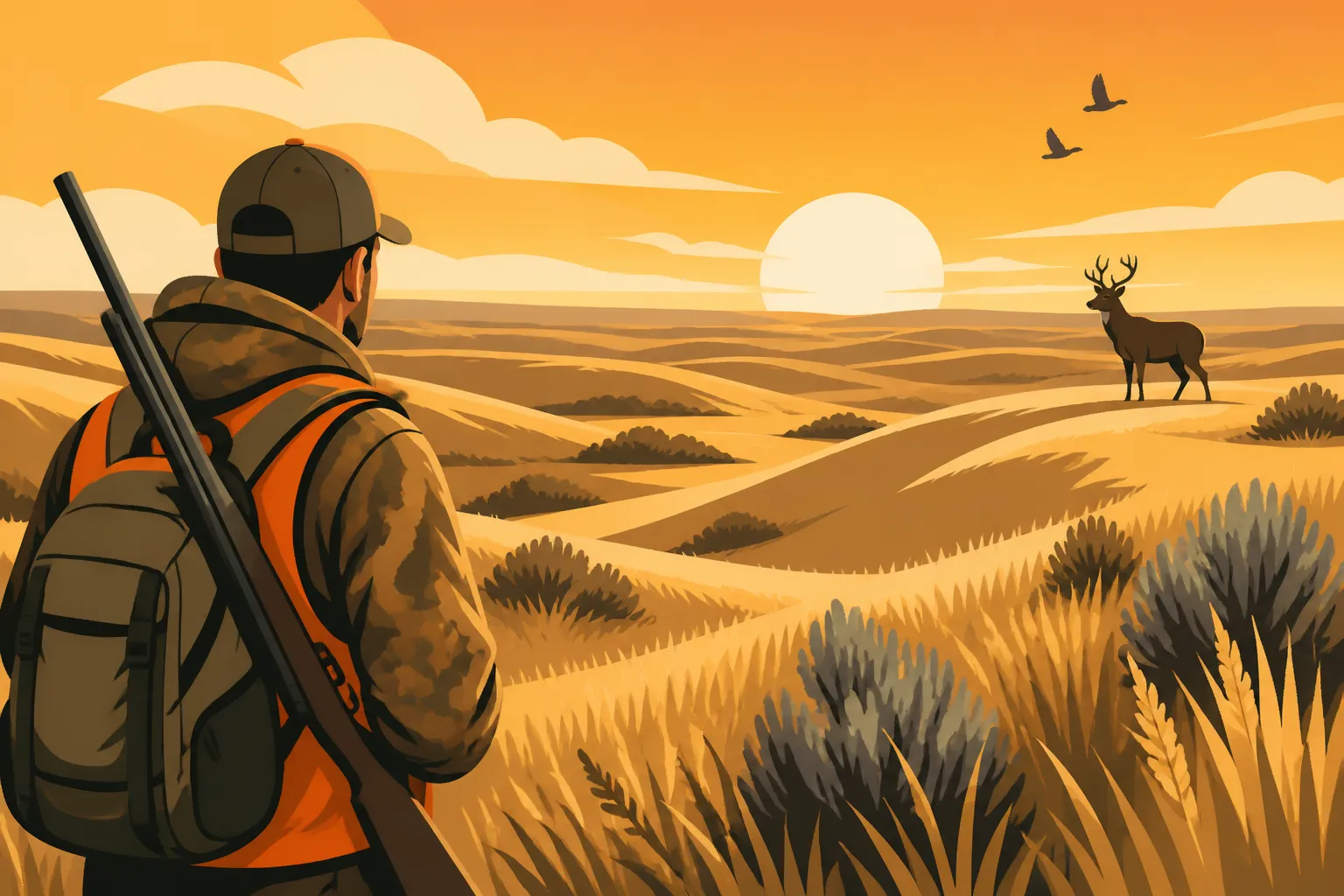
Imagine an ocean of grass, dotted with thousands of lakes and wetlands, all sculpted by the wind into rolling dunes. That's the Sandhills. It's the largest stabilized sand dune formation in the Western Hemisphere, covering roughly a quarter of Nebraska. From a distance, it can look fairly uniform, but once you're on the ground, you quickly realize the intricate nature of its topography. You'll encounter steep, sandy hills, deep, brushy draws that offer surprising cover, and low-lying valleys that can hide everything from a mule deer buck to a covey of grouse.
The distances here are vast. What looks like a short walk on a map can quickly become a monumental trek across uneven terrain. The sandy soil, while beautiful, can be a major energy drain, especially if you're carrying a pack or pushing through thicker cover. Hidden pockets of cedar or plum thickets can be magnets for game, but they also mean more work to penetrate. Water sources, while plentiful in certain areas, can be far apart in others, making hydration a critical concern for any foot hunter. This landscape demands respect and thorough preparation; it's not a place for the unprepared or the faint of heart.
Identifying "Walkable" Public Ground
Not all public ground in the Sandhills is created equal for the foot hunter. Some tracts are massive, remote, and best accessed with a four-wheel-drive vehicle and a lot of planning, while others are smaller, more defined, and perfectly suited for a solid day of walking. The key is to understand the difference and target your efforts wisely. "Walkable" public ground often means areas with clearly defined boundaries, accessible parking, and terrain that, while challenging, isn't utterly impassable on foot. It also means looking beyond just the acres and considering the shape and access points. A long, narrow strip of public land bordered by private fields might be highly walkable and productive for a deer hunter, whereas a massive, square block far from any road might be tough to tackle solo on foot.
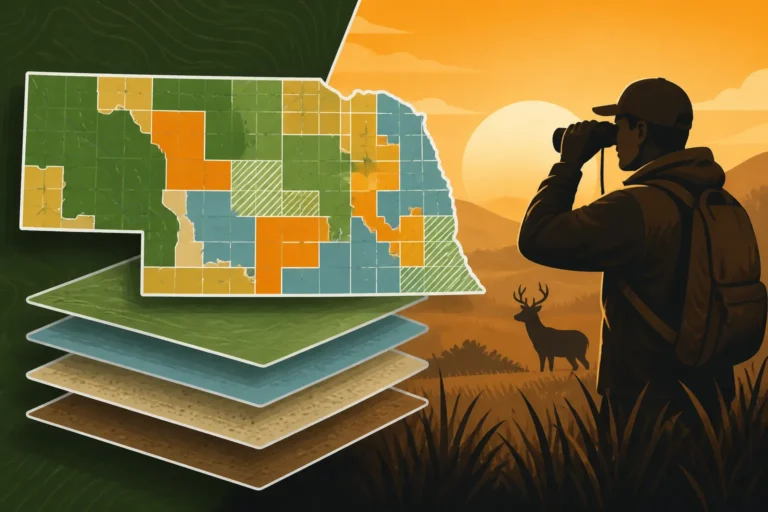
You need to become a diligent map scout. Tools like onX Hunt are invaluable here, allowing you to clearly see property lines, topography, and potential access points. You can distinguish between federal lands, state-managed areas, and tracts enrolled in programs like Open Fields and Waters. Pay close attention to the size and shape of these public parcels. Are they isolated, or do they connect to other public ground, allowing for longer, continuous walks? Look for topographical features like draws, ridge lines, and natural funnels that could concentrate game movement and make your walking more efficient. Remember that private land often checkerboards public ground, so knowing exactly where you stand, both literally and figuratively, is paramount. Understanding Reading a Nebraska Deer Unit Boundary is also crucial, as some regulations can vary even within the Sandhills based on unit lines.
Key Public Hunting Areas in the Sandhills for Foot Hunters
While the Sandhills are largely private ranchland, several types of public hunting areas offer fantastic opportunities for those willing to walk.
Wildlife Management Areas (WMAs) and State Recreation Areas (SRAs)
Nebraska's Wildlife Management Areas (WMAs) and State Recreation Areas (SRAs) are often prime targets for foot hunters in the Sandhills. These areas are specifically managed for wildlife and typically have designated parking and defined access points, making them easier to navigate than some of the more vast federal lands. While some WMAs might be geared towards waterfowl with large wetland complexes, many in the Sandhills offer excellent upland bird and deer hunting. Think about WMAs near places like the Valentine National Wildlife Refuge or parts of the Merritt Reservoir SRA area. These can be incredible spots.
When you're looking at these areas, consider the type of cover. Some WMAs might feature rolling choppy hills covered in native grass, perfect for pheasants and grouse. Others might have more significant cedar pockets or plum thickets, which are classic bedding and thermal cover for deer. While these areas can experience higher hunting pressure, especially on opening weekends, the foot hunter who is willing to put in the miles beyond the parking lot often finds success. Always check the specific regulations for each WMA or SRA, as rules for things like vehicle access, camping, or even specific hunting methods can vary. This diligence ties directly into understanding Nebraska Wildlife Management Area Rules before you head out.
National Forest and Grasslands Opportunities
The Sandhills are home to a truly unique public land offering: the Nebraska National Forest. Yes, a forest in the middle of a grassland! Specifically, the Bessey Ranger District near Halsey and the Samuel R. McKelvie National Forest in Cherry County offer thousands of acres of hand-planted ponderosa pine forests, interspersed with native grasslands. These areas provide incredible habitat diversity and, importantly, vast stretches of ground perfectly suited for foot hunting. Imagine still-hunting through towering pines for a whitetail buck, then stepping out into open grassland to glass for mule deer or flush prairie grouse.
These national forest lands can feel incredibly remote, which is a huge draw for hunters seeking solitude. The sheer size means you can walk for miles without seeing another soul, but it also means you need to be self-sufficient and prepared for any eventuality. For upland bird hunters, the mix of timber and grass can be phenomenal for sharp-tailed grouse and prairie chickens, especially around the edges where the two habitat types meet. Deer hunters will find both whitetails and mule deer using the diverse cover. Companies like GoHunt can provide valuable intel on public land opportunities and hunting statistics across these larger federal properties, helping you narrow down your focus. Diving into specifics like Samuel R. McKelvie National Forest will reveal just how much ground there is to explore on foot.
Open Fields and Waters (OFW) Program Tracts
The Open Fields and Waters (OFW) program is a godsend for Nebraska hunters, especially those relying on foot access. This program leases private land for public hunting and fishing, often designating tracts as "walk-in only." These can be smaller, more manageable parcels that are ideal for a day of intensive foot hunting without needing to hike miles from a distant parking area. Many of these tracts are strategically located near agricultural fields, river bottoms, or smaller grassland pastures that hold excellent numbers of pheasants, quail, and deer.
The beauty of OFW is that it provides access to lands that would otherwise be entirely private. These tracts are marked with distinctive yellow signs and clearly outline the rules, often emphasizing non-motorized access. While the specific tracts enrolled can change annually, the program consistently opens up hundreds of thousands of acres. It's crucial to consult the most current Nebraska Public Access Atlas, which details all OFW properties. This atlas is available both online and as a printed map book, and a mobile app can be incredibly useful in the field for real-time navigation. Knowing Are Open Fields Tracts Public Land? and how they function is vital, as is making full use of resources like The Nebraska Public Access Atlas Mobile App to find these valuable walk-in opportunities.
Strategies for Successful Foot Hunting in the Sandhills
Successfully hunting the Sandhills on foot requires more than just knowing where to go; it demands strategic planning, the right gear, and an understanding of how to adapt your tactics to the unique environment.
Scouting from Afar and Up Close
Before you ever set foot in the Sandhills, your scouting should begin at home. Use online mapping tools like onX Hunt to pour over satellite imagery and topographic maps. Look for patterns: where do the draws run? Are there hidden ponds or wetlands that could attract game? Where are the fingers of timber or brush extending into open grass? Identify potential travel corridors, bedding areas, and feeding zones. Pay attention to how public land connects to private land; sometimes, the best public hunting happens along these edges, especially if private land offers food sources that deer might access on the public side. Mark potential parking areas, water sources, and key waypoints on your app.
Once you arrive, put boots on the ground for some in-person scouting, even if it's just a day or two before the season. This allows you to confirm what you saw on the map, check for fresh sign, and get a feel for the terrain's difficulty. Are the sandy hills as steep as they looked? Is the cover thicker or thinner? Look for tracks, scat, rub lines, and scrapes. Pay particular attention to how game might move through pinch points or across saddles in the hills. Scouting Nebraska Public Ground Before Opening Day is crucial for maximizing your chances and understanding how to apply that knowledge to the vastness of the Sandhills.
Gear and Preparedness for Long Walks
Foot hunting in the Sandhills is physically demanding, so your gear needs to be up to the task. First and foremost, water is non-negotiable. Carry more than you think you'll need, especially on warmer days or if you plan on extended hikes. The remoteness means you can't just run back to the truck for a refill. Secondly, invest in quality footwear. The combination of sandy soil, uneven terrain, and potentially thorny vegetation demands sturdy, comfortable boots with good ankle support. Think about Boots for Walking Nebraska Grass and Sand – a pair that can handle both the soft sand and the rougher stuff without causing blisters.
Layered clothing is also essential. Nebraska weather can be notoriously fickle, with wide temperature swings and sudden winds. A good wind-blocking outer shell is a must, as the open Sandhills can be brutally windy. A reliable GPS unit or a fully charged phone with downloaded maps (like onX Hunt) is critical for navigation; cell service is often spotty or non-existent in many areas. Carry a good Packs for a Day on Public Ground with essentials: first-aid kit, flashlight, fire starter, and emergency shelter. Understanding Wind Direction on Open Nebraska Prairie Stands isn't just a tactic; it's a safety consideration, ensuring you don't inadvertently push game into unhuntable areas or lose your scent to the very conditions you're braving.
Tactics for Specific Game
Your foot hunting tactics will naturally vary depending on what you're after:
Deer: For deer, especially mule deer in the more open country, glassing is your best friend. Find a high point, set up your spotting scope or binoculars, and systematically pick apart the hillsides, looking for deer moving between bedding and feeding areas. Once you spot an animal, plan your stalk using the terrain to your advantage. For whitetails, often found in the brushier draws or around the few timbered areas, still-hunting through those pockets of cover or setting up on funnels and creek crossings can be effective. Reading a Cedar Draw for Deer Movement and using wind direction to your advantage are paramount.
Upland Birds (Pheasants, Grouse, Quail): For pheasants and quail, focus on edges—where grass meets crop fields, along shelterbelts, or in thick cattail sloughs. You'll often be walking them out, so a good bird dog is a huge asset. For prairie grouse (sharp-tailed grouse and prairie chickens), you'll be covering vast expanses of native grass. It's often a game of putting in the miles, walking contours, and being ready for a sudden flush. Groups of hunters can work together to block and drive sections of cover. Understanding Walking Nebraska Sandhills Meadows for Sharptails or Walking Milo and Corn Stubble for Pheasants provides specific insights into these pursuit types.
Navigating Challenges and Maximizing Access
Hunting the Sandhills on foot is a rewarding adventure, but it's one that comes with its share of challenges. Being prepared for these obstacles will make your experience safer and more enjoyable.
Dealing with Isolation and Emergency Preparedness
The Sandhills are beautiful in their solitude, but that isolation can quickly become a serious concern in an emergency. Cell phone service is notoriously unreliable across much of the region. A sprained ankle, a sudden change in weather, or a vehicle breakdown can leave you in a perilous situation if you're not prepared. Always, always, tell someone exactly where you're going and when you expect to return. Consider carrying a satellite messenger or a personal locator beacon (PLB), especially if you're venturing far from main roads.
Your vehicle itself needs to be robust. Many "two-track" roads into public land can be sandy and remote. Carrying basic recovery gear – a shovel, tow strap, and traction boards – is a wise move, even if you don't plan to drive far off the main drag. A comprehensive First Aid Kits for Remote Nebraska Ground is also non-negotiable. Beyond the basic bandages, think about splinting materials, pain relievers, and any personal medications you might need. Being self-sufficient and prepared for the unexpected is part of the Sandhills experience.
Respecting Boundaries and Landowner Relations
Even on public ground, the Sandhills present a complex mosaic of land ownership. Private ranch land often surrounds or is intermingled with public parcels. Respecting property boundaries is not just a matter of courtesy; it's a legal requirement and crucial for maintaining positive relationships between hunters and landowners. This is where your mapping apps, like onX Hunt, become indispensable. Use them constantly to verify your location and ensure you're not inadvertently trespassing.
Understanding Nebraska's Posted-Land and Trespass Rules is critical. Even if you don't see a "No Trespassing" sign, assume land is private unless clearly marked as public or you have explicit permission. Issues like "corner crossing" (stepping from one public parcel to another where the corners meet, potentially touching private land at the intersection) can be contentious and legally ambiguous. The best practice is to avoid any gray areas and stick strictly to public ground or clearly granted easements. A polite knock on a farmhouse door can sometimes open up new opportunities, but always be respectful of "no" if that's the answer.
Understanding Hunting Pressure and Finding Seclusion
Public hunting areas in Nebraska, even in the vast Sandhills, can see significant pressure, especially on opening weekends or during peak seasons like the rifle deer hunt. However, the beauty of foot hunting is your ability to escape much of that pressure. Most hunters won't venture far from their vehicles. If you're willing to walk an extra mile or two, especially into rougher terrain or less obvious cover, you significantly increase your odds of finding undisturbed game and solitude.
Consider hunting during weekdays if your schedule allows, or focus on mid-season hunts after the initial rush has subsided. Look for public parcels that might be slightly harder to access, requiring a longer walk or perhaps a trek through a marshy area. These natural barriers often act as filters, keeping casual hunters closer to the roads. Don't be afraid to utilize less obvious cover; a small, overlooked draw or a patch of slightly taller grass can hold game that's been bumped from more popular areas. Your willingness to put in the miles directly correlates with your chances of finding quality hunting in less pressured environments. Remember, the rule of thumb often applies: How Far to Walk From the Parking Area can directly influence your success.
Disclaimer
This article is for general informational purposes only and does not constitute professional advice. Laws, prices and regulations vary by location and change over time. Consult a qualified professional for guidance on your specific situation.