Hunting the Nebraska Sandhills Without Permission
The thought of hunting the vast, rolling expanses of the Nebraska Sandhills often brings up a major roadblock for many hunters: how do you get access to all that private land? It's a valid concern, as much of the Sandhills is indeed privately owned ranchland. However, the good news is that there are absolutely ways to experience the incredible hunting opportunities in this unique landscape without needing a direct, personal permission slip from a landowner. This guide will walk you through the various public access avenues and smart strategies to hunt the Nebraska Sandhills legally and successfully, even if you don't know a rancher.
Understanding Nebraska's Public Land Footprint in the Sandhills
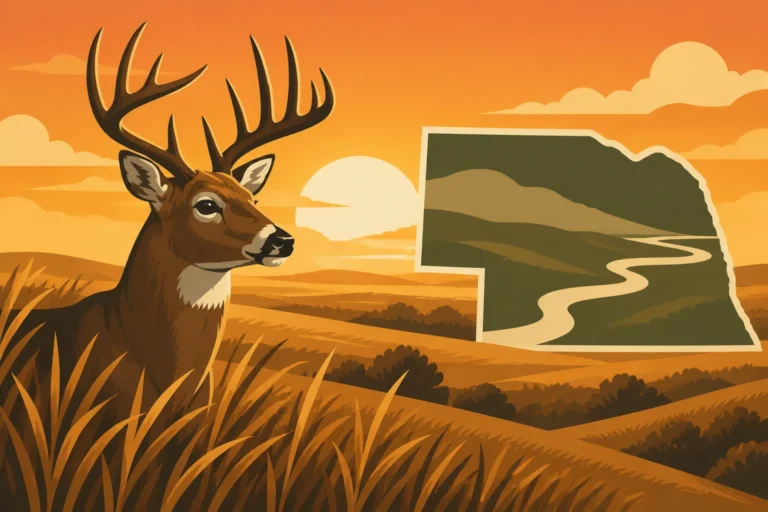
It's easy to look at a map of Nebraska and see the massive swaths of Sandhills, assuming it's all private, but that's not entirely accurate. While a significant portion is indeed private, there are crucial pockets of public land, as well as innovative programs, that provide access. Knowing where these opportunities exist and how to identify them is the first step to hunting the Sandhills without permission.
Wildlife Management Areas and National Forests
Nebraska boasts a network of Wildlife Management Areas (WMAs) and national forest lands that are open to public hunting. In the Sandhills region, these can be absolute gems, often encompassing large tracts of diverse habitat. We're talking about pristine grasslands, cattail sloughs, cedar breaks, and even some scattered timber that can hold everything from deer and antelope to pheasants and grouse.
These areas are managed by the Nebraska Game and Parks Commission or federal agencies, specifically for wildlife and public recreation. They are clearly marked, and once you learn to read the signs and maps, you'll know exactly where you can legally hunt. For instance, some of the larger WMAs in or near the Sandhills can offer thousands of acres, giving you plenty of room to roam and apply various hunting tactics. The key is to do your homework beforehand, identifying these locations and understanding their specific rules and regulations. Often, these areas are less pressured than public lands closer to major population centers, offering a more secluded hunting experience.
Federal National Grasslands and Refuges
Beyond state-managed WMAs, parts of the Nebraska Sandhills also fall within federally managed lands, such as the Oglala National Grassland in the northwestern Panhandle. These are immense tracts of public ground, often adjacent to or interspersed with private ranchland, making them prime spots for those seeking extensive areas to hunt without permission. The sheer scale of the Oglala National Grassland means you can literally walk for miles, pursuing mule deer, pronghorn, and even prairie grouse.
Additionally, certain National Wildlife Refuges exist within the broader Sandhills ecosystem, though access rules can vary. Some refuges might have specific hunting units or seasons, while others might be closed to hunting entirely. It's vital to check the individual refuge's regulations closely. However, the larger federal grasslands, like the Oglala, are explicitly managed for multiple uses, including hunting, providing fantastic opportunities for independent hunters. These areas often require a different hunting approach due to their vast, open nature, but they absolutely offer the "without permission" access you're looking for.
Nebraska's Open Fields and Waters Program
This is where things get really exciting for hunters looking to access private land without needing direct, personal permission. The Nebraska's Open Fields and Waters Program (OFW) is a cooperative effort between the Nebraska Game and Parks Commission and private landowners. Landowners volunteer to open portions of their private property to public hunting, fishing, or trapping, and in return, they receive an incentive.
What does this mean for you? It means you can hunt designated private lands by simply looking for the distinctive yellow and black OFW signs. These signs clearly mark the boundaries of enrolled properties and indicate what activities are allowed. The program is a game-changer, especially in areas like the Sandhills where traditional public land might be sparse. You might find a large ranch that has enrolled several hundred acres of prime habitat, allowing you to access areas that would otherwise be entirely off-limits. It's crucial to respect the boundaries and rules posted on each OFW tract. These are not permanent public lands; they are private lands with temporary public access, so treating them with the utmost respect ensures the program continues to thrive. How Many Acres Are in Open Fields and Waters is a good read to understand the scope of this program.
Leveraging Tools and Resources for Sandhills Access
The Sandhills can be a tricky place to navigate, even with public land. Its vastness, remote nature, and often sparse road network mean that precise planning and the right tools are essential for a successful hunt without direct permission.
The Nebraska Public Access Atlas
Your absolute best friend for identifying and navigating public and OFW lands in Nebraska, including the Sandhills, is The Nebraska Public Access Atlas. This annually updated guide, available both in print and digitally, is an indispensable resource. It maps out all the state and federal public hunting lands, as well as all enrolled Open Fields and Waters tracts. Each tract is color-coded and detailed, showing boundaries, access points, and what species are typically found there.
I cannot stress enough how critical this resource is. Before you even leave home, you should be poring over the Atlas, identifying potential hunting areas in the Sandhills. It will show you the WMAs, National Grasslands, and every single OFW tract available. Many seasoned Nebraska hunters consider it their bible. Don't rely on general maps; the Atlas is specific to hunting access and will save you countless hours of driving around hoping to find an open gate. Understanding Reading the Nebraska Public Access Atlas is key to unlocking these opportunities.
Mapping Apps and GPS Devices
Once you've identified potential hunting spots using the Public Access Atlas, you'll need reliable navigation in the field. The Sandhills are notorious for their lack of cell service in many areas, and the landscape itself can be disorienting, with rolling hills, similar-looking grasslands, and faint two-track roads. This is where modern mapping technology truly shines.
Apps like onX Hunt are invaluable. They layer public and private land boundaries directly onto detailed satellite imagery, allowing you to see exactly where you are in relation to property lines, even without cell service (if you download the maps beforehand). This is non-negotiable for hunting the Sandhills without permission. Imagine walking a vast piece of grassland, pursuing a mule deer, and needing to know precisely where the public land ends and private land begins. onX Hunt provides that real-time, on-the-ground assurance. It also displays OFW tracts, making it easier to confirm signage and access points. A dedicated GPS unit can also serve this purpose, but many hunters find the visual interface of a smartphone app more intuitive. These tools are far more than conveniences; they are crucial for staying legal and safe when Hunting the Nebraska Sandhills Without Permission.
Scouting and Research Before You Go
Even with excellent maps and navigation tools, a successful "no permission" hunt in the Sandhills requires diligent scouting and research. The Sandhills are vast, and simply showing up without a plan can lead to frustration.
Start by researching specific WMAs or National Grasslands that are known for the species you're targeting. For example, if you're after mule deer, focus on units or areas where they are more prevalent. Mule Deer in the Nebraska Sandhills and Panhandle can give you a good starting point. Use online satellite imagery to look for terrain features that might concentrate game, such as cedar draws, sand blowouts, water sources, or changes in vegetation. Reading Sign on a Nebraska Sandhills Two-Track can offer insights. Look for potential access roads and parking areas.
If you're planning to hunt OFW tracts, understand that these areas can change annually. The Atlas is updated each year for a reason. Don't assume a tract you hunted last year will be open this year. Make sure you have the most current information. Also, consider the specific challenges of the Sandhills terrain; Getting Stuck in Sandhills Sand is a very real possibility if you venture off designated roads, so plan your routes carefully.
Tactics for Hunting Without Permission in the Sandhills
Once you've identified your public access points and armed yourself with the right maps, it's time to think about how to actually hunt these unique areas effectively. Hunting the Sandhills, especially without the benefit of knowing a specific private ranch, requires a different approach than hunting timbered river bottoms or small farm plots.
Embracing the "Walk-In Only" Mentality
Many of the most productive public and OFW tracts in the Sandhills are designated as "walk-in only." This means vehicular access is restricted beyond designated parking areas. While this might seem like a limitation, it's actually an advantage for the determined hunter. Areas that require a significant walk often see less pressure from other hunters.
Be prepared to cover ground on foot. Invest in good boots and durable clothing, because you'll be putting in miles. A solid daypack with water, snacks, and emergency gear is essential. The open nature of the Sandhills means that even a short walk can feel longer, and carrying out game will be a challenge. However, by embracing the "walk-in only" nature, you gain access to undisturbed areas where game animals are more likely to be patterned and less wary. This is especially true for species like mule deer and pronghorn, which can be incredibly visible but also incredibly sensitive to pressure. The reward for your effort can be a truly wild and unpressured hunting experience.
Glassing and Spot-and-Stalk
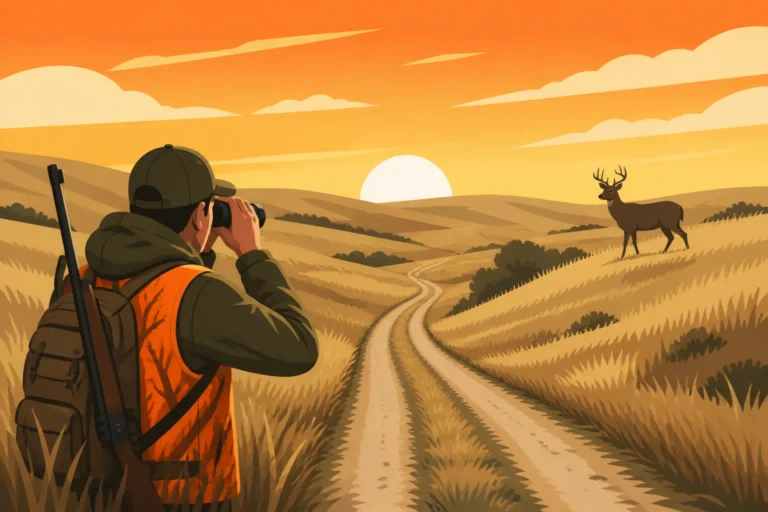
The open, rolling terrain of the Sandhills is perfectly suited for glassing and spot-and-stalk hunting, particularly for mule deer and pronghorn. These tactics are ideal for public lands where you don't have detailed knowledge of specific game movements or bedding areas. Instead of waiting for animals to come to you, you become the active seeker.
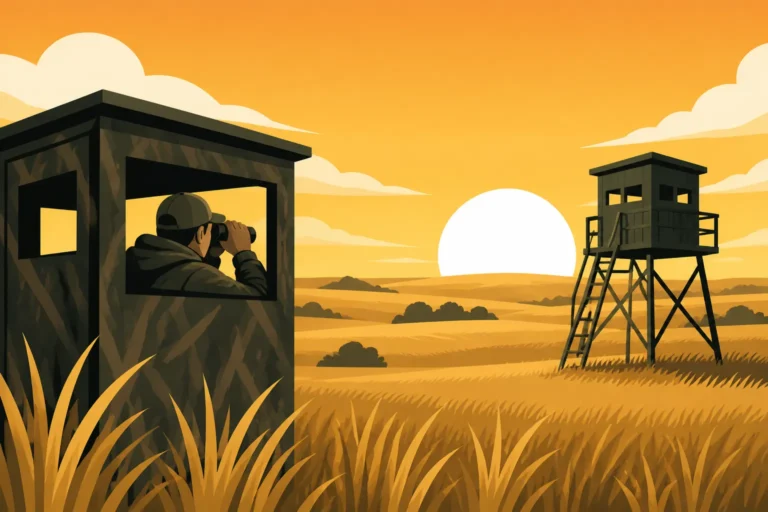
Glassing: Find a high vantage point – a ridge, a sand dune, or even the roof of your vehicle (if legal and safe) – and use quality binoculars or a spotting scope to systematically scan the landscape. Take your time, really dissecting the distant hillsides, draws, and meadows. You're looking for movement, an odd shape, or a flicker of an ear. Early mornings and late evenings are prime times, as animals are often out feeding. Optics for Glassing the Nebraska Sandhills is a critical article to read to understand how to choose the right gear for this.
Spot-and-Stalk: Once you spot an animal you want to pursue, the real work begins. The Sandhills can offer good cover for a stalk due to the rolling topography and occasional clumps of yucca or cedar. However, the wind is almost always a factor, and animals have an incredible ability to spot movement. Plan your approach carefully, using terrain features to stay out of sight, and always pay attention to the wind direction. Closing the distance on a wary Sandhills buck or antelope is one of hunting's great challenges, but also one of its most rewarding. Stalking Pronghorn Across Open Nebraska Ground offers specific tactics for antelope.
Respecting Boundaries and Ethics
Hunting without direct permission in the Sandhills absolutely relies on understanding and respecting property boundaries. This is where your mapping apps become your best friend. It is your responsibility, and yours alone, to know where you are at all times and to ensure you do not trespass.
| Boundary Type | Description | How to Identify | Important Considerations |
|---|---|---|---|
| Public Land (WMA/NG) | State or federally owned land managed for public use, including hunting. | Public Access Atlas, onX Hunt, WMA signage | Generally liberal rules, but check for specific WMA/refuge restrictions. |
| Open Fields & Waters | Private land enrolled in a program, granting temporary public hunting access. | Yellow and black OFW signs, Public Access Atlas, onX Hunt | Strictly adhere to posted rules; access can change annually. |
| Private Land (No Access) | Land privately owned, not enrolled in OFW, and without direct permission from landowner. | Fencelines, "No Hunting" signs, onX Hunt | NEVER trespass. Respect landowner rights and privacy. |
| Road Right-of-Way | Often a gray area; hunting from or in road ditches. | Public road shoulders/ditches | Check local regulations. Many areas restrict shooting from or across roads. |
Beyond legal boundaries, there's an ethical component. Leave no trace. Pack out everything you pack in. If you encounter other hunters, be courteous and give them space. Your actions on public or OFW lands reflect on all hunters. Maintaining a positive image is critical for the continued availability of these precious resources. If you accidentally retrieve game onto private land, you must have permission to do so. This is a common situation that can be avoided with good planning and clear communication. Nebraska's Posted-Land and Trespass Rules details important legal requirements.
Legalities and Practicalities of Public Access Hunting
Hunting the Sandhills without private permission isn't just about finding land; it's also about understanding the nuances of public access and being prepared for the realities of hunting in such a wild and often remote environment.
Required Permits and Stamps
Before you even step foot in the Sandhills, ensure all your permits and stamps are in order. This includes a valid Nebraska Hunt Permit and a Habitat Stamp. If you're hunting migratory birds, you'll also need a Federal Duck Stamp and HIP registration. For specific big game like deer or antelope, you'll need the appropriate species-specific permit for the unit you're hunting.
Many hunters planning a Sandhills trip, particularly nonresidents, will apply through the draw for highly sought-after permits, or purchase over-the-counter options if available. Nebraska Big Game Permits and How to Get One and Nebraska Habitat Stamp and Hunter Education are essential resources. Double-check all dates and requirements well in advance, as permits can sell out, and deadlines can be strict. It's frustrating to find the perfect public spot only to realize you don't have the proper paperwork.
Being Prepared for Remote Conditions
The Sandhills are beautiful, but they can be unforgiving. When you're hunting without specific landowner contacts, you're often in more remote areas, far from help. This means self-sufficiency is paramount.
- Vehicle Readiness: Many Sandhills roads are primitive two-tracks, sandy, or muddy. A 4×4 vehicle is highly recommended. Carry a shovel, tow strap, extra water, and know how to use them. Cell service is unreliable, so don't count on it for emergencies.
- Weather: Nebraska weather can change in an instant. Prepare for extreme heat in early seasons and bitter cold, high winds, and snow later in the year. Layered clothing is critical. Clothing for Nebraska Wind and Cold is a must-read.
- Water: Always carry more water than you think you'll need, especially during warmer seasons. Dehydration can quickly become a serious issue when covering miles on foot.
- First Aid: A comprehensive first-aid kit is essential. Know how to use it.
- Game Recovery: If you harvest an animal, especially a large one like a deer or antelope, be prepared for a difficult retrieval. Long drags across sandy terrain are brutal. Consider a game cart or a pack designed for hauling meat. Knowing how to field dress efficiently is crucial, particularly in warmer weather. Field Dressing and Cooling Game in Warm Weather can help.
Hunting the Nebraska Sandhills without permission is an incredible adventure. It demands respect for the land, diligent preparation, and a willingness to work hard, but the rewards—a truly wild hunting experience and the satisfaction of earning your quarry on your own terms—are immeasurable.
Disclaimer
This article is for general informational purposes only and does not constitute professional advice. Laws, prices and regulations vary by location and change over time. Consult a qualified professional for guidance on your specific situation.