Sandhills Two-Track Road Access
The vast, seemingly endless expanse of the Nebraska Sandhills offers incredible hunting opportunities, but navigating its unique terrain can be incredibly daunting, especially when it comes to those elusive "two-track" roads. It's easy to feel lost, confused about what's public or private, and constantly worried about getting stuck miles from anywhere. This guide will help you understand, navigate, and safely use the two-track road access that defines hunting in the Nebraska Sandhills, helping you confidently unlock some of the state's best hunting.
Understanding Sandhills Two-Tracks and Their Nature
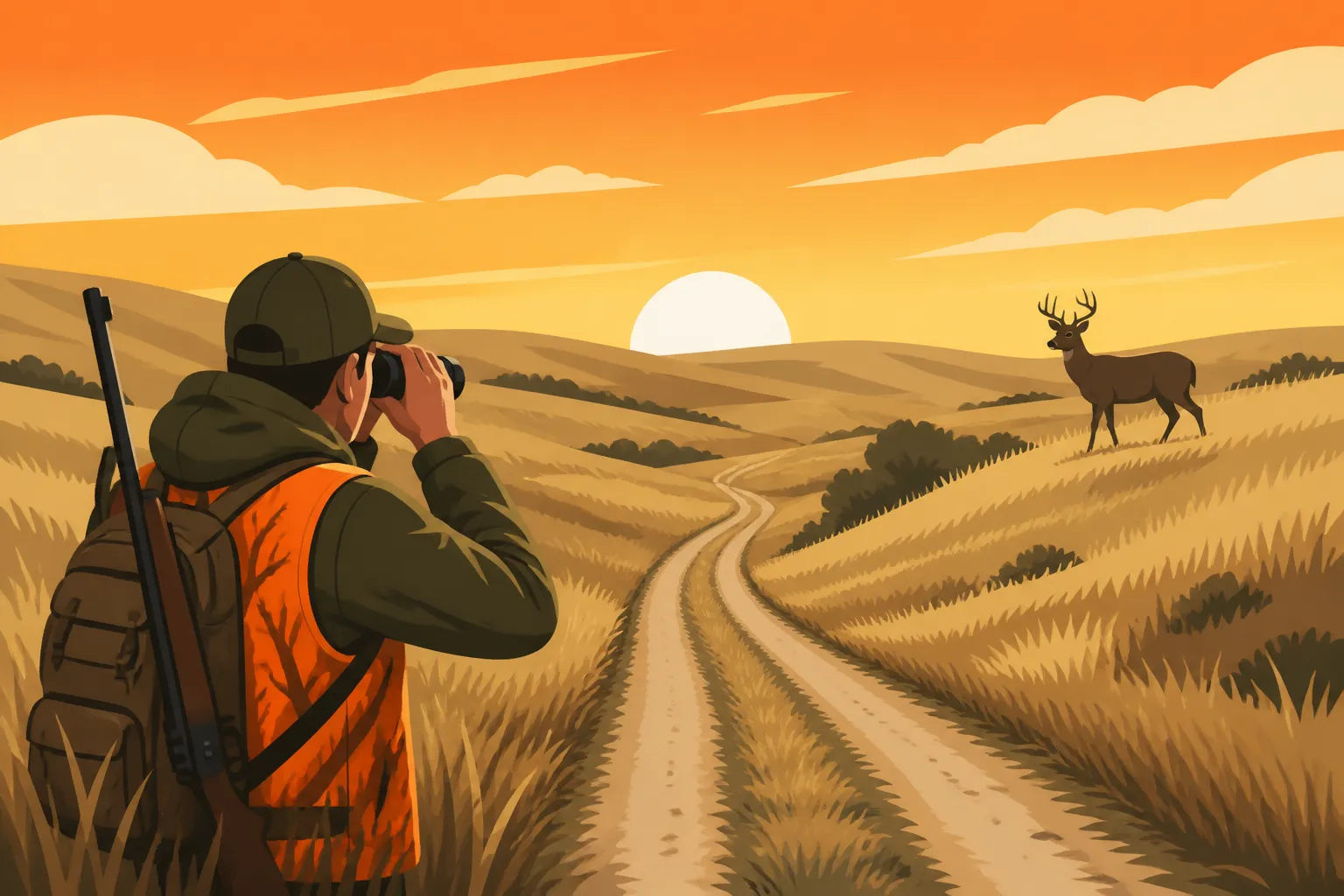
When you hear "two-track" in the Sandhills, don't picture a gravel road or even a well-maintained dirt path. We're talking about something far more primitive and often ephemeral. These are essentially paths worn by vehicles, sometimes over decades, but often just by a few ranch trucks or ATVs, cutting through the grass and sand. They typically consist of two parallel ruts, barely wider than your tires, with a strip of grass growing down the middle. They are the arteries of the Sandhills, connecting pastures, windmills, and remote hunting spots, but they come with their own set of challenges and quirks.
The Unofficial Road System of the Prairie
Imagine a landscape where formal roads are few and far between, and the primary mode of travel across miles of rolling hills is simply following the path of least resistance. That's how many two-tracks were born. They're often not mapped on traditional road atlases because they aren't maintained by any governmental entity. They are carved by necessity, by the daily routines of ranching, and sometimes by generations of hunters seeking out specific areas. This unofficial nature is both their charm and their greatest challenge. You might find a seemingly good two-track suddenly dead-end at a blowout, a deep sand pocket, or simply fade back into the prairie grass as if it were never there. It requires a keen eye and a good dose of humility to navigate them successfully.
The Difference Between a Two-Track and a Maintained Road
The key distinction lies in maintenance and intention. A county road, even if it's dirt, is regularly graded, signed, and intended for general public travel. A two-track is none of those things. It's often barely wide enough for one vehicle, making passing impossible without driving off-road. There are no culverts, no shoulders, and certainly no traffic signs. What might be passable in dry conditions can become an impassable bog or a deep sand trap after a heavy rain or snowmelt. The terrain dictates the path of a two-track, winding around dunes and through valleys, sometimes with surprisingly steep grades. Understanding this fundamental difference is crucial; approaching a two-track with the same expectations as a maintained road is a recipe for trouble. You'll need different driving skills, a different mindset, and certainly different expectations about your travel time and vehicle's capability.
Navigating and Identifying Legal Access on Two-Tracks
The biggest headache for hunters in the Sandhills isn't always the driving, but knowing where you can drive and hunt legally. The mix of public and private land, often without clear markings, makes this a puzzle that requires careful attention. Many a hunter has found themselves inadvertently trespassing simply by following a two-track that seemed public, only to realize too late they crossed onto private property.
Utilizing Mapping Tools for Sandhills Access
In this vast, often featureless landscape, reliable mapping tools are your absolute best friend. Forget paper maps for pinpointing two-tracks; they simply aren't detailed enough. Digital mapping apps, like onX Hunt, are indispensable. These apps layer property ownership information over satellite imagery, allowing you to see exactly where public land ends and private land begins, even in the middle of nowhere. Before you even leave home, spend time studying the areas you plan to hunt using these tools. Look for green (public) land and identify any two-tracks that lead into or through it. Pay close attention to subtle changes in fence lines or other boundaries that might indicate a property shift. GoHunt also offers some fantastic mapping and planning resources that can help visualize terrain and potential access points, especially when planning a long-range trip. It's like having a local guide in your pocket, showing you the intricacies of the land before you ever put boots on the ground. Always double-check boundaries against The Nebraska Public Access Atlas if you have any doubts.
Identifying Public vs. Private Two-Tracks
This is where it gets tricky. Many two-tracks are entirely on private land, serving only the landowner. Some might start on public ground, then cross into private, and then back to public again. There’s no magic sign for a public two-track, especially if it’s merely an easement. However, a general rule of thumb is that if a two-track isn't clearly marked as part of a public access program (like Open Fields and Waters) or within a designated public area like the Oglala National Grassland, assume it's private unless you have explicit information otherwise.
Look for physical cues:
- Gates: Locked gates, or even just closed gates, almost always signify private land. Don't open them unless you have permission.
- Signs: Look for "No Trespassing," "Private Property," or "Open Fields and Waters" signs. The latter indicates public access.
- Fences: A fence line that abruptly changes from a well-maintained, multi-strand barbwire to an older, less kept fence might indicate a property line.
- The Public Access Atlas: This annual publication and its online/app version are crucial. They clearly delineate public hunting lands and accessible private lands. If a two-track isn't explicitly shown leading to or on public ground, tread carefully.
Remember, if you're not absolutely certain it's public land, it's best to err on the side of caution and assume it's private. Always seek Getting Private Land Permission in Nebraska if you want to hunt private ground.
| Indicator | Suggests | Action |
|---|---|---|
| Locked Gate | Private Land, No Access | Turn Around, Do Not Enter |
| Closed Gate | Private Land (usually), Seek Permission | Do Not Enter Without Permission, Could be for Livestock |
| "No Trespassing" | Private Land, No Access | Turn Around Immediately |
| "Open Fields & Waters" Sign | Public Access (specific rules apply) | Consult Public Access Atlas for details, park legally, walk in |
| Well-Defined Road | Likely Public or Major Private Access | Verify with map, proceed cautiously |
| Faded Tire Tracks | Remote, Infrequent Use, Could be Anything | High caution, verify with map, consider walking or finding alternative |
| No Visual Cues | Assume Private until proven otherwise | Consult mapping apps, respect boundaries |
Best Practices for Driving Sandhills Two-Tracks
Driving these sandy, winding paths is an art form. It's not like cruising down the highway, and an unprepared driver can quickly find themselves in a challenging situation, miles from help. The key is preparation, understanding your vehicle's limits, and a healthy respect for the terrain.
Vehicle Preparation and Equipment
Before you even think about tackling a two-track, your vehicle needs to be ready. A high-clearance 4×4 vehicle is almost a non-negotiable. Two-tracks often have deep ruts, exposed rocks, and high centers that can easily high-center a lower-slung vehicle. Your tires are also critical. All-terrain or mud-terrain tires offer better traction in sand and mud than standard highway tires. Consider airing down your tires slightly (to around 15-20 psi) if you anticipate a lot of deep sand; this increases your tire's footprint and improves flotation. Just remember to air them back up before hitting pavement again. Beyond the vehicle itself, a basic recovery kit is paramount. This should include a shovel, a tow strap or kinetic recovery rope, and possibly traction boards. Vehicle Recovery Gear for Sand Roads is not just a good idea, it's essential for peace of mind. A full spare tire, a working jack, and basic tools for minor repairs are also must-haves.
Driving Techniques for Sandy and Uneven Terrain
Driving on two-tracks requires a different approach than typical off-roading.
- Maintain Momentum: In sandy sections, momentum is your friend. Don't stop abruptly, and try to keep a consistent, moderate speed. Too slow, and you'll bog down; too fast, and you risk losing control or damaging your vehicle on unexpected bumps or washouts.
- Follow the Ruts (Carefully): While it's tempting to try and avoid the deep ruts, often they are the path of least resistance. However, be aware that ruts can be deeper than they appear and can steer your vehicle in an unintended direction. If the ruts are too deep for your clearance, you might have to straddle one, or consider if this two-track is truly passable.
- Read the Terrain Ahead: Always be looking far down the two-track. Are there deep washouts? Large sand blowouts? Muddy sections? Anticipate these obstacles. If you see standing water, especially in a low spot, proceed with extreme caution or find a way around. What looks like a shallow puddle could be hub-deep mud.
- Utilize Low Range and Locking Differentials: If your 4×4 has low range gearing, use it in particularly difficult sections. It provides more torque and better control at lower speeds. Locking differentials, if your vehicle has them, can also provide extra traction when one wheel loses grip in sand or mud.
- Avoid Steep, Sandy Upslopes: Some dunes can be incredibly steep and composed of very loose sand. Attempting to climb these without proper technique can quickly lead to getting stuck or sliding backward. Assess the grade and the sand's consistency before committing.
Safety and Contingency Planning for Remote Sandhills Hunting
The Sandhills are breathtakingly beautiful, but they are also incredibly remote and unforgiving. When you venture onto two-tracks, you're often miles from civilization, cell service, and assistance. Planning for the unexpected isn't paranoia; it's smart hunting.
Dealing with Getting Stuck in Sand or Mud
It’s not a matter of if you'll get stuck on a two-track, but when. And when it happens, panic is your worst enemy.
- Assess the Situation: First, determine if you're actually stuck or just losing traction. If you are stuck, try to identify what's preventing forward movement. Is your frame high-centered? Are your drive wheels spinning freely in sand or mud?
- Try to Rock Out (Carefully): If you're slightly bogged, gently try to rock the vehicle back and forth. Shift from drive to reverse and back, using minimal throttle. Sometimes this can create enough momentum to free yourself. Be very careful not to over-rev and dig yourself deeper.
- Use Your Shovel: Clear sand or mud from around your tires and under the frame. If you're high-centered, digging out the "belly" of your vehicle is crucial.
- Employ Traction Aids: Place traction boards, floor mats, or even tree branches under your drive wheels to give them something to grip.
- Kinetic Recovery: If you have a second vehicle and a kinetic recovery rope, this is often the most effective method. The second vehicle builds momentum and the rope stretches, then contracts, gently "snatching" the stuck vehicle free. Never use a chain for this; it's too rigid and can snap, causing serious injury.
Remember, walking out for help might not be an option if you're deep in the Sandhills. Always be prepared to self-recover or wait for help. Getting a Deer Out of a Nebraska Sandhills Basin can be tough enough; getting a truck out is another beast entirely.
Communication and Emergency Preparedness
Cell service in much of the Sandhills is spotty at best, and often non-existent. Relying solely on your phone for communication is a dangerous gamble.
- Satellite Communicator: A satellite messenger (like a Garmin InReach or Spot device) is a lifeline. These devices allow you to send and receive text messages, share your location, and, critically, send an SOS signal to emergency services, even with no cell service.
- Inform Others: Always tell someone responsible exactly where you're going, your planned route, and when you expect to return. Give them a detailed map or a GPS track of your intended travel.
- Emergency Supplies: Pack more than you think you'll need. This includes extra water (more than you expect to drink), non-perishable food, blankets, a first-aid kit, a flashlight, fire-starting materials, and extra layers of clothing, even if the day starts warm. Temperatures can drop drastically, and Wind Direction on Open Nebraska Prairie Stands can make it feel much colder.
- Navigation Backup: Even with a great app like onX Hunt, have a backup. A physical compass and a paper map of the area are good to have, especially if your phone battery dies or your device malfunctions.
- Check Weather Forecasts: The weather in the Sandhills can change rapidly. A clear morning can turn into a violent thunderstorm or a blizzard with little warning. Being caught unprepared for extreme weather while miles down a two-track can be life-threatening.
Taking these precautions means you're not just hoping for the best, but actively preparing for the challenges that come with hunting in such a wild and magnificent landscape. Being prepared means you can focus on the hunt, knowing you've got your bases covered.
Disclaimer
This article is for general informational purposes only and does not constitute professional advice. Laws, prices and regulations vary by location and change over time. Consult a qualified professional for guidance on your specific situation.