Vehicle Recovery Gear for Sand Roads
There’s almost nothing quite like that sinking feeling in your gut when your tires start spinning on a sandy Nebraska two-track, and you realize you’re not just slowing down, you’re actively burying your vehicle. It's a common, frustrating reality for anyone who ventures off the paved roads to chase pheasants in the milo stubble, spot mule deer in the Sandhills, or simply explore some of our state's beautiful, remote country. This guide is all about equipping you with the right knowledge and gear to get yourself out of trouble when the Nebraska sand decides it wants to hold onto your rig.
The Unique Challenge of Nebraska's Sand Roads
Nebraska might be known for its vast farmlands and rolling prairies, but don't let that fool you into thinking all off-pavement driving is the same. Our sand roads, particularly those cutting through the iconic Sandhills, present a very specific set of challenges that can quickly turn a pleasant drive into a recovery mission. Understanding these unique characteristics is the first step to avoiding a bad situation.
Understanding the Terrain: Sandhills and Two-Tracks
When we talk about "sand roads" in Nebraska, we're often referring to the network of unmaintained, or minimally maintained, two-tracks and county roads that crisscross the Sandhills region and other areas with sandy soils. These aren't your typical gravel roads. They're often composed of loose, fine sand that can behave almost like quicksand, especially after a dry spell or when churned up by previous traffic. The "road" might look solid from a distance, but underneath that thin crust, it can be incredibly soft and yielding. It's not uncommon to find yourself driving along, feeling perfectly fine, and then suddenly hit a pocket of sugar sand that sucks your tires right down.
What makes these areas particularly tricky is their remote nature. Many of these two-tracks lead to prime hunting spots or simply connect vast stretches of ranchland, meaning you might be miles from the nearest paved road or even another person. The Sandhills, while breathtakingly beautiful, can be unforgiving if you're not prepared. There's a certain wildness to them, and that extends to the ground beneath your tires. Always have a good map, and these days, a reliable app like GoHunt can make a huge difference in identifying your exact location, even in areas with spotty cell service. This allows you to plan your route more effectively and identify potential escape routes or even just gauge how far you are from help if things go south.
The Hidden Dangers: Unexpected Soft Spots
One of the biggest culprits for getting stuck on Nebraska's sand roads isn't always overt negligence; it's often the hidden danger of unexpected soft spots. You could be driving along what appears to be a perfectly firm two-track, perhaps one you've used countless times before, and then suddenly one side of your vehicle drops, or all four tires lose traction simultaneously. These soft spots can be caused by anything from recent rainfall that hasn't fully dried, creating pockets of super-saturated sand, to heavy equipment or cattle traffic disturbing the subsurface. They often don't show themselves until you're right on top of them.
Compounding this problem is the natural tendency of sand to shift and drift, particularly in areas exposed to the infamous Nebraska wind. A two-track that was clear last week might now have a foot of loose sand piled across it. This is especially true after a long, dry spell followed by some strong gusts. These hidden soft spots are why having reliable Vehicle Recovery Gear for Sand Roads isn't just about being prepared for the worst-case scenario, but for the highly probable one. You can be the most cautious driver in the world, but eventually, the sand will find a way to test your preparedness. It's truly a different beast than, say, traversing a muddy field in eastern Nebraska.
Essential Gear for Self-Recovery
Getting stuck is inevitable if you spend enough time exploring Nebraska's back roads. The key isn't necessarily avoiding getting stuck every time, but knowing that when it happens, you have the right tools to get unstuck. Having a well-stocked recovery kit in your vehicle is paramount, turning a potential disaster into a minor inconvenience.
Traction Boards and Their Importance
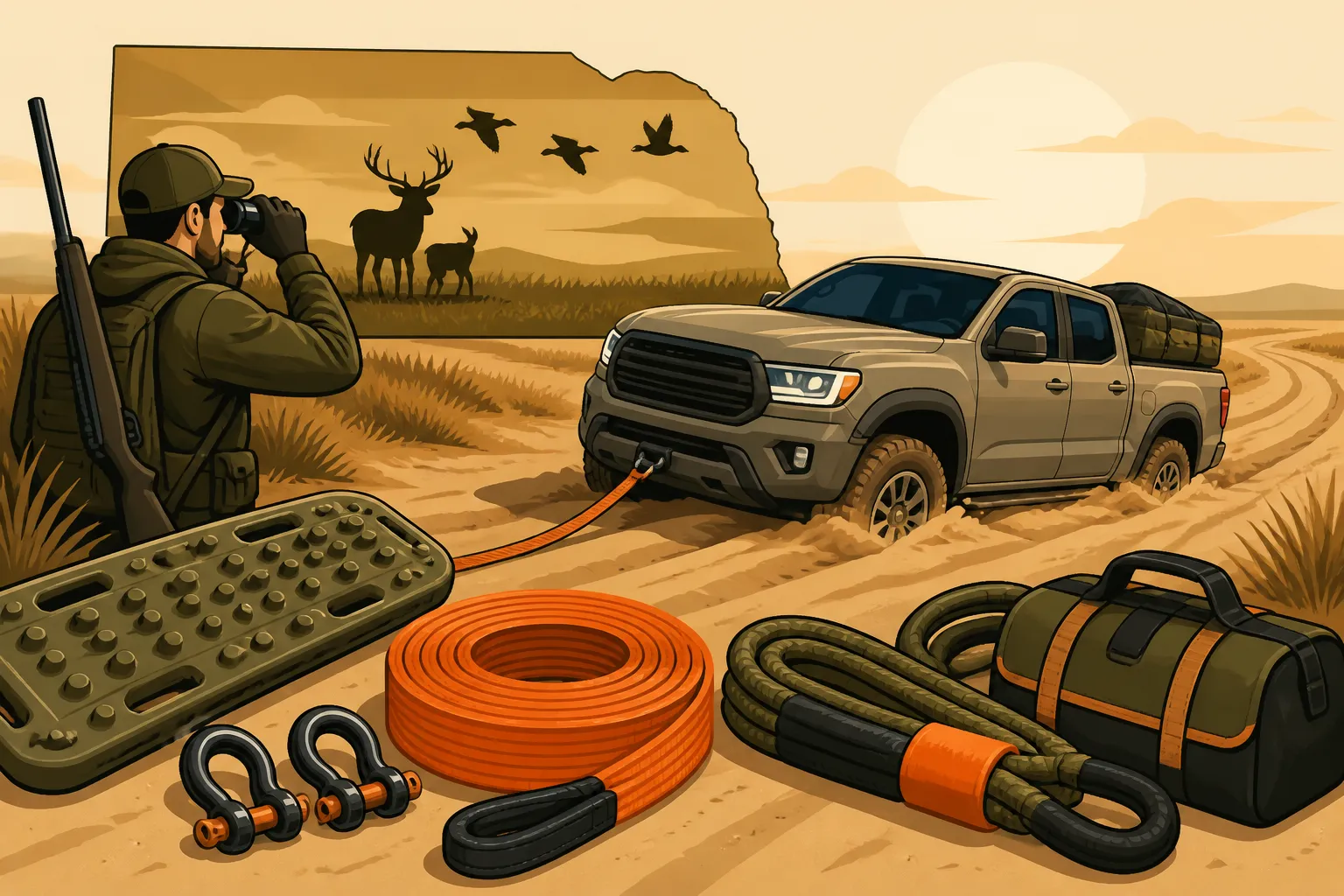
If there's one piece of recovery gear that often makes the difference between a quick self-recovery and a long wait for a tow, it's a good set of traction boards (often called recovery boards). These aren't just fancy plastic planks; they're engineered tools designed to give your tires a solid surface to grip when they've lost traction in sand, mud, or snow. When your tires are spinning, they're essentially digging themselves deeper. Traction boards interrupt this process by providing a ramp and a grippy surface to drive onto.
To use them effectively, you'll want to clear some sand from in front of and around your tires, then wedge the boards under the leading edge of your drive tires. Make sure they're pointed in the direction you want to go. Then, apply slow, steady throttle. The idea is for your tires to grab the nubs on the boards and "climb" out of the hole. Once you're out, you can collect your boards and be on your way. It sounds simple, but the wrong technique can launch the boards out from under your tires like missiles, so caution is key. Quality boards are durable and can withstand significant weight and abuse, making them an indispensable part of your kit, especially in areas like the Oglala National Grassland Acreage where sandy conditions are prevalent.
Shovels and Digging Tools
Before you even think about engaging your vehicle's recovery points or calling for help, a sturdy shovel is your best friend. When your tires sink into soft sand, the first thing you need to do is reduce the resistance around them. A compact, robust shovel (or even a military-style folding shovel) allows you to clear sand from the front of your tires, out from under the chassis, and around the axles. The goal is to create a path of least resistance and prevent your vehicle from high-centering.
High-centering is when the main body or undercarriage of your vehicle comes to rest on the sand, lifting your tires off the ground or reducing their contact pressure significantly. When this happens, even if your tires have traction, the vehicle's weight is no longer distributed through them effectively, making it impossible to move. A shovel helps you clear enough material to get the chassis off the ground and allow your tires to bite again. It’s also crucial for preparing the ground for traction boards or for a recovery strap if another vehicle is involved. Don't underestimate the power of a good digging session; sometimes, a little sweat equity with a shovel is all it takes to free your rig.
Air Compressor and Tire Deflators
This might seem counterintuitive at first glance, but reducing your tire pressure is one of the most effective strategies for navigating and recovering from soft sand. When you "air down" your tires, you increase the tire's footprint on the ground. This larger contact patch distributes the vehicle's weight over a greater area, significantly reducing the ground pressure per square inch. Think of it like walking on snowshoes versus regular boots – the snowshoes spread your weight out, preventing you from sinking.
A good set of tire deflators allows you to quickly and accurately drop your tire pressure, often down to 15-20 PSI (pounds per square inch) or even lower, depending on your tires and vehicle. Once you've aired down and successfully navigated the sandy section, an onboard or portable air compressor is vital to re-inflate your tires to road pressure. Driving at highway speeds with extremely low tire pressure is dangerous and can damage your tires. Make sure your compressor is powerful enough for your vehicle's tire size. This technique is a game-changer when you're driving on a two-track that suddenly turns into deep sand, as you might find when exploring remote areas, and can make the difference between Getting Stuck in Sandhills Sand and confidently navigating through it.
Recovery Straps and Shackles
While self-recovery is always the goal, sometimes you need a little help from a friend – or another vehicle. This is where a kinetic recovery strap and a pair of heavy-duty shackles (often called D-rings or bow shackles) come into play. A kinetic recovery strap isn't just a tow strap; it's designed to stretch under load, building up kinetic energy that then "snaps back," gently pulling the stuck vehicle out. This stretching action significantly reduces the shock load on both vehicles and their recovery points, making the recovery much safer and more effective than a non-stretching tow strap.
It's absolutely critical to only attach recovery straps to designated recovery points on both vehicles. These are typically reinforced hooks or loops on the frame. Never attach a strap to a bumper, hitch ball, or suspension component that isn't designed for recovery, as these can fail catastrophically and cause serious injury or damage. The shackles are used to securely connect the strap to these recovery points. Always ensure that everyone is clear of the strap and in a safe location when performing a recovery. Knowing how to safely use a recovery strap is a skill every adventurous Nebraskan driver should possess, especially if you plan to explore remote regions or go Hunting the Nebraska Sandhills Without Permission (always get permission, folks!).
| Gear Item | Primary Function | Best Use Case | Essential Rating |
|---|---|---|---|
| Traction Boards | Grip for spinning tires | Moderate sand, mud, snow; self-recovery | High |
| Shovel | Digging out tires/chassis | Clearing obstructions, high-centering | High |
| Tire Deflator | Rapidly lower tire pressure | Preparing for soft terrain, increasing footprint | High |
| Air Compressor | Re-inflating tires after airing down | Post-recovery, returning to road pressure | High |
| Kinetic Strap | Vehicle-to-vehicle recovery | When another vehicle is available, gentle pull | Medium |
| D-Ring Shackles | Secure strap attachment | Connecting straps to recovery points | Medium |
| First Aid Kit | Emergency medical care | Any outdoor adventure | Very High |
| Water/Food | Sustenance while waiting for help | Remote areas, unexpected delays | Very High |
Practical Self-Recovery Techniques on Sand
Having the gear is only half the battle; knowing how to use it effectively is what truly counts. When you find yourself stuck in the deep sand of a Nebraska two-track, a methodical approach is far more effective than just mashing the gas pedal. Panic can often make a bad situation much worse, so take a breath and think through these steps.
Airing Down Your Tires
This is often the first and most crucial step if you haven't already done it. As discussed, airing down your tires dramatically increases their footprint, distributing the vehicle's weight over a larger area and providing much better flotation. If you’re driving on a Sandhills Two-Track Road Access and it starts to feel unusually soft, it’s often wise to pull over and air down before you get stuck. Once you’re already buried, it might be too late to make a significant difference without some digging.
Using your tire deflators, drop the pressure to a safe off-road PSI, typically between 15 and 20 PSI for most vehicles, but always refer to your tire manufacturer's recommendations for off-road use. For particularly soft, deep sand, some experienced drivers might go even lower, but understand that this increases the risk of "bead breaking" (the tire separating from the rim) and tire damage. Once your tires are aired down, try to move forward or backward very gently. Often, this alone is enough to free a moderately stuck vehicle. Remember, slow and steady wins the race; aggressive acceleration will just dig you in deeper.
Strategic Digging and Traction Board Placement
If airing down isn't enough, or if your vehicle is high-centered, it's time to grab your shovel. Focus on clearing sand from in front of (or behind, depending on your intended direction) the drive tires. Dig out a ramp-like path. Critically, remove any sand that's piled up under the chassis or around the axles. You want to ensure that when the vehicle moves, it's not trying to push a mountain of sand with its underside.
Once the path is clear and your chassis isn't resting on the sand, it's time for the traction boards. Wedge them firmly under the leading edge of your drive tires, pointed in the direction you want to go. Ensure they are as flat as possible, providing a stable ramp. You might need to dig a small trench for them to sit securely. Once placed, get back in your vehicle and apply very gentle, consistent throttle. The goal is for the tires to climb the boards, not spin on them. If your tires start spinning on the boards, ease off the throttle, reposition the boards, and try again. It might take a few attempts, and you might need to move the boards forward a few times, but this method is highly effective. Sometimes, it helps to put the vehicle in a lower gear and use minimal RPMs.
Gentle Rocking and Momentum
For vehicles with four-wheel drive, a technique called "rocking" can sometimes work for minor stuck situations, especially if you're not deeply buried or high-centered. The idea is to gently shift between reverse and a low forward gear (or first gear), using the vehicle's momentum to slowly work itself free. The key here is gentle application of power and precise timing.
Start in reverse, apply a little throttle until the tires just start to lose traction or the vehicle moves a short distance backward. Before you lose all momentum, quickly shift to a forward gear and apply throttle again. Repeat this, trying to build a little more momentum with each swing. The goal is to create a small "ramp" in the sand with each movement, eventually gaining enough traction to drive out. This technique is dangerous if done aggressively or with rapid, hard shifts, as it can damage your drivetrain. It's best reserved for slight stuck situations where the sand isn't too deep and your tires still have some purchase. Always remember that when dealing with challenging terrain, checking your route and potential hazards on an app like GoHunt beforehand can help you avoid these situations altogether.
Beyond Self-Recovery: Planning and When to Call for Help
Despite your best efforts and the best gear, there will be times when the sand simply wins. That’s not a failure; it’s an opportunity to learn and to remember that safety and preparedness are paramount. Knowing when to stop trying and when to call for help is a critical piece of the recovery puzzle.
Pre-Trip Planning and Communication
Before you even turn the key, effective planning can prevent many headaches. If you’re heading into remote Sandhills country, tell someone your route and your estimated return time. Many hunting apps, including GoHunt, allow you to download offline maps, which are invaluable where cell service is nonexistent – and it often is. This way, even if you’re out of range, you know where you are and can potentially navigate to higher ground or a known area with service. Consider a satellite communication device if you frequently venture far off the beaten path; they can be literal lifesavers.
Pack an emergency kit that goes beyond just recovery gear. Think about extra water, non-perishable food, a warm blanket, a first-aid kit, and a flashlight. Even on a pleasant autumn day, the Wind and Thermals in the Sandhills can change quickly, and nights can get surprisingly cold. If you’re stuck for hours, or even overnight, these basic supplies will make a world of difference for your comfort and safety. Proper preparation, including understanding your vehicle’s limitations and the terrain you’ll cover, is just as important as the gear itself. You might also want to review Scouting Nebraska Public Ground Before Opening Day to get a better sense of access points and terrain before your actual hunt.
Recognizing When You're Truly Stuck
There's a fine line between a challenging self-recovery and a futile effort that only buries your vehicle deeper. Recognize the signs that you might be truly stuck:
- You're high-centered and can't dig out. If your vehicle's frame or undercarriage is firmly resting on the sand, and your tires are just spinning in the air, you're likely beyond what a shovel and traction boards can easily fix alone.
- Your tires keep losing beads. If you've aired down significantly and your tire keeps coming off the rim, stop immediately. Continuing to try and drive will damage the tire beyond repair.
- You're out of ideas and energy. Exhaustion can lead to poor decision-making. If you've tried all your techniques multiple times and are getting nowhere, it's time to reassess.
- The situation is becoming dangerous. If you're near a steep drop-off, a body of water, or weather conditions are deteriorating rapidly, continuing a risky self-recovery might put you in more peril.
- You're running out of daylight. Trying to recover a vehicle in the dark, especially in unfamiliar terrain, dramatically increases the risk of injury.
Don't let pride keep you from calling for help. It happens to the best of us. Knowing your limits and prioritizing your safety and the integrity of your vehicle is always the smartest move.
Calling for Assistance and Staying Safe
If you determine that you're truly stuck and can't self-recover, the next step is to call for assistance. This is where your pre-trip planning really pays off. If you have cell service, call a towing service experienced in off-road recoveries, or a trusted friend with a capable 4×4 and recovery gear. If you used a satellite communicator, send a message for help. Make sure to provide your exact location (from your GPS unit or phone app, like GPS Units Versus Phone Apps) and describe the situation accurately – what kind of vehicle, how it's stuck, and what recovery gear you have available.
While you wait, prioritize your safety and comfort. Stay with your vehicle; it offers shelter and is easier for rescuers to spot than a person walking. If it’s cold, bundle up with those emergency blankets. Hydrate and eat. If you're hunting, make sure any firearms are unloaded and stored safely. And for goodness sake, if it's during the firearm deer season, ensure you're wearing your blaze orange; even when stuck, safety protocols are important. Remember, the goal is always to get home safely, even if your vehicle has to wait a little longer. Getting stuck on sand roads is part of the adventure of Nebraska hunting, but being prepared ensures it's a story you tell with a smile, not a shiver.
Disclaimer
This article is for general informational purposes only and does not constitute professional advice. Laws, prices and regulations vary by location and change over time. Consult a qualified professional for guidance on your specific situation.