Getting Stuck in Sandhills Sand
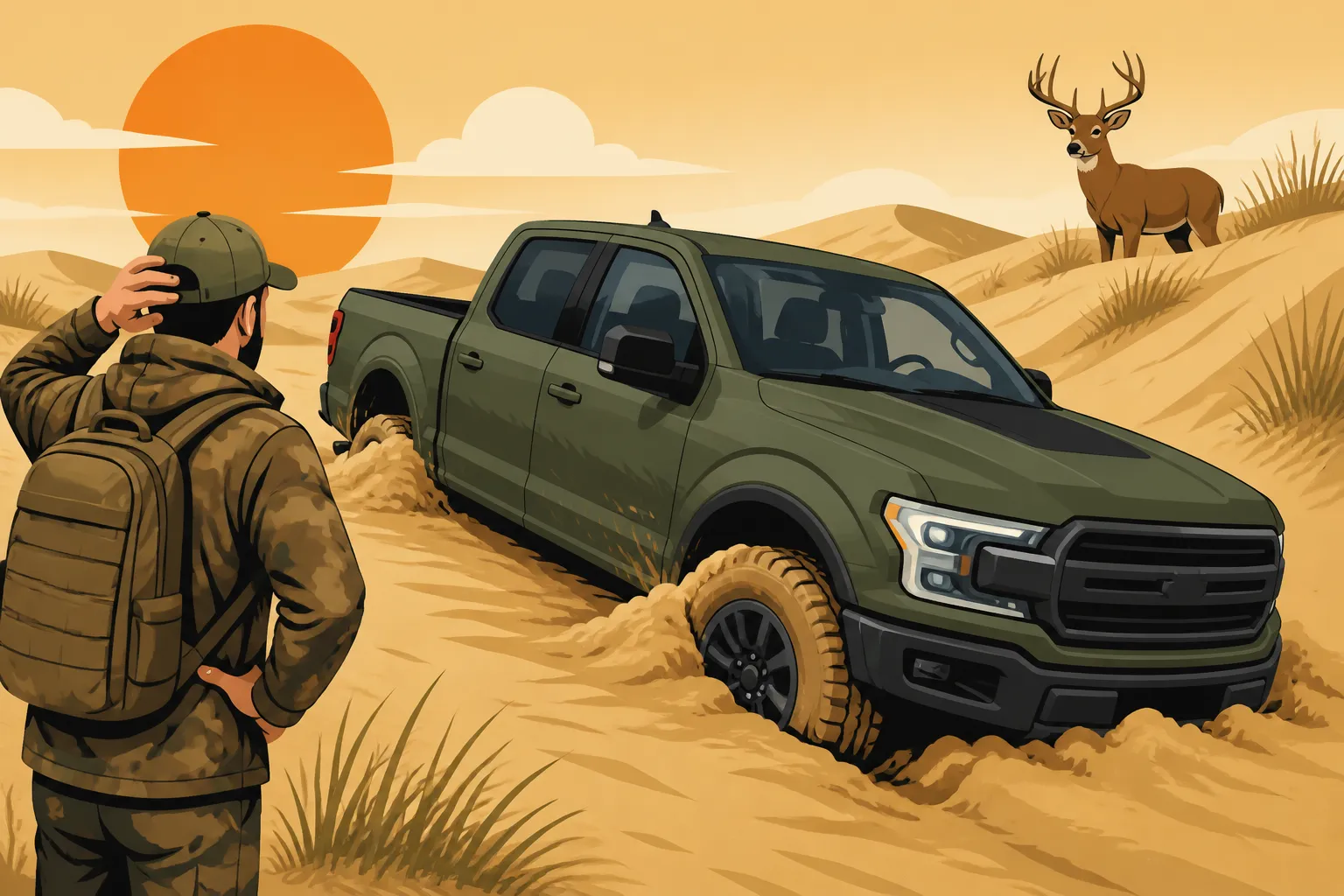
There's nothing quite like the freedom and solitude of hunting in Nebraska's vast Sandhills, but that unique terrain holds a real hidden danger: getting your vehicle hopelessly stuck in soft sand. Many a seasoned hunter has found themselves digging for hours under a blazing sun or in freezing winds, regretting not being better prepared. This guide is all about helping you understand the Sandhills' tricky ground, equipping your rig for recovery, and giving you the practical steps to get unstuck so you can spend more time hunting and less time in a ditch.
Understanding the Nebraska Sandhills Terrain
The Nebraska Sandhills, a truly unique ecosystem of rolling grass-covered dunes, present some of the most challenging off-road conditions you'll ever encounter. What looks like firm ground can quickly turn into a trap, especially after heavy rains, during extended dry spells, or simply in areas with less vegetation to bind the sand. The sheer scale and remoteness of the region mean that a simple mistake can quickly escalate into a serious situation, far from any easy help. Knowing the characteristics of this terrain is the first step in avoiding a headache.
The Nature of Sandhills Roads and Trails
Most roads in the Sandhills are not paved, or even graveled in the traditional sense. You'll find yourself on a mix of dirt two-tracks, sandy trails, and occasionally, roads that are little more than grass worn down by infrequent travel. These aren't your typical forest service roads; they're often narrow, winding, and can change dramatically with weather conditions. A stretch that was firm last week might be impassable after a big rain, or conversely, become a dust bowl with deep, fluffy ruts during a dry spell. It's easy to assume that because a path exists, it's always stable, but that's a dangerous assumption to make out here. These trails are generally not maintained, meaning washouts, hidden dips, and deep ruts are common, often appearing suddenly around a bend or over a small rise.
Sometimes, what appears to be a well-used two-track leading to prime hunting ground is actually just a path of least resistance over soft sand, used by others who may have gotten stuck themselves. The edges of these tracks are often softer than the center, and if you deviate even slightly to avoid a bump, you can find your tires sinking in a heartbeat. Pay close attention to subtle changes in sand color, which can indicate varying moisture content, and keep an eye out for areas where the grass cover is sparse or nonexistent, as these are often the softest. Even seemingly firm areas can have pockets of sugary sand that will suck down a tire in seconds, especially on slopes or near creek crossings.
Identifying Risky Areas Before You Drive
Before you even put your vehicle in drive, spend some time scouting your route. This is where tools like onX Hunt become invaluable. You can study satellite imagery to get a sense of the terrain, spot potential two-tracks, and identify areas that might look particularly boggy or sandy. Look for low-lying areas, especially those near playas or small creeks, as these are almost always softer than higher ground. Similarly, the approaches to any water crossing should be viewed with extreme caution, as the banks often consist of loose, unstable sand.
Another key indicator of a risky area is the presence of tire marks that abruptly end in a dug-out mess, or worse, old ruts that look suspiciously deep. These are warning signs left by previous unfortunate adventurers. If you see evidence of other vehicles having trouble, it's wise to reconsider your path or, at the very least, proceed with extreme caution on foot first. Walking a questionable section of trail, especially if you're alone, can save you hours of digging and potential damage to your vehicle. Remember, the Sandhills are vast and remote, and getting stuck out here means you're often truly on your own for a good long while. Think about how far you are from cell service or any form of assistance. Consider also Wind and Thermals in the Sandhills as wind can shift sand over time, creating new soft spots or covering old, firm tracks.
Preparing Your Vehicle for Sandhills Travel
Heading into the Sandhills unprepared is like showing up to a duck hunt without waders – you're just asking for trouble. While you don't necessarily need a fully customized off-road rig, a few key preparations and essential gear items can make all the difference between a minor inconvenience and a full-blown wilderness rescue. Your vehicle's setup and the recovery tools you carry are your best defense against the pervasive, inescapable grip of Sandhills sand.
Essential Gear to Carry for Self-Recovery
When you venture into the Sandhills, you need to bring more than just your hunting gear. A robust recovery kit is non-negotiable. At a minimum, this should include a quality shovel (a full-sized one, not a tiny folding camp shovel), a heavy-duty tow strap or kinetic rope, and traction boards (often called MaxTrax or similar brands). Traction boards are particularly effective in sand, providing a ramp and firm surface for your tires to grip. They're much more useful than trying to gather sparse branches or rocks in many parts of the Sandhills.
Beyond these basics, consider a high-lift jack or exhaust jack, which can lift a vehicle without needing a firm point on the ground, especially helpful if your frame is resting on the sand. You should also carry a tire pressure gauge and a portable air compressor, as adjusting tire pressure is a crucial tactic for sand travel. Gloves are also essential for protecting your hands during digging and recovery efforts. Finally, don't forget plenty of water and a reliable communication device, like a satellite messenger, because cell service is often nonexistent deep in the Sandhills. Vehicle Recovery Gear for Sand Roads delves into this topic with more specific recommendations.
Here's a quick checklist for your Sandhills recovery kit:
| Item | Purpose | Notes |
|---|---|---|
| Full-Sized Shovel | Digging out sand from around tires/frame | Essential for clearing obstacles and creating ramps |
| Heavy-Duty Tow Strap | Pulling or being pulled by another vehicle | Look for kinetic ropes for dynamic recovery |
| Traction Boards | Creating traction under spinning tires | Invaluable in soft sand, mud, or snow |
| Air Compressor & Gauge | Adjusting tire pressure for traction | Allows you to air down for more float, then air up for road |
| Gloves | Hand protection during digging and handling gear | Protects against blisters, cuts, and scrapes |
| High-Lift Jack / Exhaust Jack | Lifting vehicle when frame is bogged | Offers versatility when traditional jacks won't work on soft ground |
| Water | Hydration during strenuous recovery | Crucial in hot weather or extended efforts |
| Communication Device | Contacting help if self-recovery fails | Satellite messengers or two-way radios are recommended |
Tire Pressure and Traction Considerations
One of the most effective strategies for driving in soft sand is to air down your tires. Reducing your tire pressure increases the tire's footprint on the ground, essentially making it "float" more on the sand rather than digging in. For severe soft sand, dropping your PSI significantly – sometimes as low as 15-20 psi, or even lower depending on your tires and vehicle – can make a huge difference. However, it's critical to re-inflate your tires to proper highway pressure once you're back on firm ground to avoid damaging them or risking a blowout at higher speeds.
Before you go, understand your vehicle's 4×4 system. Engage four-wheel drive before you enter any questionable sandy sections, not after you start to get stuck. Many modern 4×4 systems have different modes for various terrains; familiarize yourself with what your vehicle offers. Traction control systems, while great for hard surfaces, can sometimes hinder progress in deep sand by cutting power to spinning wheels. In some situations, it might be beneficial to temporarily disable traction control, but always consult your vehicle's manual and understand the implications. Your goal is to maintain momentum and consistent traction without spinning your tires excessively, which only digs you deeper.
Tactics for Getting Unstuck
So, you've done your best, but the Sandhills have still claimed your vehicle. Don't panic! The key now is to remain calm, assess the situation, and apply a systematic approach to recovery. Hasty, desperate actions often make things worse, digging you deeper and sapping your energy. Remember that the vastness of the Sandhills means you could be out there for a while, so conservation of effort and smart tactics are paramount.
Initial Steps When You Lose Traction
The moment you feel your tires losing grip and the vehicle slowing, stop spinning your wheels. Continuously spinning your tires is the absolute worst thing you can do, as it will quickly dig you down to your frame. Instead, immediately try to gently back out along the path you came in, using the firmest ground you just drove over. Sometimes, a slight change in direction or a reduction in tire pressure at this early stage can be enough to get you free. If you're aired up, now is the time to start dropping your tire pressure. Get out, assess how deep you've sunk, and where the most resistance is coming from.
If backing out doesn't work, clear the sand from around your tires and, crucially, from under your vehicle's frame. If the frame is resting on the sand, your tires can't get any grip, no matter how much you spin them. Use your shovel to dig ramps in front of and behind each tire, and clear enough sand so that your vehicle isn't bellied out. Once you've dug, try again with gentle, steady throttle in the direction of least resistance. Avoid aggressive acceleration; it's about applying just enough power to get the tires to bite, not spin. This methodical approach can save you a lot of grief and keep you from having to call for help, which, out here, can be a very long wait. You'll often be glad you studied Scouting Nebraska Public Ground Before Opening Day to know your escape routes.
Utilizing Recovery Gear Effectively
Once you've cleared sand from around your vehicle, it's time to deploy your recovery gear. Start with your traction boards. Wedge them firmly under the drive tires, in the direction you want to move. Make sure they are angled to create a ramp, not just flat under the tire, and push them as far under as possible. Once the boards are in place, get back in your vehicle and apply a slow, steady throttle. The goal is to drive onto the boards, not over-spin past them. You might need to repeat this process several times, moving the boards forward as you gain a few feet of progress. It's a slow and deliberate dance.
If traction boards aren't enough, and you have another vehicle, then a tow strap or kinetic rope comes into play. Ensure both vehicles are properly equipped with recovery points (shackles or clevis mounts) – never attach a strap to a bumper, axle, or hitch ball, as these can fail catastrophically. The pulling vehicle should use a slow, steady pull, ideally with a kinetic rope that stretches and then contracts, providing a dynamic tug rather than a jarring yank. If you're alone, and absolutely desperate, a high-lift jack can be used to lift the vehicle, and then you can shove traction boards, branches, or even your spare tire under the lifted wheel to gain some height and traction. This is a last resort and can be dangerous, so proceed with extreme caution and never get under a vehicle supported only by a jack on soft ground.
When to Call for Help and What to Expect
Sometimes, despite your best efforts and preparation, the Sandhills win. If you've exhausted your options, are running low on water, daylight is fading, or the weather is turning, it's time to call for help. This is where that satellite messenger or two-way radio becomes your most important piece of gear. Understand that in the remote Sandhills, help can be hours, or even a full day, away. There aren't tow trucks lurking around every corner. Often, "help" might be a fellow hunter, a rancher, or eventually, a sheriff's deputy with a sturdy pickup.
When you make that call, be as precise as possible about your location. This is where a good GPS app like onX Hunt comes in handy, allowing you to give exact coordinates. Describe the situation: what kind of vehicle, how deep you're stuck, and what recovery gear you have. Be honest about your physical condition and supplies. Expect to wait, and make sure you're prepared for that wait with adequate food, water, and warm clothing. It's not uncommon for rescue efforts to take significant time, especially if you're in a particularly remote area far from any main roads or population centers. Being able to pinpoint your location precisely with tools on your phone, perhaps even pre-downloading maps for offline use, is key for GPS Units Versus Phone Apps in these areas.
Disclaimer
This article is for general informational purposes only and does not constitute professional advice. Laws, prices and regulations vary by location and change over time. Consult a qualified professional for guidance on your specific situation.