First Aid Kits for Remote Nebraska Ground
You’re out there, miles from the nearest blacktop, deep in a cattail slough or the vast expanse of the Sandhills, and suddenly, something goes wrong. A twisted ankle, a deep cut from a broadhead, or even worse, a hunting partner takes a nasty fall. In Nebraska's wild places, help isn't just around the corner, and those precious minutes can make all the difference. This guide isn't about scaring you; it's about empowering you to be truly prepared for the unexpected, ensuring you have the right first aid kit and the knowledge to use it when hunting remote Nebraska ground.
Why a Robust First Aid Kit Isn't Just "Nice to Have" in Nebraska's Backcountry
Let's be honest, we all carry something in our packs. Maybe a few band-aids, some pain relievers, perhaps even a small pre-packaged first aid kit we got from a big box store. But when you’re truly out in the sticks, the kind of remote Nebraska ground where your phone might not even have service, that little kit often isn't enough. The truth is, relying on someone else to be prepared, or hoping nothing serious happens, is a gamble you just can't afford to take. The stakes are too high.
The Harsh Reality of Remote Nebraska Terrain
Nebraska might not have towering mountains, but its wild spaces present their own unique challenges. Think about the sprawling Sandhills, where you could be miles from the nearest gravel road, let alone a paved one. The terrain is deceptively soft and uneven, making a simple walk a potential ankle-twisting hazard. Then there are the dense river bottoms of the Platte or Niobrara, thick with tangled briars and deadfall, where a slip could mean a puncture wound or a nasty fall. Even walking through a Nebraska cornfield before harvest can hide uneven ground, irrigation ruts, or sharp broken stalks.
When you're far from immediate medical assistance, every minute counts. Cell service can be spotty at best, and even if you get a signal, describing your exact location to a 911 dispatcher can be incredibly difficult, especially if you're injured or disoriented. Relying on an app like GoHunt for mapping can help pinpoint your location, but it won't patch you up. The vastness of places like the Oglala National Grassland or the Samuel R. McKelvie National Forest means emergency responders could be an hour or more away, even after they pinpoint you. That time is critical, and a well-stocked first aid kit turns those minutes into valuable opportunities for initial treatment, stabilizing the situation, and preventing a minor incident from escalating into a full-blown crisis.
Common Hunting Mishaps You'll Face
Hunting, by its very nature, involves elements of risk, and remote hunting amplifies those risks. It's not just about getting gored by a deer or shot (though those are extreme possibilities). More often, it’s the mundane, preventable accidents that get you. Think about walking through thick brush or climbing into a treestand site on Nebraska farmland; a slip of the knife while field dressing your harvest; or even just dehydration and heat exhaustion during a warm early season opener. Anyone who's spent time in the field has a story about a close call or a minor injury that could have been much worse.
Here’s a quick list of common injuries you might encounter, far from immediate help:
- Cuts and Lacerations: From sharp broadheads, knives, barbed wire fences, or broken branches.
- Puncture Wounds: Stepping on something sharp, or impaling yourself on a snag.
- Sprains and Fractures: Twisted ankles on uneven ground, falls from elevated stands, or slips on icy terrain.
- Blisters and Foot Issues: Long walks in ill-fitting boots or wet conditions, especially when walking Nebraska grass and sand.
- Burns: From campfires or faulty equipment.
- Insect Bites and Stings: Ticks, wasps, or spiders, which can cause allergic reactions.
- Allergic Reactions: To plants, insects, or food.
- Eye Injuries: From branches, dust, or ricocheting debris.
- Dehydration and Heat Exhaustion: Especially during early season hunts or intense physical exertion like getting a deer out of a Nebraska Sandhills basin.
- Hypothermia: Cold weather sitting strategy and unexpected drops in temperature during late-season hunts.
These aren't hypothetical boogeymen; these are real, everyday possibilities that a hunter needs to be ready for. Having the right tools to address these immediately can prevent infection, mitigate pain, and even save a limb or a life.
What Goes Into a Truly Prepared Hunting First Aid Kit
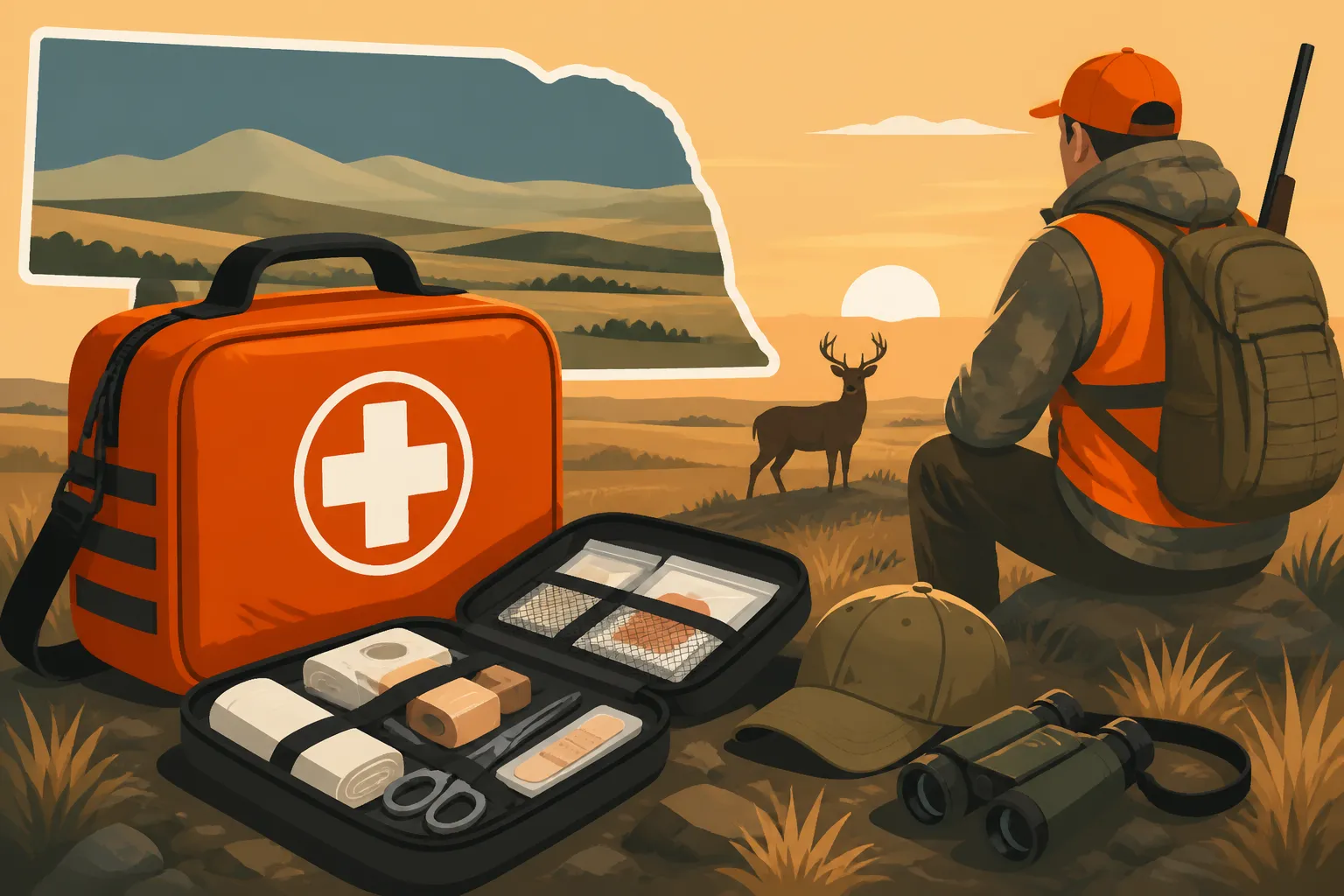
Building a genuinely useful first aid kit for remote hunting isn't about buying the biggest pre-made kit you can find. It's about thoughtful selection, knowing what you might realistically need, and tailoring it to your specific hunting style and the Nebraska environment. You want a kit that’s organized, accessible, and robust enough to handle the wear and tear of the field.
Essential Supplies for Minor Injuries
Even the smallest scrape or blister can turn into a big problem if left untended in a remote environment. You're putting miles on your boots, often through abrasive cover, and hygiene isn't always at its peak. So, let's start with the basics – the stuff you'll probably use most often.
These items address those everyday annoyances and minor mishaps that can quickly escalate if neglected:
- Bandages and Dressings: A variety of adhesive bandages (different sizes), gauze pads (sterile, various sizes), medical tape, and a roll of self-adhering wrap. Don't forget moleskin or blister pads – those long walks can really do a number on your feet!
- Antiseptics and Wipes: Alcohol prep pads, antiseptic wipes, and a small bottle of wound wash or saline solution. Cleanliness is paramount to preventing infection.
- Pain Relievers: Ibuprofen or acetaminophen for headaches, muscle aches, or minor pains. If you rely on GoHunt for scouting, you know the long hours spent behind binoculars can sometimes lead to tension headaches.
- Tweezers and Small Scissors: For removing splinters, thorns, tick removal, or cutting tape/gauze.
- Topical Ointments: Antibiotic ointment for cuts and scrapes, and hydrocortisone cream for insect bites or skin irritation.
- Gloves: Disposable non-latex gloves. Always use them when dealing with blood or open wounds to protect both yourself and the injured person.
Critical Gear for Major Emergencies
While we hope to never need them, these are the items that can literally save a life or prevent permanent injury in a serious situation. This is where your kit moves beyond "boo-boo" care and into critical intervention.
Think about the most serious things that could happen: significant bleeding, severe breaks, or profound shock.
- Tourniquet: A high-quality, commercially made tourniquet (like a CAT or SOF-T Wide). Learn how to use it before you're in an emergency. This is for severe, life-threatening arterial bleeding that can't be controlled by direct pressure.
- Pressure Dressing/Israeli Bandage: These combine a sterile pad, a pressure bar, and an elastic wrap into one unit, making it easier to apply sustained pressure to a bleeding wound.
- Splinting Material: A malleable splint (like a SAM splint) that can be molded to support a broken or sprained limb. Duct tape can be your best friend here, too, for securing splints.
- Sterile Gauze and Trauma Pads: Larger, highly absorbent pads for significant bleeding.
- CPR Face Shield: A barrier device for performing CPR safely.
- Emergency Blanket: A Mylar space blanket can prevent hypothermia or treat shock by reflecting body heat, crucial on a cold morning when hunting the pre-rut in late October.
Medications and Personal Items
Your first aid kit isn't just for accidents; it's also about managing existing conditions or common ailments that could sideline your hunt. Don't forget your personal needs.
Consider what you or your hunting partners regularly take or might need:
- Personal Prescription Medications: If you or anyone in your group has specific medications (e.g., for heart conditions, diabetes, asthma, severe allergies), ensure they have at least a few days' supply readily accessible in a waterproof container. An EpiPen for severe allergic reactions is non-negotiable if someone is known to be allergic to bee stings, for example.
- Antihistamines: For mild allergic reactions or insect bites.
- Anti-Diarrhea Medication: Nothing ruins a hunt faster than an upset stomach when you're miles from the nearest facility.
- Burn Cream/Gel: For minor burns.
- Eye Wash/Saline: For flushing out debris.
- Hand Sanitizer: To maintain hygiene when water isn't available.
- Lip Balm/Sunscreen: Nebraska sun and wind can be harsh, especially in open country or when you’re glassing the Nebraska Sandhills for mule deer.
- Headlamp/Small Flashlight: In case you're dealing with an injury or need to find supplies in the dark.
- Fire Starter: A reliable way to build a warmth or signal fire if you're stranded.
- Whistle: For signaling for help, especially if you get separated from your group.
- Emergency Contact Information: A laminated card with vital medical information for everyone in your group and emergency contacts.
Customizing Your Kit for Nebraska's Unique Challenges
A generic first aid kit is a good start, but a truly effective one is tailored to the specific environment and conditions you’ll encounter. Nebraska, with its diverse landscapes and sometimes unpredictable weather, demands a thoughtful approach.
Terrain-Specific Additions (Sandhills, Pine Ridge, River Bottoms)
Each distinct Nebraska landscape presents its own set of potential hazards, and your first aid kit should reflect that.
- Sandhills: This vast, rolling grassland, perfect for spot-and-stalk mule deer, means long walks and uneven, sandy terrain. Blisters are a huge concern, so extra moleskin, athletic tape, and a good blister kit are paramount. The thorny bushes and cacti also increase the risk of punctures and scrapes, so plenty of antiseptic wipes and fine-tipped tweezers are a must. Dehydration is another big one here, especially if you're stalking pronghorn on Nebraska grassland in August heat, so consider electrolyte packets.
- Pine Ridge: The rugged, rocky terrain of the Pine Ridge in western Nebraska, where you might be hunting Mule Deer in the Nebraska Pine Ridge, brings risks of falls, sprains, and fractures from navigating steep slopes and loose rock. Having robust splinting materials and extra wraps for support becomes even more critical. The prevalence of sharp rocks also means a higher chance of deeper cuts, requiring more substantial trauma dressings.
- River Bottoms (Platte, Niobrara, Missouri): These areas, often characterized by dense cover, deadfall, and sometimes swampy conditions, are notorious for slips, falls, and sharp encounters with submerged objects or tangled briars. The risk of puncture wounds and deep lacerations increases, so ensure you have plenty of sterile gauze, wound cleansing solution, and a good pair of gloves. Insect activity is also higher, so insect repellent and allergy medication should be well-stocked. The cold, wet conditions in late season mean extra attention to preventing hypothermia, so an emergency blanket or chemical hand warmers are wise additions.
Weather-Proofing and Accessibility
It doesn't matter how well-stocked your kit is if it's soaked, frozen, or buried under a pile of gear you can't access quickly. Durability and quick access are just as important as the contents.
- Waterproof Storage: All your supplies should be stored in a durable, waterproof bag or multiple dry bags within your main pack. A clear, heavy-duty Ziploc-style bag for each category (bandages, meds, trauma) inside your main kit bag makes it easy to find what you need without rummaging.
- Easy Access: Your first aid kit should not be at the bottom of your pack for a day on public ground. It should be in an easily accessible external pocket or a dedicated compartment, ready to be grabbed in seconds. If you're wearing a vest, maybe a smaller, immediate-use kit is on your person, with the main kit in your larger pack.
- Organization: Label compartments or small bags within your kit. You don't want to be fumbling for gauze when someone is bleeding badly. A good system saves crucial time.
- Temperature Considerations: In Nebraska's cold winters, keep medications and batteries (for headlamps, etc.) from freezing if possible, perhaps closer to your body. Conversely, in the heat of early seasons, prevent creams and liquids from degrading by keeping the kit in a shaded, cooler spot.
| Injury Type | Common Causes | Key Kit Items | Priority |
|---|---|---|---|
| Cuts/Lacerations | Knives, broadheads, barbed wire, sharp branches | Gauze pads, antiseptic wipes, medical tape, bandages, gloves, antibiotic ointment | High |
| Sprains/Fractures | Falls, uneven terrain, slips | Malleable splint (SAM splint), self-adhering wrap, duct tape, pain relievers | High |
| Blisters | Long walks, ill-fitting boots | Moleskin, blister pads, athletic tape, antiseptic wipes | Medium |
| Insect Bites | Ticks, wasps, spiders | Tweezers, hydrocortisone cream, antihistamines (EpiPen if severe allergy) | Medium (High if allergic) |
| Severe Bleeding | Major trauma, deep cuts | Tourniquet, pressure dressing, large trauma pads, gloves | CRITICAL |
| Hypothermia | Cold weather, unexpected immersion | Emergency blanket, chemical hand warmers, extra dry layers | High (in cold) |
| Dehydration | Intense activity, hot weather, inadequate water | Electrolyte packets, ample water, anti-diarrhea meds | High (in heat) |
When and How to Use Your Kit (and Call for Help)
Having the best first aid kit in the world is useless if you don't know how to use it or when to call in the professionals. This isn't just about patching up a scrape; it's about making sound judgments under pressure.
Assessing the Situation and Triage
When an incident occurs, especially in a remote area, your first step isn't to open the kit. It's to stop, take a breath, and assess. This is often called triage, even if it's just for one person.
- Scene Safety: First and foremost, is the scene safe? Is the injured person still in danger (e.g., in the path of a falling tree, near an unstable structure, or exposed to traffic if near a road)? Move them to safety if you can do so without putting yourself or them at further risk.
- Initial Assessment (ABCs): Check for Airway, Breathing, and Circulation. Is the person conscious? Are they breathing? Do they have a pulse? If not, immediate CPR might be necessary, assuming you're trained.
- Identify and Prioritize Injuries: What's the most life-threatening injury? Is there severe bleeding? Are they going into shock? Is their airway compromised? Address the most critical issues first. A deep cut needs attention before a twisted ankle.
- Stay Calm: Panic is contagious and hinders effective action. Take a few deep breaths. Speak calmly to the injured person and anyone else present. Your composure can be incredibly reassuring. Remember those hours scouting Nebraska public ground before opening day? This is another form of preparation – mental readiness.
Once you have a clear picture, then you can delve into your kit, knowing exactly what you need to address the most pressing concerns.
When to Self-Treat vs. Call for Rescue
This is perhaps the most critical decision you'll make in a remote emergency. Nebraska's wild spaces demand self-reliance, but they also demand knowing your limits. Calling for professional help isn't a sign of weakness; it's a sign of wisdom.
When to Self-Treat (and continue your hunt, or head back to the truck):
- Minor Cuts and Scrapes: Easily cleaned and covered with a bandage.
- Small Blisters: Treated with moleskin.
- Minor Sprains: Stable enough to bear weight with support, not excruciating pain, and no obvious deformity.
- Minor Headaches/Aches: Relieved by over-the-counter pain medication.
- Mild Dehydration/Fatigue: Responds quickly to rest, water, and electrolytes.
In these cases, you can treat the injury, monitor the person, and make a decision about continuing the hunt or walking back to your vehicle. If you're using GoHunt's mapping features, you can easily track your route back.
When to Call for Immediate Help (911/Emergency Services):
- Severe, Uncontrolled Bleeding: Bleeding that soaks through dressings, or arterial spurting despite direct pressure and tourniquet application.
- Major Fractures or Dislocations: Obvious deformity of a limb, inability to move, or bone protruding through the skin.
- Head, Neck, or Spinal Injuries: Any significant impact to these areas, especially if there's loss of consciousness, confusion, severe headache, or numbness/tingling.
- Loss of Consciousness or Altered Mental State: Confusion, disorientation, unresponsiveness.
- Severe Allergic Reactions (Anaphylaxis): Difficulty breathing, swelling of the face/throat, rapid pulse. Even after using an EpiPen, medical attention is crucial.
- Chest Pain or Difficulty Breathing: Especially if sudden or severe.
- Deep Puncture Wounds or Animal Bites: High risk of infection and internal damage.
- Severe Burns: Large burns, burns to the face/genitals, or full-thickness burns.
- Hypothermia or Heat Stroke: When initial self-treatment (warming/cooling, rehydration) isn't improving the situation rapidly.
- Any Injury That Prevents Safe Self-Extraction: If the injured person cannot walk out, or you cannot safely transport them.
If you decide to call for help, be prepared to give them your precise location using GPS coordinates (from your phone or a dedicated GPS unit). Tell them the nature of the injury, the number of people involved, and what you’ve done so far. Staying calm and providing clear information is paramount. Knowing when to call and how to communicate effectively is a vital part of your first aid kit, almost as important as the items inside.
Disclaimer
This article is for general informational purposes only and does not constitute professional advice. Laws, prices and regulations vary by location and change over time. Consult a qualified professional for guidance on your specific situation.