Spot-and-Stalk Mule Deer in the Nebraska Sandhills
Hunting mule deer in the vast, rolling expanse of the Nebraska Sandhills is a dream for many, but it can quickly turn into a frustrating puzzle. The sheer scale of the landscape, the elusive nature of these magnificent deer, and the constant challenge of finding and approaching them without blowing your stalk can leave even seasoned hunters feeling defeated. This comprehensive guide is here to unravel those complexities, providing you with the knowledge and tactics you need to successfully spot-and-stalk mule deer in this incredible, unique hunting environment. We’ll cover everything from understanding the terrain and mule deer behavior to essential gear, advanced stalking techniques, and how to overcome the common challenges that often trip up hunters in the Sandhills.
Understanding the Nebraska Sandhills Landscape
The Nebraska Sandhills is unlike any other hunting ground in the Midwest, and truly, much of North America. It's a land of breathtaking beauty and daunting scale, where the horizon seems endless and cover can be both omnipresent and utterly absent all at once. To successfully hunt mule deer here, you first have to understand the very ground beneath your boots and how these animals interact with it.
The Unique Topography and Cover
Imagine a sea of grass, punctuated by thousands of rolling hills, deep basins, and surprisingly abrupt sand blowouts. That's the Sandhills. There are very few traditional "timber blocks" or dense forests like you might find in eastern Nebraska. Instead, the cover comes in the form of yucca plants, clumps of soapweed, scattered Ponderosa pine, and often, small, dense cedar draws that follow the contours of the land. These cedar draws are critical for deer, offering thermal cover from the harsh sun or biting wind, and a place to feel secure. Learning to identify these draws and understand how deer utilize them is paramount, as they can often hold deer in an otherwise open landscape.
The rolling nature of the hills means constant elevation changes, creating subtle draws, saddles, and hidden pockets that can conceal deer perfectly. What looks like an open, flat expanse from a distance can quickly reveal a complex network of rises and dips upon closer inspection. This undulating topography is what makes spot-and-stalk hunting here so exciting and challenging. Hunters often describe it as a land of "false horizons," where you crest one hill only to find another, equally vast, expanse stretching before you. This constant change in perspective is something you need to embrace, not fight, as it's the key to finding those hidden deer. The vast, open nature also means that when you do locate deer, a careful approach is vital, understanding that any slight rise or dip can be your pathway to closing the distance.
Mule Deer Behavior and Habitat Use
Mule deer in the Sandhills are creatures perfectly adapted to their environment. Unlike their whitetail cousins, which often prefer dense river bottoms or thick timber for security, mule deer thrive in open, broken country. They use their keen eyesight and incredible hearing to detect threats from a distance, relying on the vastness of the land to provide escape routes rather than thick cover to hide in. You'll often find them bedding on north-facing slopes during warmer weather, taking advantage of the shade and a good vantage point to survey their surroundings. In colder, windier conditions, they might seek the shelter of a cedar patch or the leeward side of a large hill.
Their feeding habits also differ; while they'll browse on various forbs and shrubs, they're also partial to the rich grasses and agricultural edges if available, particularly alfalfa or corn stubble fields on the periphery of the Sandhills. Early mornings and late evenings are prime feeding times, but in vast, unpressured areas, they might be up and moving throughout the day. Understanding where they might choose to bed down during the day, often on points or ridges that offer commanding views, is crucial for your glassing strategy. They’re masters of blending in, and their tendency to hold tight when spooked, rather than crashing away, can make them incredibly hard to relocate once they've been disturbed. Knowing their natural inclination to stop and look back after a short dash can sometimes offer a second opportunity, but it requires quick thinking and a steady hand. These deer are truly at home in the open country, making their movements a study in efficiency and caution. For a deeper dive into their presence and population, you might find "Mule Deer in the Nebraska Sandhills and Panhandle" incredibly helpful.
Essential Gear for Sandhills Spot-and-Stalk
Hunting the Sandhills successfully, especially for mule deer, isn't just about knowing where to go or what to do; it's also about being properly equipped. The environment is demanding, and the right gear can make or break your hunt, enhancing your efficiency and ensuring your safety and comfort.
Optics: Your Most Important Tool
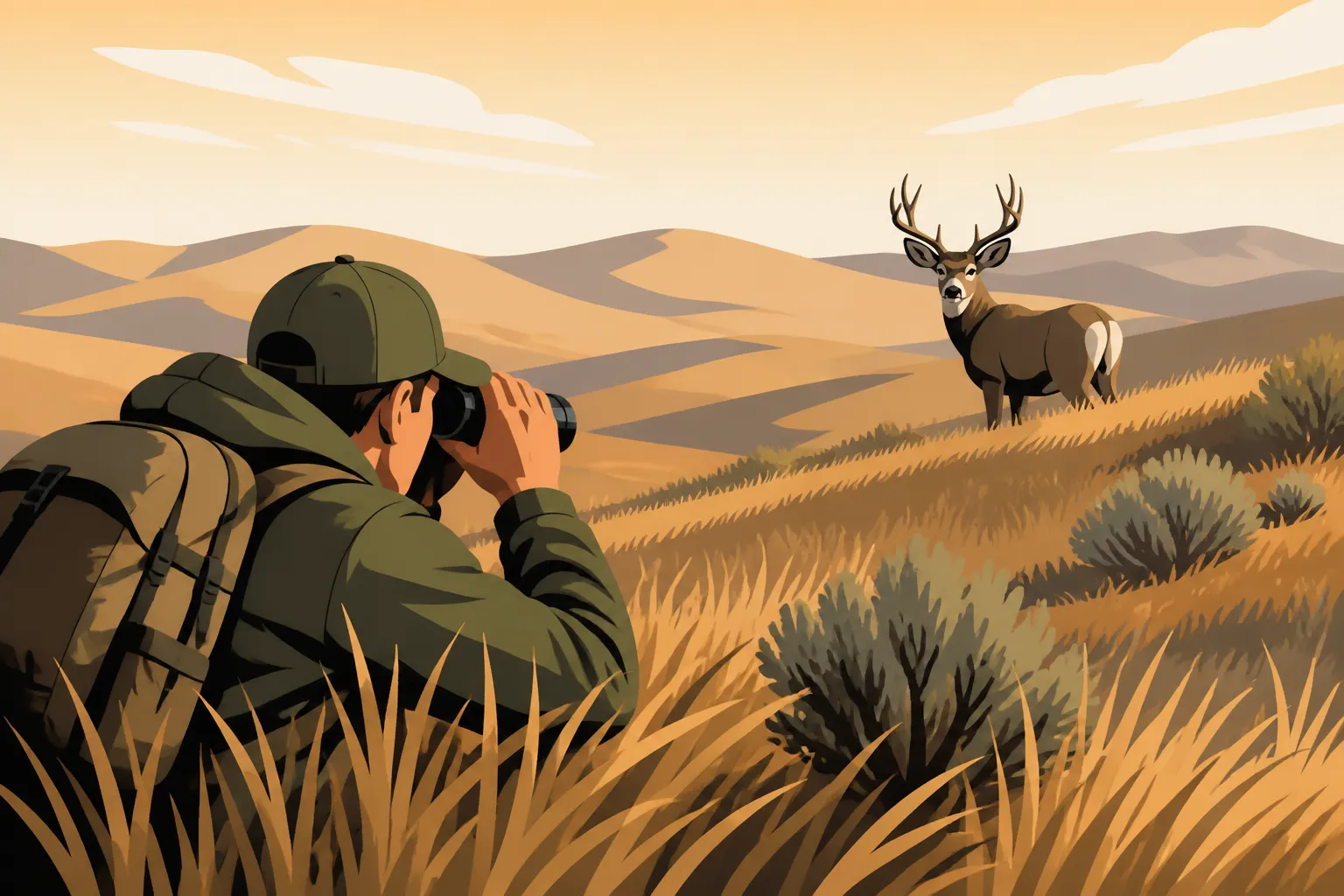
If there's one piece of gear you absolutely cannot skimp on for Sandhills mule deer hunting, it's optics. Forget the rifle for a second; you can't shoot what you can't see, and in this vast landscape, seeing means glassing. High-quality binoculars are your primary scouting tool. A good pair of 10x42s is a solid baseline, but many experienced Sandhills hunters opt for 12x50s or even 15x56s for increased magnification, allowing them to pick apart distant hillsides and judge deer from afar. Brands like Vortex, Kowa, and even some of the higher-end offerings from Leupold or Maven can provide the clarity and light transmission needed for those crucial low-light moments. A quality spotting scope, typically a 60-80mm objective lens with 20-60x magnification, mounted on a sturdy tripod, is equally vital. This combination allows you to identify deer species, accurately judge antler size, and assess if a distant shape is indeed a bedded buck or just a unique rock formation.
The tripod is non-negotiable. Freehanding binoculars, especially higher magnification ones, will quickly lead to eye strain and missed details. A solid tripod allows you to systematically grid search the landscape for hours, picking up the smallest flick of an ear or the subtle outline of a bedded deer. You'll be spending more time behind glass than walking, so invest wisely. Beyond just finding deer, good optics also help you plan your stalk, identifying potential routes, areas of cover, and obstacles. Many hunters also use digital tools like the GoHunt app, which, combined with their optics, allows for marking potential deer locations, routes, and glassing points on detailed satellite imagery, making the vast Sandhills much more manageable. For more on selecting the right magnification, check out "Binocular Magnification for the Sandhills" and "Spotting Scope Magnification for Antelope," as the principles are very similar for judging mule deer.
Rifles and Ammunition for Open Country
Given the expansive nature of the Sandhills, you need a rifle setup that's accurate and capable of ethical shots at longer distances, should the situation demand it. While responsible hunting always prioritizes getting closer, the reality of open country means that shots beyond 200-300 yards are not uncommon. Calibers like the .270 Winchester, .30-06 Springfield, .308 Winchester, 6.5 Creedmoor, and even magnum cartridges such as 7mm Rem Mag or .300 Win Mag are popular choices. The key is to choose a cartridge you're proficient and comfortable with, that can deliver enough energy for a clean kill at potential hunting ranges.
Bullet construction is also important. You'll want a bullet with a high ballistic coefficient to buck the ever-present Sandhills wind and one designed for consistent expansion at various velocities. Premium bonded or monolithic bullets are excellent choices for ensuring penetration and controlled expansion. Practice, practice, practice! Know your rifle's capabilities at extended ranges, understand your bullet's trajectory, and practice shooting from field positions, not just a bench. A good quality scope with a ballistic reticle or turrets can be a huge asset. For a comprehensive overview of rifle choices, "Rifle Setups for Nebraska's Open Country" provides excellent detail. Furthermore, understanding "Bullet Weight for Windy Conditions" will help you optimize your ammunition choice for the often gusty prairie.
Footwear and Clothing for Demanding Terrain
Your feet are your vehicle in the Sandhills, and they'll take a beating from the rolling sand and uneven ground. Invest in durable, comfortable, and supportive hunting boots. Waterproofing is a plus, as you might encounter dew-soaked grass in the mornings or unexpected creek crossings. Many hunters prefer lightweight, flexible boots that allow for good ankle articulation while still providing support, as you'll be covering many miles. Break them in thoroughly before your hunt to avoid blisters, which can quickly derail a trip.
Clothing needs to be versatile and adaptable to Nebraska's often unpredictable weather. Layering is king here. Mornings can be cool, especially in the fall, but midday sun can quickly heat things up, only for a sudden cold front or wind gust to drop temperatures again. Start with a moisture-wicking base layer, add insulating layers (fleece or synthetic down), and top it off with a windproof and water-resistant outer shell. The Sandhills are notoriously windy, so a good wind-blocking jacket and pants are essential to maintain core body temperature. Remember to check Nebraska's blaze orange requirements, especially during firearm seasons, and ensure your outer layers meet those standards. For staying comfortable against the elements, you’ll want to review "Boots for Walking Nebraska Grass and Sand" and "Wind-Blocking Outerwear for the Plains."
The Art of Spotting Mule Deer
Finding a mule deer in the vastness of the Sandhills is often likened to finding a needle in a haystack – if the haystack was miles wide and full of false positives. It's an exercise in patience, discipline, and understanding how these animals blend seamlessly into their environment.
Effective Glassing Techniques
Successful glassing in the Sandhills isn't about aimlessly scanning the horizon; it's a systematic approach. Find a high vantage point that offers an expansive view of the landscape. Once settled, begin by methodically breaking the terrain into manageable sections. Start with the closest areas, then work your way further out. Scan slowly, moving your binoculars in a grid pattern – left to right, then drop down slightly, then right to left. Don't rush. Pause often, allowing your eyes to rest and detect any subtle movement or unusual shapes. Look for horizontal lines that don't quite fit the vertical grasses, or a patch of slightly different color. Mule deer often bed down in depressions, behind rises, or in the scattered cedar draws, seeking shade and protection from the wind. Pay extra attention to these likely bedding areas, especially on north-facing slopes during sunny days, or protected leeward slopes when the wind is howling.
The time of day also influences where you should focus your glassing efforts. Early mornings and late evenings are prime times to catch deer feeding or moving between bedding and feeding areas. During the middle of the day, they'll often be bedded down, making them harder to spot. In these situations, you're not looking for a whole deer, but rather a part of one – an ear, an antler tip, a patch of hide that catches the sunlight. Many hunters find that using a high-quality spotting scope on a tripod for hours is the best way to pick apart distant terrain. Patience is your greatest ally here; it's not uncommon to glass a hillside for an hour or more before a subtle movement or glint of sun off an antler reveals a hidden buck. If you're looking for more advanced glassing strategies, "Glassing Sandhills Blowouts for Mule Deer" offers fantastic insights tailored to this unique terrain.
Identifying Mule Deer from a Distance
Once you spot something that might be a deer, the real detective work begins. Mule deer are masters of camouflage, and distinguishing them from rocks, yucca plants, or shadows at a distance takes practice. First, look for movement. Even a slight twitch of an ear, a flick of a tail, or a shift in weight can confirm your suspicions. If there's no movement, analyze the shape. Mule deer have large ears, often described as "mule-like," which are a distinctive feature. Their tails are typically rope-like with a black tip, unlike the broad, white flag of a whitetail. When they move, mule deer often have a distinctive "stotting" or "bounding" gait, where all four feet leave the ground at once, a clear contrast to a whitetail's more fluid run.
Pay attention to body color and size. Mule deer tend to have a more uniform grayish-brown coat with a lighter belly, often appearing stockier than whitetails. Look for patterns – are there two "eye" spots on its face? Does it have a white rump patch? Binoculars and spotting scopes are critical for these distinctions. Use the magnification to scrutinize the head and antlers to determine if it's a buck, and then to judge its size and maturity. Don't be afraid to take your time; a hasty judgment can lead to a blown stalk or wasted effort. With digital tools like the GoHunt app, you can even mark the exact coordinates of what you've spotted, helping you plan your approach later. Learning "Telling a Mule Deer From a Whitetail at Distance" is a valuable skill in the overlapping ranges of Nebraska. For those focused on trophy potential, "Judging a Mule Deer Buck in the Field" will refine your eye for what constitutes a good buck.
Mastering the Stalk in Open Country
Spotting a mule deer is only half the battle; closing the distance for an ethical shot in the open, rolling Sandhills is where the real challenge lies. A successful stalk requires meticulous planning, an understanding of the environment, and an almost intuitive sense of how to use the terrain to your advantage.
Reading the Wind and Thermals
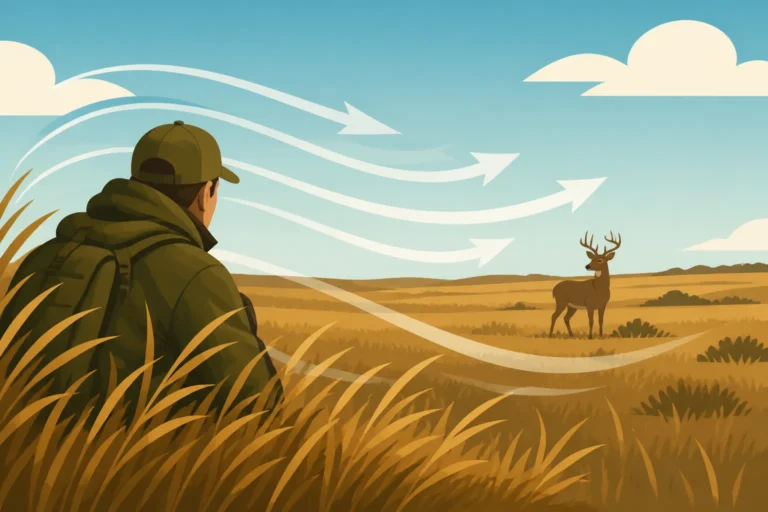
In the Sandhills, the wind is not just a factor; it's a character in the hunt. It dictates how you approach, where you can hide, and even how the deer perceive their surroundings. Mule deer, like all deer, rely heavily on their sense of smell, so staying downwind or crosswind of your target is absolutely non-negotiable. Before you even take your first step on a stalk, assess the wind direction and speed. Use a wind checker (talcum powder, milkweed seeds, or a small feather attached to your rifle) constantly. The wind can swirl in the rolling hills, making it even more challenging. What might be a steady breeze at your elevation could be different in a valley or on an opposing ridge.
Thermals, which are rising or falling air currents, also play a significant role, particularly in the mornings and evenings. As the sun rises, the air warms and begins to rise, carrying scent upwards. Conversely, as the sun sets and the air cools, thermals drop, carrying scent downwards. This means an evening stalk down a draw might pull your scent directly to a bedded deer below, while a morning stalk in the same draw could be relatively safe as your scent rises. Pay close attention to these natural air movements, integrating them into your approach strategy. Sometimes, you'll need to make a longer, more circuitous route to stay in the favorable wind and thermal cone, and rushing this step can ruin an otherwise perfect setup. Understanding "Wind and Thermals in the Sandhills" is foundational to any successful Sandhills hunt.
Utilizing Terrain for Concealment
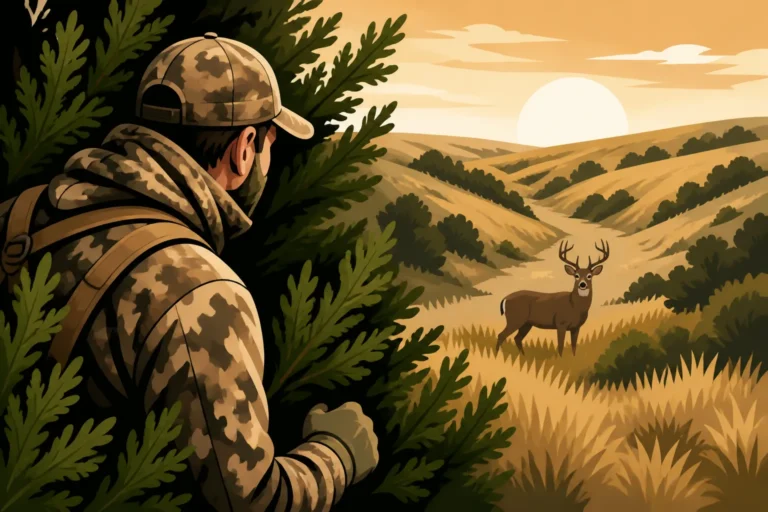
The beauty of the Sandhills is that while it appears open, it's actually full of subtle concealment opportunities if you know how to read it. Every slight rise, every fold in the land, every deep basin or "blowout" becomes a potential avenue for your approach. The key is to move slowly and deliberately, always staying below the skyline. Exposing yourself on a ridge-top is a surefire way to be spotted by a sharp-eyed mule deer. Instead, use the contours of the land to your advantage. Plan your route from your glassing position, identifying draws, coulees, or even rows of taller yucca plants that can offer cover.
When you need to cross an open area, move during periods when the deer's head is down feeding, or when it's looking in another direction. If a deer is bedded, you might have to commit to a low crawl, using every available tuft of grass or slight rise to break up your outline. Avoid wearing clothing that stands out against the muted browns and greens of the Sandhills. Often, the best path to your target isn't a straight line, but a winding, circuitous route that keeps you out of sight. It might take significantly longer, and require more physical effort, but the reward of a successful, undetected stalk is worth every ounce of extra effort. For tips on navigating the last, critical portion of your stalk, "Closing the Last Hundred Yards on Sand" offers crucial advice.
The Final Approach and Shot Placement
As you near your target, the stalk becomes even more critical. Every step must be silent and intentional. Look for small pebbles, dry grass, or crunching sand that could give away your position. Keep your binoculars handy for quick checks on the deer's position and demeanor. Are its ears flicking? Is it looking in your direction? If so, freeze and wait until it relaxes before proceeding. Often, the final stage of the stalk involves getting into position for the shot. This might mean finding a stable rest, whether it's dropping to a prone position, using a bipod, shooting sticks, or even resting your rifle over your backpack.
In open country, having a stable shooting platform is absolutely vital for accuracy, especially at longer distances or in windy conditions. Practice shooting from these field positions so they become second nature. When the shot opportunity presents itself, take a deep breath, settle your crosshairs, and focus on ethical shot placement. Aim for the vitals (lung/heart) to ensure a quick, humane kill. Be prepared for the mule deer to react to the shot, sometimes running a short distance before stopping to assess the situation, or simply dropping in its tracks. Having practiced with your chosen rifle and knowing its capabilities will give you the confidence to make the shot when it matters most. "Shooting Sticks and Bipods on Grass" details the benefits of these crucial accessories for steady aiming in open terrain.
Overcoming Common Sandhills Challenges
The Sandhills are a land of opportunity, but also one that presents unique challenges to the unprepared hunter. From its vast, seemingly featureless expanse to its unpredictable weather, being aware of and planning for these hurdles is key to a successful and safe hunt.
Dealing with Vastness and Navigation
The sheer scale of the Sandhills can be overwhelming and disorienting. What looks like a prominent landmark from a distance can quickly disappear into the rolling hills as you approach, leaving you wondering which way is back to your vehicle. It’s incredibly easy to get turned around, especially when focused on a stalk or tracking an animal. Relying solely on memory or sun position is a recipe for trouble. Modern navigation tools are your best friend here. A reliable GPS unit, or a smartphone app with downloaded offline maps (like the GoHunt app or onX Hunt, which works even without cell service), is essential. Mark your vehicle's location before you leave, and mark any important points of interest, like a spotted deer, water sources, or potential escape routes.
Carry a physical map and compass as a backup, and know how to use them. The Sandhills can quickly sap your energy, so knowing your general location and the most efficient way back to camp or your vehicle is not just a convenience, but a safety measure. Always carry more water than you think you'll need, and a few emergency snacks. Breaking down the vast landscape into smaller, more manageable sections during your glassing and planning can also help psychologically. Recognize that you won't cover it all, and focus your efforts effectively. This helps prevent being "lost" both physically and mentally. For further guidance on getting out of tough spots, consider "Getting a Deer Out of a Nebraska Sandhills Basin" and explore "GPS Units Versus Phone Apps" for the best navigation tools.
Heat, Cold, and Rapid Weather Changes
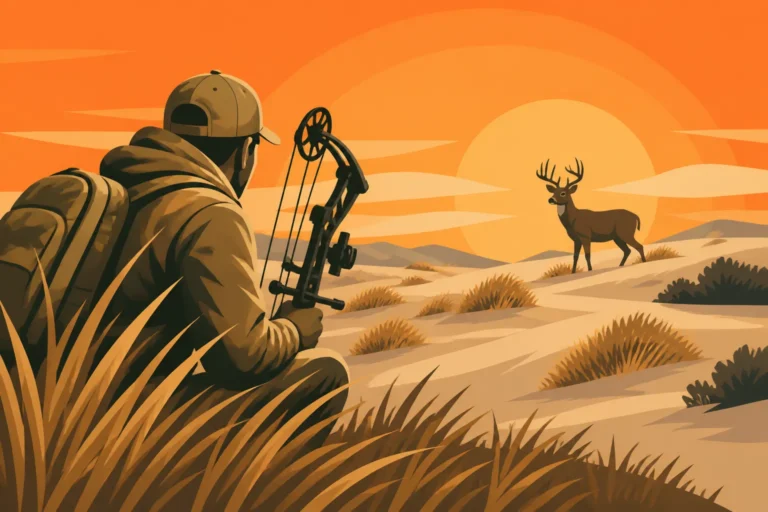
Nebraska weather, especially in the Sandhills, is famously unpredictable. A beautiful, crisp morning can give way to a scorching afternoon, only for a sudden thunderstorm or even an early-season blizzard to roll in without much warning. Hunters must be prepared for everything. During early archery seasons in August or September, heat and sun exposure are major concerns. Dehydration can quickly become serious, so carry ample water, wear light-colored, breathable clothing, and consider a wide-brimmed hat. Keep an eye on your canine companions too, as "Water and Heat Risk for Bird Dogs" reminds us, heat affects all creatures afield.
Conversely, as fall progresses into late season firearm or muzzleloader hunts, bitter cold and strong winds become the primary adversary. Layering is crucial, as discussed earlier, but also pack emergency hand warmers, an extra hat and gloves, and a bivy sack or emergency blanket for unexpected overnight stays. The persistent wind in the Sandhills can make even moderate temperatures feel much colder, so effective wind-blocking outerwear is critical. Always check the weather forecast before heading out, but understand that conditions can change rapidly. Being over-prepared for weather extremes is always better than being caught off guard. Even if you're stalking, the principles of staying warm apply, so adapting advice from "Cold Weather Sitting Strategy" is important.
Respecting Land and Ethics
A significant portion of the Nebraska Sandhills is private land, owned by ranchers and farmers. Gaining permission to hunt these private lands is often the biggest hurdle for hunters. Always assume land is private unless clearly marked otherwise, and always seek permission from the landowner before you step foot on their property. This isn't just common courtesy; it's the law. Trespassing can lead to serious consequences and reflects poorly on all hunters. Build relationships, be respectful, and offer to help with chores if appropriate. Often, a "no" today might turn into a "yes" next season if you demonstrate respect and responsible behavior. For detailed information on this, refer to "Getting Private Land Permission in Nebraska."
Beyond access, ethical hunting practices are paramount. This includes knowing your effective shooting range and sticking to it, ensuring a clean and humane kill. Practice shot placement and be confident in your abilities. After the shot, diligent tracking and recovery of your animal are non-negotiable. Even if it takes hours or requires returning the next morning, every effort must be made to recover the game. Pack out all trash, spent casings, and leave no trace of your presence. Respect for the land, the wildlife, and the landowners ensures that these hunting opportunities will remain for future generations.
Post-Harvest Care in the Sandhills Environment
Successfully harvesting a mule deer in the Sandhills is a moment of triumph, but the work isn't over. Proper field dressing and meat care are crucial, especially given the variable temperatures and sometimes remote locations of the Sandhills. Neglecting these steps can compromise the quality of your hard-earned venison.
Field Dressing and Cooling Considerations
Once your mule deer is down, the clock starts ticking, especially if hunting during warmer early-season periods. The primary goal is to cool the carcass as quickly as possible to prevent spoilage. Traditional gutting is effective, but for those deep in the Sandhills or facing warm weather, the "gutless method" is an excellent alternative. This technique involves removing the hide, quartering the animal, and deboning the meat in the field, leaving the gut pile largely intact. This minimizes the amount of material you need to pack out and significantly speeds up the cooling process as more surface area is exposed to the air. You'll want to have a sharp knife, a game bag for each quarter, and a sturdy pack frame ready for this.
If conditions allow for traditional field dressing, remove the entrails as quickly as possible, then prop the cavity open to allow air circulation. If possible, hang the deer, even briefly, to further facilitate cooling. Wipe out any blood or debris with clean cloths or paper towels (avoid using water inside the cavity, as it can promote bacterial growth). In warm weather, getting the hide off immediately is perhaps the single most important step for preserving meat quality. Remember, flies and other insects are attracted to fresh meat, so having quality game bags to protect the quarters is essential. For detailed instructions on proper care, see "Field Dressing and Cooling Game in Warm Weather."
Transporting Your Harvest
Getting a mule deer out of a deep Sandhills basin or off a remote ridge can be a significant physical challenge. These deer are large, and the terrain is often soft sand, making traditional dragging difficult. This is where a good quality pack frame or game cart becomes invaluable. If you've quartered the animal using the gutless method, each quarter can be loaded into game bags and then onto your pack frame for multiple trips, or one very heavy one, depending on your fitness and the distance. Be realistic about your physical capabilities and the distance to your vehicle. Trying to drag an entire deer through soft sand for a mile is an exhausting and often fruitless endeavor.
If you are using a game cart, ensure it has large, sturdy wheels capable of navigating uneven, sandy terrain. Two-track roads, while often rough, can sometimes be used to get closer to your downed animal, but be extremely cautious of getting your vehicle stuck in the soft sand. Four-wheel drive and recovery gear (tow strap, shovel, traction mats) are highly recommended if venturing off main gravel roads. Once you have the meat back to your vehicle, it needs to be immediately placed in coolers with plenty of ice, especially if you have a long drive home or if temperatures are still warm. Keep the drain plugs open on coolers to allow melted ice to escape, preventing the meat from sitting in water. If you're looking for strategies to manage the physical demands, revisiting "Getting a Deer Out of a Nebraska Sandhills Basin" will offer practical advice.
| Essential Sandhills Mule Deer Gear Checklist | Purpose | Key Features/Notes |
|---|---|---|
| High-Quality Binoculars (10-15x) | Spotting deer at long distances | Clear glass, good light transmission, comfortable to hold for long periods. |
| Spotting Scope (20-60x) + Tripod | Detailed identification, antler judging | Essential for precise glassing and stable viewing over vast areas. |
| Rangefinder | Accurate distance measurement | Crucial for ethical shots in open country. |
| Reliable Rifle (.270, 6.5 CM, .30-06, etc.) | Ethical long-range shots | Known trajectory, consistent accuracy, comfortable for you to shoot. |
| Quality Ammunition | Consistent performance | High ballistic coefficient, reliable expansion, practiced with your rifle. |
| Durable, Comfortable Boots | All-day walking on uneven, sandy terrain | Good ankle support, waterproof, broken-in to prevent blisters. |
| Layered Clothing System | Adapting to rapid weather changes | Moisture-wicking base, insulating layers, windproof/water-resistant outer shell. |
| Blaze Orange | Visibility during firearm seasons | Meet Nebraska's square inch requirements; critical safety item. |
| Game Bags | Protecting meat in the field | Breathable, keep flies off, essential for quartered meat. |
| Pack Frame / Game Cart | Transporting harvested game | Sturdy, comfortable for hauling heavy loads over rough terrain. |
| GPS / Offline Maps (e.g., GoHunt app) | Navigation and marking locations | Essential for vast, disorienting landscape, even without cell service. |
| Wind Checker | Scent control | Constantly verify wind direction for successful stalks. |
| Water & Emergency Kit | Safety and hydration | More than you think you need, basic first aid, fire starter, emergency blanket. |
Disclaimer
Hunting involves inherent risks, including injury and death. Always prioritize safety, follow all local and state regulations, and obtain appropriate licenses and permits. The information provided in this guide is for informational purposes only and should not be considered a substitute for professional instruction or personal experience. Always scout thoroughly, practice ethical hunting practices, and respect wildlife and private property.