Hunting Nebraska Road Ditches
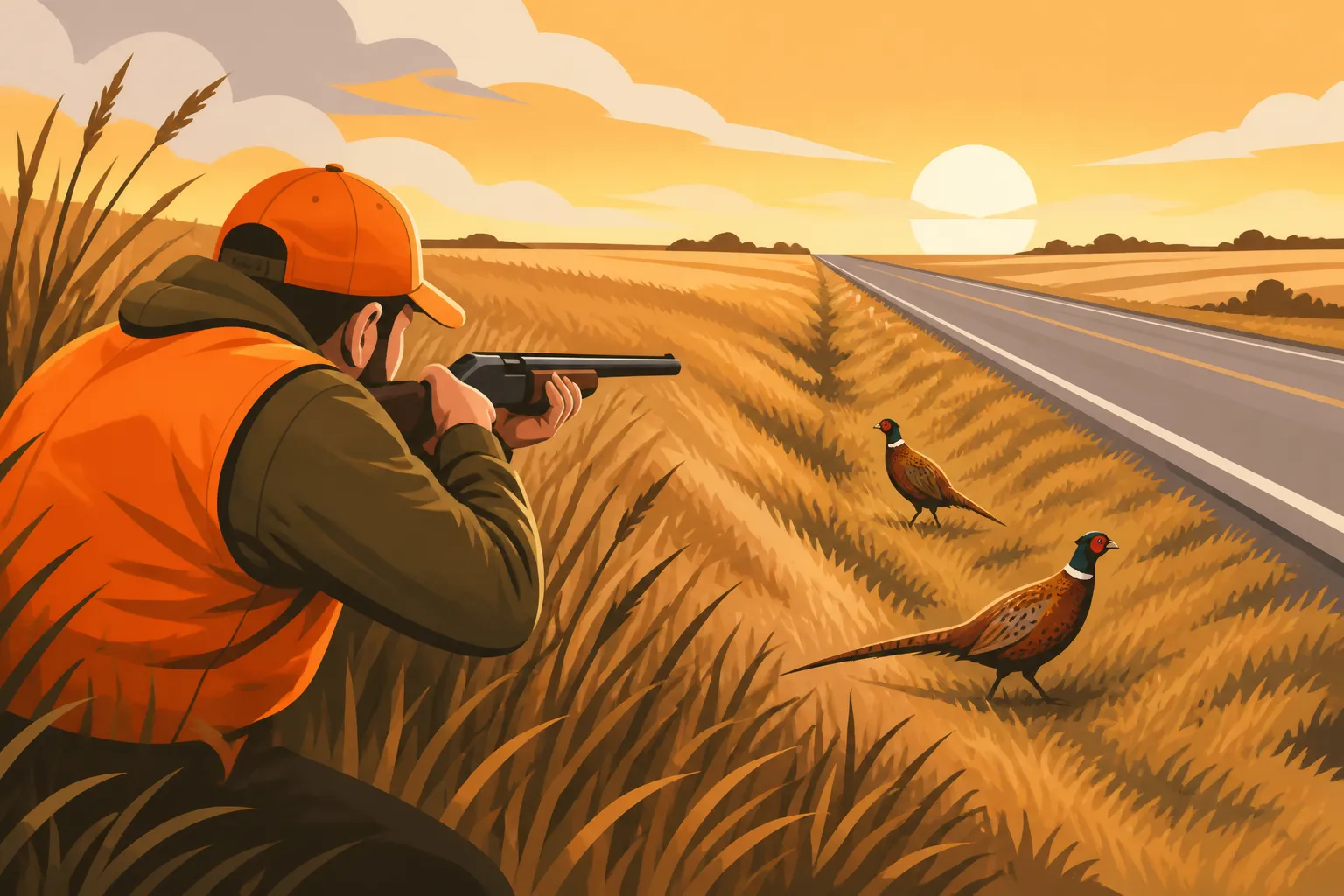
It’s a common sight across Nebraska: long stretches of road, often with grassy ditches and fence lines bordering agricultural fields or rangeland. For many hunters, especially those new to the state or struggling to secure private land access, the thought might cross their mind – "Can I hunt that ditch?" The reality of hunting road ditches in Nebraska is far more complex than a simple yes or no, involving a maze of regulations, safety concerns, and critical ethical considerations that every hunter needs to understand. This guide will meticulously break down the nuances of hunting Nebraska road ditches, helping you navigate the regulations, prioritize safety, and approach these areas with respect and responsibility.
Understanding Nebraska Road Right-of-Way and Your Hunting Rights
The concept of a "road ditch" might seem straightforward, but legally, it's anything but. In Nebraska, the right-of-way along public roads isn't just the paved or graveled surface; it extends beyond that, often encompassing the ditch, shoulder, and even a strip of land beyond the fence line. Understanding where this right-of-way begins and ends, and who owns it, is absolutely crucial for any hunter considering these areas.
Defining the Right-of-Way: What's Public, What's Not?
In most cases, roads in Nebraska are laid out within a designated right-of-way, which is usually public property or a public easement. However, the width of this right-of-way can vary dramatically. On many rural county roads, it might extend 33 feet (one rod) from the centerline in either direction, making the total right-of-way 66 feet wide. But this is not a universal rule; some roads might have wider or narrower rights-of-way, depending on their classification and historical establishment.
It's tempting to think that if you're standing on the "public" part of the right-of-way, you're free to hunt. However, it's not quite that simple. While the road itself and its immediate right-of-way are generally considered public for travel, hunting regulations often treat them differently than, say, a designated wildlife management area. The line between what's considered a legal hunting spot and trespassing can be incredibly thin, often just a few feet or inches away from where you're standing. Even if the ditch itself is within the public right-of-way, the ground beyond the fence is almost certainly private.
Legalities of Hunting Within Road Right-of-Way
Nebraska law has specific provisions regarding hunting from or within the road right-of-way. While it generally permits hunting within the public right-of-way adjacent to private land with permission, it explicitly prohibits shooting from a public road or the shoulder thereof. This might sound like a subtle distinction, but it's a critical one. You cannot, for example, stand on the gravel road and shoot into a ditch, even if that ditch is technically within the public right-of-way. You also cannot shoot across a public road.
Furthermore, there are rules about possessing loaded firearms in or on vehicles on a public road, which can come into play if you're driving along scouting and decide to jump out to pursue game. These laws are designed for public safety and to prevent reckless behavior. Even if you're outside your vehicle and in the ditch, you need to be acutely aware of whether you're still considered "on" the public road in the eyes of the law. You'll want to review Road Right-of-Way Hunting in Nebraska for a more detailed breakdown.
Here's a quick overview of some key legal distinctions:
| Aspect | Explanation | Hunter's Responsibility |
|---|---|---|
| Shooting FROM Road | Prohibited to discharge a firearm from a public road, its shoulder, or inside a vehicle on a public road. | Absolutely do not shoot while standing on the gravel or paved portion of the road, or directly next to it. You must be completely off the traveled portion. |
| Shooting ACROSS Road | Prohibited to shoot across a public road. | Your shot trajectory must not cross the road itself. This significantly limits shot angles when hunting ditches. |
| Public Right-of-Way | Can extend beyond the road surface and ditch, typically 33 feet from the centerline on rural roads. | Understand the exact width of the right-of-way for the specific road you are on. Knowing Right-of-Way Width on Nebraska Roads is vital. |
| Private Land Access | Hunting within the right-of-way adjacent to private land requires permission from the landowner. | This is where most issues arise. If the ditch abuts private property, you need permission from that private landowner to hunt any game that might be on their side of the fence, even if you are on public ground. |
| Loaded Firearms | Restrictions on loaded firearms in or on vehicles on public roads. | Ensure your firearm is unloaded and cased when traveling in your vehicle on public roads, especially if you're not actively hunting a legal public tract. |
The Critical Role of Adjacent Land Ownership
This is perhaps the biggest and most misunderstood hurdle for "ditch hunters." Even if you are standing in a roadside ditch that is technically part of the public right-of-way, you generally still need permission from the adjacent private landowner to hunt if their land borders that ditch. Why? Because the game you are pursuing, whether it's a pheasant, a rabbit, or a deer, is likely to be moving onto or off of that private property.
Nebraska's hunting regulations are designed to protect private property rights. If you shoot a pheasant that flushes from the private side of the fence and lands in the ditch, or vice-versa, you could be in violation of trespass laws. This is particularly true if you have to cross a fence to retrieve game. Nebraska's Posted-Land and Trespass Rules are clear: even retrieving legally downed game from private land without permission is considered trespass.
This is where tools like onX Hunt become invaluable. By using a mapping app like onX Hunt, you can overlay property boundaries onto satellite imagery, allowing you to clearly see where public right-of-way ends and private land begins. This information, combined with knowing Finding Nebraska Property Lines, is crucial for making informed decisions and staying on the right side of the law. Without explicit permission from landowners, hunting these areas often leaves you with nowhere to shoot and nowhere to pursue game if it moves even a few feet off the public right-of-way.
Safety, Ethics, and Landowner Relations
Beyond the legal complexities, there are significant safety and ethical considerations that come with hunting near roads. These factors often lead to negative public perception and can damage the reputation of hunters as a whole. Being a responsible hunter means prioritizing safety and fostering good relations, even when pursuing game on seemingly marginal ground.
Prioritizing Safety When Hunting Near Roads
Hunting near roads introduces a host of safety concerns that are often not present in more remote public or private hunting areas. First and foremost is the proximity to vehicle traffic. A stray shot, a ricochet, or even just the presence of hunters walking along a road can be a serious hazard. Hunters must be absolutely certain of their target and what lies beyond it. This is incredibly difficult in a ditch situation where the background is often a road or private property.
Visibility is another major concern. Drivers may not expect to see hunters in a ditch, especially in tall cover. Wearing adequate blaze orange is not just a legal requirement during specific seasons like Orange Requirements for Archers in November but a crucial safety measure when hunting anywhere near roads. Ensure you meet Nebraska Blaze Orange Square Inches requirements and consider exceeding them for maximum visibility.
Think about the angle of your shot. Shooting parallel to a road risks hitting vehicles, while shooting towards private land without permission is trespass. If you're walking a ditch and a pheasant flushes into the road, or across it, taking a shot would be illegal and incredibly dangerous. These situations demand extreme restraint and often mean letting opportunities pass rather than risking a violation or an accident.
Ethical Considerations and Public Perception
While something might be technically legal, it doesn't always make it ethical or wise. Hunting road ditches can easily lead to negative perceptions of hunters from the general public and, perhaps more importantly, from landowners. Imagine a farmer seeing hunters walking a ditch alongside their property, especially if they have livestock or crops nearby. Even if you're not breaking any laws, it can be perceived as disrespectful or even threatening.
The "road hunter" stereotype is a real problem for hunter-landowner relations. It conjures images of individuals who aren't putting in the effort, are ignoring safety, and have little regard for private property. Even if you are meticulously following every rule, the visual of someone hunting a ditch can contribute to this negative image. We all have a responsibility to uphold a positive image of hunting, and sometimes that means choosing not to hunt areas that, while technically permissible, could be perceived negatively. Consider how your actions reflect on the entire hunting community.
Navigating Landowner Relations Along Road Ditches
As we discussed, even if you can hunt a small strip of public right-of-way, the moment game moves onto private property, your hunt is effectively over without permission. This means that successful and responsible ditch hunting is often predicated on good landowner relations. Instead of simply assuming you can hunt the ditch, consider it an opportunity to build a relationship.
Knock on doors, introduce yourself, and respectfully ask for permission to hunt the ditch and to retrieve game if it runs onto their property. Many landowners might be more agreeable to this limited request than a full-blown request to hunt their entire property. This also opens the door to potentially gaining full permission in the future. Websites and apps like GoHunt or onX Hunt can help you identify landowners, making it easier to know whose door to knock on. Building trust and showing respect is always the best approach, whether it's for hunting the ditch or the back forty. Remember, a courteous request for Do You Need Written Permission in Nebraska? can go a long way.
Practical Approaches to Hunting Ditch-Adjacent Cover
Given the legal and ethical tightrope, what does practical, responsible "ditch hunting" actually look like in Nebraska? It's less about directly hunting in the ditch, and more about utilizing its unique cover in conjunction with other accessible hunting areas, always with extreme caution.
Species You Might Encounter and Tactics
Roadside ditches, especially those with good cover like tall grass, brush, or shelterbelts, can hold a variety of small game and even deer. Pheasants, quail, rabbits, and coyotes are common inhabitants.
- Pheasants and Quail: Ditches offer critical thermal and escape cover, particularly in areas dominated by row crops. For pheasants, you might find them using ditches as travel corridors between feeding and roosting areas. If you've secured permission on adjacent private land, walking parallel to a ditch, just inside the private property, can push birds into shooting range. Without permission, hunting only the right-of-way means being extremely vigilant about property lines. Walking Milo and Corn Stubble for Pheasants or Quail Coveys in Nebraska Shelterbelts are often tied to ditch habitats.
- Rabbits: Cottontails are often abundant in brushy ditches. Small game hunting, with fewer concerns about crossing property lines for retrieval (due to smaller game size and quick retrieval), might be more practical in these areas, provided you are well within the legal right-of-way and have a safe shooting lane.
- Coyotes: Ditches, especially those that provide concealment along field edges, are natural travel routes for coyotes. Coyote Calling on Winter Grassland can be effective if you can set up on accessible public land (like Open Fields and Waters tracts) with a clear shot away from roads and private residences. Again, getting permission from adjacent landowners significantly increases your options and reduces risk.
- Deer: Deer will certainly use ditches for travel and bedding, especially in agricultural areas. However, attempting to hunt deer in or along a road ditch is generally not advisable due to the extreme safety risks and the near certainty of having to trespass to retrieve a downed animal. It’s nearly impossible to find a truly safe, legal, and ethical shot opportunity on a deer in such close proximity to roads and private property.
Tactics must always revolve around safety first. Still-hunting slowly, watching for movement, and having an escape plan for when game moves onto private property are key. When using a shotgun, consider smaller shot sizes to reduce maximum projectile range, and always ensure your backstop is safe and clear.
Essential Tools for Navigating Ditch Hunting
To even consider hunting near a road ditch responsibly, you'll need the right tools:
- Mapping App: This is non-negotiable. An app like onX Hunt or GoHunt with property boundary overlays is essential. You need to know exactly where the public right-of-way ends and private land begins, down to the foot. This information can literally keep you out of legal trouble. It's also invaluable for identifying landowners for permission requests. Knowing Finding Nebraska Property Lines is paramount.
- Rangefinder: A rangefinder can help you verify distances, especially to property lines or to the road itself, ensuring you're not attempting an unsafe shot or shooting into private property.
- Blaze Orange: As mentioned, wear plenty of it. High visibility is critical, especially when walking parallel to a road.
- Positive Attitude and Respect: This isn't a physical tool, but it's perhaps the most important. Approaching landowners with respect and gratitude, whether you get permission or not, ensures you're a good ambassador for hunting.
When to Avoid Ditch Hunting Altogether
There are many scenarios where the safest and most ethical decision is simply to avoid hunting a road ditch.
- High Traffic Roads: Avoid ditches along busy highways or even heavily trafficked county roads. The risk to public safety is too high.
- Residential Areas: Never hunt ditches near homes, farmsteads, or other occupied dwellings. The safety risk and the ethical implications are enormous.
- Limited Right-of-Way: If the public right-of-way is very narrow, offering almost no room beyond the travel surface, it's not a viable hunting spot.
- Lack of Clear Property Lines: If you cannot definitively determine property lines, or if they are ambiguous, it's best to err on the side of caution and avoid the area. This is where your mapping app becomes absolutely critical.
- No Adjacent Landowner Permission: If the ditch abuts private land and you haven't secured permission from that landowner, your hunting options are so severely limited as to make the endeavor pointless and risky. The vast majority of game will be using the private land, and you'll have no recourse when it flushes or runs that direction.
Ultimately, while the legal framework allows for very specific and limited hunting opportunities in Nebraska's road ditches, it's a practice fraught with challenges. Responsible hunters prioritize safety, respect property rights, and strive to maintain a positive public image. Often, the best course of action is to seek out larger, clearly defined public access areas, or to put in the effort to gain private land permission, which will provide far more enjoyable and ethical hunting experiences. Before any hunt, be sure to check Nebraska Legal Shooting Hours.
Disclaimer
This article is for general informational purposes only and does not constitute professional advice. Laws, prices and regulations vary by location and change over time. Consult a qualified professional for guidance on your specific situation.