What the Small Game Hunt Permit Covers
Hunting in Nebraska offers incredible opportunities for small game enthusiasts, from chasing pheasants in sprawling fields to calling in ducks on a crisp morning. However, many hunters, particularly those venturing to the Cornhusker State for the first time or even seasoned locals returning after a hiatus, often find themselves navigating a maze of permits and regulations. The frustration of trying to figure out exactly what you need to legally hunt can be daunting, sometimes leading to confusion or, worse, unintended violations. This comprehensive guide is designed to demystify the Nebraska Small Game Hunt Permit, providing a clear roadmap so you can spend less time worrying about paperwork and more time enjoying the hunt.
Understanding Nebraska's Small Game Permit System
Embarking on a small game hunt in Nebraska starts with understanding the foundational permit that unlocks these experiences. It’s not just a piece of paper; it’s your key to participating responsibly and legally in the state’s rich hunting traditions.
Who Needs a Small Game Hunt Permit?
Let's cut right to the chase: almost anyone planning to pursue Nebraska's designated small game species will need a Small Game Hunt Permit. This applies universally to both residents and nonresidents. Whether you're a Nebraskan heading out for a quick evening squirrel hunt behind your property or a hunter from out of state making the pilgrimage for legendary pheasant hunting, this permit is your mandatory entry ticket. It covers a vast range of species, ensuring that nearly all your small game endeavors are legally sanctioned.
It’s easy to assume that perhaps a short, local outing might not require the full suite of permits, but that's a risky assumption. Even if your target is just a single species, like the abundant cottontail rabbit found in brushy creek bottoms or the wily ring-necked pheasants flushing from dense cover, the Small Game Hunt Permit is the baseline requirement. Very few exceptions exist, primarily for specific scenarios involving landowners hunting their own property or youth participating in supervised programs, which we'll touch on later. It’s always prudent to acquire this permit unless you have definitively confirmed an exemption applies to your unique situation.
Imagine driving for hours to reach a prime Public Hunting Land in Nebraska spot, excited to test your skills against the state's renowned pheasant population. You gear up, step out, and then a game warden checks your license. Without that fundamental Small Game Hunt Permit, all your excitement could quickly turn into a penalty. This permit is the non-negotiable first step for a legal and worry-free small game hunting experience in Nebraska.
What Species Are Covered?
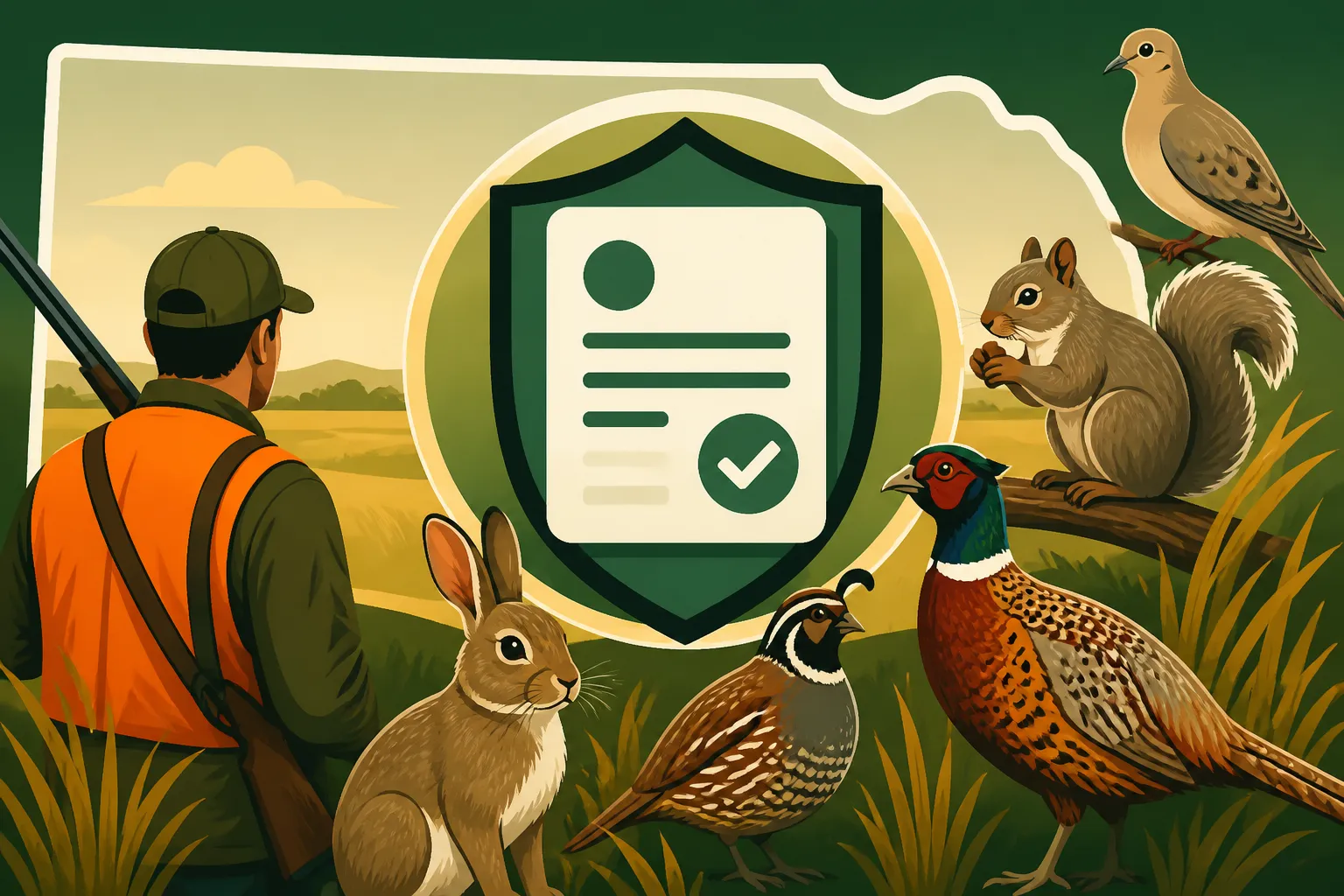
The Nebraska Small Game Hunt Permit is remarkably inclusive, encompassing an impressive array of species under its umbrella. This broad coverage is what makes it so valuable for hunters who enjoy a diverse range of outdoor pursuits throughout the hunting seasons. At its core, the permit covers all upland game birds such as the beloved ring-necked pheasant, the spirited bobwhite quail, the unique sharp-tailed grouse, and the iconic greater prairie-chicken. Additionally, it applies to migratory game birds, including various duck and goose species, doves, woodcock, snipe, and rails.
Beyond the feathered game, the permit also extends to popular small game mammals like cottontail rabbits and both fox and grey squirrels. This means that a single Small Game Hunt Permit can facilitate a wide spectrum of hunting adventures across different seasons and habitats within Nebraska. It allows for seamless transitions from an early autumn pursuit of Prairie Grouse Hunting on Nebraska's Open Range in the Sandhills to a late-season walk for Quail Coveys in Nebraska Shelterbelts in the southeastern part of the state.
Understanding this broad scope is crucial for planning your hunting year. It ensures you’re not caught off guard, mistakenly thinking you need a separate permit for, say, rabbits versus pheasants. As long as the species isn't classified as big game (like deer, elk, or antelope) or a furbearer/predator with specific separate regulations, it's highly probable that your Small Game Hunt Permit has you covered. This makes planning multi-species trips significantly simpler, as your primary permit remains valid for most of your small game targets.
Key Exemptions and Special Circumstances
While the Small Game Hunt Permit is a broad requirement, there are specific situations that can alter or exempt a hunter from needing it. Being aware of these exceptions is vital for ensuring compliance and making informed decisions about your permit purchases. One common exemption applies to resident landowners. If you are a Nebraska resident and hunting certain small game species on land that you own or lease, you might be exempt from needing the permit. However, these rules can be intricate and often depend on the specific species, the size of your property, and whether you are hunting on a designated public access area that might be within your property. It’s always best to consult the official Nebraska Game and Parks Commission (NGPC) regulations guide for the most current and precise details regarding landowner exemptions.
Another significant area of special consideration involves youth hunters. Nebraska is deeply committed to nurturing the next generation of hunters, and as such, provides generous provisions for young participants. Hunters under a certain age (typically 16) often qualify for reduced-cost permits or are entirely exempt from the Small Game Hunt Permit requirement when hunting under the direct supervision of a properly licensed adult through a mentored hunt program. These programs are invaluable for introducing newcomers to hunting in a safe, guided environment. They allow aspiring young hunters to experience the thrill of the chase and learn proper ethics and safety without the immediate financial burden of a full permit suite. More information on these opportunities can be found by researching Nebraska Apprentice Hunter Certificates.
Finally, it's worth noting that certain species, particularly some furbearers and common predators like coyotes, generally do not fall under the Small Game Hunt Permit requirements for hunting. However, they may have their own distinct regulations regarding seasons, methods of take, or require a separate permit if you intend to trap them. Always cross-reference the NGPC's annual hunting guide for any species-specific nuances or additional permits that might be required beyond the general Small Game Hunt Permit.
Beyond the Basics: Required Stamps and Additional Permits
Getting your Nebraska Small Game Hunt Permit is a crucial first step, but it’s often just one piece of the puzzle. To be fully legal and ethically compliant for various small game pursuits, you'll almost certainly need to acquire additional stamps and registrations. These are not merely optional add-ons but mandatory requirements for specific types of hunting, each serving a critical role in conservation funding and wildlife management.
The All-Important Habitat Stamp
Every single hunter in Nebraska, without exception, needs a Nebraska Habitat Stamp. This isn't tied to a specific game type; whether you're hunting deer, turkeys, pheasants, or ducks, if you're holding a hunting implement, you need this stamp. The Habitat Stamp is arguably one of the most vital components of Nebraska's conservation funding. The revenue generated from its sale directly supports the acquisition, development, and maintenance of wildlife habitats across the state. This means the money you spend on a Habitat Stamp goes directly back into creating and improving the very places you hunt, benefiting everything from pheasants to big game.
Failing to possess a valid Habitat Stamp renders all your other hunting permits invalid. It’s a common oversight, particularly for nonresident hunters or those who hunt infrequently, but it's an easily avoidable mistake. The cost of the Habitat Stamp is relatively modest, especially when you consider its significant contribution to sustaining and enhancing Nebraska's wildlife resources. Most hunters find it convenient to purchase their annual hunting permit and Habitat Stamp concurrently, making it a routine part of their pre-season preparation. Comprehensive information regarding the specific mandates can be found under Nebraska Habitat Stamp Requirements.
Imagine setting out for an early morning hunt, your shotgun loaded, and your dog eagerly sniffing the air, only to have your day cut short because you overlooked this one crucial item. It's a scenario no hunter wants, and it's entirely preventable by prioritizing the Habitat Stamp purchase. This stamp is not just a fee; it's an investment in the future of hunting in Nebraska.
Federal Duck Stamp for Waterfowl Hunters
If your definition of small game includes any migratory waterfowl—ducks, geese, or swans—then you have an additional, federally mandated requirement: the Federal Migratory Bird Hunting and Conservation Stamp, universally known as the Federal Duck Stamp. This stamp is required for all waterfowl hunters aged 16 and older across the entire United States, not just Nebraska. The funds generated from its sale are exceptionally impactful, dedicating 98 cents of every dollar directly to conserving wetlands and acquiring critical habitat for the National Wildlife Refuge System. These efforts benefit hundreds of species of migratory birds, extending conservation far beyond the boundaries of any single state.
Purchasing a Federal Duck Stamp is therefore both a legal obligation and a powerful act of conservation. It ensures that the vital wetland ecosystems, upon which countless species of waterfowl depend, continue to thrive. You can typically purchase Federal Duck Stamps at most post offices, major sporting goods retailers like Bass Pro Shops, or even online through various authorized vendors. While a physical stamp is issued, a temporary e-stamp confirmation can be used for a short period while your physical stamp is mailed to you. Staying informed about the Nebraska Federal Duck Stamp Cost and acquisition points is essential for any waterfowl enthusiast.
So, whether you're planning a trip to the famed Rainwater Basin to pursue pintails and mallards or setting up a decoy spread along the Platte River for Canada geese, make absolutely certain your Federal Duck Stamp is current and in your possession. Without it, you would be hunting migratory birds in direct violation of federal law, even if you have all your state permits in order.
HIP Registration Explained
Rounding out the list of necessities for migratory bird hunters is the Harvest Information Program (HIP) registration. Unlike the Federal Duck Stamp or the state's Habitat Stamp, HIP registration isn't a physical item you purchase; rather, it's a mandatory, free registration process. Every hunter, regardless of age, who plans to hunt any migratory game birds in Nebraska (doves, ducks, geese, woodcock, snipe, rails, etc.) must complete an annual HIP registration.
During this quick registration, hunters are asked a few questions about their migratory bird hunting activity from the previous year. This data is incredibly valuable for wildlife biologists and managers, allowing them to collect crucial information on harvest trends, estimate hunter participation, and scientifically manage migratory bird populations across flyways. It's a vital tool for setting appropriate season lengths and bag limits to ensure sustainable hunting opportunities year after year.
The process is typically very simple and can often be completed simultaneously when you purchase your other permits online through the Nebraska Game and Parks Commission website. Many advanced hunting planning platforms, such as GoHunt, also integrate reminders or direct links to complete your HIP registration, making it incredibly convenient. It literally takes less than a minute to complete, yet forgetting it can lead to a citation if you're checked by a game warden while hunting migratory birds. The Nebraska HIP Registration Requirement is clearly stated in the state's hunting guide and is a small but critical step for any migratory bird hunter.
Obtaining Your Small Game Permit and Associated Costs
Navigating the process of acquiring your Nebraska Small Game Hunt Permit and associated stamps should be a smooth experience, not a source of pre-hunt anxiety. Knowing your options for purchase and understanding the financial outlay upfront will ensure you're fully prepared.
Navigating the Online Permit System
In today's digital age, the most convenient and efficient way to acquire your Nebraska Small Game Hunt Permit, along with any required stamps and registrations, is through the Nebraska Game and Parks Commission's (NGPC) online permit system. This user-friendly portal allows you to complete your entire purchase from the comfort of your home, anytime, day or night. You'll typically create a personal account, which streamlines future purchases by storing your hunter education records, previous permit history, and other relevant details.
When utilizing the online system, it’s always a good practice to carefully review your selections before proceeding to payment. It's easy to overlook a necessary stamp or accidentally select the wrong permit type if you rush. The platform is designed with clear prompts and explanations to guide you through the process, helping you select everything you need for your planned hunts. Once purchased, you can often print a temporary permit immediately, which is valid until your official physical permits arrive by mail. This immediate access is particularly beneficial for those last-minute hunting trips.
For nonresident hunters, the online system is an absolute godsend. It eliminates the need to locate a physical vendor upon arrival in Nebraska, saving valuable hunting time. Many hunters also leverage comprehensive planning tools like GoHunt, which can help them research specific hunting units and understand permit requirements before directing them to the NGPC site for a seamless purchase experience. This digital convenience ensures you can be legally ready to hunt well in advance of your trip.
Nebraska Small Game Permit Cost
The cost of a Nebraska Small Game Hunt Permit, much like other hunting licenses, is structured differently for residents and nonresidents. Nebraska residents benefit from significantly lower fees, a common practice across states to acknowledge the tax contributions of their citizens to state conservation efforts. Nonresidents, while paying a higher fee, contribute to the state’s wildlife management and habitat conservation programs, which in turn support the very opportunities they travel to enjoy.
It’s essential to remember that the price of the base Small Game Hunt Permit is only one part of the total cost. You must also factor in the mandatory Nebraska Habitat Stamp and, if you plan to hunt waterfowl, the Federal Duck Stamp. These additional costs are non-negotiable for most hunters and should be included in your budgeting. Youth permits are typically offered at a reduced rate, reflecting the state's commitment to making hunting accessible for younger generations. Always refer to the official NGPC website for the most current and accurate fee schedule, as prices are subject to change annually.
To give you a clearer picture, here’s a general overview of the estimated costs. However, please consider these as approximations and always verify the current rates directly from the Nebraska Game and Parks Commission before your purchase.
| Permit/Stamp | Resident Cost (Approx.) | Nonresident Cost (Approx.) | Key Notes |
|---|---|---|---|
| Annual Hunt Permit (Small Game) | $20 – $30 | $100 – $150 | Covers upland birds, migratory birds, small game mammals (e.g., rabbits, squirrels). |
| Habitat Stamp | $30 – $40 | $30 – $40 | Required for all hunters, regardless of game type, resident or nonresident. Funds habitat conservation. |
| Federal Duck Stamp (Waterfowl Only) | $25 | $25 | Required for all migratory waterfowl hunters aged 16 and over. Federal purchase, funds wetland conservation. |
| HIP Registration (Migratory Birds) | Free | Free | Mandatory registration for all migratory game bird hunters. |
| Youth Hunt Permit (Small Game) | $5 – $10 | $5 – $10 | Reduced fees for eligible youth hunters. Specific age requirements apply. |
This table helps illustrate the Nebraska Small Game Permit Cost you might expect. Budgeting for these items ahead of time will prevent any last-minute financial surprises and ensure your hunting trip starts off on the right foot.
Youth Permits and Mentored Hunter Opportunities
Nebraska stands out for its proactive approach to preserving hunting traditions by actively engaging young people in the sport. The state offers specific youth permits that are not only significantly more affordable but are also part of a broader strategy to encourage mentorship and safe, ethical hunting practices. These permits are typically available for hunters under the age of 16, and their reduced cost helps alleviate a common barrier to entry for families.
Beyond cost savings, Nebraska also champions mentored hunter programs. These initiatives allow unlicensed individuals, including youth, to gain practical hunting experience while under the direct, watchful supervision of a licensed adult hunter. This means a young aspiring hunter can accompany a seasoned mentor into the field and participate in the hunt without immediately needing to complete a full hunter education course or purchase every required permit. It’s an excellent "try before you buy" opportunity that allows new hunters to discover their passion for the outdoors in a controlled and educational environment.
These thoughtful programs extend to providing special youth seasons for certain species, like pheasants and quail. These youth-only weekends often occur before the general statewide openers, offering less crowded fields and a more relaxed, educational atmosphere for young hunters to hone their skills. Parents and guardians interested in introducing their children to small game hunting should definitely explore the details of Nebraska Youth Permit Prices and the full scope of benefits offered through the mentored hunter program. It's a testament to Nebraska's dedication to ensuring that hunting remains a vibrant and accessible activity for generations to come.
Important Regulations and Considerations for Small Game Hunters
Beyond securing the correct permits, a truly responsible and successful hunter is one who is thoroughly versed in the regulations governing their sport. Nebraska's hunting laws are designed to manage wildlife populations sustainably, ensure public safety, and uphold the highest standards of ethical conduct.
Season Dates and Bag Limits Overview
Perhaps the most critical information for any small game hunter, after permit requirements, revolves around season dates and bag limits. These regulations are the backbone of wildlife management, dictating precisely when you can hunt specific species and how many you can legally harvest per day and possess. Season dates can vary significantly depending on the species and even by management zone for migratory birds, ensuring that hunting pressure is managed appropriately and avoids critical periods like breeding or nesting.
For instance, the Nebraska Pheasant Season Opening Date typically falls in late October and extends into January, offering a long season for upland bird enthusiasts. Meanwhile, Nebraska Quail Season Dates often align closely with pheasants but can have minor differences, and migratory bird seasons (like those for ducks and geese) are influenced by federal frameworks and state-specific zone splits, often featuring "split seasons" to align with migration patterns. It is absolutely imperative that you consult the most current Nebraska hunting guide or the NGPC website for the precise dates, specific zone regulations, and legal shooting hours for every species you intend to pursue.
Bag limits also differ considerably. You might have a daily limit of three pheasants but six quail, with possession limits usually set at twice the daily bag. Exceeding these limits, or hunting outside designated seasons, are serious violations that carry significant penalties. Many modern hunters find digital tools and apps, sometimes integrated with services like GoHunt, incredibly useful for quickly referencing these regulations while afield, helping them stay compliant.
Public vs. Private Land Access
Understanding where you are legally allowed to hunt is just as paramount as knowing what species you can pursue. While Nebraska boasts an admirable amount of public hunting land, a substantial majority of the state is privately owned. Navigating this landscape requires careful attention to access laws and a strong sense of ethical responsibility.
The Nebraska Game and Parks Commission provides invaluable resources like The Nebraska Public Access Atlas, a comprehensive guide and mobile app detailing publicly accessible lands. This includes Nebraska’s extensive network of Wildlife Management Areas (WMAs), State Recreation Areas (SRAs), and crucially, lands enrolled in the Open Fields and Waters (OFW) program. OFW properties are private lands leased by the NGPC to provide public hunting opportunities, often fantastic for small game like pheasants and quail. Always review the Atlas or its app prior to your hunt, as OFW tracts often have specific rules, such as "walk-in only" access or restrictions on certain activities.
When it comes to private land, the ethical obligation to obtain permission from the landowner is absolute. While Nebraska law doesn't always mandate written permission for hunting (though it does for trapping), verbal permission is always required, and written permission is always advisable as proof. Trespassing is not only illegal but also severely damages the reputation of all hunters and can jeopardize future access for others. Developing respectful relationships with landowners, asking politely for permission, and respecting their property boundaries are the cornerstones of responsible hunting on private ground. Never assume access; always verify it directly with the property owner.
Blaze Orange Requirements and Other Safety Rules
Safety should always be the paramount concern for any hunter. Nebraska has specific regulations regarding blaze orange, particularly during the firearm deer season, but wearing it is often a wise choice for small game hunting as well, even when not legally required. During the general statewide firearm deer season, for instance, any person hunting any species of game (with a few exceptions like waterfowl hunting from a blind) must conspicuously wear at least 400 square inches of blaze orange on their head, chest, and back. This means if you're pheasant hunting during the November rifle season, you must comply with these stringent requirements. For a detailed breakdown, you can refer to Nebraska Blaze Orange Square Inches.
Beyond orange, adherence to fundamental firearm safety rules is non-negotiable. This includes always identifying your target and what lies beyond it, keeping your firearm's muzzle pointed in a safe direction, treating every firearm as if it's loaded, and keeping your finger off the trigger until you are ready to shoot. These tenets apply universally to all hunting situations. For upland bird hunting, particularly when hunting with a group, clear communication, maintaining safe shooting lanes, and being acutely aware of your hunting partners' positions are critical to preventing accidents.
Responsible hunting also extends to ethical practices such as proper tagging and reporting of harvests, as well as adherence to game transport regulations. A truly successful hunt culminates not just with a filled game bag, but with a safe return home and complete compliance with all applicable laws and regulations.
Planning Your Nebraska Small Game Adventure
With your permits secured and regulations understood, the exciting phase of planning your actual small game adventure in Nebraska begins. A well-crafted plan significantly boosts your chances of success and, more importantly, enhances the overall enjoyment and safety of your time afield in the diverse landscapes of the Cornhusker State.
Researching Productive Areas
One of the most significant challenges, especially for nonresident hunters or those exploring new regions of the state, is identifying where to find productive small game opportunities. Nebraska offers varied habitats, meaning what constitutes a prime pheasant spot in the southeast might be entirely different for sharp-tailed grouse in the Sandhills. Thorough research is not just helpful; it's essential. Begin by utilizing the Nebraska Game and Parks Commission (NGPC) website, which often provides valuable insights into species distribution, population trends, and detailed maps of public hunting lands. Resources like The Nebraska Public Access Atlas Mobile App are indispensable for pinpointing specific tracts of public ground, including Wildlife Management Areas (WMAs) and Open Fields and Waters (OFW) properties, which are often excellent for small game.
Don't underestimate the power of local knowledge. Engaging with employees at local sporting goods stores, striking up conversations at small-town diners, or even respectfully reaching out to area game wardens can yield invaluable, current tips. Online hunting forums and communities can also provide anecdotal information, though it’s crucial to always cross-reference any advice with official NGPC sources. If you're targeting specific bird species, a deep dive into Nebraska's Ring-Necked Pheasant Story or understanding the specific habitat needs of Bobwhite Quail in Eastern Nebraska will help you narrow down your focus to the most promising regions and cover types. Platforms like GoHunt excel in offering detailed maps with public land overlays and user-generated insights, which can be immensely helpful for virtual scouting and identifying potential hotspots before you even arrive.
It’s important to remember that prime hunting locations can shift from year to year due to changes in habitat, agricultural practices (like crop rotations), and hunting pressure. Flexibility and a willingness to adapt your plans are key traits of a successful small game hunter in Nebraska.
Essential Gear for Small Game Pursuits
While skill and knowledge are paramount, having the right gear can significantly enhance your comfort, safety, and effectiveness during a small game hunt in Nebraska. For upland bird hunting, in particular, your equipment choices will be quite specific to the demands of walking vast stretches of varied terrain.
First and foremost, your shotgun is your primary tool. A reliable 12 or 20 gauge is standard, and understanding the nuances of Shotguns and Loads for Nebraska Pheasants is critical. Be sure to have a selection of choke tubes for different shooting scenarios and appropriate ammunition (steel shot is required for waterfowl, while lead is typically used for upland birds, unless specific WMAs dictate nontoxic). Beyond the firearm, comfortable and durable clothing is essential. Nebraska's weather can be unpredictable, making layered clothing a wise choice. A high-quality Upland Vests and Blaze Orange setup is almost universally recommended; the vest provides crucial storage for shells, water, and harvested birds, while the blaze orange ensures high visibility for safety.
Your footwear might be the single most important gear decision. You’ll be covering many miles, often through dense cover, muddy fields, or sandy grasslands. Investing in sturdy, waterproof, and well-broken-in hunting boots that provide excellent ankle support is non-negotiable. Researching options like Boots for Walking Nebraska Grass and Sand can help you choose wisely. Other crucial items include a reliable GPS device or a smartphone with offline mapping capabilities, plenty of water, high-energy snacks, a comprehensive first-aid kit, and a good field dressing knife. For waterfowl hunting, specialized gear such as waders, decoys, and calls will also be necessary additions to your kit.
The Value of a Good Hunting Plan
Beyond merely possessing the correct permits and essential gear, a meticulously crafted hunting plan is what truly orchestrates a successful and enjoyable small game adventure in Nebraska. This plan encompasses not just where you're going to hunt, but how you're going to approach the hunt, which is especially critical if you're hunting with partners or dogs.
A robust hunting plan accounts for key variables such as the prevailing weather forecast, wind direction, and the typical behavior patterns of the small game species you’re targeting. For upland birds, this involves strategic considerations like how to effectively walk a field – whether blocking and driving, meticulously working field edges, or quartering – and how to maintain effective communication and coordination with any hunting dogs or human companions. Identifying clear entry and exit points, particularly on expansive tracts of public land or Open Fields and Waters properties, is also vital for both safety and efficiency. Leveraging advanced mapping tools, such as those found on the GoHunt platform, can be invaluable for laying out these tactical plans, marking key waypoints, and easily sharing them with your hunting party.
Furthermore, a comprehensive plan always includes contingency options. What will you do if your primary hunting spot is unexpectedly crowded? How will you adapt if the weather takes a sudden turn for the worse? Having backup locations or strategies for adverse conditions can often salvage a trip. Crucially, the plan also integrates safety protocols, such as establishing clear shooting lanes within a group, ensuring regular check-ins among hunters, and having readily accessible emergency contact information. A well-executed hunting plan minimizes unforeseen challenges and maximizes both your enjoyment and safety, transforming a routine outing into a truly memorable Nebraska hunting experience.
Disclaimer
Please note that hunting regulations, season dates, and permit requirements are subject to change. While every effort has been made to provide accurate and up-to-date information in this guide, it is the hunter's sole responsibility to consult the official Nebraska Game and Parks Commission (NGPC) website or the current year's hunting guide for the most precise and legally binding regulations before engaging in any hunting activities. This guide is for informational purposes only and does not supersede official state or federal regulations.